

On April 22, 2026, Acting Attorney General Todd Blanche signed an order placing state-licensed medical marijuana into Schedule III of the Controlled Substances Act. The cannabis industry declared it a turning point. In certain respects, it is.
But turning points are not endpoints. And for California cannabis retailers who operate in the most complex, most taxed, and most litigated cannabis market in the country, the April 22 order resolves far less than the headlines suggest.
The §280E Problem, Revisited
Section 280E was enacted in 1982 in response to a tax court decision that allowed a convicted drug trafficker to deduct ordinary business expenses. Congress’s response was blunt: no deduction or credit shall be allowed for any amount paid or incurred in carrying on a trade or business that consists of trafficking in controlled substances prohibited by federal or state law. Only the cost of goods sold (or “cogs”, which is treated as an adjustment to gross income rather than a deduction) survives.
The practical consequence is financial absurdity. Cannabis businesses are taxed not on net income but on a fictional gross margin that bears little relationship to actual profitability. Effective tax rates routinely exceed 70% of gross revenue and, in loss years, can exceed 100% of cash flow. The tax obligation exists regardless of whether the business is solvent. The statute thus becomes a primary driver of insolvency, causing businesses to appear profitable for tax purposes at the precise moment they are failing.
The Schedule III order addresses this problem — but only partially, and only for one category of operator.
Section 280E applies to businesses trafficking in Schedule I or Schedule II controlled substances. For licensed medical cannabis operators in California, the federal tax picture changed materially on April 22 when medical cannabis was moved to Schedule III. Rent, payroll, insurance, utilities, professional fees, and interest are now deductible. Taxable income will, for the first time, bear a rational relationship to actual profitability.
For adult-use retailers — which represent the majority of California’s licensed retail market — nothing has changed. Recreational cannabis remains on Schedule I under the April 22 order. The broader rescheduling rulemaking that would extend Schedule III treatment to all cannabis is now the subject of a new DEA administrative hearing scheduled to begin June 29, 2026. That process will take time. Its outcome is not guaranteed. Until it concludes, the typical California Type 10 licensee is still being taxed as if it were running a criminal enterprise because, under federal law, it still is.
The California Tax Stack: Even Without 280E, the Math Is Brutal
Even for a California cannabis retailer that qualifies for Schedule III treatment and sheds its §280E burden, what remains is formidable.
California imposes a 15% cannabis excise tax at the point of sale, collected by the retailer and remitted to the California Department of Tax and Fee Administration (CDTFA). That excise tax is not optional and is not deferred. It is due whether or not the business is profitable. It sits on top of state and local sales tax, and on top of municipal cannabis business taxes, which in some California jurisdictions approach ten to fifteen percent of gross receipts on their own.
The cumulative tax burden of state excise, local cannabis tax, and sales tax consumes thirty-five to forty cents of every dollar of retail revenue before a single operating expense is paid. Now add the cost of goods, rent at two to three times conventional commercial rates (because landlords price in the regulatory risk), payroll, security, compliance consultants, insurance, and accountants. What remains, in many cases, is insufficient to service debt, fund reserves, or generate a return on invested capital.
I have sat across the table from operators who did everything right, licensed on time, METRC compliant, CDTFA current, local permits in order, who still could not make the economics work. The math is not a function of poor management. It is a function of a cost structure that the regulatory regime has made structurally unworkable for a significant share of the market.
When a California cannabis retailer falls behind on its CDTFA obligations, the consequences are not merely civil. Under Revenue and Taxation Code Section 34015.2, enacted in 2022, officers, managers, and other responsible persons of a cannabis business can be held personally liable for unpaid cannabis excise taxes. The CDTFA does not merely pursue the entity. It pursues the individual. That exposure is one of the most underappreciated risks in California cannabis, and one that rescheduling does not touch at all.
The Licensing Regime: A Patchwork Quilt That Does Not Lie Flat
A retail licensee in California must maintain: (1) a valid state license from the Department of Cannabis Control; (2) a local license or permit from its city or county; and (3) often a conditional use permit or variance from the local planning department. These three tracks run on separate timelines, have their own independent and significant costs, answer to different agencies, and typically do not “speak to one another”.
The local licensing bottleneck is the most consequential. Many jurisdictions cap the number of cannabis retail licenses available within their borders. Once those caps are filled, the market is closed, not because an applicant is unqualified, but because the cap has been reached. Getting an existing license transferred in connection with a business sale requires regulatory approval at both the state and local levels, a process that can take months and that introduces material uncertainty into any transaction. Deals collapse not because the buyer and seller cannot agree on economics, but because the regulatory approval timeline makes the financing structure unworkable.
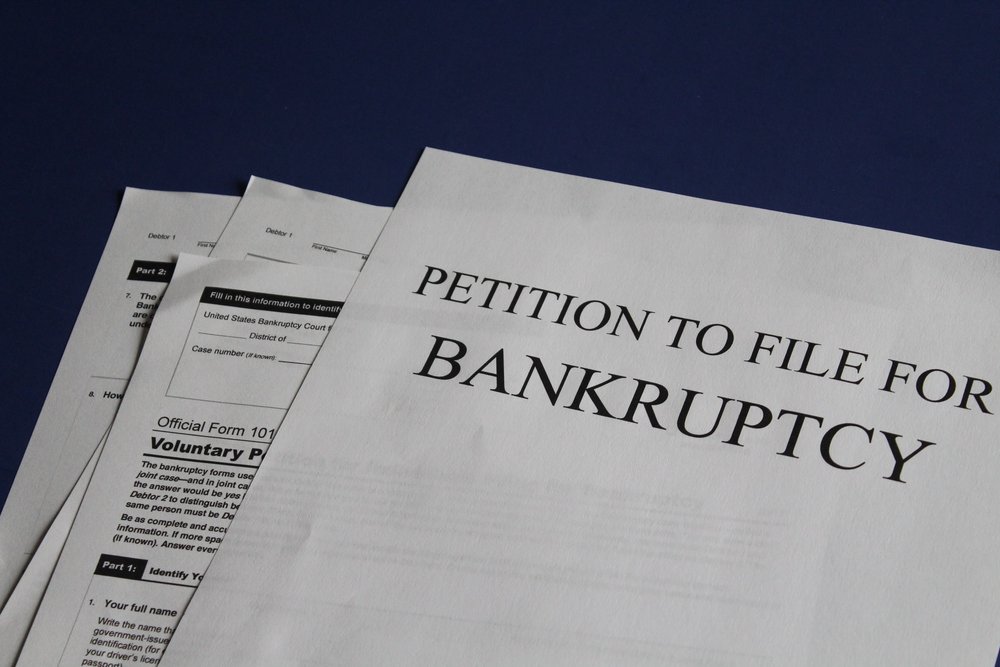
License compliance is existential. A cannabis retailer whose state or local license is suspended or revoked does not merely face a fine. It faces the destruction of its enterprise value overnight. And because adult-use cannabis businesses still cannot access federal bankruptcy protection, the April 22 order did not change that; a distressed California retailer’s options are confined to state-court tools: a receivership under Code of Civil Procedure Section 564, an assignment for the benefit of creditors, or an out-of-court workout.
These are legitimate and sometimes effective mechanisms. The state court receivership inherits all of the regulatory complexity of the underlying cannabis license, including CDTFA priority claims under Revenue and Taxation Code Section 6756, which places the state’s tax claim ahead of most other creditors in the distribution waterfall.
Rescheduling does not simplify the licensing regime. It does not reduce the number of layers, accelerate transfer approvals, or change the CDTFA’s priority position. The regulatory architecture of California cannabis retail is unchanged by the April 22 order.
The Illegal Market: The Structural Competitor That Tax Relief Cannot Fix
The illegal cannabis market in California is winning on price, and it has been winning on price for years.
The arithmetic is straightforward. A fully compliant California cannabis retailer pays the state excise tax, local cannabis taxes, sales tax, and a full load of regulatory compliance costs: METRC, Livescan, insurance, security, professional fees, that an unlicensed operator does not pay. The licensed retailer must charge a price that sustains all of that. The unlicensed operator pays none of it: no excise tax, no local tax, no CDTFA reporting, no DCC compliance, no background checks. The price differential between licensed and unlicensed products in many California markets is thirty to fifty percent, and that gap is not the product of better growing or lower overhead. It is the direct product of tax and regulatory avoidance.
Rescheduling and the partial elimination of §280E will reduce the licensed retailer’s federal cost burden. But it will not reduce the state excise tax, the local cannabis tax, or the compliance cost burden that drives the price gap. The unlicensed market’s competitive advantage is not primarily a function of federal law. It is a function of California’s own tax and regulatory structure.
State and local enforcement against unlicensed operators is chronically underfunded and inconsistent. In Los Angeles, thousands of unlicensed cannabis retailers operate openly. A business that is raided often reopens under a different name within weeks. Until enforcement becomes a genuine deterrent rather than an occasional inconvenience, the licensed retailer will continue to compete at a structural disadvantage against operators who have simply declined to follow the rules. No federal rescheduling order fixes that.
Banking and Civil Asset Forfeiture: Still Unresolved
For adult-use retailers, the banking environment after the April 22 order remains unchanged. Recreational cannabis remains on Schedule I. Bank Secrecy Act obligations — KYC, AML, SAR filing — continue to apply to any financial institution serving cannabis clients. The FDIC insurance, FedWire access, and charter risks that have kept most mainstream financial institutions out of cannabis banking are not eliminated by Schedule III treatment of medical cannabis alone.
The civil asset forfeiture exposure for adult-use operators is similarly unchanged. Federal law authorizes the forfeiture of property used in the manufacture, distribution, or sale of Schedule I controlled substances, and for adult-use licensees, that authorization remains fully intact. Lenders who hold a UCC-1 security interest recorded under California Commercial Code Section 9610 have established creditor priority within the state court system — but that position offers no tangible protection against a federal forfeiture action targeting the same collateral. The “innocent owner” defense under the Civil Asset Forfeiture Reform Act exists as a potential avenue of relief, but asserting it requires expensive, slow, and uncertain litigation. And, it places the burden of proof on the “innocent owner” to prove a negative. In practice, most lenders in this position lack the appetite for that fight, and most borrowers lack the resources to fund it.
Hopefully, the banking picture will improve as the broader rescheduling process advances and federal banking regulators issue updated guidance. Yet sadly, that guidance has not arrived.
What the April 22 Order Actually Accomplishes
Precision matters here because the market has created significant confusion about the scope of the order. To be clear, recreational cannabis, unlicensed cannabis, and synthetically derived THC products remain on Schedule I.
The April 22 order places two categories of cannabis into Schedule III: FDA-approved cannabis drug products, principally Epidiolex, the first FDA-approved prescription medication derived from the cannabis plant, indicated for the treatment of seizures associated with Lennox-Gastaut syndrome, Dravet syndrome, and tuberous sclerosis complex in patients one year of age and older, and marijuana products subject to a qualifying state-issued medical marijuana license.
What the order accomplishes for qualifying medical operators is meaningful: it eliminates §280E exposure on a going-forward basis, it opens the door to expanded banking relationships, and it reduces civil asset forfeiture risk. For research institutions, it meaningfully eases the regulatory burden on clinical studies.
What it does not do is equally important. It does not open federal bankruptcy courts to cannabis businesses. It does not resolve the FDA’s prohibition on cannabinoids in food and beverages — a live issue for any California retailer selling edibles, beverages, or infused products. It does not reduce California’s excise tax, local cannabis taxes, or compliance cost burden. It does not address the personal liability exposure under Revenue and Taxation Code Section 34015.2. It does not accelerate license transfer approvals. And it does nothing to level the competitive playing field between licensed retailers and the unlicensed market.
The Path Forward, Stated Plainly
The §280E reform embedded in rescheduling is the most consequential positive development for cannabis businesses since California legalized adult use in 2016. For the medical cannabis sector, it is transformative. For adult-use operators, it remains a promise to be kept, pending the June 29 hearing and the subsequent rulemaking process.
But rescheduling, even in its most complete form, addresses only the federal dimension of a problem that is substantially a California problem. The state tax stack, the licensing fragmentation, the enforcement gap that sustains the illegal market, and the personal liability exposure for responsible persons under Revenue and Taxation Code Section 34015.2. These are California-made conditions, and they require California-made solutions.
For the California cannabis retailer navigating the CDTFA, the local licensing authority, the Department of Cannabis Control, and a price-cutting unlicensed competitor down the street, the finish line remains further away than the headlines suggest.