
Tag Archives: marijuana

Cannabusiness Sustainability

Taking Cannabis Global: Inside Somai Pharmaceuticals’ Multi-Country Strategy


In an industry defined by local operators struggling to stay afloat and confined within their borders, Michael Sassano, founder and CEO of Somai Pharmaceuticals, has created a blueprint for scaling cannabis worldwide with pharmaceutical discipline and regulatory agility. With headquarters in Lisbon and operations in 12 countries today, Somai is preparing to reach 18 by year’s end.

The company has already secured distribution in Germany, the UK, Italy, Australia, and New Zealand, with France recently authorizing Somai’s products for its growing patient program. By the end of this year, six more markets, including parts of Eastern Europe, will be added to the roster.


“Every new country is like starting a company from scratch,” Sassano said in an interview. “You have to understand not only the national regulations but also how local medical communities perceive cannabis, how prescriptions are written, and what distributors are required to do. There’s no one-size-fits-all approach.”


Operating across borders has taught Somai how to adapt to widely different healthcare environments. In Germany, cannabis is covered by insurance in some instances, requiring negotiations with health funds. In the UK, the market is dominated by private clinics and cash-paying patients. Australia and New Zealand have highly structured import programs, while France is still moving cautiously through pilot projects.

This incremental, country-by-country buildout has given Somai real-world experience operating across multiple regulatory systems, positioning the company as one of the most credible voices on international cannabis harmonization.


High Standards Are Key

At the core of Somai’s global strategy is its pharmaceutical manufacturing facility in Lisbon, certified under EU-GMP (Good Manufacturing Practice). This certification is a mandatory requirement for selling medical-grade cannabis products in the EU and most international markets.


“EU-GMP is the gold standard,” Sassano says. “Without it, you simply can’t access the bulk of the world’s regulated medical markets.”


This distinction highlights one of the biggest differences between the US and international cannabis industries. In the United States, the market is fractured by a state-by-state model, with companies forced to duplicate infrastructure in every new state because products can’t cross state lines. By contrast, Somai can centralize manufacturing in Portugal and distribute to multiple countries. Products produced in Lisbon are eligible for export across Europe, Australia, New Zealand, South Africa, Brazil, and other compliant markets.

Unlike US operators who may quickly launch products like gummies with minimal oversight, a EU-GMP market-authorized medicine requires approximately two and a half years of validation, stability testing, and regulatory review before reaching patients. The payoff is consistency, safety, and the ability to meet the expectations of regulators, physicians, and patients alike.

By owning EU-GMP manufacturing and pairing it with distribution partnerships across 12 (soon 18) countries, Somai is among a select handful of cannabis companies capable of bringing pharmaceutical-grade products to the global market.


Strategic Partnerships, Cultivation, and Research

Somai’s global growth relies on a carefully balanced supply chain strategy that combines in-house cultivation with an extensive network of international partners. In addition to cultivating indoor flower at its own facilities, it also works with about 15 cultivation partners worldwide.

In most European markets, pharmaceutical cannabis must move through distributors before reaching pharmacies. Somai works with leading distribution companies, ensuring products reach doctors and patients in compliance with local laws.

Research partnerships are also part of Somai’s business strategy. The company collaborated with a university in Lisbon to conduct clinical research evaluating its manufacturing process, ensuring consistency from one product to another and from batch to batch. This validation of consistency is crucial for Somai to claim medical status and prove it.

“There are really only five global operator brands today in the market, and then a lot of localized brands, clinic brands, and white-label brands,” Sassano notes. “Our focus is on building a pharmaceutical brand with true international reach.”


Pharmaceutical Rigor from the Start

“In pharmaceuticals, quality is binary,” Sassano explains. “Either you meet the exacting standards or you don’t. There is no middle ground.”

This applies from raw material sourcing to batch release protocols. Unlike the US, which often requires independent third-party lab testing, the EU herbal medicine framework permits EU-GMP-certified facilities, such as Somai, to conduct all necessary testing in-house. Somai operates its own EU-GMP lab, a rarity in cannabis but standard in pharma.

The lab operates under strict oversight from a Qualified Person (QP), who leads the independent Quality Assurance (QA) department. The QA/QP team conducts regular onsite reviews of all procedures and documentation, ensuring that production, laboratory testing, and batch releases adhere to rigorous protocols. “Nobody can influence the lab or its reports,” Sassano emphasizes. Each product undergoes multiple checks: raw material testing, formulation verification, and random dosage confirmation.

Even packaging and labeling are treated with pharmaceutical precision. Labels must comply with each country’s language and dosage requirements, and patient information leaflets are tailored to the regulatory environment. “It might seem like a small thing, but one mistake on a label can stop a shipment at customs and delay patient access by months,” Sassano notes.

Sassano supports the rigorous framework. “Doctors will only prescribe, and patients will only trust cannabis if it meets the same standards as any other medicine on the shelf.”


Navigating a Patchwork of Regulations

Some nations allow doctors to prescribe freely, while others limit access to a narrow list of conditions. Even within the same country, patients may face dramatically different experiences.

Sassano points to Italy as a case in point. While prescriptions are permitted, the way pharmacists prepare medicines can vary region by region. “A patient in Milan might get a different preparation than a patient in Rome, even with the same prescription,” he explains. “That creates inconsistency for patients and makes it extremely challenging for producers to standardize.”

The difference between magisterial preparations and finished dosage form medicines illustrates the unevenness of the system. In newer markets, such as the UK and Australia, patients now receive finished dosage products that are fully packaged, labeled, and ready to use, just like any other pharmaceutical. But in older systems, pharmacists were often required to compound medicines themselves, a legacy from the early years when manufacturers didn’t exist and flower was the only product available.

Germany still clings to this model. Pharmacy compounding laws require pharmacists to fill vape cartridges or re-bottle oils instead of allowing manufacturers to deliver standardized, child-proof, finished dosage forms directly. “In some cases, they’re literally just swapping a cap, calling it magisterial prep, and charging patients double,”

Sassano notes. “It’s an archaic system that needs to go.”

Despite these hurdles, Sassano sees eventual harmonization as inevitable. “Europe cannot sustain a market where 27 countries have 27 different systems,” he argues. “Over time, patient demand and cross-border trade will push regulators toward standardization. Finished dosage forms are the future.”


Global Market Access

Somai’s EU-GMP certification positions it for international distribution. Unlike the US state-by-state system, where borders are closed and infrastructure must be duplicated in each market, EU-GMP allows a single production hub to supply multiple countries. As a recognized pharmaceutical standard, it enables Somai’s products to move across borders into any country that accepts EU-GMP medicines.

This flexibility is critical because cannabis is treated differently around the world. Europe and many international markets have strong herbal medicine traditions, so cannabis extracts fall under the herbal pharmacopoeia as true medicines and are subject to rigorous pharmaceutical rules. In contrast, the US market is closed off under FDA oversight, which historically favors synthetic cannabinoids over botanical extracts.

Still, Somai is positioning itself for future entry. “We’re working with the U.S. Department of Veterans Affairs because there is no federally approved cannabis extract made domestically,” Sassano says. “If cannabis is ever integrated into federal programs, it will need to be a registered medicine, not a dispensary product.”

Beyond the U.S., Somai has already secured FDA-style registrations in countries like Thailand, is pursuing approvals in Japan, and has entered France’s government-controlled medical program, where cannabis is subsidized for patients.

“These are true medicines that can travel cross-border,” Sassano says. “Wherever cannabis is accepted as a medicine, we want to be there.”


Conclusion

Michael Sassano’s insights offer a roadmap not just for his company but for the entire industry. “Cannabis is a medicine first,” he emphasizes. “Our responsibility is to show regulators, doctors, and patients that it can be produced, prescribed, and trusted like any other pharmaceutical. Once that trust is established, global acceptance will follow.”

Quick Q&A Recap

Q: Who is Michael Sassano?
A: Michael Sassano is the founder and CEO of Somai Pharmaceuticals, a company scaling cannabis globally with pharmaceutical-grade standards.

Q: What is Somai Pharmaceuticals’ global footprint?
A: Somai currently operates in 12 countries and plans to expand into 18 by the end of the year.

Q: Why is EU-GMP certification important in cannabis?
A: EU-GMP (Good Manufacturing Practice) is the gold standard for pharmaceutical products and a requirement to sell medical cannabis in most international markets.

Q: How does Somai’s model differ from U.S. cannabis companies?
A: Unlike U.S. operators confined by state borders, Somai can centralize manufacturing in Portugal and distribute across multiple countries under EU-GMP rules.

Q: What are the main challenges of international cannabis expansion?
A: Each country has unique regulations, healthcare systems, and distribution requirements, forcing companies to adapt market by market.

Q: How does Somai ensure pharmaceutical quality?
A: The company operates its own EU-GMP-certified lab with strict Quality Assurance oversight, ensuring consistency, safety, and regulatory compliance.

Q: What role do partnerships play in Somai’s strategy?
A: Somai balances in-house cultivation with about 15 global cultivation partners and works with leading distributors to reach doctors and patients.

Q: What is the future of cannabis regulation in Europe?
A: Sassano believes eventual harmonization is inevitable, with standardized finished dosage forms replacing outdated pharmacy compounding practices.

Q: Is Somai targeting the U.S. market?
A: Yes. Somai is collaborating with the U.S. Department of Veterans Affairs and preparing for potential federal approval of cannabis-based medicines.

How ESOPs Can Save Cannabis Businesses A Ton of Money While Doing Good

By Darren Gleeman
No Comments

What most people don’t realize is that there is an entirely legal, proven way to increase a company’s profit margins. It’s called an Employee Stock Ownership Plan, or ESOP.

In cannabis, it sometimes feels like every financial conversation ends the same way: “If not for 280E, we’d be thriving.” That line gets repeated in boardrooms and investor decks across the country, and for good reason. Section 280E has choked margins, slowed growth, and kept great operators from building real wealth.

What most people don’t realize is that there is an entirely legal, proven way to increase a company’s bottom line. It’s called an Employee Stock Ownership Plan, or ESOP.

The problem is that when people in cannabis hear “ESOP,” they often imagine a maze of red tape, confusing tax rules, and loss of control. Some think it sounds too good to be true. Others assume it’s only for Fortune 500 companies.

None of that is accurate. ESOPs have been part of U.S. tax law for fifty years. They’ve been tested, audited, and refined by Congress and the IRS many times over. What’s new is how we’re applying them to cannabis.

Let’s separate fact from fiction.


Myth #1: ESOPs Are Too Complex for Cannabis Businesses

Fact: ESOPs aren’t complicated; they’re structured.

Complex doesn’t mean chaotic. The ESOP process is built on structure—specific steps, professional oversight, and a framework that’s been refined for decades. Cannabis operators already deal with licensing, banking, and compliance frameworks that make ESOP implementation look simple by comparison.

With the right team of advisors, setting up an ESOP is no more difficult than selling to a private equity group. The difference is that an ESOP retains the value within your company, rather than transferring it to outside investors.


Myth #2: You’ll Lose Control of Your Company

Fact: ESOPs are designed to be flexible. You decide how and when ownership changes hands.

An ESOP doesn’t take your company away overnight. It lets you sell shares over time, at your pace, while continuing to lead. You remain the CEO, set the strategic direction, and determine when, or if, you step back. Employees become shareholders, but they don’t manage the business day-to-day.


Think of it as succession planning with stability built in. You can gradually transfer ownership without losing control of what you built.


Myth #3: ESOPs Don’t Deliver Fair Market Value

Fact: The law requires ESOPs to pay fair market value, which independent valuation firms verify.

When you sell to an ESOP, the price is based on the same valuation principles used in mergers and acquisitions. There’s no “friends and family” discount. And because ESOPs qualify for capital gains deferral under Section 1042, sellers often end up with more after-tax value than they would in a traditional sale.

You’re selling to your employees, not giving the business away. The transaction adheres to the same financial standards as any other corporate transaction.


Myth #4: ESOPs Create Too Much Debt

Fact: ESOP debt is paid with pre-tax dollars, and it pays for itself, and if the company is 100% owned by an ESOP, the company pays zero income taxes

Unlike conventional debt, ESOP loans are self-liquidating. The company makes contributions to the ESOP trust, deducts them from taxable income, and those contributions repay the loan.

In cannabis, that’s a game changer. Under 280E, many companies lose 60 percent of their profits to taxes. With an ESOP, those profits stay in the business. The Gleeman Model eliminates the 280E burden entirely. With tax pressure lifted, operators can shift their focus from survival to strategy. The money that once went to the IRS can now be used to fund expansion, new equipment, or well-deserved bonuses for their teams.


Myth #5: ESOPs Only Work for Big Companies

Fact: Most ESOPs are small to mid-sized, founder-led businesses.

Across the U.S., the average ESOP company has between 50 and 200 employees. These are construction firms, food producers, and professional services businesses, not global corporations. They succeed because ESOPs align ownership with culture, giving employees a vested interest in the company’s success.

Cannabis companies with EBITDA exceeding $ 2.5 million are ideal candidates. These firms are entrepreneurial, closely held, and value legacy and employee retention. Those are the companies that benefit most from employee ownership.


Myth #6: Employees Can’t Handle Ownership

Fact: Ownership doesn’t mean management. It means alignment.

ESOP participants don’t vote on business strategy or day-to-day operations. They hold shares in a trust and earn value as the company’s value increases. That structure provides employees with a tangible reason to care about the company’s performance. When people have a genuine stake in the outcome, they pay closer attention to quality, take ownership of their work, and seek ways to improve efficiency.


Myth #7: ESOPs Don’t Work in Highly Regulated Industries

Fact: ESOPs were created to function in regulated environments.

They fall under the oversight of the Department of Labor and the IRS, and every plan undergoes an annual valuation and compliance review. In contrast to the constantly changing rules in cannabis, ESOPs offer a level of structure and predictability that’s rare in this industry.

They’ve worked for defense contractors, banks, and utilities—sectors with far tighter oversight than cannabis. The framework is clear, tested, and fully compliant with federal standards.


Myth #8: Selling to Private Equity Is Easier

Fact: Private equity is not necessarily faster, and it often comes at the cost of your culture.

Selling to private equity usually means an aggressive timeline, leveraged buyouts, and a complete change in leadership. ESOPs, on the other hand, let founders exit gradually, keep jobs local, and preserve the company’s mission.

Private equity is designed for short-term return. ESOPs aren’t built for quick wins. They’re built to last. The best structure for you comes down to what kind of business you want to leave behind and who you want it to serve when you’re gone.


Myth #9: ESOPs Don’t Offer Real Tax Benefits

Fact: No other ownership model comes close.

A 100 percent ESOP-owned S-Corporation pays no federal or state income tax. Ever. Sellers can defer capital gains indefinitely. Combined, these two features make ESOPs the most tax-efficient structure available.

For cannabis operators paying crushing 280E rates, that’s not a minor advantage; it’s a survival strategy. Freeing up that much cash flow can double profitability and open the door to expansion or acquisitions that once felt impossible.


Myth #10: ESOPs Are “Too Good to Be True”

Fact: They’re underused and misunderstood.

Thousands of American companies are owned by an ESOP, which, together, employs more than 14 million people. Think Publix, W.L. Gore, or New Belgium Brewing. All are proof that when employees share in ownership, companies tend to last longer and grow stronger.

The only reason ESOPs sound extraordinary is that most cannabis owners have never seen one in practice. However, the model has already been proven in more than 10 cannabis companies.


The Bottom Line

ESOPs aren’t a tax trick or an accounting loophole. They’re the product of decades of bipartisan legislation designed to reward broad ownership and long-term growth.

Skepticism is understandable, especially in cannabis, where operators are constantly warned to avoid anything that sounds unconventional. But in this case, the “too good to be true” option is actually the one most deeply rooted in U.S. law.

For business owners still battling the 280E tax, ESOPs are no longer a fringe idea. They’re a lifeline. They transform a broken tax environment into an advantage, align teams through shared ownership, and enable founders to exit with both wealth and integrity intact.

Ignoring ESOPs isn’t cautious; it’s costly. The facts are there. The framework is legal. The opportunity is real.

The question now isn’t whether ESOPs work. It’s whether the cannabis industry is ready to use them.

You can hear Darren Gleemans’ full interview on the Innovating Cannabis Podcast to dive deeper into ESOPS.

Can Cannabinoids Help Keep the Aging Body Balanced?

As our bodies age, the mechanisms that keep our systems humming, such as immune regulation, metabolism, and neural repair, gradually erode. That loss of homeostasis is the culprit behind many age-related disorders, from cognitive decline to metabolic dysfunction. Scientists are beginning to explore whether cannabis or its constituent cannabinoids might help support the body’s natural ability to maintain equilibrium as it ages.

The Journal of Cannabis Research is an international, fully open-access, peer-reviewed journal that welcomes submissions on all aspects of cannabis research. Their 2025 systematic review, “The Impact of Cannabis Use on Aging and Longevity: A Systematic Review of Research Insights,” pooled data from preclinical and human studies. The authors concluded that cannabinoids show promise in modulating aging processes, although human evidence remains limited. The review provides a solid foundation, but recent mechanistic and methodological work adds important nuance and depth to the understanding.


Rewiring the Aging Brain

One compelling line of evidence comes from a study showing that continuous administration of low-dose THC (3 mg/kg/day) over 28 days in 18-month-old mice counteracted age-related decline in dendritic spine dynamics in cortical neurons. The treated mice showed reduced spine loss and increased spine survival, essentially re-establishing neural stability similar to that of young mice. The researchers observed that the probability of spine survival in THC-treated old mice reached levels comparable to those in 3-month-old controls (Komorowska-Müller et al., Nature).

This supports the idea that cannabinoids may actively restore structural stability in neural circuits rather than merely slowing decay. Earlier work by Bilkei-Gorzo et al. (2017) demonstrated that chronic low-dose THC reversed age-related cognitive decline in 12- and 18-month-old mice. Their treated mice displayed increased hippocampal spine density, stronger expression of synaptic marker proteins, and gene transcription changes that made them more similar to younger mice.


A Two-Way Switch for Aging Cells

Recent studies highlight the nuanced, tissue-specific effects of cannabinoids. A 2024 study revealed that long-term low-dose THC produces a bidirectional effect. In the brain, THC transiently enhances mTOR signaling and increases the levels of amino acids and energy metabolites, thereby promoting synaptic protein synthesis and neural repair. At the same time, in peripheral tissues such as adipose, THC reduces mTOR activity and suppresses metabolic overactivity, effects similar to those seen with caloric restriction or exercise interventions (Bilkei-Gorzo et al., ACS Pharmacology & Translational Science).

This dual effect suggests that THC may act as a metabolic switch, enhancing repair in the central nervous system while balancing peripheral metabolism. Such tissue-specific modulation offers a promising model for a homeostasis-based therapeutic approach.


How Men and Women Respond Differently

Emerging research is exploring other cannabinoids as well. A 2025 study on cannabinol (CBN) found that it improved spatial memory and learning in aging mice, particularly in females. These findings suggest that the antiaging potential of cannabis is not limited to THC or CBD, and that sex differences may influence response.

It is worth noting that both human and animal studies have observed sex-specific pharmacokinetic differences in cannabis metabolism and sensitivity, even when equivalent doses are administered. This indicates that men and women may experience distinct benefits or side effects from the same cannabis formulations.


Can Too Much Cannabis Age You Faster?

While the potential benefits are compelling, some evidence suggests that chronic cannabis use may accelerate specific aging markers in humans. A longitudinal study titled “Lifetime Marijuana Use and Epigenetic Age Acceleration: A 17-year Study” found that heavier lifetime marijuana users exhibited significantly greater epigenetic aging, measured by DNAmGrimAge clocks, even after adjusting for tobacco use and other confounders (PMC).

Cannabis smoking has also been linked to higher levels of IL-1β, a proinflammatory cytokine, along with elevated methylation clock measures, though some effects appear reversible with cessation (PMC review).

Reviews of epigenetic effects suggest that cannabinoids can alter methylation patterns across genes associated with neurotransmission, immune signaling, and cellular repair (ScienceDirect). A recent molecular epidemiology study also reported dozens of DNA methylation sites in middle-aged adults associated with both cumulative and recent marijuana use, reinforcing cannabis’s potential influence on aging trajectories (Nature).

These findings point to the complexity of cannabis’s effects on homeostasis. Factors such as dose, age of onset, duration of use, cannabinoid type, and mode of consumption likely determine whether cannabis supports or undermines healthy aging.


Hope, Caution, and the Path Forward

Cannabinoids offer intriguing possibilities for mitigating age-related decline, from restoring neural circuit stability to rebalancing metabolic signaling and possibly influencing molecular aging pathways. Yet the evidence remains inconclusive. In preclinical studies, low-dose THC consistently demonstrates beneficial effects, and emerging research on CBN suggests additional promise. However, human data are still limited, and the potential for epigenetic acceleration calls for careful attention.

Currently, cannabinoids may represent one tool among many for supporting homeostasis in aging, provided they are used with close attention to dosing, timing, compound specificity, and tailored to the individual’s needs. As more human trials and longitudinal studies emerge, we may gain a better understanding of how these compounds can help the aging body maintain balance and resilience while minimizing risk.


Arizona Commands the Nation’s Highest Cannabis Business Valuations

By , Gordon K. Sattro
No Comments

Whether it’s a single retail license, a multi-site operation, or a vertically integrated enterprise, deals in Arizona are fetching top-tier premiums – often exceeding price points in larger, more mature markets like California.

So, what’s driving these sky-high valuations? More importantly, how can industry players take advantage? Let’s break it down.

Arizona: Where Cannabis Assets Command a Premium

Over the past 24 months, dozens of transactions have closed in Arizona by way of consolidation, ranging from single dispensary sales to multi-unit portfolio deals. The results have been record-setting: in some cases a standalone retail license has sold for over $10 million, a figure unheard of in many other states. Arizona’s cannabis assets are, in a word, premium and are routinely attracting bids that surpass those in traditionally dominant market.. Clearly, Arizona has become a market where cannabis assets command a serious premium.

Why is this desert market so hot? Below are five key factors fueling Arizona’s elevated valuations.

Five Key Factors Driving Arizona’s Sky-High Cannabis Valuations

  1. Limited License Structure: Arizona’s cannabis market operates under a tightly restrictive license cap, with only 169 dispensary licenses statewide. This built-in scarcity means any available license instantly becomes a coveted asset. With far fewer retail outlets than demand requires, sellers hold the leverage – and can command steep prices as a result.
  2. Dual Licensure (Medical + Recreational): Many Arizona licenses are dual-use, meaning one license allows both medical and adult-use sales. This doubles a dispensary’s potential customer base overnight. Dual licensure translates to higher revenue per store, as each licensed operator can serve all segments of the market. Buyers are willing to pay a premium for this versatility and expanded market share.
  3. Strategic Location and Growing Consumer Base: Arizona boasts one of the fastest-growing populations in the U.S., with major metros like Phoenix and Tucson expanding rapidly. The state also enjoys booming tourist traffic and steady streams of interstate shoppers (especially from nearby prohibition states such as Texas, Utah, and New Mexico). On top of that, Arizona offers a favorable business climate with relatively low taxes and fees, which further boosts profitability for operators. In short, demand is high and operating costs are relatively manageable which all results in a perfect recipe for rich valuations.
  4. Robust Sales and Profitability: Thanks to limited competition and dual-use sales, Arizona dispensaries tend to generate strong revenues and healthy profit margins. Each store services a large customer pool, often resulting in higher sales per dispensary than in states with more saturated markets. Buyers see that Arizona operations can yield a significant return on investment, which justifies paying top dollar for a foothold in the market.
  5. Strong Investor Demand: The buzz around Arizona has drawn in deep-pocketed buyers from across the country. Green Life has witnessed both institutional investors and high-net-worth individuals eagerly bidding for Arizona licenses and companies. This competitive buyer pool pushes valuations even higher – it’s not uncommon to see bidding wars drive a sale price well above the initial asking. When multiple buyers are vying to enter or expand in Arizona, sellers ultimately reap the reward in the form of lofty sale prices.

Navigating the Arizona Market: Buyers and Sellers

Buyers: How to Win in a Hot Market
For buyers, Arizona’s high valuations mean you must come prepared. To successfully acquire an asset in this competitive market, buyers should:

  • Be ready to move quickly. Attractive opportunities often trigger bidding wars, so speed and decisiveness are essential once a viable deal hits the market.
  • Expect to pay a premium. Understand that Arizona assets are expensive for good reason – low-ball offers won’t win deals here. Savvy buyers budget for top-tier prices and focus on the long-term upside.
  • Leverage local expertise. Partnering with experienced cannabis brokers or advisors (like Green Life Business) who know the Arizona landscape can help you identify opportunities early and navigate the complex regulatory environment with confidence.

Sellers: How to Maximize Your Sale
For sellers, Arizona’s moment in the spotlight presents a prime opportunity – but preparation is key to capturing maximum value. Green Life Business guides sellers through critical steps to capitalize on the market, including:

  • Packaging the business for maximum value. We help organize financials, compliance records, and growth stories into a compelling presentation that attracts top-tier buyers.
  • Securing pre-qualified buyers. Through an extensive network, we screen and line up buyers who have the interest and the funds, ensuring a smoother sale process.
  • Navigating regulatory hurdles. From state licensing rules to local regulations, our team helps sellers handle all compliance and license transfer requirements without derailment.
  • Closing quickly and transparently. We strive for deals that close on time, with no surprises, giving both parties confidence from offer to final handshake.

By taking these steps, sellers can tap into Arizona’s aggressive pricing environment and drive their deal to the finish line efficiently.

Bottom Line


Arizona isn’t just hot – it’s on fire. In a market where asset values elsewhere are cooling, Arizona continues to deliver record-setting valuations fueled by scarcity, strong demand, and proven profitability.

With experience selling High Times, Statehouse, and securing the largest all-cash cannabis transaction since 2022, Green Life Business has the expertise and track record to position your Arizona business for the strongest possible sale outcome. Whether you’re considering an exit, recapitalization, or expansion, our team brings the market knowledge and deal execution needed to maximize value.

Let’s talk. The next great Arizona transaction could be yours.

Greenlife Business Group Inc.

NECANN Atlantic City: Insights on NJ’s Emerging Market

By Pam Chmiel
No Comments

The excitement and interest around New Jersey are impossible to ignore because of its potential to be one of the most lucrative cannabis markets in the country. Since legalization, operators have been racing to open doors, capture consumers, and keep pace with evolving regulations, as they battle sky-high operating costs, shifting compliance rules, and the uncertainty of how consumer demand will shake out.

At NECANN’s Atlantic City conference, a panel of industry insiders gathered to offer their insights on where the Garden State’s market is heading. Moderated by Jacob Robbins of Longview Strategic, the panel brought together voices from the packaging, brewing, and manufacturing industries to explore the opportunities, roadblocks, and trends reshaping the industry.


“This market is young and growing fast,” Robbins said as he opened the session. “But it’s also unpredictable. Success requires both planning and adaptability.”

Lesson From Other States: Scaling Smart                                                                                    Jason Marshall of AE Global, a company specializing in packaging and supply chain solutions, began by pointing to lessons from more mature cannabis markets. Drawing on his background in consumer packaged goods (CPG) with companies like Pepsi and General Mills, Marshall stressed that packaging in cannabis is far more than just compliance.

“Packaging is the vehicle for trust and brand identity,” he said. “In a crowded dispensary, that’s how you stand out.”

The data shows just how crowded New Jersey has become. In 2023, the state tracked 2,100 SKUs; this year, that number more than doubled to 4,800. For consumers, that means unprecedented choice. For businesses, it means competing for shelf space and consumer attention in ways that look increasingly like mainstream retail.

Marshall’s advice was clear: treat cannabis like any other consumer market. Strategic planning is essential, but rigid strategies rarely succeed. Operators must be nimble and prepared to adjust pricing, packaging, and distribution to reflect changing consumer behavior and evolving regulatory requirements. “The playbook is always shifting,” Marshall said. “The winners are the ones who can shift with it.”

Regulations vs. Market Reality                                                                                                           If packaging is where brands differentiate, regulation is where they stumble. Chuck Garrity, founder of Death of the Fox Brewing Co., knows firsthand what happens when rules lag behind business. His experience navigating New Jersey’s craft beer rollout gave him a sobering perspective on what to expect when he entered the cannabis industry with his dispensary, Frosted Nug.

“We saw the same messy process with craft beer,” Garrity said. “Government always lags behind business. Cannabis is no different.”

According to Garrity, the problem isn’t just bureaucracy; it’s who writes the rules. Lobbyists, he argued, play an outsized role in shaping legislation. Unless operators engage lawmakers directly, they risk being boxed out of decisions that will shape their businesses for decades.

“Operators need relationships with mayors, senators, and regulators. If you’re not at the table, you’re on the menu,” he warned.

The threat of overregulation is real. Rules that are too restrictive, he said, could choke off innovation and slow down the momentum New Jersey needs to stay competitive with neighboring states. For Garrity, political advocacy is not optional; it’s survival.

Manufacturing, Innovation, and White Labeling                                                      Where Garrity sees a risk in policy, Hursh Patel sees opportunity in production. Patel, founder of Red Oak Cannabis, detailed his company’s investment in a CGMP-certified manufacturing facility powered by AI-driven automation to raise the bar on quality, consistency, and efficiency.

“Automation and quality control are everything in cannabis manufacturing,” Patel said. Consumers expect consistency. Retailers demand it. AI helps us deliver it at scale.”

But Patel’s bigger play is in white-labeling. In a landscape where every dispensary is trying to carve out its identity, exclusive brands offer a way to build loyalty and improve margins.

“White label gives retailers the chance to control more of the value chain,” Patel explained. “It’s a high-margin growth path, but it only works with the right partners and strict quality standards.”

The strategy has been successful in other states, where dispensaries have developed in-house brands that compete directly with national players. In a crowded New Jersey market, Patel argued, it could mean the difference between profitability and mediocrity.

Beverages: The Next Super-Category                                                          One trend drew universal attention: beverages. While still a small slice of the market, cannabis drinks are gaining momentum across the U.S., and panelists believe New Jersey won’t be far behind.

Marshall pointed to the West Coast, where dispensaries in California and Oregon are increasingly “fridge-heavy,” dedicating prime space to cannabis beverages. Branding is more experiential, with products designed to appeal to wellness-minded and socially conscious consumers who might never consider smoking a joint.

“Beverages are shaping up to be a super-category,” Marshall said. “In three to five years, they could be the preferred consumption method.”

National brands like Cycling Frog are already building mainstream awareness, helping normalize the idea of drinking cannabis instead of alcohol. For New Jersey operators, beverages represent both an opportunity and a challenge: they require cold storage, different packaging standards, and consumer education. But if the predictions hold true, they could also be the next major driver of growth for dispensaries.

Roadblocks On The Horizon                                                                         Despite the optimism, delivery remains an obstacle, being both costly and underdeveloped. Insurance premiums are steep, and regulations create more friction than efficiency. Without reform, consumers may continue to rely on traditional purchasing channels.

Interstate commerce also looms large. While federal legalization remains stalled, most agree that it’s a matter of when, not if. For New Jersey, with its high operating costs, the threat is real. Once interstate trade opens, local producers may struggle to compete with lower-cost operators on the West Coast.

Then there’s politics. New Jersey’s upcoming gubernatorial election could have a major impact on the regulatory climate. A shift in leadership could accelerate reform or stall it indefinitely.

Key Takeaways for New Jersey Operators                                                  By the end of the session, a handful of themes emerged as survival strategies for cannabis businesses in the Garden State:

  1. Build flexibility into strategy. The rules and market conditions will change—your business model must be ready to adapt.
  2. Study other state markets. Learn from the missteps and successes of other states.
  3. Cultivate political relationships. Lobbying power isn’t optional; it’s how laws get written.
  4. Explore white-label opportunities. House brands can expand margins and consumer loyalty.
  5. Prepare for beverages. There seems to be a big white space for beverages. Whether it’s in two years or five, drinks are poised to lead consumer adoption.

A Market Still Taking Shape                                                                         The challenges are significant, and the future is uncertain, just like any other maturing cannabis market. But for operators willing to stay lean, resourceful, invest in relationships, and think creatively about products, the opportunity remains immense.

“This is still the early innings,” Robbins said in closing. “The operators who thrive will be the ones who treat this like the serious, dynamic consumer market it is, while never forgetting that in cannabis, everything can change overnight.”


What you will learn:

  • What makes New Jersey one of the most promising cannabis markets in the U.S.?

  • How are operators adapting to high operating costs and changing regulations?

  • What lessons can New Jersey learn from more mature cannabis markets?

  • Why is packaging important for brand identity and consumer trust in cannabis?

  • How can white-label products help dispensaries improve margins and loyalty?

  • Why are cannabis beverages considered a potential “super-category” for growth?

  • What regulatory and political challenges could impact New Jersey operators?

  • How can operators stay flexible and thrive in a rapidly evolving cannabis market?

How Cannabis Moves Around the World: Inside the Global Supply Chain

By Pam Chmiel
No Comments

Global cannabis trade is well underway as legalized countries move forward to establish a supply chain infrastructure in a newly formed and rapidly evolving industry. At the forefront of transportation logistics is Cannabilog, an Israeli company led by pharmaceutical industry veteran Yoram Eshel. In an interview, he shared his playbook for building a compliant, efficient, and scalable supply chain for global cannabis import and export trade.


The Complex Web of Global Cannabis Trade Regulations

According to Eshel, not surprisingly, the global cannabis trade hinges on regulatory compliance and requires expertise to manage the movement of products across continents. Unlike pharmaceuticals, where harmonized frameworks such as those of the European Union apply across borders, cannabis regulations differ drastically from country to country.

Some nations permit imports, while others ban them entirely. Even within importing countries, the rules vary by product category. “Some will allow flower, others only oil or genetics,” Eshel explains. “It’s never a simple straight line.”

Every aspect of the supply chain requires specific licensing under narcotics laws, from cultivation and storage to import and export. Adding to the challenge is the constant evolution of these laws. For example, Thailand initially embraced its booming local market and export-friendly policies, but the new government abruptly switched course and limited cannabis use to medical purposes only. In addition, Thai producers seeking to export face roadblocks because European authorities do not recognize their local GACP certifications, which are based on “Good Cultivation and Harvesting Practices for Medicinal Plants.”

Eshel emphasizes that failing to keep pace with changing laws can be costly.


“If you export cannabis products to another country and they can’t clear customs, the shipment is destroyed. There’s no way back.”


Medical Cannabis Must Meet Pharmaceutical Standards

The second major pillar of the international cannabis trade is adherence to pharmaceutical-grade standards. “Governments treat medical cannabis as a medicine,” says Eshel. “It’s exactly like Tylenol or any other drug.”

Even though cannabis has not gone through the traditional drug registration process, regulators treat it as a pharmaceutical product, which means it must comply with strict Good Distribution Practice (GDP) requirements. That includes temperature control, data logging, and rigorous quality management throughout the supply chain. Every shipment is audited and must be approved by a Qualified Person (QP) on the receiving end before entering the market. If any quality parameters are unmet, the product is rejected.

Logistics providers like Cannabilog must operate under EU GDP certification and maintain pharmaceutical-grade systems and documentation. “We are audited constantly,” Eshel says.

The difference between the medical and recreational markets often catches producers off guard, especially those in countries like Canada, which has a more recreational mindset, similar to that of the US. “When you move into the medical space,” Eshel notes, “you suddenly need temperature-controlled vehicles, validated packaging, and specialized labeling. It requires training and experience.”

Globally, countries such as Germany, Australia, and Israel classify cannabis exclusively as a medical product. “It’s not even close to recreational,” Eshel stresses. “And in most countries, recreational use is still illegal and requires special licensing.”


Managing Cold Chain Logistics

After navigating complex regulations and meeting pharmaceutical-grade standards, the final piece of the international cannabis trade puzzle, says Eshel, is execution.


“You can have your licenses, your permits, your quality system, but if you don’t execute correctly, everything can fail.”


Execution means maintaining control over every step, including packaging, labeling, documentation, temperature regulation, and secure transportation. Shipments must move through carefully selected routes using temperature-controlled vehicles, warehouses, and flights, with continuous monitoring to ensure product integrity is preserved. In some countries, even armed escorts are required for security.

Eshel explains that cannabis logistics is not one-size-fits-all. Each product type, including genetics, flower, and concentrates, has unique handling and storage protocols. For instance, cannabis clones present one of the most challenging forms of transport. “Most clones are unrooted,” he says. “From the moment you cut them from the mother plant, you have three to four days to keep them alive. That requires special packaging, rapid shipping, and customs clearance to get them back into water in time.”

Temperature management is another major operational challenge. Most global regulators require cannabis products to be stored and transported between 59 °F and 77 °F, known in the pharmaceutical world as Controlled Room Temperature (CRT). In the United States, many recommend that temperatures should not exceed 70 °F for optimal cannabis preservation. Eshel clarifies that maintaining actual CRT conditions demands active temperature monitoring and specialized packaging, not just insulated boxes.

For every shipment, Cannabilog conducts a route risk assessment to evaluate potential environmental extremes along the supply chain. Eshel cites the example of shipments from Canada to Australia, where opposite seasons create complex thermal risks.


“Winter in Canada is summer in Australia, making temperature management a challenge from continent to continent; you have to plan for that,” he says.


To minimize exposure, Cannabilog uses pharma-grade airline partners that store and handle products under strict temperature conditions and prioritize loading and unloading to reduce time on the tarmac. Each shipment includes data loggers that record temperature throughout transit.


“If there’s an excursion outside the allowed range,” Eshel notes, “the products are rejected.”


European regulators, he adds, tend to enforce these standards more rigorously than their U.S. counterparts. While the United States has many GMP-certified cannabis facilities, most are not EU-GMP certified, which limits their ability to export to Europe when the time comes, even though the differences are not that big.

Eshel contrasts this with Canada, where much of the market remains recreational. While medical exporters adhere to strict temperature control and quality management, domestic recreational products are often transported under looser conditions.


“You can’t count on the weather,” he says. “Temperature management is part of the medical cannabis infrastructure.”


The Last Mile in Cannabis Preservation

Most of Cannabilog’s shipments are from a cultivation or production facility to a licensed wholesaler or distribution center, rather than directly to pharmacies.


“We verify that every facility we deliver to is properly licensed and has temperature-controlled storage,” Eshel says.


Cannabilog provides insurance coverage for every shipment, including losses related to temperature excursions or other transport issues. However, ultimate product responsibility remains with the manufacturer, much like in the pharmaceutical industry.


“If something goes wrong, it’s the manufacturer’s duty to investigate, and if needed, issue a recall,” Eshel explains.


Each transfer of custody, whether at the port, airport, or distribution warehouse, marks a shift in responsibility defined by the buyer-seller agreement. Still, Eshel stresses that all parties must adhere to Good Distribution Practices (GDP) and maintain detailed documentation, including lab tests and Certificates of Analysis (COAs), to ensure transparency and traceability.

Without mandatory cold-chain standards, products are often transported in “hot trucks,” leading to product degradation. Eshel agrees: “The last mile is often the weakest link in the supply chain infrastructure as the industry strives to build a cold chain custody from seed to sale.”

Even last-mile deliveries must be temperature-controlled. The difference, Eshel says, comes down to mentality. “In Europe, it’s purely medical. There’s no confusion between recreational and medical use, so cannabis is treated just like any other medicine.”


Making the Cannabis Industry SAFER for America

By Melissa Kuipers Blake, Osiris Morel
No Comments

After nearly a decade of conversation and education on the Hill, the Senate Banking, Housing and Urban Affairs Committee finally held a markup on the Secure and Fair Regulation (SAFER) Banking Act. Previously known as the SAFE Banking Act, the “R” was included to account for Sen. Jack Reed’s (D-RI) concerns with Section 10. The senator shared his concerns publicly on May 11 during the “Examining Cannabis Banking Challenges of Small Businesses and Workers” hearing. Sen. Reed said that Section 10’s language “would make it more difficult for federal regulators to raise the alarm about relationships with any customer that presents significant risks to the bank” and shared that such a provision is “not limited to the marijuana industry or the cannabis industry,” but that it “could allow pyramid schemes or all sorts of other interesting activity to go on without an effective response by the regulator.” Since then, he and a group of bipartisan members, including Majority Leader Chuck Schumer (D-NY), Senate Banking Committee Chair Sherrod Brown (D-OH), and Sens. Steve Daines (R-MT), Cynthia Lummis (R-WY), Kevin Cramer (R-ND) and Kyrsten Sinema (I-AZ), have worked endlessly to develop language to resolve such concerns while maintaining GOP support, leading to the SAFER Banking Act.

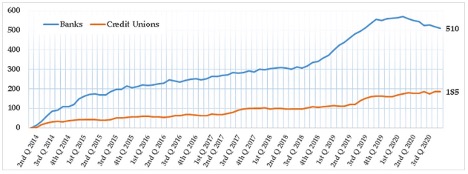
Number of Depository Institutions Actively Banking
Cannabis-Related Businesses in the United States
(Reported in SARS)

The difference between the SAFE Banking Act and the SAFER Banking Act can mainly be found in Section 10. Changes focus on and determines:

  • How regulators terminate bank accounts;
  • How the Federal Deposit Insurance Corporation (FDIC) develops guidance for financial institutions serving state-licensed cannabis businesses;
  • How income derived from state-legal cannabis business activity is managed;
  • That personal and political beliefs cannot impact a financial regulator’s decision making;
  • That federal banking regulators and state banking supervisors and their secretaries of Commerce and Treasury would create rules to increase access to deposit accounts and how such individuals would enhance customer relationships with rural, low- and moderate-income, unbanked and tribal communities; and
  • How the FDIC would conduct a biennial survey and report on barriers for small- and medium-sized businesses.

During the markup on Wednesday, members introduced and discussed a range of amendments related to criminal justice reform, the racial wealth gap, federal regulators and their processes, rescheduling and the opioid epidemic. In total, there were six amendments, one by Chairman Brown, as well as Sens. Mike Crapo (R-ID), Bill Hagerty (R-TN), Mike Rounds (R-SD) and two by Sen. Raphael Warnock (D-GA). Sen. Brown’s amendment, which would make technical changes to the bill, was the only amendment to prevail on a 17-6 vote.

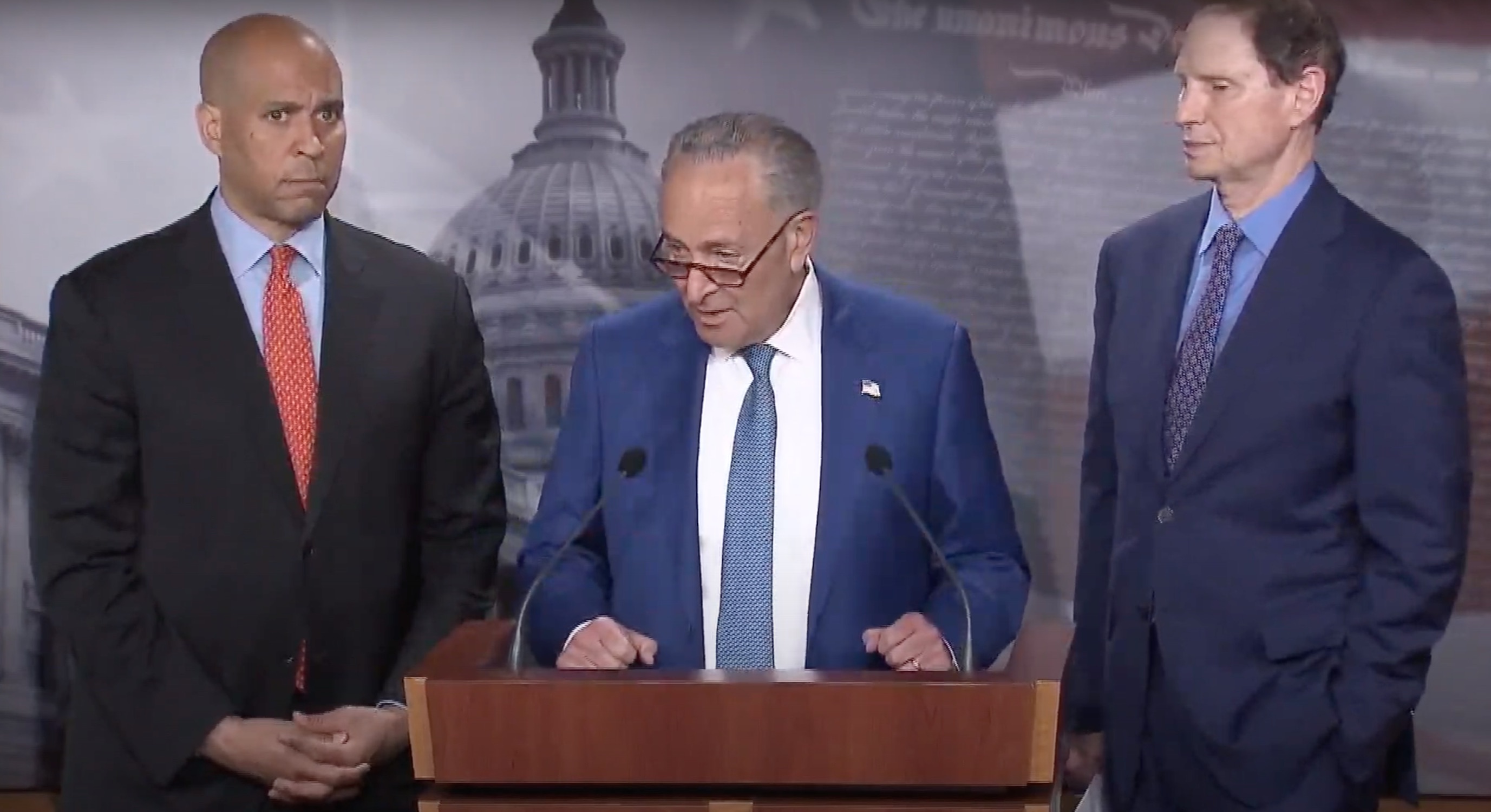
Senate Majority Leader Chuck Schumer (center), Senate Finance Committee Chair Ron Wyden (right) and Senator Cory Booker (left)

To begin the markup, Chair Brown said that propelling this legislation is a critical step in reversing the damage done by the war on drugs and clarified that the SAFER Banking Act would create a better financial system for small and medium-sized cannabis businesses that lack access to such traditional banking services. Sen. Daines, who served as the committee ranking member in place of Sen. Tim Scott (R-SC), who was in California preparing for the Republican presidential debate, shared that although he opposes legalization or decriminalization, he agreed to sponsor and support the SAFER Banking Act because it would fix the current banking system for cannabis businesses nationwide. After hearing remarks from Sens. Lummis, Catherine Cortez Masto (D-NV) and Sinema, the committee voted on the bill, and approved its passage to the Senate floor on a 14-9 vote. Senators voting in favor of the bill were Brown, Tester, Warren, Reed, Menendez (by proxy), Smith (by proxy), Warner, Fetterman, Cortez-Masto, Sinema, Van Hollen, Lummis, Cramer and Daines, and voting against the measure were Sens. Warnock, Scott (by proxy), Crapo, Tillis, Kennedy, Haggerty, Vance and Britt.

After the vote, Sen. Jeff Merkley (D-OR) thanked Sen. Rand Paul (R-KY) and former Republican Sen. Cory Gardner (CO) for their early efforts and for bringing the legislation and issue to the chamber’s attention and concluded that he hopes to have a robust discussion with the full Senate chamber.

With the bill out of committee, it heads to the Senate floor for additional input, discussion and potentially a vote. Majority Leader Schumer has said he intends to bring the SAFER Banking Act to the floor “with all due speed” and noted that he is committed to attaching Rep. Dave Joyce’s (R-OH) Harnessing Opportunities by Pursuing Expungement (HOPE) Act and Rep. Brian Mast’s (R-FL) Gun Rights and Marijuana (GRAM) Act to the final legislation. Sen. Schumer also shared that such provisions would address the war on drugs, bolster social equity and criminal justice reform and protect Second Amendment rights for medical cannabis patients.

When the SAFER Banking Act will receive floor time remains unclear, but Leader Schumer has made numerous representations that he would like to see it done this year.

Sustainability in Cannabis Packaging: Balancing Preservation and Environmental Impact

By Jack Grover
2 Comments

Even a cursory review of cannabis reveals that the market has been notoriously wasteful, polluting the environment with chemical fertilizers, misused pesticides, contaminated plants, and—perhaps most problematically—thoughtlessly excessive packaging.

The industry is in dire need of sustainable practices, and the easiest way to start an impactful new trend is from the outside in: a.k.a., adjusting how you’re parceling your products.

Honing in on sustainable packaging isn’t just a good move for the environment. It’s also more cost-effective, less labor-intensive and allows you to provide consumers with the best possible version of your flower—no matter how far through the supply chain it’s had to travel before hitting retail shelves.

Cannabis has progressed: It’s time for its packaging to do the same

By the time legalization began sweeping the nation, the industry already had several decades of experience operating underground. With that discretion came a lot of built-in habits around not attracting attention, and for packaging, the focus was solely on not looking like a cannabis product.

An overabundance of plastic isn’t cutting it anymore—not only when it comes to environmental friendliness, but for the integrity of the product itself.

Today, increased legalization grants operators the freedom to expand without the fear of being seen, and as a result, there’s no longer any excuse for wasteful packaging to be the industry’s norm. Glass jars, Ziplocks and an overabundance of plastic isn’t cutting it anymore—not only when it comes to environmental friendliness, but for the integrity of the product itself.

“I’ve been designing packaging in the cannabis industry since 2013, and a lot of trends have come and gone. We used to put flower in plastic Rx jars and paper envelopes. In general, there was a lot of waste: excess boxes and jars that all get thrown away,” says Legacy’s Chief Cannabis Officer Ryan Hedrick. “And when consumers pull the products out of those containers, your marketing doesn’t remain intact. The box gets thrown away, and now they’re just carrying around a labelless jar. Not only is it bad for the environment, but it isn’t helping you promote your brand at all.”

How sustainable storage optimizes curing and shelf life of flower

As for the curing process, Hedrick used to use airtight buckets, which both took up a lot of room and wasn’t at all effective for maintaining cannabis’s ideal humidity levels. He’s since switched to passive atmospheric packaging, which utilizes increasingly popular technology to keep humidity—and sustainability—in mind. “The buckets weren’t letting any moisture out. On top of that, you can imagine how much room 165 five-gallon buckets takes up in a grow space,” Hedrick says.

The same goes for long-term storage. With humidity-controlled bags, operators can rest assured that their product will maintain its efficacy, because as soon as that pack is sealed, the humidity level is guaranteed to stay the same.

Cannabis brand Lava Leaf Organics relies on passive atmospheric packaging for efficient storage—mainly because of the reduction in carbon footprint and increase in terpene preservation.

“When we think about the energy involved in packaging and shipping large amounts of heavy glass jars compared to TerpLoc bags, it was an easy decision for us,” said Lava Leaf Organics CEO Tony Martinez.

“The bags are recyclable, and compared to glass jars with child-resistant lids, they’re much better at preserving terpenes. Using sustainable packaging allows us to put our best foot forward and to better control our customer’s brand experience.”

Tips for making sustainable storage work for you

Sustainable storage is an environmentally-responsible move for the cannabis industry to make, but when weighing the pros and cons of a big switch like this, operators should also keep in mind how positively it will impact their end product, consumer’s experience, and, subsequently, their industry-wide reputation.

Some product packaging examples in the market today

Placing your products in eco-friendly bags is just the start. There are definitely more tips and tricks operators can take advantage of to prolong the use of sustainable materials and ensure they’re leaving as small a footprint as possible. For example, Hedrick’s team reuses their passive atmospheric packaging for maximum efficiency—especially when it comes to bulk storage or curing.

“We mark all of our storage bags with the original strain, so we can reuse that bag for the same strain as long as it passes testing along the way. When I do so, I take a mixture of SaniDate and water to make sure everything is sanitized and clean,” Hedrick said. “That allows me to reuse them for about 3-4 months’ worth of curing and storage. You can reuse a bucket in that same way, but when it’s time to replace it, you’re still spending another $15-$17.”

Sustainable, humidity-controlled packaging is also ideal for testing consistency. If you send in five buckets of the same strain to be tested, you run the risk of them all sitting at wildly different humidity levels, which means some might pass, and others might be rendered trash.

All of the environmental benefits aside, using sustainable packaging just makes cents—literally. “Essentially, I’m saving a minimum of half a million in packaging every year. That’s my entire staff’s salary for two months. That’s incredible, impactful, significant savings that can make a huge difference for a business trying to expand.”

Cannabis in Texas: A Look Ahead to Legalization and Beyond

By Abraham Finberg, Rachel Wright, Simon Menkes
1 Comment

A Uniquely Texas Approach to Cannabis

The last few decades have seen the United States move forward state-by-state with the legalization of cannabis. Every state is charting its own unique path, and nowhere is this truer than with the state of Texas.

The Lone Star State has made its way from being staunchly anti-cannabis to expressing its own blend of temperance and careful action, combined with a medical cannabis program that’s expanding.

Any predictions regarding the future of cannabis in Texas must take into consideration both the state’s past and its values. In the end, it’s clear that Texas will embrace cannabis in its own individual way and at its own pace, but with a timeframe that appears to be arriving sooner rather than later.

The Debate Continues

108 years after Texas first banned cannabis and the debate continues. Even though Texas has a medical cannabis program, cannabis is still illegal in the state, with possession of less than two ounces a misdemeanor. Possession of more than four ounces is a felony punishable by a $10,000 fine and from 2-99 years in jail.

Texas’s 2015 Compassionate Use Act created the state’s medicinal cannabis program, which now makes treatment available only in the form of low-THC oil of a maximum strength of 1%, and only to a small list of serious conditions: epilepsy, terminal cancer, autism, multiple sclerosis, amyotrophic lateral sclerosis (ALS), seizure disorders, incurable neurological disorders such as Alzheimer’s, Parkinson’s, Huntington’s Disease and PTSD.

Support for a Stronger Medicinal Cannabis Program Comes from Prominent Politicians

Texas Department of Agriculture Commissioner Sid Miller, a leader in Texas politics and one of the architects of Texas’s burgeoning hemp industry, has encouraged Texas legislators to create a more complete medical cannabis program.

Texas Department of Agriculture Commissioner Sid Miller

“I am for medical use,” Miller said in an August 2023 interview. “We have so much good science now. And we know what diseases it can treat, yet our legislature picks winners [and] losers. If you’ve got this disease, you can get treated, but if you’ve got this disease and cannabis will help you, you can’t get treated. We need to let the doctor-patient relationship make those medical decisions and not some bureaucrat or some politician … I’m not a supporter of recreational marijuana, but if someone has a condition that this chemical will help, they should be able to use it.”

Texas Representative Joe Moody from El Paso has worked for many years to promote adult-use cannabis. He recently co-authored two pro-cannabis bills, HB 1805, which would have expanded covered medical conditions and defined a per-doze THC limit instead of a percentage limit on cannabis products, and HB 218, which would have decriminalized cannabis.

Although both bills passed the House of Representatives, they were stopped in the Senate. The next session of the state legislature, which happens every two years, won’t begin until January 2025, so that is the earliest any change in cannabis statutes could take place.

The Future of Medicinal Cannabis

There are currently only three dispensaries in Texas. They appear to be servicing the state’s 268,000 square miles through a series of weekly drop-offs to satellite “partner locations,” which are open an average of only two days per week. This is not exactly a corner-CVS type of arrangement, and the need for new dispensaries for the state’s 61,000 registered patients is high.

The Texas Department of Public Safety took applications for new medical dispensary licenses between January and April 2023. Tony Gallo, managing partner of Sapphire Risk Advisory Group, which helped twelve licensees prepare their applications during this round, anticipates around ten new dispensaries being approved.

All licensees must be vertically integrated – product must go from seed-to-sale under one license – and each applicant paid $7,356 to apply. If approved, the applicants will owe another $488,520.00 for a two-year period.

Many knowledgeable Texans, including Agriculture Commissioner Sid Miller, predict a fully-functioning medicinal cannabis market is just a few years away. “If you can get it to the floor, probably 70% or 80% of the legislative body will vote in favor of it because we have such good science on it. [Originally] we thought, ‘Well, that’ll lead to recreational use or more drug use,’ but it’s not. It’s a plant derivative. Medical marijuana is not nearly as addictive as some of the prescription drugs we use now.”

The Push is On for Adult-Use

Representative Joe Moody believes that adult-use is not too far away in Texas’s future either, and that the way to speed its arrival is through education. He recently sponsored HB 3652, the Texas Regulation & Taxation of Cannabis Act, in order to start a dialogue on what a retail cannabis market will look like in Texas.

Texas Representative Joe Moody

On April 26, 2023, Moody and his bill received a public hearing in the House Committee for Licensing and Administrative Procedures in which many points about setting up a retail market in Texas were discussed. A 10% cannabis tax was proposed by Moody, to be split evenly between the state and local government. Licenses would be required for those growing, selling, transporting or testing cannabis, although individuals would be allowed to grow or possess it in small amounts for personal use. Legal sale and consumption would be limited to adults 21 years of age and older, like alcohol. And of course, cannabis possession would be decriminalized.

How Strong is the Market Potential for Cannabis?

One indication of how strong even a fully-open medical cannabis market might be in Texas came during Moody’s hearing from the testimony of Estella Castro. Castro owns two medical dispensaries in Oklahoma just across the state line from Texas and suspects most her buyers are from Texas. “They have a Texas plate and they come in and buy $500 to $600 worth of product,” she said. Her two shops generated $158,000 in taxes to Oklahoma, most of which she believes should have gone to Texas.

New Mexico recently legalized adult-use cannabis, and the small towns along the Texas-New Mexico border are seeing a lot of traffic from Texas. In the first week of adult-use sales, the New Mexico did adult-use sales totaling $6 million. Of those sales, $1.5 million came from dispensaries in 5 small border towns.

Florida and California Suggest the Scope of a Mature Cannabis Market in Texas

The potential for a fully developed medical cannabis market can be gleaned by studying the next smaller state, Florida, which has an open, mature, medical cannabis market. Florida, with 20 million people, is about two-thirds the size of Texas, which has 30 million inhabitants. Right now, Florida boasts 700,000 cannabis patients whereas Texas only has 61,000. Simple math suggests a fully open, mature, medical cannabis market in Texas could see over a million patients gain relief.

California is the nation’s most populous state with 39 million inhabitants, and its cannabis revenue gives some perspective as to the size of a Texas adult-use market. 2024 estimates of California’s cannabis revenue suggest the Golden State will see $7.2 billion legal cannabis sales while the illegal market will generate another $6.4 billion for a total of $13.6 billion. With a reduction for Texas’s smaller size, these numbers suggest a fully-mature Texas adult-use cannabis market could generate close to $10 billion in annual revenue.

Large adult-use states like California and New York are notorious for having an illicit market that threatens to derail their legal, tax-paying cannabis license holders. Texas’s strong business-friendly focus should help deter such an illicit marketplace from gaining too significant a foothold.

The Back-Door Cannabis Industry

Meanwhile, an extensive “back door” cannabis industry is in full swing in Texas. CBD shops now sell delta-9 (fully psychoactive) THC/CBD gummies and tinctures made from the hemp plant, which is the low THC-version of the cannabis plant. These THC/CBD products adhere to the 0.3% definition of hemp as required by the federal 2018 Farm Bill and are legal and available for over-the-counter or online purchase in Texas’s CBD stores.

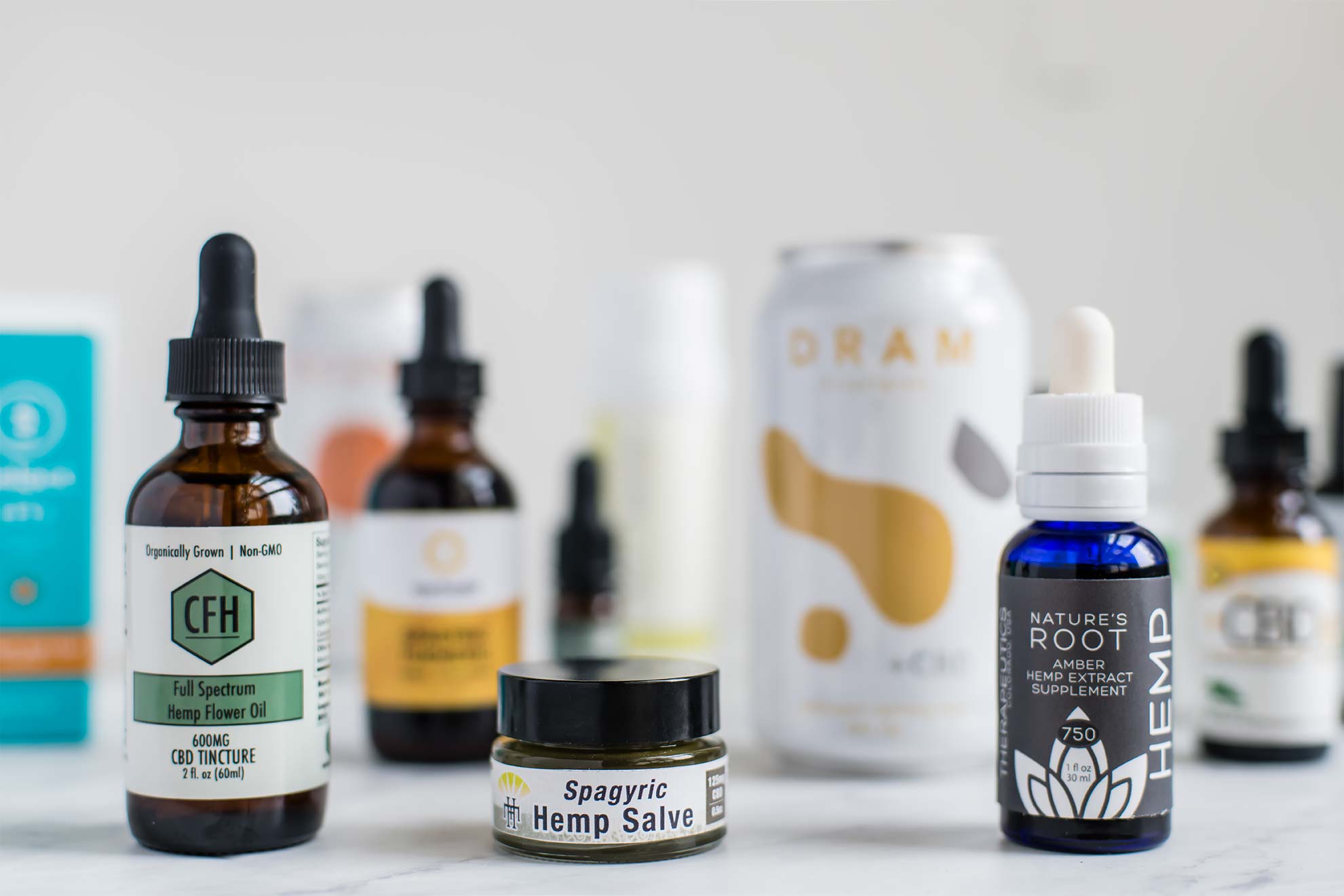
Gummies, tinctures and other products made form them hemp plant

Current estimates are that there are over 5,000 hemp, CBD and cannabinoid retailers, manufacturers and distributors in Texas that employ more than 50,000 workers and generate more than $8 billion in annual revenue. With these numbers, the 1,100+ licensed Texas hemp growers are sitting well where they are and are poised to take advantage of a legal adult-use market if and when Texas decides it is ready to go down that path.

Next Steps for Texas’s Cannabis Market

People familiar with Texas’s cannabis market believe that adult-use is a ways down the road for the Lone Star State, and that the near-term focus needs to be on decriminalization and achieving an unincumbered medical cannabis system. Tony Gallo of Sapphire Risk Advisory Group advises the Texas cannabis community to concentrate on “increasing what conditions are allowed for medicinal use” and “increasing what areas of the state it’s allowed to be sold.”

There is a groundswell of public support for decriminalizing cannabis as well as for allowing adult-use. A December 2022 poll showed 55% of Texans support legalizing at least small amounts of cannabis for recreational purposes, and another 28% said it should be legal for medicinal purposes.

A February 2023 poll by the University of Houston found that 82% of Texans support the Legislature passing a bill that would allow people to use marijuana for a wide range of medical purposes with a prescription. The belief that cannabis is a “gateway drug” that would make people more likely to use other illegal drugs is losing traction as well – 70% said it would make people less likely to do so or would have no impact.

Final Thoughts

The demand for cannabis in the Lone Star State is strong. With the likelihood of a fully-functioning medical cannabis market coming soon, and the possibility of decriminalization not too far behind, it’s clear that the future of cannabis is bright in Texas.

While the legalities around adult-use will take longer to work out, and the place of hallucinogenic hemp in the mix needs to be examined and clarified, one fact is certain. The path forward that Texas cannabis takes will certainly be a unique one, as unique and as individual as the Texan people themselves.

Employee Management & Human Resources: An Often-Overlooked Part of Building a Business

By Cannabis Industry Journal Staff
No Comments

Well before cannabis businesses win a license application, they need to have traditional business plans outlining how they’ll run the company. While this obviously includes things like the property, the building, products and inventory, it also includes a lot of things that are often overlooked: things like payroll, human resources and employee management.

Before a cannabis company should even hire their first employee, they need to have a few thing squared away. The timeframe and order of operations will differ for every business and every state, but there are a number of things to consider like workers comp, employee training, handbooks and of course, everyone’s favorite topic: insurance. There’s crop insurance, general liability insurance, unemployment insurance, workers comp insurance and more. Working with the right brokers, not breaking the bank and understanding what you need and when can be crucial to keeping the doors open.

Ahead of the Cannabis Quality Conference, we sit down with Nick Murer, the founder of WECO, to ask him some questions about what businesses need to know and when. Nick will be available at the event in New Jersey this October 17 and 18 during our “Ask the Expert Roundtables” to answer these questions and much more.

Cannabis Industry Journal: Does a company need to have workers comp and unemployment insurance before they’re licensed?

Nick Murer: They don’t need to have it figured out before they’re licensed, but they should want to have a strategy in place as they’re going through the process, knowing what they need to accomplish. There are some cases where states may require insurance upfront in the licensing process, but not always. It is however required before a business opens their doors, and absolutely necessary to have insurance before staffing and their first employees comes on board.

CIJ: What types of insurance should companies look into as they’re submitting our license application?

Nick: As you’re submitting your license application, you should have it figured out or at least speak with a broker about your options. You probably don’t have it yet, since you’re not an entity, but you’ll need general liability insurance, and if you’re a grower, you should have crop insurance too. Prior to opening, you should have your workers comp insurance, unemployment insurance, FICA, SUTA and FUTA figured out with the state. Prior to licensing, you need to make sure you are working with the right insurance broker and managing the cost aspect. We can help with that; we work with a couple of great brokers that are industry-specific. As folks go through the licensing process, it’s important to work with people like us that have the right resources and the right tools to provide that necessary support.

Nick Murer will be available at the CQC in New Jersey, October 16-18 to answer questions and provide a resource for new and existing businessesDuring the application process, you need to be aware of insurance and the options that are available, as well as what’s required, but you might not need to have all of those in place. It’s different for every state.

CIJ: What important parts of human resources and employee management should companies have figured out before they get licensed?

Nick: I think the first area they need to start with is making sure they have their workers comp set up, their GL [general liability insurance] set up, I think they should have their employee handbook figured out, their onboarding procedures, their strategies for discontinuing employment figured out prior to bringing them on. Where we come in and assist with that is making sure that these businesses are properly set up with the state to handle workers comp, unemployment insurance, their FICA, FUTA and SUTA, social security taxes, healthcare benefits and being able to deploy all of that within thirty days properly. We work with a lot of clients making sure they have their onboarding programs fully figured out before they take that leap.

CIJ: As cannabis companies get licensed and begin operating, what are some often overlooked HR functions?

Nick: I think the number one area they need to understand in their hiring process prior to bringing people on is really having a thorough, compliant handbook that they’ve also participated in, and have worked towards creating a better document so when these employees come on they know the expectations and the standards that need to be met in order to be a successful member of the team. I think their employment onboarding practices need to be dialed in where they understand what is going on between the onboarding, timing, the documentation needed all before effective start date to stay in compliance. Understanding labor compliance and being able to understand how you properly onboard and offboard an employee is a really critical part. Where we like to come in and assist our clients is helping train managers and being their resource. Everyone works with humans and there are always unforeseen problems that arise We’re in the people business and there will be people problems and mitigating those should be everyone’s number one priority. The more we can help protect cannabis businesses, the less risk they bring to their own company, people and the industry.