Tag Archives: marijuana

Homeland Security Sec. Kelly Says Marijuana is a Gateway Drug

By Aaron G. Biros
No Comments

According to The Washington Examiner, Department of Homeland Security secretary John Kelly said that marijuana is a gateway drug during a speech at George Washington University on Tuesday. “And let me be clear about marijuana. It is a potentially dangerous gateway drug that frequently leads to the use of harder drugs,” says Kelly. “[U.S. Customs & Border Protection] will continue to search for marijuana at sea, air and land ports of entry and when found take similar appropriate action.” The DEA recently dropped any mention of the gateway drug theory. Many argue it is a myth propagated by drug war stalwarts and even the National Institute on Drug Abuse won’t call it a gateway drug anymore.

Homeland Security Secretary John Kelly
Photo: Chairman of the Joint Chiefs of Staff

During a crime committee meeting this morning, Attorney General Jeff Sessions mentioned a link between the illegal marijuana trade and cartel violence. “We have quite a bit of marijuana being imported by the cartels from Mexico- this is definitely a cartel-sponsored event,” says Sessions. According to The Washington Times, Sessions mentioned violence involving marijuana distribution in the nation’s capital, Washington D.C., where cannabis is legal. “So it remains a significant international criminal organization, the marijuana network,” says Sessions. This is not the first time the Attorney General has suggested a link between the plant and violence. Back in February, Sessions claimed that legal cannabis has led to an increase in violence.

The statements made this morning are the latest in a series of contradictory and uncertain messages on federal cannabis policy by the Trump administration. “DHS personnel will continue to investigate marijuana’s illegal pathways along the network into the U.S., its distribution within the homeland, and will arrest those involved in the drug trade according to federal law,” says secretary Kelly. That message, however, contradicts statements he made earlier in the week.

During a Sunday interview with NBC’s “Meet the Press,” secretary Kelly told Chuck Todd “marijuana is not a factor in the drug war.” In that interview, he went on to add that methamphetamine, heroin and cocaine are the real culprits they are after, noting the high death tolls associated with the drugs and connection to organized crime in Mexico. The Trump administration still has not issued a clear, consistent position on federal cannabis policy.

Canada Releases Proposed Cannabis Legislation

By Aaron G. Biros
No Comments

The government of Canada published a press release on April 13th proposing a piece of legislation, the Cannabis Act, which would regulate the industry by July of 2018. The press release puts a heavy emphasis on keeping cannabis away from children, curbing impaired driving and reducing criminal and organized crime profits.

The press release says the legislation would set up a regulatory framework “for controlling the production, distribution, sale and possession of cannabis in Canada.” It would set the minimum age to purchase cannabis at 18, but provinces can increase that minimum age how they see fit. Health Canada, the Royal Canadian Mounted Police, the Canada Border Services Agency and the Department of Public Safety would be responsible for enforcing the regulations.

Justin Trudeau, Prime Minister of Canada
Photo: John McCallum

The Cannabis Act states they plan on implementing a fully functioning regulatory framework by July of 2018. Transporting cannabis across international borders or selling to minors would be serious criminal offenses. If the legislation becomes law, adults could have up to 30 grams of cannabis on their person and grow up to four plants in their home.

Individual provinces would ultimately be the regulating authorities, but if local jurisdictions do not have a regulatory framework in place, the press release says Canadians could purchase cannabis online and have it shipped to them. In addition to establishing the regulatory framework, the Cannabis Act would tighten laws on impaired driving. “Additionally, the proposed legislation would authorize new tools for police to better detect drivers who have drugs in their body,” reads the press release. That would give the police authorization to use oral fluid drug screeners, but cannabis is particularly difficult to detect at low concentrations. It is unclear exactly how that would be enforced and specifically what technology they would use.

In a Facebook post this morning, Justin Trudeau announced the proposed legislation to his followers. “It’s too easy for our kids to get marijuana,” says the Prime Minister. “We’re going to change that.” That mention of keeping cannabis out of reach of the Canadian youth is heavily emphasized in the press release as well.

Applications for Tissue Culture in Cannabis Growing: Part 1

By Aaron G. Biros
5 Comments

Dr. Hope Jones, chief scientific officer of C4 Laboratories, believes there are a number of opportunities for cannabis growers to scale their cultivation up with micropropagation. In her presentation at the CannaGrow conference recently, Dr. Jones discussed the applications and advantages of tissue culture techniques in cannabis growing.

Dr. Hope Jones, chief scientific officer at C4 Labs

Dr. Jones’ work in large-scale plant production led her to the University of Arizona Controlled Environment Agriculture Center (CEAC) where she worked to propagate a particularly difficult plant to grow- a native orchid species- using tissue culture techniques. With that experience in tissue culture, hydroponics and controlled environments, she took a position at the Kennedy Space Center working for NASA where she developed technologies and protocols to grow crops for space missions. “I started with strawberry TC [tissue culture], because of the shelf life & weight compared with potted plants, plus you can’t really ‘water’ plants in space- at least not in the traditional way,” says Dr. Jones. “Strawberries pack a lot of antioxidants. Foods high in antioxidants, I argued, could boost internal protection of astronauts from high levels of cosmic radiation that they are exposed to in space.” That research led to a focus on cancer biology and a Ph.D. in molecular & cellular biology and plant sciences, culminating in her introduction to the cannabis industry and now with C4 Labs in Arizona.

Working with tissue culture since 2003, Dr. Jones is familiar with this technology that is fairly new to cannabis, but has been around for decades now and is widely used in the horticulture industry today. For example, Phytelligence is an agricultural biotechnology company using genetic analysis and tissue culture to help food crop growers increase speed to harvest, screen for diseases, store genetic material and secure intellectual property. “Big horticulture does this very well,” says Dr. Jones. “There are many companies generating millions of clones per year.” The Department of Plant Sciences Pomology Program at the Davis campus of the University of California uses tissue culture with the Foundation Plant Services (FPS) to eliminate viruses and pathogens, while breeding unique cultivars of strawberries.

A large tissue culture facility run in the Sacramento area that produces millions of nut and fruit trees clones a year.

First, let’s define some terms. Tissue culture is a propagation tool where the cultivator would grow tissue or cells outside of the plant itself, commonly referred to as micropropagation. “Micropropagation produces new plants via the cloning of plant tissue samples on a very small scale, and I mean very small,” says Dr. Jones. “While the tissue used in micropropagation is small, the scale of production can be huge.” Micropropagation allows a cultivator to grow a clone from just a leaf, bud, root segment or even just a few cells collected from a mother plant, according to Dr. Jones.

The science behind growing plants from just a few cells relies on a characteristic of plant cells called totipotency. “Totipotency refers to a cell’s ability to divide and differentiate, eventually regenerating a whole new organism,” says Dr. Jones. “Plant cells are unique in that fully differentiated, specialized cells can be induced to dedifferentiate, reverting back to a ‘stem cell’-like state, capable of developing into any cell type.”

Cannabis growers already utilize the properties of totipotency in cloning, according to Dr. Jones. “When cloning from a mother plant, stem cuttings are taken from the mother, dipped into rooting hormone and two to five days later healthy roots show up,” says Dr. Jones. “That stem tissue dedifferentiates and specializes into new root cells. In this case, we humans helped the process of totipotency and dedifferentiation along using a rooting hormone to ‘steer’ the type of growth needed.” Dr. Jones is helping cannabis growers use tissue culture as a new way to generate clones, instead of or in addition to using mother plants.

With cannabis micropropagation, the same principles still apply, just on a much smaller scale and with greater precision. “In this case, very small tissue samples (called explants) are sterilized and placed into specialized media vessels containing food, nutrients, and hormones,” says Dr. Jones. “Just like with cuttings, the hormones in the TC media induce specific types of growth over time, helping to steer explant growth to form all the organs necessary to regenerate a whole new plant.”

Having existed for decades, but still so new to cannabis, tissue culture is an effective propagation tool for advanced breeders or growers looking to scale up. In the next part of this series, we will discuss some of issues with mother plants and advantages of tissue culture to consider. In Part 2 we will delve into topics like sterility, genetic reboot, viral infection and pathogen protection.

Pennsylvania Temporary Rules for Doctors Released

By Aaron G. Biros
3 Comments

Pennsylvania Department of Health Secretary Dr. Karen Murphy recently released a draft of temporary regulations for physicians, asking for feedback via a survey from the medical community. “The process for a patient to obtain medical marijuana will begin with the physician, so it’s vital to ensure that our regulatory process for those physicians is open and transparent,” says Secretary Murphy. “Our focus remains to implement a patient-focused medical marijuana program that gives help to those who need it, and these temporary regulations mark an important step forward in achieving that goal.” The temporary rules, published on April 11th, outline physician and practitioner registration, patient certifications, physician training and other key regulations.

Steve Schain, Esq. practicing at Hoban law Group

In the temporary rules lie some stipulations for doctors, which seem intended to limit corruption or financial conflicts of interest. According to Steven Schain, Esq., consumer finance litigation, banking law and cannabis law expert practicing with Hoban Law Group, the market’s growth will hinge on doctor participation. “The entire program will rise and fall based on the speed in which we involve doctors,” says Schain. “If the doctors don’t certify for medical conditions and make recommendations, the market won’t go anywhere.” Pennsylvania’s program, under the current language, requires doctors to issue patient certifications, similar to what other states might call a doctor recommendation or prescription.

According to Schain, other states with similarly worded regulations experience a lack of physician participation, and tepid market growth at best. “If you look at New York, New Jersey or Maryland, they run into issues where there just is no incentive for doctors to participate,” says Schain. “If you look at the existing language of the regulations, there is no financial incentive for doctors to get involved, they can’t charge for a recommendation, which is good and bad.”

“The good part is it reinforces that doctors can’t really be a financial backer of a grow operation or a dispensary,” says Schain. Under the current language, physicians can’t solicit, accept or offer any form of compensation from any patient, prospective patient, caregiver or anyone involved in a medical cannabis business if they intend to register with the Department to issue patient certifications for cannabis. “Some doctors thought this would be a cottage industry for them, it’s not.” Doctors are also not allowed to advertise as a practice issuing patient certifications for cannabis. “Another benefit of the language in the proposed regulations is the continuing care of a physician,” says Schain. “They want the people doing the bulk of referring or recommendations to be primary care physicians. Those are the people doing most of the recommendations, as it should be.” 

Those rules contrast starkly with what many are familiar with in California’s regulations where doctors could advertise freely and charge fees without the need for ongoing care. “Looking at previous regulations in a state like California, where there were no requirements for ongoing care, we saw doctors making a business out of writing recommendations for cannabis,” says Schain. “The PA regulations are much stricter, which I think is great.”

In addition to those preventative measures, the temporary rules require physicians to actively use the Prescription Drug Monitoring Program. This means doctors must consider a patient’s history of controlled substance prescriptions to see if that might impact their medical cannabis use. Doctors have to take this into account before issuing or modifying a patient certification. The rules also provide for a 4-hour training course, required for all physicians seeking to register as a practitioner who can certify patients for medical cannabis use. The Department of Health expects the program will be fully implemented by 2018.

DoJ Task Force Moves to Review Federal Cannabis Policy

By Aaron G. Biros
1 Comment

In a memo sent throughout the Department of Justice on April 5th, attorney general Jeff Sessions outlines the establishment of the Department’s Task Force on Crime Reduction and Public Safety. That task force, largely focused on violent crime, is supposed to find ways that federal prosecutors can more effectively reduce illegal immigration, violent crimes and gun violence.

The task force is made up of subcommittees, according to the memo, and one of them is focused on reviewing federal cannabis policy. “Task Force subcommittees will also undertake a review of existing policies in the areas of charging, sentencing, and marijuana to ensure consistency with the Department’s overall strategy on reducing violent crime and with Administration goals and priorities,” the memo reads. “Another subcommittee will explore our use of asset forfeiture and make recommendations on any improvements needed to legal authorities, policies, and training to most effectively attack the financial infrastructure of criminal organizations.” Those existing policies that Sessions refers to in the memo could very well be the 2013 Cole Memorandum, an Obama administration decree that essentially set up a framework for states with legal cannabis laws to avoid federal enforcement of the Controlled Substances Act.

In the past, Sessions has said he thinks the Cole Memo is valid, but remains skeptical of medical cannabis. In the last several months, comments made by Sessions and White House press secretary Sean Spicer have sparked outrage and growing fears among stakeholders in the cannabis industry, including major business players and state lawmakers. As a general feeling of uncertainty surrounding federal cannabis policy grows, many are looking for a safe haven, which could mean looking to markets outside of the U.S., like Canada, for example.

Sen. Jeff Sessions (R-AL)
Photo: Gage Skidmore, Flickr

Washington State’s former Attorney General Rob McKenna, Washington State’s former Chief Deputy Attorney General Brian Moran, and Maryland’s former Chief Deputy Attorney General Kay Winfree recently went on the record identifying the BioTrack THC traceability system as fully compliant with the Cole Memo. “The key to meeting the requirements of the Cole Memorandum is ‘both the existence of a strong and effective state regulatory system, and an operation’s compliance with that system’,” says the former attorney general and chief deputy attorneys general in a press release. “As described above, Washington State has a robust, comprehensive regulatory scheme that controls the entire marijuana supply chain.

The email sent to Colorado prosecutor Michael Melito

The flagship component of this regulatory scheme is the WSLCB’s seed to sale inventory system, the BioTrackTHC Traceability System.” Those commendations from a former attorney general could provide some solace to business operating with the seed-to-sale traceability software.

Still though, worries in the industry are fueled by speculation and a general lack of clarity from the Trump Administration and the Department of Justice. In an email obtained by an open records request and first reported by the International Business Times, a DEA supervisor asked a Colorado prosecutor in the state attorney general’s office about a number of cannabis-related prosecutions. The DEA supervisor asked for the state docket numbers of a handful of cases, including one involving cannabis being shipped out of state, according to The Denver Post. “Some of our intel people are trying to track down info regarding some of DEA’s better marijuana investigations for the new administration,” reads the email. “Hopefully it will lead to some positive changes.” So far, only speculations have emerged pertaining to its significance or lack thereof and what this could possibly mean for the future of federal cannabis policy.

marijuana buds drying in racks biotrackthc

BioTrackTHC Uses Amazon Web Service’s Government Cloud for Traceability System

By Aaron G. Biros
No Comments
marijuana buds drying in racks biotrackthc

BioTrackTHC, partnering with the Hawaii Department of Health, is deploying the first live seed-to-sale traceability system for cannabis in a FedRAMP-authorized environment, according to a press release. The Federal Risk and Authorization Management Program (FedRAMP) is a government-wide risk management platform that provides standards for security assessment, authorization and continuous monitoring for cloud products and services. “BioTrackTHC, utilizing Amazon Web Service’s Government Cloud (AWS GovCloud), has met all necessary requirements to host its live government cannabis seed-to-sale Traceability Systems in one of the most secure cloud platforms in the world,” states the press release.

“The BioTrackTHC team invested an incredible amount of time and effort into this high priority project, and we are excited to see it transform from last year’s concept to clean execution,” says Patrick Vo, president and chief executive officer of BioTrackTHC. “We are grateful for the Hawaii Department of Health’s trust in us to get it right the first time.” Hawaii working with BioTrackTHC and AWS GovCloud essentially affords them an ultra-high level of data security in their state traceability program.

“We’re pleased to know that our state’s seed-to-sale Traceability System is now housed in the most secure cloud server available,” says Keith Ridley, chief of the Hawaii DOH Office of Health Care Assurance. “This ensures safety and comfort for our licensees, business operators, and our patients, who can all be confident in knowing their business data and protected patient information is being stored in the most secure traceability system in the world.” The FedRAMP decision-making body is comprised of the Chief Information Officers (CIOs) from the Department of Defense, Department of Homeland Security, and the General Services Administration, with additional collaboration from the National Institute of Standards and Technology, National Security Agency, Office of Management and Budget, and the Federal CIO Council.

The FedRAMP standards include “400 security measures and allows government agencies to use these and only these cloud environments for high-impact data where the loss of data confidentiality, integrity, or availability could be expected to have a severe or catastrophic effect on organizational operations, assets, or individuals,” according to the press release. Essentially this means that they meet the highest security requirements of the program.


Opening a Dispensary on an Island: Overcoming a Barrier to Business

By Aaron G. Biros
No Comments

Martha’s Vineyard is renowned for its beautiful beaches, quaint whaling towns and picturesque rolling countryside. The island is well known as a popular vacation spot for the rich and famous, including the Obamas, the Clintons and Larry David. The movie Jaws was filmed there and the infamous Ted Kennedy-Chappaquiddick incident took place there in 1969. Its summer population of 115,000 drops to about 17,000 as the island slows down for the winter. It is also home to roughly 120 registered medical cannabis patients and a dispensary that will have to deal with the complexities of operating on an island.

In 2012, Massachusetts became the eighteenth state to legalize medical cannabis and in 2016, the state legalized adult use of cannabis. Geoff Rose, co-founder of Our Island Club, a local organization that offers discounts to full-time residents, saw a great need for a medical cannabis dispensary. Rose was granted a provisional license to both cultivate and dispense, as required by the state, on the island. Rose’s nonprofit that received the licenses, Patient Centric of Martha’s Vineyard, plans to operate in West Tisbury, a small town located in the center of the island.

Travel to and from the island is restricted to either boat or plane with the vast majority of traffic occurring on ferries operated by the Steamship Authority. But Rose cannot transport any cannabis on the ferries or even a smaller, non-commercial vessel because the waters are under the jurisdiction of the Coast Guard, a federal agency tasked with enforcing The Controlled Substances Act. The same goes for aircraft under FAA jurisdiction. Transporting cannabis products on the ferries, or any vessel for that matter, would be a felony.

Coast Guard vessel conducting training exercises off the Vineyard

Martha’s Vineyard is not just a physical island, but also a jurisdictional island where all cannabis growing, lab testing and dispensing must occur on the island. Currently, those 120 medical cannabis patients living on the island have no legal method of obtaining medical cannabis, unless they grow it themselves. Rose and his nonprofit, Patient Centric, hope to change that. We sat down with Geoff Rose to learn more about his mission to bring medical cannabis to the Vineyard and some of the legal implications associated with running a cannabis business on an island.

Cannabis Industry Journal: How did you get started with the idea to open a dispensary on the island?

Geoff Rose: Well I moved here almost sixteen years ago and as I have often said, when you move here you have three options: you can contribute to the community, you can hide and stay reclusive or you can leave. It is a very unique community and I chose to contribute. We started Our Island Club, which is a service program for year-round residents that helps them save on essential products and services as a means to cope with the high cost of living here. Clearly there is a need as there are 7,000 year round residents participating in that program. We have donated over a half-million dollars to 175 or more charitable organizations on the island. In addition to that, because of the membership fee, anyone who can’t afford it can still receive the membership.

Photo: Michelle Wyrich

I have come to launch the dispensary in the same manner. There is a need. [Legal medical cannabis] has now been law since November of 2012. Over four years later and still no dispensary on the island- I have continued to persevere because I know that there is a need.

CIJ: It is a pretty tight-knit community; did you meet any local opposition?

Geoff: Dukes County (the Vineyard) voted in favor of medical marijuana by a wide margin and 82% of West Tisbury voted in favor of medical marijuana, one of the highest in the state. Well I am currently waiting on my special permit application that I am required to apply for in West Tisbury. It has been sent to the Martha’s Vineyard Commission (MVC) for review.

There have been concerns, including from the local school. But state law requires that a dispensary be located beyond 500 feet from a school. The current location that I am asking for approval is over seven times that distance. There is a perceived concern about that. The first round of applications in 2013 included a score-based application process and while there were four competitors, none of us met the minimum score. In the second round, it moved to a compliance-based application process, and I was the only one who kept the effort alive and was awarded the license.

CIJ: There is a bit of an opioid problem on the vineyard, and multiple scientific studies have suggested a causal relationship between cannabis legalization and a reduction in opioid overdose-related deaths; do you see this as part of the solution?

 Geoff: I have seen studies, particularly one by Johns Hopkins that does show a correlation between medical cannabis and the reduction of the use of opioids. I think it is a byproduct of opening the dispensary, so yes. I shared these findings with the Superintendent of Schools. I think education is the key to really develop awareness. The state has mandated that schools are required to develop a drug education program, it’s part of the school curriculum, and I see that as a critical component in our outreach effort to the community. We have a responsibility to the community in many ways, whether it’s law enforcement or education.

Geoff Rose, founder of Patient Centric

I recently announced that we would allocate a percentage of our net profits for grant money to programs involved in drug education. Community outreach and education are very important. There also needs to be some positive education. There is a clear understanding that children need to be educated about the misuse of cannabis, which is true. But they also need to be educated about the medical value of cannabis. For example, many in the medical community will acknowledge the benefits of cannabis as it relates to cancer patients, whether it is helping nausea, appetite, pain management or being used as a sleep aid. This is an important message that needs to be disseminated to children. How does it help your family member, friend or neighbor who is suffering from the effects of cancer? That is one of the messages that would be helpful for children to receive. We can address the impact of all drugs including cannabis on the developing brain; I understand and agree, and publicly support that in an educational context. I want to be part of the solution.

CIJ: What problems do you run into trying to open a cannabis business on the island?

Geoff: I received my provisional cultivation license in September of last year. Part of the issue is the fact that cultivation has to occur on the island. The Coast Guard regulates everything surrounding the island including all the ferries, or any watercraft.

As part of my provisional license, I am required to have an independent cannabis-testing laboratory on the island that will perform the requisite testing mandated by the state. I am currently in conversations with Ph.D. chemists consulting for the laboratory. I have had numerous conversations with lab directors in other parts of the state, including Proverde Labs and MCR Labs. The Coast Guard has stated that cannabis is a Schedule One substance and therefore any transport is illegal. Unfortunately the law is very specific and not exactly written with Martha’s Vineyard in mind.


Editor’s Note: If you have further questions relating to Patient Centric of Martha’s Vineyard, you can reach Geoff Rose at geoff@patientcentricmv.org

Bipartisan Cannabis Reform Effort Unveiled in Congress

By Aaron G. Biros
No Comments

According to National Cannabis Industry Association (NCIA) executive director Aaron Smith, seven measures were introduced today at the Capitol, covering a variety of issues that, if signed into law, would ease many of the legal implications on the federal level affecting cannabis businesses in legal states currently.

In a very important development, Rep. Carlos Curbelo (R-FL), a member of the House Ways and Means Committee, joined Rep. Earl Blumenauer as a lead sponsor of the 280E tax reform bill. According to an NCIA press release, that bill is The Small Business Tax Equity Act of 2017 and was introduced in the Senate by Sen. Ron Wyden (D-OR), Sen. Rand Paul (R-KY) and Sen. Michael Bennet (D-CO).

Aaron Smith, executive director of NCIA

That bill gives cannabis businesses in legal states the opportunity to take business deductions like any other legal business. Right now cannabis businesses cannot deduct any expenses related to sales, given its Schedule I status. “Cannabis businesses aren’t asking for tax breaks or special treatment,” says Smith. “They are just asking to be taxed like any other legitimate business.”

Rep. Jared Polis (D-CO) introduced the Regulate Marijuana Like Alcohol Act in the House, which would put cannabis in the section of code that regulates intoxicating liquors, essentially giving the ATF oversight authority. “The flurry of bills on the Hill today are a reflection of the growing support for cannabis policy reform nationally,” says Smith. “State-legal cannabis businesses have added tens of thousands of jobs, supplanted criminal markets, and generated tens of millions in new tax revenue. States are clearly realizing the benefits of regulating marijuana and we are glad to see a growing number of federal policy makers are taking notice.”

Rep. Earl Blumenauer (D-OR), Photo: Michael Campbell, Flickr

Sen. Wyden and Rep. Blumenauer introduced The Responsibly Addressing the Marijuana Policy Gap (RAMP) Act, which addresses banking and tax fairness for businesses, civil forfeiture, and drug testing for federal employees. Both Blumenauer and Wyden represent Oregonians, who could benefit tremendously if it becomes legislation. Rep. Blumenauer also introduced The Marijuana Tax Revenue Act, which would put a federal excise tax of initially 10% on cannabis sales, then rising to 25% after five years, according to the NCIA press release.

Understanding Dissolved Oxygen in Cannabis Cultivation

By Aaron G. Biros
4 Comments

Oxygen plays an integral role in plant photosynthesis, respiration and transpiration. Photosynthesis requires water from the roots making its way up the plant via capillary action, which is where oxygen’s job comes in. For both water and nutrient uptake, oxygen levels at the root tips and hairs is a controlling input. A plant converts sugar from photosynthesis to ATP in the respiration process, where oxygen is delivered from the root system to the leaf and plays a direct role in the process.

Charlie Hayes has a degree in biochemistry and spent the past 17 years researching and designing water treatment processes to improve plant health. Hayes is a biochemist and owner of Advanced Treatment Technologies, a water treatment solutions provider. In a presentation at the CannaGrow conference, Hayes discussed the various benefits of dissolved oxygen throughout the cultivation process. We sat down with Hayes to learn about the science behind improving cannabis plant production via dissolved oxygen.

In transpiration, water evaporates from a plant’s leaves via the stomata and creates a ‘transpirational pull,’ drawing water, oxygen and nutrients from the soil or other growing medium. That process helps cool the plant down, changes osmotic pressure in cells and enables a flow of water and nutrients up from the root system, according to Hayes.

Charlie Hayes, biochemist and owner of Advanced Treatment Technologies

Roots in an oxygen-rich environment can absorb nutrients more effectively. “The metabolic energy required for nutrient uptake come from root respiration using oxygen,” says Hayes. “Using high levels of oxygen can ensure more root mass, more fine root hairs and healthy root tips.” A majority of water in the plant is taken up by the fine root hairs and requires a lot of energy, and thus oxygen, to produce new cells.

So what happens if you don’t have enough oxygen in your root system? Hayes says that can reduce water and nutrient uptake, reduce root and overall plant growth, induce wilting (even outside of heat stress) in heat stress and reduce the overall photosynthesis and glucose transfer capabilities of the plant. Lower levels of dissolved oxygen also significantly reduce transpiration in the plant. Another effect that oxygen-deprived root systems can have is the production of ethylene, which can cause cells to collapse and make them more susceptible to disease. He says if you are having issues with unhealthy root systems, increasing the oxygen levels around the root system can improve root health. “Oxygen starved root tips can lead to a calcium shortage in the shoot,” says Hayes. “That calcium shortage is a common issue with a lack of oxygen, but in an oxygen-deprived environment, anaerobic organisms can attack the root system, which could present bigger problems.”

So how much dissolved oxygen do you need in the root system and how do you achieve that desired level? Hayes says the first step is getting a dissolved oxygen meter and probe to measure your baseline. The typical dissolved oxygen probe can detect from 20 up to 50 ppm and up to 500% saturation. That is a critical first step and tool in understanding dissolved oxygen in the root system. Another important tool to have is an oxidation-reduction potential meter (ORP meter), which indicates the level of residual oxidizer left in the water.

Their treatment system includes check valves that are OSHA and fire code-compliant.

Citing research and experience from his previous work, he says that health and production improvements in cannabis plateau at the 40-45 parts-per-million (ppm) of dissolved oxygen in the root zone. But to achieve those levels, growers need to start with an even higher level of dissolved oxygen in a treatment system to deliver that 40-45 ppm to the roots. “Let’s say for example with 3 ppm of oxygen in the root tissue and 6ppm of oxygen in the surrounding soil or growing medium, higher concentrations outside of the tissue would help drive absorption for the root system membrane,” says Hayes.

Reaching that 40-45 ppm range can be difficult however and there are a couple methods of delivering dissolved oxygen. The most typical method is aeration of water using bubbling or injecting air into the water. This method has some unexpected ramifications though. Oxygen is only one of many gasses in air and those other gasses can be much more soluble in water. Paying attention to Henry’s Law is important here. Henry’s Law essentially means that the solubility of gasses is controlled by temperature, pressure and concentration. For example, Hayes says carbon dioxide is up to twenty times more soluble than oxygen. That means the longer you aerate water, the higher concentration of carbon dioxide and lower concentration of oxygen over time.

Another popular method of oxidizing water is chemically. Some growers might use hydrogen peroxide to add dissolved oxygen to a water-based solution, but that can create a certain level of phytotoxicity that could be bad for root health.

Using ozone, Hayes says, is by far the most effective method of getting dissolved oxygen in water, (because it is 12 ½ times more soluble than oxygen). But just using an ozone generator will not effectively deliver dissolved oxygen at the target levels to the root system. In order to use ozone properly, you need a treatment system that can handle a high enough concentration of ozone, mix it properly and hold it in the solution, says Hayes. “Ozone is an inherently unstable molecule, with a half-life of 15 minutes and even down to 3-5 minutes, which is when it converts to dissolved oxygen,” says Hayes. Using a patented control vessel, Hayes can use a counter-current, counter-rotational liquid vortex to mix the solution under pressure after leaving a vacuum. Their system can produce two necessary tools for growers: highly ozonized water, which can be sent through the irrigation system to effectively destroy microorganisms and resident biofilms, and water with high levels of dissolved oxygen for use in the root system.

Preventing Yeast and Mold with Two-Way Humidity Control

By Aaron G. Biros
No Comments

When a grower harvests their cannabis plants, they process it by drying, curing and trimming the plant material. Dried cannabis ready for the consumer can often sit on retail shelves for months before it is purchased. According to the Cannabis Safety Institute, trimming is the processing stage with the highest level of human handling, and thus presents the most significant opportunities for microbiological contamination.

The Cannabis Safety Institute recommends workers handling dry cannabis wash their hands periodically, generally conform to food safety rules and wear gloves at all times. In addition to these tips, looking at relative humidity is a good tool to mitigate contamination concerns like the growth of yeast and mold spores. Mold spores can grow quickly when there is enough moisture, but if the cannabis is dry enough, mold spores cannot develop.

Growers controlling the relative humidity of their finished product in the past often placed an orange peel or a wet cotton ball in a jar with dried cannabis to retain the weight from water and keep it from over-drying. Those tactics have since been improved upon using modern technology.

Water activity is a measure of the relative humidity immediately adjacent to the product, according to Bob Esse, vice president of research at Boveda. “Cannabis’ relative humidity will reach equilibrium with the surrounding environment over time, which is why it is so critical to manage this adjacent atmosphere,” says Esse. “Moisture content is the total water present in the product and is a variable that changes in its relationship to water activity from one strain or type of product to the next.”

Back in 1997, Boveda first patented two-way humidity control. For the last 20 years, that company has made humidity control products for packaging in a variety of industries, like wooden musical instruments, pharmaceuticals, medical devices, electronics, tobacco, photos and documents and perhaps most notably for keeping cigars at the right humidity level in a humidor. According to Charles Rutherford, business development director at Boveda, he saw people buying their products meant for cigars, but using them with cannabis. About six years ago, they started developing a product specifically for the cannabis market.

The science behind it is relatively simple, says Rutherford. “Certain salts saturated in water can naturally regulate humidity- we just developed a cannabis-specific humidity level and patented the packaging around it that purifies the water and can come in direct contact with cannabis,” says Rutherford. “Using water activity meters and a moisture isotherm test, we determined the most appropriate range of humidity levels that cannabis will remain stable.” That range turned out to be between 59% and 63% humidity level for the properties in dried cannabis to stay the same.
According to Rutherford, it is a little more complex than just a range to stay in. “There are different humidity levels that certain strains prefer, but there are personal preferences, regions and other factors to consider when determining the levels of humidity ideal for cannabis,” says Rutherford. “We wanted to understand what people consider to be perfect.” In their research they found that depending on the region of the country, that humidity level varies considerably. “Using a water activity meter we could tell exactly what people prefer,” says Rutherford. Colorado, for example, prefers significantly drier cannabis than the Pacific Northwest, according to their findings.

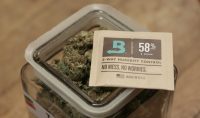
Right now, Boveda has two-way humidity controllers set at 62%, 58% and soon they will have an under 50% option (appealing to the Colorado market). Using a device to accurately control the humidity level in cannabis can help growers and retailers prevent contamination from the biggest source of concern: water. “There is a ton of talk about pesticide contamination, but the reality is even if the flower is grown organically, you can still encounter safety problems when the moisture level is off,” says Rutherford. From a medical perspective, keeping dried cannabis at an ideal humidity level helps stabilize the properties of it, maintaining the medical efficacy. “If this is something people use for a medicine, it should be at an ideal condition,” says Rutherford. “Quantifying and understanding what humidity level is right is what we are helping accomplish.” For patients with compromised immune systems that need safe, consumable cannabis, a humidity control device can help prevent contamination and ensure a certain degree of safety in their medicine.

On a retail level, the packaging insert can extend the shelf life of products and maintain the quality. “The world has known for decades that 70% humidity level for cigars is ideal,” says Rutherford. “The cannabis world hasn’t had a moisture standard or understanding of what is proper until very recently.” That 62% humidity level determined after commissioned testing is a good standard to reference when determining your own ideal humidity level.

Growers also recognize the value in keeping their cannabis at the right humidity level beyond the obvious safety concerns. “As cannabis dries out and loses its humidity, the overall weight is reduced,” says Rutherford. “Precision humidity control gives a uniform humidity throughout the flower, leaving out the mystery for growers and maintaining weight, meeting the nexus between quality and weight.” According to Rutherford, growers have an incentive to package their cannabis a little on the wet side. “Because it weighs the most when wet, it is sold by weight and it will lose moisture over time, the incentive to deliver product that will dry out over time- that can create a lot of problems by having high moisture content.” For the first time ever, people can dramatically extend the shelf life of dried cannabis, instead of letting products naturally deteriorate and go bad over time. “For the first time ever, it allows you to extend the shelf life of dried cannabis for aging cannabis like wine and cigars,” says Rutherford.
The data from that Cannabis Safety Institute report, collected by AquaLab and CannaSafe Analytics using a vapor sorption analyzer, shows a cutoff of 65% relative humidity. These findings give the industry a lot of guidance in working to reduce the amount of yeast and mold contamination, says Bob Esse. “If your dried cannabis is above 65% relative humidity and you are a retailer, you should send that product back to the grower because it wasn’t dried properly, is vulnerable to mold and yeast spores and thus not safe for the consumer,” says Esse.

Pointing to the report, Esse says foods with high moisture content are able to support robust microbial population growth, which can lead to bacterial and fungal infections. “Water activity is what impacts whether microorganisms can grow or not.” By using two-way humidity control technology, growers and retailers can mitigate risks of contamination, improve quality and extend the shelf life of their products.