Tag Archives: operations

Cultivation facilitiy

A Case for Compartmentalization: Problems with Perpetual Harvest Models in Cultivation, Part I

By Adam Koh
7 Comments
Cultivation facilitiy

When newspapers and television run a cannabis story, it is frequently accompanied by photos or video of vast, cavernous warehouses filled with veritable oceans of plants. Photos used to illustrate stories in the New York Times and Denver Post serve to illustrate this point.

Cultivation facilitiy
Photo credit: Lawrence Downes

This type of facility design is sometimes referred to in the cannabis industry as a “perpetual harvest” model. This is because plants are harvested piecemeal – one row at a time, for example – with new plants ready to flower replacing the recently harvested ones. In this model, flowering plants of various ages occupy the same space and the room is never completely harvested and empty, hence the “perpetual” moniker. This is in contrast to more compartmentalized facility designs, in which flowering plants are segregated in smaller groups in various rooms, which are then harvested completely before the room is cleaned and new plants ready to flower replace the previous ones.

The perpetual harvest setup appears impressive and lends itself well to portraying the volume of production being achieved in large facilities. This is likely why I have seen such models, or similar ones, copied in other states. Prospective entrants to the industry have also approached my firm with such designs in mind for their cultivation facilities. However, we generally advise against the perpetual harvest facility model, as this type of design imposes serious difficulties upon operators. Problems arise primarily in the areas of pest and contamination mitigation, ability to properly observe pesticide use and worker safety guidelines, and inefficiencies in lighting and HVAC usage. The problems noted are linked to the perpetual harvest design and can be mitigated with increased compartmentalization. Before getting to my recommendations, however, lets run down the issues created by the perpetual harvest model.

AdamKohcultivation
Photo credit: Denver Post

Lighting and HVAC Inefficiencies

In many photos I see of perpetual harvest facilities, the ceilings are extremely high, as are the light fixtures in most cases. This is likely the result of one of the main perceived advantages of such spaces, which is that they require minimal construction prior to getting up and running. There are no walls to be put up or ceilings lowered, and the lack of compartmentalization makes running wires and ducting much easier.

However, whatever capital was saved in initial construction will likely be burned up by increased ongoing operational costs. High ceilings such as those in the above photos mean more cubic footage that climate control systems must cool or heat. Additionally, due to the great height of the light fixtures, plants are not getting the most bang for their buck, so to speak, compared to designs that allow lights to be lowered appropriately to provide optimal intensity and spectrum. Double-Ended High Pressure Sodium (DE HPS) lamps are probably the most common type of lighting in use for flowering by commercial cannabis cultivators today, and they are ideally situated about four feet above the canopy when running at full capacity.

For businesses aiming for a no-frills production model with minimal attention to the light management needs of individual cannabis cultivars (or strains, as they are commonly referred to), then this consideration may be moot. However, those operations attempting to produce the highest-quality flower and plant material know the value of proper light management, as well as the fact that some cultivars respond differently than others to intense light. Indeed, I have observed cultivars that produce more when light intensity was decreased, while others thrived under intense light that would have seriously damaged others. This makes the one-size-fits-all approach to light management I’ve seen in most perpetual harvest designs generally detrimental to the quality of the final product, in addition to using the same amount of energy, or more, to achieve that lower quality result.

Difficulties in Pest and Contamination Mitigation

Such a design makes it easy for a small pest incursion to become a full-blown infestation. Because plants about to be harvested are sharing space with plants just beginning their flowering process, this means that both current and future harvests will be affected, or even lost entirely if the pest problem is severe. Having plant groups of different ages share the same space is generally unadvisable. This is because older plants, particularly those close to harvest, are weaker and more susceptible to pests by virtue of the fact that their life cycles are nearing an end. On the other hand, a more compartmentalized facility design provides physical barriers that can contain mites and mildew spores to some extent, limiting the damage done by individual pest incursions.

One of the essential tasks in an indoor cultivation operation is sterilizing just-harvested spaces to ensure that the subsequent run gets off to a clean start. This task could conceivably be performed in a perpetual harvest model; say, for example, trays, trellis frames, and other equipment are scrubbed after a row has been cut down and removed for drying or processing. However, due to the fact that there are always other plants in the room, it seems impossible for any plant group to get an assuredly clean start, as other plants may be harboring bugs, mold spores, or viruses, despite not showing signs or symptoms. The presence of plants also eliminates the possibility of using cleaning agents such as bleach, which gives off harmful fumes, but is sometimes necessary to completely sterilize an area that might have previously experienced some amount of powdery mildew or botrytis.

In Part II of this series, I will discuss some problems with pesticide use and worker safety regulations as well as provide recommendations for compartmentalization in cultivation facilities. Stay tuned for Part II of A Case for Compartmentalization: Problems with “Perpetual Harvest” Models in Cultivation, coming out next week.
goodchem.exter

Dispensary Best Practices: A Q&A with Stephen Spinosa

By Aaron G. Biros
1 Comment
goodchem.exter

Stephen Spinosa, vice president of retail operations at Good Chemistry, has over seven years of experience working in the cannabis industry in the operation and management of licensed dispensaries.

stephenspinosa1
Stephen Spinosa, VP of retail operations at Good Chemistry, delivering the keynote at Dispensary Next

He was previously an inventory manager in a 7,000-square-foot medical marijuana cultivation in Colorado. Spinosa is currently part of the team at Good Chemistry dispensaries, which has locations in Aurora and Denver, Colorado. He oversees staff training, state and local regulatory compliance and seed-to-sale inventory tracking.

Spinosa recently delivered a keynote presentation at the Dispensary Next Conference in Portland, Oregon titled “From Waiting Room to High-End Retail Experience: How Dispensary Culture Has Changed from 2009 to Now.” He discussed the rise of high-end experience and gave tools for dispensaries to improve retail operations.

In the presentation, he covered supplier quality, security, tiered pricing, inventory tracking and safety issues. Much of what he discussed revolved around the consumer experience and how important the culture at a dispensary is for the buying experience. After his keynote presentation, I sat down with Spinosa to discuss the customer experience, consumer education and safety and sales trends.

Cannabis Industry Journal: What are some of the key areas where dispensaries can improve the quality of customer experience?

Stephen Spinosa: Ultimately, the dispensary experience is like any retail experience. Good Chemistry’s staff is always friendly, smiling, welcoming and helpful to all customers that walk through our doors. Having employees who are experts at providing advice to any user level, and who are extremely knowledgeable on each strain and edible effect is extremely important to us. It is all about making the customer feel comfortable in their experience, especially for novice users who may feel timid when entering a dispensary for the first time.

goodchem lobby
Smiling employees greet customers in a clean environment

Good Chemistry’s high-end retail experience includes our up-to-date LED menu screens that present our daily flower menu. That may seem like common sense, however, you would be surprised how many dispensaries do not have a flower menu for their customers to peruse.  It helps the customer navigate through all the strains that we offer, and adds to the overall retail experience. We offer twenty or more strains every day.

Additionally we do not have an armed guard hovering at the entrance, making our guests feel uncomfortable. We have highly sophisticated security, like every dispensary, but we’ve left out this intimidating and unnecessary aspect.

CIJ: Can you discuss what you and your employees do for consumer education and safety?

Spinosa: When introducing cannabis to consumers, it is our mission to educate our customers on the correct dosage based on experience level. Our bud tenders are trained to ask a lot of questions before recommending anything. If a customer is a first timer, the bud tenders will have certain recommendations based on their experience level, such as high-CBD [cannabidiol] flower, a low THC percentage vaporizer pen, or a 1-5mg edible serving.

goodchem.exter
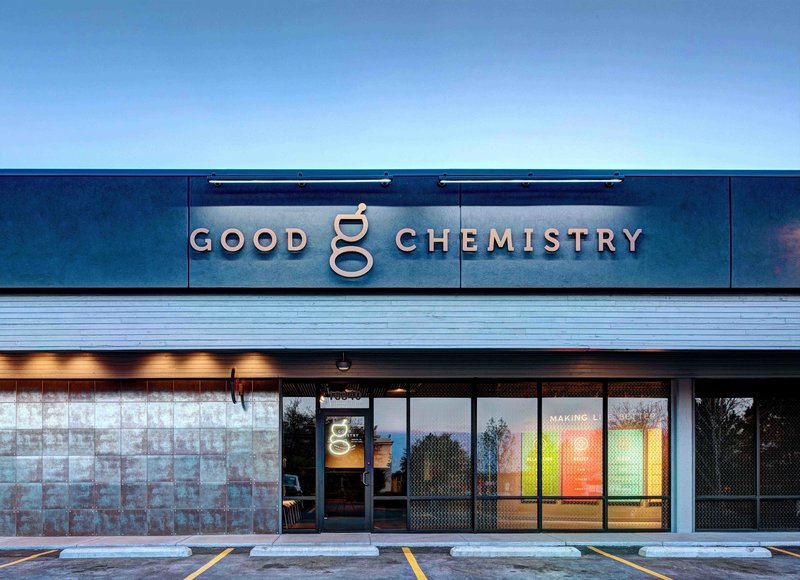
The exterior of a Good Chemistry dispensary

That said, strains of cannabis often cannot be neatly compartmentalized into sativa vs. indica, so our bud tenders also educate customers about the entourage effect, the interaction of the various compounds in marijuana to produce each strain’s unique feeling.

We have developed a pioneering category system to help our customers, whether novice or connoisseur. The system is broken down into four main categories to help consumers decide what sensation they would like to experience: stimulation, relaxation, sleep or relief. We use the four categories to guide our customers through our daily flower menu by labeling each strain with a category.

goodchemwall
This wall display shows customers the Good Chemistry categories of strains

If a customer is purchasing edibles, we provide an Edibles Education brochure from the Cannabis Business Alliance that stresses the Start Low, Go Slow motto. We also educate consumers on the difference between edibles made with butter vs. oil. Additionally, all of our third party vendor edible products for adult-use are packaged safely in 100% child resistant packaging.

It is important that our customers have a great experience, which is always possible with good guidance. A happy customer is a repeat customer. We are also well aware of the importance of educated employees. Our employees go through a formal training program, and we have monthly meetings where vendors come in and educate the employees on how to sell and dose various products.

CIJ: Can you tell me about your inventory and some consumer trends you are noticing?

Spinosa: Flower is the biggest seller, and for good reason: we have award-winning strains that are $30 an eighth, every strain, every day. Not many dispensaries offer such incredible pricing. Right now, the purchasing trend tends to lean toward the strains that have the highest THC percentage.

goodchemint
The interior of the dispensary has digital displays and ample lighting.

This may not accurately depict the best strains, because there have been findings that the entourage effect means different strains can have unique lifts, but it is definitely what the industry is seeing as far as sales trends. As far as edibles, gummies are the biggest sellers followed by hard candies, chocolate and baked goods. Lastly, concentrates such as live resin, shatter and wax have increased in popularity. Good Chemistry produces a new product called solvent-less rosin, concentrated THC oil that is produced using just heat and pressure. Rosin is currently picking up a good amount of traction, although not many dispensaries currently offer it.

Biros' Blog

Sustainability of Cultivation in 2016, Part II

By Aaron G. Biros
No Comments

In the second part of this series, I speak with Alex Cooley, vice president of Solstice, to find out what particular solutions growers can use to increase efficiency. Last month, I introduced the challenge of growing cannabis more sustainably. To recap, I raised the issue of sustainability as an economic, social and environmental problem and referenced recent pesticide issues in Colorado and carbon footprint estimates of growing cannabis.

soslticefarms_feb
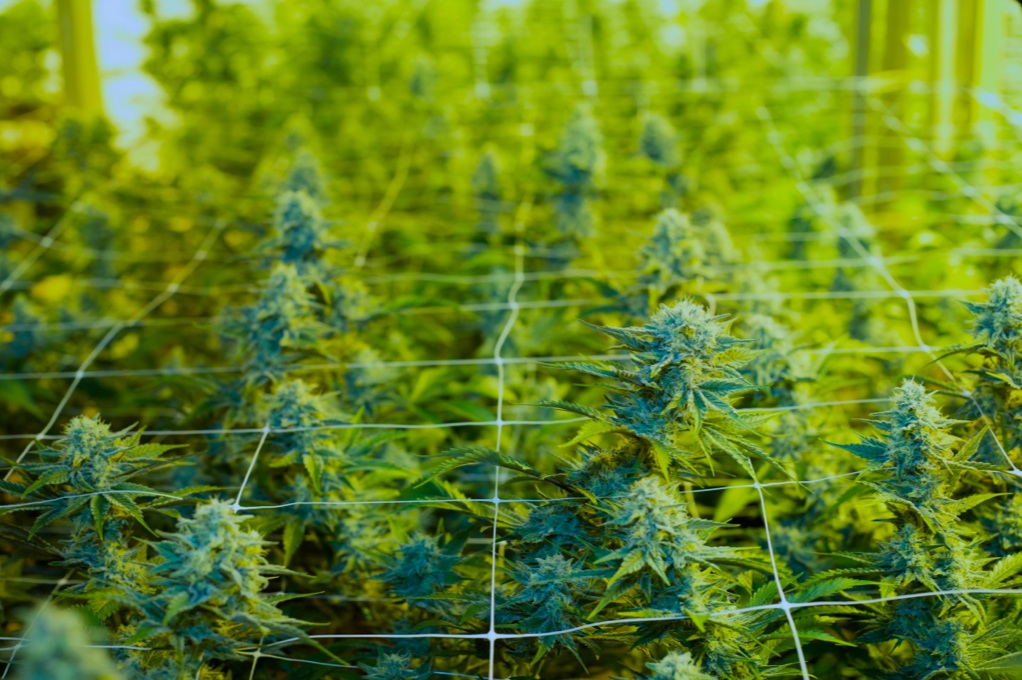
The growers at Solstice put their plants under a trellis net to increase yield.

Alex Cooley is the vice president of Solstice, a cultivation and processing business based in Washington. Solstice is at the forefront of the industry for innovating in energy, water and raw materials efficiency. I sat down with Cooley to discuss exactly what you can do to grow cannabis sustainably.

“Switching to outdoors or greenhouse will always be more sustainable than indoor, but depending on the type of facility, energy efficiency and specifically lighting should be at top of mind,” says Cooley. “Just looking at your bottom line, it is cheaper to use energy efficient lighting sources such as plasma or LED lighting, which will reduce your need for air conditioning and your overall energy consumption.”

Looking into sustainable technologies is one of the quicker ways to improve your overall efficiency. “We are big believers in VRF [variable refrigerant flow] HVAC systems because it is one of the most energy efficient ways to cool a large space in the world,” adds Cooley. “Use a smart water filtration system that gets away from wasting water by catching condensate off AC and dehumidifiers, filtering and then reusing that water.”

solsticegrowop_feb
Indoor cultivator facilities use high powered lights that give off heat, requiring an efficient air cooling system like VRF HVAC.

Utilizing your waste streams is another relatively simple and cost effective practice to grow cannabis sustainably. “Our soil and biomass goes through a composting company, we recapture any of our waste fertilizer and runoff for reuse,” says Cooley. “We try to use post-consumer or fully recyclable packaging to reduce what would go into the waste streams.”

So some of the low hanging fruit to improve your bottom line and overall sustainability, according to Alex Cooley, include things like reusing materials, composting, increasing energy efficiency and saving water. These are some of the easily implementable standard operating procedures that directly address inefficiency in your operation.

soslticefarms_feb
The tops of plants are beginning to flower in this Solstice indoor facility.

In the next part of this series, I will discuss Terra Tech’s approach to sustainable cultivation, which utilizes the “Dutch hydroponic greenhouse model” on a large scale growing produce such as thyme and basil, but are now taking their technologies and expertise to the cannabis industry. I will also discuss the benefits of using a third party certification, Clean Green Certified, to not only help grow cannabis more ecofriendly, but also market your final product as such. Stay tuned for more in Sustainability of Cultivation in 2016, Part III.