Tag Archives: quality

An MSO’s Perspective on the New York Market

By Pam Chmiel
No Comments

At the recent Business of Cannabis event in New York, Robert Sciarrone, Chief Revenue Officer at Curaleaf, shared an MSO’s insider view on why he believes New York is poised to become the best cannabis market on the planet.

Sciarrone began by reflecting on his early years as a cannabis-focused venture capitalist. Through his firm, Measure 8 Partners, he has deployed more than $550 million across 20-plus cannabis companies globally, including dispensaries, delivery services, and technology platforms, with investments spanning California, Arizona, Nevada, Canada, and Europe.

After joining Curaleaf two and a half years ago, recruited by Executive Chairman Boris Jordan, Sciarrone transitioned from investor to operator, now overseeing revenue across 18 states in both retail and wholesale. He admitted the operational grind has given him a new respect for the business side of cannabis, but emphasized that passion for the plant and its customers remains the heart of the industry.

Looking back on the “freewheeling” investment era of 2019, when $100 million deals were being done daily, Sciarrone contrasted that speculative period with today’s market. “California’s day is over,” he declared, suggesting that the West Coast market’s oversaturation and regulatory struggles have created space for New York to lead. With its cultural influence, economic strength, and growing consumer sophistication, Sciarrone believes New York can set the standard for how cannabis culture and business shape the global industry.

As a born-and-raised New Yorker, Sciarrone expressed deep pride in being part of that evolution: “It’s my passion to be here and watch this market unfold.”


Curaleaf’s Early Bet on New York

Sciarrone highlighted Curaleaf’s early commitment to the New York medical market. The company was among the first Registered Organizations (ROs) to invest heavily in infrastructure, opening four medical dispensaries and building a state-of-the-art cultivation facility in Ravena, just south of Albany, in 2018. “It’s one of the nicest cultivation centers I’ve seen, he said, noting that Curaleaf “believed in New York early.”

However, as the state prepared to transition to adult-use, Sciarrone recalled a divide that formed between corporate medical operators and new entrants under the CAURD program. “The market was divided, and it never should have been, he said. Fragmentation, he argued, weakened the industry’s collective voice at a time when it needed to work together to navigate taxes, regulations, and constant policy changes.

Today, Sciarrone sees signs of progress. “The market is starting to slowly come together, he said, adding that Curaleaf’s approach in New York is focused on wholesale partnerships with other retailers.

He also acknowledged that Curaleaf had to earn back credibility on product quality. “When I came in, Curaleaf didn’t have a lot. People probably remember that our product quality was lacking, he admitted. Like many MSOs in the early days, Curaleaf had relied on scale and storefronts to drive sales. But as the market matured, so did the company’s mindset. “We’ve had to think critically about our brands, about what we’re putting in the jar—the genetics, the nose, the story, Sciarrone said.


“We’ve had a complete 180 in Curaleaf’s journey, and it started with our efforts in New York.”


As operators unite around shared goals of keeping stores open, expanding access, and stabilizing supply, Sciarrone said New York’s cannabis industry is beginning to find its footing. He believes collaboration between the different groups has made it one of the fastest-growing and healthiest markets in the country.


“If we stay the path,” he concluded, “New York will be the biggest cannabis economy in the United States.”


The Potential of New York Brands

Sciarrone also shared his perspective on the potential of New York cannabis brands. He noted that while West Coast brands were once expected to dominate, consumer preferences differ by region. New Yorkers are proud of their local products, and homegrown brands have a strong story that resonates with consumers, budtenders, and store owners.


“California brands have cachet, but we have our own stories to tell in New York, he said.


While the consistency and quality of California brands give them an advantage in some markets, Sciarrone believes that as New York cultivators and operators collaborate, local brands will thrive. He highlighted that formulated products, such as edibles and beverages, may be one area where California brands see success, but in flower, New York brands have the edge.


“The more that cultivators open up their doors for brand partnerships, the more opportunity there is for some really great brands to merge, and we will see true New York brands make a run at it, he said.


Track and Trace, the Illicit Market, and the Path Forward

Sciarrone also addressed the upcoming New York track-and-trace system, expected to be implemented in early 2026. He sees it as a crucial step for a fair and regulated market. “Anybody operating in New York or any regulated market should be operating with a license, he said. Without track and trace, unlicensed operators have easy access to the market, avoiding taxes and regulations, which undermines legitimate businesses.

The system, he explained, will provide relief to licensed operators, including microbusinesses, microprocessors, and outdoor farms, by helping them move products more efficiently and transparently. It will also give consumers confidence in the origin and safety of the cannabis they purchase. While he acknowledges that some will try to work around the system, he emphasized that track and trace is a necessary step toward maintaining a healthy, fair, and thriving market.


“Listen, it’s a step in the right direction, he said. “It will help us keep a really great economy going and prevent giving people a free swing in the market.”


Price Compression and Market Equilibrium

On the topic of pricing, Sciarrone noted that predicting supply and demand in New York is challenging. The market is growing rapidly, but price compression is a reality in a sector where cannabis prices are not regulated. “Price is going to come down, he said, and any market that expects stable high prices has never existed because supply, investment, and competition constantly influence it.

He emphasized the importance of building confidence among local operators. Micro and outdoor farms in New York are producing good-quality products. As the local supply base stabilizes without too much out-of-state competition, operators may feel more comfortable investing in cultivation and expanding capacity. “We’re hopeful that people will see it as investable, he said. Curaleaf itself continues to invest carefully, weighing expansion decisions against market uncertainty. Stabilization of supply, he believes, will ultimately support a healthier, long-term market.

The Hemp Equation

Sciarrone also addressed the emerging hemp space, where Curaleaf has begun experimenting with beverages and a small retail presence in Florida. While he does not oversee the hemp business directly, he emphasized its significance and complexity. The hemp market has reached $30 billion in value, growing faster than the regulated cannabis channel. It is widely available in convenience stores and major retailers, which means it is attracting new consumers who might otherwise enter the regulated market.


“The hemp channel is stealing our new customers, Sciarrone said.


Many consumers who are trying cannabis for the first time are turning to hemp beverages and edibles instead of licensed dispensaries. Large investments and strong lobbying by farmers have accelerated this growth, creating a reality that cannot simply be legislated away.

Sciarrone believes that the regulated and hemp industries will eventually converge, whether through national or state-level licensing. Curaleaf’s strategy is to understand the hemp market while protecting the regulated channel, where its distribution assets and customer relationships reside. “We will fight to make sure we protect the regulated channel, he said, noting that brand work and product development, particularly in beverages, are ongoing priorities to maintain market share.

Treating Cannabis Like A Fine Wine

By Sean Creamer
No Comments

The experience in both wine and cannabis starts with ritual: swirling, inhaling, letting heat or air coax the plant’s chemistry to life. Where wine has long relied on sommeliers to guide that moment, cannabis has spent decades without an equivalent voice to explain how cultivation, curing, and preparation shape what a consumer feels.

The emergence of the Ganjier is an attempt to fill that gap. Created by a group of cultivators, hashmakers, historians, and retailers, including figures like Kevin Jodrey, Swami Chaitanya, Nick Tanem, and Derek Gilman, the Ganjier Council is designed to professionalize cannabis evaluation and service. Think of it as the cannabis world’s version of the Court of Master Sommeliers: a certification built around sensory training, product knowledge, and the language needed to communicate quality.

Reverence for process is exactly what the Ganjier certification program aims to formalize. Kevin Jodrey, the renowned cultivator and original architect of the curriculum, describes Ganjiers as interpreters. “Ganjiers fit into the conversation as translators, somebody who clarifies language, so that when you say something to me, and I say something to someone else, it means the same thing.” It mirrors the work of sommeliers, a comparison Jodrey makes explicitly: “That’s really what sommeliers do, they translate wine into language that allows people to understand what to expect.”

As legalization accelerates and price compression pushes products toward uniformity, this shared language, the ability to turn sensory experience into common understanding, may be cannabis’s most powerful differentiator.


Meet the Experts Teaching the World to Taste Cannabis like Fine Wine

The modern Ganjier began as something far more personal. Jodrey recalls its earliest moment taking shape at home. “The Ganjier was invented in my kitchen. My son came up with the name, he said, ‘Dad, you’re a Ganjier, you’re a cannabis culturalist. You’re all things cannabis.’” What started as a family nickname soon resonated more widely. As legalization gained momentum, Green Flower founders Max Simon and Derek Gilman approached Jodrey with a proposal. “They came to me and said, Hey, Kev, we have an idea that we would like to create a program that highlights the nuances of cannabis in a way that allows the complex world to be brought to light so that customers, new people, consumers can see the picture in a way they haven’t.”

Shaping that clarity took work. Over several years, Jodrey and a team of eighteen practitioners debated how to define cannabis quality in a way that could stand the test of time. “It allowed the 18 of us, over the course of  7,000 hours in a multi-year period, to brawl it out and determine how to look at something in an objective manner. It was an idea of how to create cannabis connoisseurship that has a hundred-year life.”

Tanem, a California-based hashmaker and founding Ganjier Council member, remembers how the Council ultimately formed around that mission. “Derrick Gilman collected a number of us professionals that had skill sets in different areas throughout the industry, from breeding to cultivation to the law to history to extraction, you name it. The goal was to cover all bases via a program that would teach what quality is in cannabis. “People don’t really know how to assess quality, and so that’s a big part of what the Ganjier does,” said Tanem. “We really give a full background of the industry, from cultivation to law to the history to extraction to customer interaction protocols, etc.”

The path cannabis is now traveling mirrors the evolution of other connoisseur markets. Jocelyn Sheltraw, founder of The Budist, a cannabis scoring and education platform, notes that wine, beer, and coffee all matured through codification. “It’s just understanding how other connoisseur markets have evolved, and really studying the history of how consumers come to appreciate products. Whether you look at wine, beer, or coffee, they all use the same 100-point system created by Robert Parker in the late 1970s and early 1980s.” 

She emphasizes that no scoring system gains traction without guidance for interpreting it. “It took the Sherpas, it took the educators to translate that to consumers across all of those industries.” Competitions and community forums also played a role. “Competitions were a major part of drawing light on quality, and the oldest wine competition in the United States actually dates back to the 1850s.” 

Cannabis is now following the same arc, with its own judging culture, from legacy region cups to large-scale events like the upcoming MJBiz Con awards on December 2nd-5th, which bring brands, cultivators, and reviewers under one roof to evaluate products on shared terms. Cannabis connoisseurship is now entering that same phase: a shift from tradition held in pockets to a shared, teachable system of evaluation. The Ganjier is its first attempt at building a unified language.

Training and the Craft of Evaluation

If the origins of the Ganjier reflect cannabis culture’s past, the curriculum represents its future. The program is designed to function much like formal wine education, combining sensory discipline, technical learning, and service training. Students work through extensive online modules and then take part in in-person instruction led by multiple council members with different palates and professional backgrounds. 

Tanem describes the value of that diversity. “Students who come through the Ganjier program not only do two days of in-person training, but they also do anywhere from two weeks to two years of online training where they go through all of the different aspects of the industry.” Once students come out for the in-person class, there are four or five instructors or council members who provide different opinions and education. “For instance, from Swami [Chaitanya], who wants a smoother smoke and a well-cured product he calls vintage, to people like myself who have the ears to the streets,” said Tanem. “We have a lot of council members that are in retail today, in cultivation, in extraction. Having that variation in how we present what quality is, because quality can be subjective.”

A major part of that training is undoing the industry’s fixation on THC percentage. “We teach away from promoting high THC products,” Tanem says. “People want the highest THC, and we really want to educate people against that. We talk about the other volatile compounds, from sulfurs to esters to terpenes. There is a lot more to cannabis than just high THC numbers.”

The structure for this deeper analysis comes through the Systematic Assessment Protocol, or SAP, the sensory backbone of the curriculum. Jodrey explains it as a guided way to evaluate cannabis in stages. “The SAP is basically a digital scorecard with criteria that, when you touch the category, allows you to understand what this category is and how we look at it.” First up, according to Jodrey, is aroma, followed by appearance, then combustion or flavor, and then experience. The approach distinguishes between objective traits and subjective preferences. “Very volatile cannabis indicates good storage and good production,” he notes. “But a variety with low aroma might be perfect for someone who lives with their family, and the smell of pot offends them.”

Even outside the formal Ganjier curriculum, people who cultivate, process, and evaluate cannabis are running into the same limitation: combustion obscures the very subtleties the SAP is designed to measure. Former cultivator and current PAX Labs VP of Marketing Justin Tacy says this was a constant frustration long before he ever entered the device world. 

“As a cultivator, it was always frustrating to have people take what I spent years and years developing and just throw it in a bong and rip the whole gram in one go,” said Tacy. “That gives you the psychoactive effects, but it doesn’t really give you appreciation for the nuances around different terpenes and flavors.” 

Glassware and devices in cannabis are a crucial vehicle for connoisseurship. The same way wine glass design affects aroma delivery and perception, the tools used to consume cannabis can either sharpen or blunt the sensory experience. 

“It [dry air vaporization] really allows you to taste the genetics the way the cultivator intended, and pick up some of those more nuanced effects that only come from vaporizing certain terpenes versus combusting them,” Tacy noted. 

The point underscores a larger shift within cannabis connoisseurship, which is how you smoke matters. Just as glassware shapes how wine expresses its structure, the way flower is heated determines which compounds rise to the surface and which are muted or lost. That emphasis on controlled, repeatable sensory experience is exactly what the Ganjier SAP aims to formalize. 

“Wine is picking up complexity and notes and creating identification so people can understand,” Jodrey says. “We provide that, but we also provide other factors that wine does not have, which are the sustainability of aroma and penetration of aroma.” 

Behind the scenes, the Council built the curriculum piece by piece. “We broke this thing into pieces: cannabis science, law, history, retail, cultivation.” The team then went and found the people who fit into all those pieces, enabling the creation of the curriculum. “The Ganjier is a book; we all wrote a couple of chapters each in this book,” said Jodrey. “We created a common respect that was collaborative, and it was a golden time to create a language that we knew would hold up.”

That language now feeds into the broader connoisseurship ecosystem. Sheltraw describes the relationship between the Ganjier program and consumer platforms like The Budist. “Ganjier is the educational platform, equivalent of the sommelier program. Budist is the commercial platform where you apply that knowledge. Budist would then be the Wine Advocate, or Budist would be Vivino.” She emphasizes the importance of consistent judging methods. 

The SAP supplies the structure behind those evaluations. “With the SAP, there are 50 different data points. You are looking at trichome density, bud texture, and the complexity of flavors and aromas. Just to assess one flower can easily take over an hour.” And at the consumer level, the system becomes more approachable. “At Budist, we still use that same 100 point system, like all of these other major industries, but simplified for consumers. There are really four key attributes: aroma, appearance, flavor, and effect.”

Together, these elements turn the Ganjier curriculum into something much larger than a training course. It is a shared methodology, one that moves cannabis evaluation away from potency myths and toward a transparent, structured language of quality.

How Ganjiers Will Reshape Retail, Cultivation, and Brand Strategy

The rise of the Ganjier is beginning to reshape how cannabis is bought, taught, and experienced. What started as a sensory certification is now influencing every corner of the industry, from retail counters to events to tourism. 

“We are now having Bud Bars at weddings and events instead of alcohol bars, where Ganjier would be the budtender at a Bud Bar at a wedding,” Tanem said. “We are also seeing Ganjier in so many different spaces and aspects of the industry from buyers for dispensaries to QC to the head of distro, the head of sales departments, lead cultivation techs, and femmers [A femmer is someone who carries out the processes used to create feminized cannabis seeds, typically through controlled stress techniques, colloidal silver sprays, or silver thiosulfate (STS) applications that suppress male flower development.].  Tanem notes that recreational smokers and industry participants want to become Ganjiers for a whole host of reasons. 

As such, the credential has begun to create its own global community. “Every single time I go out in the field, whether I am in Hawaii or Barcelona or Berlin or Thailand, I will pull up at an event, and there are other Ganjiers there, and it is a congregation. They know each other; they can build from that,” Tanem says. These gatherings reinforce a shared standard, which then filters back into consumer education.

But even as connoisseurship gains ground, most consumers still operate via narrow decision-making looks built around potency, price, and whatever happens to be familiar. Without time or instruction at the point of sale, people default to what they know, a pattern that obscures the meaningful aspects of quality. Tacy, who spent a decade cultivating flower before joining PAX, sees this as one of the industry’s largest hurdles. 

“The market rushed to easy-to-understand numbers, high THC, weight, and maybe the color of the product, ” said Tacy. “Those are driving a lot of the industry versus what’s the value and experience you’re getting for that dollar.”

The point echoes what Ganjiers confront daily: as long as potency remains a stand-in for quality, the nuances cultivators labor to express remain out of reach for consumers. 

Jodrey frames the market context driving this need for guidance. Disposable income controls the purchase. Ninety to ninety-five percent of all purchases in cannabis are fundamentally price-driven,” he said. Education becomes the tool that helps consumers choose based on fit rather than strength or discount. Retail environments are already adjusting. “What you have to do is create a situation that lets people feel relaxed, and Ganjiers help you understand what is available in the world of cannabis so you can make better choices. That changes entire businesses,” said Jodrey. 

This vision aligns with the broader consumer landscape that Sheltraw sees emerging. “It will be very similar to what we see in wine. You are going to see your Ganjier working at cannabis retail, and as tourism evolves, you will see Ganjiers at farms educating consumers.” That presence will be omnichannel. “Wherever the consumer is, whether it is digital, social, dispensaries, or farms, we are going to see Ganjiers assisting customers.” Consumer knowledge is limited, and people are doing what they’ve done in the past; consumers are purchasing based on price point and THC level. Professional evaluation helps bridge that gap, and brands are beginning to realize that connoisseurship can also be a strategy. “Brands in cannabis recognize that this can be the impact of what we are doing to get out of this price and potency trap,” says Sheltraw. 

In a market where sameness is easy and differentiation is hard, the Ganjier offers something rare: a way to raise the value of cannabis through understanding, story, and experience.

Cheers!

The same rituals that open a glass of wine or a jar of cured flower remind us that tasting is as much interpretation as it is sensation. 

As cannabis moves from prohibition to professionalism, the Ganjier represents the shift from novelty to craft, from a scattered vocabulary to a shared one. Nick Tanem sees that future taking shape as new markets mature and consumers search for guidance on quality. Kevin Jodrey frames it even more directly. 

“The Ganjier is just really meant to create a language, fundamentally a language, that everyone speaks from store to store. So that when you say a strain does this, it translates to that somewhere else. It is language. It is understanding.” In that understanding lies the foundation of cannabis connoisseurship espoused by the Ganjier Council.

Get your Ganjier certificate here.

Hear more from Kevin Jodrey on the Inovating Cannabis Podcast.

Hear more from Nick Tanem on the Innovating Cannabis Podcast.


The Shift Toward Stability Testing for Cannabis Products

By Liz Cornish
No Comments

Cannabis products are increasingly held to the same standards as food and pharmaceuticals, and that means verifying how their potency and composition change over time. Cannabis stability testing provides the data needed to establish reliable shelf life, confirm product consistency, and guide formulation optimization for improved stability and performance. 

Cannabinoids and terpenes are complex, naturally derived compounds that react to light, heat, oxygen, and humidity. Even slight variations in these factors can alter potency or flavor. By conducting cannabis shelf life studies, manufacturers can determine how long a product maintains its intended properties under defined storage conditions. 

Why Cannabis Stability Testing Is Necessary 

Unlike synthetic pharmaceuticals, cannabis-based formulations are highly sensitive to environmental conditions. During processing, exposure to air or high temperatures can cause degradation of cannabinoids and oxidation of terpenes. Packaging materials also play a role—improper barriers can accelerate loss of aroma and potency. 

To quantify these effects, samples are stored under controlled conditions such as: 

  • Long-term studies: 25°C ± 2°C / 60% RH ± 5% RH 
  • Accelerated studies: 40°C ± 2°C / 75% RH ± 5% RH 

Products are tested at specific intervals for changes in potency, moisture, and appearance. The results support expiration dating, regulatory compliance, and product reliability across batches. Over time, stability datasets also reveal how formulation or packaging changes affect performance, helping manufacturers continually refine production methods. 

Temperature and Storage: The Role of Cold Chain 

Temperature control directly affects cannabinoid and terpene integrity. Fluctuating conditions during storage or transport can cause emulsion separation, texture changes, or reduced potency. 

For high-value products, a cold supply chain helps maintain consistent quality. Refrigerated or temperature-monitored storage slows degradation, stabilizes emulsions, and preserves the sensory characteristics that distinguish premium formulations. 

Although cold chain infrastructure can be costly, it is becoming a defining factor in cannabis quality assurance as brands compete on consistency and shelf stability. Stability study data can guide cold chain validation—determining the temperature range at which a product remains within specification. Those findings also support labeling statements such as “store below 25°C” or “refrigerate after opening,” allowing producers to base handling instructions on verified evidence rather than assumptions. 

Terpene Testing and Product Stability 

Terpenes are among the most volatile compounds in cannabis and degrade faster than cannabinoids. Their loss can indicate declining freshness long before measurable changes in potency occur. 

Despite their importance, terpene data are often missing from Certificates of Analysis (COAs). The omission isn’t usually due to a lack of interest, but rather to the complexity and cost of additional testing. 

Adding Terpene Profiling to Cannabis Potency Testing 

Integrating terpene profiling into cannabis potency testing programs offers deeper insight into product quality, aroma stability, and freshness.
However, accurate analysis requires: 

  • Advanced analytical instrumentation such as GC-MS or GC-FID 
  • Specialized calibration standards for quantifying individual terpenes 
  • Consistent testing intervals to track degradation patterns 

Interpreting Terpene Stability Data 

Testing terpene levels at regular intervals—monthly for accelerated studies and quarterly for long-term studies—reveals how quickly compounds evaporate or oxidize. Changes in terpene ratios (for example, limonene relative to myrcene) can identify which compounds drive shifts in aroma or flavor and signal the onset of degradation. These findings inform packaging design, storage recommendations, and shelf-life targets across product lines. 

Toward Standardized Terpene Stability Metrics 

As analytical capabilities advance, terpene stability metrics are expected to become part of routine quality control. Standardized testing will promote transparency, consistency, and product differentiation as consumers become more discerning about formulation and freshness. 

Formulation Optimization and Shelf Life Extension 

Stability data often reveal opportunities for formulation optimization—adjusting the balance of active ingredients, excipients, or stabilizers to enhance product longevity. 

Factors influencing cannabis product stability include: 

  • Excipient selection: Emulsifiers, antioxidants, and carrier oils can affect degradation rates. 
  • Packaging materials: Glass, plastic, and multilayer films offer varying levels of protection from oxygen and light. 
  • Moisture control: Desiccants and humidity-resistant containers can prevent microbial growth. 

Refining formulations based on empirical data extends shelf life, minimizes waste, and supports consistent consumer experiences across product lines. Effective formulation optimization bridges product development and regulatory compliance by ensuring each new formulation undergoes verification before scaling for the market. 

Designing a Reliable Cannabis Stability Program 

Effective cannabis stability testing starts with asking the right questions: 

  • Which environmental factors most affect each formulation? 
  • How should sampling intervals be defined? 
  • What level of potency loss is acceptable for regulatory or label claims? 

A comprehensive program typically includes: 

  • Accelerated testing for early insight into degradation trends 
  • Long-term studies that confirm real-world performance 
  • Validated analytical methods, such as HPLC for cannabinoids and GC-MS for terpenes 
  • Robust documentation of storage conditions, results, and analytical methods 

Data trending across studies allows manufacturers to identify recurring patterns in potency loss or terpene volatility. Predictive models based on historical data can estimate shelf life for new formulations with similar matrices, reducing time-to-market. These programs should follow the guidelines in ICH Q1A(R2) and align with GMP and ISO/IEC 17025:2017 standards to ensure data integrity and reproducibility. 

Connecting Stability Testing to Product Safety 

As cannabinoids and terpenes degrade, they can form secondary compounds that alter efficacy or safety. Moisture fluctuations may also allow microbial growth, which presents additional health risks. 

For infused products, ingredients such as fats, sugars, or botanical extracts are subject to oxidation or spoilage. Monitoring these variables through stability testing enables producers to identify early signs of degradation and take preventive measures, thereby protecting consumers and supporting regulatory compliance. 

Long-term datasets also support post-market surveillance by providing reference points when investigating product complaints or performance discrepancies. This continuity between laboratory data and field results builds trust with regulators, retailers, and consumers alike. 

The Future of Cannabis Stability Testing 

The cannabis industry continues to evolve toward pharmaceutical-grade quality systems. Future advances in analytical equipment, automation, and data management will make cannabis stability testing faster and more precise. 

The integration of stability studies, terpene profiling, and environmental monitoring will provide a comprehensive understanding of product performance over time. Manufacturers that invest in scientific validation and continuous improvement will be best positioned to meet both regulatory demands and consumer expectations. 


The Industry Is Failing At Last Mile Cannabis Preservation

Multiple scientific studies and lab results have provided compelling evidence that terpenes and volatile metabolites in cannabis rapidly degrade when exposed to light, oxygen, heat, and time, and therefore, reduce the entourage effect that depends on a specific balance of cannabinoids and terpenes. Because of this, what the product label promises is not what the consumer is getting.

The clock starts ticking at harvest, where terpenes start degrading at a rapid rate if not handled and stored correctly. Evaporation, oxidation, or structural change can alter both the composition and balance of compounds.


Fragile Aromas, Fading Effects: The Science of Terpene Loss

Terpenes, the aromatic compounds responsible for cannabis’s distinctive scent and effects, are highly sensitive to environmental stress. Studies show that these same conditions also degrade cannabinoids like THC, which converts to the less potent CBN over time. A 2021 study in the Journal of Cannabis Research found that flower stored at higher temperatures lost both THC and terpene content, while a 2024 Scientific Reports study revealed that UV light can degrade THC and CBD within days.

Each terpene reacts differently to stress. The lighter ones, like pinene and myrcene, start to fade at even modestly warm temperatures. Mid-weight terpenes such as limonene (that bright citrus note) and linalool (the floral lavender scent) hold on a bit longer but still break down when air or light gets in. Even the heavier, more stable compounds—like caryophyllene and humulene—eventually oxidize when storage conditions are poor. As those delicate aromas disappear, so does much of what makes each strain unique, subtly changing the flavor, scent, and effects of the flower.


Beverages Under Attack

Cannabis-infused beverages are particularly susceptible to potency loss if not properly stored. One primary cause is oxidation, where THC degrades into cannabinol (CBN), a compound with significantly less psychoactive effect. This transformation can occur rapidly in beverages due to the increased surface area of emulsified droplets and the presence of oxygen in the liquid. For instance, a study by Vertosa demonstrated that exposure to light and oxygen can lead to a potency loss of up to 8 percent over 12 weeks in specific formulations.

Additionally, physical interactions between the beverage’s emulsion and packaging materials can exacerbate potency loss. Hydrophobic emulsion droplets may adhere to hydrophobic surfaces, such as the interior linings of aluminum cans, leading to a reduction in cannabinoid content over time. To mitigate these issues, it’s best to use antioxidant-rich formulations, select appropriate packaging materials, and maintain proper storage conditions to maintain the efficacy of cannabis-infused beverages.

This is why information on a certificate of analysis can differ dramatically from what a consumer ultimately experiences in the end product.

When product degradation occurs, your label no longer accurately represents the contents of the product, and now the consumer is not receiving what they were promised. The danger also here is in dosing; if THC turns into CBN and loses potency because of degradation, but the label says 10mg of THC, the customer will not have an accurate baseline for dosing.

Improper storage without temperature control can lead to microbes growing in your product, so moisture content and water activity will play a big role in sabotaging shelf stability.


Degradation in Concentrates and Formulated Products

Concentrates, vape oils, and infused products are also vulnerable, if not more so, to degradation. No matter the format, cannabinoids and terpenes are delicate molecules that break down under unfriendly environmental conditions. In fact, research shows that these environmental factors can change the very chemistry of the extract, reducing potency and altering the product’s intended effects.

According to SC Labs, which regularly tests and studies terpene stability, even “sealed” vape cartridges and concentrate jars can experience terpene evaporation and oxidation when exposed to warm or brightly lit environments. Over time, this not only dulls the aroma and flavor but can also create new by-products as terpenes and cannabinoids oxidize. Monoterpenes, the lighter, more volatile compounds that give cannabis its bright, complex aroma, are especially quick to disappear, while heavier sesquiterpenes linger longer but still degrade without proper storage.

A review by Broughton and colleagues (2023) on cannabinoid stability found that THC and CBD are highly unstable under poor conditions, and their breakdown accelerates in liquid or semi-liquid formats like vape oils and emulsions. Another study published in Chemical Research in Toxicology found that high temperatures used in dabbing or vaping can produce degradation by-products, including isoprene and benzene derivatives, especially when terpene concentrations are high. Even during extraction, terpene loss can occur; the transition from flower to concentrate often strips away the lighter aromatics, leaving a narrower and chemically altered profile.

All of this means that the degradation “clock” starts much earlier than most realize, beginning at harvest, accelerating through packaging and transport, and continuing on the dispensary shelf. Proper temperature control, opaque airtight containers, and low-oxygen environments are needed to maintain chemical integrity and preserve the original profile that the product label promises.


Packaging and Storage Impact: Terpene and THC Stability
Terpene and cannabinoid degradation in cannabis products is heavily influenced by packaging and storage conditions. The material and closure system of the packaging are critical for preservation. Semi-permeable plastics or non-airtight closures can allow water vapor and oxygen to penetrate, accelerating product degradation. Packaging specifications, such as water vapor and oxygen transmission rates, directly affect shelf life; cheaper options with higher transmission rates can drastically reduce product quality. Improper handling—leaving packages open, exposing them to heat, or subjecting them to light—can further degrade THC and terpenes, making all cannabis formats, from flower to edibles to concentrates, vulnerable to potency loss.

Retailers play an extremely important role in the preservation process. How cannabis is stored, moved, and displayed in the store can either protect or accelerate product degradation. One of the biggest offenders is the widely used deli-style showcase for selling cannabis flower, where buds are exposed to light and frequent handling, dramatically increasing the risk of terpene and THC loss. Even the most carefully cultivated and processed products can lose stability if retailers fail to maintain proper temperature, light protection, and airtight handling during storage, stocking, and transfer.

The bottom line: Protecting and preserving cannabis means keeping the supply chain cool, airtight, and out of the light, from processing all the way to the retail shelf, where it might impact the stability of your product and a consumer’s experience.


How Cannabis Moves Around the World: Inside the Global Supply Chain

By Pam Chmiel
No Comments

Global cannabis trade is well underway as legalized countries move forward to establish a supply chain infrastructure in a newly formed and rapidly evolving industry. At the forefront of transportation logistics is Cannabilog, an Israeli company led by pharmaceutical industry veteran Yoram Eshel. In an interview, he shared his playbook for building a compliant, efficient, and scalable supply chain for global cannabis import and export trade.


The Complex Web of Global Cannabis Trade Regulations

According to Eshel, not surprisingly, the global cannabis trade hinges on regulatory compliance and requires expertise to manage the movement of products across continents. Unlike pharmaceuticals, where harmonized frameworks such as those of the European Union apply across borders, cannabis regulations differ drastically from country to country.

Some nations permit imports, while others ban them entirely. Even within importing countries, the rules vary by product category. “Some will allow flower, others only oil or genetics,” Eshel explains. “It’s never a simple straight line.”

Every aspect of the supply chain requires specific licensing under narcotics laws, from cultivation and storage to import and export. Adding to the challenge is the constant evolution of these laws. For example, Thailand initially embraced its booming local market and export-friendly policies, but the new government abruptly switched course and limited cannabis use to medical purposes only. In addition, Thai producers seeking to export face roadblocks because European authorities do not recognize their local GACP certifications, which are based on “Good Cultivation and Harvesting Practices for Medicinal Plants.”

Eshel emphasizes that failing to keep pace with changing laws can be costly.


“If you export cannabis products to another country and they can’t clear customs, the shipment is destroyed. There’s no way back.”


Medical Cannabis Must Meet Pharmaceutical Standards

The second major pillar of the international cannabis trade is adherence to pharmaceutical-grade standards. “Governments treat medical cannabis as a medicine,” says Eshel. “It’s exactly like Tylenol or any other drug.”

Even though cannabis has not gone through the traditional drug registration process, regulators treat it as a pharmaceutical product, which means it must comply with strict Good Distribution Practice (GDP) requirements. That includes temperature control, data logging, and rigorous quality management throughout the supply chain. Every shipment is audited and must be approved by a Qualified Person (QP) on the receiving end before entering the market. If any quality parameters are unmet, the product is rejected.

Logistics providers like Cannabilog must operate under EU GDP certification and maintain pharmaceutical-grade systems and documentation. “We are audited constantly,” Eshel says.

The difference between the medical and recreational markets often catches producers off guard, especially those in countries like Canada, which has a more recreational mindset, similar to that of the US. “When you move into the medical space,” Eshel notes, “you suddenly need temperature-controlled vehicles, validated packaging, and specialized labeling. It requires training and experience.”

Globally, countries such as Germany, Australia, and Israel classify cannabis exclusively as a medical product. “It’s not even close to recreational,” Eshel stresses. “And in most countries, recreational use is still illegal and requires special licensing.”


Managing Cold Chain Logistics

After navigating complex regulations and meeting pharmaceutical-grade standards, the final piece of the international cannabis trade puzzle, says Eshel, is execution.


“You can have your licenses, your permits, your quality system, but if you don’t execute correctly, everything can fail.”


Execution means maintaining control over every step, including packaging, labeling, documentation, temperature regulation, and secure transportation. Shipments must move through carefully selected routes using temperature-controlled vehicles, warehouses, and flights, with continuous monitoring to ensure product integrity is preserved. In some countries, even armed escorts are required for security.

Eshel explains that cannabis logistics is not one-size-fits-all. Each product type, including genetics, flower, and concentrates, has unique handling and storage protocols. For instance, cannabis clones present one of the most challenging forms of transport. “Most clones are unrooted,” he says. “From the moment you cut them from the mother plant, you have three to four days to keep them alive. That requires special packaging, rapid shipping, and customs clearance to get them back into water in time.”

Temperature management is another major operational challenge. Most global regulators require cannabis products to be stored and transported between 59 °F and 77 °F, known in the pharmaceutical world as Controlled Room Temperature (CRT). In the United States, many recommend that temperatures should not exceed 70 °F for optimal cannabis preservation. Eshel clarifies that maintaining actual CRT conditions demands active temperature monitoring and specialized packaging, not just insulated boxes.

For every shipment, Cannabilog conducts a route risk assessment to evaluate potential environmental extremes along the supply chain. Eshel cites the example of shipments from Canada to Australia, where opposite seasons create complex thermal risks.


“Winter in Canada is summer in Australia, making temperature management a challenge from continent to continent; you have to plan for that,” he says.


To minimize exposure, Cannabilog uses pharma-grade airline partners that store and handle products under strict temperature conditions and prioritize loading and unloading to reduce time on the tarmac. Each shipment includes data loggers that record temperature throughout transit.


“If there’s an excursion outside the allowed range,” Eshel notes, “the products are rejected.”


European regulators, he adds, tend to enforce these standards more rigorously than their U.S. counterparts. While the United States has many GMP-certified cannabis facilities, most are not EU-GMP certified, which limits their ability to export to Europe when the time comes, even though the differences are not that big.

Eshel contrasts this with Canada, where much of the market remains recreational. While medical exporters adhere to strict temperature control and quality management, domestic recreational products are often transported under looser conditions.


“You can’t count on the weather,” he says. “Temperature management is part of the medical cannabis infrastructure.”


The Last Mile in Cannabis Preservation

Most of Cannabilog’s shipments are from a cultivation or production facility to a licensed wholesaler or distribution center, rather than directly to pharmacies.


“We verify that every facility we deliver to is properly licensed and has temperature-controlled storage,” Eshel says.


Cannabilog provides insurance coverage for every shipment, including losses related to temperature excursions or other transport issues. However, ultimate product responsibility remains with the manufacturer, much like in the pharmaceutical industry.


“If something goes wrong, it’s the manufacturer’s duty to investigate, and if needed, issue a recall,” Eshel explains.


Each transfer of custody, whether at the port, airport, or distribution warehouse, marks a shift in responsibility defined by the buyer-seller agreement. Still, Eshel stresses that all parties must adhere to Good Distribution Practices (GDP) and maintain detailed documentation, including lab tests and Certificates of Analysis (COAs), to ensure transparency and traceability.

Without mandatory cold-chain standards, products are often transported in “hot trucks,” leading to product degradation. Eshel agrees: “The last mile is often the weakest link in the supply chain infrastructure as the industry strives to build a cold chain custody from seed to sale.”

Even last-mile deliveries must be temperature-controlled. The difference, Eshel says, comes down to mentality. “In Europe, it’s purely medical. There’s no confusion between recreational and medical use, so cannabis is treated just like any other medicine.”


From The Lab

MJBowl Comes For New York Brands

By Pam Chmiel
No Comments

MJBizCon, the largest and one of the most influential gatherings in the cannabis industry, is adding a new element to its lineup: a cannabis competition.

This year marks the debut of the MJBowl awards on December 4th in Las Vegas, produced in partnership with Budist, the first-ever review platform to combine consumer feedback with expert ratings from seasoned professionals.

Elevating Cannabis Standards

Often compared to Wine Spectator, the influential magazine known for expert ratings, detailed tasting notes, and industry news, Budist applies a similar model to cannabis.

“Cannabis needed a professional ratings and review platform that elevates a brand’s standards,” said Claudio Miranda, co-founder and COO of Budist. “Just like wine, coffee, or craft beer, cannabis deserves a transparent, unbiased system for measuring quality.”

The inaugural event will feature separate competitions in California and New York, with winners crowned in each state. While future editions may pit markets against one another, for now, the MJBowl is designed as a celebration of excellence rather than a direct state-to-state showdown, since cannabis remains federally illegal and cannot be shipped across state lines.

Driving Premiumization in Cannabis

Beyond ratings and reviews, Budist is also tackling one of the industry’s most persistent challenges: the lack of education around products. Miranda points out that cannabis is often reduced to a race to the bottom, where products are judged primarily on low prices and high THC percentages.

By introducing expert-driven evaluations, Budist aims to help consumers understand why some products command a higher price, just as wine drinkers learn to distinguish between a $10 and a $100 bottle. The platform also shines a spotlight on cultivators and brands that invest in craftsmanship, such as high-quality sun-grown flower, which is often undervalued in today’s market.

“Education is key,” Miranda explained. “Some consumers want value products, and that’s fine. But others are willing to pay more for craftsmanship and quality, and they want to know why that product is worth the premium. That’s where we come in—helping consumers make sense of the differences.”

Budist vs. Ganjier: Complementary Roles

Because Budist is often compared to the Ganjier program, Miranda clarifies the distinction and how they complement one another.

  • Ganjier, founded by renowned cultivator Kevin Jodrey, is the industry’s first sommelier-style certification program. It provides deep product knowledge, professional credentials, and evaluation training similar to earning a degree.
  • Budist is a platform. It gives certified experts, including many Ganjiers, an outlet to apply their skills in the marketplace.

In addition to expert reviews, Budist also includes consumer ratings, creating a dual system modeled after platforms like Rotten Tomatoes, where both critics and everyday users contribute.


“Both perspectives are valid,” Miranda said. “Our professionals might include Ganjiers, longtime competition judges, journalists, or educators, but they all share a commitment to standardized, unbiased product evaluation. At the same time, consumer input provides balance and insight into what everyday users value.”


Together, programs like Ganjier and platforms like Budist help professionalize cannabis evaluation, giving the industry tools to recognize quality while also educating consumers about the nuances that distinguish one product from another.

California vs. New York: Different Stages, Different Stories

One of the most compelling aspects of the MJBowl will be seeing how winners differ between California and New York.

California has had a legal cannabis framework for over 20 years and is a hub of innovation for brands, product formats, retail experiences, and cultivation and extraction methods. New York’s regulated market, by contrast, is still in its early stages. While its traditional market is longstanding, the legal side has fewer brands and less product diversity, making it more of a developing market than a mature one.

It’s not just about the products. Each MJ Bowl competition reflects the culture of its state. In New York, social equity license holders make up a majority of the market, accounting for approximately 54 percent across cultivation, manufacturing, and retail. Many of these operators come from the legacy market and support one another as they transition into the legal industry. Growers supply brands, brands support retailers, and retailers provide visibility for their community peers. This longstanding network of collaboration is now thriving in the regulated space, giving New York’s cannabis scene a uniquely cooperative spirit.

California, by contrast, brings decades of product innovation and a deep bench of brands, with judges steeped in West Coast cannabis culture. New York’s judging team is being built from within its own community. “This isn’t about California going to New York and telling them what we think of their products,” Miranda said. “It’s about letting each market speak for itself, from producers to consumers and professionals alike.”

How Judges Decide What Wins

According to Miranda, winning products don’t follow a single formula; trends, innovation, and what’s bubbling up in the market all matter. Years ago, hydrocarbon extracts such as shatter and wax dominated competitions, while today’s connoisseurs favor solventless products like rosin. Edibles have evolved from simple brownies to precisely dosed chocolates, beverages, and nanotech-infused products. Judges also reward innovation across hardware and packaging, not just flower or concentrates.

Budist is working to elevate standards by implementing a 100-point evaluation rubric that scores aroma, flavor, appearance, and effect, weighted differently according to category. For example, concentrates are judged heavily on aroma and flavor, while medicinal capsules are judged primarily on whether they deliver the promised effect.

The scoring system also recognizes that consumer expectations vary widely across categories. “You can’t measure rosin against distillate and call one better than the other; they’re different products serving different purposes,” Miranda explained. That’s why products compete within subcategories, ensuring fair comparisons and allowing each style to shine on its own merits.

For the MJBowl, there are five main competition categories:

  • Flower
  • Pre-rolls
  • Vaporizers
  • Concentrates
  • Edibles

Within these, entries are divided into 11 subcategories—such as distillates, live resin, solventless extracts, chocolates, gummies, and beverages to ensure recognition across the full spectrum of cannabis products.

What Winners Receive

In addition to honoring winners on the national stage at MJBizCon, the MJBowl ups the stakes with event tickets, an awards show entry, and a travel voucher to Las Vegas. Winning brands also gain major visibility through post-event press coverage, Budist social promotion, and amplification from MJBiz.

Retail partners in each state, such as The Artist Tree, with 10 California locations, and Gotham, with four dispensaries in New York, have committed to showcasing winners on their shelves.

“This isn’t an award that disappears once the show ends,” Miranda said. “It translates directly into new opportunities for brands. So we hope everybody enters.”


Hear Claudio Miranda’s full interview on the Innovating Cannabis Podcast and YouTube.

CSQ Launches Compliance Toolkit for Colorado Operators Following the Certification’s Approval to Audit CO’s Safe Harbor Hemp Products

CSQ’s accredited certification program, along with its Certification Body, ASI are both now approved by the Colorado Department of Public Health & Environment (CDPHE) for Safe Harbor Hemp manufacturers for cGMP certification, per Colorado’s revised statutes that took effect July 1st. 

According to Colorado’s regulators, a Safe Harbor Hemp product is a hemp-derived compound or cannabinoid, whether a finished product or in the process of being produced, that is permitted to be manufactured, produced, packaged, processed, or prepared in Colorado for export, but not permitted to be sold or distributed in Colorado.

Cannabis Safety & Quality (CSQ) is an ANAB-accredited certification program for the manufacture of cannabinoid products, and its cGMP certification is an optimal solution for licensed Safe Harbor Hemp manufacturers who are now required to get audited by an accredited third-party Certification Body no later than July 1st, 2025.

The first step Safe Harbor Hemp manufacturers must take to acquire a CSQ cGMP certification is to schedule an audit through ASI, an accredited Certification Body for all approved programs listed by the CDPHE.

Additionally, CSQ is stepping in to help Colorado’s marijuana operators navigate the updated reduced testing allowance requirements that took effect July 1st. The revised statutes allow operators to reduce their testing requirements if they implement a Hazard Analysis and Critical Control Points (HACCP) system in conformance with ASTM Standard D8250-19 and pass an internal audit assessing compliance with the rule’s requirements.

Since the new rule does not clarify how a licensed operator submits evidence of their self-assessment or proof of implementing a HACCP system, CSQ is developing resources to help operators exceed expectations with a Reduced Testing Allowance (RTA) Toolkit.

“Companies that truly implement these processes needed to qualify for reduced testing will at the end of the day, produce safer and higher quality products. However, they are currently left in the dark in terms of where to start, or what the State constitutes as acceptable evidence, so we are arming operators with tools to prove they’ve done everything right,” said Darwin Millard, Technical Director of CSQ.

The RTA Toolkit being developed in collaboration with Rootwurks, CSQ’s official training partner and creator of the most affordable accredited HACCP course on the market today, will include:

  • HACCP Preparation;
  • Lead Auditor Training;
  • RTA Compliance Guide, outlining everything a licensed operator should know before attempting to achieve an RTA; and
  • RTA Compliance Document Packaging, including all necessary documentation to be submitted to the CO Marijuana Enforcement Division.

“The new processes outlined in Colorado’s revised statutes—in particular, HACCP preparation—will undoubtedly help companies create safer cannabis products and more compliant workplaces. Rootwurks developed a HACCP certification course to help companies increase safety despite budgetary and manpower shortcomings that often complicate safety training,” said Chase Eastman, CEO of Rootwurks.

CSQ and Rootwurks anticipate a Q3 launch date with more details and free resources coming soon.

Sustainability in Cannabis Packaging: Balancing Preservation and Environmental Impact

By Jack Grover
2 Comments

Even a cursory review of cannabis reveals that the market has been notoriously wasteful, polluting the environment with chemical fertilizers, misused pesticides, contaminated plants, and—perhaps most problematically—thoughtlessly excessive packaging.

The industry is in dire need of sustainable practices, and the easiest way to start an impactful new trend is from the outside in: a.k.a., adjusting how you’re parceling your products.

Honing in on sustainable packaging isn’t just a good move for the environment. It’s also more cost-effective, less labor-intensive and allows you to provide consumers with the best possible version of your flower—no matter how far through the supply chain it’s had to travel before hitting retail shelves.

Cannabis has progressed: It’s time for its packaging to do the same

By the time legalization began sweeping the nation, the industry already had several decades of experience operating underground. With that discretion came a lot of built-in habits around not attracting attention, and for packaging, the focus was solely on not looking like a cannabis product.

An overabundance of plastic isn’t cutting it anymore—not only when it comes to environmental friendliness, but for the integrity of the product itself.

Today, increased legalization grants operators the freedom to expand without the fear of being seen, and as a result, there’s no longer any excuse for wasteful packaging to be the industry’s norm. Glass jars, Ziplocks and an overabundance of plastic isn’t cutting it anymore—not only when it comes to environmental friendliness, but for the integrity of the product itself.

“I’ve been designing packaging in the cannabis industry since 2013, and a lot of trends have come and gone. We used to put flower in plastic Rx jars and paper envelopes. In general, there was a lot of waste: excess boxes and jars that all get thrown away,” says Legacy’s Chief Cannabis Officer Ryan Hedrick. “And when consumers pull the products out of those containers, your marketing doesn’t remain intact. The box gets thrown away, and now they’re just carrying around a labelless jar. Not only is it bad for the environment, but it isn’t helping you promote your brand at all.”

How sustainable storage optimizes curing and shelf life of flower

As for the curing process, Hedrick used to use airtight buckets, which both took up a lot of room and wasn’t at all effective for maintaining cannabis’s ideal humidity levels. He’s since switched to passive atmospheric packaging, which utilizes increasingly popular technology to keep humidity—and sustainability—in mind. “The buckets weren’t letting any moisture out. On top of that, you can imagine how much room 165 five-gallon buckets takes up in a grow space,” Hedrick says.

The same goes for long-term storage. With humidity-controlled bags, operators can rest assured that their product will maintain its efficacy, because as soon as that pack is sealed, the humidity level is guaranteed to stay the same.

Cannabis brand Lava Leaf Organics relies on passive atmospheric packaging for efficient storage—mainly because of the reduction in carbon footprint and increase in terpene preservation.

“When we think about the energy involved in packaging and shipping large amounts of heavy glass jars compared to TerpLoc bags, it was an easy decision for us,” said Lava Leaf Organics CEO Tony Martinez.

“The bags are recyclable, and compared to glass jars with child-resistant lids, they’re much better at preserving terpenes. Using sustainable packaging allows us to put our best foot forward and to better control our customer’s brand experience.”

Tips for making sustainable storage work for you

Sustainable storage is an environmentally-responsible move for the cannabis industry to make, but when weighing the pros and cons of a big switch like this, operators should also keep in mind how positively it will impact their end product, consumer’s experience, and, subsequently, their industry-wide reputation.

Some product packaging examples in the market today

Placing your products in eco-friendly bags is just the start. There are definitely more tips and tricks operators can take advantage of to prolong the use of sustainable materials and ensure they’re leaving as small a footprint as possible. For example, Hedrick’s team reuses their passive atmospheric packaging for maximum efficiency—especially when it comes to bulk storage or curing.

“We mark all of our storage bags with the original strain, so we can reuse that bag for the same strain as long as it passes testing along the way. When I do so, I take a mixture of SaniDate and water to make sure everything is sanitized and clean,” Hedrick said. “That allows me to reuse them for about 3-4 months’ worth of curing and storage. You can reuse a bucket in that same way, but when it’s time to replace it, you’re still spending another $15-$17.”

Sustainable, humidity-controlled packaging is also ideal for testing consistency. If you send in five buckets of the same strain to be tested, you run the risk of them all sitting at wildly different humidity levels, which means some might pass, and others might be rendered trash.

All of the environmental benefits aside, using sustainable packaging just makes cents—literally. “Essentially, I’m saving a minimum of half a million in packaging every year. That’s my entire staff’s salary for two months. That’s incredible, impactful, significant savings that can make a huge difference for a business trying to expand.”

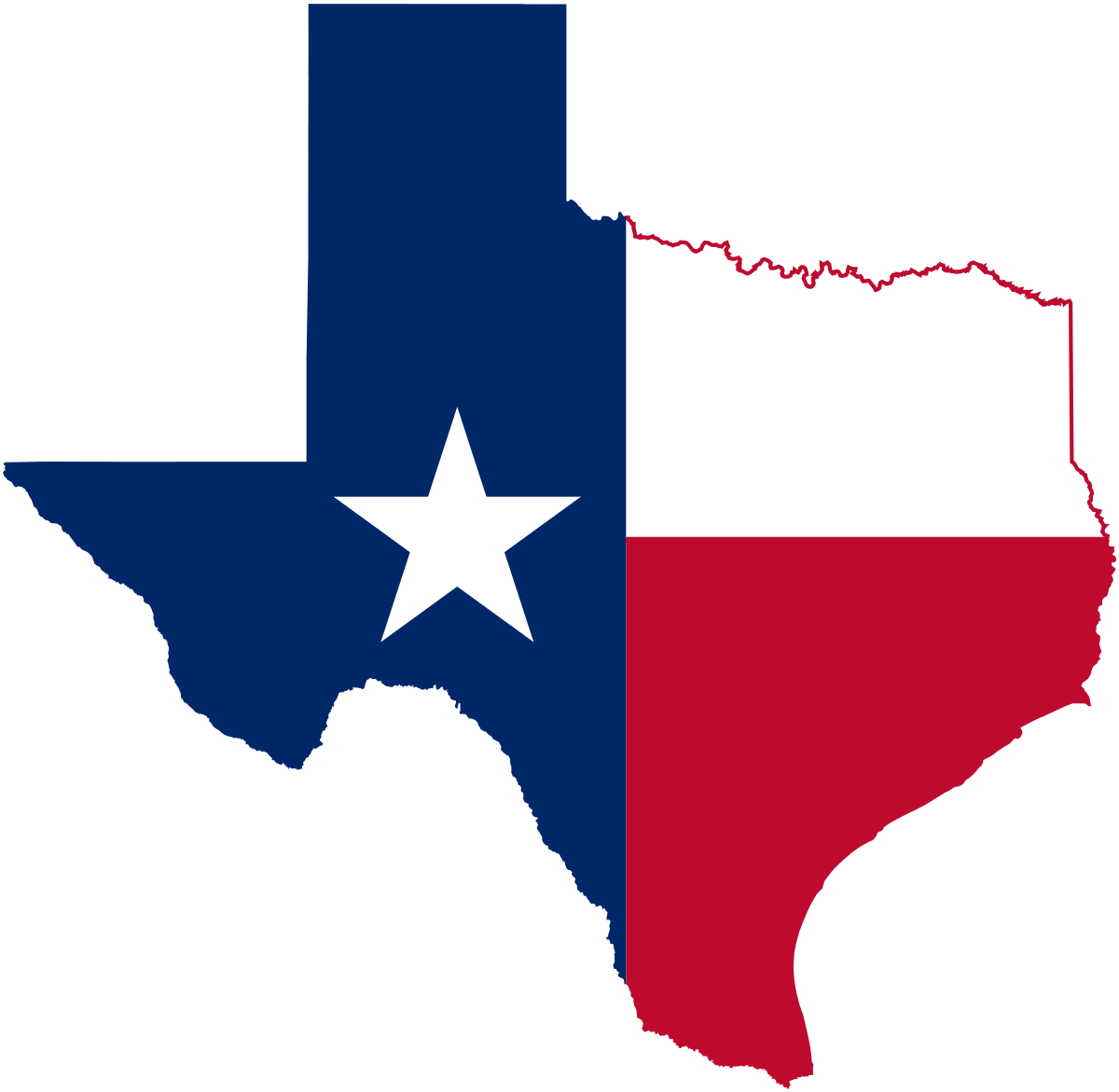
Cannabis in Texas: A Look Ahead to Legalization and Beyond

By Abraham Finberg, Rachel Wright, Simon Menkes
1 Comment

A Uniquely Texas Approach to Cannabis

The last few decades have seen the United States move forward state-by-state with the legalization of cannabis. Every state is charting its own unique path, and nowhere is this truer than with the state of Texas.

The Lone Star State has made its way from being staunchly anti-cannabis to expressing its own blend of temperance and careful action, combined with a medical cannabis program that’s expanding.

Any predictions regarding the future of cannabis in Texas must take into consideration both the state’s past and its values. In the end, it’s clear that Texas will embrace cannabis in its own individual way and at its own pace, but with a timeframe that appears to be arriving sooner rather than later.

The Debate Continues

108 years after Texas first banned cannabis and the debate continues. Even though Texas has a medical cannabis program, cannabis is still illegal in the state, with possession of less than two ounces a misdemeanor. Possession of more than four ounces is a felony punishable by a $10,000 fine and from 2-99 years in jail.

Texas’s 2015 Compassionate Use Act created the state’s medicinal cannabis program, which now makes treatment available only in the form of low-THC oil of a maximum strength of 1%, and only to a small list of serious conditions: epilepsy, terminal cancer, autism, multiple sclerosis, amyotrophic lateral sclerosis (ALS), seizure disorders, incurable neurological disorders such as Alzheimer’s, Parkinson’s, Huntington’s Disease and PTSD.

Support for a Stronger Medicinal Cannabis Program Comes from Prominent Politicians

Texas Department of Agriculture Commissioner Sid Miller, a leader in Texas politics and one of the architects of Texas’s burgeoning hemp industry, has encouraged Texas legislators to create a more complete medical cannabis program.

Texas Department of Agriculture Commissioner Sid Miller

“I am for medical use,” Miller said in an August 2023 interview. “We have so much good science now. And we know what diseases it can treat, yet our legislature picks winners [and] losers. If you’ve got this disease, you can get treated, but if you’ve got this disease and cannabis will help you, you can’t get treated. We need to let the doctor-patient relationship make those medical decisions and not some bureaucrat or some politician … I’m not a supporter of recreational marijuana, but if someone has a condition that this chemical will help, they should be able to use it.”

Texas Representative Joe Moody from El Paso has worked for many years to promote adult-use cannabis. He recently co-authored two pro-cannabis bills, HB 1805, which would have expanded covered medical conditions and defined a per-doze THC limit instead of a percentage limit on cannabis products, and HB 218, which would have decriminalized cannabis.

Although both bills passed the House of Representatives, they were stopped in the Senate. The next session of the state legislature, which happens every two years, won’t begin until January 2025, so that is the earliest any change in cannabis statutes could take place.

The Future of Medicinal Cannabis

There are currently only three dispensaries in Texas. They appear to be servicing the state’s 268,000 square miles through a series of weekly drop-offs to satellite “partner locations,” which are open an average of only two days per week. This is not exactly a corner-CVS type of arrangement, and the need for new dispensaries for the state’s 61,000 registered patients is high.

The Texas Department of Public Safety took applications for new medical dispensary licenses between January and April 2023. Tony Gallo, managing partner of Sapphire Risk Advisory Group, which helped twelve licensees prepare their applications during this round, anticipates around ten new dispensaries being approved.

All licensees must be vertically integrated – product must go from seed-to-sale under one license – and each applicant paid $7,356 to apply. If approved, the applicants will owe another $488,520.00 for a two-year period.

Many knowledgeable Texans, including Agriculture Commissioner Sid Miller, predict a fully-functioning medicinal cannabis market is just a few years away. “If you can get it to the floor, probably 70% or 80% of the legislative body will vote in favor of it because we have such good science on it. [Originally] we thought, ‘Well, that’ll lead to recreational use or more drug use,’ but it’s not. It’s a plant derivative. Medical marijuana is not nearly as addictive as some of the prescription drugs we use now.”

The Push is On for Adult-Use

Representative Joe Moody believes that adult-use is not too far away in Texas’s future either, and that the way to speed its arrival is through education. He recently sponsored HB 3652, the Texas Regulation & Taxation of Cannabis Act, in order to start a dialogue on what a retail cannabis market will look like in Texas.

Texas Representative Joe Moody

On April 26, 2023, Moody and his bill received a public hearing in the House Committee for Licensing and Administrative Procedures in which many points about setting up a retail market in Texas were discussed. A 10% cannabis tax was proposed by Moody, to be split evenly between the state and local government. Licenses would be required for those growing, selling, transporting or testing cannabis, although individuals would be allowed to grow or possess it in small amounts for personal use. Legal sale and consumption would be limited to adults 21 years of age and older, like alcohol. And of course, cannabis possession would be decriminalized.

How Strong is the Market Potential for Cannabis?

One indication of how strong even a fully-open medical cannabis market might be in Texas came during Moody’s hearing from the testimony of Estella Castro. Castro owns two medical dispensaries in Oklahoma just across the state line from Texas and suspects most her buyers are from Texas. “They have a Texas plate and they come in and buy $500 to $600 worth of product,” she said. Her two shops generated $158,000 in taxes to Oklahoma, most of which she believes should have gone to Texas.

New Mexico recently legalized adult-use cannabis, and the small towns along the Texas-New Mexico border are seeing a lot of traffic from Texas. In the first week of adult-use sales, the New Mexico did adult-use sales totaling $6 million. Of those sales, $1.5 million came from dispensaries in 5 small border towns.

Florida and California Suggest the Scope of a Mature Cannabis Market in Texas

The potential for a fully developed medical cannabis market can be gleaned by studying the next smaller state, Florida, which has an open, mature, medical cannabis market. Florida, with 20 million people, is about two-thirds the size of Texas, which has 30 million inhabitants. Right now, Florida boasts 700,000 cannabis patients whereas Texas only has 61,000. Simple math suggests a fully open, mature, medical cannabis market in Texas could see over a million patients gain relief.

California is the nation’s most populous state with 39 million inhabitants, and its cannabis revenue gives some perspective as to the size of a Texas adult-use market. 2024 estimates of California’s cannabis revenue suggest the Golden State will see $7.2 billion legal cannabis sales while the illegal market will generate another $6.4 billion for a total of $13.6 billion. With a reduction for Texas’s smaller size, these numbers suggest a fully-mature Texas adult-use cannabis market could generate close to $10 billion in annual revenue.

Large adult-use states like California and New York are notorious for having an illicit market that threatens to derail their legal, tax-paying cannabis license holders. Texas’s strong business-friendly focus should help deter such an illicit marketplace from gaining too significant a foothold.

The Back-Door Cannabis Industry

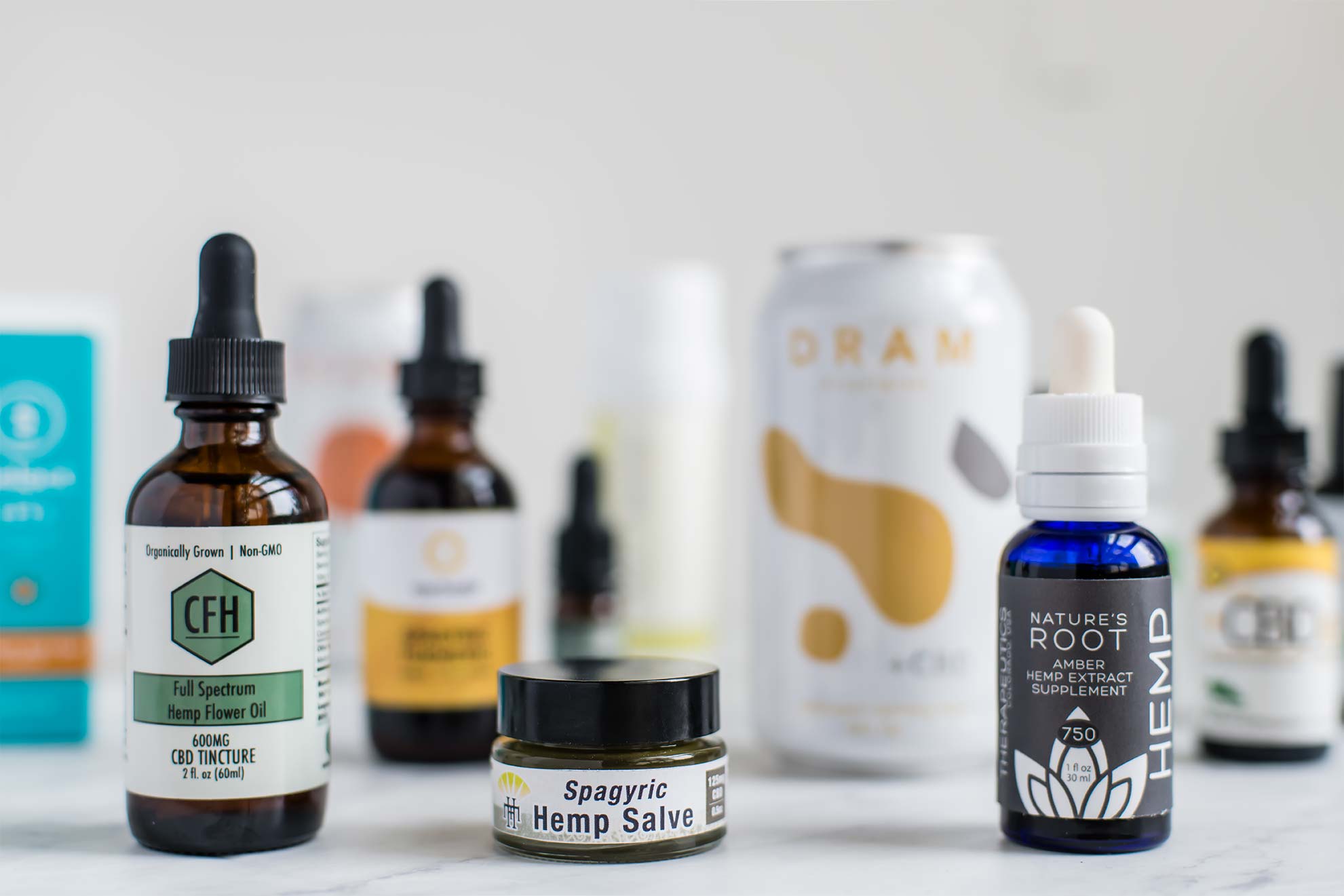
Meanwhile, an extensive “back door” cannabis industry is in full swing in Texas. CBD shops now sell delta-9 (fully psychoactive) THC/CBD gummies and tinctures made from the hemp plant, which is the low THC-version of the cannabis plant. These THC/CBD products adhere to the 0.3% definition of hemp as required by the federal 2018 Farm Bill and are legal and available for over-the-counter or online purchase in Texas’s CBD stores.

Gummies, tinctures and other products made form them hemp plant

Current estimates are that there are over 5,000 hemp, CBD and cannabinoid retailers, manufacturers and distributors in Texas that employ more than 50,000 workers and generate more than $8 billion in annual revenue. With these numbers, the 1,100+ licensed Texas hemp growers are sitting well where they are and are poised to take advantage of a legal adult-use market if and when Texas decides it is ready to go down that path.

Next Steps for Texas’s Cannabis Market

People familiar with Texas’s cannabis market believe that adult-use is a ways down the road for the Lone Star State, and that the near-term focus needs to be on decriminalization and achieving an unincumbered medical cannabis system. Tony Gallo of Sapphire Risk Advisory Group advises the Texas cannabis community to concentrate on “increasing what conditions are allowed for medicinal use” and “increasing what areas of the state it’s allowed to be sold.”

There is a groundswell of public support for decriminalizing cannabis as well as for allowing adult-use. A December 2022 poll showed 55% of Texans support legalizing at least small amounts of cannabis for recreational purposes, and another 28% said it should be legal for medicinal purposes.

A February 2023 poll by the University of Houston found that 82% of Texans support the Legislature passing a bill that would allow people to use marijuana for a wide range of medical purposes with a prescription. The belief that cannabis is a “gateway drug” that would make people more likely to use other illegal drugs is losing traction as well – 70% said it would make people less likely to do so or would have no impact.

Final Thoughts

The demand for cannabis in the Lone Star State is strong. With the likelihood of a fully-functioning medical cannabis market coming soon, and the possibility of decriminalization not too far behind, it’s clear that the future of cannabis is bright in Texas.

While the legalities around adult-use will take longer to work out, and the place of hallucinogenic hemp in the mix needs to be examined and clarified, one fact is certain. The path forward that Texas cannabis takes will certainly be a unique one, as unique and as individual as the Texan people themselves.

Employee Management & Human Resources: An Often-Overlooked Part of Building a Business

By Cannabis Industry Journal Staff
No Comments

Well before cannabis businesses win a license application, they need to have traditional business plans outlining how they’ll run the company. While this obviously includes things like the property, the building, products and inventory, it also includes a lot of things that are often overlooked: things like payroll, human resources and employee management.

Before a cannabis company should even hire their first employee, they need to have a few thing squared away. The timeframe and order of operations will differ for every business and every state, but there are a number of things to consider like workers comp, employee training, handbooks and of course, everyone’s favorite topic: insurance. There’s crop insurance, general liability insurance, unemployment insurance, workers comp insurance and more. Working with the right brokers, not breaking the bank and understanding what you need and when can be crucial to keeping the doors open.

Ahead of the Cannabis Quality Conference, we sit down with Nick Murer, the founder of WECO, to ask him some questions about what businesses need to know and when. Nick will be available at the event in New Jersey this October 17 and 18 during our “Ask the Expert Roundtables” to answer these questions and much more.

Cannabis Industry Journal: Does a company need to have workers comp and unemployment insurance before they’re licensed?

Nick Murer: They don’t need to have it figured out before they’re licensed, but they should want to have a strategy in place as they’re going through the process, knowing what they need to accomplish. There are some cases where states may require insurance upfront in the licensing process, but not always. It is however required before a business opens their doors, and absolutely necessary to have insurance before staffing and their first employees comes on board.

CIJ: What types of insurance should companies look into as they’re submitting our license application?

Nick: As you’re submitting your license application, you should have it figured out or at least speak with a broker about your options. You probably don’t have it yet, since you’re not an entity, but you’ll need general liability insurance, and if you’re a grower, you should have crop insurance too. Prior to opening, you should have your workers comp insurance, unemployment insurance, FICA, SUTA and FUTA figured out with the state. Prior to licensing, you need to make sure you are working with the right insurance broker and managing the cost aspect. We can help with that; we work with a couple of great brokers that are industry-specific. As folks go through the licensing process, it’s important to work with people like us that have the right resources and the right tools to provide that necessary support.

Nick Murer will be available at the CQC in New Jersey, October 16-18 to answer questions and provide a resource for new and existing businessesDuring the application process, you need to be aware of insurance and the options that are available, as well as what’s required, but you might not need to have all of those in place. It’s different for every state.

CIJ: What important parts of human resources and employee management should companies have figured out before they get licensed?

Nick: I think the first area they need to start with is making sure they have their workers comp set up, their GL [general liability insurance] set up, I think they should have their employee handbook figured out, their onboarding procedures, their strategies for discontinuing employment figured out prior to bringing them on. Where we come in and assist with that is making sure that these businesses are properly set up with the state to handle workers comp, unemployment insurance, their FICA, FUTA and SUTA, social security taxes, healthcare benefits and being able to deploy all of that within thirty days properly. We work with a lot of clients making sure they have their onboarding programs fully figured out before they take that leap.

CIJ: As cannabis companies get licensed and begin operating, what are some often overlooked HR functions?

Nick: I think the number one area they need to understand in their hiring process prior to bringing people on is really having a thorough, compliant handbook that they’ve also participated in, and have worked towards creating a better document so when these employees come on they know the expectations and the standards that need to be met in order to be a successful member of the team. I think their employment onboarding practices need to be dialed in where they understand what is going on between the onboarding, timing, the documentation needed all before effective start date to stay in compliance. Understanding labor compliance and being able to understand how you properly onboard and offboard an employee is a really critical part. Where we like to come in and assist our clients is helping train managers and being their resource. Everyone works with humans and there are always unforeseen problems that arise We’re in the people business and there will be people problems and mitigating those should be everyone’s number one priority. The more we can help protect cannabis businesses, the less risk they bring to their own company, people and the industry.