

Tag Archives: retail

goodchem.exter

Dispensary Best Practices: A Q&A with Stephen Spinosa

By Aaron G. Biros
1 Comment
goodchem.exter

Stephen Spinosa, vice president of retail operations at Good Chemistry, has over seven years of experience working in the cannabis industry in the operation and management of licensed dispensaries.

stephenspinosa1
Stephen Spinosa, VP of retail operations at Good Chemistry, delivering the keynote at Dispensary Next

He was previously an inventory manager in a 7,000-square-foot medical marijuana cultivation in Colorado. Spinosa is currently part of the team at Good Chemistry dispensaries, which has locations in Aurora and Denver, Colorado. He oversees staff training, state and local regulatory compliance and seed-to-sale inventory tracking.

Spinosa recently delivered a keynote presentation at the Dispensary Next Conference in Portland, Oregon titled “From Waiting Room to High-End Retail Experience: How Dispensary Culture Has Changed from 2009 to Now.” He discussed the rise of high-end experience and gave tools for dispensaries to improve retail operations.

In the presentation, he covered supplier quality, security, tiered pricing, inventory tracking and safety issues. Much of what he discussed revolved around the consumer experience and how important the culture at a dispensary is for the buying experience. After his keynote presentation, I sat down with Spinosa to discuss the customer experience, consumer education and safety and sales trends.

Cannabis Industry Journal: What are some of the key areas where dispensaries can improve the quality of customer experience?

Stephen Spinosa: Ultimately, the dispensary experience is like any retail experience. Good Chemistry’s staff is always friendly, smiling, welcoming and helpful to all customers that walk through our doors. Having employees who are experts at providing advice to any user level, and who are extremely knowledgeable on each strain and edible effect is extremely important to us. It is all about making the customer feel comfortable in their experience, especially for novice users who may feel timid when entering a dispensary for the first time.

goodchem lobby
Smiling employees greet customers in a clean environment

Good Chemistry’s high-end retail experience includes our up-to-date LED menu screens that present our daily flower menu. That may seem like common sense, however, you would be surprised how many dispensaries do not have a flower menu for their customers to peruse.  It helps the customer navigate through all the strains that we offer, and adds to the overall retail experience. We offer twenty or more strains every day.

Additionally we do not have an armed guard hovering at the entrance, making our guests feel uncomfortable. We have highly sophisticated security, like every dispensary, but we’ve left out this intimidating and unnecessary aspect.

CIJ: Can you discuss what you and your employees do for consumer education and safety?

Spinosa: When introducing cannabis to consumers, it is our mission to educate our customers on the correct dosage based on experience level. Our bud tenders are trained to ask a lot of questions before recommending anything. If a customer is a first timer, the bud tenders will have certain recommendations based on their experience level, such as high-CBD [cannabidiol] flower, a low THC percentage vaporizer pen, or a 1-5mg edible serving.

goodchem.exter
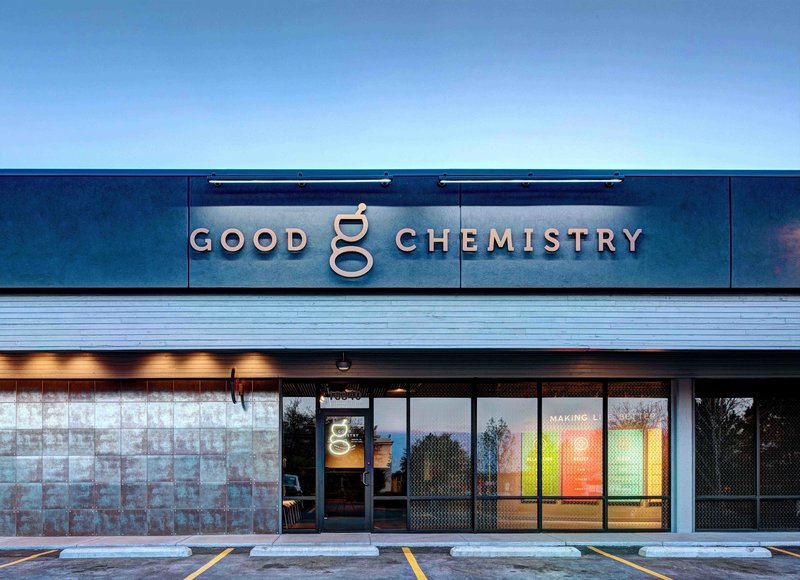
The exterior of a Good Chemistry dispensary

That said, strains of cannabis often cannot be neatly compartmentalized into sativa vs. indica, so our bud tenders also educate customers about the entourage effect, the interaction of the various compounds in marijuana to produce each strain’s unique feeling.

We have developed a pioneering category system to help our customers, whether novice or connoisseur. The system is broken down into four main categories to help consumers decide what sensation they would like to experience: stimulation, relaxation, sleep or relief. We use the four categories to guide our customers through our daily flower menu by labeling each strain with a category.

goodchemwall
This wall display shows customers the Good Chemistry categories of strains

If a customer is purchasing edibles, we provide an Edibles Education brochure from the Cannabis Business Alliance that stresses the Start Low, Go Slow motto. We also educate consumers on the difference between edibles made with butter vs. oil. Additionally, all of our third party vendor edible products for adult-use are packaged safely in 100% child resistant packaging.

It is important that our customers have a great experience, which is always possible with good guidance. A happy customer is a repeat customer. We are also well aware of the importance of educated employees. Our employees go through a formal training program, and we have monthly meetings where vendors come in and educate the employees on how to sell and dose various products.

CIJ: Can you tell me about your inventory and some consumer trends you are noticing?

Spinosa: Flower is the biggest seller, and for good reason: we have award-winning strains that are $30 an eighth, every strain, every day. Not many dispensaries offer such incredible pricing. Right now, the purchasing trend tends to lean toward the strains that have the highest THC percentage.

goodchemint
The interior of the dispensary has digital displays and ample lighting.

This may not accurately depict the best strains, because there have been findings that the entourage effect means different strains can have unique lifts, but it is definitely what the industry is seeing as far as sales trends. As far as edibles, gummies are the biggest sellers followed by hard candies, chocolate and baked goods. Lastly, concentrates such as live resin, shatter and wax have increased in popularity. Good Chemistry produces a new product called solvent-less rosin, concentrated THC oil that is produced using just heat and pressure. Rosin is currently picking up a good amount of traction, although not many dispensaries currently offer it.


Wellness Watch

Creating a Balanced Menu: Tips for a Better Dispensary Inventory

By Dr. Emily Earlenbaugh, PhD.
2 Comments

When it comes to running a well functioning dispensary, one of the biggest challenges can be stocking a balanced menu. Cannabis consumers have a wide range of tastes and preferences when it comes to products and the most successful dispensaries have a wide selection to meet this need. When a dispensary can keep a consistent stock of products that a particular consumer likes, they can quickly become the only dispensary that consumer frequents. For those dispensaries looking to fill out their menu with crowd pleasing products, I recommend the following practices.


Diverse Strains
Cannabis comes in many varieties, and each strain has a slightly different effect on the user. One of the biggest mistakes I see in new dispensaries is a menu that is weighted heavily toward one type of cannabis. The grower or manager of the collective may prefer Diesel varieties, or Haze, and choose similar strains repeatedly. This can severely limit your potential client pool to only those cannabis users who enjoy that one variety. When stocking your flower and concentrates, look for a range of genetic varieties, and be careful not to have too much bias in one direction or the other. 
 
Consistent but New
Cannabis consumers want a consistent supply of strains that work well for them. But sometimes using one strain all the time can lead to decreased efficacy of that particular strain. Keeping a rotation of similar strains in one category can help keep your client base intrigued with new strains, without sacrificing consistency. If you have patients who really enjoy the strain Grape Ape. Rather than keeping Grape Ape in stock at all times, you can stock it regularly, but rotate it with similar strains like Lavender or Blackberry Kush, or new strains with similar genetics.
 
Consumer Feedback
Successful dispensaries are responsive to their consumers’ purchasing habits. Tracking the strains and products that your consumers buy can be helpful when deciding what to purchase again. However, this type of tracking does not tell you about the consumers you may have lost by not having the right product in the first place. Giving your consumers an avenue to give you feedback on your products and request ones that you do not have can be a great way to find out what your particular client base is looking for.
 
Edible and Topical Options
The fastest growing demographic of cannabis users are baby boomers, and many of them are less interested in smoking cannabis than using an edible or topical product. Having a wide variety of edible and topical products can help to bring in this growing demographic. When choosing edible products, look for both sugary treats that appeal to the sweet tooths out there, and the more medicinal products like capsules and tinctures for those looking for exact dosing and a more clinical experience.
 
When in Doubt, Ask for Help

For those looking for more in depth information on how to create a balanced dispensary menu, seek out help from people with industry experience. My practice, Mindful Cannabis Consulting offers consulting and dispensary staff trainings on just this topic. Whether you are just starting out or looking to optimize your existing dispensary, a little help can go a long way.

 
puregreen lobby

Consumer Trends: Analyzing Oregon’s Dynamic Markets

By Aaron G. Biros
No Comments
puregreen lobby

Oregon was the second state to legalize medical marijuana in 1998 behind California that introduced legislation measures two years earlier in 1996. In the past two decades, Oregon has grown its medical market, treating more patients and producing exponentially more cannabis. Since October 1st of 2015, Oregon’s recreational sales have been made legal, creating potential opportunities for dispensaries to target this emerging market.

In that first week of recreational sales alone, dispensaries in Oregon made over $11 million in revenue. That figure is more than double what Colorado made in its first week and significantly larger than Washington’s figures posted.

puregreenpdx
The exterior storefront of PureGreen in Northeast Portland, Oregon

Matt Walstatter, president and founder of PureGreen, a dispensary located in Northeast Portland, Oregon, says that while recreational customers are limited to seven grams of flower per day (no concentrates or edibles yet), they have noticed an uptick in sales of certain strains.

“Up until October 1st of this year, our sales percentages have been very consistent with about 66% to 72% flower sales since we opened and around 20% concentrates and 10% edibles, with the remainder consisting of topicals and non-medicated products,” says Walstatter. “Now we have an influx of a new type of customer so we do around 80% of sales in flower since the introduction of recreational sales on October 1st.”

When analyzing the top-selling strains, Walstatter’s figures show an inclination of customers and patients to prefer high-THC strains when buying flower. Girl Scout Cookies, a very high THC, low CBD strain, consistently sells the most at over 2000 grams per month. “People that smoke flower generally want high-THC strains, while people that seek CBD overwhelmingly do not smoke as much and prefer ingesting edibles, tinctures, capsules or other products with low THC content,” adds Walstatter.

puregreen lobby
The lobby at PureGreen

PureGreen keeps a select few high-CBD strains on their shelves, including Cannatonic, which is known for its approximate 1:1 ratio of THC to CBD. “Out of twenty five strains on my shelves, I usually keep two or three high-CBD strains because they have their niche, even if they are less sought after, it is certainly worthwhile to carry them,” says Walstatter.

“Because Oregon has such a well established cannabis culture with less novice customers than other markets, our more popular strains are consistent over multiple months so we built a brand around knowledge and education,” Walstatter says. “Our budtenders usually come from a background involving the plant whether they were involved in cultivation, trimming or processing, and then they go through extensive training to be able to recommend certain strains for different ailments or preferences.”

Walstatter offered some tips for dispensary owners and employees at the Las Vegas Marijuana Business Conference in November where he sat on a panel with other industry experts called What Patients and Consumers Want: Strain Trends, Product Mix & CBD vs. THC. “Understanding your customer’s needs and their buying habits plus properly managing your inventory is the key to success,” says Walstatter. “We have a couple of exclusive growers that went through an extensive review process, they tend to rotate through different strains while we have some grower-specialists that grow only one strain very consistently.”

puregreenpdx
Exterior view of PureGreen dispensary in Portland, Oregon

Walstatter prides himself in his team’s exceptional customer service. “People do business with people they know, like and trust, so authenticity is very important to us,” he adds. “Over delivering on value in the form of knowledge, expertise and service is crucial to growing your brand and business.” Having a high quality product mix, knowledgeable staff and inviting atmosphere are a few of the ingredients to running a successful dispensary.

“It can take up to six months or longer to bring a new strain from seed to sale, so if it is a popular strain, it is very important to have a backup grower,” Walstatter adds. He likens his dispensary to a farm-to-table restaurant where the menu is constantly changing: “This time of year, there are some greenhouse and outdoor crops that do well on the shelves but strains can go in and out of season.”

While edibles and concentrates are not yet available for recreational sales, state regulators are closely monitoring other state’s rules and progress to map out a timeline for their introduction. This would effectively create another new emerging market, opening up potential opportunities for dispensaries in Oregon to diversify.

screenshotCannaScore

Staying Compliant with CannaScore

By Aaron G. Biros
No Comments
screenshotCannaScore

Cultivators, manufacturers and dispensaries face a variety of ever-changing regulations that vary between states. The cannabis industry is notoriously inconsistent with regulations and as new legislation changes the rules so often, it can be difficult for businesses to keep up and stay compliant.

CannaScore provides a cannabis compliance auditing system that takes an inspector through questions around the operation, flagging areas that are out of compliance with state regulations. CannaScore works in Washington, Oregon and Colorado, and has plans to provide its services in Nevada and Maryland soon.

screenshotCannaScore
Various screenshots of an audit being performed with CannaScore

After co-founding DANK, a dispensary located in Colorado, Kush Bottles Colorado, a marijuana child-safe packaging company, and Denver Consulting Group, license-to-sale consulting company for the marijuana industry, Greg Gamet co-founded CannaScore after finding third party compliance audits to be lengthy, time-consuming and inefficient. The company developed the program and a mobile app within one year and beta-tested it for another six months.

“We are trying to stay in code with city and state regulations, along with the Colorado Marijuana Enforcement Division [MED], who finally has enough money to go out and enforce those laws. CannaScore identifies areas of concern and allows business owners to take corrective actions before problems ensue,” says Gamet.

homescreencannascore
The home screen of the app, CannaScore, on an iPad

According to Gamet, some of the biggest areas of concern for business owners involve making sure employees and day-to-day operations follow the extensive rules set forth by state and local governments. “The MED wants to make sure there is no hidden ownership [or] diversion of the product, and that dispensaries are following the rules, especially when it concerns public safety,” he says. “CannaScore can help businesses get a great overview on how they are operating within these rules that are enforced not only by the MED, but local police and fire departments, local health departments, and the Colorado Department of Agriculture.” The program will be available to other qualified consulting services to use through licensing agreements.

audit summary
An Audit Summary Report prepared for Cannabis Investors Group

The overall score, much like a FICO or Dun and Bradstreet score, rate an individual’s or business’ credit score, which helps business owners, banks, landlords and other stakeholders know what level of compliancy a cannabis business is operating. It also keeps a compliancy record on hand if a business is required to prove to a governing body its willingness to follow the rules.

In performing dispensary, grow, infused products, and MIP kitchen audits, CannaScore can give the consulting company that is performing the audit the ability to assist in the correction of any and all violations. “Once a violation has been found, the consulting company can work with the customer to get it corrected immediately, which will increase revenues,” says Gamet.

“Because rules and regulations change so often it can be very difficult to stay on top of managing everything that goes into staying compliant,” Gamet adds. “Keeping compliant in the cannabis industry is a full time job and CannaScore can make it easy.”

As the industry grows and regulators hammer out details in legislation, compliance will remain an important part of any cannabis business. Staying in code with local laws and state regulations can make or break a business.

dispensarypic

A Dispensary’s Road to Success

By Aaron G. Biros
No Comments
dispensarypic

The Herbery, a dispensary with two locations in Vancouver, Washington, is currently awaiting medical endorsements from the state for both locations. The two co-founders, Jim Mullen and Rick Zahler, found a credit union to work with them, Salal Credit Union in Seattle. “There are five dispensaries in the Western part of Vancouver, so it is quite a saturated market,” says Jim Mullen. “But we have drawn considerable business and are very happy with the success of our two locations.”

dispensarypic
A view inside the The Herbery

It has not always been like that, says Mullen. There are several key ingredients that go into launching and operating a successful dispensary, all of which pose significant barriers to entry in an extremely competitive retail market. Rick Zahler won the second and third positions in Vancouver for the state i502 retail licensing lottery. Zahler has more than 40 years of experience in franchising restaurants, a background that gives him a competitive advantage in scaling up his business.

Mullen and Zahler formed a partnership in early 2014 and by that summer they had finalized their lease agreement, converting an old restaurant into their flagship store. They hired local architects, contractors, and CPA’s and began looking for staff. “We set out to find the best people who could provide a level of customer service that this industry needs to be recognized as a mainstream business,” adds Mullen.

“We are changing the perception that you have to go into some back alley store to buy your pot,” he says. “We have a very attractive, well-lit storefront; we get complimented on the look of our stores all the time, one woman called us the Nordstrom’s of dispensaries.”

Before the doors opened, Mullen and Zahler worked long and hard to find growers, manufacturers and processors that met their standards. “We wanted to fill our display cases and shelves with premium cannabis, so we found really high-quality indoor, outdoor and greenhouse grows across the state,” says Mullen. “We go out and do site visits to see firsthand what nutrients they use, along with their standards and practices, to really size up our suppliers and verify they are giving us safe and high-quality products.”

budtenderpic
A bud tender helping customers at the dispensary

The Herbery hit some early obstacles as the market in Vancouver became highly saturated with dispensaries like New Vansterdam and Main Street Marijuana grossing well over $1 million each in revenue in May 2015.

“Our competition received a lot of media coverage and brand recognition early on. We had to side-step that with heavy guerilla marketing including handing out cards and flyers on street corners,” says Mullen. “We continued to push our social media marketing campaigns, slowly building a clientele with quality products, affordable prices and good customer service.”

Of all the roadblocks they hit, Mullen said the toughest aspect of getting started has been simply “letting people know that we opened and where we are.”

“There are fairly strict marketing rules, and staying compliant is difficult when you are trying to get your name out there,” Mullen adds. “We have been doing what we can with billboards and ads in magazines, but really word of mouth has gotten us far.”

budtenderpicdispensary
A bud tender can give recommendations on different strains or advice on consuming edibles

Looking forward, Mullen wants the ability to market in a manner that is similar to other mainstream businesses. He is also excited to get endorsed to sell medical cannabis. “With so many people seeking high-CBD products for a variety of conditions like fibromyalgia, chronic pain, anxiety, and more, we want to help patients get access to the medicine they need.”

As cannabis continues to be studied for its true benefits, Mullen anticipates significant advances in knowledge to occur within a very short timeframe.