

A cannabis product can pass laboratory testing, meet manufacturing standards, and have the documentation to demonstrate its quality. But what happens when that product leaves the lab and enters the marketplace?
That was the question Sheri Tarr, chief advisor of regulatory consultancy 68 Partners, raised at the recent Cannabis Quality Conference in Washington, DC.
Tarr acknowledged that her presentation on packaging, labeling, and marketing compliance was aimed more at cannabis brands than at the laboratory, quality, and regulatory professionals in the room. But she wanted them to understand where compliance goes next, after their work is done. And that’s where cannabis businesses may be overlooking some of their greatest regulatory and legal risks.
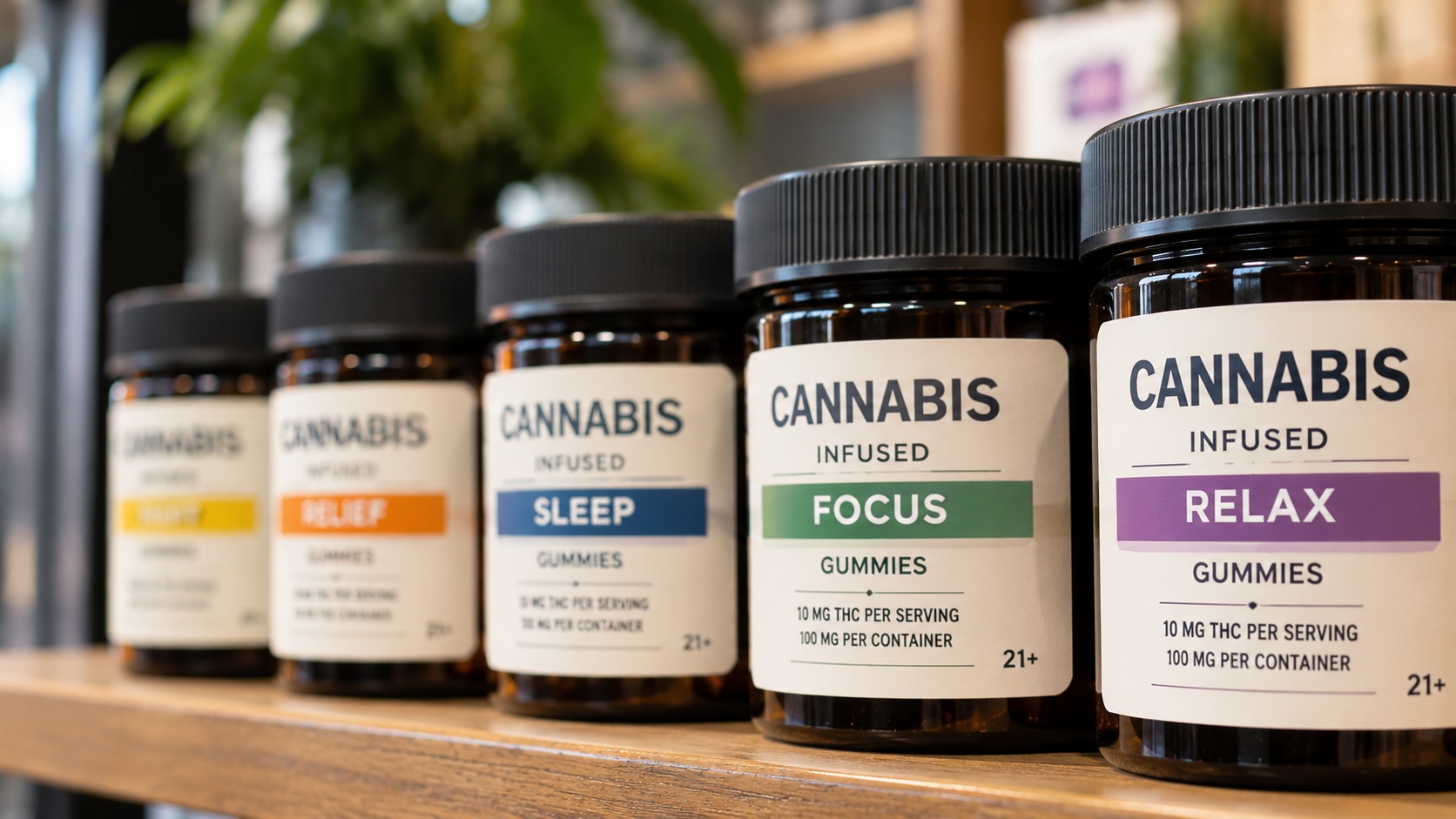
Packaging, advertising, social media, customer testimonials, and even conversations between budtenders and consumers can create problems for an otherwise compliant product.
Tarr brings an unusual perspective to the subject. A self-described “recovering lawyer,” she previously worked in pharmaceutical sales and marketing, ran a division at Pfizer, and later became a plaintiffs’ attorney, suing pharmaceutical companies over product liability and regulatory violations.
She’s seen the commercial side of regulated products from both sides of the courtroom.
When Packaging and Marketing Become Compliance Problems
Tarr joked that she doesn’t always get an enthusiastic reception when discussing packaging and labeling compliance.
“Usually I’m in front of people that are like, God, do I sit here and listen to why I can’t put a holographic giraffe on my packaging and labeling?”
But the rules governing how cannabis products are presented to consumers are extensive. She pointed to New York’s packaging, labeling, marketing and advertising regulations, which she said run approximately 135 pages, in 10-point type.
And those are just the state requirements.
Tarr emphasized that regulators examine the overall impression a company creates through its packaging, imagery, messaging, and promotional materials.
A company doesn’t necessarily have to make an explicit medical claim to create a problem.
Tarr described working with a company selling a topical product that wanted to use before-and-after photographs showing improvements in psoriasis. The company argued that it wasn’t actually saying the product cured or treated the condition. It also planned to include the standard disclaimer that the product wasn’t FDA-approved and wasn’t intended to diagnose or treat disease.
Tarr wasn’t persuaded.
“You just sent me materials that show a before and after with psoriasis, without psoriasis,” she recalled telling the company. “You don’t have to say, this cures, treats.”
Nor would a disclaimer solve the problem.
“You can’t hide behind a disclaimer,” she said.
The example illustrates how easily a marketing team can cross into medical claims without recognizing it. A photograph, testimonial, or comparison may communicate something that the company deliberately avoided putting into words.
And regulators don’t necessarily evaluate those elements separately. They consider the overall message consumers receive.
Claims Don’t Stop at the Label
One of Tarr’s strongest warnings concerned the many places where companies communicate with consumers.
“Claims live everywhere, and the brand owns all of it,” she said.
A brand’s compliance exposure doesn’t end with its approved packaging or advertising copy. Its website, social media accounts, promotional videos, customer testimonials, and sales presentations all contribute to the claims being made about its products.
Tarr pointed to companies that publish customer testimonials describing relief from serious medical conditions, then argue that the statements came from consumers rather than the company.
But once a business selects a testimonial and publishes it on its own website, it has adopted that message.
“Congratulations, you’re responsible,” Tarr said.
She also warned against relying on disclaimers to distance a company from statements it has chosen to promote. The issue becomes more complicated as brands work with influencers and third-party marketers, particularly when promotional content moves quickly across social media.
Tarr urged companies to pay closer attention to the Federal Trade Commission (FTC), which oversees advertising claims and can scrutinize misleading representations even when those claims don’t appear on a product label.
An audience member raised another interesting question: Could posting published scientific research about terpenes on a cannabis company’s website be considered an implied product claim?
Tarr acknowledged that she didn’t have a definitive answer. Even legitimate scientific research can raise questions about how it’s presented, particularly if consumers could interpret it as evidence of a product’s therapeutic benefits.
The challenge isn’t limited to preventing outright falsehoods. Companies also need to consider whether their imagery, language, and testimonials imply benefits that haven’t been substantiated.
Budtenders Are Part of the Compliance Equation
Tarr also raised another concern: What happens when a consumer walks into a dispensary and asks for help choosing a product?
In the pharmaceutical industry, sales representatives receive extensive training on what they can say about a drug, how to discuss its benefits and risks, and when to refer questions to medical professionals.
As a plaintiffs’ attorney, she deposed hundreds of pharmaceutical sales representatives, examining what they were taught and whether they understood the evidence supporting the products they promoted.
She sees a parallel in cannabis, where budtenders and dispensary employees often serve as the primary source of product information for consumers.
During the presentation, an audience member asked how a budtender should respond when a customer describes a headache, pain, or difficulty sleeping and asks which product might help.
Tarr acknowledged that there isn’t an easy answer.
Budtenders face pressure to sell products, but many don’t have scientific or medical training. They may also receive product education from third-party sales trainers who lack a regulatory background.
“The training becomes really, really critical,” she said.
Tarr cautioned that brands, dispensaries and the companies providing sales training all have responsibilities in how products are represented to consumers.
And she expects more attention to be paid to what happens inside dispensaries.
She predicted that plaintiffs’ lawyers and regulators would eventually emerge from their “orange-carpeted cubicles from the 1980s,” start visiting dispensaries, listen to sales conversations, and examine packaging and labels firsthand.
“They’re going to do it the old-fashioned way,” she joked. “We’re gonna have a visit.”
Her concern isn’t that budtenders shouldn’t help customers. It’s that the industry needs better training and clearer boundaries around product recommendations and medical claims.
Building a Commercial Compliance System
So how can cannabis companies manage compliance across packaging, advertising, websites, sales teams, and multiple state markets?
Tarr pointed to a system commonly used in the pharmaceutical industry: medical, legal, and regulatory review of promotional materials before they reach the marketplace.
At Pfizer, she said, promotional materials went through a review process involving multiple departments.
“Nothing went out the door until all of those people were aligned.”
She recommends applying similar oversight to cannabis marketing, particularly as companies expand into additional states with different requirements.
Her approach centers on what she calls the three C’s of compliance: controlled, centralized, and consistent. Companies need a system to approve promotional materials, track where those materials are used, and withdraw or replace them when necessary.
That becomes increasingly important for multistate operators managing different labels, advertising requirements, websites, and sales teams.
Consistency alone isn’t enough, however.
“You don’t want consistently bad,” Tarr joked.
The information also needs to be accurate and supported by evidence. She urged companies to avoid embellishing product claims and instead market what they can substantiate.
“Say what your COA says,” she advised, referring to the certificate of analysis.
Tarr also emphasized documentation. Companies should be able to show what evidence supported a claim, who approved it, and how decisions were made.
“Build a record you want someone else to read,” she said.
Regulators, attorneys, investors, or prospective buyers may eventually examine that record.
Tarr encourages cannabis businesses to think about compliance as part of their long-term planning. Her “build to exit” approach reminds companies that the decisions they make today, including how they manage marketing claims and document approvals, could come under scrutiny during an acquisition, investment review, or lawsuit.
“We want to be treated normally, we want to be mainstream, then we have to act that way, right?”

