
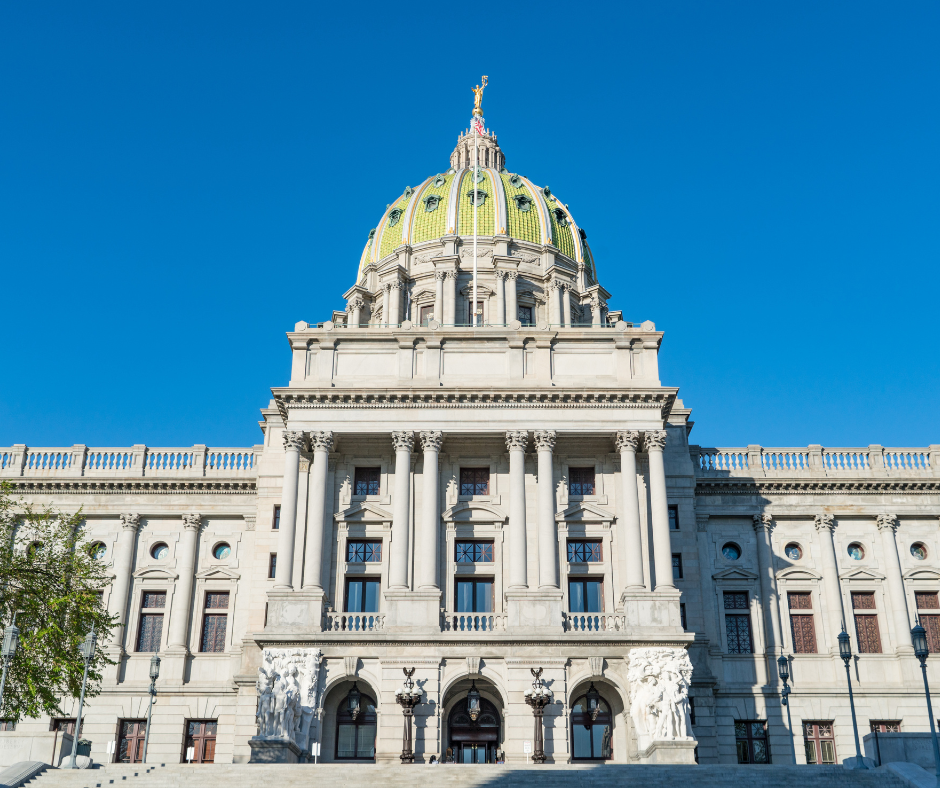

Yesterday, the Pennsylvania Senate rejected SB 49, Sen. Dan Laughlin’s Cannabis Control Board bill, on a 27-23 floor vote.
Then, within the same session, lawmakers filed a motion to reconsider, and it passed 29-21. The bill lives, for now, in a kind of legislative purgatory.
If you follow the hemp beverage space in Pennsylvania and you’re reading this, you may have seen the headlines and assumed they were relevant to HB 2309, the Malagari Hemp Beverage Bill. You may have wondered whether the floor failure signaled something broader about the political climate for hemp regulation in the commonwealth.
It doesn’t. Not in the way you might think.
Because SB 49 and HB 2309 are not the same bill, they are not two versions of the same idea. They do not share the same purpose, architecture, or constituency. The industry’s tendency to treat them as related legislation is creating confusion that does nobody any favors.
Let me be precise about what each of these bills actually does.
What SB 49 Is
Senate Bill 49 is a marijuana governance bill. Its core purpose is to establish a Pennsylvania Cannabis Control Board – a new regulatory body designed to eventually oversee adult-use marijuana if and when legalization is enacted by the General Assembly.
In its current amended form, SB 49 also absorbs Pennsylvania’s medical marijuana program into the CCB framework and, critically, adopts the new federal hemp definition from H.R. 5371, which Congress passed in November 2025. That federal law significantly tightened the definition of hemp and effectively banned most intoxicating hemp-derived cannabinoids that proliferated after the 2018 Farm Bill.
Sen. Laughlin, who chairs the Law and Justice Committee and authored the amendment, framed it plainly: these changes close the loopholes that allowed intoxicating hemp products to flood the marketplace with little oversight.
That framing tells you everything about SB 49’s posture toward the hemp market. It is not trying to build a regulated framework for hemp-derived THC products; it is trying to constrain them. The CCB would provide oversight of what remains, but the intent is restriction, not expansion.
For the hemp beverage category specifically, SB 49 is not a friendly bill. It is a bill premised on the assumption that the hemp-derived THC market is a regulatory problem to be solved, not a commercial category to be developed.
The reason it failed on the floor on Wednesday has more to do with the partisan dynamics around marijuana legalization than anything specific to hemp beverages. Democratic cosponsors voted against it in committee in May. Gov. Shapiro has repeatedly called for full adult-use legalization. Senate Republicans and Democrats are in open disagreement about whether a CCB without a legalization framework is the right vehicle. That’s the fight SB 49 is caught in.
What HB 2309 Is
House Bill 2309 — the Malagari Hemp Beverage Bill — is a targeted, category-specific regulatory bill. It does not attempt to establish a Cannabis Control Board. It does not govern medical marijuana. It does not anticipate adult-use legalization. It has nothing to do with any of that.
What HB 2309 does is create a licensed, age-verified retail framework for hemp-derived THC beverages in Pennsylvania.
It treats hemp beverages the way we already treat alcohol: licensed retailers, point-of-sale age verification, responsible distribution channels, and a regulatory structure that the Commonwealth already knows how to administer. It is narrow by design. It is bipartisan in its logic — Republicans and Democrats who would never agree on marijuana legalization can agree that products already on shelves across the state should be sold responsibly through licensed, accountable channels rather than without oversight.
HB 2309 doesn’t require SB 49 to pass first. It doesn’t require a CCB to exist. It moves now, for a product that exists now, in a category that is growing now.
The public hearing for HB 2309 is June 25-26 in Harrisburg.
Why the Conflation Is a Problem
When SB 49 stumbles on the floor, I hear people in this industry exhale as though it signals the end of momentum for hemp regulation broadly. That’s the wrong read.
SB 49 failing is a story about partisan cannabis politics. It is about the unresolved tension between a Republican-controlled Senate and a Democratic governor over whether to build regulatory infrastructure before or after legalization. It is about a bill that tried to govern a sprawling landscape — medical cannabis, hemp-derived THC, recreational frameworks — in a single piece of legislation, and ran into the inevitable complexity of doing so.
HB 2309 failing would be a different story. It would mean Pennsylvania looked at a product sitting on shelves in vape shops, grocery stores, and convenience stores across the Commonwealth — unregulated, unverified, and unsupervised — and decided to leave it that way. That would be a story about willful negligence.
These are two different conversations. The legislature is capable of holding both simultaneously. The industry needs to be capable of the same thing.
What happened to SB 49 yesterday is not a signal about HB 2309. It is a reminder that broad, complex cannabis legislation carries enormous political weight, enormous competing interests, and enormous opportunities to stall.
HB 2309 is not that. It is a beverage bill. A responsible retail bill. A framework that the Commonwealth already knows how to run.
What Happens Next
SB 49 will likely be revised and reconsidered. The motion to revive it passed. Sen. Laughlin has shown throughout this session that he is willing to amend and renegotiate. Whether the CCB framework survives in a form that can get 26 votes on the floor remains to be seen.
For HB 2309, the hearing on June 25-26 is the immediate focus. Public testimony matters. Operator voices matter. Legislative relationships matter.
If you are a Pennsylvania hemp beverage brand, retailer, or consumer who wants to be part of that conversation, the public comment period is open. The hearing is two weeks away.
Know which bill you’re talking about. Know what it does. The distinction is not academic. It’s the difference between a bill that seeks to restrict this category and one that seeks to build it.

