Tag Archives: AI

The Power of AI and How it Will Transform Cannabis Medicine

Biotechnology, cannabis medicine, and the rapid advancements in artificial intelligence (AI) and machine learning (ML) are beginning to converge.

Hemant Kumar Bid, program director for the Master of Science in Biotechnology and the Medical Cannabis concentration at Morehouse School of Medicine, believes this convergence could dramatically accelerate the development of cannabis-based therapies. With AI, cannabis medicine may move beyond today’s trial-and-error approach toward more personalized, precise treatments.

Biotechnology combines biological science with advanced technology to develop medical solutions, including drug discovery, genetic engineering, and diagnostic tools. “Modern biotechnology focuses on molecular biology, genetic engineering, and advanced cell culture techniques. This is where it will advance cannabis medicine,” explains Bid.


The Foundational Elements of AI and Machine Learning

AI and machine learning are closely related but serve distinct roles.

AI refers to computer systems designed to perform tasks that usually require human intelligence, such as reasoning, pattern recognition, and decision-making. Machine learning, a branch of AI, identifies patterns in large datasets, improves as it processes more data, and predicts future outcomes.

Many AI systems rely on deep learning, a method using neural networks to detect complex patterns across massive datasets. Another important capability is natural language processing (NLP), which allows computers to understand and generate human language and analyze vast bodies of scientific literature, uncovering insights and connections that might otherwise take researchers years to identify.

Machine learning is already widely used in biotechnology to analyze complex biological data and predict how molecules behave in the body.


AI in Drug Discovery and Development

AI is rapidly transforming how new drugs are discovered and developed.

Traditionally, drug discovery depends heavily on animal models and laboratory testing—a slow, expensive trial-and-error process. Machine learning can now analyze large molecular datasets to predict which cannabinoid compounds interact with specific receptors, such as CB1, CB2, TRPV1, GPR55, and serotonin receptors. This capability can significantly reduce both the time and cost of traditional drug discovery.

AI can also predict toxicity and safety risks in drug formulations before human testing begins. “Once a clinician knows that toxicity will exceed 70%, they can decide not to move forward,” says Bid.

In addition, NLP tools can mine extensive cannabis research literature to identify emerging therapeutic targets and gaps in current studies.


Personalized Cannabis Medicine

Many diseases are complex, and scientists are still uncovering their underlying causes. Conditions such as cancer may be influenced by a combination of genetics, lifestyle, and environmental factors.

Deep learning systems can analyze pathology images and genetic data at a level beyond human capability. They can detect subtle changes in DNA, RNA, or protein structures that influence disease progression and treatment outcomes. These insights are opening the door to how personalized approaches can be applied to cannabis medicine.

Machine learning models are already being applied to pharmacogenomic data to predict how a patient will metabolize cannabinoids based on genetic variation, particularly in liver-metabolizing enzymes like cytochrome P450, which play a key role in metabolizing THC and CBD.

“That means this genomics and pharmacogenomics approach, using machine learning models, could help predict efficacy and adverse effects before treatment begins,” says Bid.

AI and ML systems can also analyze genetic mutations, disease risk, and patient data to suggest individualized treatment plans. Factors such as genetics, medical history, symptoms, prior cannabis use, disease severity, and previous treatment responses can all inform personalized decisions. Because everyone’s DNA and endocannabinoid system differ, a one-size-fits-all approach to cannabis medicine is ineffective.


Identifying Endocannabinoid Dysfunction

Bid emphasizes that more genetic research is needed to understand how the endocannabinoid system varies across populations worldwide. Without sufficient patient data, it is difficult to identify patterns of endocannabinoid dysfunction or determine which cannabis treatments are most effective.

Mobile applications like Strainprint are already tracking cannabis use and therapeutic outcomes, collecting valuable real-world patient data. These platforms can generate large datasets on dosing, product type, symptoms, and treatment results. AI can use this data to predict treatment response and support personalized medicine.

Such datasets may also help researchers identify patterns of endocannabinoid dysfunction and develop needed standardized diagnostic tools.

Today, many cannabis physicians still rely on trial and error when determining dosing and treatment protocols. AI-driven analysis of large patient datasets could dramatically accelerate the development of evidence-based guidelines.


Connecting Microbiome Insights

Emerging research increasingly links the gut microbiome to a wide range of diseases. AI-driven microbiome analysis, paired with endocannabinoid profiling, can identify biomarkers of gut health and guide interventions—from dietary modifications and probiotics to customized cannabinoid formulations.

Since most cannabinoid receptors reside in the gut, endocannabinoid deficiencies often intersect with microbiome imbalances. This integration highlights the importance of combining microbiome and endocannabinoid insights for effective treatment.


AI for Cannabis Safety and Patient Monitoring

AI applications in electronic health records and patient-reported databases can accelerate the detection of adverse effects associated with cannabis use. Traditional pharmacovigilance methods can take months or years to identify safety signals, but AI-driven analytics can flag potential risks in near real-time. This allows healthcare providers to optimize treatment plans, mitigate harm, and make data-driven decisions.


Transforming Clinical Trials

Clinical trials are the gold standard for evaluating new medicines and are required for FDA approval. Yet they remain costly, time-consuming, and often slow the development of innovative therapies.

AI can identify patients most likely to respond to specific treatments, improving trial success rates while reducing costs and timelines. By accelerating clinical trials, AI could speed the development of standardized cannabis medicines, strengthen regulatory oversight, and bring safe, effective therapies to patients faster.


AI and Cannabis Plant Science

Advances in plant science are shaping the future of cannabis medicine. Researchers now understand much of the cannabis genome and the biosynthetic pathways that produce cannabinoids, terpenes, alkaloids, and flavonoids. Breeders and cultivators have the ability to manipulate these pathways to achieve precise therapeutic outcomes.

New cannabinoids are being discovered faster than physicians can test and integrate them into treatment plans. Because cannabis plants are highly variable in their chemistry, AI could bring precision and consistency to breeding and cultivation. Machine learning models trained on spectroscopic data can predict cannabinoid and terpene content without the need for extensive lab testing.

“Since the plant is highly variable in its chemistry, we need AI to ensure precision and consistency in breeding and cultivation,” says Bid.


The Need for Data and Expertise

Despite the need for AI-driven cannabis medicine, large-scale datasets required to train effective machine learning models remain limited. And relatively few physicians have formal training in cannabis medicine.

Meanwhile, the pace of cannabinoid discovery in plant science continues to accelerate, widening the gap between scientific knowledge and clinical practice.


Potential Risks and Ethical Considerations

While AI offers enormous potential, it also raises important ethical and practical concerns. Large healthcare datasets pose privacy and data-breach risks, and implementing advanced AI systems can be expensive and energy-intensive.

As the cannabis industry integrates biotechnology and AI, careful attention is needed to ensure these technologies are deployed responsibly, safely, and equitably.


“Everything starts with education,” Bid emphasizes. By training the next generation of scientists and practitioners, the field of biotechnology and medical cannabis can fully leverage AI and ML—from precision cannabinoid medicine and endocannabidomic profiling to microbiome integration, accelerated drug discovery, and AI-guided patient monitoring. Introduction to these tools will prepare future leaders to innovate, expand applications, and advance AI-driven precision medicine in the cannabis industry.

Dispensaries Are Winning on Google and Disappearing on ChatGPT

By Darren Tarbat
No Comments

SOCi’s 2026 Local Visibility Index analyzed more than 350,000 business locations across 2,751 brands and found a gap every dispensary operator should take seriously. ChatGPT recommends 1.2% of those locations. Perplexity recommends 7.4%. Gemini reaches 11%.

Google’s local 3-pack surfaces 35.9% of the same locations. That is not a small gap. It is a different search reality, and it runs on different inputs than the local SEO game cannabis operators have spent years learning.

SOCi’s CMO described the shift clearly: AI is “reducing choice,” not replacing search. Instead of giving users a page of results, AI gives them a short list. Brands that do not clear the confidence threshold do not rank lower. They disappear from the answer entirely.

For a category that cannot run paid advertising at scale, that is a serious problem. The SOCi study covered retail, food, healthcare, and other industries broadly. Cannabis was not benchmarked separately in the public report, but the structural dynamics apply with particular force to dispensaries.

The Infrastructure Gap 

The local SEO playbook cannabis operators built over the last decade was the right playbook for the environment it was built in. Strong Google Business Profile. Consistent Leafly and Weedmaps presence. Solid review volume. NAP consistency across the platforms that mattered.

That work was real. It translated to real traffic. What it did not build was the infrastructure AI recommendation systems actually pull from. Each major platform pulls from somewhere different.

Platform Main Local Data Input What That Means for Dispensaries
ChatGPT Foursquare place data Unclaimed or thin Foursquare listings can hurt visibility
Gemini Google Maps Strong Google Business Profile matters most here
Perplexity Open web and citations Directory, press, review, and editorial signals matter more
Google Local 3-Pack Google local search ecosystem Traditional local SEO still matters

ChatGPT Looks Beyond Google

ChatGPT does not primarily draw from Google Maps for local recommendations. According to multiple independent industry analyses, somewhere between 60% and 70% of ChatGPT’s local business results come from Foursquare’s place database.

Most dispensary operators have either ignored Foursquare or forgotten it exists. That is understandable. Foursquare ended its consumer-facing city guide app in December 2024 and its web version in early 2025, making it easy to dismiss.

But its enterprise place data feeds directly into OpenAI’s local recommendation layer. A dispensary with a thin, unclaimed, or outdated Foursquare listing is effectively invisible to ChatGPT’s local search, regardless of its Google presence.

Gemini Rewards Google Maps Accuracy

Gemini behaves differently. Because it grounds local answers directly in Google Maps, a dispensary with a complete, accurate, and well-maintained Google Business Profile is better positioned there than anywhere else in the AI ecosystem.

The SOCi LVI found business profile information was 100% accurate on Gemini versus 68% accurate on ChatGPT and Perplexity. That gap reflects the underlying data architecture.

Perplexity Needs Open-Web Proof

Perplexity is different again. It crawls the open web and assembles answers from citation-rich sources. For local queries, that means review aggregators, directory platforms, local press mentions, and community discussions matter.

A dispensary that exists only in cannabis-specific directories gives Perplexity almost nothing to work with when a consumer searches across the open web.

Three platforms. Three data architectures. Three different sets of inputs. Most dispensaries have optimized for one of them.

Why Multi-Location Groups Have It Worse

The SOCi data surfaced a problem that hits MSOs and multi-location dispensary groups harder than single-location operators: strong traditional local search performance does not predict AI visibility.

In the retail category, only 45% of brands leading in Google’s local results also appeared in AI recommendations. More than half of the brands winning on Google were invisible in AI-generated answers for the same queries.

AI Systems Need Entity Confidence

The structural reason is entity confidence. AI systems are not only ranking pages. They are evaluating how much confidence they have in a business, its locations, its reputation, and its consistency across the web.

Locations recommended by ChatGPT in the SOCi study averaged 4.3 stars. Locations with inconsistent data across directories, low review engagement, or fragmented brand identity often failed that confidence threshold.

Fragmentation Compounds Across Locations

For a dispensary group operating 10, 20, or 50 locations, entity fragmentation is the default state unless someone has deliberately fixed it.

That fragmentation can look like:

  • Slightly different business name formats across platforms
  • Locations claimed on Google but not on Foursquare
  • Inconsistent profiles across Weedmaps, Leafly, Yelp, Apple Maps, and Bing Places
  • Strong location-level reviews but little brand-level editorial coverage
  • Store pages that are not clearly connected to one parent brand

To an AI assembling a recommendation, that reads as a collection of loosely connected storefronts, not a credible multi-location operator.

The Fix Starts With an Audit

I have worked with multi-location cannabis clients where the entity signals were fragmented enough that AI systems could not aggregate them into a coherent brand picture.

The fix is not technically complicated. But it does require auditing every surface the brand appears on, not just the two platforms the marketing team checks every week.

What Moves the Needle

The 2026 LVI identifies three factors that consistently determine AI local visibility: data accuracy and consistency across the full citation network, review volume and quality, and third-party editorial presence.

None of those are driven only by Google Business Profile optimization.

Data Accuracy Across the Full Citation Network

Data accuracy matters more than operators expect. When AI systems encounter conflicting information about a business, they often omit it from recommendations rather than risk surfacing incorrect details.

A dispensary that has been at the same address for five years but still carries an old address in a few aggregator databases may be quietly failing a confidence test on every AI recommendation query in its market.

That means NAP consistency needs to extend beyond Google, Weedmaps, and Leafly. Operators need to check Yelp, Apple Maps, Bing Places, Foursquare, major aggregators, local directories, dispensary directories, map databases, and any legacy listings still floating around the web.

Review Response Behavior

Review engagement is directional, not just volumetric. The SOCi research found that brands with review response rates below 5% were effectively invisible in AI recommendations, even when overall review volume was adequate.

That matters because review response behavior functions as a business health signal, separate from star rating. A location with decent reviews but no owner responses can look inactive. A location with consistent responses looks maintained, monitored, and operationally alive.

This is a correctable problem, but many multi-location cannabis operators have not assigned clear ownership to it.

Third-Party Editorial Presence

Third-party editorial presence is where cannabis operators are most consistently underinvested. A dispensary mentioned in a local news article, covered by a trade publication, cited in a city guide, or referenced in a credible editorial context carries external validation.

That kind of validation gives AI systems more to work with than a Weedmaps-only footprint. Whitespark’s 2026 Local Ranking Factors report flagged third-party mentions and local press as rising signals in AI-driven local discovery.

For cannabis operators that have spent years locked out of mainstream advertising, earned editorial coverage is more accessible and more strategically valuable than many marketing teams realize.

The Window Is Open and Narrowing

Whitespark’s Q2 2026 data found AI Overviews appearing in 68% of local searches overall and in 97% of hybrid intent queries. Those hybrid intent queries matter.

They include searches like “best dispensary in [city]” and “where to get [product] near me.” That is the highest-intent discovery moment in the category.

Fewer than 5% of local businesses in any category are actively optimizing for AI recommendations. In cannabis, that number is almost certainly lower.

The path forward is sequential:

  1. Claim and complete every Foursquare listing.
  2. Audit NAP consistency across the full citation network.
  3. Check Weedmaps, Leafly, Yelp, Apple Maps, Bing Places, and major data aggregators.
  4. Build review response cadence into location-level operations.
  5. Connect individual store pages to a clear parent brand entity.
  6. Pursue trade press, local editorial coverage, and credible third-party mentions.
  7. Treat AI visibility as an infrastructure problem, not a content gimmick.

Cannabis operators have been locked out of many of the channels other retail categories use to build discovery. AI local search is not locked.

Any operator willing to build the right infrastructure can compete. Right now, almost none of them are.

3 Ways IP Security Cameras Can Help Cannabusinesses Comply with COVID-19 Health Requirements

By Jeremy White
No Comments

The cannabis industry, like many others, felt the effects of the stay-at-home orders issued in March in response to the COVID-19 healthcare crisis. While medical cannabis companies were considered “essential” in most states, many recreational dispensaries had to close their doors, or pivot to a curbside pickup operations model. According to the State of the Cannabis Industry 2020 report, following a two-week spike in mid-March, as consumers stockpiled product ahead of stay-at-home mandates, sales took a temporary downturn.

The industry rebounded in a big way, however. The report notes that, since April 20, cannabis sales have steadily increased, and are, in fact, up approximately 40% from 2019. But while medical and recreational dispensaries are now open to the public and thriving, it’s far from business as usual.

Like any other retail store, cannabusinesses must follow local- and state-issued health and safety mandates designed to prevent the spread of COVID-19. Complying with these new requirements can be difficult for business owners and management teams on a normal business day – never mind in today’s climate, where demand for cannabis products continues to soar.

Turning to Technology

With more health regulations to follow than ever before and stores experiencing a consistent increase in daily foot traffic, it’s no longer realistic to expect managers to manually monitor every employee and customer to make sure guidelines are met. For example, it’s difficult to manage social distancing within the store – but there are commonly lines outside of cannabusinesses, where social distancing and mask-wearing precautions also need to be followed. Wouldn’t you rather have managers spend their time on customer service and initiatives that will deliver business value, rather than spending time making sure people are following safety protocols?

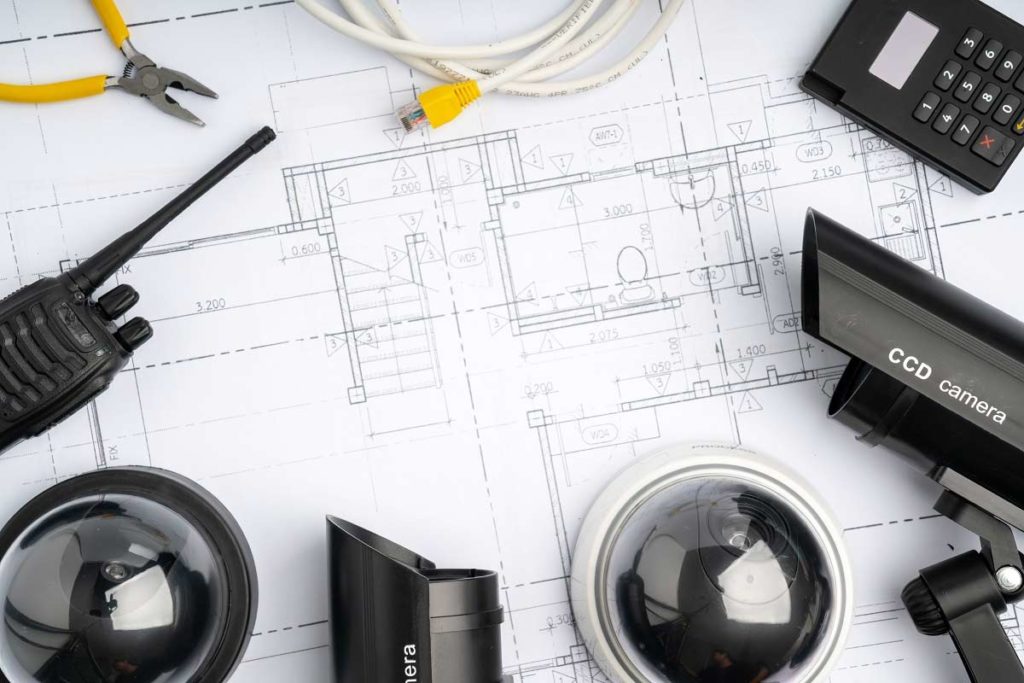
Technology can help mitigate these new health compliance challenges – and you may even already have the solution deployed: Internet Protocol (IP) security cameras. Often implemented by businesses as a security tool, IP cameras are now also an effective way to ensure employees and customers are following health and safety protocols.

Most IP cameras are equipped with artificial intelligence (AI) that can analyze information in real-time and make split-second response decisions. In the context of health compliance, they can be trained over time to recognize when requirements are not being followed and immediately alert the appropriate managers. This means managers only need to address violations, rather than observing everyone all the time, and they can resolve compliance gaps as they’re happening. In other words, AI takes on the compliance burden for you. And, as an added bonus, many AI-enabled surveillance systems give managers the ability to pull up live video feeds from their smartphone, so they can conduct compliance checks remotely, at any time. This is especially helpful to managers covering multiple stores (suddenly, they can be in more than one place at a time!).

Here are three specific ways IP security cameras can help dispensaries and other cannabusinesses ensure compliance with COVID-19-prompted health guidelines:

  1. Social distance monitoring

Six-feet social distancing rules are now the norm across the U.S., and IP security cameras are able to measure the space around employees and customers to detect when the six-foot rule is violated. For example, some systems place a ring around each person, and the ring’s color changes when people come within six feet of each other. This capability can be helpful when trying to do things such as supervise the line to get into your store, manage your checkout queue, or monitor the distance between customers browsing in store aisles.You can use IP security cameras to create a healthier and safer work environment

  1. Occupancy management

In many states, organizations must follow orders that restrict occupancy to 50% capacity. Rather than having an employee at your front door tallying the number of people going into and out of your store, IP security cameras can do the counting for you. With this capability, you can control foot traffic and keep the number of shoppers within defined occupancy requirements – without having to allocate personnel to do the task manually.

  1. Face mask detection

AI-enabled IP security cameras can also help businesses comply with mandatory face mask orders. The technology can be trained to detect employees and customers who aren’t wearing face masks or other required personal protective equipment, and then alert appropriate management personnel.

A Dual Purpose – Security and Compliance

IP security cameras now have a dual purpose. Beyond simply helping organizations protect their premises from crime, they now also empower them to ensure compliance with health and safety requirements. You can leverage the technology to remediate compliance issues in real-time and demonstrate to public officials that your business remains in compliance with all health mandates. Most importantly, you can use IP security cameras to create a healthier and safer work environment – and, in these uncertain times, this is a certainty you can count on.

Soapbox

The Stress of a Grower

By Carl Silverberg
2 Comments

Tell me that you can’t relate to this story.

You’re sitting down to dinner at a restaurant about ten minutes from where you work, finally relaxing after a tough day. You’ve set your environmental alerts on your plants; you have that peace of mind that the technology promised and you know that if anything goes wrong you’ll get notified immediately. As you’re looking at the menu, you receive an alert telling you that the temperature in one of your 2,000 square foot grow rooms has gone out of the safe range. Your mind starts to race, “It’s week seven, I’ve got 500 plants one week away from harvest, that’s 200 pounds of cannabis worth about $150,000-$200,000. Oh my God, what am I going to do?”

You’re doing all this at the dinner table and even though you’re not in a state of panic, you are extremely concerned. You need to figure out what’s going on. You check the graphing and see that over the past hour your humidity dropped and your temperature is gradually going up. Within the past ten minutes, the temperature has gone to 90 degrees. Your numbers tell you that the temperature in the room with $200,000 of cannabis is going up about five degrees every three minutes.

adamJgrow
Monitoring a large grow room can be a stressful task.

“I see this trend and can’t figure it out,” the grower relates. “Normally, the HVAC kicks on and I’d begin to see a downward trend on the graphs. I pre-set my trigger for 90 degrees. But, I’m not seeing that. What I AM seeing is the temperature gradually and consistently getting warmer without the bounce-back that I would expect once the HVAC trigger was hit. All I know is I better find out what’s causing all this and I better find out fast or my entire crop is gone.”

You go through the rest of the checklist from LUNA and you see that the lights are still on. Now, you’re starting to sweat because if the temperature in that room hits 130 and stays there for more than twenty minutes, you’re losing your entire crop. You have to walk in your boss’s office the next day and explain why, after all the time and money you put in over the past seven weeks, not only is all that money gone but so is the $200,000 he is counting on to pay salaries, expenses, and bank loans.

This is something you’ve been working on for seven straight weeks and if you don’t make the right decision, really quickly, when that room hits 130 degrees here’s what happens.

“My equipment starts to fail,” our grower continues. “The crop literally burns as the oils dry up and the crop is worthless. At 130 degrees, my grow lights essentially start to melt. All you can think of is that temperature going up five degrees every three minutes and you’re ten minutes from your facility. I need to leave that restaurant right now, immediately, because even if I get there in ten minutes the temperature is going to be almost 120 degrees while I’ve been sitting here trying to figure out what’s wrong.”

You run out to your car and you speed back to the facility. The grow room is now 125 degrees, you have maybe three or four minutes left to figure things out before you flush $200,000 down the drain. The first thing you do is turn off the grow lights because that’s your primary source of heat. Then, you check your HVAC panel and you realize it malfunctioned and shorted out. There’s the problem.

The real toll is the human cost. Once this happens, no grower ever wants to leave and go home or even go to dinner. It’s a horrible toll. It’s the hidden cost we don’t talk about. The grower opens up with his own personal experience.“This system allows the grower to step back and still feel confident because you’re not leaving your facility to another person,” 

“You think about the burden on the person that you bring in to replace you while you’re out of town and then you think about the burden on you if something goes wrong again. And you decide, it’s not worth it. The anxiety, the fear that it will happen again, it’s not worth it. So, you don’t go. I didn’t even see my sister’s new baby for eight months.”

Your desire to see your family, your desire to have a normal life; all of that goes out the window because of your desire to be successful in your job. It outweighs everything.

This is every grower. It’s why many farmers never leave their property. It just becomes a normal way of living. You just repeat it so much that you don’t even think about it. Why go on vacation if your stress level is higher than it is if you’re home. You’re constantly worried about your farm or your facility. The only way to escape it is to not go away at all.

“This system allows the grower to step back and still feel confident because you’re not leaving your facility to another person,” he tells us. “You don’t realize how stressful a lifestyle you live is until you step back and look at it. Or, if you have an alert system that allows you to pull back. That’s when you realize how difficult your life is. Otherwise, it just seems normal.”

As AI technology expands its footprint into agriculture, there will be more tools to help mediate situations like this; more tools to give you a more normal life. It’s one of the reasons we got into the business in the first place.