By Melissa Kuipers Blake, Osiris Morel No Comments
After nearly a decade of conversation and education on the Hill, the Senate Banking, Housing and Urban Affairs Committee finally held a markup on the Secure and Fair Regulation (SAFER) Banking Act. Previously known as the SAFE Banking Act, the “R” was included to account for Sen. Jack Reed’s (D-RI) concerns with Section 10. The senator shared his concerns publicly on May 11 during the “Examining Cannabis Banking Challenges of Small Businesses and Workers” hearing. Sen. Reed said that Section 10’s language “would make it more difficult for federal regulators to raise the alarm about relationships with any customer that presents significant risks to the bank” and shared that such a provision is “not limited to the marijuana industry or the cannabis industry,” but that it “could allow pyramid schemes or all sorts of other interesting activity to go on without an effective response by the regulator.” Since then, he and a group of bipartisan members, including Majority Leader Chuck Schumer (D-NY), Senate Banking Committee Chair Sherrod Brown (D-OH), and Sens. Steve Daines (R-MT), Cynthia Lummis (R-WY), Kevin Cramer (R-ND) and Kyrsten Sinema (I-AZ), have worked endlessly to develop language to resolve such concerns while maintaining GOP support, leading to the SAFER Banking Act.
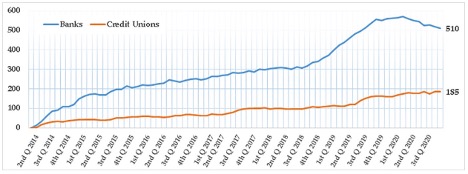
Number of Depository Institutions Actively Banking Cannabis-Related Businesses in the United States (Reported in SARS)
The difference between the SAFE Banking Act and the SAFER Banking Act can mainly be found in Section 10. Changes focus on and determines:
How regulators terminate bank accounts;
How the Federal Deposit Insurance Corporation (FDIC) develops guidance for financial institutions serving state-licensed cannabis businesses;
How income derived from state-legal cannabis business activity is managed;
That personal and political beliefs cannot impact a financial regulator’s decision making;
That federal banking regulators and state banking supervisors and their secretaries of Commerce and Treasury would create rules to increase access to deposit accounts and how such individuals would enhance customer relationships with rural, low- and moderate-income, unbanked and tribal communities; and
How the FDIC would conduct a biennial survey and report on barriers for small- and medium-sized businesses.
During the markup on Wednesday, members introduced and discussed a range of amendments related to criminal justice reform, the racial wealth gap, federal regulators and their processes, rescheduling and the opioid epidemic. In total, there were six amendments, one by Chairman Brown, as well as Sens. Mike Crapo (R-ID), Bill Hagerty (R-TN), Mike Rounds (R-SD) and two by Sen. Raphael Warnock (D-GA). Sen. Brown’s amendment, which would make technical changes to the bill, was the only amendment to prevail on a 17-6 vote.
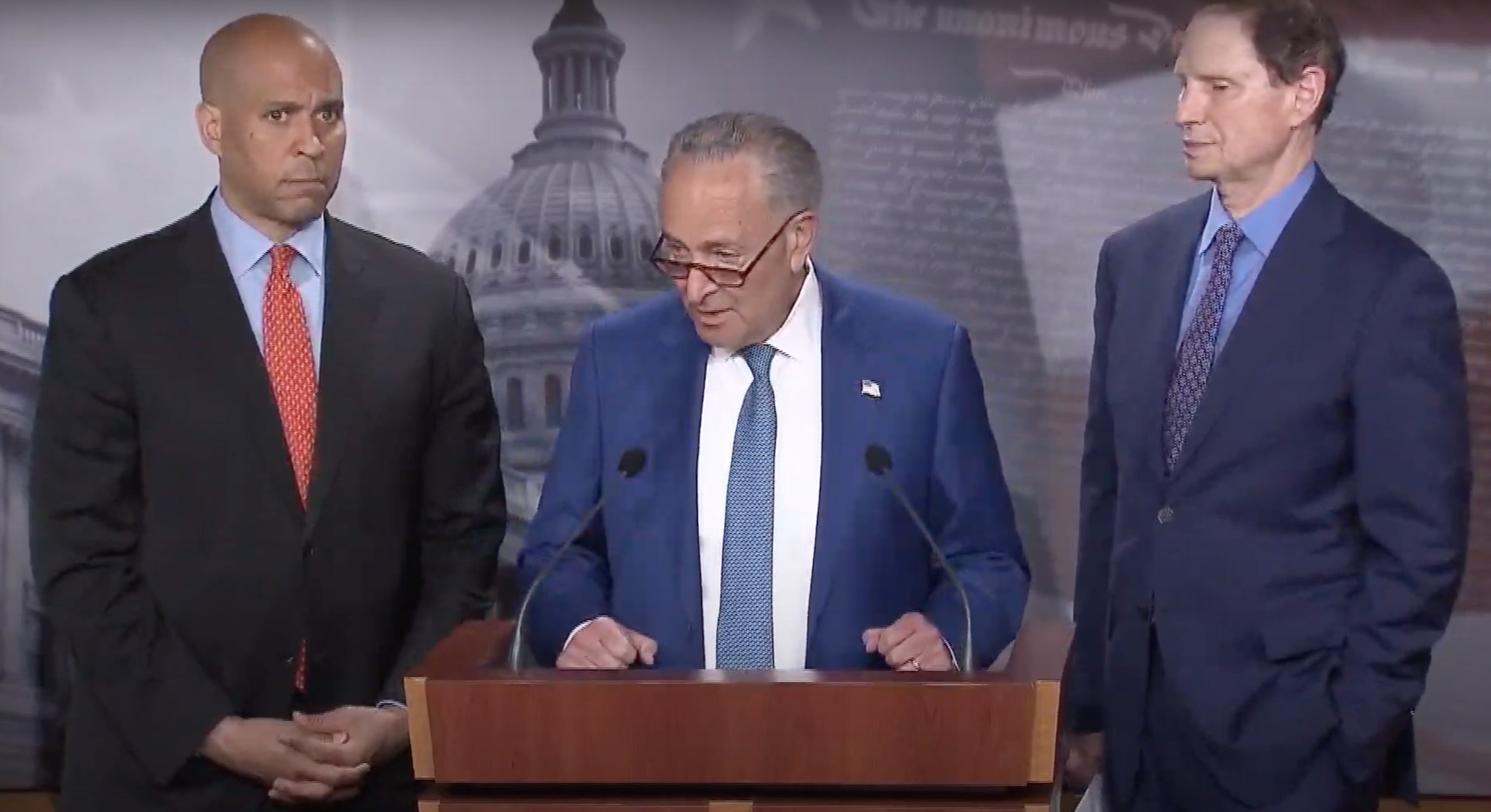
Senate Majority Leader Chuck Schumer (center), Senate Finance Committee Chair Ron Wyden (right) and Senator Cory Booker (left)
To begin the markup, Chair Brown said that propelling this legislation is a critical step in reversing the damage done by the war on drugs and clarified that the SAFER Banking Act would create a better financial system for small and medium-sized cannabis businesses that lack access to such traditional banking services. Sen. Daines, who served as the committee ranking member in place of Sen. Tim Scott (R-SC), who was in California preparing for the Republican presidential debate, shared that although he opposes legalization or decriminalization, he agreed to sponsor and support the SAFER Banking Act because it would fix the current banking system for cannabis businesses nationwide. After hearing remarks from Sens. Lummis, Catherine Cortez Masto (D-NV) and Sinema, the committee voted on the bill, and approved its passage to the Senate floor on a 14-9 vote. Senators voting in favor of the bill were Brown, Tester, Warren, Reed, Menendez (by proxy), Smith (by proxy), Warner, Fetterman, Cortez-Masto, Sinema, Van Hollen, Lummis, Cramer and Daines, and voting against the measure were Sens. Warnock, Scott (by proxy), Crapo, Tillis, Kennedy, Haggerty, Vance and Britt.
After the vote, Sen. Jeff Merkley (D-OR) thanked Sen. Rand Paul (R-KY) and former Republican Sen. Cory Gardner (CO) for their early efforts and for bringing the legislation and issue to the chamber’s attention and concluded that he hopes to have a robust discussion with the full Senate chamber.
With the bill out of committee, it heads to the Senate floor for additional input, discussion and potentially a vote. Majority Leader Schumer has said he intends to bring the SAFER Banking Act to the floor “with all due speed” and noted that he is committed to attaching Rep. Dave Joyce’s (R-OH) Harnessing Opportunities by Pursuing Expungement (HOPE) Act and Rep. Brian Mast’s (R-FL) Gun Rights and Marijuana (GRAM) Act to the final legislation. Sen. Schumer also shared that such provisions would address the war on drugs, bolster social equity and criminal justice reform and protect Second Amendment rights for medical cannabis patients.
When the SAFER Banking Act will receive floor time remains unclear, but Leader Schumer has made numerous representations that he would like to see it done this year.
Even a cursory review of cannabis reveals that the market has been notoriously wasteful, polluting the environment with chemical fertilizers, misused pesticides, contaminated plants, and—perhaps most problematically—thoughtlessly excessive packaging.
The industry is in dire need of sustainable practices, and the easiest way to start an impactful new trend is from the outside in: a.k.a., adjusting how you’re parceling your products.
Honing in on sustainable packaging isn’t just a good move for the environment. It’s also more cost-effective, less labor-intensive and allows you to provide consumers with the best possible version of your flower—no matter how far through the supply chain it’s had to travel before hitting retail shelves.
Cannabis has progressed: It’s time for its packaging to do the same
By the time legalization began sweeping the nation, the industry already had several decades of experience operating underground. With that discretion came a lot of built-in habits around not attracting attention, and for packaging, the focus was solely on not looking like a cannabis product.
An overabundance of plastic isn’t cutting it anymore—not only when it comes to environmental friendliness, but for the integrity of the product itself.
Today, increased legalization grants operators the freedom to expand without the fear of being seen, and as a result, there’s no longer any excuse for wasteful packaging to be the industry’s norm. Glass jars, Ziplocks and an overabundance of plastic isn’t cutting it anymore—not only when it comes to environmental friendliness, but for the integrity of the product itself.
“I’ve been designing packaging in the cannabis industry since 2013, and a lot of trends have come and gone. We used to put flower in plastic Rx jars and paper envelopes. In general, there was a lot of waste: excess boxes and jars that all get thrown away,” says Legacy’s Chief Cannabis Officer Ryan Hedrick. “And when consumers pull the products out of those containers, your marketing doesn’t remain intact. The box gets thrown away, and now they’re just carrying around a labelless jar. Not only is it bad for the environment, but it isn’t helping you promote your brand at all.”
How sustainable storage optimizes curing and shelf life of flower
As for the curing process, Hedrick used to use airtight buckets, which both took up a lot of room and wasn’t at all effective for maintaining cannabis’s ideal humidity levels. He’s since switched to passive atmospheric packaging, which utilizes increasingly popular technology to keep humidity—and sustainability—in mind. “The buckets weren’t letting any moisture out. On top of that, you can imagine how much room 165 five-gallon buckets takes up in a grow space,” Hedrick says.
The same goes for long-term storage. With humidity-controlled bags, operators can rest assured that their product will maintain its efficacy, because as soon as that pack is sealed, the humidity level is guaranteed to stay the same.
Cannabis brand Lava Leaf Organics relies on passive atmospheric packaging for efficient storage—mainly because of the reduction in carbon footprint and increase in terpene preservation.
“When we think about the energy involved in packaging and shipping large amounts of heavy glass jars compared to TerpLoc bags, it was an easy decision for us,” said Lava Leaf Organics CEO Tony Martinez.
“The bags are recyclable, and compared to glass jars with child-resistant lids, they’re much better at preserving terpenes. Using sustainable packaging allows us to put our best foot forward and to better control our customer’s brand experience.”
Tips for making sustainable storage work for you
Sustainable storage is an environmentally-responsible move for the cannabis industry to make, but when weighing the pros and cons of a big switch like this, operators should also keep in mind how positively it will impact their end product, consumer’s experience, and, subsequently, their industry-wide reputation.
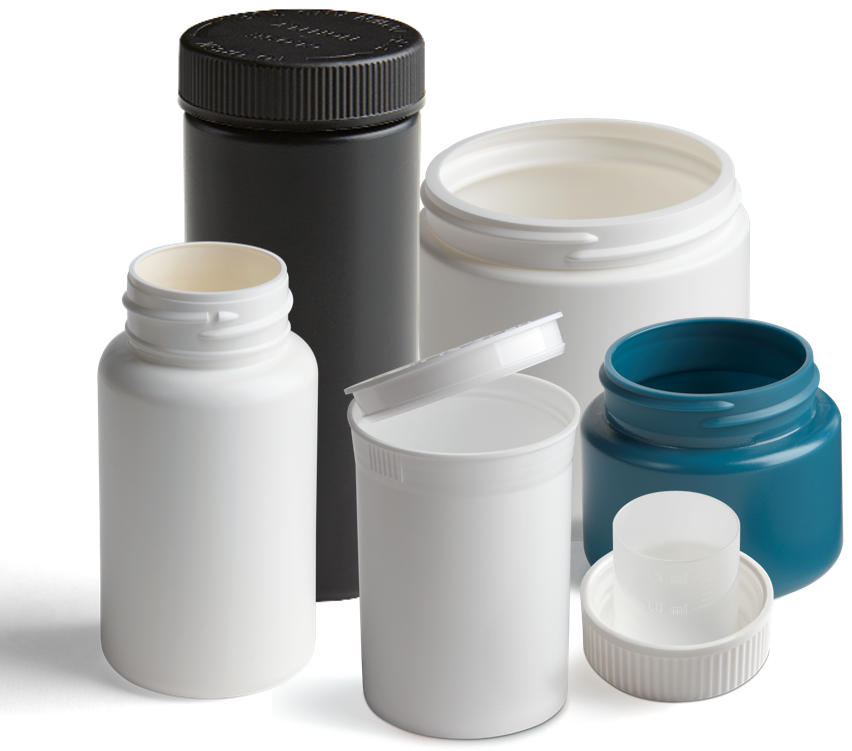
Some product packaging examples in the market today
Placing your products in eco-friendly bags is just the start. There are definitely more tips and tricks operators can take advantage of to prolong the use of sustainable materials and ensure they’re leaving as small a footprint as possible. For example, Hedrick’s team reuses their passive atmospheric packaging for maximum efficiency—especially when it comes to bulk storage or curing.
“We mark all of our storage bags with the original strain, so we can reuse that bag for the same strain as long as it passes testing along the way. When I do so, I take a mixture of SaniDate and water to make sure everything is sanitized and clean,” Hedrick said. “That allows me to reuse them for about 3-4 months’ worth of curing and storage. You can reuse a bucket in that same way, but when it’s time to replace it, you’re still spending another $15-$17.”
Sustainable, humidity-controlled packaging is also ideal for testing consistency. If you send in five buckets of the same strain to be tested, you run the risk of them all sitting at wildly different humidity levels, which means some might pass, and others might be rendered trash.
All of the environmental benefits aside, using sustainable packaging just makes cents—literally. “Essentially, I’m saving a minimum of half a million in packaging every year. That’s my entire staff’s salary for two months. That’s incredible, impactful, significant savings that can make a huge difference for a business trying to expand.”
By Abraham Finberg, Rachel Wright, Simon Menkes No Comments
A Uniquely Texas Approach to Cannabis
The last few decades have seen the United States move forward state-by-state with the legalization of cannabis. Every state is charting its own unique path, and nowhere is this truer than with the state of Texas.
The Lone Star State has made its way from being staunchly anti-cannabis to expressing its own blend of temperance and careful action, combined with a medical cannabis program that’s expanding.
Any predictions regarding the future of cannabis in Texas must take into consideration both the state’s past and its values. In the end, it’s clear that Texas will embrace cannabis in its own individual way and at its own pace, but with a timeframe that appears to be arriving sooner rather than later.
The Debate Continues
108 years after Texas first banned cannabis and the debate continues. Even though Texas has a medical cannabis program, cannabis is still illegal in the state, with possession of less than two ounces a misdemeanor. Possession of more than four ounces is a felony punishable by a $10,000 fine and from 2-99 years in jail.
Texas’s 2015 Compassionate Use Act created the state’s medicinal cannabis program, which now makes treatment available only in the form of low-THC oil of a maximum strength of 1%, and only to a small list of serious conditions: epilepsy, terminal cancer, autism, multiple sclerosis, amyotrophic lateral sclerosis (ALS), seizure disorders, incurable neurological disorders such as Alzheimer’s, Parkinson’s, Huntington’s Disease and PTSD.
Support for a Stronger Medicinal Cannabis Program Comes from Prominent Politicians
Texas Department of Agriculture Commissioner Sid Miller, a leader in Texas politics and one of the architects of Texas’s burgeoning hemp industry, has encouraged Texas legislators to create a more complete medical cannabis program.
Texas Department of Agriculture Commissioner Sid Miller
“I am for medical use,” Miller said in an August 2023 interview. “We have so much good science now. And we know what diseases it can treat, yet our legislature picks winners [and] losers. If you’ve got this disease, you can get treated, but if you’ve got this disease and cannabis will help you, you can’t get treated. We need to let the doctor-patient relationship make those medical decisions and not some bureaucrat or some politician … I’m not a supporter of recreational marijuana, but if someone has a condition that this chemical will help, they should be able to use it.”
Texas Representative Joe Moody from El Paso has worked for many years to promote adult-use cannabis. He recently co-authored two pro-cannabis bills, HB 1805, which would have expanded covered medical conditions and defined a per-doze THC limit instead of a percentage limit on cannabis products, and HB 218, which would have decriminalized cannabis.
Although both bills passed the House of Representatives, they were stopped in the Senate. The next session of the state legislature, which happens every two years, won’t begin until January 2025, so that is the earliest any change in cannabis statutes could take place.
The Future of Medicinal Cannabis
There are currently only three dispensaries in Texas. They appear to be servicing the state’s 268,000 square miles through a series of weekly drop-offs to satellite “partner locations,” which are open an average of only two days per week. This is not exactly a corner-CVS type of arrangement, and the need for new dispensaries for the state’s 61,000 registered patients is high.
The Texas Department of Public Safety took applications for new medical dispensary licenses between January and April 2023. Tony Gallo, managing partner of Sapphire Risk Advisory Group, which helped twelve licensees prepare their applications during this round, anticipates around ten new dispensaries being approved.
All licensees must be vertically integrated – product must go from seed-to-sale under one license – and each applicant paid $7,356 to apply. If approved, the applicants will owe another $488,520.00 for a two-year period.
Many knowledgeable Texans, including Agriculture Commissioner Sid Miller, predict a fully-functioning medicinal cannabis market is just a few years away. “If you can get it to the floor, probably 70% or 80% of the legislative body will vote in favor of it because we have such good science on it. [Originally] we thought, ‘Well, that’ll lead to recreational use or more drug use,’ but it’s not. It’s a plant derivative. Medical marijuana is not nearly as addictive as some of the prescription drugs we use now.”
The Push is On for Adult-Use
Representative Joe Moody believes that adult-use is not too far away in Texas’s future either, and that the way to speed its arrival is through education. He recently sponsored HB 3652, the Texas Regulation & Taxation of Cannabis Act, in order to start a dialogue on what a retail cannabis market will look like in Texas.
Texas Representative Joe Moody
On April 26, 2023, Moody and his bill received a public hearing in the House Committee for Licensing and Administrative Procedures in which many points about setting up a retail market in Texas were discussed. A 10% cannabis tax was proposed by Moody, to be split evenly between the state and local government. Licenses would be required for those growing, selling, transporting or testing cannabis, although individuals would be allowed to grow or possess it in small amounts for personal use. Legal sale and consumption would be limited to adults 21 years of age and older, like alcohol. And of course, cannabis possession would be decriminalized.
How Strong is the Market Potential for Cannabis?
One indication of how strong even a fully-open medical cannabis market might be in Texas came during Moody’s hearing from the testimony of Estella Castro. Castro owns two medical dispensaries in Oklahoma just across the state line from Texas and suspects most her buyers are from Texas. “They have a Texas plate and they come in and buy $500 to $600 worth of product,” she said. Her two shops generated $158,000 in taxes to Oklahoma, most of which she believes should have gone to Texas.
New Mexico recently legalized adult-use cannabis, and the small towns along the Texas-New Mexico border are seeing a lot of traffic from Texas. In the first week of adult-use sales, the New Mexico did adult-use sales totaling $6 million. Of those sales, $1.5 million came from dispensaries in 5 small border towns.
Florida and California Suggest the Scope of a Mature Cannabis Market in Texas
The potential for a fully developed medical cannabis market can be gleaned by studying the next smaller state, Florida, which has an open, mature, medical cannabis market. Florida, with 20 million people, is about two-thirds the size of Texas, which has 30 million inhabitants. Right now, Florida boasts 700,000 cannabis patients whereas Texas only has 61,000. Simple math suggests a fully open, mature, medical cannabis market in Texas could see over a million patients gain relief.
California is the nation’s most populous state with 39 million inhabitants, and its cannabis revenue gives some perspective as to the size of a Texas adult-use market. 2024 estimates of California’s cannabis revenue suggest the Golden State will see $7.2 billion legal cannabis sales while the illegal market will generate another $6.4 billion for a total of $13.6 billion. With a reduction for Texas’s smaller size, these numbers suggest a fully-mature Texas adult-use cannabis market could generate close to $10 billion in annual revenue.
Large adult-use states like California and New York are notorious for having an illicit market that threatens to derail their legal, tax-paying cannabis license holders. Texas’s strong business-friendly focus should help deter such an illicit marketplace from gaining too significant a foothold.
The Back-Door Cannabis Industry
Meanwhile, an extensive “back door” cannabis industry is in full swing in Texas. CBD shops now sell delta-9 (fully psychoactive) THC/CBD gummies and tinctures made from the hemp plant, which is the low THC-version of the cannabis plant. These THC/CBD products adhere to the 0.3% definition of hemp as required by the federal 2018 Farm Bill and are legal and available for over-the-counter or online purchase in Texas’s CBD stores.
Gummies, tinctures and other products made form them hemp plant
Current estimates are that there are over 5,000 hemp, CBD and cannabinoid retailers, manufacturers and distributors in Texas that employ more than 50,000 workers and generate more than $8 billion in annual revenue. With these numbers, the 1,100+ licensed Texas hemp growers are sitting well where they are and are poised to take advantage of a legal adult-use market if and when Texas decides it is ready to go down that path.
Next Steps for Texas’s Cannabis Market
People familiar with Texas’s cannabis market believe that adult-use is a ways down the road for the Lone Star State, and that the near-term focus needs to be on decriminalization and achieving an unincumbered medical cannabis system. Tony Gallo of Sapphire Risk Advisory Group advises the Texas cannabis community to concentrate on “increasing what conditions are allowed for medicinal use” and “increasing what areas of the state it’s allowed to be sold.”
There is a groundswell of public support for decriminalizing cannabis as well as for allowing adult-use. A December 2022 poll showed 55% of Texans support legalizing at least small amounts of cannabis for recreational purposes, and another 28% said it should be legal for medicinal purposes.
A February 2023 poll by the University of Houston found that 82% of Texans support the Legislature passing a bill that would allow people to use marijuana for a wide range of medical purposes with a prescription. The belief that cannabis is a “gateway drug” that would make people more likely to use other illegal drugs is losing traction as well – 70% said it would make people less likely to do so or would have no impact.
Final Thoughts
The demand for cannabis in the Lone Star State is strong. With the likelihood of a fully-functioning medical cannabis market coming soon, and the possibility of decriminalization not too far behind, it’s clear that the future of cannabis is bright in Texas.
While the legalities around adult-use will take longer to work out, and the place of hallucinogenic hemp in the mix needs to be examined and clarified, one fact is certain. The path forward that Texas cannabis takes will certainly be a unique one, as unique and as individual as the Texan people themselves.
Well before cannabis businesses win a license application, they need to have traditional business plans outlining how they’ll run the company. While this obviously includes things like the property, the building, products and inventory, it also includes a lot of things that are often overlooked: things like payroll, human resources and employee management.
Before a cannabis company should even hire their first employee, they need to have a few thing squared away. The timeframe and order of operations will differ for every business and every state, but there are a number of things to consider like workers comp, employee training, handbooks and of course, everyone’s favorite topic: insurance. There’s crop insurance, general liability insurance, unemployment insurance, workers comp insurance and more. Working with the right brokers, not breaking the bank and understanding what you need and when can be crucial to keeping the doors open.
Ahead of the Cannabis Quality Conference, we sit down with Nick Murer, the founder of WECO, to ask him some questions about what businesses need to know and when. Nick will be available at the event in New Jersey this October 17 and 18 during our “Ask the Expert Roundtables” to answer these questions and much more.
Cannabis Industry Journal: Does a company need to have workers comp and unemployment insurance before they’re licensed?
Nick Murer: They don’t need to have it figured out before they’re licensed, but they should want to have a strategy in place as they’re going through the process, knowing what they need to accomplish. There are some cases where states may require insurance upfront in the licensing process, but not always. It is however required before a business opens their doors, and absolutely necessary to have insurance before staffing and their first employees comes on board.
CIJ: What types of insurance should companies look into as they’re submitting our license application?
Nick: As you’re submitting your license application, you should have it figured out or at least speak with a broker about your options. You probably don’t have it yet, since you’re not an entity, but you’ll need general liability insurance, and if you’re a grower, you should have crop insurance too. Prior to opening, you should have your workers comp insurance, unemployment insurance, FICA, SUTA and FUTA figured out with the state. Prior to licensing, you need to make sure you are working with the right insurance broker and managing the cost aspect. We can help with that; we work with a couple of great brokers that are industry-specific. As folks go through the licensing process, it’s important to work with people like us that have the right resources and the right tools to provide that necessary support.
Nick Murer will be available at the CQC in New Jersey, October 16-18 to answer questions and provide a resource for new and existing businessesDuring the application process, you need to be aware of insurance and the options that are available, as well as what’s required, but you might not need to have all of those in place. It’s different for every state.
CIJ: What important parts of human resources and employee management should companies have figured out before they get licensed?
Nick: I think the first area they need to start with is making sure they have their workers comp set up, their GL [general liability insurance] set up, I think they should have their employee handbook figured out, their onboarding procedures, their strategies for discontinuing employment figured out prior to bringing them on. Where we come in and assist with that is making sure that these businesses are properly set up with the state to handle workers comp, unemployment insurance, their FICA, FUTA and SUTA, social security taxes, healthcare benefits and being able to deploy all of that within thirty days properly. We work with a lot of clients making sure they have their onboarding programs fully figured out before they take that leap.
CIJ: As cannabis companies get licensed and begin operating, what are some often overlooked HR functions?
Nick: I think the number one area they need to understand in their hiring process prior to bringing people on is really having a thorough, compliant handbook that they’ve also participated in, and have worked towards creating a better document so when these employees come on they know the expectations and the standards that need to be met in order to be a successful member of the team. I think their employment onboarding practices need to be dialed in where they understand what is going on between the onboarding, timing, the documentation needed all before effective start date to stay in compliance. Understanding labor compliance and being able to understand how you properly onboard and offboard an employee is a really critical part. Where we like to come in and assist our clients is helping train managers and being their resource. Everyone works with humans and there are always unforeseen problems that arise We’re in the people business and there will be people problems and mitigating those should be everyone’s number one priority. The more we can help protect cannabis businesses, the less risk they bring to their own company, people and the industry.
By Abraham Finberg, Rachel Wright, Simon Menkes No Comments
When Texas Governor Greg Abbott signed Senate Bill 339, also known as the Texas Compassionate Use Act, into law in 2015, many Texans expressed frustration. The purpose of the act was to allow the THC treatment of illness via prescription, opening up the state’s medicinal cannabis market. However, the act authorized only low-THC cannabis oil (maximum strength 0.5% THC) and only for epilepsy. Many Texans with other medical conditions that would have benefited from cannabis were unable to access it, and the dosage was seen as weak and minimally effective.
In addition, those residents hoping the Lone Star State would take a significant step forward towards legalizing adult-use cannabis experienced a rude awakening. A long road was still left to travel before recreational cannabis sales would be allowed to take place.
The Texas Department of Public Safety, which oversees the Compassionate Use Program, did a study of other state’s compassionate use programs and determined that three licenses were the minimum needed to supply the state’s epilepsy population. They updated Health and Safety Code to require a minimum of three licenses, and only three licenses were issued in 2017. This, for a state with a population of 29 million.
Then, the following year, a quiet revolution began. It started with the passage of the federal 2018 Farm Bill, signed into law by President Donald Trump as the Agriculture Improvement Act of 2018. Among its many provisions were several sections dealing with the production of hemp. Because the hemp plant and the cannabis plant are the same plant, the Farm Bill defined hemp as “the plant Cannabis sativa L. and any part of that plant, including the seeds thereof and all derivatives, extracts, cannabinoids, isomers, acids, salts, and salts of isomers, whether growing or not, with a delta-9 tetrahydrocannabinol (THC) concentration of not more than 0.3 per-cent.”
The Farm Bill also removed hemp from the Drug Enforcement Administration’s schedule of Controlled Substances and authorized states to submit plans to administer hemp programs, making sure to keep the THC of plants and products under 0.3%.
The Texas Department of Agriculture, led by its enthusiastic three-term commissioner, Sid Miller, was instrumental in promoting the hemp section of the 2018 Farm Bill. Upon the bill’s passage, Miller backed Texas House Bill 1325 which authorized the production, manufacture, retail sale and inspection of industrial hemp crops and products. HB 1325 passed unanimously in June 2019, and the Texas Department of Agriculture opened the online hemp licensing and permit application process on March 16, 2020. The cost to be licensed by the Department of State Health Services is a yearly fee of $258; a licensee either purchases a license to grow, manufacture and sell hemp products wholesale or a license to sell hemp products retail in-store and online.
The hemp is tested before harvesting to make sure the THC level stays below 0.3%; otherwise, it must be destroyed. (The type of THC being measured is delta-9 THC, the same THC used in cannabis flower, gummies and other products being sold in fully legal states.)
That being said, what the hemp farmers realized was that, by keeping the delta-9 THC content of their hemp and hemp oil to 0.3%, they could still make CBD gummies with strong psychoactive properties. A typical 4-gram gummy would support 10mg of THC and a 6-gram gummy would support THC of 15mg, while still maintaining the 0.3% legal hemp concentration. This is a similar number of milligrams of THC found in cannabis gummies sold in cannabis shops in states such as California.
The Texas state list of approved hemp varietals reads like the list of cannabis flower sold in a dispensary: names like Hemp Kush, Bubba Kush and Blu Haze abound. Additionally, because it is still hemp by the 0.3% strength definition, there is no age limit to purchases and products may be purchased online by anyone and mailed anywhere.
A 2023 study revealed that the Texas hemp industry currently employs more than 50,000 workers and generates more the $8 billion in annual revenue. Also, between $19.1 and $22.4 billion in economic activity is generated by the 5,033 hemp, CBD and cannabinoid retailers, manufacturers and distributors in Texas.
“It is vital that Texas continues to support the hemp industry, which has become a key component of the state’s overall economy,” said Cynthia Cabrera, chair of the cannabinoids council of the Hemp Industries Association and chief strategy officer at Austin-based Hometown Hero CBD. “The results of this study demonstrate the positive economic and social impact of hemp in Texas, and that its small businesses and farmers need to be protected to continue to thrive, providing jobs and tax revenue.”
In 2020, smokable hemp, including vapes, was banned in Texas, a ban that was upheld by the Texas Supreme Court. The only allowed consumable hemp products are oil-based products, like tinctures and gummies.
The only allowed consumable hemp products are oil-based products, like tinctures and gummies.
Agriculture Commissioner Miller lobbied against the ban and feels it puts Texas hemp farmers in an uncompetitive position compared to other state’s hemp farmers. “After three years of administering our hemp program, it’s clear the legislature’s effort to ban smokable hemp products has reduced our competitiveness to other states and harmed our farmers,” he said earlier this year. “The ban on smokable hemp products has confused and discouraged licensed growers and forced out processing facilities on which those growers depend.”
Meanwhile, the medicinal cannabis industry has expanded, at least in terms of the conditions for writing a medical prescription and the allowable THC strength. Terminal cancer, autism, multiple sclerosis, amyotrophic lateral sclerosis (ALS), seizure disorders, and incurable neurological disorders such as Alzheimer’s, Parkinson’s, and Huntington’s Disease were approved in 2019, and in 2021, House Bill 1535 raised the THC concentration from 0.5% to 1.0% and added PTSD to the list of approved medical conditions.
From January to April 2023, Texas Department of Public Safety took applications to open more dispensaries at an applicant cost of $7,356 for each application. All licensees must be vertically integrated – product must go from seed-to-sale under one license. If approved, the applicants will owe another $488,520.00 for a two-year period. This will allow them the opportunity to serve almost 61,000 registered patients who are supported by 747 physicians approved by the Regulatory Services Division to prescribe low-THC cannabis through the Compassionate Use Program.
Tony Gallo, managing partner of Sapphire Risk Advisory Group, helped twelve of the recent license applicants prepare their applications. In addition, his firm has been assisting cannabis companies in Texas since 2017. 420CPA reached out to Tony for an “in-the-trenches” view of cannabis in Texas. Gallo believes an adult-use market is a long way away.
“Concerning growth in the Texas cannabis industry,” Gallo says, “two factors come into play — increasing what conditions are allowed for medicinal use, and increasing what areas of the state it’s allowed to be sold.”
420CPA co-founder Abraham Finberg CPA suggests hemp companies position themselves to enter the cannabis market should state legislators and the people of Texas have a change of heart and decriminalize cannabis and authorize an adult-use market. “Hemp entrepreneurs can start with CBD products as they’re doing now and expand their offerings as the laws change,” Finberg says.
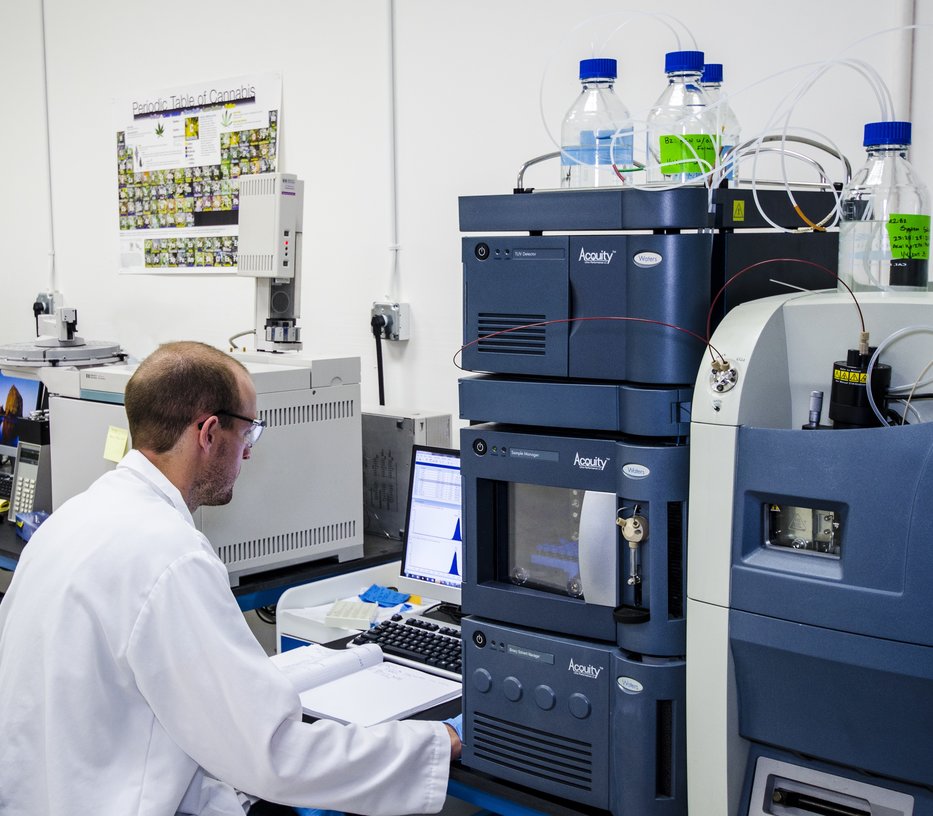
In Maine, a laboratory released a study they conducted, finding a 17% failure rate of dangerous pesticides in cannabis samples tested. The state requires testing for adult use cannabis, but not for medical cannabis. Just under 4% of adult use samples failed a pesticide screening, while over 20% of all medical samples they tested failed the same screening. Nova Analytic Labs conducted the study and found piperonyl butoxide, bifenthrin, spinosad, imidacloprid and pyrethrins in both adult use and medical cannabis samples.
Also in the Northeast, a NY Cannabis Insider investigation found labs breaking rules for reporting pesticides and other contaminants as well as companies misreporting numbers and selling cannabis that has failed tests. New York only allows outdoor cultivation to encourage environmental sustainability, but some say that rule is what is behind high microbial test failure rates. To ease the burden, New York simply removed mandatory microbial testing.
Now, Oregon is doing the same: removing microbial testing burdens because too many businesses are failing them. Back in March of this year, Oregon started to require tests for aspergillus contamination, but a legal challenge halted that rule in late August and state regulators complied, doing away with the testing requirement for now. Stakeholders in many cannabis markets, including New York and Oregon, still debate just how much of a public health risk microbial contamination in cannabis truly is.
Meanwhile in California, regulators have sent warning letters to labs threatening stiff penalties if inaccurate test results are found. While these warning letters highlight THC potency inflation and laboratory shopping, a rising concern in markets across the country, they also mention falsifying scientific data, which has been known to occur in pesticide testing results as well.
The common theme across these markets is lab testing policy at the state level and an inability of an entire industry to come to any agreement. In lieu of any federal guidelines on a national level, disjointed state policies and preventable lab testing problems like these continue.
By Abraham Finberg, Rachel Wright, Simon Menkes 2 Comments
Adult-use cannabis has gained steam across the nation as more and more states jump on the legalization train. As of the writing of this article, 23 states have legalized adult-use while another 15 have allowed the sale of cannabis for medicinal purposes, for a total of 38 green states.
Meanwhile, Texas still has stiff penalties for possession. Two ounces or less is a misdemeanor with a maximum fine of $2,000 to $4,000 if one has between two and four ounces. Possession of more than four ounces is a felony punishable by a $10,000 fine and between 2-99 years in jail. And that’s just for possession.
Quasi-medicinal use was approved with the 2015 Texas Compassionate Use Act, and just for epilepsy, to be only treated by low-THC cannabis oil with a maximum strength of 0.5%. Since then, the number of conditions approved for low-THC treatment has been opened up to terminal cancer, autism, multiple sclerosis, amyotrophic lateral sclerosis (ALS), seizure disorders, incurable neurological disorders such as Alzheimer’s, Parkinson’s, Huntington’s Disease and PTSD. At the same time, the allowable strength of cannabis oil has been increased to a still-minimal 1.0%.
So, what’s holding back the Lone Star State? And what can be done to obtain full legalization for both medicinal and adult-use cannabis? The answers lie within the Texan psyche which has a strong streak of self-reliance in it that has made the state go its own way before. Legalize cannabis just because 75% of the other states have already done so? If your friends jumped off a cliff, would you jump off a cliff too?
Texas is the only state to have been its own country. When its leaders declared independence from Mexico in 1836 and General Sam Houston defeated Mexican General Santa Anna later that year, Texas became the Republic of Texas. While many Texans wanted their country to join the United States, the push within the new republic to remain a separate country was strong. It took nine years of heated debates before Texas entered the Union.
Fast forward 178 years to 2023, and many of the heated debates taking place in Texas today revolve around cannabis. Some Texans see the push to legalize adult-use cannabis as a moral issue, and that it is the responsibility of state government to hold the line against what they view as a gateway drug. Others argue cannabis can be beneficial by providing a safe alternative to opioids for pain relief, and that it is already easy to access on the black market.
Several recent cannabis bills: HB 1805, which would have expanded covered medical conditions and defined a per-dose THC limit instead of a percentage limit, and HB 218, which would have decriminalized cannabis, both passed the state House of Representatives in April 2023 but died in the Senate when Lt. Gov. Dan Patrick, who presides over the chamber, refused to refer the bills to a state Senate committee for review.
“We’re always listening on the health issues, but we’re not going to turn this into California,” Patrick said in 2021, “where anybody can get a slip from the doctor and go down to some retail store and say, ‘You know, I got a headache today so I need marijuana,’ because that’s just a veil for legalizing it for recreational use.”
The Texas legislature only meets every two years, and the next session is scheduled to begin in January 2025. Since Texas does not have a statewide ballot initiative process, statewide decriminalization and possible passage of adult-use legislation will only be possible then.
Law enforcement has a stronger voice in public policy in Texas than in many other states, and law enforcement organizations have expressed serious reservations about decriminalizing cannabis in Texas. In a joint statement in 2019, the Texas Police Chiefs Association and the Sheriffs’ Association of Texas expressed concerns that legalization would bring increased crime, entice a dangerous black market and lead to increased use of other, more addictive drugs. They also opposed expanding the state’s restrictive medical program until “validated, peer-reviewed medical research shows a proven medical benefit.”
Despite these setbacks, there is a growing groundswell of public support for decriminalizing cannabis as well as for allowing adult-use. A December 2022 poll showed 55% of Texans support legalizing at least small amounts of cannabis for recreational purposes, and another 28% said it should be legal for medicinal purposes.
A February 2023 poll by the University of Houston found that 82% of Texans support the Legislature passing a bill that would allow people to use cannabis for a wide range of medical purposes with a prescription. The belief that cannabis is a “gateway drug” that would make people more likely to use other illegal drugs is losing traction as well – 70% said it would make people less likely to do so or would have no impact.
Austin, Texas
Voters in some cities passed local ordinances in 2022 decriminalizing cannabis although not all of these ordinances have been implemented by their mayors and city councils. One large city, Austin, passed such a law and is no longer arresting or citing anyone for misdemeanor possession. Other cities, including Dallas, have gone as far as to implement cite-and-release policies, which directs police to ticket someone with less than four ounces of cannabis. Though this policy keeps cannabis possessors from being arrested and detained, they still must appear in court and face the same fines and possible jail time.
These individual city and county efforts to decriminalize cannabis are helping build momentum for eventual statewide decriminalization when the state legislature returns in 2025.
The keys to achieving the goals of state-wide decriminalization and adult-use lie in implementing a multi-pronged approach of changing the public perception of cannabis through education coupled with promoting the economic benefits to the state of increased jobs and tax revenue.
Representative Joe Moody has taken a unique approach to educate lawmakers and Texas citizens. He recently sponsored HB 3652, the Texas Regulation & Taxation of Cannabis Act, in order to start a dialogue on what a retail cannabis market would look like in Texas. Moody received a public hearing in the House Committee for Licensing and Administrative Procedures on April 26, 2023 in which many points about setting up a retail market in Texas were discussed, including a 10% cannabis tax.
Moody didn’t expect the bill to move forward and, in the end, no vote was taken. But that wasn’t his goal. “No cannabis retail market bill has ever gotten a hearing like this in the Texas Legislature,” he told the committee. “The time is coming where this will be the law of the land, and so we might as well get in front of that.”
Many Texans in favor of legalization and the establishment of an adult-use market are optimistic. Recently, 420CPA’s Tara O’Connor attended a meeting of cannabis executives in Dallas. The Texas Cannabis Roundup, billed as “one of the largest gatherings of cannabis business professionals in the South”, was packed with close to 200 people, all there for an evening of good food and drink and to hear speeches on the progress of legalization in the Lone Star State. The mood was upbeat. “People here are really hopeful and energized,” commented Tara afterward. “They really want recreational cannabis to come to Texas.”
In the last analysis, Texans are an independent lot, and they do things their own way. Decriminalization will happen when the people of the Lone Star State are ready to allow it. And whether it’s a fully functioning medicinal cannabis program with an adequate number of dispensaries and a strong enough cannabis product to bring relief to all who need it, or if, in the end, Texas approves adult-use cannabis for its citizens, one thing is for certain: such progress will happen in a time-frame that is right for Texas and in a uniquely Texan way.
A review of these various jurisdictions, the EU, the UK, and the USA, makes it clear that testing of CBD to ensure public safety is paramount to staying in business, and indeed to the survival of the industry. In the UK it is imperative to be active in the Novel Food licensing regime to remain on the market. In the EU, it is imperative for a legitimate market at all.
In the USA, it may very well become an imperative, if not because of the FDA or even Congress, but rather because as the U.S. market matures, lawsuits over product liability are almost inevitable, pointing to the lack of toxicology reporting or to the way a product was manufactured or marketed. Until the FDA plays a more robust role in establishing standards for the safety of CBD in food products, the best means for companies to protect themselves is with a Novel Food inspired testing regime to confirm product safety.
What this means for the CBD industry
Companies want a clear path forward for investments in the CBD sector. Litigation is predictable, especially in a litigious society like the U.S., as companies prepare themselves with toxicology reporting that satisfies the FDA. There will be clear winners and losers in the CBD market place, most likely based on a toxicology report.
The EFSA, FSA, FDA, the various state level hemp associations dotted across America and more intriguingly, businesses who see testing requirements as a legal means of ousting the less-well-financed competition, are all advocating for testing. This makes sense: There is no future in betting on the unknown. Anything short of a clear safety standard is just guessing with people’s health and thus the company’s future.
So, what are we left with?
Clearly, there is a need for a toxicology report prepared on behalf of the CBD sector. And one about CBD as a food supplement, not as a medicine. It is worth noting that Miller also remarked on how Epidiolex contained high doses of CBD. It needs to be made clear that the medical study of Epidiolex is not consistent with a study of non-medical levels of CBD when used as a supplement.
At present, the biggest challenge facing CBD product manufactures, whether in the USA, EU or UK, is the lack of controlled studies and thus the inability to illustrate the necessary toxicology reporting in their portfolio. Even in the US, the FDA has said it can’t conclude that CBD meets the standard of “generally recognized as safe” (GRAS) for use in human or animal food. Thus, the future of CBD lies in a company’s ability to illustrate by means of a study and accompanying toxicology reports that their brand is firmly in line with the required safety and data standards.
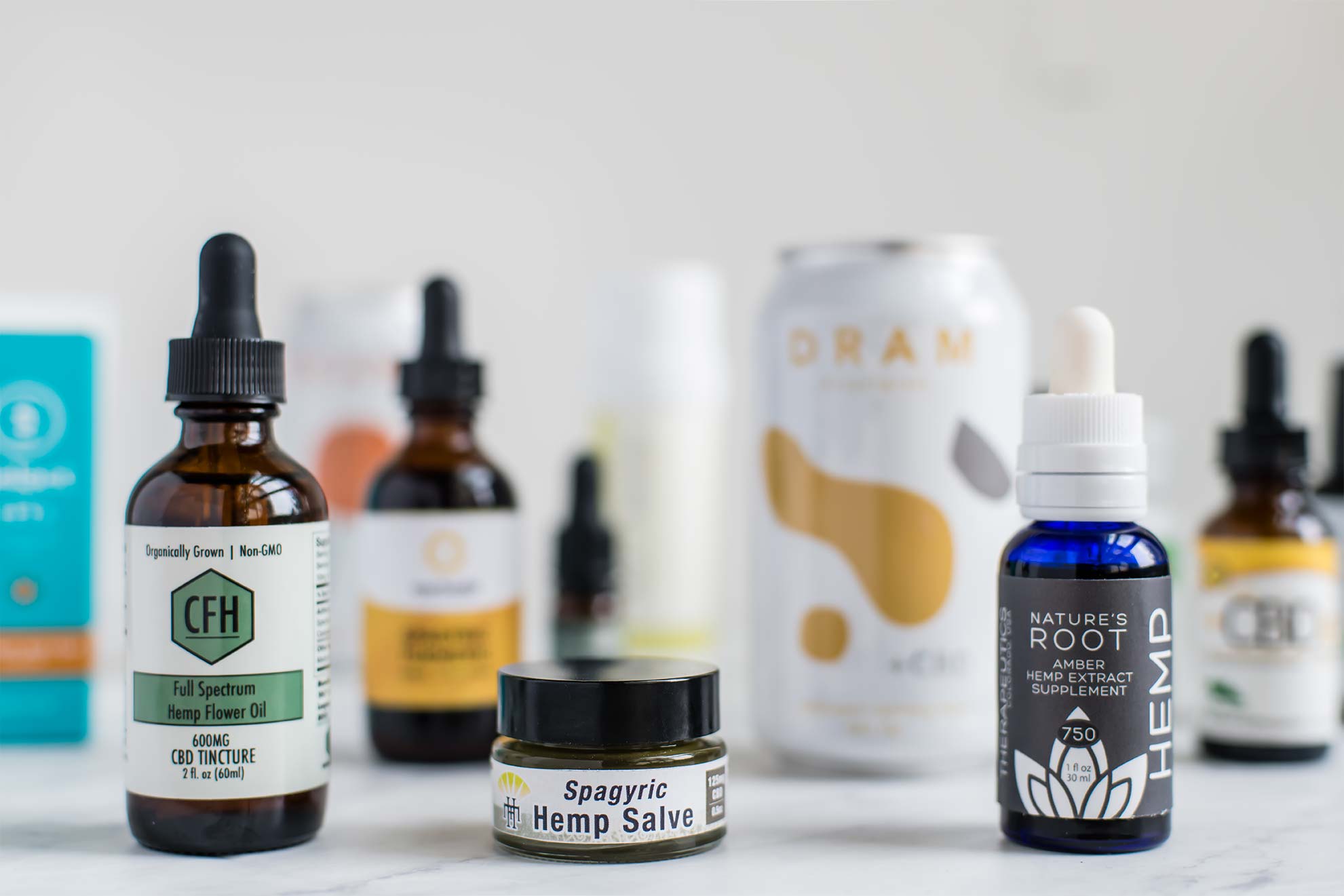
Just some fo the many CBD products in the U.S. market out there
Here is where the EU and the UK may have an advantage, through involvement in the Novel Food application and licensing procedures. The needed legal security for the marketing of CBD products can only be achieved by their approval as Novel Foods. Projected costs for an individual company registering CBD isolate and full spectrum distillate under the Novel Food guidelines requires an investment of €3.5 million. As this is prohibitively high for most companies, at the June 2019 General Assembly, the EIHA proposed the creation of a consortium, with the aim of submitting a joint Novel Food application and sharing these costs among the members.
How the “EIHA projects GmbH” Partnership Works
The founding members of the EIHA projects GmbH have a preferential partnership rate. As a partner, I am able to sub-license products or brands in the EU and this license will be valid in the UK when the application is validated and on the Union list, and is equally valid in the USA.
The Atlantic Ocean is getting smaller and it appears that the FDA might very well decide that the US needs the same European safety standards applied to products at home. Sub-licensing is clearly an inexpensive pathway for an American brand to claim toxicology and safety testing PLUS get access to the EU market. It is imperative for businesses going forward to take a serious look at their future business goals and align themselves with an advancing regulatory environment confirming their commitment to approved quality products.
Part 1 of this series discussed the lack of bankruptcy protections for cannabis companies, since bankruptcy in the U.S. is an exclusively federal procedure and cannabis remains illegal under federal law and proposed a number of alternative options for businesses struggling in the current environment. Part 2 of this series focused on state law receiverships for several states.
In this the third and final part of this series, we continue to review state law receiverships for several additional states and discuss the final non-bankruptcy option for cannabis companies, an assignment for the benefit of creditors.
Below is an overview of the laws and rules governing receiverships in several additional states which have legalized cannabis.
Massachusetts
In Massachusetts, receiverships are governed by statute, with numerous statutes for receivership in various industries and entity types but, in general, the appointment of a receiver is granted by a court after the filing of a complaint by third party, most frequently a secured creditor.
In keeping with its industry specific approach, the state cannabis regulator has enacted rules detailing the steps for a cannabis receivership. Most notable among these rules is a requirement to provide notice to the state regulator at least five days before filing a petition to appoint a receiver and, similar to the approach of Nevada, establishing minimum requirements for a person to serve as a receiver for a cannabis company (which generally require a person to pass a background check and have a crime-free past). In addition, because of the fairly restrictive local licensing in Massachusetts, coordination with the locality in which a cannabis company has operations is also required.
Michigan
Michigan has a broad receivership statute, in addition to both entity and industry specific statutes. The general receivership statute allows for the appointment of receivers as part of a court’s equitable powers so long as the appointment is permitted by law. In 2020, Michigan law was amended to specifically permit receivers to be appointed over cannabis companies. The state cannabis regulator’s rules require notice to such agency within 10 days following the appointment of a receiver, and Michigan law further provides that receivers may only operate a cannabis facility upon approval by the state regulator.
Anyone may seek the appointment of a receiver in Michigan, even if they have a connection to the property or business to be placed in the receivership. However, an action may not be brought solely to appoint a receiver but must instead be sought after an action for another claim has already been made. If a court determines it has cause to appoint a receiver, such receiver must have “sufficient competence, qualifications, and experience to administer the receivership estate”. Receivers in Michigan appointed under the general commercial receivership statute (including receivers over cannabis companies) are subject to the court’s equitable discretion but have broad powers, including the power to operate, restructure, liquidate, and sell the business.
Missouri
Like Michigan, Missouri has a general receivership statute as well as statutes for specific receivership situations, notably with respect to corporations. However, Missouri has not enacted any particular rules with respect to cannabis companies and as a result receiverships in Missouri have been conducted under the general receivership statute.
Receivers in Missouri are appointed by a court order following the application of a person with an interest in the assets over which the receivership is sought and an appointment may be made prior to any judgement having been rendered. In addition, the appointment of a receiver may be sought as an independent claim and not as an ancillary claim to another primary claim. Receivers may be granted powers as a general receiver (similar to “equity receivers” in other states) with powers over all of the assets of a debtor, or over specific property of a debtor.
Missouri’s cannabis regulations contain very few rules that specifically relate to a receivership, other than a requirement to provide notice to the state cannabis regulator within 5 days of a receivership filing. While some parties have cited a lack of cannabis specific rules as creating a lack of clarity regarding receivership in these states, Missouri courts and the state regulator appear to be applying the general receivership rules to the industry with at least one receivership in the state in the final stages of completion.
Assignments for the Benefit of Creditors
To conclude this series, we want to revisit another option we discussed in Part 1 for dealing with a financially troubled firm: an assignment for the benefit of creditors (ABC). While voluntary negotiations with creditors is typically taken where the value of the underlying business clearly exceeds the liabilities of the business, and receivership is an avenue for creditors to seek a court to force a restructuring or liquidation of a business, even over the objections of the business itself, an ABC process can be appealing where the creditor and debtor maintain relatively amicable relations, but the value of the business is such that it is clear the equity holders have little to no value remaining in the business. A creditor may view the ABC process, which is generally a lower cost option as compared with a court-supervised receivership, as the superior proposition in these circumstances.
An ABC is a state common law or statutory remedy available to debtors that is roughly analogous to a Chapter 7 bankruptcy or liquidating Chapter 11 bankruptcy. Unlike a receivership, where a creditor applies to a court for the appointment of a receiver and such an appointment can be granted even over the objection of the debtor, an ABC is a step taken by the debtor itself to liquidate its assets in an orderly fashion with the proceeds paid to its creditors. While courts can be involved to resolve specific matters, and ABC process is principally undertaken without court involvement or direct supervision.
Unlike a receivership, an ABC is a step taken by the debtor itself to liquidate its assets in an orderly fashion with the proceeds paid to its creditorsTo initiate an ABC process, the debtor selects the assignee to take ownership of its assets and such assignee holds such assets in the functional equivalent of a trust for the benefit of the creditors of the debtor. As such, the assignee, while selected by the debtor, owes duties (typically fiduciary duties under state law) to the body of creditors.
Once the assignment has occurred, the assignee will engage in a relatively significant diligence effort in order to gain a clear understanding of the assets and liabilities of the debtor, to complete the assignment and to provide notice to third parties and creditors of the fact that the assignment has occurred. The assignee then generally oversees the operation of the business (if it is continuing) while moving to create a sale process for its assets, whether through some sort of public auction or a privately negotiated sale (which, as in bankruptcy proceedings, may include stalking horse bids).
One notable difference between the bankruptcy and receivership process and an ABC is that, in general, assets sold in an ABC are not sold free and clear of all underlying liens, meaning that senior secured creditors must consent to any sale, or their liens will travel with the assets.
While ABCs offer many advantages over receiverships, including a typically lower cost, flexibility in the selection of the assignee, and a generally easier and faster path to liquidation of assets, there are limitations, including the risk that a third party may seek to appoint a receiver after an ABC has been commenced or that the compensation package granted the assignee is disproportionately high, each of which could ultimately result in higher costs for all involved. Furthermore, sales of assets in an ABC are not automatically sold free and clear of all liens.
In the end, regardless of where a cannabis company may be operating, the lack of access to federal bankruptcy courts does not deprive the company or its creditors of viable avenues to restructure or liquidate a business. However, because these options are less familiar to those who typically operate in the bankruptcy-centric restructuring arena in other industries, companies and creditors in the cannabis space are well advised to consult with counsel familiar with the cannabis industry and the restructuring alternatives that remain available to them.
This is Part Three of a four-part series discussing European cannabis regulations. Click here for Part One and here for Part Two. Part Three dives into dosage, approvals and more. Stay tuned for the final Part Four, coming next week.
But does CBD harm the liver?
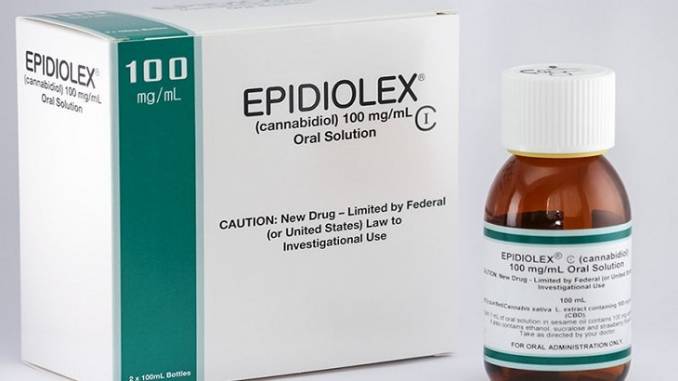
Here, it is important that we compare apples to apples. Supplements are intended in addition to one’s usual diet. Medicines, on the other hand, are meant to alter a condition to solve a problem. Epidiolex is a medicine, not a supplement. According to Epidiolex the recommend dosage of Epidiolex, a highly purified form of CBD, is between 5mg and 25mg per kilo body weight per day. That means that an average 70 kilo adult would need to take between 350mg and 1750mg per day!
At this moment, even the FSA states that a recommended dosage should not exceed 70mg per day and most recommendations are much lower. This is because supplements are not medicines.
The point is that Epidiolex is an FDA-recognized medicine and should not be compared to a supplement. Supplements may range from vitamins, minerals, herbal products and botanicals, and are offered without a prescription to people who wish to maintain or improve their health. Purchasers of supplements, as the word suggests, are supplementing their diet or lifestyle, they are not seeking a doctor prescribed medicine.
The supplement or additive industry has no desire to confuse the objective of a supplement with one of a medicine. The objective of testing CBD is to confirm its usage as a supplement, so a firm line can be drawn between what is a medicine, formed to make conditional changes to the body, and what is a supplement to a normal diet.
Despite the FDA’s website warning that CBD is not a legal additive to food or drinks, at this point, the Agency seems to limit actions to claims, and not the safety of the product itself.
This position may be about to change.
The FDA has made inquiries with the European authority, EFSA, concerning testing and safety requirements. It is quite possible the FDA prefers the ‘EU approach’ over the current ‘wild west approach’ driving the American CBD industry.
In response to interview questions directed to FDA spokesperson, Courtney Rhodes says:
“CBD cannot lawfully be sold as a dietary supplement or as an ingredient in food under the FD&C Act. (Bold italics by the FDA) Food ingredients must be shown to be safe to be lawfully added to food. That means, there must be a reasonable certainty that an ingredient’s intended use won’t cause harm”.
If this is the case, one may well wonder why the FDA is not enforcing the FD&C Act. The answer might lay in great part to the specifics of the 2018 Farm Bill (formally, the Agriculture Improvement Act), where the only statutory metric for cannabis as a controlled substance is the reference to the 0.3% delta 9 THC level. Many see this poorly written bill as an open door for cannabinoids to hit the markets legally, much to the chagrin of many state lawmakers.
FDA spokeswoman Rhodes says that the 2018 Farm Bill effectively “removed hemp from [DEA] regulation.” By defining hemp as Cannabis sativa L. with a delta-9 concentration of 0.3% or less, “hemp derivatives, [like] CBD, …meet that definition of hemp and [are] not prohibited under the Controlled Substances Act.”
Thus, any enforcement on the part of the FDA is legally hamstrung due to the way the 2018 Farm Bill was written.
But is change in the air?
Research has yet to settle on “how much CBD can be consumed, and for how long, before causing harm,” says FDA Principal Deputy Commissioner Janet Woodcock. The existing regulatory framework for food and supplements are inappropriate for CBD, she says, and the FDA does not, in fact, intend to pursue rulemaking that would allow for the inclusion of CBD in dietary supplements.
So, what does the FDA intend to pursue?
While the FDA has generally focused on unsubstantiated health claims for food and beverage products, it is also on record stating that available data did not show CBD products as meeting the safety standard for a human or animal food supplement. “A new regulatory pathway for CBD is needed,” the Agency says, “that balances individuals’ desire for access to CBD products with the regulatory oversight needed to manage risks.”
What would such “a new regulatory pathway” look like? Most likely, that new testing requirements for CBD could come into effect. This could eventually mean testing requirements much like those in the EU.
Have the studies of Epidiolex, with findings based on extremely high dosage levels tainted the CBD discussion?
The structure of cannabidiol (CBD), one of 400 active compounds found in cannabis.
“The FDA is relying on pharmaceutical studies that show risks at larger doses,” says Jonathan Miller, general counsel for the U.S. Hemp Roundtable, adding that there is a decade of clear and established evidence of the safety of CBD products sold at retail. This is hard to deny: The industry has been selling CBD products for the last 10 years without any significant health issues arising. Thus, says Miller, creating a new regulatory pathway would not be necessary as the dietary supplement and food pathways are already provided for under the FD&C Act.
Authorities and industry leaders alike want regulations that promote business while at the same time protecting consumers. “The FDA’s inaction for the past year has facilitated an unregulated marketplace — which is bad for consumers and bad for business. It’s time for FDA to announce a legal pathway to market for these CBD-containing supplements and to commence meaningful enforcement against products that flout category-wide requirements for dietary supplements,” says Steve Mister, president and CEO of the Council for Responsible Nutrition (CRN), quoted on the crnusa.org website.
It is clear that the FDA does not want CBD in food and beverages and likewise claims there is no clear regulatory pathway, citing scientific data on CBD based on the Epidiolx study, which has little room for claiming CBD could be safely used as a supplement because the study is based on medicine, not a supplement.
Parallel to this, the US Hemp Roundtable and other industry stakeholders are urging the U.S. House Committee on Oversight and Accountability to move forward with an investigation into the lack of regulatory action on CBD products by the U.S. Food and Drug Administration (FDA). Does this mean that hemp lobbyist Jonathan Miller for Hemp Roundtable wants toxicology testing? “Yes,” he definitively answered.
Serious business requires the security that only toxicology reporting can give. Most of the large industry stakeholders have been engaged in toxicology testing for years, as time, not just funds, is a crucial factor. The EIHA projects GmbH began testing in 2020 and is not yet finished.
If congress and the FDA were to require toxicology reporting tomorrow, would your company be ready?
This website uses cookies so that we can provide you with the best user experience possible. Cookie information is stored in your browser and performs functions such as recognising you when you return to our website and helping our team to understand which sections of the website you find most interesting and useful.
Strictly Necessary Cookies
Strictly Necessary Cookie should be enabled at all times so that we can save your preferences for cookie settings.
We use tracking pixels that set your arrival time at our website, this is used as part of our anti-spam and security measures. Disabling this tracking pixel would disable some of our security measures, and is therefore considered necessary for the safe operation of the website. This tracking pixel is cleared from your system when you delete files in your history.
We also use cookies to store your preferences regarding the setting of 3rd Party Cookies.
If you disable this cookie, we will not be able to save your preferences. This means that every time you visit this website you will need to enable or disable cookies again.








 The Farm Bill also removed hemp from the Drug Enforcement Administration’s schedule of Controlled Substances and authorized states to submit plans to administer hemp programs, making sure to keep the THC of plants and products under 0.3%.

 Also in the Northeast,