

Tag Archives: clinical research

Can Cannabinoids Help Keep the Aging Body Balanced?

As our bodies age, the mechanisms that keep our systems humming, such as immune regulation, metabolism, and neural repair, gradually erode. That loss of homeostasis is the culprit behind many age-related disorders, from cognitive decline to metabolic dysfunction. Scientists are beginning to explore whether cannabis or its constituent cannabinoids might help support the body’s natural ability to maintain equilibrium as it ages.

The Journal of Cannabis Research is an international, fully open-access, peer-reviewed journal that welcomes submissions on all aspects of cannabis research. Their 2025 systematic review, “The Impact of Cannabis Use on Aging and Longevity: A Systematic Review of Research Insights,” pooled data from preclinical and human studies. The authors concluded that cannabinoids show promise in modulating aging processes, although human evidence remains limited. The review provides a solid foundation, but recent mechanistic and methodological work adds important nuance and depth to the understanding.


Rewiring the Aging Brain

One compelling line of evidence comes from a study showing that continuous administration of low-dose THC (3 mg/kg/day) over 28 days in 18-month-old mice counteracted age-related decline in dendritic spine dynamics in cortical neurons. The treated mice showed reduced spine loss and increased spine survival, essentially re-establishing neural stability similar to that of young mice. The researchers observed that the probability of spine survival in THC-treated old mice reached levels comparable to those in 3-month-old controls (Komorowska-Müller et al., Nature).

This supports the idea that cannabinoids may actively restore structural stability in neural circuits rather than merely slowing decay. Earlier work by Bilkei-Gorzo et al. (2017) demonstrated that chronic low-dose THC reversed age-related cognitive decline in 12- and 18-month-old mice. Their treated mice displayed increased hippocampal spine density, stronger expression of synaptic marker proteins, and gene transcription changes that made them more similar to younger mice.


A Two-Way Switch for Aging Cells

Recent studies highlight the nuanced, tissue-specific effects of cannabinoids. A 2024 study revealed that long-term low-dose THC produces a bidirectional effect. In the brain, THC transiently enhances mTOR signaling and increases the levels of amino acids and energy metabolites, thereby promoting synaptic protein synthesis and neural repair. At the same time, in peripheral tissues such as adipose, THC reduces mTOR activity and suppresses metabolic overactivity, effects similar to those seen with caloric restriction or exercise interventions (Bilkei-Gorzo et al., ACS Pharmacology & Translational Science).

This dual effect suggests that THC may act as a metabolic switch, enhancing repair in the central nervous system while balancing peripheral metabolism. Such tissue-specific modulation offers a promising model for a homeostasis-based therapeutic approach.


How Men and Women Respond Differently

Emerging research is exploring other cannabinoids as well. A 2025 study on cannabinol (CBN) found that it improved spatial memory and learning in aging mice, particularly in females. These findings suggest that the antiaging potential of cannabis is not limited to THC or CBD, and that sex differences may influence response.

It is worth noting that both human and animal studies have observed sex-specific pharmacokinetic differences in cannabis metabolism and sensitivity, even when equivalent doses are administered. This indicates that men and women may experience distinct benefits or side effects from the same cannabis formulations.


Can Too Much Cannabis Age You Faster?

While the potential benefits are compelling, some evidence suggests that chronic cannabis use may accelerate specific aging markers in humans. A longitudinal study titled “Lifetime Marijuana Use and Epigenetic Age Acceleration: A 17-year Study” found that heavier lifetime marijuana users exhibited significantly greater epigenetic aging, measured by DNAmGrimAge clocks, even after adjusting for tobacco use and other confounders (PMC).

Cannabis smoking has also been linked to higher levels of IL-1β, a proinflammatory cytokine, along with elevated methylation clock measures, though some effects appear reversible with cessation (PMC review).

Reviews of epigenetic effects suggest that cannabinoids can alter methylation patterns across genes associated with neurotransmission, immune signaling, and cellular repair (ScienceDirect). A recent molecular epidemiology study also reported dozens of DNA methylation sites in middle-aged adults associated with both cumulative and recent marijuana use, reinforcing cannabis’s potential influence on aging trajectories (Nature).

These findings point to the complexity of cannabis’s effects on homeostasis. Factors such as dose, age of onset, duration of use, cannabinoid type, and mode of consumption likely determine whether cannabis supports or undermines healthy aging.


Hope, Caution, and the Path Forward

Cannabinoids offer intriguing possibilities for mitigating age-related decline, from restoring neural circuit stability to rebalancing metabolic signaling and possibly influencing molecular aging pathways. Yet the evidence remains inconclusive. In preclinical studies, low-dose THC consistently demonstrates beneficial effects, and emerging research on CBN suggests additional promise. However, human data are still limited, and the potential for epigenetic acceleration calls for careful attention.

Currently, cannabinoids may represent one tool among many for supporting homeostasis in aging, provided they are used with close attention to dosing, timing, compound specificity, and tailored to the individual’s needs. As more human trials and longitudinal studies emerge, we may gain a better understanding of how these compounds can help the aging body maintain balance and resilience while minimizing risk.


Steep Hill Labs Expands to Pennsylvania, Washington, D.C.

By Aaron G. Biros
No Comments

Last week, Steep Hill Labs, Inc. announced plans to expand on the East Coast, including licensing for laboratories in Washington, D.C. and Pennsylvania. The cannabis testing company now is operating or developing in seven states, the District of Columbia along with an official arrangement with a research university in Jamaica, according to Cathie Bennett Warner, director of public relations at Steep Hill.

The same team of physicians that oversees the Steep Hill laboratory in Maryland will operate the Pennsylvania and D.C. labs. Heading that team is chief executive officer Dr. Andrew Rosenstein, chief of the division of Gastroenterology at University of Maryland Saint Joseph Medical Center and assistant clinical professor of Gastroenterology and Hepatology at the University of Maryland Medical Center. Dr. Rosenstein has been recognized by Baltimore Magazine as a top doctor in the Baltimore area, according to a press release.

Dr. Andrew Rosenstein, CEO of Steep Hill Maryland, PA and D.C.

According to Dr. Rosenstein, they want to provide accurate clinical results for trials with patients using cannabis. “All clinical trials will require a competent, credible and reliable lab partner and that is what we are bringing to the field- and that is why we are working with Steep Hill,” says Dr. Rosenstein. With team members having backgrounds in pathology, molecular diagnostics, clinical chemistry, microbiology and genetics, it should come as no surprise that they plan to participate in clinical research.

Dr. Rosenstein’s vested interest in cannabis safety stems from prior experience with his patients using cannabis. “Over the past five years, we have seen an increased number of patients using cannabis, particularly for managing the side effects of Crohn’s disease and cancer treatment,” says Dr. Rosenstein. “They would bring it up to us and at the time I didn’t know much about it, but anecdotally it’s really clear that a lot of patients have great responses to it.” Not knowing much about the preparation or safety of cannabis at the time led Dr. Rosenstein to advise patients to be very careful if they are immunocompromised.
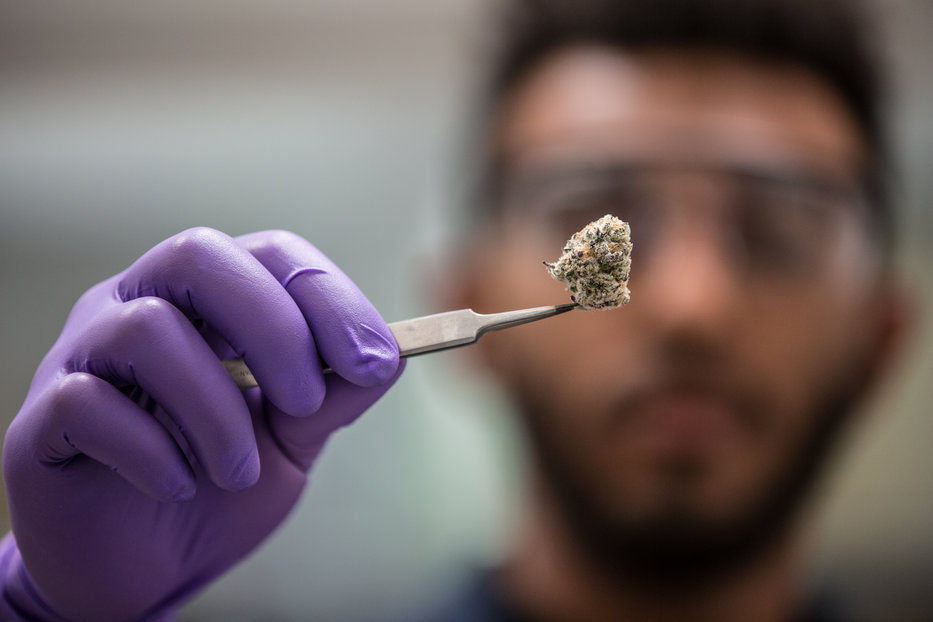
Examination of cannabis prior to testing- credit Steep Hill Labs, Inc.
Examination of cannabis prior to testing- credit: Steep Hill Labs, Inc.

“When a patient is immunocompromised, a bacterial or fungal infection can be lethal, so because we had patients using cannabis, we wanted to make sure it was safe,” says Dr. Rosenstein. So when Maryland legalized medical cannabis, Dr. Rosenstein and his team saw the need to protect patient safety and Steep Hill was a perfect fit. “We really didn’t want to reinvent the wheel so we looked for someone to partner with,” says Dr. Rosenstein. “Steep Hill has the best technology and the best credibility and we didn’t want to compromise on quality and safety issues. They felt the same way so we partnered with them and culturally it has been a great fit.”
Steep Hill Express in Berkeley, CA- MD,PA and D.C. will have a similar offering of instant potency analysis

The new laboratories plan to offer a similar range of services that are offered at other Steep Hill labs, such as rapid potency testing for THC-A, ∆-9-THC, CBD, CBD-A and moisture. But Dr. Rosenstein sees clinical opportunities in the East Coast medical hubs. “We want to provide the testing component for studies, providing clinical reproducibility and consistency, and those are the things as a top-notch lab that we are interested in doing.”
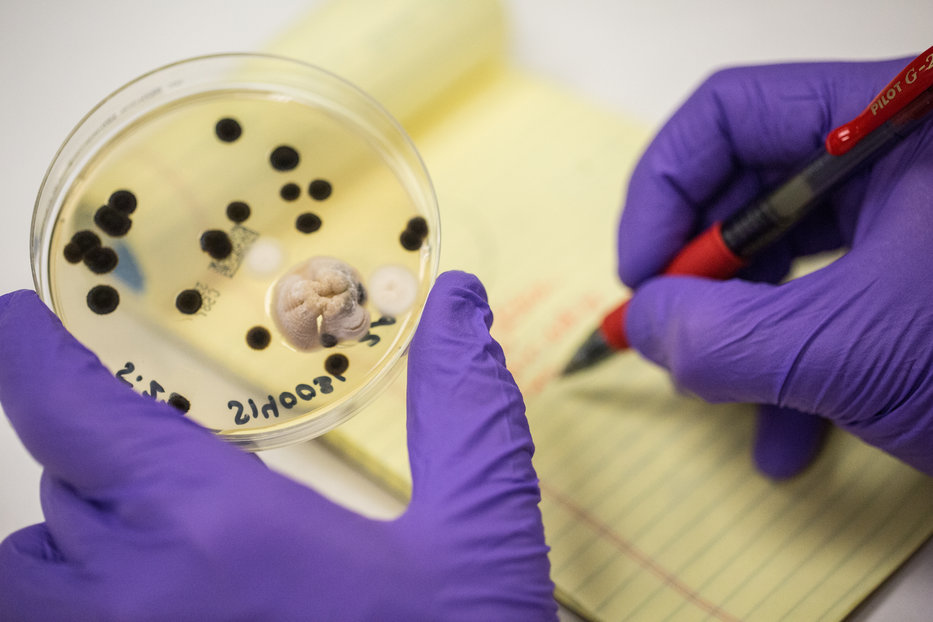
A petri dish of mold growth from tested cannabis- Photo credit: Steep Hill-
A petri dish of mold growth from tested cannabis- Photo credit: Steep Hill Labs, Inc.

With a physician-led group that has experience in molecular diagnostics, partnering with Steep Hill is about being medically focused, according to Dr. Rosenstein. “First and foremost, this is about patient safety.” Because of that, he emphasizes the need for required microbiological contaminant testing, particularly because of his experience with patients. “If you’re a cancer patient and you get a toxic dose of salmonella or E. coli, that can kill you, so testing for microbiologic  contamination is of the highest priority.”

According to Warner, bridging the medical cannabis science gap with Steep Hill’s professionalism and experienced doctors practicing medicine is a big deal. “We are working very closely with their medical team to make sure these standards are medically superior,” says Warner. “To have these doctors with such a high level of knowledge in medicine working with us in cannabis analytics is a breakthrough.”