Dr. Hope Jones, chief scientific officer of C4 Laboratories, believes there are a number of opportunities for cannabis growers to scale their cultivation up with micropropagation. In her presentation at the CannaGrow conference recently, Dr. Jones discussed the applications and advantages of tissue culture techniques in cannabis growing.
Dr. Hope Jones, chief scientific officer at C4 Labs
Dr. Jones’ work in large-scale plant production led her to the University of Arizona Controlled Environment Agriculture Center (CEAC) where she worked to propagate a particularly difficult plant to grow- a native orchid species- using tissue culture techniques. With that experience in tissue culture, hydroponics and controlled environments, she took a position at the Kennedy Space Center working for NASA where she developed technologies and protocols to grow crops for space missions. “I started with strawberry TC [tissue culture], because of the shelf life & weight compared with potted plants, plus you can’t really ‘water’ plants in space- at least not in the traditional way,” says Dr. Jones. “Strawberries pack a lot of antioxidants. Foods high in antioxidants, I argued, could boost internal protection of astronauts from high levels of cosmic radiation that they are exposed to in space.” That research led to a focus on cancer biology and a Ph.D. in molecular & cellular biology and plant sciences, culminating in her introduction to the cannabis industry and now with C4 Labs in Arizona.
Working with tissue culture since 2003, Dr. Jones is familiar with this technology that is fairly new to cannabis, but has been around for decades now and is widely used in the horticulture industry today. For example, Phytelligence is an agricultural biotechnology company using genetic analysis and tissue culture to help food crop growers increase speed to harvest, screen for diseases, store genetic material and secure intellectual property. “Big horticulture does this very well,” says Dr. Jones. “There are many companies generating millions of clones per year.” The Department of Plant Sciences Pomology Program at the Davis campus of the University of California uses tissue culture with the Foundation Plant Services (FPS) to eliminate viruses and pathogens, while breeding unique cultivars of strawberries.
A large tissue culture facility run in the Sacramento area that produces millions of nut and fruit trees clones a year.
First, let’s define some terms. Tissue culture is a propagation tool where the cultivator would grow tissue or cells outside of the plant itself, commonly referred to as micropropagation. “Micropropagation produces new plants via the cloning of plant tissue samples on a very small scale, and I mean very small,” says Dr. Jones. “While the tissue used in micropropagation is small, the scale of production can be huge.” Micropropagation allows a cultivator to grow a clone from just a leaf, bud, root segment or even just a few cells collected from a mother plant, according to Dr. Jones.
The science behind growing plants from just a few cells relies on a characteristic of plant cells called totipotency. “Totipotency refers to a cell’s ability to divide and differentiate, eventually regenerating a whole new organism,” says Dr. Jones. “Plant cells are unique in that fully differentiated, specialized cells can be induced to dedifferentiate, reverting back to a ‘stem cell’-like state, capable of developing into any cell type.”
Cannabis growers already utilize the properties of totipotency in cloning, according to Dr. Jones. “When cloning from a mother plant, stem cuttings are taken from the mother, dipped into rooting hormone and two to five days later healthy roots show up,” says Dr. Jones. “That stem tissue dedifferentiates and specializes into new root cells. In this case, we humans helped the process of totipotency and dedifferentiation along using a rooting hormone to ‘steer’ the type of growth needed.” Dr. Jones is helping cannabis growers use tissue culture as a new way to generate clones, instead of or in addition to using mother plants.
With cannabis micropropagation, the same principles still apply, just on a much smaller scale and with greater precision. “In this case, very small tissue samples (called explants) are sterilized and placed into specialized media vessels containing food, nutrients, and hormones,” says Dr. Jones. “Just like with cuttings, the hormones in the TC media induce specific types of growth over time, helping to steer explant growth to form all the organs necessary to regenerate a whole new plant.”
Having existed for decades, but still so new to cannabis, tissue culture is an effective propagation tool for advanced breeders or growers looking to scale up. In the next part of this series, we will discuss some of issues with mother plants and advantages of tissue culture to consider. In Part 2 we will delve into topics like sterility, genetic reboot, viral infection and pathogen protection.
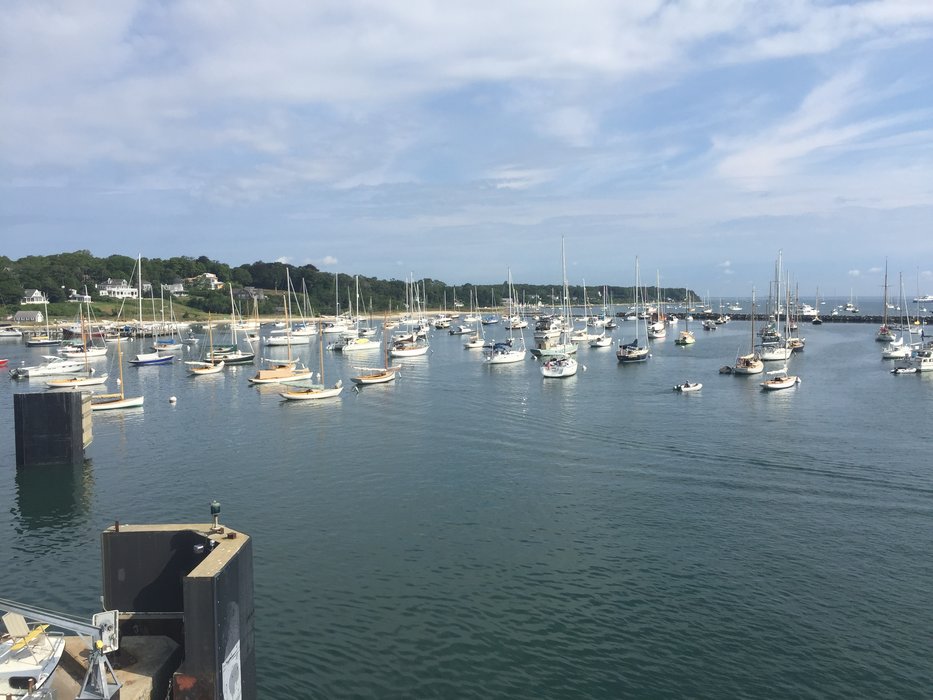
Martha’s Vineyard is renowned for its beautiful beaches, quaint whaling towns and picturesque rolling countryside. The island is well known as a popular vacation spot for the rich and famous, including the Obamas, the Clintons and Larry David. The movie Jaws was filmed there and the infamous Ted Kennedy-Chappaquiddick incident took place there in 1969. Its summer population of 115,000 drops to about 17,000 as the island slows down for the winter. It is also home to roughly 120 registered medical cannabis patients and a dispensary that will have to deal with the complexities of operating on an island.
In 2012, Massachusetts became the eighteenth state to legalize medical cannabis and in 2016, the state legalized adult use of cannabis. Geoff Rose, co-founder of Our Island Club, a local organization that offers discounts to full-time residents, saw a great need for a medical cannabis dispensary. Rose was granted a provisional license to both cultivate and dispense, as required by the state, on the island. Rose’s nonprofit that received the licenses, Patient Centric of Martha’s Vineyard, plans to operate in West Tisbury, a small town located in the center of the island.
Travel to and from the island is restricted to either boat or plane with the vast majority of traffic occurring on ferries operated by the Steamship Authority. But Rose cannot transport any cannabis on the ferries or even a smaller, non-commercial vessel because the waters are under the jurisdiction of the Coast Guard, a federal agency tasked with enforcing The Controlled Substances Act. The same goes for aircraft under FAA jurisdiction. Transporting cannabis products on the ferries, or any vessel for that matter, would be a felony.
Coast Guard vessel conducting training exercises off the Vineyard
Martha’s Vineyard is not just a physical island, but also a jurisdictional island where all cannabis growing, lab testing and dispensing must occur on the island. Currently, those 120 medical cannabis patients living on the island have no legal method of obtaining medical cannabis, unless they grow it themselves. Rose and his nonprofit, Patient Centric, hope to change that. We sat down with Geoff Rose to learn more about his mission to bring medical cannabis to the Vineyard and some of the legal implications associated with running a cannabis business on an island.
Cannabis Industry Journal: How did you get started with the idea to open a dispensary on the island?
Geoff Rose: Well I moved here almost sixteen years ago and as I have often said, when you move here you have three options: you can contribute to the community, you can hide and stay reclusive or you can leave. It is a very unique community and I chose to contribute. We started Our Island Club, which is a service program for year-round residents that helps them save on essential products and services as a means to cope with the high cost of living here. Clearly there is a need as there are 7,000 year round residents participating in that program. We have donated over a half-million dollars to 175 or more charitable organizations on the island. In addition to that, because of the membership fee, anyone who can’t afford it can still receive the membership.
Photo: Michelle Wyrich
I have come to launch the dispensary in the same manner. There is a need. [Legal medical cannabis] has now been law since November of 2012. Over four years later and still no dispensary on the island- I have continued to persevere because I know that there is a need.
CIJ: It is a pretty tight-knit community; did you meet any local opposition?
Geoff: Dukes County (the Vineyard) voted in favor of medical marijuana by a wide margin and 82% of West Tisbury voted in favor of medical marijuana, one of the highest in the state. Well I am currently waiting on my special permit application that I am required to apply for in West Tisbury. It has been sent to the Martha’s Vineyard Commission (MVC) for review.
There have been concerns, including from the local school. But state law requires that a dispensary be located beyond 500 feet from a school. The current location that I am asking for approval is over seven times that distance. There is a perceived concern about that. The first round of applications in 2013 included a score-based application process and while there were four competitors, none of us met the minimum score. In the second round, it moved to a compliance-based application process, and I was the only one who kept the effort alive and was awarded the license.
CIJ: There is a bit of an opioid problem on the vineyard, and multiple scientific studies have suggested a causal relationship between cannabis legalization and a reduction in opioid overdose-related deaths; do you see this as part of the solution?
Geoff: I have seen studies, particularly one by Johns Hopkins that does show a correlation between medical cannabis and the reduction of the use of opioids. I think it is a byproduct of opening the dispensary, so yes. I shared these findings with the Superintendent of Schools. I think education is the key to really develop awareness. The state has mandated that schools are required to develop a drug education program, it’s part of the school curriculum, and I see that as a critical component in our outreach effort to the community. We have a responsibility to the community in many ways, whether it’s law enforcement or education.
Geoff Rose, founder of Patient Centric
I recently announced that we would allocate a percentage of our net profits for grant money to programs involved in drug education. Community outreach and education are very important. There also needs to be some positive education. There is a clear understanding that children need to be educated about the misuse of cannabis, which is true. But they also need to be educated about the medical value of cannabis. For example, many in the medical community will acknowledge the benefits of cannabis as it relates to cancer patients, whether it is helping nausea, appetite, pain management or being used as a sleep aid. This is an important message that needs to be disseminated to children. How does it help your family member, friend or neighbor who is suffering from the effects of cancer? That is one of the messages that would be helpful for children to receive. We can address the impact of all drugs including cannabis on the developing brain; I understand and agree, and publicly support that in an educational context. I want to be part of the solution.
CIJ: What problems do you run into trying to open a cannabis business on the island?
Geoff: I received my provisional cultivation license in September of last year. Part of the issue is the fact that cultivation has to occur on the island. The Coast Guard regulates everything surrounding the island including all the ferries, or any watercraft.
As part of my provisional license, I am required to have an independent cannabis-testing laboratory on the island that will perform the requisite testing mandated by the state. I am currently in conversations with Ph.D. chemists consulting for the laboratory. I have had numerous conversations with lab directors in other parts of the state, including Proverde Labs and MCR Labs. The Coast Guard has stated that cannabis is a Schedule One substance and therefore any transport is illegal. Unfortunately the law is very specific and not exactly written with Martha’s Vineyard in mind.
Editor’s Note: If you have further questions relating to Patient Centric of Martha’s Vineyard, you can reach Geoff Rose at geoff@patientcentricmv.org
According to National Cannabis Industry Association (NCIA) executive director Aaron Smith, seven measures were introduced today at the Capitol, covering a variety of issues that, if signed into law, would ease many of the legal implications on the federal level affecting cannabis businesses in legal states currently.
In a very important development, Rep. Carlos Curbelo (R-FL), a member of the House Ways and Means Committee, joined Rep. Earl Blumenauer as a lead sponsor of the 280E tax reform bill. According to an NCIA press release, that bill is The Small Business Tax Equity Act of 2017 and was introduced in the Senate by Sen. Ron Wyden (D-OR), Sen. Rand Paul (R-KY) and Sen. Michael Bennet (D-CO).
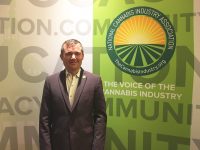
Aaron Smith, executive director of NCIA
That bill gives cannabis businesses in legal states the opportunity to take business deductions like any other legal business. Right now cannabis businesses cannot deduct any expenses related to sales, given its Schedule I status. “Cannabis businesses aren’t asking for tax breaks or special treatment,” says Smith. “They are just asking to be taxed like any other legitimate business.”
Rep. Jared Polis (D-CO) introduced the Regulate Marijuana Like Alcohol Act in the House, which would put cannabis in the section of code that regulates intoxicating liquors, essentially giving the ATF oversight authority. “The flurry of bills on the Hill today are a reflection of the growing support for cannabis policy reform nationally,” says Smith. “State-legal cannabis businesses have added tens of thousands of jobs, supplanted criminal markets, and generated tens of millions in new tax revenue. States are clearly realizing the benefits of regulating marijuana and we are glad to see a growing number of federal policy makers are taking notice.”
Rep. Earl Blumenauer (D-OR), Photo: Michael Campbell, Flickr
Sen. Wyden and Rep. Blumenauer introduced The Responsibly Addressing the Marijuana Policy Gap (RAMP) Act, which addresses banking and tax fairness for businesses, civil forfeiture, and drug testing for federal employees. Both Blumenauer and Wyden represent Oregonians, who could benefit tremendously if it becomes legislation. Rep. Blumenauer also introduced The Marijuana Tax Revenue Act, which would put a federal excise tax of initially 10% on cannabis sales, then rising to 25% after five years, according to the NCIA press release.
On March 18th, the Oregon Liquor Control Commission (OLCC) issued its first recall for recreational cannabis products. The recall, according to the press release, occurred because an unnamed wholesaler sent cannabis products to a retailer before the pesticide test results were entered into the OLCC Cannabis Tracking System (CTS).
Photo: Michelle Tribe, Flickr
The cannabis grown at Emerald Wave Estate, LLC is said to fail a test for pyrethrins exceeding the Oregon Health Authority (OHA) action level (the action level for pyrethrins is 1 ppm). Pyrethrins are a class of insecticides derived from the chrysanthemum flower. Their toxicity varies a lot depending on exactly what organic compound was used, but has an acute toxicity level that is cause for concern. When exposed to high levels of pyrethrins, people have reported symptoms similar to asthma. Generally, pyrethrins have a low chronic toxicity for humans.
The retailer, Buds 4 U LLC, located in Mapleton, OR, issued a voluntary recall for 82.5 grams of the strain Blue Magoo sold between March 8th and 10th. After finding the failed test results in the CTS, the retailer immediately contacted the OLCC. According to The Portland Tribune, OLCC spokesman Mark Pettinger says the retailer was very cooperative in immediately notifying the OLCC. “The retailer was great,” says Pettinger. “They get the gold star.” The Portland Tribune also says the wholesaler who shipped the cannabis prior to test results being entered is Cascade Cannabis Distributing of Eugene. That mistake could be a violation of Oregon’s regulations, leading to a 10-day closure and up to a $1,650 fine.
According to the press release, the rest of the nine pounds in the batch is on hold “pending the outcome of an additional pesticide retest.” The OLCC encourages consumers to check if their products have the license and product numbers detailed in the press release. They advise consumers who did purchase the affected cannabis to dispose of the product or return it to the retailer. The press release also mentions that they have not received any reports of illness related to the tainted cannabis.
At the Department of Justice on Monday, Attorney General Jeff Sessions told reporters he believes cannabis use is unhealthy and leads to more violence, according to Politico. “I don’t think America is going to be a better place when people of all ages, and particularly young people, are smoking pot,” Sessions told reporters. “I believe it’s an unhealthy practice and current levels of THC in marijuana are very high compared to what they were a few years ago.” Those comments come a week after press secretary Sean Spicer suggested that the opioid crisis is tied to recreational cannabis use and seemed to hint that President Trump is okay with legal medical cannabis, but that the administration might not approve of recreational cannabis.
Sen. Jeff Sessions (R-AL) Photo: Gage Skidmore, Flickr
During a press conference last week, White House press secretary Sean Spicer told reporters “I do believe you will see greater enforcement of it,” referring to the enforcement of the Controlled Substances Act on recreational cannabis. He went on to make the distinction between medical and recreational use clear, while deferring to the Department of Justice, saying they will be looking further into the matter.
Much like press secretary Spicer incorrectly tied legal cannabis to the opioid crisis, Attorney General Sessions incorrectly tied legal cannabis to an increase in violence. “We’re seeing real violence around that,” says Sessions. “Experts are telling me there’s more violence around marijuana than one would think and there’s big money involved.” He did not discuss who those experts were or how he came to that conclusion. There are a number of studies refuting his claims, suggesting no causal link between legal cannabis and violence, with one study even suggesting a reduction in violent crimes after legalizing cannabis.
WH press secretary Sean Spicer during a press conference Image via Youtube
Sessions has not mentioned any specific policy actions that he would take on the enforcement of federal law. “We’re going to look at it. … And try to adopt responsible policies,” says Sessions. Jeff Sessions making these comments should come as no surprise as he expressed his disdain for cannabis a number of times and has been known to be a Drug War stalwart. President Trump promised during his campaign that he supports medical cannabis and the matter should be left up to the states. These recent comments by his newly appointed press secretary and attorney general suggest the administration may not honor that campaign promise.
Politicians in states that have legalized cannabis were quick to condemn the comments and uphold this as an issue of states’ rights. Colorado Governor John Hickenlooper told reporters legal cannabis is in their state’s constitution and he intends to uphold the will of the voters. Oregon State Rep. Knute Buehler (R-Bend) said in a press release, “I hope the new President and Attorney General keep their hands off Oregon’s marijuana law.” Regulators in Nevada have also said they plan to move forward with implementing legal recreational cannabis regulations, despite any federal actions or comments. Bob Ferguson, Washington State attorney general told the Associated Press, “We will resist any efforts to thwart the will of the voters in Washington,” and has requested a meeting with Sessions to discuss his policies. California Lt. Governor Gavin Newsom wrote a letter to President Trump telling him not to follow through on those threats of greater enforcement. “The government must not strip the legal and publicly supported industry of its business and hand it back to drug cartels and criminals,” Newsom wrote to Trump. “Dealers don’t card kids. I urge you and your administration to work in partnership with California and the other eight states that have legalized recreational marijuana for adult use in a way that will let us enforce our state laws that protect the public and our children, while targeting the bad actors.”
At this time, it remains unclear exactly how the Trump administration will address federal cannabis policy, but these vague and ominous statements from top federal officials continue to raise eyebrows in the cannabis industry. Until President Trump comes out with a clear stance on legal cannabis, those in the cannabis industry fear a federal crackdown on legal recreational cannabis is looming.
Voters in Florida passed Amendment 2 last year with an overwhelming majority of over 70%. The constitutional amendment went into effect on January 3rd this year and regulators have until July 3rd to promulgate the rules.
The Florida Department of Health set up the Office of Compassionate Use (OCU) in July of 2014 after the passing of the so-called Charlotte’s Web measure (HB 843). That bill allows use of low THC/high CBD cannabis for treating seizures. The OCU is charged with the task of writing and implementing medical cannabis rules. Ongoing public hearings and workshops at the Department of Health (DOH) are meant to give stakeholders the opportunity to chime in on the proposed rules.
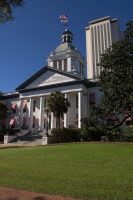
Florida State Capitol, Talahasse Stuart Seeger, Flickr
On January 17th, the DOH published proposed rules and announced public hearings, seeking input from the public on the matter. The OCU is required to implement rules consistent with Amendment 2, but they would defer to the legislature if a bill were passed, promulgating rules consistent with Amendment 2 and the bill.
After the passing of Amendment 2, Sen. Jeff Brandes (R-St. Petersburg) filed SB614, a bill that establishes four license categories instead of the currently required vertically integrated business model. Notably, Sen. Brandes’ bill requires laboratory batch testing, whereas other proposed rules do not include such a measure. Sen. Brandes sees the DOH’s proposed rules as more of the same from the current medical program, according to a quote from FloridaPolitics.com. “Any proposal which seeks to mold the spirit of Amendment 2 into the narrow and flawed law on the books today should be rejected, and a more comprehensive strategy must take priority,” says Sen. Brandes. “I will support no bill, nor any rule, that maintains the established state sanctioned cartel system we have today, and I urge my colleagues to join me in proposing a free market solution for Florida.” He is referring to the seven licensed nurseries from the low THC/high CBD medical program, all of which are vertically integrated.
Matthew Ginder, senior counsel in the cannabis practice at Greenspoon Marder
According to Matthew Ginder, senior counsel in the cannabis law practice at Greenspoon Marder, the biggest question for the legislature is how many licenses will they issue and what kind of structures are required for the licensees. Another big issue is the process by which patients access medical cannabis through their physicians. “The current program requires physicians to register as the orderer of medical cannabis, specify dosing and order medical devices, which is highly uncommon in other state programs,” says Ginder. “Sen. Brandes’ bill removes these requirements and is more consistent with other states by requiring a physician’s recommendation.” He says that bill would create four licenses: cultivation, processing transportation and retail.
Sen. Robert Bradley (R-5th District) also filed legislation (SB 406) to implement Amendment 2, but this bill is very different from Sen. Brandes’ bill. “Bradley’s bill is built upon the statutory framework that is already in place,” says Ginder. “Bradley’s is keeping vertical integration intact, seeking to also limit the amount of vertically integrated license based on a patient ratio of about 20,000 registered patients per license issued.” Bradley’s bill does not provide for independent lab testing requirements. Some might characterize Bradley’s bill as more of the same, allowing for the consolidation of existing monopolies.
Ginder says these are just two bills from the Senate, the House still has not proposed any bills. “We will most likely see more bills,” says Ginder. “We still don’t know what iteration of the bill or what language might be adopted and you can expect them to change as it moves through the committees.” With the legislative session beginning on March 7th, we can expect to see these bills debated on the floor and likely the filing of other legislation.
On February 1st, Greenspoon Marder announced the launch of their Organization for Safe Cannabis Regulation (OSCR) in Florida. By hiring lobbyists and making contributions to certain political candidates, the OSCR aims to advocate for a broad and fair marketplace, specifically “advocating for laws that create independently “registered” entities that perform specific functions along the production and distribution chain.”
The Emerald Test advisory panel recently convened to review the results from the Fall 2016 round of the semi-annual Inter-Laboratory Comparison and Proficiency Test (ILC/PT), ahead of the third annual Emerald Conference just a few weeks away. After reviewing and analyzing the results, the panel noticed a significant improvement across the board over their Spring 2016 round of proficiency testing.
Emerald Scientific’s ILC/PT program is a tool laboratories use to check how accurate their testing capabilities are compared to other labs. A lab receiving The Emerald Test badge indicates their testing meets the criteria established by the panel to demonstrate competency. This means that they were within two standard deviations of the consensus mean for all analytes tested, according to Wes Burk, vice president of Emerald Scientific. He says the labs performed better than expected on both the microbial and pesticide tests.
Wes Burk, vice president of Emerald Scientific.
Each lab has access to raw, anonymized data including a consensus mean, z-scores and kernel density plots. This round measured how well 35 cannabis labs perform in testing for potency, pesticides, residual solvents and microbial contaminants such as E. coli, Salmonella, Coliform, yeast and mold.
The advisory panel includes: Robert Martin, Ph.D., founder of CW Analytical, Cynthia Ludwig, director of technical services at AOCS, Rodger Voelker, Ph.D., lab director, OG Analytical, Tammie Mussitsch, QA manager at RJ Lee Group, Shawn Kassner, senior scientist at Neptune & Company, Inc., Jim Roe, scientific director at Steep Hill Labs, Chris Hudalla, Ph.D., founder and chief scientific officer at ProVerde Labs, Sytze Elzinga, The Werc Shop and Amanda Rigdon, Chief Technical Officer at Emerald Scientific.
Amanda Rigdon, chief technical officer at Emerald Scientific
According to Amanda Rigdon, chief technical officer at Emerald Scientific, the labs performed very well in potency, residual solvents and microbial testing PTs. This is the first year the proficiency testing includes pesticides. “All of the labs did a great job identifying every pesticide in our hemp-based PT, but some more work will most likely have to be done to bring quantitative results in line,” says Rigdon. “Since this was the first pesticide PT we had offered, we were pretty conservative when choosing analytes and their levels. For the most part, analytes and levels were taken from the Oregon pesticide list, which is widely recognized to be the most reasonable and applicable pesticide list out there to date.” They covered pesticides of high concern, like abamectin and Myclobutanil, but also included a wide range of other pesticides that labs are expected to encounter.
Shawn Kassner, senior scientist at Neptune & Company, Inc.
Shawn Kassner, senior scientist at Neptune & Company, Inc., believes microbial contamination proficiency testing should be a priority for improving public health and safety going forward. Although five participating labs did not receive badges for the microbial contamination PTs, panel members say the overall performance was really quite good. “Microbiology testing are essential analyses for all cannabis products and it’s just slower in regulatory implementation than potency testing,” says Kassner. “The risk of Salmonella and E. coli to an individual using a medical cannabis product could be very life threatening. Microbiology contamination is a huge concern for any public health agency, which is why we have seen that microbiology testing is usually the first analytical test required after potency.” Kassner notes that there were few outliers and with each Emerald PT program, he is seeing an improvement in overall laboratory performance.
For The Emerald Test’s next round, the panel hopes to make some improvements in the test’s robustness and consistency, like obtaining assigned values for all samples and comparing to a consensus mean. “We want to develop permanent badge criteria, streamline the appeals process and possibly implement a qualitative performance review in the pesticide PT,” says Burk. For the next round of pesticide PTs, they want to build a better list of pesticides to cover more states, allowing labs to pick a set based on their state’s regulations. Burk says they also want to collect data on whether or not matrix-matched curves were used for pesticides.
Rodger Voelker, Cynthia Ludwig and Shawn Kassner, all members of the advisory panel, will be speaking at the Emerald Conference, discussing some of their findings from this round of proficiency testing. The Emerald Conference will take place February 2nd and 3rd in San Diego, CA.
President-elect Donald Trump nominated Sen. Jeff Sessions (R-AL) for Attorney General back in November. For Sessions to become a member of the cabinet and head of the Department of Justice, the Senate must approve the nomination during a confirmation hearing, taking place today in Washington D.C.
Sen. Jeff Sessions (R-AL) Photo: Gage Skidmore, Flickr
According to CNN’s coverage of the events, Sen. Mike Lee (R-Utah) mentioned the Obama Administration’s tolerance of states with legal cannabis. “There are federal laws prohibiting the use of marijuana, the sale of marijuana, the production of marijuana, that apply regardless of whether a state has independently criminalized the drug,” says Senator Lee. He then asks if Obama’s actions were indicative of a breach of “the understanding that we [Congress] are the lawmaking body.”
Sessions replied to that by saying that as federal law stands, cannabis is illegal. He says if keeping cannabis illegal is “not desired any longer, Congress should pass a law to change the rule.” He adds that it’s not the AG’s job to enforce or not enforce certain laws. “We should do our job and enforce laws as effectively as we’re able,” says Sessions.
In April of 2016 according to USA Today, Sen. Jeff Sessions was quoted saying “Good people don’t smoke marijuana.” Sessions has a history of making inflammatory remarks, including racist statements. He has also previously mentioned his proud support for the War on Drugs.
Aaron Smith, executive director of NCIA
Sessions’ comments during the exchange today shed some much-needed light on his stance toward legal cannabis. National Cannabis Industry Association (NCIA) executive director Aaron Smith issued a statement on Sessions’ comments made today. In the statement, Smith sounds optimistic regarding Sessions’ comments. “In today’s hearing, Sen. Sessions indicated that the Justice Department’s current guidelines for marijuana policy enforcement are ‘truly valuable’ in setting departmental priorities,” says Smith. “That belief, along with the support for state sovereignty on cannabis policy expressed by President-elect Trump and his team, should lead Sen. Sessions to maintain the current federal policy of respect for state-legal, regulated cannabis programs if he is confirmed as Attorney General.”
“Sen. Sessions also highlighted the conflict created by a Congress that has failed to reflect the will of the voters on cannabis policy,” says Smith. “Voters in 28 states, representing approximately 60% of the nation’s population, have now chosen some form of legal, regulated cannabis program. National polling shows that 60% of Americans believe cannabis should be legalized. It’s time for federal lawmakers to represent the clear choices of their constituents.” Given the Republican support for state sovereignty and Sessions’ comments on Congressional lawmaking, Smith is hopeful that if Sessions becomes the new Attorney General, he will respect states with legal cannabis programs.
Voters legalized cannabis in 8 states on Election Day. Photo: Nicole Klauss, Flickr
Election Day brought a renewed sense of vigor to the market with voters in eight states legalizing forms of cannabis. California, Nevada, Maine and Massachusetts passed recreational cannabis measures, making legalization’s momentum seem exponential.
But November 8th also gave Donald Trump the presidency, and his cabinet appointments, namely Sen. Jeff Sessions as Attorney General, gave many a feeling of uncertainty for the future of federal legalization. Adding insult to injury, the DEA repeatedly stood by their antiquated and ludicrous judgment for cannabis to remain a Schedule 1 narcotic.
Trump nominated Sen. Jeff Sessions (R) for Attorney General Photo: Gage Skidmore, Flickr
A lot of the fervor surrounding public safety could be described as overdramatic or somewhat unwarranted. 2016 was the year of misinformation. Fake news spread like wildfire with people sharing stories like this or this that turned out to be very misleading or just downright false.
States with legal cannabis came under heavy public scrutiny and addressed problems like consumer education, public safety and lab testing. Pesticides became a highly publicized and persistent issue in a number of areas, with some states regulating it heavily and addressing public health concerns. Plenty of new rules were formed surrounding labeling and testing, with Oregon, Colorado and Washington experiencing some regulatory growing pains.
Those growing pains shed light on the need for regulators to craft rules that allow for changes, adding rules where necessary and getting rid of cumbersome rules that might thwart market growth. Rules need to be able to adapt as the industry grows, much like businesses need to adapt to a changing market climate to stay afloat. This is all the more reason why cannabis businesses need to make their voices heard and work with regulators to move things forward.
Pesticide use was a major issue in 2016 Photo: Michelle Tribe, Flickr
With so much uncertainty surrounding the future of legal cannabis in America, the word of the year for 2017 should be resiliency. In a social-ecological context, resiliency is “the capacity of a system to absorb or withstand perturbations and other stressors such that the system remains within the same regime, essentially maintaining its structure and functions. It describes the degree to which the system is capable of self-organization, learning and adaptation.”
A warning label for cannabis in Oregon after the October 1st compliance deadline
Self-organization, learning and adaptation are three very important attributes of a resilient system. Without knowing what will happen when Trump’s cabinet takes the reigns of federal agencies, it is important to prepare for the unexpected. Adhering to standards like FOCUS allows cannabis businesses to prepare for unexpected events like recalls or product safety failures.
Those standards could also become the law down the road, as government officials often look to an industry’s voluntary consensus-based standards when deciding how to regulate it. In 2017, a number of state governments will embark on the heavy undertaking of writing the regulatory framework for legal cannabis.
2017 will bring opportunities and challenges to the cannabis industry. The industry’s rapid growth juxtaposed with political, economic and regulatory uncertainties create a climate that requires resilience to be built into the system at all levels. It is critical, now more than ever, that cannabis businesses build strong relationships with industry groups, advocacy groups and regulators to craft the institutional capacity and mutual trust needed to weather the uncertainty ahead.
Dr. Zacariah Hildenbrand, chief scientific officer and partner at C4 Laboratories, is currently researching some of the lesser-known molecules in cannabis, and he’s on to something. His research focuses on discovering new molecules, determining their therapeutic effects and expanding our understanding of the constituents of cannabis.
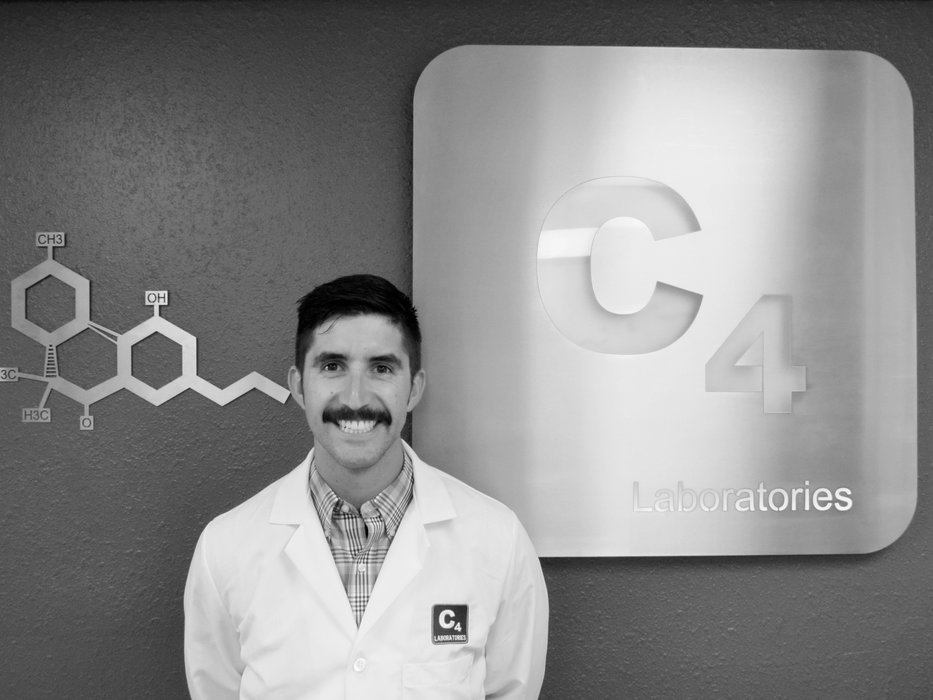
Dr. Zacariah Hildenbrand, chief scientific officer and partner at C4 Laboratories.
Dr. Hildenbrand received his Ph.D. from the University of Texas at El Paso where he researched the molecular architecture involved in hormone-dependent cancers. At the University of Texas Southwestern Medical Center in Dallas, his post-doctoral research contributed to the development of a novel therapy for the treatment of chronic myeloid leukemia, a blood-borne cancer that afflicts small children. He has published over 25 peer-reviewed scientific journal articles and hopes to do the same with his research in cannabis.
After a career of scientific consulting, Dr. Hildenbrand met Ryan Treacy, founder and chief executive officer of C4 Laboratories, in 2015 when Treacy launched the company. In June of 2015, the laboratory began operations, providing Dr. Hildenbrand the opportunity to embark on a new and exciting field of research- cannabis.
Ryan Treacy, founder and chief executive officer at C4 Laboratories.
They currently collaborate with Dr. Kevin Schug of the Shimadzu Center for Advanced Analytical Chemistry (SCAAC) at the University of Texas, Arlington and together Drs. Schug and Hildenbrand are pursuing a DEA license to expand their current cannabis research. The SCAAC is a $10.0+ million analytical laboratory with instrumentation that only a handful of people in the world has access to.
C4 Laboratories, based in Mesa, Arizona, currently offers a range of services for cannabis analysis including terpene and cannabinoid analytics, microbial, pesticide, fungicide and insecticide testing. In addition to the standard gamut of tests, they also specialize in cultivation analytics like mold and mildew culture testing, viral detection with sentinel plants and comprehensive analysis of environmental conditions.
What makes their company unique is their multidisciplinary effort to characterize the therapeutic compounds found in cannabis, the C4 Cannabinomics Collaborative. We sit down with Dr. Zac Hildenbrand to talk cannabis science, his research and what they hope to accomplish with the C4 Cannabinomics Collaborative.
CannabisIndustryJournal: What is the C4 Cannabinomics Collaborative?
Dr. Zacariah Hildenbrand: The C4 Cannabinomics Collaborative is an open collaboration between growers and scientists to discover new molecules in cannabis and to have a better characterization of individual cannabis strains based on the active constituents found in each sample. We are facilitating the collaboration of some of the world’s best cannabis growers with world-class scientists to find new information about the plant.
What we want to accomplish in this work is identifying novel molecules. Because of the [federal government’s] restrictions in researching cannabis, there is very little peer-reviewed literature on many of the compounds found in cannabis. We want to secondarily find out what those molecules do in the human body and thus make recommendations for strains targeting specific conditions.
We also want to understand the strains currently out there by determining the most established cannabinoids and terpenes via chemotyping. You hear a lot of people talking about the effects of an Indica or Sativa and making recommendations based on that. We want to find chemical signatures based on cannabinoids and terpenes and make recommendations based on that. There are a lot of problems at hand when discussing strain names scientifically. There are nomenclature issues- people calling the same strain different names, people giving multiple names to the same strain to make it appear that their strain portfolios are more diverse.
We can identify the chemical signatures in strains based on the major cannabinoids and terpenes. Based on the terpenes and chemical profile we can determine more accurate recommendations for patients as well as in recreational applications. All of this, again, discovering the new molecules, identifying the current strains, is so we can make more informed decisions regarding cannabis use. It is not a panacea but it is a very robust plant. There are a lot of terpenes with anti-inflammatory responses. Other molecules help with blood flow, sleep, regulating blood glucose, and we all know the cases of CBD helping children with convulsions and epilepsy. We want people to make sure they have the most up-to-date information.
CIJ: How is your collaboration with the SCAAC at UT Arlington contributing to this work?
Dr. Hildenbrand: One of the instruments we use there is a supercritical-fluid-extraction supercritical-fluid-chromatography mass-spectrometer (SFE-SFC-MS). With that instrument, we can do the extraction on the machine with an extreme level of sensitivity. It is ideal for drug discovery and identifying molecules in the parts-per-quadrillion range. This particular instrument allows us to detect molecules with an extreme level of sensitivity without volatizing them during the sample extraction process.
The Shimadzu Center for Advanced Analytical Chemistry
We want to acquire samples of unique cannabis from growers that will work with us to discover new cannabis constituents. We are in the process of getting a DEA license so that we can send products across state lines to the center at UT Arlington to perform the advanced characterization. They have instrumentation that only a handful of people in the world have access to, which gives us the best opportunity to explore the unknown. When we discover new molecules, find out what they do on the molecular level, we can then isolate these compounds and ultimately use this newfound knowledge for the development of effective nutraceuticals.
CIJ: What molecules are you researching right now?
Dr. Hildenbrand: Some of the low-hanging fruit in our research looks at identifying compounds similar to the better-studied compounds such as THC and CBD. THCV has a very similar structure to THC, but has a shorter acyl carbon chain (3 carbons vs. 5).
Tetrahydrocannabivarin (THCV)
THCV doesn’t induce a psychoactive response (like THC), but it does improve fat utilization, so it has remarkable potential for medicine. We are looking at what conditions are required for it to occur naturally. Cannabis doesn’t produce THCV in a high amount. 0.7% by weight is the most we have seen in Arizona. In Oregon, where craft cannabis has been refined to a much higher degree, we have heard rumblings of some strains containing up to 3% THCV. We want to find out if this is a possible weight loss tool. Our research in CBDV is very much the same.
CBL is the breakdown product of CBC when it is treated with ultraviolet light. We know absolutely nothing about what CBL does. If we find a strain that produces high amounts of CBC, we can then treat it with UV light and force the conversion to CBL, and then ultimately determine what it does. This is a good example of low-hanging fruit and the versatility of cannabis. Based on the biogenesis of the cannabinoids, we can alter the profile of cannabis products using a series of biochemical reactions.
Cannabicyclol (CBL)
For example, we have been helping clients in Arizona look for a quality sleep aid in cannabis. Certainly, Indica strains will help, but the molecule CBN helps specifically with sleep abnormalities. As CBN is formed as a byproduct when CBD or THC are oxidized, we see some producers using liquid nitrogen to oxidize CBD, leading to higher CBN levels. I would like to think we are in the age of understanding CBD, THC and the major terpenes,but there are a whole milieu of compounds that require our attention and THCV, CBDV and CBL are just a few that we want to devote our efforts to right away.
CIJ: What are your plans in the immediate future?
Dr. Hildenbrand: We are in the process of finalizing the documents to bring a C4 laboratory into Oregon where we can do quite a bit of research and where we’ll have access to some very unique cannabis. We will offer full compliance testing per ORELAP and OLCC regulations, but we also want to acquire samples (free of charge) from growers that want to collaborate with us to discover new molecules. We’ve been lucky enough to start working with growers like Adam Jacques and Chris West in Eugene, but we also want to be available to other growers who want to contribute to this research.
CIJ: What are your long-term goals with this project?
Dr. Hildenbrand: At a basic level, we hope to expand the current understanding of the cannabis plant. There is a lot of “bro science” and anecdotal claims out there. There is so much that we don’t know about cannabis that we cannot simply rely on anecdotal claims for each strain. We want to bring cannabis into the same light as any pharmaceutical-grade or biomedical research.
We need to be characterizing this plant with the same level of detail as other pertinent molecular therapies. In doing so there are a lot of potential discoveries to be made and we might be able to unlock the future of medicine. A drug like Marinol, for example, has been met with mixed reviews because its only one dimensional. Furthermore, we find that the terpene molecules are tremendously beneficial and this interplay between cannabinoids and terpenes is something that we want to explore further. All and all we wish to further illustrate the therapeutic capacities of cannabis within the contexts of specific ailments and medical conditions, while discovering the medicine of the future.
This website uses cookies so that we can provide you with the best user experience possible. Cookie information is stored in your browser and performs functions such as recognising you when you return to our website and helping our team to understand which sections of the website you find most interesting and useful.
Strictly Necessary Cookies
Strictly Necessary Cookie should be enabled at all times so that we can save your preferences for cookie settings.
We use tracking pixels that set your arrival time at our website, this is used as part of our anti-spam and security measures. Disabling this tracking pixel would disable some of our security measures, and is therefore considered necessary for the safe operation of the website. This tracking pixel is cleared from your system when you delete files in your history.
We also use cookies to store your preferences regarding the setting of 3rd Party Cookies.
If you disable this cookie, we will not be able to save your preferences. This means that every time you visit this website you will need to enable or disable cookies again.






















 Each lab has access to raw, anonymized data including a consensus mean, z-scores and kernel density plots. This round measured how well 35 cannabis labs perform in testing for potency, pesticides, residual solvents and microbial contaminants such as E. coli, Salmonella, Coliform, yeast and mold.