

Tag Archives: Focus Article

Lezli Engelking

Q&A with Lezli Engelking: Why Are Standards Important?

By Aaron G. Biros, Lezli Engelking
1 Comment
Lezli Engelking
Lezli Engelking
Lezli Engelking, founder of FOCUS

FOCUSlogoLezli Engelking founded the Foundation of Cannabis Unified Standards (FOCUS) in 2014 to protect public health, consumer safety, and safeguard the environment by promoting integrity in the cannabis industry through the use of standards. Standards are an agreed upon way of doing things and specify guidelines or requirements for producing goods or providing services, according to FOCUS.

Peter Maguire, committee chair of the FOCUS Cultivation Standard

Standards can take the form of a “reference document, which may include specifications, guidelines, conditions or requirements for products, operations, services, methods, personnel and systems on how to design, operate, manufacture or manage something.” Peter Maguire, VP of System Applications for Lighthouse Worldwide Solutions and committee chair of the FOCUS Cultivation standard, joined the organization wanting to make a positive impact on the industry that is in line with protecting people and medical patients. He sees so much variability in the industry and the need to homogenize standard operating procedures (SOPs). “I have worked with multiple cultivation facilities and a few of them have operating procedures in place but having them in place is only half the solution- it’s critical to have the right ones in place,” says Maguire. He has twenty years of experience in contamination control in manufacturing, before entering the cannabis industry.

The FOCUS cultivation standard was created by experts who have years of experience in both cannabis cultivation, good agricultural practices and in the tightly regulated pharmaceutical industry. “FOCUS created these guidelines as a sort of roadmap for success in business; You need to keep your employees healthy and your products safe to survive in the long term,” says Maguire. We sit down with Lezli Engelking to find out how the standards are created, what makes them significant and what businesses can gain by working with them.

CannabisIndustryJournal: Why are standards important?

Lezli: Standards are the international language for trade – they exist in every industry. “The U.S. Department of Commerce estimates that standards and conformity assessment impact more than 80% of global commodity trade.” FOCUS is not reinventing the wheel with what we are doing. We are simply adapting a business model the federal government already uses. In the 80s, when the heroin epidemic swept across the US, methadone clinics popped up in every state in the country within two years. The clinics were all operating under different state, city and county regulations – much like the cannabis industry is today. The federal government took a look at the situation and decided they needed a way to regulate these clinics in order to protect public health and safety. They released a Request For Proposal (RFP) looking for an organization to create voluntary-consensus standards and a third-party certification system for the methadone clinics. Commission on Accreditation of Rehabilitation Facilities (CARF) is the organization that answered and won that RFP. CARF continues to work with Health and Human Services to maintain the standards and provide third-party certification to the clinics today. FOCUS develops international, voluntary consensus standards and a third party certification program for the global cannabis industry based on the CARF model. This is extremely important, because of the National Technology Transfer and Advancement Act, (Public Law 104-115), signed into law March 7, 1996 by President Clinton. The act requires that all federal agencies use standards developed by voluntary-consensus standards bodies, instead of government-unique standards wherever possible. Perhaps even more importantly, the Act includes provisions that encourage federal agencies to partner with the private sector in the development of standards that not only help improve the efficiency and effectiveness of government, but also strengthen the U.S. position in the global marketplace.

CIJ: What exactly goes into developing a voluntary-consensus standard?

Lezli: Voluntary-Consensus refers to the type of standard and how it is developed. Everyone who participates in the development of voluntary-consensus standards does so on a voluntary basis. Committee members must come to a consensus on every point within the standard- down to every comma or semicolon. Once the development process is complete, the standards must undergo a 30-day public review period. The process for developing voluntary-consensus standards is designated by International Organization for Standardization (ISO). ISO has member agencies in 163 countries that participate in the development of standards. The American National Standards Institute (ANSI) is the American body for ISO. FOCUS follows all ISO/ANSI guidelines in the standards development process. This is extremely important because it means FOCUS standards are suitable for accreditation and adoption into regulations according to the National Technology Transfer and Advancement Act. All voluntary-consensus standards are developed under the principles of:

  • Openness| Participation in the standard development process is open to individuals with a stake in the standard who bring useful expertise along with the spirit and willingness to participate.
  • Balance| Focus stakeholder groups involve all stakeholder groups: industry, regulatory, quality assurance, medical, law enforcement, business, research, consumers, patients and the general public.
  • Voluntary-Consensus| Individual subcommittees of volunteers develop each area of the standard, offering their unique expertise to form a consensus. They are not paid for their participation.
  • Lack of Dominance| No party has dominant representation, or influence to the exclusion of fair and equitable consideration of other viewpoints.

CIJ: More specifically, how are the FOCUS standards developed?

Lezli: To create a baseline standard, FOCUS utilized World Health Organization (WHO) guidelines for Good Manufacturing Practices (GMP), Good Agricultural Practices (GAP), Good Laboratory Practices (GLP), Code of Federal Regulations (CFR) for pharmaceutical GMPs, nutraceutical GMPs, food safety standards, OSHA and HACCP. From there, applicable cannabis regulations from around the world were added. All of this information was compiled into auditor-style checklists. Each committee member was provided time to go edit, remove or add to items in the checklist on their own. Over the next two years, each of the eight committees had monthly meetings, going through and coming to a consensus on each line item of the standard. Once the committees completed development, the standards were open for a 30-day Public Review to collect comments and feedback. The first eight FOCUS standards, completed and ready for use, cover Cultivation, Retail, Extraction, Infused Products, Laboratory, Security, Sustainability and Packaging & Labeling.

FOCUS is currently recruiting committee members to begin development of five new cannabis standards later this year: Advertising/Marketing, Insurance, Banking/Finance, Patient Care and Research. Committees will receive a list of proposed suggestions for what should be considered in developing the standards. Each committee member will develop a list to select criteria they think should be included into the standard. FOCUS will compile the lists, then committees will go through the monthly standards development/vetting process for each line item in the standard.

CIJ: So what does a business have to gain by adopting a FOCUS standard?

Lezli: Compliance becomes easily manageable with the FOCUS software platform, integrating standards, training and SOPs into the everyday operations of the business. FOCUS certified clients could expect to reduce costs, reduce risk and reduce liability by assuring they are producing safe, quality and consistent products. FOCUS certification allows a business to differentiate themselves from their competitors, and prove to their patients and customers they can trust their products. Certification also allows businesses to access reasonable insurance rates and drives interest from investors.

FOCUS is here to partner with cannabis businesses. We are there to hold their hand, by providing guidance and assistance along every step of the way. Unlike state mandated audits that delineate what a business is doing right or wrong, FOCUS is an on-going compliance management system. We are here to make sure a business runs as efficiently as possible and take the guesswork out of compliance. Under FOCUS certification, a business receives ongoing consulting, customized SOPs, employee training and a documentation management software system to track and prove compliance.

CIJ: Can you give us an update on FOCUS’ progress in 2016?

Lezli: A large milestone for FOCUS this year, aside from completing version one of the standards, is choosing an appropriate software platform, (Power DMS) to house the standards and provide an ongoing compliance management system for our clients. Power DMS also houses regulatory standards for law enforcement; health care, federal aviation and fire departments, so most agencies in public health are already familiar with it. The familiarity and access to this platform is a huge benefit on the regulatory side. It allows first responders to access the schematics of a FOCUS certified client in the event of an emergency. This is crucial in the event of an explosion from extraction equipment, or a fire in a cultivation facility, as without first identifying where the hazards are, they will not access the facility. The FOCUS software platform allows first responders access to all pertinent information through computers in police cars, ambulances, or fire trucks.

For the industry, the FOCUS software platform is equally as impressive. Not only does the platform house the standards and all SOPs, it is also complete compliance management system. FOCUS certified clients have a simple management tool that houses all training and documentation, assuring all required compliance documentation can be easily accessed at any time. The platform also allows FOCUS certified clients to provide access to governing bodies in advance of state audits –streamlining the process and minimizing time and interruption caused by state audits. The FOCUS platform tracks all changes to required documents, provides real time updates on employee training, creates appropriate traceability logs, and provides updates on regulatory changes, including which SOPs need to be changed to maintain compliance. The platform allows FOCUS to be way more than an auditing company. FOCUS is a partnership in compliance for cannabis companies wanting to maintain good business practices and stay compliant with regulations.

We have about 140 new committee members that will assist existing committees with standards updates and participate in the development of the next set of FOCUS standards for advertising/marketing, banking/finance, research, patient care and insurance. All committees will convene before 2017.
An Introduction to Cannabis Genetics, Part III

By Dr. CJ Schwartz
4 Comments

Polyploidy in Cannabis

Polyploidy is defined as containing more than two homologous sets of chromosomes. Most species are diploid (all animals) and chromosomal duplications are usually lethal, even partial duplications have devastating effects (Down’s syndrome). Plants are unique as in being able to somewhat “tolerate” chromosomal duplications. We often observe hybrid vigor in the F1, while the progeny of the F1 (F2) will produce mostly sickly or dead plants, as the chromosomes are unable to cleanly segregate.

polyploidy
Polyploids are generated when chromosomes fail to separate (non-disjunction) during pollen and egg generation. The chromosomes normally exist in pairs, thus having only one, or three, interferes in pairing in subsequent generations.

Chromosomal duplications, either one chromosome or the whole genome, happen frequently in nature, and actually serves as a mechanism for evolution. However the vast majority (>99.99%) results in lethality.

Thus there is polyploidy in Cannabis, and a few examples are supported by scientific evidence. The initial hybrid may show superior phenotypes and can be propagated through cloning, but there may be little potential for successful breeding with these plants.

Epigenetics and Phenotypic Consistency in Clones

One mechanism of turning off genes is by the DNA becoming physically inaccessible due to a structure resembling a ball. In addition, making molecules similar to DNA (RNA) that prevents expression of a gene can turn off certain genes. Both mechanisms are generally termed epigenetics.

These mice are all genetically identical yet they manifest different phenotypes for fur color.
These mice are genetically identical, yet their coat color phenotype is variable. Something above or beyond (epi) the gene (genetic) is controlling the phenotype.

Epigenetic regulation is often dependent on concentrations of certain proteins. Through the repeated process of cloning, it is possible that some of these proteins may be diluted, due to so many total cell divisions and epigenetic control of gene expression can be attenuated and results in phenotypic variability.

Sexual reproduction, and possibly tissue culture propagation, may re-establish complete epigenetic gene regulation, however the science is lacking. Epigenetic gene regulation is one of the hottest scientific topics and is being heavily investigated in many species including humans.

Hermaphrodites and Sex Determination

Cannabis is an extremely interesting genus (species?) for researching sex determination. Plants are usually either monoecious (both male and female organs on a single plant), or dioecious, separate sexes. Sex determination has evolved many times in many species. Comparing the mechanisms of sex determination in different organisms provides valuable opportunities to contrast and compare, thereby developing techniques to control sex determinations.

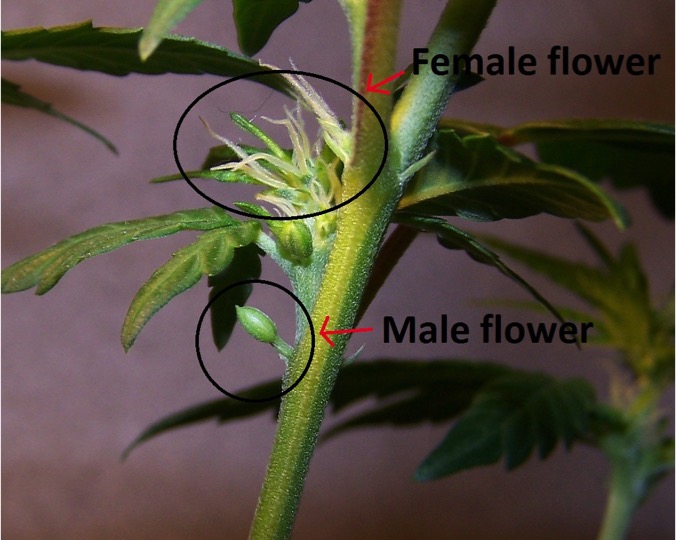
The sex organs on a Cannabis plant identified.

Cannabis is considered a male if it contains a Y-chromosome. Females have two X chromosomes. Even though female Cannabis plants do not have the “male” chromosome, they are capable of producing viable pollen (hermaphrodite) that is the source of feminized seeds. Therefore, the genes required to make pollen are NOT on the Y-chromosome, but are located throughout the remainder of the Cannabis genome. However, DNA based tests are available to identify Male Associated Sequence (MAS) that can be used as a test for the Y-chromosome in seedlings/plants.

Natural hermaphrodites may have resulted from Polyploidization (XXXY), or spontaneous hermaphrodites could be a result of epigenetic effects, which may be sensitive to the environment and specific chemical treatments.

Feminized seeds will still have genes segregating, thus they are not genetically identical. This shouldn’t lead to a necessary decrease in health, but could. A clone does not have this problem.

The other issue is that “inbreeding depression” is a common biological phenomenon, where if you are too inbred, it is bad…like humans. Feminized seeds are truly inbred. Each generation will decrease Heterozygosity, but some seeds (lines) may be unhealthy and thus are not ideal plants for a grower.

GMO– The Future of Cannabis?

Is there GMO (genetically modified organism) Cannabis? Probably, but it is likely in a lab somewhere…deep underground! Companies will make GMO Cannabis. One huge advantage to doing so is that you create patentable material…it is unique and it has been created.

The definition of a GMO is…well, undefined. New techniques exist whereby a single nucleotide can be changed out of 820 million and no “foreign” DNA remains in the plant. If this nucleotide change already exists in the Cannabis gene pool, it could happen naturally and may not be considered a GMO. This debate will continue for years or decades.

Proponents of GMO plants cite the substantial increase in productivity and yield, which is supported by science. What remains to be determined, and is being studied, are the long-term effects on the environment, ecosystem and individual species, in both plants and animals. Science-based opponent arguments follow the logic that each species has evolved within itself a homeostasis and messing with its genes can cause drastic changes in how this GMO acts in the environment/ecosystem (Frankenstein effect). Similarly, introducing an altered organism into a balanced ecosystem can lead to drastic changes in the dynamics of the species occupying those ecological niches. As in most things in life, it is not black and white; what is required is a solid understanding of the risks of each GMO, and for science to prove or disprove the benefits and risks of GMO crops.

Michigan House Approves Bills, State Set To Regulate Medical Cannabis

By Aaron G. Biros
No Comments

Update: On September 21, 2016, Governor Rick Snyder signed the bills into law, regulating the market officially.


The Michigan House of Representatives voted in concurrence with last week’s Senate vote, approving a series of bills that would establish a regulatory framework for the state’s medical cannabis industry, according to a Michigan Live article. Governor Rick Snyder is expected to sign the bills into law very soon.

The package of bills approved today includes provisions for a 3% tax on retail income, a licensing system for growers, dispensaries and patients as well as establishing a traceability system. The bills, if signed into law, would institute a regulatory framework akin to other states that have legalized cannabis recently. Packaging, labeling and testing requirements for THC, other cannabinoids and contaminants are included in the overhaul.

In 2008, voters approved the legalization of medical cannabis, since then however there has been little action from the state on regulating the safety, sale or distribution of cannabis. The bills are meant to eliminate the previous ambiguity in the laws surrounding the state’s patients, caregivers and dispensaries and establish a legitimate system for patients to access medical cannabis.

With over 203,000 registered medical cannabis patients, the passage of these bills could establish the second-largest medical cannabis market in the country, larger than the total number of Colorado and Oregon’s registered patients combined.

stevegoldner
Stephen Goldner, Esq, founder of Pinnacle Laboratory and Regulatory Affairs Associates

According to Stephen Goldner, founder of Pinnacle Laboratories in Michigan, the market will get regulated into five discrete categories for licensing: growers, dispensaries, testing labs, processors, and transporters. “The basic legislation that will become law is very sensible and almost completely mirrors what has already been passed by the Michigan House, thus rapid conformance is nearly guarantied,” says Goldner. “There is a clear intent to require all products to be tested before sale, and setting up an integrated reporting system by product batch code from production, through transport and to final sale.” Goldner believes this comes with an overriding intent to establish standardization across the board, and points to the Foundation of Cannabis Unified Standards (FOCUS) for ready-to-implement, vetted standards.

“Michigan requiring method validation and other requirements, such as adverse event reporting, thereby builds in greater assurance of product safety and compliance,” says Goldner. Pinnacle Labs has been preparing for this day for quite some time. “We have invested the past 18 months preparing for exactly this legislation,” says Goldner. “We look forward to helping the medical cannabis patients in Michigan get cost-effective, desirable products delivered legally and easily.”

If passed, this kind of legislation will present a litany of challenges for the state and all stakeholders involved. Growers dealing with contamination issues previously will now have to navigate legally mandated testing requirements. According to Goldner, the greatest challenges are those that other states already deal with. “The greatest challenge for dispensaries and other business in the chain of distribution is the lack of adequate banking services,” says Goldner. The state will have to hire inspectors, establish robust oversight and review applications while maintaining a smooth transition to a regulated market.

Until Gov. Snyder signs them into law, the state’s cannabis industry and the 203,000 patients remain in a state of uncertainty.

Aaron_headshot
Biros' Blog

No Surprise Here: Federal Gov’t Still Butting Heads With States Over Cannabis Legalization

By Aaron G. Biros
1 Comment
Aaron_headshot

On August 11, 2016, the widely anticipated Drug Enforcement Agency (DEA) announcement on federal cannabis policy yielded fairly anticlimactic results. According to the statement, the federal agency denied two petitions to reschedule cannabis under the Controlled Substances Act (CSA). The U.S. Food and Drug Administration (FDA) and the National Institute on Drug Abuse (NIDA) conducted a scientific and medical evaluation that deemed cannabis “does not meet the criteria for currently accepted medical use in treatment in the United States, there is a lack of accepted safety for its use under medical supervision, and it has a high potential for abuse.” The announcement reiterates the agency’s previous statements on the matter, stating that they believe clinical trials under the investigational new drug (IND) applications and the drug approval process are how the FDA can assess the safety and effectiveness of cannabis-derived medicine.

This avenue for bringing a cannabis-based drug to market is extraordinarily cost-prohibitive, allowing only pharmaceutical companies with deep coffers in the space. The DEA did however make one announcement in the statement that has the potential to lift many barriers to researching the plant’s medical value. The policy change allows more institutions to grow cannabis for research, which was previously allowed only at the University of Mississippi under a contract with NIDA. This is a very significant policy change that could be viewed as a step in the right direction. There is plenty of research currently that proves cannabis’ medical value and its safety and efficacy, but allowing more research opportunities signals that the DEA could be open to revisiting a rescheduling recommendation in the future.

One can speculate endlessly about when the DEA may reschedule cannabis, but in reality, no one knows when that might happen, no one knows what a new administration would do, if Congress would act on it or if the courts would. It seems even the FDA and DEA are sitting on their hands as the federal government does what they do best– inaction.

However, one important ruling in the U.S. Court of Appeals for the 9th Circuit highlights the baby steps taken toward some form of federal acceptance of legal cannabis. The court ruled that the Department of Justice couldn’t prosecute individuals in states where cannabis is legal. More specifically, the court ruling “prohibits the Department of Justice from spending funds to prevent states’ implementation of their medical marijuana laws.” The ruling basically reaffirms the Rohrabacher-Farr amendment, which states that the DOJ cannot interfere with states where cannabis is legal, but this time also for those individuals complying with state law.

The DEA’s inaction on rescheduling cannabis should not be perceived as a loss to the legalization movement, rather as an upholding of the asinine status quo. Policy change in the United States is an arduous and very slow process. These things take time. One can look to the same-sex marriage movement and find striking similarities to the cannabis legalization movement. For example, Massachusetts and California were some of the first states to introduce legislation legalizing same-sex marriage and are also some of the first states that have introduced legislation legalizing cannabis. These states that are typically drivers of national policy have opportunities to pass important ballot initiatives this November that could have ripple effects throughout the country. Five states have ballot initiatives for recreational legalization and potentially up to eight states with initiatives for medical legalization, all being voted on this November.

What can the average citizen do to help with progress in cannabis legalization? For starters, you can vote. If you live in a state that has a ballot initiative for legalizing cannabis, show up at the polls and make your voice heard. If you live in a state where no such ballot initiative exists, you can still take action to get cannabis legalized. You can sign this petition or write your member of Congress to support the Compassionate Access, Research Expansion, and Respect States (CARERS) Act (S. 683). The CARERS Act, among many other important changes, would most notably reschedule cannabis to Schedule II.

So not all is lost with the DEA’s inaction. As more states legalize cannabis, we are seeing a rising tide lift all boats.

Sustainability for the Cannabis Industry, Part II: The New Cannabis Consumer

By Olivia L. Dubreuil, Esq., Brett Giddings
No Comments

Most readers ought to be well aware that the cannabis industry is rapidly growing. The Arcview Group, an Oakland-based investor network, estimates the retail and wholesale cannabis market will reach $22.8 billion by 2020. That number represents a lot of people consuming cannabis in many different ways.

The average cannabis consumer is changing. A new range of social groups is consuming cannabis-based products. From yoga diehards, to middle-aged men and women, veterans that have ‘tried everything else’ and young professionals looking for a different way to relax, the market is broadening.

This new segment of cannabis consumers are often not looking to get high- they are looking for anti-inflammatories, relaxants and ways of dealing with chronic pains and stress. For these health and wellness seekers, the last thing they want is a product dosed with pesticides, insecticides or butane residues. We can expect to see these consumers to follow broader consumption trends- specifically when it comes to a product like cannabis that people are inevitably placing in or on their bodies.

These consumers come with new sets of expectations, similar to those when they buy fruit, vegetables, coffee or chocolate. They are increasingly curious about the contents of the products they purchase- they are a large part of the reason that the sales of organic produce has ‘ballooned’. They are asking questions like: Does the product contain pesticides? Has the product been cultivated in a way that minimizes negative environmental impacts? How do we know that the supply chain quality controls are rigorous enough to ensure no one has tampered with the product? Who is growing and picking this product and how are those people being treated?

When a curious consumer enters a modern American supermarket, they are guided by a range of messages relating to the contents and supply chain that was part of making each product. Organic, non-GMO, pesticide-free, fair trade, free-range and locally produced are some of the common criteria. The more credible labels are supported by codes and procedures in which the whole supply chain is audited, monitored and approved by the certifying body according to certain standards- for example the USDA certifies organic foods.

Being a Schedule I controlled substance under federal law, cannabis is probably not going to receive USDA organic certification any time soon. However there are organizations out there that are committed to increasing the availability of cannabis grown with organic practices. Certifying bodies like Certified Kind and the Organic Cannabis Growers Society are gaining popularity among growers who see the market evolving in that direction. At the same time, businesses such as Delicious Fog (an ‘organic-focussed’ delivery service in Santa Clara County) and Harvest (an ‘organic’ dispensary in San Francisco)- are specializing in the sale of these ‘organic’ cannabis products.

Just like any sustainability issue- ensuring your cannabis product comes from a well-managed supply chain cannot be a last minute add-on. Whether a business is small, large, mature or emerging, developing a strategic approach to the diverse spread of sustainability challenges is critical.

As a cannabis business what can you do to appeal to the new cannabis consumer?

NCIA and BDS Analytics Partnership: Analyzing the Market Data Tool

By Aaron G. Biros
No Comments

In May, the National Cannabis Industry Association (NCIA) announced a partnership with BDS Analytics, a cannabis market intelligence and data firm, according to a press release. Beginning in June of this year, NCIA members received access to market and sales data via BDS Analytics’ GreenEdge sales tracking software.NCIA.Logo

BDS_Logo_-_with_analytics_purple_text_copyAccording to Aaron Smith, executive director of NCIA, market intelligence was previously very scarce in the emerging cannabis industry. “We hear from our members all the time that one of their biggest challenges is the scarcity of reliable market intelligence and data in the industry,” says Smith. “Being able to offer this kind of data as an included benefit of NCIA membership is incredibly valuable. We’re proud to partner with BDS and grateful for their support of NCIA’s mission.”

roybingham
Roy Bingham, CEO of BDS Analytics

The GreenEdge reports span numerous product categories as well as high-level market reporting. According to Roy Bingham, chief executive officer of BDS Analytics, NCIA member-businesses can take part in a tutorial to familiarize them with the interface. Bingham says they have extraordinarily comprehensive data on Colorado and Washington; they will have Oregon’s data ready in less than three months and roll out nationally to all major markets during the rest of 2016 and 2017.

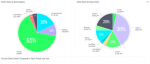
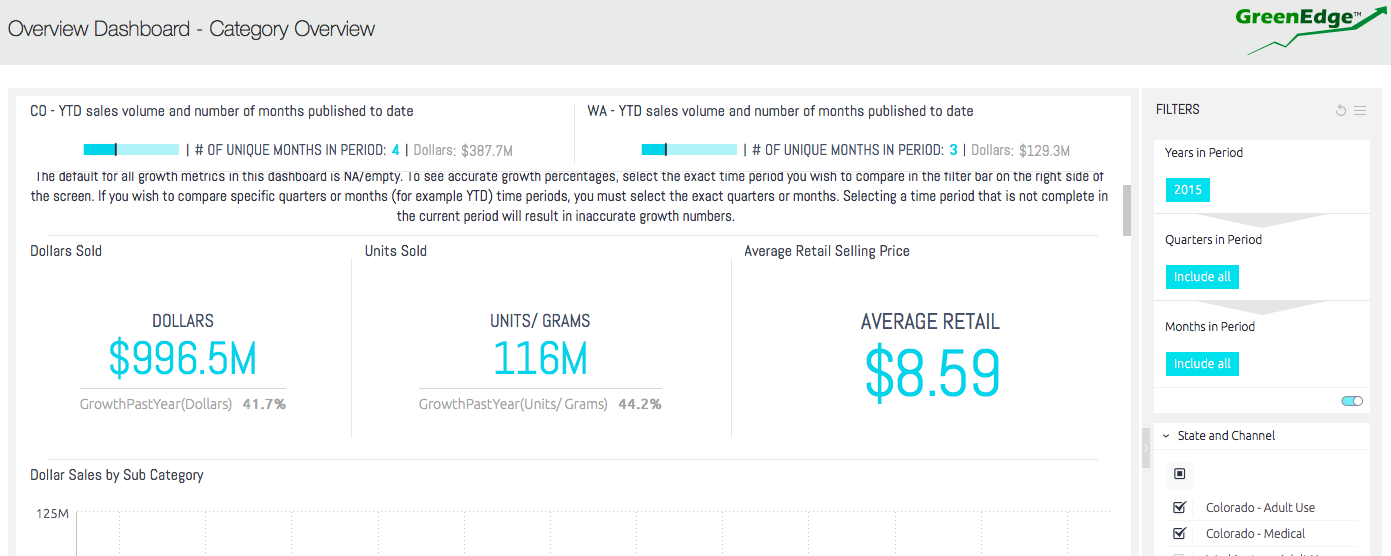
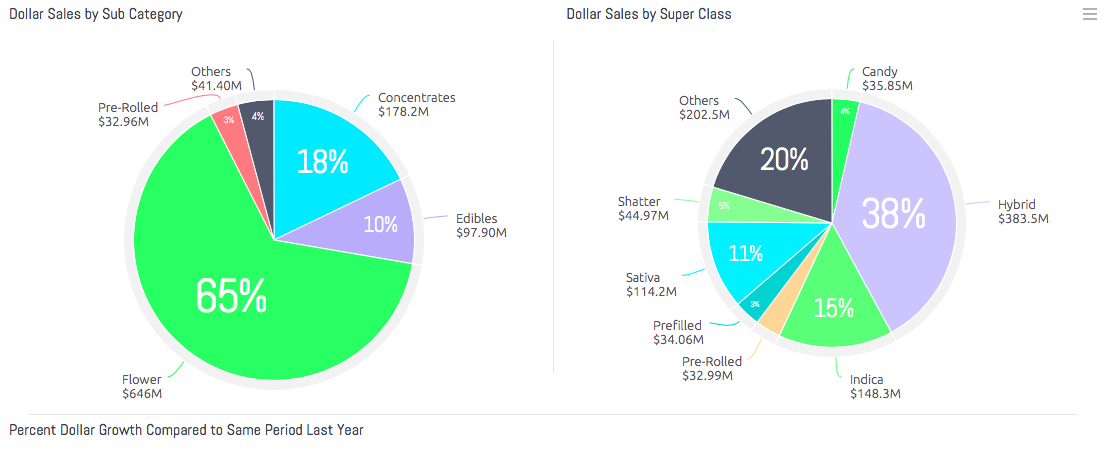
Through using the interactive GreenEdge reports, we were able to identify key market figures and growth percentages, such as percent of the market share held by dry flower, average infused chocolate bar prices and much more. We found that Colorado’s recreational and medical markets totaled $996.5 million in 2015, just shy of a billion dollars. 28% of that market was held by infused products and concentrates, which grew by 111% over the previous twelve months. The average infused chocolate bar sold at retail in Colorado was priced at $14.47 last year. Overall, Colorado’s cannabis marketplace grew by over 41% between 2014 and 2015.

ScreenShotGreenEdge1According to Bingham, for most mature industries, a ten percent transaction value of the market is sufficient to scale data so that it speaks to the entire market. “However, this is not a stable, mature industry so we are more comfortable with a sample size of around twenty percent of the total market,” says Bingham. “We are well over those numbers in Colorado and Washington.” In order to get the data, BDS Analytics makes direct arrangements with dispensaries on their panel to get access to their point-of-sale data, which can be done in almost real time or in a download at the end of each month. “It is then standardized with a learning software system, assisted by personnel, that gets better over time at categorizing data points,” says Bingham. “We use algorithms to scale the data to the total industry size, and there are a number of adjustments made to those algorithms to make sure the data is normalized.” The program has recorded more than 20 million transactions to date.

ScreenShotGreenEdge2Dispensaries provide their data because they get the full service that comes with being a member of the panel, including details down to the brand level, according to Bingham. “This enables dispensaries to offer consumers what they are purchasing on average in their market,” says Bingham. “You get to see a breakdown of the most popular brands and items if you join the panel and submit data.” They have categorized more than 20,000 unique products, such as a number of different types of concentrates, different types of infused products and more.

The interactive data tool holds tremendous value for NCIA members and business owners in the cannabis space, giving them access to market data previously unavailable or difficult to find.

Q&A with Dan Anglin: Cannabis Safety is an American Duty

By Aaron G. Biros
No Comments

Dan Anglin, a Marine Corps veteran and chairman of the Colorado Cannabis Chamber of Commerce, is the founder and chief executive officer of Americanna, an infused products business in Colorado with a heavy focus on regulatory compliance, consistent dosing and product safety. The company was the very first to implement the THC stamp, a requirement for all infused products in Colorado this coming October 1st.

dananglin
Dan Anglin, founder & CEO of Americanna

As a veteran of Operation Desert Storm, Anglin began his career as a legislative analyst in Arizona, and then moved to Colorado where he worked for the Colorado Legislative Council. Soon after, he became a lobbyist for the Colorado Association of Commerce and Industry. With a focus on health policy, he became the primary lobbyist for anything related to healthcare at the state level.

After running his own lobbying firm, he was hired by EdiPure, which was at the time the largest infused product manufacturer, to lobby against an amendment in the state legislature that would have all but shut down the infused products industry. Within six months, he was made a partner and co-owner of EdiPure for almost three years where he focused on regulatory compliance and legislative matters. In April of 2015, Anglin left EdiPure to buy Boulder Pharma with Frank Falconer, rebranding the company as Americanna making primarily edible products.AMERICANNA_LOGO_Vintage_FINAL

According to him, over the past few years, public opinion has grown in favor of differentiating cannabis products from other food products beyond just the packaging. Anglin said he saw this coming and embraced it as a core concept of his business model. Americanna produces gummies in the shape of a cannabis leaf with the THC stamp on each individual gummy. “This is a matter of public safety that you can clearly tell it is a cannabis product by its shape and symbol,” says Anglin. “We should be proud of cannabis products as an expression of American liberty, it is our duty not to hide it in an unrecognizable food product, but celebrate it with a clear shape and stamp, providing for consumer safety.” In this Q&A, we sit down with Dan Anglin to learn about his quality and safety controls, manufacturing processes and why his business embodies American freedom.

CannabisIndustryJournal: How do you see what you are doing as exercising your American liberties?

Dan Anglin: I served my country and protected the rights of Americans overseas. Because the people of Colorado have chosen this [adult use cannabis legalization] to be a right expressed in the state constitution, I feel that every day our 38 employees come to work and make cannabis products, we are exercising our rights as citizens of Colorado and of the United States.

AmericannaTeam
The Americanna Team

The adult use side of the cannabis industry is a true expression of liberty in choice. This is what freedom is all about! In the past five years, the United States has given more and more groups of people more freedoms and liberties; this is another group of people that believe they deserve rights, in this case the liberty to consume cannabis freely.

This is an issue of states’ rights too. The people of Colorado voted to make the adult use of cannabis a right in their state constitution. We are abiding by the Cole Memo by doing everything we can to protect public safety. There is still a long way to go, but the fact that my employees and I are paying taxes and selling this in a regulated environment is absolutely an expression of our American liberty.

CIJ: Walk us through some of your quality controls in manufacturing infused products.

Dan: We have a contract manufacturer with a white label agreement, so our food products are of the same quality as any food product you would find in major retailers. Quality controls begin as soon as we unpack the food product, making sure it has been stored at the right temperature with all of the right conditions. We toss any products that do not meet our quality standards. Post-infusion, we go into packaging and separate them into flavors. As packagers are putting them into the child resistant packaging as required by law, they are doing QC checks on every single gummy.

americana dummiesThe most important part of our quality control system is the testing for potency, homogeneity and microbial contamination. Post-harvest, the cannabis is tested and after it is extracted, the product is tested again but this time also for residual solvents. Once we infuse the product, we test it again. This is so important because making any type of food product requires doing everything you can to prevent bacterial contamination.

CIJ: How do you view cannabis safety as your responsibility?

Dan: Frank and I developed the business based on compliance and consistency. We already comply with rules expected to be enforced six months from now. We want consumers to be able to count on the consistency of the dosing in our products. Our semi-automated process of infusion can precisely dose every single product to ten milligrams. It is an infusion that soaks through the product, not a spray, and is one of the most homogenous products available.

Because we are creating food products, we have the same responsibility as any other food producer. When you make something that people ingest, it is your responsibility to follow health codes that provide guidelines for food handling. Every one of my employees is ServSafe certified. We are treating cannabis as an ingredient in a food product. Food safety is paramount and should be at the top of every infused product manufacturer’s mind.

NCIA Brings Cannabis Business Summit to Oakland

By Aaron G. Biros
No Comments

The National Cannabis Industry Association (NCIA) with their California affiliate, California Cannabis Industry Association (CCIA), hosted over 3,000 business professionals at this week’s Cannabis Business Summit in Oakland, CA. According to Aaron Smith, executive director of the NCIA, this event drew their largest-ever gathering of attendees and well over 100 sponsors on the expo floor. In an exclusive interview prior to the event, Smith expected this would be a wildly successful year. “Last year we had just over 2,000 attendees in Colorado and we are expecting over 3,000 this year in California,” says Smith. “There is tremendous interest in the California market and it is so great to be here with all of the excitement leading up to the ballot initiatives in November.”

aaronsmithncia
Aaron Smith, executive director of NCIA

The theme of the conference was set early on from industry progress to sustainable growth. “I am really proud that NCIA’s events always bring out the best and brightest in the industry,” says Smith. “It is mostly members of NCIA attending, which are the folks invested in the future of the industry and not just in it to make a quick buck; they are here to build a new business sector.” On Tuesday morning, Smith gave his opening remarks and introduced the first keynote delivered by Ahmed Rahim, co-founder and chief executive officer of Numi Organic Tea alongside Kayvan Khalatbari, founding partner of Denver Relief Consulting, to discuss the triple bottom line in business, emphasizing the need for social responsibility, which includes environmental stewardship, fair labor and trade laws and community integration among cannabis businesses. California Lieutenant Governor Gavin Newsom also delivered a keynote address that was received with a standing ovation after discussing the November ballot initiative, which would legalize, regulate and tax the adult use of cannabis in the state.

businessummit
The first keynote panel of the Cannabis Business Summit

Newsom’s speech highlighted the state’s opportunity to make considerable progress in the cannabis legalization arena this November. The substance of his speech echoed that of many attendees focused on moving the industry forward sustainably. “We need to right the wrong of the failed war on drugs in America,” says Newsom. Boisterous cheers and applause followed almost every sentence as he continued to emphasize the need for social and criminal justice reform. “We are not doing this to be the next California gold rush or to make tax revenue; our purpose and focus is social justice,” adds Newsom.

Gavin Newsom, Lieutenant Governor of California, delivering the keynote

The Lieutenant Governor also mentioned the sheer massive size of California’s market opportunity and their pragmatic regulatory framework in development. “The entire retail of recreational and medical [cannabis sales] in Colorado was just shy of $1 billion last year; we are talking about our 58 counties up in the northern part of this state that produce anywhere from $9-13 billion [sic] of wholesale cannabis- it’s a game changer,” says Newsom. “We have had the benefit of seeing where other states have fallen short or struggled [in regulatory frameworks] and will present that to voters this November.” Newsom also mentioned that members of the cannabis industry need to act as stewards of the environment and protect the small farmers.

Panel discussions throughout the afternoon and following day deliberated a wide variety of topics from laboratory testing standards to the state of affairs in education, training and certification across the country. John MacKay, senior director of strategic technologies at Waters Corporation, led a panel titled Validation of Analytical Methods, Lab Certifications and Standard Methods with Cynthia Ludwig, director of technical services at the American Oil Chemists’ Society (AOCS), Shawn Kassner, senior scientist at Neptune and Company, Inc. and David Egerton, vice president of technical services at CW Analytical Laboratories.

The panel: Validation of Analytical Methods, Lab Certifications and Standard Methods

The panel addressed many of the current problems facing the cannabis testing space. “It is a very difficult plant to work with and labs are doing their best to provide reproducible results,” says Mackay. Cynthia Ludwig emphasized the need for collaborative studies and method validation in cannabis labs. “We [AOCS] provide official, validated laboratory testing methods, but the cannabis industry really has no official methods to work with,” says Ludwig. Egerton echoed Mackay’s concerns over difficult sample preparation and the difficulty of working with cannabis in the lab. “The problem is the matrix of the cannabis sample; the matrix is a critical aspect of method validation- ensuring we find the signal through the noise,” says David. “In the absence of official methods, cannabis labs need to perform method validation in-house for each type of sample, ranging from dry flower to different types of infused products and concentrates.” In addition to those difficulties of providing robust and reproducible lab tests, the panel emphasized that there is currently no laboratory accreditation program required by California regulators.

The cannabis industry in California is still rather unregulated and lacks consistency in safety standards across the market in almost every sector. Attendees seemed to look forward to the November 8th vote on the ballot initiative in California as a solution for the state’s current problems, hoping consumers and patients alike will find solace in a more regulated, standardized and safe market. The NCIA will be hosting a “Seed To Sale Show” focused on best practices and case studies January 31st and February 1st, 2017 in Denver. The next Cannabis Business Summit will be held from June 12th to the 14th of 2017 in Oakland, CA.

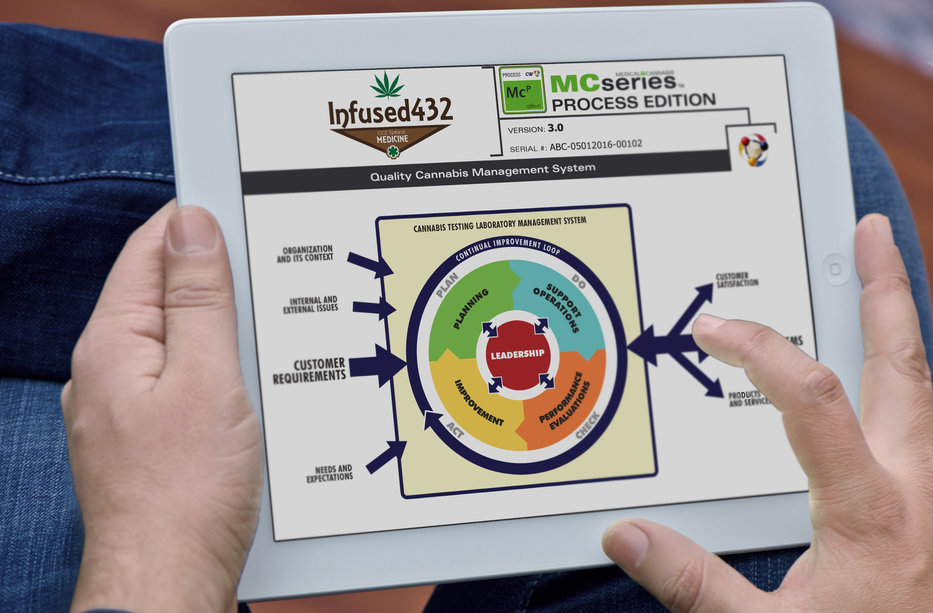
mcseriesipad

Documentation & Compliance: A Q&A with Michael Shea, ConformanceWare

By Aaron G. Biros
No Comments
mcseriesipad

Cannabis safety throughout the supply chain requires active documentation tools for business owners to keep up with standards and regulations on the local and state level. Michael Shea, founder and president of AccessQMS and chief executive officer of Upshot’s ConformanceWare, provides consulting support across multiple industries with independent referral services to compliance professionals. With quality, safety and efficiency at top of mind, ConformanceWare’s design team developed the Medical Cannabis Series (MC Series™) to help cannabis business owners make the task of compliance easier. The documentation tools in the program are individually tailored to address needs in cultivation, processing, analyzing and dispensing.MC series

The MC Series-Analyze Edition is currently in use at Canalysis Laboratories and NV Cann Labs, both operating in Nevada. According to Tara Lynn, chief executive officer at NV Cann Labs, the product helps them meet all of their documentation needs. “I appreciate all of the development using the MC Series- Analyze Edition and look forward to developing even more of a relationship through the years to come,” says Lynn. We sit down with Michael Shea to learn more about his product and how cannabis business owners can stay on top of regulatory compliance.

CannabisIndustryJournal: How will the MC Series help cannabis laboratories, cultivators, processors and dispensaries navigate regulatory compliance?

Michael Shea: To open a sustainable business involving cannabis goes beyond submitting applications, paying fees and focusing on profit alone. As laws adjust and tighter controls are put in place, more and more business owners are realizing what preserves and sustains their business is, in fact, compliance.

True sustainability is driven by forward thinking that values documenting and following best practices to ensure quality, safety and efficiency. Ambiguity concerning where to turn or how to correctly produce this documentation not only poses a difficult dilemma, it can put one’s investment at risk as well.mcserieslaptop

Finding a remedy for the situation begins with an expansion of perspective. Businesses will benefit most by actively working toward compliance from the onset. This approach eliminates having to face non-compliance and the enforcement that goes along with it.

MC Series™ is designed for this purpose and will greatly help businesses precisely document how their method of operation demonstrates full compliance with applicable laws and standards. Each MC Series™ edition is developed using Microsoft Word and Excel, which is then customized to mirror each organization’s processes, procedures and instructions.

Being user friendly, we have built in numerous hyperlinks for navigating and managing files and documents so that the documentation behaves like a website. This enables each user to access, edit, save and retrieve information instantly.

CIJ: How does your product utilize CMC’s, FDA, ISO, FOCUS, AHPA and EPA standards to help business owners?  

Michael: Businesses handling cannabis are subject to strict regulations and are expected to show full compliance with regulatory protocols. Setting up your business correctly means playing by the rules and operating with the proper documentation and structural foundation.mcserieslaptop2

By applying established best practices from the start, business owners will be able to minimize risk for investors, tighten efficiencies and quickly adapt to regulatory changes with minor adjustments. This serves two primary functions: Business owners will now have the protection they need and the means to promote their brand as a world-class operation.

Because laws surrounding cannabis are in such a state of flux and revision, what is most valuable to know is what technical documents lawmakers select for the purpose of writing regulations. Putting this knowledge to work, the MC series uses a variety of guidance documents designated by regulatory and standards bodies for best establishing compliance.

Developed with regulations in mind, each series edition accurately defines the scope of applicability required for your business model. Whether you’re a grower, processor, cannabis testing service or dispensary the MC series has a solution. It significantly helps business owners to achieve compliance by providing the required documentation with an operations framework.

MC series merges regulatory best practices with internationally accepted standards to deliver a complete solution with a very quick turnaround time. Designed to ensure public safety and protect human health, the MC series provides a much-needed tool that bridges the gap between compliance and profitability.

CIJ: How might you be ahead of the curve in looking toward a rescheduling or a schedule 2 cannabis framework?

Michael: Being ahead of the curve simply translates to knowing the regulatory landscape and what’s involved moving forward. When the goal is to legalize cannabis for its great many uses and benefits, public health and safety must come first. Now is the time for business owners to get serious and effectively address the process of legitimizing it.

As with anything available for consumption, standardization is the method and regulators have a long established process for putting controls in place to ensure the health and safety of consumers. We have a lot of experience in this area, and our MC Series™ is an exceptionally useful tool for people who don’t. It is our way of contributing to assisting and accelerating the process.

Essentially, we are saying to business owners, operate your business as if cannabis is already legal. Managing your operations in compliance to existing regulatory best practices will speak volumes to lawmakers. You will be effectively demonstrating to Federal and State governments that you understand the importance of regulations to ensure public health and safety and are making compliance top priority.

This will make your business fluid in relation to regulatory changes and prepare you for Schedule II and beyond.

CIJ: Why should business owners be proactive in navigating regulatory compliance with a documentation management system?

Michael: With so many regulations targeting the cannabis industry, it is hard to keep track of and adjust accordingly. Many business owners are getting excited about being involved and making a difference. Amidst all this enthusiasm, the importance of best practices is often times overlooked and prioritized for when business is good and finances improve.

At this point, business owners can no longer afford to position best practices for future use.

For businesses handling cannabis, taking a future stance will always increase risk.. This leaves you legally exposed to unforeseen costs and complications. More importantly, it will exponentially increase the potential for watching your investment, hard work and business be out paced by the competition, or even worse, closed down permanently.mcseriesipad

Alternatively, being proactive will yield different results. Great benefits will come by adopting and following best practices to operate your business. In doing so, you now have an effective method to ensure quality, health and safety, environmental stewardship and sustainability. As a rapidly growing industry, these areas of discipline are absolutely critical for cannabis to reach its full potential and be fully accepted.

In many industries, legitimate and successful companies see best practices as simply part of doing business. Many see it as a tool that provides a useful roadmap for continually improving their operations and strengthening their position in the market.

When the legal obligations have been taken care of, success becomes a matter of setting realistic goals, planning well and delivering with impeccable timing. Operational performance can now be measured and improved for unhindered growth. Everyone involved or tied to your business is now on the same page and in areas of supervision, micromanagement is replaced with a documented system. Documentation should clearly define everyone’s roles and responsibilities, so that when errors occur, there are corrective action procedures available to fix them.


Editor’s note: For more information you may reach out directly to Michael Shea at 313-303-6763 or info@conformanceware.com

derekpeterson

Terra Tech Expands, Maintains Quality: A Q&A with CEO Derek Peterson

By Aaron G. Biros
No Comments
derekpeterson
derekpeterson
Derek Peterson, chief executive officer of Terra Tech

Terra Tech, with the recent acquisition of Blum, a dispensary in Oakland, and the line of concentrates, IVXX, is sweeping the cannabis industry by setting standards for safety and quality. Terra Tech, publicly traded in the Over-The-Counter market, is well known as an agricultural company, with the subsidiary brand, Edible Garden, selling produce to Whole Foods, Wal-Mart and Kroger’s. In December of last year, we covered Terra Tech’s entrance into the cannabis marketplace and their experience with large-scale, sustainable agriculture. We sit down with Derek Peterson, chief executive officer of Terra Tech, to get an update on their progress and quality controls.

CannabisIndustryJournal: In January, Terra Tech announced revenue guidance of $20-22 million for 2016. Can you share some of your strategy going forward to meet your goals?

rsz_img_2343
Terra Tech is taking organic and GFSI-certified agricultural practices to growing cannabis

Derek Peterson: We have always played both a long game as well as a short game, meaning while we are building our longer term business, like in Nevada, we are also focusing on short term accretive acquisitions, like we did with Blum in Oakland. We want to make sure we capture short-term revenue growth while we plan our future revenue production. We feel confident about achieving those results.

CIJ: How big of a role does the acquisition of Blum and IVXX brand expansion play in meeting those goals?

Blumoakland
The Oakland location of Blum dispensary

Derek: Blum is a significant factor even though we are only capturing three quarters of revenue considering we closed the deal on March 31st of this year. So for the full year of 2017 we will have growth from this level considering we will be able to report a full year of Blum revenue. IVXX presents us with the best opportunity for growth in the coming years. As the market in California and Nevada grows we can continue to expand our IVXX footprint throughout the state. Being able to wholesale to thousands of other retail facilities affords us a significant opportunity to grow our sales.

CIJ: How do you think the brand of Edible Garden positions you well for expansion in the cannabis industry? 

Poinsettias ready for distribution at Edible Garden facility in Belvidere, New Jersey
Produce ready for distribution at Edible Garden facility in Belvidere, New Jersey

Derek: One of the reasons we were so successful in the Nevada market was because regulators and legislators felt a high degree of confidence in our abilities considering we are USDA organic, Kosher and GFSI-certified. Our traditional agricultural experience has been very synergistic with our cannabis division from both an optics and operational perspective.

CIJ: Could you give us an update on progress in Medifarm LLC in Nevada? And on your distribution plan for IVXX in California?

IVXXconcentrates
IVXX concentrates

Derek: We are continuing to expand our IVXX line throughout the state and increasing our sales force. In addition we will continue to develop new products to distribute into our existing supply chain, like we just did with our new pre filled cartridge line.

We are opening our Decatur location in Las Vegas in early July and Reno and Desert Inn towards the end of August. Our cultivation and extraction facilities should be complete no later than January 2017. We will have our entire infrastructure in place if the recreational bill passes in Nevada this November.

Blum Las Vegas location will open in July

CIJ: Tell us about the role of laboratory testing in your business.

Derek: Laboratories play a significant role, as they are becoming a mandated step in most new legislation around the company. Independent lab testing is extremely important to maintain safe access for consumers and patients. We work primarily with Steep Hill Labs and CW analytics.

CIJ: Can you expand on your integrated pest management and your growing practices?

stickerscannabis
Platinum Cookies ready for packaging and labelling

Derek: Well we cannot say organic, however we do cultivate all naturally. We also cultivate traditional produce that we sell to major retailers. We are USDA organic-certified and we implement similar processes in our cannabis cultivation. Pest control is extremely challenging for any farmer but we rely primarily on bio control, meaning the good bugs eat the bad bugs. This has been very effective for us in the cultivation of all our products.

CIJ: How is your business different from the slew of other dispensaries and growers in California?

Consistency in quality standards requires meticulous SOPs

Derek: Service and consistency; we have over 42,000 registered patients and our operations team has over 19 years of experience in California. One of the reasons we have become one of the largest dispensaries in the state is because of that experience. In addition, consistency is extremely important. Consumers expect the same product in every other business and ours is no different. If they come in for our Platinum Cookies one month and the next month it has different characteristics you are going to lose patient confidence. So in the front of the house, we are focused on pairing patients’ needs with the correct product and in the back of the house we are focused on providing a meticulously cultivated product, produced at the highest standards.

CIJ: Can you delve into some of the processing for concentrates? How do you meet such rigorous quality standards?

IVXX processing
Extraction equipment in one of the processing facilities for IVXX

Derek: Through research and development, we have engineered a proprietary process in which our solvent profiles used under our proprietary conditions ensures solvent residual levels which are not detected by instrumentation at 3rd party testing agencies such as Steep Hill Labs. In addition, any good scientific method requires repetition and corroboration of results. In order to accomplish this we also rely on random routine testing in which we send out extracts out to other 3rd party testing labs. Proprietary conditions include, but are not limited to, heat, vacuum, agitation, etc. By utilizing the correct amalgamation of solvent profiles, extraction conditions, purging conditions, as well as rigorous quality control standards, we are able to ensure a product that is void of any residual solvents, without sacrificing potency or identity of the cannabinoids and terpenes. Cannabinoids and terpenes are of chief interest when extracting cannabis for patients so that they have access to these essential oils without any of the actual leaf and bud.

All solvents used are the highest grade available to us, which ensures a truly medical product for the patient. In addition, all of our extraction equipment is routinely cleaned and sterilized using medical grade cleaning agents.