Tag Archives: lab

Digipath Expands To California

By Aaron G. Biros
1 Comment

In July, we sat down with the folks at Digipath, Inc. when they received their testing license in Nevada for the adult use market. In that conversation, they mentioned they were looking to expand into California.

According to a press release published September 25th, DigiPath, Inc. has entered a joint venture to establish their first cannabis-testing lab in California. They will be working with Don Ashley, an experienced real estate developer and cannabis entrepreneur, to launch Humboldt Botanical, LLC, conducting business under the name “Digipath Botanical Testing”.

Ashley says they expect to be fully operational by Q1 of 2018. “We expect to break ground on this project in the next few weeks and hope to be operational in early Q1 2018 just after the state-wide adult-use market is expected to launch, as we have already obtained approval from the local planning authorities for the entire complex,” says Ashley.

Todd Denkin, founder and president of Digipath

Todd Denkin, president of Digipath, is optimistic for California’s market and the coming regulations. “The state of California is estimated to be the single largest cannabis market in the U.S. Adult-use cannabis legislation was approved by California residents last November, and we expect these new regulations to be implemented in 2018,” says Denkin. “The good news for the industry is that the requirements for cannabis testing will be significant, and we are excited to partner with Don and his team to pursue this opportunity in Humboldt County.”

Ashley is contributing roughly $2 million to build and equip the lab with instrumentation, while Digipath Labs will manage and supervise operations at the lab. According to the press release, Digipath will provide a non-exclusive license to use its intellectual property for the operation of the lab. Digipath Labs will retain rights over all the scientific data generated in the lab.

Cindy Orser, PhD., chief science officer at Digipath

According to Cindy Orser, PhD., chief science officer at Digipath, that data will be put to good use. “Digipath Labs has developed an algorithm for use in strain authentication based largely on terpene profiling from our testing lab in Nevada and we are eager to further test our hypothesis with an expanded dataset from cannabis grown in Northern California,” says Orser.

While testing labs are primarily seen as safeguards for public health and safety, using data to correctly identify strains is a relatively new concept. “Digipath Labs is all about public health and safety through testing for adulterants,” says Orser. “Another component to quality is having confidence in product authenticity at the dispensary level. Not only is the consumer buying quality assured products but truth in advertising when it comes to strain nomenclature.”

Denkin says they were proactive in working toward getting the license early on. “Our partners have been dealing with the local regulators while we have been providing the proper SOP’s for the local government in order to receive the proper licensure in the area,” says Denkin. Taking their experience from Nevada to California, Orser says they have been asked to present to the California Toxicology Association on their experience with cannabis testing in the highly regulated marketplace of Nevada.

The laboratory in Humboldt is going to be part of a “cannabis industrial park,” alongside an R&D facility, oils/concentrate manufacturing center, health and wellness center, distribution and processing facility, tissue culture nursery, hemp clothing outlet, and coffee bistro, according to the press release.

Looking forward to growing their business, Denkin says they hope to launch a lab in Southern California. “We do expect to have a larger footprint in California because of the size of the market and are looking for locations in Southern California as well,” says Denkin. When asked about any new plans to expand elsewhere, Denkin says they’ll let us know. “We are continuing with our business plan and actively seeking the right mergers and acquisitions. Stay tuned.”
Nevada Cannabis Lab License Suspended

By Aaron G. Biros
1 Comment

Last month, G3 Labs LLC, a Las Vegas-based cannabis-testing lab, had their license suspended for an unknown regulatory compliance issue. According to Stephanie Klapstein, spokeswoman for the Nevada Department of Taxation, the reason why their license was suspended is confidential. “We can’t disclose the details of the suspension, including anything about penalties,” says Klapstein.

When asked about the license suspension, Klapstein told us it was a compliance issue, but could not go into detail. “I can confirm that we did suspend G3’s license for compliance issues,” says Klapstein. “We are working with them to bring them back into compliance. In the meantime, they cannot operate.” Klapstein told the Las Vegas Review-Journal that the Nevada Department of Agriculture tested cannabis samples from the lab to determine if there was a need for a recall. She also confirmed with us that the compliance issue does not necessitate any product recalls.

According to the Las Vegas Review-Journal, this is the first time a cannabis business license is suspended in the state since the beginning of adult-use sales back in July of this year. Nevada’s cannabis regulations require independent lab testing of products before they reach shelves. That required testing includes checking for potency, microbials, pesticides, residual solvents, moisture content, growth regulators, Mycotoxins and foreign matter.

When we reached out to G3 Labs, they did not immediately respond to a request for comment.

Dr. Chao-Hsiung Tung, lab director at G3 Labs, told the Las Vegas Review-Journal that they couldn’t comment, based on advice from their legal counsel. “G3 Labs is actively sorting out the issues with the Department,” Dr. Tung told the Review-Journal in an email.

emerald test retail

Colorado Approves Emerald Scientific Proficiency Tests for Regulatory Compliance in Cannabis Testing

By Aaron G. Biros
No Comments
emerald test retail

Emerald Scientific recently announced their proficiency-testing program, The Emerald Test, has been approved by Colorado as a third party provider for proficiency testing in licensed cannabis laboratories. The Emerald Test, held twice annually, is an inter-laboratory comparison and proficiency test (ILC-PT), allowing data to be collected pertaining to the performance of laboratories on a national scale. Proficiency testing is designed to measure how accurately laboratories perform and is a critical tool for quality assurance.

Colorado requires labs to participate in a proficiency-testing program in order to be certified to conduct required testing on cannabis and cannabis products for safety and quality. According to the press release, Colorado’s Marijuana Enforcement Division, under the Department of Revenue, conducted an evaluation process to determine which applicants could meet the performance standards for regulatory compliance concerning proficiency testing. The contract was awarded to Emerald Scientific following this evaluation process.

emerald test retailAccording to Ken Groggel, director of the Proficiency Testing Program at Emerald Scientific, a number of states have recognized the need for independent proficiency testing as a required piece of regulatory compliance. “The Emerald Test Inter-Laboratory Comparison/PT is state approved in Washington & Colorado for cannabis testing laboratory licensure,” says Groggel. “States with cannabis or hemp production, as well as labs in other countries are now actively participating in the Emerald Test as a tool for quality improvement, efficiency upgrades and product safety.” He says the Colorado Marijuana Enforcement Division has contracted with Emerald Scientific to provide third party PT programs for microbial contaminants, residual solvents and pesticides.

Ken Groggel, director of the Proficiency Testing Program at Emerald Scientific

Beginning in 2014, The Emerald Test has been offered twice a year and, in 2017, over 50 labs participated from 14 states and 2 countries. “Laboratories that have enrolled more than once have seen significant improvement in their results, an indicator of improved performance for industry customers,” says Groggel.

Proficiency testing is important for ensuring quality, safety and product content accuracy. “This should be the priority whether you are a grower, manufacturer, testing laboratory, regulatory entity, medical patient or adult use consumer,” says Groggel. It also helps labs meet regulatory requirements and achieve ISO 17025 accreditation. “Independent proficiency testing helps determine if the lab is able to deliver the services marketed to its customers,” says Groggel. “Regulatory agencies can use this information when licensing, monitoring & enforcing good science for public safety.”

As new states legalize cannabis and develop consumer protection regulations, proficiency testing programs can help labs demonstrate their commitment to responsible and accurate testing. “When PT results show the cannabis testing lab is capable it is up to the government to ensure accountability for performance on behalf of all its citizens,” says Groggel. Labs can enroll starting on September 25th in the Fall 2017 Emerald Test ILC/PT.

Canadian Company Recalls Contaminated Cannabis

By Aaron G. Biros
No Comments

Broken Coast Cannabis Ltd., a cannabis business located on Vancouver Island, issued a voluntary recall of three cannabis lots due to the detection of pesticides. According to the safety alert published on Health Canada’s website, the voluntary Type III recall follows an inspection of the facility back in March of this year.

A Type III recall means those products are not likely to cause negative health effects. Sampling of those three cannabis lots found a cannabis oil product in July to contain low levels of Myclobutanil and Spinosad.

Upon further testing, a cannabis leaf sample was found to contain 0.017 parts-per-million of Myclobutanil. A third party laboratory confirmed the presence of that fungicide, leading them to recall three lots of dried cannabis sold between July and December of 2016, according to that safety alert.

Spinosad, an insecticide, and Myclobutanil, a fungicide, are not authorized for use with cannabis plants per the Pest Control Products Act, however they are approved for use in food production. The health risks of ingesting either of those two chemicals are well documented. “Health Canada has not received adverse reaction reports related to Broken Coast Cannabis Ltd.’s products sold affected by the recall,” reads the safety alert. “Health Canada recommends that any individual affected by the recall immediately stop using the recalled product and to contact Broken Coast Cannabis Ltd., at the following number 1-888-486-7579.”

JCanna Boot Camp Educates Portland Attendees

By Aaron G. Biros
No Comments

On Monday, August 28th, attendees of the Cannabis Science Conference descended on Portland, Oregon for a week of educational talks, networking and studying the science of cannabis. On Monday, Chalice Farms, an extracts and infused products company, hosted the full-day JCanna Boot Camp focused on a deep dive behind the scenes of a cannabis production facility. The Cannabis Science Conference, hosted by Josh Crossney, founder of JCanna, takes place August 28th to 30th.

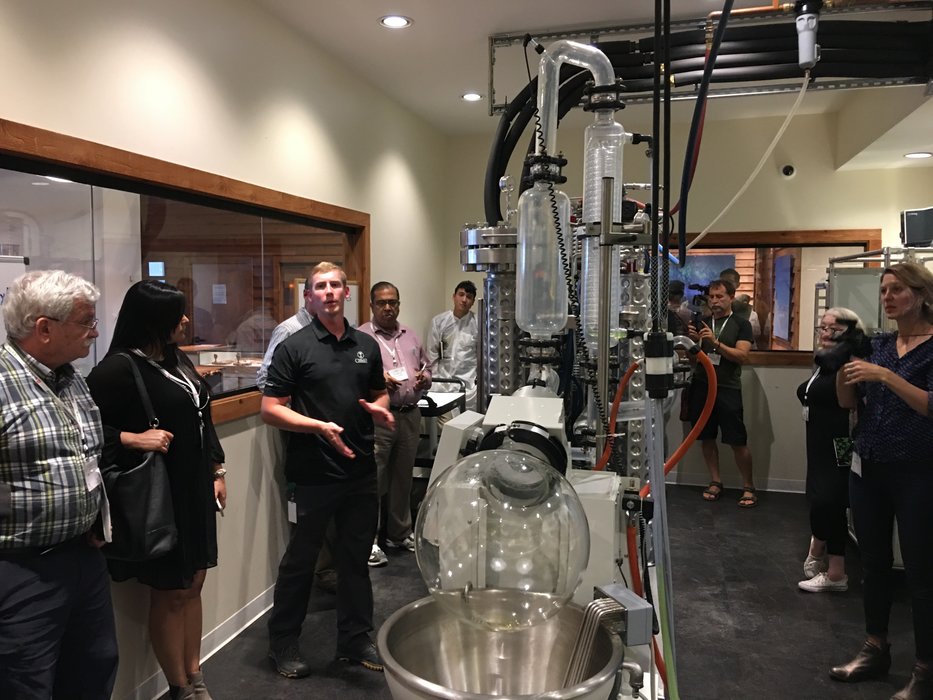
Attendees touring an extraction setup

Attendees were split into five groups where they listened to a variety of educational sessions and toured the facility. A track focused on cultivation, led by Autumn Karcey, president of Cultivo, Inc., detailed all things facility design for cannabis cultivation, including an in-depth look at sanitation and safety. For example, Karcey discussed HVAC cleanliness, floor-to-ceiling sanitation and the hazards associated with negative pressure. These principles, while applicable to most cultivating facilities, applies particularly to commercial-scale grows in a pharmaceutical setting.

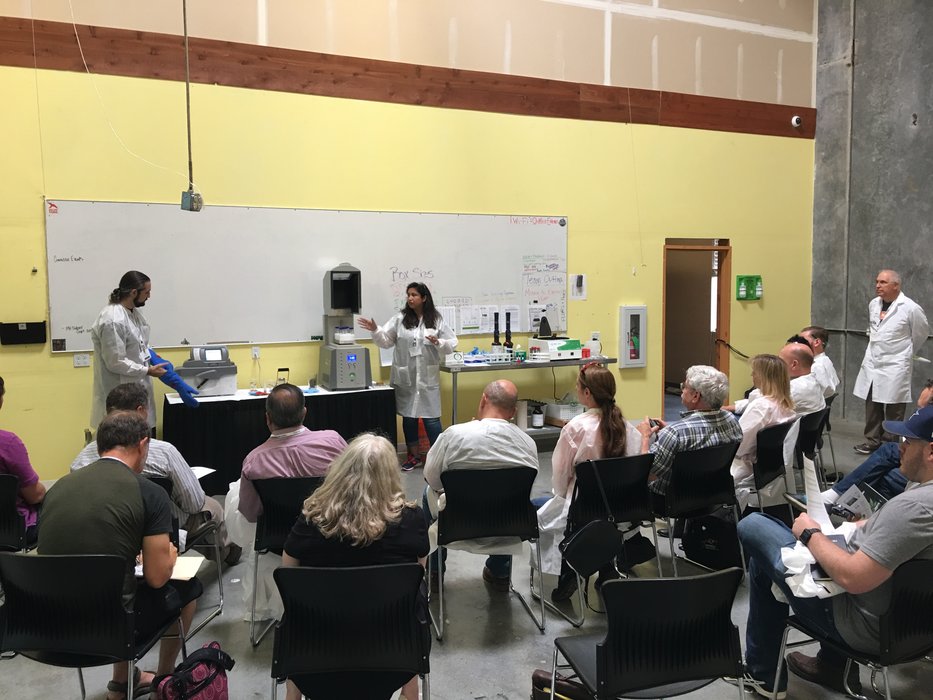
Sandy Mangan and Tristan DeBona demonstrating the grinding technique for sample prep

During one session, Sandy Mangan, accounts manager at SPEX Sample Prep and Tristan DeBona, sales specialist at SPEX Sample Prep, demonstrated the basics of sample preparation for detecting pesticides in infused products, such as gummies. That required using their GenoGrinder and FreezerMill, which uses liquid nitrogen to make gummies brittle, then pulverizing them to a powder-like substance that is more conducive for a QuEChERS preparation.

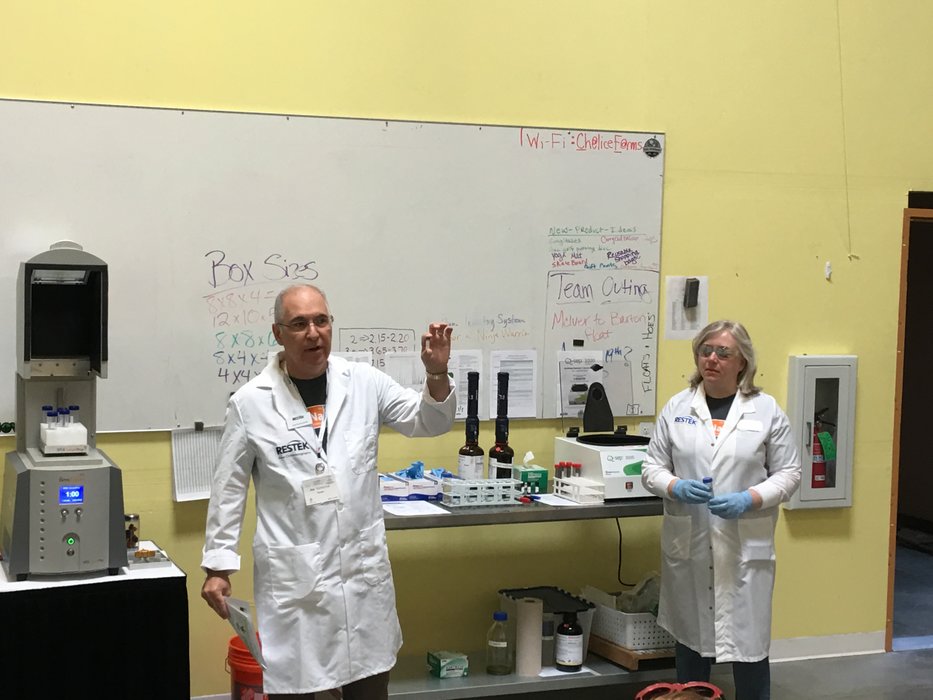
Joe Konschnik and Susan Steinike demonstrate the QuEChERS method

Joe Konschnik, business development manager at Restek, Susan Steinike, product-marketing manager at Restek and Justin Steimling, an analytical chemist at Restek, gave a demonstration of a full QuEChERS extraction of a cannabis sample for pesticide analysis, with attendees participating to learn the basics of sample preparation for these types of tests.

Following those were some other notable talks, including a tour of the extraction instruments and equipment at Chalice Farms, a look inside their commercial kitchen and a discussion of edibles and product formulation. Dr. Uma Dhanabalan, founder of Uplifting Health and Wellness, a physician with over 30 years of experience in research and patient care, led a discussion of physician participation, patient education and drug delivery mechanisms.

Amanda Rigdon, Emerald Scientific, showing some complex matrices in cannabis products

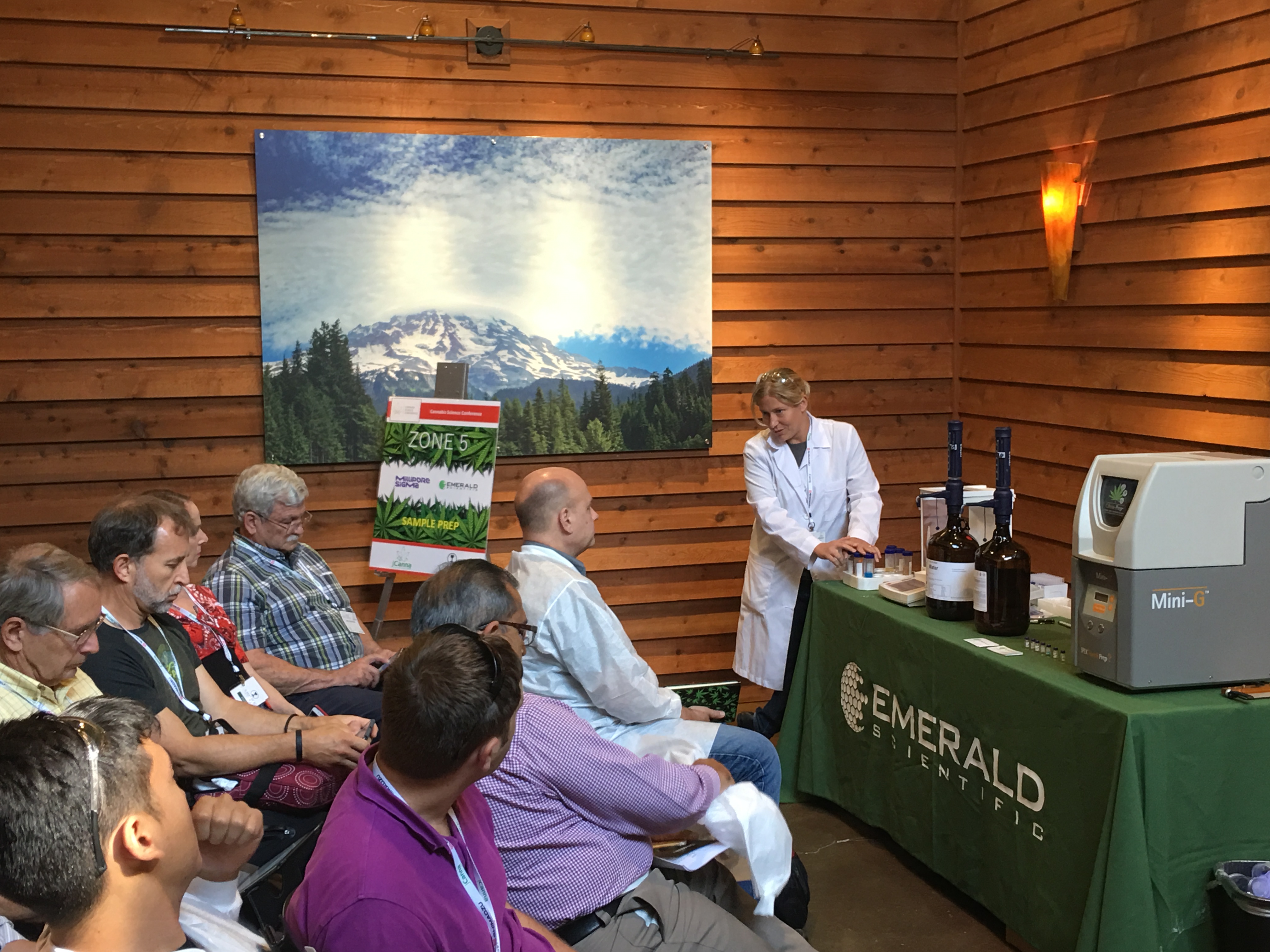
Amanda Rigdon, chief technical officer of Emerald Scientific, offered a demonstration of easy and adaptable sample preparation techniques for potency testing of infused product matrices. Rigdon showed attendees of the boot camp how wildly diverse cannabis products are and how challenging it can be for labs to test them.

The JCanna Canna Boot Camp is a good example of an educational event catered to the cannabis industry that offers real, hands-on experience and actionable advice. Before the two-day conference this week, the boot camp provided a bird’s eye view for attendees of the science of cannabis.

Steep Hill Hawaii Launches, Receives ISO 17025 Accreditation

By Aaron G. Biros
No Comments

Spectra Analytical LLC, doing business as Steep Hill Hawaii, was the first cannabis-testing laboratory to be licensed by the State of Hawaii and opened for business on August 1st. Today the lab announced they received ISO 17025:2005 certifications in biological and chemical testing from Perry Johnson Laboratory Accreditation, Inc., according to a press release.

Dana Ciccone, chief executive officer of Steep Hill Hawaii, has been a patient advocate and leader in cannabis education in Hawaii, as well as a member of the Hawaii Medical Marijuana Dispensary Task Force, an organization formed by the University of Hawaii College of Social Sciences Public Policy Center to develop regulations for the state. “We are proud not only to be the first cannabis lab to be licensed in the State of Hawaii, but also now the first lab to achieve ISO certification as well,” says Ciccone. “Industry businesses, medical professionals, state regulators, and patients can be confident that our lab and its testing standards will operate to the highest international standards.”

According to the press release, the laboratory will offer services for testing cannabinoid profiles (potency), terpenes, pesticides, heavy metals, biological screening, and residual solvents, testing for 17 Cannabinoids and 43 terpenes. The release states they are locally owned and operated, providing testing services for not just industry businesses, but in-state card-holding patients as well.

“This is a turning point for the industry – we have moved very quickly to raise the industry standards in Hawaii to internationally recognized certification,” says Ciccone. “I am very proud our scientific team for the professionalism and hard work they put in to achieve this certification.”

SC Labs Santa Cruz Gets ISO 17025 Accreditation

By Aaron G. Biros
No Comments

Earlier this week, SC Labs issued a press release announcing they achieved ISO/IEC 17025:2005 accreditation for the cannabinoids panel at their Santa Cruz location.

“We are thrilled to announce our ISO accreditation as this is one of our most important achievements over the past seven years of serving the cannabis industry and demonstrates our commitment to serving our clients with integrity,” says Jeff Gray, co-founder and chief executive officer of SC Labs. ISO 17025 accreditation represents an international standard for a laboratory’s technical competence in producing accurate test results.

“Being accredited to this International Standard demonstrates our robust quality system, technical competence, the calibration and suitability of our instrumentation and our ability to produce precise and accurate test data,” says Gray. “For clients, it enhances their confidence in our services and their choice in a business partner, provides them with additional legal defensibility in complying with upcoming regulations, and enhances the integrity of their products based on SC Labs results.”

SC Labs is currently expanding in California, growing their Southern California and Santa Cruz locations, and adding field offices throughout the state, according to the press release.

Las Vegas Gets First ISO 17025-Certified Cannabis Lab

By Aaron G. Biros
1 Comment

According to a press release published earlier this week, DB Labs achieved accreditation, becoming the first ISO 17025-accredited cannabis laboratory in Las Vegas. DB Labs received their accreditation with the help of Perry Johnson Laboratory Accreditation, Inc., an organization that provides third-party assessments to ISO/IEC 17025:2005. DB Labs was also the very first cannabis-testing lab in the state of Nevada.

According to Susan Bunce, president of DB Labs, ISO accreditation is one way the cannabis lab space is being standardized. “As the first cannabis-testing laboratory in Nevada, DB Labs has always taken patient safety very seriously and has always tried to raise the bar,” says Bunce. “The world of cannabis testing is often compared to the Wild West: each lab uses state regulations to set their standards, but it leaves a lot of room for subjective interpretations. The ISO accreditation removes the ambiguity and guarantees a consistent level of testing to users. We are proud to be a part of that.”
According to Tracy Szerszen, president and operations manager at Perry Johnson, ISO/IEC 17025:2005 is an international standard utilized to accredit testing laboratories. “This accreditation provides confidence to end-users that the test results they receive are reliable,” says Szerszen. “Laboratories achieving this accreditation have demonstrated their ability to adequately perform tests using appropriate equipment, environmental conditions and technical staff.” She says another requirement for that accreditation is a quality management system, which essentially helps manage operations and client needs. “Achieving this type of accreditation is quite challenging for laboratories especially with all of the new up-and-coming regulations, technologies and methods in the cannabis industry,” says Szerszen. “Laboratory testing is such a critical part of this industry and becoming accredited provides assurance that they are performing to the highest standard.”

As Szerszen points out, laboratory accreditation can provide a consumer that sense of confidence and trust in the product’s lab testing. “PJLA would like to commend DB Labs for achieving their ISO/IEC 17025:2005 accreditation and their commitment towards meeting the standard,” says Szerszen.

The news of their accreditation comes at an opportune time: With surging consumer demand at the outset of recreational sales, the state has raked in millions of dollars in sales within the first weekend. Recreational cannabis sales in Nevada began on July 1st, and a statewide cannabis product shortage recently led to Governor Sandoval issuing a statement of emergency, allowing more applications for distribution licenses to be considered.

DigiPath Gets Rec Testing License, Renews Medical License In Nevada

By Aaron G. Biros
1 Comment

According to a press release, Digipath, Inc. (OTCQB: DIGP) was awarded a recreational cannabis-testing license and a renewal of their medical cannabis-testing license in Nevada.

Digipath Labs is based in Las Vegas, NV

The news came the week following Nevada’s opening day for recreational cannabis sales, which began July 1st. Some estimates report up to $5 million in sales within the first weekend.

Todd Denkin, founder and president of Digipath

According to Todd Denkin, president of Digipath, that massive start hasn’t showed any signs of slowing. “I was in a dispensary yesterday and it was packed,” says Denkin. “There were 40 people in line and it was pouring rain outside.” He says the flow of customers to dispensaries hasn’t stopped since July 1st.

Because of that demand as well as the state’s testing requirements, Denkin is preparing to expand. “From a laboratory’s perspective, we expect a large increase in volume,” says Denkin. “Most of the medical cultivators we work with got their rec license as well so we’re working with a lot of the same clients and getting new clients on a regular basis.” Before the launch of recreational sales, DigiPath has been doing lab testing for medical cannabis for over two years.

Cindy Orser, PhD., chief science officer at Digipath

Cindy Orser, PhD., chief science officer at Digipath, says they are on their way to receiving ISO 17025 accreditation via the American Association for Laboratory Accreditation (A2LA). According to Orser, labs in Nevada must go out and do the sampling themselves, then bring the samples back to the lab for testing. The testing regulations overall seem relatively similar to what we’ve seen develop in other states with required pesticide testing and microbial screening. “We have a list of 24 pesticides, (two of them are plant growth regulators) that we monitor for,” says Orser. “We have specific allowable limits for that set of chemicals.” For microbial testing, Orser says they enumerate total aerobic count (TAC), total yeast and mold (TYM), pathogenic E. coli and Salmonella spp., enterobacteriaceae and bile-tolerant gram-negative, a subset of enterobacteria, as well as screening for mycotoxins. All of the testing in the state goes through just eleven laboratories, including DigiPath.

In preparing for expansion, they are looking at California in addition to other states. California released a set of draft regulations for lab testing in the spring, which many say is an example of regulatory overreach. “We still don’t know exactly what’s going to happen in California,” says Orser. “The draft regulations that have come out are so restrictive.” As Digipath looks toward expanding more in Nevada, California and other states, all eyes are on regulators proposing requirements for laboratory testing. “The future looks promising,” says Denkin.

The Practical Chemist

Instrumentation for Heavy Metals Analysis in Cannabis

By Chris English
2 Comments

Determination of Toxic Metals in Cannabis

Heavy metals are common environmental contaminants often resulting from mining operations, industrial waste, automotive emissions, coal fired power plants, amount other sources. Several remediation strategies exist that are common for the reduction/elimination of metals in the environment. Phytoremediation is one method for removing metals from soil, utilizing plants to uptake metals which then bioaccumulate in the plant matter. In one study, cesium concentrations were found to be 8,000 times greater in the plant roots compared to the surrounding water in the soil. In 1998, cannabis was specifically tested at the Chernobyl nuclear disaster site for its ability to remediate the contaminated soil. These examples demonstrate that cannabis must be carefully cultivated to avoid the uptake of toxic metals. Possible sources would not only include the growing environment, but also materials such as fertilizers. Many states publish metal content in fertilizer products allowing growers to select the cleanest product for their plants. For cannabis plant material and concentrates several states have specific limits for cadmium (Cd), Lead (Pb), Arsenic (As) and Mercury (Hg), based on absolute limits in product or daily dosage by body weight.

Analytical Approaches to Metals Determination

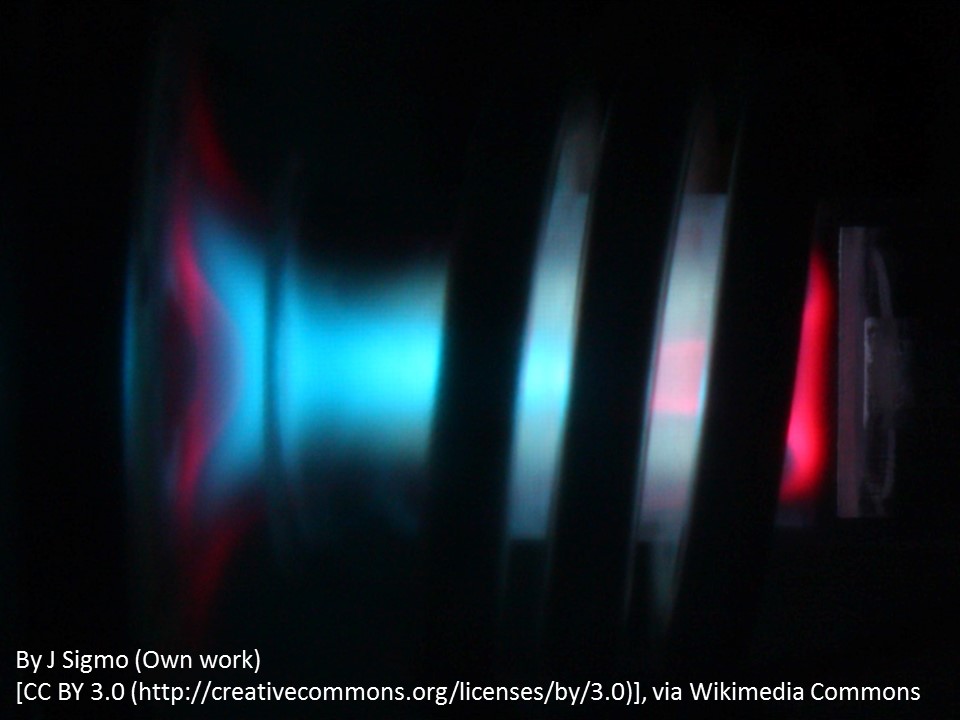
Inductively Coupled Plasma, Ionized Argon gas stream. Photo Courtesy: Sigma via Wikimedia Commons

Flame Atomic Absorption Spectroscopy (Flame AA) and Graphite Furnace Atomic Absorption Spectroscopy (GFAA) are both techniques that determine both the identity and quantity of specific elements. For both of these techniques, the absorption in intensity of a specific light source is measured following the atomization of the sample digestate using either a flame or an electrically heated graphite tube. Reference standards are analyzed prior to the samples in order to develop a calibration that relates the concentration of each element relative to its absorbance. For these two techniques, each element is often determined individually, and the light source, most commonly a hollow cathode lamp (HLC) or electrodeless discharge lamp (EDL) are specific for each element. The two most common types of Atomic Emission Spectroscopy (AES) are; Inductively Coupled Plasma Optical Emission Spectroscopy (ICP-OES) and ICP-Mass Spectrometry (ICP-MS). Both of these techniques use an argon plasma for atomization of the sample digestates. This argon plasma is maintained using a radio frequency generator that is capable of atomization and excitation of the majority of the elements on the periodic table. Due to the considerably higher energy of the plasma-based instruments, they are more capable than the flame or furnace based systems for measurement of a wide range of elements. Additionally, they are based on optical emission, or mass spectrometric detection, and are capable of analysis of all elements at essentially the same time.

Technique Selection

Flame AA is easy to use, inexpensive and can provide reasonable throughput for a limited number of elements. However, changes to light sources and optical method parameters are necessary when determining different metals. GFAA is also limited by similar needs to change the light sources, though it is capable of greater sensitivity for most elements as compared to flame AA. Runtimes are on the order of three minutes per element for each sample, which can result in lower laboratory throughput and greater sample digestate consumption. While the sensitivity of the absorption techniques is reasonable, the dynamic range can be more limited requiring re-analyses and dilutions to get the sample within the calibration range. ICP-OES allows the simultaneous analysis of over 70 elements in approximately a minute per sample with a much greater linear dynamic range. ICP-OES instruments cost about 2-5 times more than AA instruments. ICP-MS generally has the greatest sensitivity (sub-parts-per-trillion, for some elements) with the ability to determine over 70 elements per minute. Operator complexity, instrument expense and MS stability, as well as cost are some of the disadvantages. The US FDA has a single laboratory validated method for ICP-MS for elements in food using microwave assisted digestion, and New York State recently released a method for the analysis of metals in medical cannabis products by ICP-MS (NYS DOH LINC-250).

The use of fertilizers, and other materials, with low metal content is one step necessary to providing a safe product and maintaining customer confidence. The state-by-state cannabis regulations will continue to evolve which will require instrumentation that is flexible enough to quickly accommodate added metals to the regulatory lists, lower detection limits while adding a high level of confidence in the data.