Anyone in cannabis will tell you that complex transportation and supply issues are stalling industry growth and impacting employers’ ability to hire teams for the critical roles that keep product moving on schedule.
Since the onset of COVID-19 in March 2020, global and domestic supply chains have suffered bottlenecks caused by ever-changing public health policies and ongoing materials and labor shortages. While the status of transportation as an essential business kept other essential sectors, such as cannabis and grocery, chugging along, the current situation is still challenging.
Transportation remains the biggest supply-side problem, with the American Trucking Association reporting a shortage of an estimated 80,000 truckers in October 2021. The Bureau of Labor Statistics also continues to report high numbers of job openings across supply-chain jobs such as warehousing and transportation.
Cannabis businesses, from multistate operators to distributors to delivery service startups, are hardly immune to these issues. In fact, they face the additional hurdle of restrictive federal regulations, including the illegality of transporting cannabis across state borders. For example, this stipulation means that the over-saturation of flower in California cannot be addressed in a naturally symbiotic manner by shipping to states whose markets demand more flower, such as Arizona and New Mexico.
In the aggregate, these challenges impact employers’ operational and logistics goals and diminish candidates’ interest to work in a highly scrutinized industry. Many trucking companies have found it a challenge to attract drivers. Low pay, grueling schedules, and zero-tolerance cannabis testing for drivers despite legalization have led to an exodus of truckers in the U.S. and Canada.
Despite these obstacles, cannabis employers can still embrace smart strategies to attract quality employees and create much-needed stability to thrive in the rapidly changing marketplace.
Cannabis, COVID & the Great Resignation
In recent months, when it seemed America was finally emerging from COVID’s long shadow, the Great Resignation dampened business optimism. Employee turnover hit cannabis hard—especially in California, where other challenges like a thriving illicit market, high taxes and wholesale price compression have impacted companies’ ability to operate smoothly. Transportation and supply issues compound the problems.
For example, even transporting federally legal hemp in California and elsewhere has its headaches. Our company’s trimmer certification course uses hemp for training purposes. We ship the hemp directly to students’ homes so they can participate in virtual training sessions. Although our company has certified that the course packet contains only hemp, the U.S. Postal Service (USPS) will not ship it, regardless of whether the delivery location is in or out of state. We therefore must rely on a private carrier to transport the course packets to class participants, which is more time consuming and costly
Staffing Strategies for Transportation & Supply Jobs
Cannabis employers have several traditional and non-traditional tools at their disposal to address transportation and supply-related staffing.
While standard ecommerce jobs are synonymous with turnover, here lies an opportunity for cannabis operators to differentiate themselves. This is the cannabis industry, after all, and plenty of individuals who might not normally be interested in the transportation or supply aspect of ecommerce, might be far more open to those types of roles if they know the jobs involve cannabis.
What can employers do to attract these more receptive candidates to their organizations? Hone in on workers who have a passion for the plant. In job descriptions, position cannabis messaging front and center and conduct outreach through LinkedIn groups and other social media platforms to groups and individuals that have a cannabis focus.
Salary and Benefits
These days, a competitive salary simply is not enough to entice the right employees. A solid benefits package goes a long way to establishing trust between employers and employees and provides employees with a level of comfort and reassurance that they are supported during these tumultuous times. For example, companies must prioritize healthcare benefits and consider including coverage for part-time workers on the supply side of the cannabis industry.
Bonuses
Bonuses are another great way to catch the eye of potential employees, but bonuses must be developed within a framework designed for retention. Cannabis employers who establish performance bonuses and loyalty bonuses also increase that ever-important aspect of trust within their companies.
Safety
A transparent and robust HR plan that addresses safety concerns—COVID and beyond—can affect employees’ comfort for certain supply or transport positions that may involve increased public exposure or enhanced personal safety risks. Be clear with employees about the system that’s in place to support them in the event of unforeseen emergencies or injuries.
Procedures
Cannabis employers should also be aware of the importance of having compliance-focused internal transportation standard operating procedures and protections for employees. These policies can be a key factor in attracting both drivers and additional transport and supply experts from other regulated transport industries such as food, agriculture and pharmaceuticals. Candidates without a cannabis background will be more drawn to companies that provide a well-developed and safe infrastructure.
Smart Cannabis Staffing Solutions: The Time is Now
Federal cannabis legalization is coming, and with that nationwide sea change other issues in cannabis supply and transport will emerge. How will cannabis transport consolidate? Will the nation’s top carriers simply take over?
Regardless of what those answers might be, the need to embrace smart staffing solutions now is imperative. Providing a solid base wage with health benefits, and making it clear to current employees and job candidates that there’s an internal infrastructure of support—from HR to loyalty bonuses—is the best way to tackle the transportation and supply issues to position your company for future success.
By Erik Paulson, Josh Swider, Zachary Eisenberg 5 Comments
Fraud
The THC content you see on a label when you walk into a dispensary? There is a very good chance the number is false.
In every state with regulated cannabis, there is a requirement to label the potency of products so consumers can make informed purchasing and medicating decisions. The regulations usually state that the THC/cannabinoid content on the label must be within a particular relative percent difference of the actual tested results for the product to be salable. In California, that threshold is +/- 10%.
The problem is, with all the focus on THC percentage in flower and concentrate products, enormous pressure has been placed on cultivators and manufacturers to push their numbers up. Higher numbers = higher prices. But unfortunately, improving their growing, extraction and formulation processes only gets companies so far. So, they proceed to ‘lab shop’: giving their business to whichever lab provides them the highest potency.
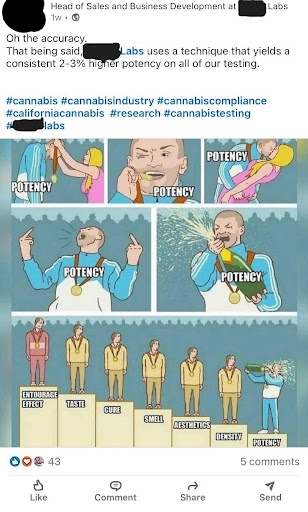
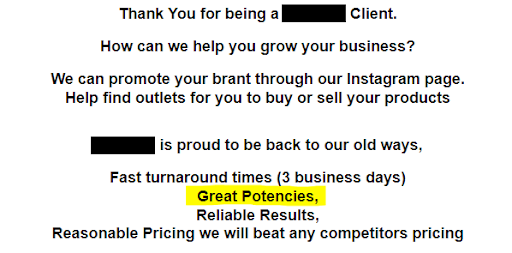
There are roughly 50 Department of Cannabis Control (DCC) licensed labs in the state, and competition is fierce to maintain market share in a maturing and plateauing industry. Whereas competition used to be healthy and revolved around quality, turnaround time and customer service, now it’s essentially become a numbers game. As a result, many labs have sacrificed their scientific integrity to chase what the clients want: higher THC potency results without contaminant failures. The practice has become so prevalent that labs openly advertise their higher potency values to gain customers without fear of recourse. Here are two examples:
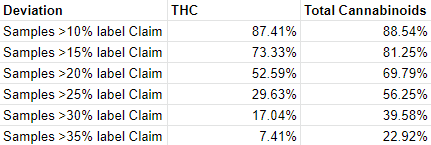
Over a year ago, a few labs fed up with what was happening got together to determine the extent of the potency inflation issue. We proactively purchased and tested over 150 randomly chosen flower samples off dispensary shelves. The results were staggering. Eighty-seven percent of the samples failed their label claims (i.e., were >10% deviant of their labeled values), with over half of the samples >20% deviant of their labeled THC values (i.e., over 2x the legal permitted variance). Additionally, our labs found multiple cases of unreported category 1 pesticides in some of the analyzed samples at multiple times the legal limit – a significant public health concern. The deceit was not limited to small cultivators trying to get by but also some of the industry’s biggest brands.
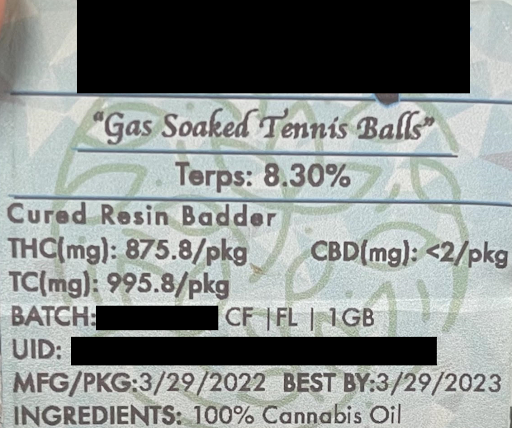
The same issues and economic conditions are in play for concentrates. Manufacturers of these products also hunt for the highest D9 THC values because wholesale prices for distillate are determined by THC content: <86% for the lowest value, 86-88%, 88-90% and >90%, with a new price point for over 94%. As a result, consumers can walk into a dispensary and find concentrates like the one shown below that report>99% total cannabinoids (>990mg/g) and contains almost 10% additional terpenes. You don’t have to be an analytical chemist to realize those numbers add up to well over 100%, which is physically impossible.
Blame
Everyone can agree that the system is broken, but who is at fault? Should the blame be placed on dispensaries, many of whom use THC % as their only purchasing or marketing metric? Or on cultivators, manufacturers and distributors, who seek the highest results possible rather than the most accurate ones? Or on the labs themselves, who are knowingly reporting inflated results?
Ultimately, the individual businesses are acting in their own self-interest, and many are participating in this practice simply to stay afloat. Dispensaries can’t reasonably be expected to know which results are inflated and which are not. Cultivators and manufacturers feel obligated to use labs that provide them with the highest results; otherwise, they’re putting themselves at a disadvantage relative to their competitors. Likewise, labs that aren’t willing to inflate their numbers have to be ready to watch customers walk out the door to maintain their principles – an existential dilemma for many.
The primary reason why potency inflation has become so prevalent is that there have been no negative repercussions for those that are cheating.
The axiom is true – don’t hate the player, hate the game. Unlike most businesses, testing labs operating with integrity want meaningful regulations and oversight to assure a level playing field. Without them, the economics force a race to the bottom where labs either have to inflate more and more or go out of business. Since 2016, the DCC (formerly BCC) has taken zero meaningful actions to discourage or crackdown on potency inflation— not a single recall of an inflated product or license suspension of an inflating lab— so predictably, the problem has gotten progressively worse over time.
So, to answer the question above – who is at fault for our broken system? The answer is simple: the DCC.
Inaction
In the Fall of 2021, we began engaging with the DCC to address the industry’s potency inflation concerns. The DCC requested we provide them with direct evidence of our accusations, so we collected and shared the flower data mentioned above. The Department tested the same batches off the shelf and confirmed our results. Somehow not a single recall was issued – even for the batches containing category 1 pesticides.
We pushed for more accountability, and DCC Director Nicole Elliott assured us steps were being taken: “The Department is in the process of establishing a number of mechanisms to strengthen compliance with and accountability around the testing methods required of labs and will be sharing more about that in the near future.”
Instead, we got a standardized cannabinoid potency method (mandated by SB 544) that all labs will be required to use. On the surface, a standardized methodology sounds like a good thing to level the playing field by forcing suspect labs into accepting generally accepted best practices. In reality, however, most labs already use the same basic methodology for flower and concentrate cannabinoid profiling and inflate their results using a variety of other mechanisms: selective sampling, using advantageous reference materials, manipulating data, etc. Furthermore, the method mandated is outdated and will flatly not work for various complex matrices such as gummies, topicals, beverages, fruit chews and more. If adopted without changes, it would be a disaster for manufacturers of these products and the labs that test them. Nevertheless, the press release issued by the DCC reads as though they’ve earned a pat on the back and delivered the silver bullet to the potency inflation issue.
Here are a few more meaningful actions the DCC could take that would help combat potency inflation:
Perform routine surveillance sampling and testing of products off of store shelves either at the DCC’s internal lab or by leveraging DCC licensed private labs.
Recall products found to be guilty of extreme levels of potency inflation.
Conduct in-person, unannounced audits of all labs, perhaps focusing on those reporting statistically higher THC results.
Conduct routine round-robin studies where every lab tests the same sample and outliers are identified.
Shutdown labs that are unable or unwilling to remediate their potency inflation issues.
For some less disciplinary suggestions:
Remove incentives for potency inflation, like putting a tax on THC percentage
Set up routine training sessions for labs to address areas of concern and improve communication with the DCC
Fight
Someone might retort – who cares if the number is slightly higher than it should be? No one will notice a little less THC in their product. A few counterpoints:
Consumers are being lied to and paying more for less THC.
Medical cannabis users depend on specific dosages for intended therapeutic effects.
Ethical people who put their entire lives into cultivating quality cannabis, manufacturing quality products and accurately testing cannot compete with those willing to cheat. If things get worse, only the unethical actors will be left.
Labs that inflate potency are more likely to ignore the presence of contaminants, like the category 1 pesticides we found in our surveillance testing.
This single compound, delta-9 THC, is the entire reason why this industry is so highly regulated. If we are not measuring it accurately, why regulate it at all?
We will continue to fight for a future where quality and ethics in the cannabis industry are rewarded rather than penalized. And consumers can have confidence in the quality and safety of the products they purchase. Our labs are willing to generate additional surveillance data, provide further suggestions for improvement in regulations/enforcement, and bring further attention to this problem. But there is a limit to what we can do. In the end, the health and future of our industry are entirely in the hands of the DCC. We hope you will join us in calling on them to enact meaningful and necessary changes that address this problem.
The cannabis industry operates in a legal gray area between federal restrictions and state legalization in a constantly changing regulatory environment. Maintaining payroll and HR compliance is a burden cannabis companies face that grows exponentially with geographic expansion of the workforce.
Würk allows cannabis companies to manage payroll, human resources, timekeeping, scheduling and tax compliance, minimizing compliance risks in the ever-changing cannabis regulatory environment. The company uses its expertise and trusted partnerships to provide guidance on 280E tax law, accounting and banking. Its platform is designed to scale nationally with the growth of the industry while incorporating the local laws and regulations unique to individual states. Their clients include Cresco Labs, Canndescent and NUG.
We caught up with Scott Kenyon to ask about Würk’s approach to human capital management, challenges facing cannabis businesses and industry trends. Scott sat on the Board of Würk before becoming its CEO and chairman. Prior to Würk, Scott held leadership roles at Dell and Phunware.
Aaron Green: How did you get involved in the cannabis industry?
Scott Kenyon, CEO and Chairman of Würk
Scott Kenyon: My wife and I were early investors in a few companies in Colorado and Nevada. From early on (this was back in 2015) we learned the hard way of cannabis and how difficult it is to run these businesses, especially in those early days. We’ve progressed a ton over the years, but it’s still very difficult to run cannabis businesses.
I joined Würk about five years ago as a board member. I came on as CEO at the beginning of 2021 after our founder and previous CEO Keegan Peterson, who was an early trailblazer in the industry, passed away. So, I’ve been CEO at Würk for about 18 months.
Green: Tell me about Würk and the main problems you’re trying to solve.
Kenyon: Early on we were focused on establishing getting out of the cash business for these cannabis companies. Allowing them to pay payroll, taxes and be tax compliant electronically was a huge early advantage for us as a company. Now, fast forward seven years later and a lot of different banks (credit unions) are in the industry and that is allowing people to move money. So, that’s not as big of an advantage for us anymore, but early on that was huge.
Our advantage now is the scars on our back, for lack of a better phrase, from what we’ve gone through over the last seven years. We anticipate. We prevent. And most importantly we’ve seen all those problems for our customers. Last year, a big thing of mine was being “Smokey the Bear.” We want everybody to be Smokey the Bear: prevent fires and prevent issues for our customers. When I came in, we were the world’s best firefighters. I didn’t want that title. I wanted to prevent issues for our customers. That takes you from being a vendor to a partner.
If you look at it, on our platform we have 80% of the enterprise cannabis market, about 60% of the mid-market and then low single digits in the small business space. We have that market share because we provide invaluable experience and guidance to our customers. The biggest MSOs have different challenges from a “Joseph and Scott” dispensary, or a “Mary and Jane” grow facility. We’re able to adapt to all those different segments.
At the core of our product, we offer payroll services and what we call HCM – human capital management. That’s everything from scheduling, applicant tracking systems processing and paying your payroll taxes. So, we have the full gamut of product offerings that any type of HCM or HRIS software system does, whether you’re outside of cannabis or inside of cannabis, we’re offering the same thing.
Green: How does Würk differ from say a Professional Employer Organization (PEO)?
Kenyon: We aren’t a PEO. We don’t manage employees. At a high-level, a PEO is basically managing HR for these companies. Our platform enables HR professionals to go out there and do that. PEOs are more popular down in the small business space, because people are not at the scale to hire an HR team. We’re similar in that we’re processing payroll and have all the software that these companies need, but we’re different in that we’re not running their HR for them.
Green: How do you work benefits into the mix?
Kenyon: We leave it to the client, and we integrate their benefits provider into our platform so it’s an easy one-stop shop. We have single sign-on for a lot of our integrations. For the HR organizations, we want them to log into our platform and everything they need will be there.
Green: How is SAFE banking going to affect the HR industry in cannabis?
Kenyon: It’s going to be great for the industry, obviously. For HR specifically, it’s going to bring in more providers of payroll and more competitors for us for sure. But also it’s going to bring in more providers of services that can come in and offer that right now because of the federal illegalization.
Green: How does 280E affect your business and your customers?
Kenyon: We don’t guide people around 280E because that’s a tax specific matter. We refer them to their tax experts. We process payroll tax, which is different than what 280E affects. I think 280E was a big challenge, it’s still a big challenge, but that’s mostly because people didn’t really understand it. I think 280E was a problem five to seven years ago. In the last two years most companies are very familiar with it. That doesn’t mean 280E is the right thing. I think 280E is an awful thing. And while I think I hope SAFE banking is the first thing to fall legislatively, I think 280E has a good chance of getting across first.
On any given day my opinion on which will go first changes. I just want something to get across the line.
Green: What are some unemployment and payroll challenges your customers face?
Kenyon: We really watch unemployment changes and changes in job descriptions or job codes. For example, if an unemployment rate changed, and that unemployed person moved to a different place, which happened a lot during COVID, that company needed to report that and they needed to collect the appropriate charges or taxes there.
Green: What geographies are you in right now?
Kenyon: As of January 1, we had people on our platform in 46 states and just under 600 different jurisdictions. So, even though cannabis isn’t legal in all those states, big companies have employees across the United States.
Green: How do you help your users manage compliance across multiple jurisdictions? That must be a complex undertaking.
Kenyon: Our platform automatically plugs into the states that have electronic notifications around laws, which most states do. In our tax department, we have certain group members that are experts, let’s say, in the west coast. So, we assign people to certain regions to ensure that they have the best knowledge.
From our support piece, where a lot of our customers come in, somebody might say, “Hey, I have a unique question for Utah” and we’ll say we have a person that is specialized in Utah, but we don’t force them there, we just give them the option. But in our tax queue, we actually direct the customer like, “Hey, here’s a Massachusetts Question, so that goes to a particular person because they are our Massachusetts expert.”
Green: How do you deal with timekeeping issues like overtime?
Kenyon: Well, our system does that automatically. Let’s say they’re working overtime in a state that’s difficult to keep time for like California. In the state of California, if they’re working overtime on a Saturday or Sunday or a holiday, that’s a whole different calculation than working longer on a Thursday night. So, our platform is made to automatically calculate that for our customers. There’s no manual adjustments or coaching happening there. We just follow the state law based on where the employees are.
Green: Are you seeing any unionization of employees within the cannabis industry?
Kenyon: There’s unionization in many of our states, I don’t know the exact number, but California being the biggest, there’s a lot of union representation. Illinois is probably the second biggest union state on our platform. I’m assuming New York will be once it becomes adult use.
Green: How does Würk approach cybersecurity?
“Cannabis customers don’t want to buy on the illicit market. They want to buy from a trusted source. It just takes time to make that happen.”Kenyon: Well, we approach it very seriously and I recommend everybody take cybersecurity seriously. We test our internal systems regularly. We test our employees through phishing scams. And we’re always just trying to educate our team on the risk that we have.
I can’t share specifically the prevention steps that we’re taking, but I can tell you we partner with some of the biggest experts and make sure that we’re following everything that they’re recommending. More importantly, we’re testing for human failures, because where most failures happen is with people.
Green: What trends are you following in the industry right now?
Kenyon: Any type of activity in Congress is going to be huge for this industry. So that’s something I always keep abreast of. The next thing that comes down the line which is tied to that is interstate commerce: How is interstate commerce going to really come into play? And how does that change this industry?
Within the industry, the big question is how do we combat the illicit market? Over the last five years, I’ve heard all kinds of different ideas. But in the end, I think we have to out-innovate the illicit market, and that’s what I’m most excited about.
There are new product categories, beverage being one that is starting to gain traction. How are these new products and new variations of the cannabis plant able to treat and help people in ways that we’ve never thought of? That’s part of out-innovation. I was reading an article today about new terpenes that were discovered and how 100 products could come from each one of those new terpenes. I think we’re just still at the tip of the iceberg of product innovation.
How do we fight the illicit market? I think that is just through coming up with new products that treat different illnesses and ailments, that allow customers to get away from pharmaceuticals. Cannabis customers don’t want to buy on the illicit market. They want to buy from a trusted source. It just takes time to make that happen. They’re not going to do it when there’s a huge price difference, but they will do it when there’s a huge product difference. And right now, our products are very similar to what you can find on the illicit market. You can find vapes, you can find gummies, you can find all that in the illicit market. We’ve got to out-innovate the illicit market.
Green: What in your personal life are you most interested in learning about?
Kenyon: I am the father of two teenagers right now and I really like to learn how to be a better parent to them because it’s really frickin’ tough!
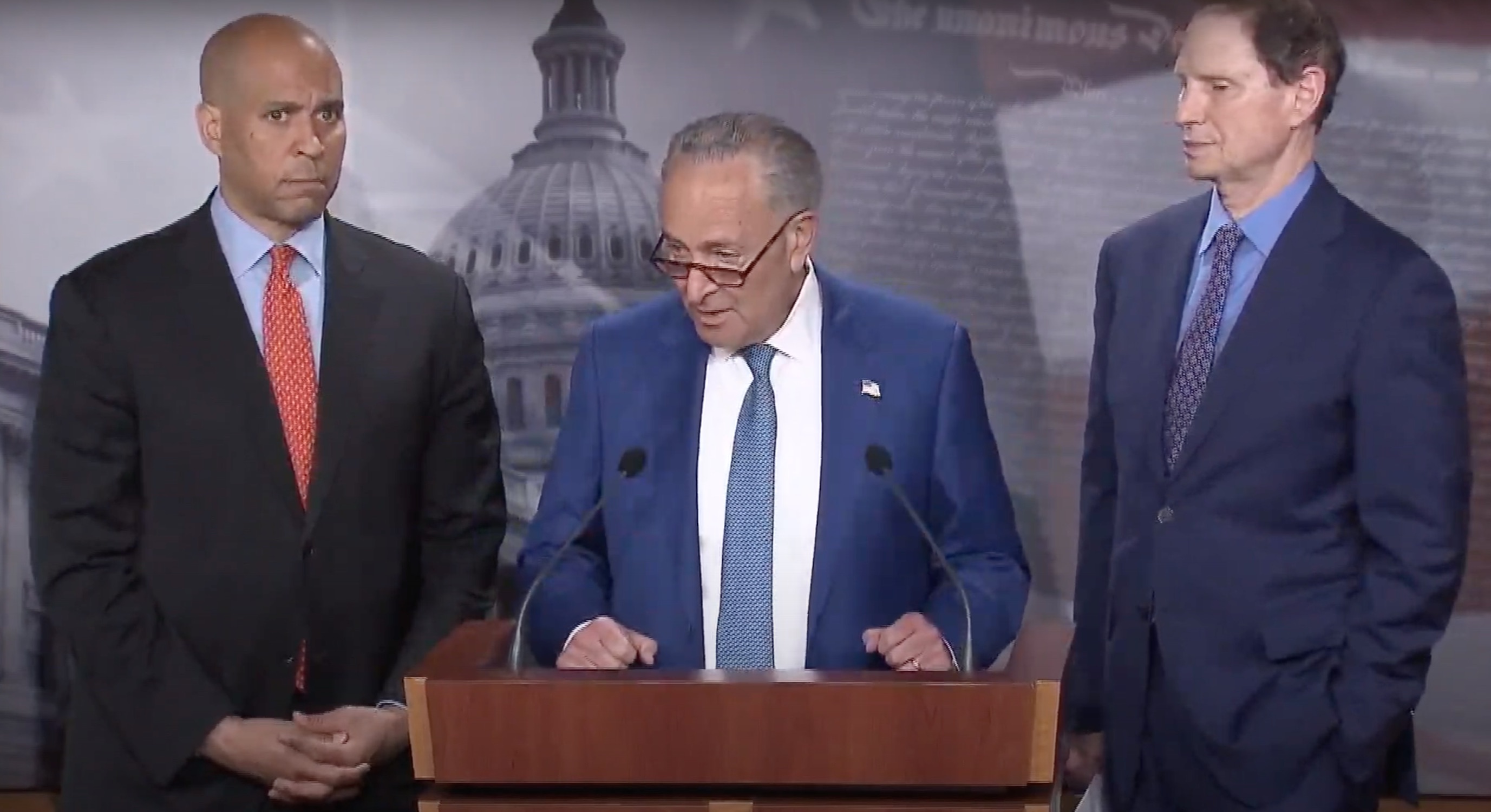
Senate Majority Leader Chuck Shumer (D-NY), Sen. Cory Booker (D-NJ) and Sen. Ron Wyden (D-OR) introduced the Cannabis Administration and Opportunity Act (CAOA), a bill that seeks to decriminalize cannabis and end prohibition as we know it. About a year ago, the same lawmakers held a press conference where they unveiled their first draft of the CAOA, calling on the public for comments and input.
In that press conference last year, Sen. Booker emphasized the need to address social equity and restorative justice, laying out the foundation for what would soon be called the most comprehensive piece of cannabis legislation so far.
Sen. Schumer unveiling the Cannabis Administration and Opportunity Act last year.
According to the Minority Cannabis Business Association (MCBA), the bill succeeds in doing that, offering a number of provisions that would help those most impacted by cannabis prohibition, offer funding for equity programs, support for minorities in the cannabis market and more. “The CAO Act represents a giant leap forward in federal cannabis policy by outlining the most meaningful solutions to address issues facing minority cannabis businesses we’ve seen in a federal legalization bill to-date,” says Kaliko Castille, president of MCBA.
Notable provisions in the bill also include:
Removes cannabis from the Controlled Substances Act scheduling entirely.
Allows states to implement their own policies without the federal government interfering.
Allows cannabis businesses access to financial services, removes the threat of 280E tax code impacting normal business deductions.
Regulatory responsibility would fall under the authority of the Alcohol and Tobacco Tax and Trade Bureau (TTB), the Food and Drug Administration (FDA).
Immediate expungement for prior cannabis convictions and cancellation of any sentencing for those incarcerated for cannabis.
Raise allowable THC content in hemp from 0.3% to 0.7%.
Sets up a pilot program with the Small Business Administration (SBA) for minority-owned and economically disadvantaged cannabis businesses.
High taxes: Up to a 25% federal excise tax on top of state cannabis taxes.
When people have to make important decisions, we often consult a third party to increase our knowledge and confidence in a product. For instance, when choosing a car, an individual may weigh heavily on safety ratings and other awards from organizations such as Consumer Reports. These awards are often boasted and a heavy focus in car commercials because it tells the consumer that a third party has deemed their car valuable to own. For more than 100 years, the Association of Official Agricultural Chemists (AOAC® International) has operated in this exact manner, and has set the bar and guidelines for testing in the cannabis industry through its special program called the Cannabis Analytical Science Program, also known as CASP.
The CASP program is designed to develop standards and validation guidance to evaluate testing methods, as well as the methods’ ability to detect the target organism or compound on the cannabis matrix. With the addition of new states permitting the legal sale of both medical and adult use cannabis and no federal governing body overseeing testing regulations, the value of AOAC cannot be understated, as these guidelines allow cannabis testing laboratories to have their own third-party reference to look to when choosing a compliant testing method to implement in their laboratory.
AOAC was founded in 1884 by the US government as the standard setting body in the country and, in 1991, became an independent association known as AOAC International, with a goal of building a reputation as an international, consensus-based standard-setting body and a conformity assessment organization in analytical sciences. As an independent third-party resource, AOAC has the Performance Tested Methods’ (PTM) and Official Methods of AnalysisSM (OMA) programs for certification of analytical testing methods in both biology and chemistry.
If analytical methods, including proprietary test kits, are deemed acceptable, AOAC provides approved certification, their seal of approval that the method works as designed. Though multiple factors are considered to determine if AOAC approval is given; accuracy and precision of the method are among the most important. For example, when validating a cannabis method for microbiology, AOAC will contract an independent testing facility to conduct a series of tests with known spiked samples to measure the recovery limit of the target microorganism. This allows the organization to determine if the method is sensitive enough to be named an AOAC-approved method through either the PTM or OMA conformity programs. Another way of ensuring the validity of results is by conducting an inclusivity and exclusivity study on a method. In this type of experiment, target organisms are tested while also spiking with non-target organisms to see if there will be a high rate of false positives.
In cannabis, discussions have grown surrounding testing of four strains of Aspergillus, which are A. terreus, A. flavus, A. fumigatus and A. niger. By spiking cannabis with one of the four Aspergillus strains and on a separate sample with a non-target Aspergillus strain such as A. clavatus, it ensures that only the target strains are being recognized and recorded on the method being tested.
This methodology limits the likelihood of unconfirmed positives occurring, ensuring the validity of the results. Of course, when a method is undergoing an actual AOAC evaluation for approval, the testing requirements for both the sensitivity and inclusivity/exclusivity experiments are much more thorough than the explanation above.
Regardless of which AOAC-approved method you select, you can feel confident that most of the “heavy-lifting” is done and that the method is accurate and precise enough to implement in a cannabis testing facility. In turn, the cannabis testing laboratory then only needs to complete their own internal method verification to ensure the method works with their processes, people, environment and product, but on a much smaller scale and aligns with state regulations.
On a consumer safety level, AOAC-approved methods are designed to keep cannabis consumers safe. Whether they are an adult using cannabis or medicinal cannabis patient, the product that is being sold should be held to the highest safety standards. By having a laboratory that is utilizing an independently approved AOAC method, an additional layer of confidence is achieved that the product being consumed is safe. This ultimately limits the number of costly recalls from dispensaries and minimizes risk to consumers. At the end of the day, cannabis testing laboratories want to keep the public safe and it is our job to do so. This means implementing these independently approved methods from agencies such as AOAC at various touch points in the seed to sale cycle to ensure the data is validated and reliable.
Overall, just as it is equally important to get a non-biased and reputable third-party approach to your automobile search, a scientist that is responsible for choosing methods in their cannabis compliance laboratory should also consider these third-party approvals. As a scientist, the goal every day is to report accurate data to help the client and the consumer equally. The cannabis compliance laboratories are the last line of defense in preventing harmful or contaminated products from getting into the marketplace and any extra assurance we have with our testing methodology is always encouraged. Ultimately, AOAC’s work is important and their standard of quality and safety is a must-have in the cannabis laboratory.
Despite the US making cannabis regulations challenging to navigate, the industry is snowballing toward profitability. New Jersey legalized adult use cannabis on April 21 this year. One month earlier, The Garden State began accepting applications for Class 5: Retailers, Dispensing and Delivery.
Although New Jersey isn’t shy about its licensing requirements and standards, many people want to know how retailers can stay in the game for the long run. So, let’s talk about risk management considerations New Jersey retailers need to know.
Top Risks Cannabis Retailers Face in New Jersey
Regardless of what kind of retailer you operate —medical or adult use — it’s critical to know what you’re up against. The following are the most common risks we’ve watched cannabis retailers face daily in New Jersey, making a customized risk management strategy necessary.
Theft
Like other retailers, New Jersey cannabis retailers are vulnerable to theft. Unfortunately, theft can come from various angles, such as in-store, in-transit and insider crime. Besides cannabis retailers typically having a well-stocked inventory, it’s not uncommon for them to have more cash on hand than most other businesses.
Although the SAFE Banking Act could positively impact the cannabis industry, it’s in a notorious stall yet again. Briefly, the SAFE Banking Act would no longer allow financial institutions, such as banks and credit card companies, to refuse to do business with cannabis companies. However, cannabis retailers must operate in a cash-only environment, for now, forcing them to make bank runs multiple times a day. We probably don’t have to explain how enticing a significant inventory and fat bank bags look to criminals.
Cybersecurity
Since the onset of the global health crisis, the cyber liability landscape has nearly spun into a death spiral. In other words, cybercriminals sat on the edge of their seats during the pandemic, waiting to pounce on anything that looked slightly vulnerable. Remote workers, small businesses, and emerging industries were hard-hit.
It’s no surprise that New Jersey cannabis retailers face many cybersecurity risks through their point of sale (POS) systems. Additionally, retailers often gather and store personal information, such as email addresses, credit card numbers, shipping addresses, etc. Hackers and cybercriminals gravitate to this vital data rapidly.
Property Damage
In addition to the risk of theft, as mentioned above, cannabis retailers must protect their property from losses. Without adequate protection, damage to equipment or buildings could add up to high out-of-pocket costs. Consider the damage a weekend office fire or late-night vandalism would cause. If property damage occurs, retailers must figure out how to sustain business operations while recovering from the loss simultaneously. As a result, New Jersey retailers must protect their property and maintain business continuity.
How to Customize a Risk Management Strategy
Watch or listen to any news reports and there’s a decent chance that you’ll feel some slight sense of doom and gloom. And sure, a lot is going wrong in our world; however, that doesn’t need to impact how you perceive your businesses. Instead of casting a massive net over every possible risk that you can imagine, we recommend trying the following 5-step approach. Here’s the gist:
Identify: Pinpoint high-level risks that are specific to the cannabis industry. Then, let the process trickle down to focus on company-specific exposures.
Analyze: Determine how badly a particular risk could harm your retail company. How much will this hurt should the “what-ifs” play out?
Evaluate: Categorize risks according to how risk tolerant your company is. Will you avoid, transfer, mitigate or accept the risk?
Track: Use your history or the stats from a similar retailer to map out how you’ve handled the risk over time. Older retailers have an advantage over younger retailers, of course, but you can still get a feel for your risk management style.
Treat: Make good on your evaluation promises by avoiding, transferring, mitigating, or accepting the various risks you identified.
Recommended Insurance for New Jersey Retailers
Sales totals in the first month of New Jersey’s adult use market
The New Jersey Cannabis Regulatory Commission issued detailed requirements for new cannabis businesses. That said, part of the application requirements considered is the plan for companies to obtain liability insurance. Many new retailers opted for a “letter of commitment” as opposed to a certificate of insurance (COI), stating their plans for obtaining the following coverages:
Commercial general liability: Protects cannabis companies against basic business risks.
Product liability: Protects against claims alleging your product or service caused injury or damage.
Property: Reimburses cannabis companies for direct property losses.
Workers’ compensation: Covers employees if they are injured on the job and can no longer work.
In addition to the required insurance coverages, we recommend New Jersey retailers customize their risk management package with these policies:
Crime: Protects your cannabis company against specific money theft crimes.
Cyber: Protects your cannabis company against damages from specific electronic activities.
Directors & officers: Protects corporate directors’ and officers’ personal assets if they are sued.
Employment practices liability: Protects cannabis companies against employment-related lawsuits.
Professional liability: Protects cannabis companies against lawsuits of inferior work or service.
With more states in the US entering the marketplace soon, New Jersey is doing its fair share of the heavy lifting by spearheading the onboarding process. Remember, doing your due diligence at the start pays off in the long run — New Jersey retailers are proving that. Consider teaming with a commercial insurance broker calibrated to the cannabis industry, so you get the most out of your broker, marketplace and the cannabis industry as a whole.
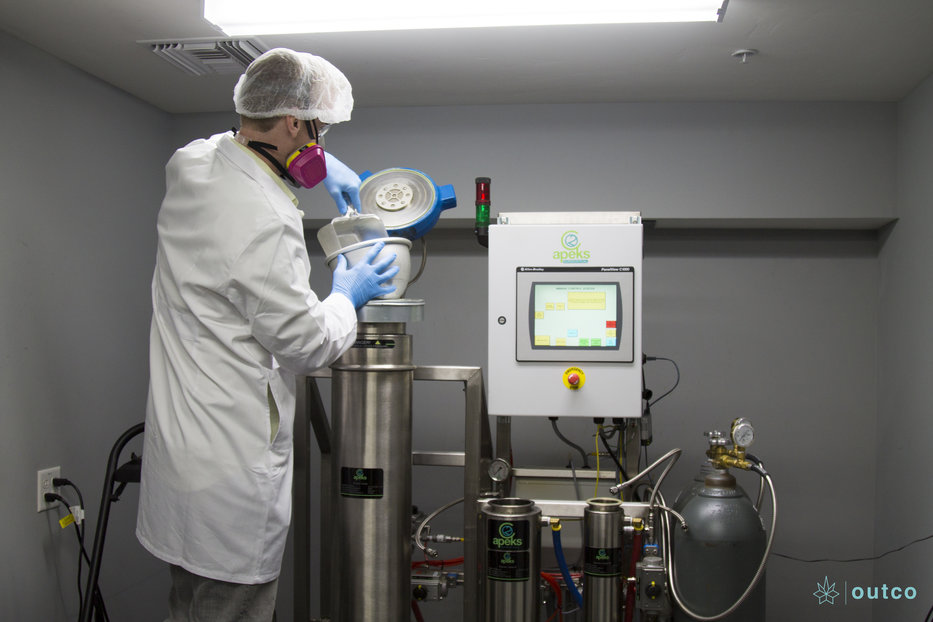
Cannabis sativa contains over 500 different bioactive compounds that can be separated through an extraction process. This is carried out in an extraction lab and the end result is the production of cannabis extracts with a high concentration of specific cannabinoids (such as THC or CBD) with up to 99% purity levels. Cannabis can get easily contaminated with pesticides, heavy metals, residual solvents or other contaminants and thereby pose a risk to the health and safety of consumers. In-house testing allows manufacturers to ensure that the cannabis products they put out to the market are not only potent but also are free of all sorts of contaminants.
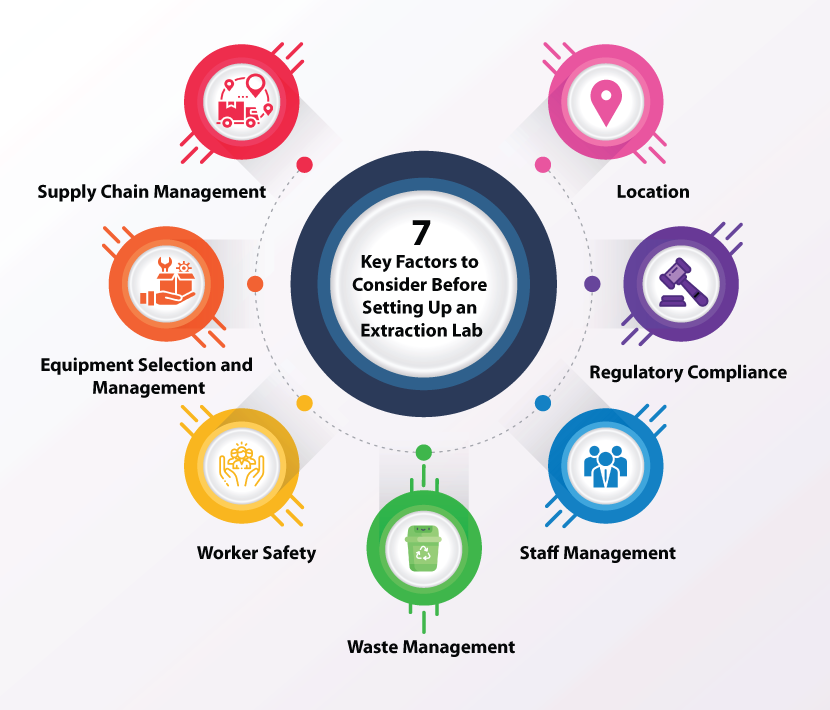
The cannabis extraction market worldwide was valued at $9.7 billion in 2020. According to data from Grandview Research, the market size is expected to hit $23.7 billion by 2027, growing at a CAGR of 16.6%. While setting up a cannabis extraction facility can be cost-intensive at the start, the running costs are minimal, making this a profitable venture in the long run. However, you will need to consider these 7 important factors.
1. Location
A schematic representation of the 7 important factors to consider when setting up a cannabis extraction facility (Figure courtesy of CloudLIMS)
Cannabis is a highly regulated industry, regardless of the country. In the U.S, it is illegal at the federal level, and therefore there’s a need for judicious selection of location to avoid run-ins with the federal government. If you are in the U.S, you will need to check the specific laws in your state. These rules dictate how close an extraction facility can be to a daycare facility, children’s park, school, residential areas, etc. The rules may also spell out how many cannabis facilities can be located in one area and how close to each other they can be. At the end of the day, you also want to ensure that the location that you settle for is readily accessible, secure and close to resources.
2. Regulatory Compliance
A cannabis extraction facility needs to meet regulations that apply to the manufacturing and production of consumable goods to ensure that the safety of workers and end consumers is guaranteed. Here are a few that are of priority:
current Good Manufacturing Practices (cGMP): The CGMP is a regulatory standard enforced by the FDA. It defines the creation, implementation and monitoring of manufacturing processes to meet the quality and safety threshold. It requires manufacturers to use technology and have systems in place to ensure product safety and effectiveness. Cannabis extraction facilities should be GMP certified for operational standardization and for performing transnational business.
National Fire Protection Association (NFPA): Extraction labs use flammable materials which can easily trigger fires. NFPA, which is a non-profit organization, has created standards and codes to minimize injuries, death, and economic losses attributable to fire accidents. The standard describes how labs should be set up and how flammable liquids should be stored and transported to prevent accidental fires.
Local Fire Codes: These are a set of codes/requirements that must be adhered to in all commercial and industrial buildings to prevent fires. They include the availability and proper use of the following:
Fire extinguishers
Extension cords
Smoke detectors
Fire exits
Fire signage
Fire assembly points
Sprinkler heads and pipes
Fire alarms
Here are some important fire codes that should be followed in a cannabis extraction facility:
NFPA 1: The Fire Code Handbook
NFPA 30: The National Code for Flammable and Combustible Liquids
NFPA 45: Fire Protection for Labs Using Chemicals
NFPA 70: The National Electrical Code
NFPA 58: The Liquid Petroleum Gas Code
Occupational Standards for Health and Safety (OSHA): Cannabis extraction facilities are compelled by federal law to comply with OSHA requirements for occupational health and safety, and specifically regarding biological and chemical compounds that lab staff may come into contact with during their work. OSHA standard 29CFR1910.1200 requires labs to have a written hazard safety standard for all chemicals, and the standard should be accessible to all employees at all times. Labs are required to have an inventory of all hazardous chemicals with associated details recorded in a Safety Data Sheet (SDS).
3. Staff Management
Lab staff need to train on all hazards in the facility and be given first aid measures in case of an accident. The staff will need to sign that they have received training on the same.
4. Waste Management
Cannabis waste in an extraction facility includes plant trimmings, leftover extraction chemicals, disposed of samples and other debris left behind. Waste needs to be segregated according to hazardous or non-hazardous categories and disposed of accordingly. The lab needs to put measures in place for proper waste segregation so that the waste does not get mixed.
5. Worker Safety
Worker safety in an extraction facility is of paramount importance and should be based on the kinds of risks that each staff gets exposed to in the line of duty. This makes it necessary to have a Job Hazard Analysis (JHA) to assess hazards and put measures in place to avert accidents and injuries.
A laboratory software for CBD/THC laboratories to schedule staff training and manage staff competency (Figure courtesy of CloudLIMS)
6. Equipment Selection and Management
Cannabis extraction equipment can cost anywhere between $5,000 to $100,000, depending on the type and scale of extraction. When choosing the equipment, you need to factor in the cost efficiency, output, and the final product. All equipment used in an extraction lab should be Underwriters Laboratories Listed (UL-Listed). The equipment also needs to undergo regular maintenance to ensure maximum efficiency and productivity, and to prevent accidents and minimize wear and tear. National Recognized Testing Laboratory (NRTL) certification is necessary to achieve this.
7. Supply Chain Management
Supply chain management refers to the strict monitoring of the entire workflow to ensure effectiveness, eliminate wastage, and boost productivity and profitability. This means tracking raw materials from the time they are received by the extraction facility to when they are released as cannabis extracts. A Laboratory Information Management System (LIMS) comes in handy to support supply chain management in an extraction facility.
Role of a LIMS in Setting Up a Cannabis Extraction Facility
A laboratory software for CBD/THC laboratories, also known as a Laboratory Information Management System (LIMS), helps automate workflows, and thereby improve efficiency and productivity in an extraction facility. A laboratory software for CBD/THC laboratories streamlines in-house testing processes and guarantees that the final extracts produced are potent and free of impurities. A LIMS also comes in handy in managing Standard Operating Procedures (SOPs) and human resources, tracking samples and lab inventory, scheduling equipment calibration and maintenance, and ensuring compliance with the necessary regulations.
When setting up a cannabis extraction facility, sufficient time needs to be allocated to the planning to ensure all-important considerations are in place. This starts with finding an ideal and compliant location, ensuring regulatory compliance, ensuring worker safety, efficiently managing staff, inventory, and waste, and the careful selection of equipment. A laboratory software for CBD/THC laboratories ties these factors together to ensure a smooth workflow and maximum productivity of the facility.
Coda Signature is a leading cannabis edibles company that has won countless awards for their creations. Founded in 2015 in Trinidad, Colorado, a small town just north of the New Mexico border, the women-led company has since become a fixture of the infused products market. Coda Signature prides itself on its innovative lens, focusing on what consumers want and framing their products around a luxury experience.
Lauren Gockley co-founded the brand in 2015 after a 20-year culinary career that started with professional training in France, working in Michelin-starred restaurants and Parisian pastry shops. They launched their first line of products in March of 2016 and three weeks later, the awards started coming in. Today, the company is a leader in the cannabis industry and constantly raising the bar. Last year they rolled out products with nanoemulsions, offering fast-acting edibles with a shortened onset time. In May of this year, Coda Signature debuted their low dose Fruit Notes, their foray into microdose formulations.
We caught up with Lauren Gockley to see what inspires her, hear the story of how the business came to be and get some insights on what’s next for the cannabis space.
Cannabis Industry Journal: I saw that you have a culinary background. Can you tell me about your background and how you got involved in the cannabis industry?
Lauren Gockley, Co-Founder and Chief Innovation Officer, Coda Signature
Lauren Gockley: I have been working in the culinary world for almost 20 years. I have been blessed to have a wealth of different experiences from my professional training in France at Valrhona’s L’Ecole Du Grand Chocolat and the Parisian pastry shops of Pierre Hermé, to the fine dining restaurants of Jean-Georges Vongerichten and Thomas Keller. I also spent several years as a raw vegan chocolatier where I gained a totally new understanding of chocolate and flavor creation using unconventional ingredients.
The transition into cannabis was an unexpected turn in my culinary career, especially considering the level of acceptance of cannabis in its early legalization period. I had been living in New York for almost eight years. I was working two jobs and trying to start a chocolate business. One night, my partner (and fellow co-founder), Brien Sauchelli, brought over a cannabis chocolate bar. At the time, I was not terribly familiar with cannabis edibles, but I sure was familiar with chocolate! I tasted the chocolate bar, and thought, “this tastes pretty good, but what if I could do it better?” The idea of elevating the cannabis edibles experience to the same caliber of excellence that we revere food made so much sense.
CIJ: Tell us how you co-founded and started Coda Signature. I’d like to hear the origin story
Lauren: Well, like so many cannapreneurs, I started in my kitchen with a crockpot, a Ziploc bag of trim and a massive amount of research. Fast-forward a few months to March 2015, and my partner and I are traveling across the country to Trinidad, Colorado—the new home of Coda Signature. Once unpacked, we dedicated almost a full year to product development, raw material sourcing, packaging design, facility construction, and most importantly we defined the mission, vision and core values of Coda Signature. One of our most significant core values is legacy. This was not meant to be an aspirational statement about the impact we hoped to have many years into the future, but rather an opportunity for us in every moment to ask, “What will my legacy be today?” We launched our first products in March of 2016. Three weeks later, we won the High Times Cannabis Cup for Best Edible with our Crescendo truffle collection.
CIJ: Your job title is Chief Innovation Officer – How is your company innovating the cannabis product space? What does your day-to-day look like?
Lauren: When it comes to innovation, we have identified four key areas of focus for Coda Signature products:
1) Flavor. We are leaning into our brand legacy of bold flavors and aromas, quality ingredients and impeccable craftsmanship. This legacy is reinforced by industry data. According to BDSA Trending Consumer Insights, flavor is the No. 1 driver of consumer purchase decisions, and second is brand loyalty.
2) Microdosing. According to BDSA Consumer Research, 73% of adults nationwide are now “bought in” to consuming cannabis. Understanding that much of this population is still getting acquainted with cannabis-infused products, we believe strongly that microdosed products are an essential factor for safe and customized experiences. We are one of the few infused products companies to defy the industry “standard serving size” with our new 1mg THC Fruit Notes.
3) Minor cannabinoids. We define the Coda experience through the integration of minor cannabinoids such as CBN, CBG, CBC and most recently THCV. This is no longer a market solely driven by milligrams of THC per dollar. Products innovating with minor cannabinoids are rapidly taking top-selling positions in both brand share and the market as a whole.
4) Fast-acting. After two years of intense R&D, Coda launched our first “Fast Acting” products in Q3 of 2021. “Fast Acting” decreases not only the onset time from 1-2 hours to 15-20 minutes, but also shortens the overall duration. This technology is a strong example of the incredible innovation redefining the cannabis edibles experience.
To answer your second question: My day-to-day is a blend of hands-on product creation; ongoing research into industry trends and new technologies; working with my colleagues in operations, quality and compliance to ensure our systems and procedures continue to deliver safe and consistent products; brand development and expansion; and of course, eating a lot of chocolate! The past few weeks have been particularly exciting for me as I have been back in the kitchen revitalizing our signature truffles that will be returning this holiday season.
CIJ: Where do you think cannabis will innovate next? What excites you about the future of product innovation in this market?
Lauren: Innovation in the cannabis industry can be particularly challenging due to the ongoing legalization limitations. However, like most life forms in nature, it is through limitations that we adapt, grow stronger and defy expectations. The fact that 73% of adults nationwide are open to the idea of cannabis means that we are just scratching the surface of innovation with this incredibly powerful plant.
Post-pandemic, I think a lot about our social habits. As a chef, there is a level of social intimacy I identify with food that I feel is not fully present in cannabis. I get very excited about the opportunities for more open cannabis consumption and how that will elevate and inspire the Coda product experience.
Hangovers are one of the aftereffects often experienced with spirits. Who doesn’t love a good martini or a refreshing margarita? One company is on a mission bring the flavor profile and buzz of spirited drinks without the negative consequences.
Like this article and want to see more? Subscribe to our free newsletter hereMXXN is a California-based cannabis infused beverage manufacturer specializing in 1:1 non-alcoholic replacements for everyone’s favorite spirits, enhanced with a touch of cannabis. By combining new technology in cannabis oil nano emulsions and alt-alcohol, MXXN is able to create flavor matching spirits sold by the 750 mL bottle. MXXN recently launched with three product SKUs including London Dry (gin), Jalisco Agave (tequila) and Kentucky Oak (bourbon) with a rum replacement due to launch soon.
We caught up with Darnell Smith, founder & CEO of MXXN, to ask about the technology going into infused non-alcoholic spirits, regulatory challenges and more. Prior to MXXN, Darnell was a spirits industry veteran, having worked with companies including Diageo, Pernod-Ricard and Bacardi.
Aaron Green: Darnell, nice to meet you. How did you get involved in the cannabis industry?
Darnell Smith: For me, it wasn’t something that was premeditated, in a sense. I had always been a cannabis user in my adult life. I played Division I sports. Cannabis replaced a lot of painkillers and medications that I probably would have had to take just to cope with athletic injuries. That’s how I got introduced to cannabis. And there is the recreational use of it as well.
Darnell Smith, Founder & CEO of MXXN
To get to the origin story of MXXN, I spent a large part of my career working in spirits, namely, on the innovation and commercialization side of bringing new products to market under very well-known trademarks for large multinational companies. A few years into it, my liver was kind of at a point where it was like, “It’s gonna be you or me here, buddy.” So, I made the decision to start making – this is 15 years ago, in New York – a tincture where I would just heat up flower and decarb it and soak it in a high proof spirit. I would cover it for 30 days then strain it and have my tincture.
I’d be the guy in the bar, that would say “Hey, can I get a tonic and lime?” and I would put three drops of my tincture in there, and I would session cocktails along with everyone else. Next day at work, I’m the guy that’s bright-eyed and bushy-tailed and everyone else is kind of feeling a little bit weathered by that alcohol.
Innovation is usually born out of a personal need and that’s the same way here. So, fast forward 15 years and the technology has finally caught up. The rise of non-alcoholic spirits, the rise of cannabis and water-soluble emulsification, those two things combined really made the light bulb go off and say now is the time to offer this product. I feel like MXXN has a very specific place in our consumption of beverages and can fill a unique need that I think is rising.
Green: I’m interested in learning about the technology and the product. We can start with the technology that went into the product development process. I’ll go on to product next.
Smith: From a technical standpoint, up until a few years ago, the way that edibles were made was basically like raw extraction. There was very little ability to be precise about dosage. It was like trying to throw softballs through a chain-link fence. Non-uniformity made it very hard to say, “Here’s how this is going to affect you.” Fast forward and companies like Vertosa and Source have perfected this kind of nano-emulsion technology, which is basically water-suspended cannabis that can uniformly be used in food, beverage and cosmetic applications. And it’s akin to trying to throw sand through a chain-link fence. It’s just much smaller. It can remain more uniform, and thereby be more predictable in terms of dosage and effect.
The MXXN London Dry
So, that technology made it possible for us to then combine it with another wave that’s happening, which in the spirits industry is called alt-alcohol. What we do is distill all the flavor essences of well-known spirits and skip the alcohol. We then add the emulsified cannabis in place of the alcohol. And so with that, we offer a new kind of experience which is basically all the buzz but none of the booze. That’s really where technology-wise things have evolved. The rise of the non-alcoholic spirits and then the rise of being able to do water-soluble compatible cannabinoid emulsions.
Green: Are you selling this then as packaged goods or are you selling it as bladders similar to Coca-Cola in a bar setting?
Smith: This is a CPG packaged product and it really is analogous to a 750 ML spirits bottle similar to Tito’s or Grey Goose. The form factor is the same as spirits bottles, same 750 ML bottle. It doses just like a spirit would. Standard spirit pour is an ounce and a half. For us, an ounce and a half shot has six milligrams of THC.
For the average consumer, you can session cocktails and we give you the option to dose between two and six milligrams between a half ounce and an ounce and a half pour. So, it’s very analogous to what people are experienced in when it comes to spirits from the bottle to the dosage and to the actual recipes. We pride ourselves on being able to demystify something that has been a little bit complex in terms of making cannabis-infused cocktails. We are sticking close to what people are familiar with. People have a lot of experience with tequila or gin or bourbon and so we wanted to stay very familiar but also give people a chance to make the same recipes but sans alcohol.
Green: What kind of flavor profiles are you launching with?
Smith: We’re launching with three SKUs. Our first is London Dry, which is our take on a gin and that one has cucumber, juniper, coriander, and a nice peppery finish. We have Jalisco Agave, which is our take on a tequila or Mezcal. You have notes of agave, flint, salt, oak, and vanilla. And then the last one is Kentucky Oak, which is our version of a bourbon or whiskey. There you have charred oak, vanilla, and other flavor components that make up what bourbon is.
The MXXN Kentucky Oak
Now we have a rum in development that’s nearing the end of a robust R&D pipeline. We have some other options like ready-to-drink cocktails made with MXXN to more high-dose products for what we consider the “legacy consumer” who is maybe more medically inclined in the hopes of being able to give people more options when it comes to consumption of flavored spirits.
Green: On the cannabis side, with the infusions that you’re doing, is it pure THC or are you doing full spectrum?
Smith: Yes, full-spectrum cannabinoid. You’ll notice some beverage brands have what we consider a hybrid, some THC and some CBD. For us, and for the effects that we wanted to have the product to have we stuck with a THC-forward blend. There is a trace of CBD in there, but we don’t even claim it. It’s not something that we go forward with. Our emulsion is THC-based.
Green: Where are you at today in terms of the launch and presence?
Smith: We just finished a pilot test here in California. We started late-January, early-February and we’ve been selling direct-to-consumer. Just order and you can have it at your door in 24 hours for about 85% of the state. We’ve blown through our entire pilot run. Now we are entering into what we consider our launch phase which will be available in select retailers late-July. We are gearing up for our next big production run here in mid-July. We are basically all systems go.
At the same time, we’re exploring multi-state expansion. We have a lot of interest in states like Colorado, Nevada, Arizona and we’re having constant conversations with partners in those states to help bring the product to market.
Green: Have you looked at lounges?
Smith: Lounges have been our biggest traction as we start the retail rollout. We literally just started the dispensary piece of what we’re doing last month. And this is by design. First, we wanted to go direct-to-consumers for proof of concept to make sure we weren’t, you know, saying the story to ourselves. I think just by the performance of the pilot run and direct-to-consumer sales, we proved okay, this is a viable concept.
MXXN’s Jalisco Agave
So as we go out, our number one targets are obviously establishments that also are connected to or have connections with a consumption lounge. There aren’t a ton at this point. They’re still kind of proliferating. But I will tell you the moment we walk into one of these accounts is like a no-brainer because it allows this account to offer a whole new experience. When it comes to consumption lounges in terms of great cocktails you already know: gin and tonics, margaritas, paloma, with no real education required on the part of who’s ever going to be serving. We basically take 20 retailers a month in chunks and so far of the 15-20 that we’ve done, four or five of them have consumption lounges and you’ll see it in those very soon.
Green: Are there any challenges there with dosing in a lounge where the onus is on the operator to dose? How do the regulations work there?
Smith: It’s similar to alcohol, right? As an establishment, you have a responsibility to kind of pay attention to what’s happening as the consumer is consuming. Typically, most of the legislation that was written is for an inhaled consumption lounge. Ingestibles weren’t necessarily considered heavily when it came to legislation. What we tell folks is you have the same responsibilities you would if you were a bartender. Our recommended pour in consumption lounges is a lighter dose. This way, the customer has a chance to start low and go slow, and really recognize how it’s going to affect them.
Legally, there is no firm guidance on what overconsumption looks like for the typical consumer. So, we tell folks you have to kind of get a feel for who the consumer is. If they’re curious person who doesn’t have a lot of experience with cannabis, we typically recommend not to exceed a five-milligram serve per sitting until you figure out how it’s going to affect them. However, if you have very high dose legacy consumers, who buy and drink these 100-milligram single-serve bottles it’s a different story. You kind of need to gauge that from consumer to consumer, and what their tolerance level is. A lot of onus is on the consumption lounge. And I think that’s why they’ve kind of been slow to really roll out how they deal with beverages, because it’s just a different beast. It’s absorbed differently by the body from inhalable products
Green: What trends are you looking at in the industry?
Smith: I love seeing more food-based options. Edibles to this point have been mostly candies and gummies and I see the trend going to more high-end, curated food selections. I think that’s super interesting. The condiments that go into cooking is a category that I’m keeping an eye on. I came across a THC and CBD-infused Siracha sauce the other day and I was like, “wow, this is fantastic!”
MXXN logo
In the beverage space, there continues to be innovation, which we are on the forefront of. There’s a point of saturation that’s going to come for how many seltzers can exist in the market at the same time. And I think we’re kind of reaching that point. So, it’s going to be incumbent upon the beverage space to continue to innovate.
I’m also watching where things go with hemp-derived THC, the Delta-8s and those things and how is that going to be dealt with when it comes to the legal market. I think you see varying ways that it’s being dealt with across states. That’s a trend I’m certainly keeping an eye on as things continue to roll out across the country.
Green: What, in your personal life or in cannabis are you most interested in learning about?
Smith: Given where the world is today, I feel like we all live in this “OR” mindset. It’s either you OR me, it’s either this OR that. And I think you can see with some of the more recent political things that have happened, it’s this ideology of like, trying to force your beliefs on someone else. For me, it’s more about like, how can we learn to live more in the “AND” right? You can have this AND this and they can coexist, and they don’t have to be in competition. In my personal life, that’s where a lot of my energy is going. How do I spread that thought of getting out of this living in OR. We must move to this kind of mindset of AND. How can we be accommodating for a bunch of different beliefs, a bunch of different approaches? It causes so much friction when we try to impose beliefs on others that may not share the same beliefs.
I am thinking about how I can apply that to the cannabis industry as well. In terms of federal legalization versus state, where can we find that the happy ground? If we think about going across state lines, that’s effectively building a whole other business in the state, and in virtually no other industry does that exist. I can tell you economically this country could use infusion of cannabis to be more freely available. So those are the types of things that keep me moving these days. I’ve had a lot of success in my past and so for me, it’s less about financial achievements, and it’s more about how we can help move folks to this is AND mentality and not everything has to be OR.
Despite the popularity of cannabidiol (CBD) infused edibles among consumers there are storm clouds on the horizon for this market. The potential threat stems from continuing uncertainty about the regulatory status of CBD in the United States (US) and the European Union (EU). Recent statements by government agencies in both areas are reminders that regulators could make decisions or take actions that would suddenly end the viability of this market. Any company that sells, or is planning to sell, CBD infused edibles such as bakery items, candy and beverages needs to understand what the regulators are thinking now and what might happen in the future.
in the US, the 2018 Farm Bill created a category of products called hemp that are derived from the Cannabis sativaplant and contain less than 0.3% tetrahydrocannabinol (THC). This law also explicitly confirmed the authority of the US Food and Drug Administration (FDA) to regulate the safety of hemp-derived infused edibles. This means CBD needs to navigate the New Dietary Ingredient pathway for dietary supplements, and either the food additive petition process or the Generally Recognized as Safe (GRAS) pathway for foods before it can be used as an ingredient in a food. All three of these processes require that someone (an individual, a company or a group) acting as a petitioner or notifier must submit safety data to the agency or arrange for a safety evaluation by independent experts.
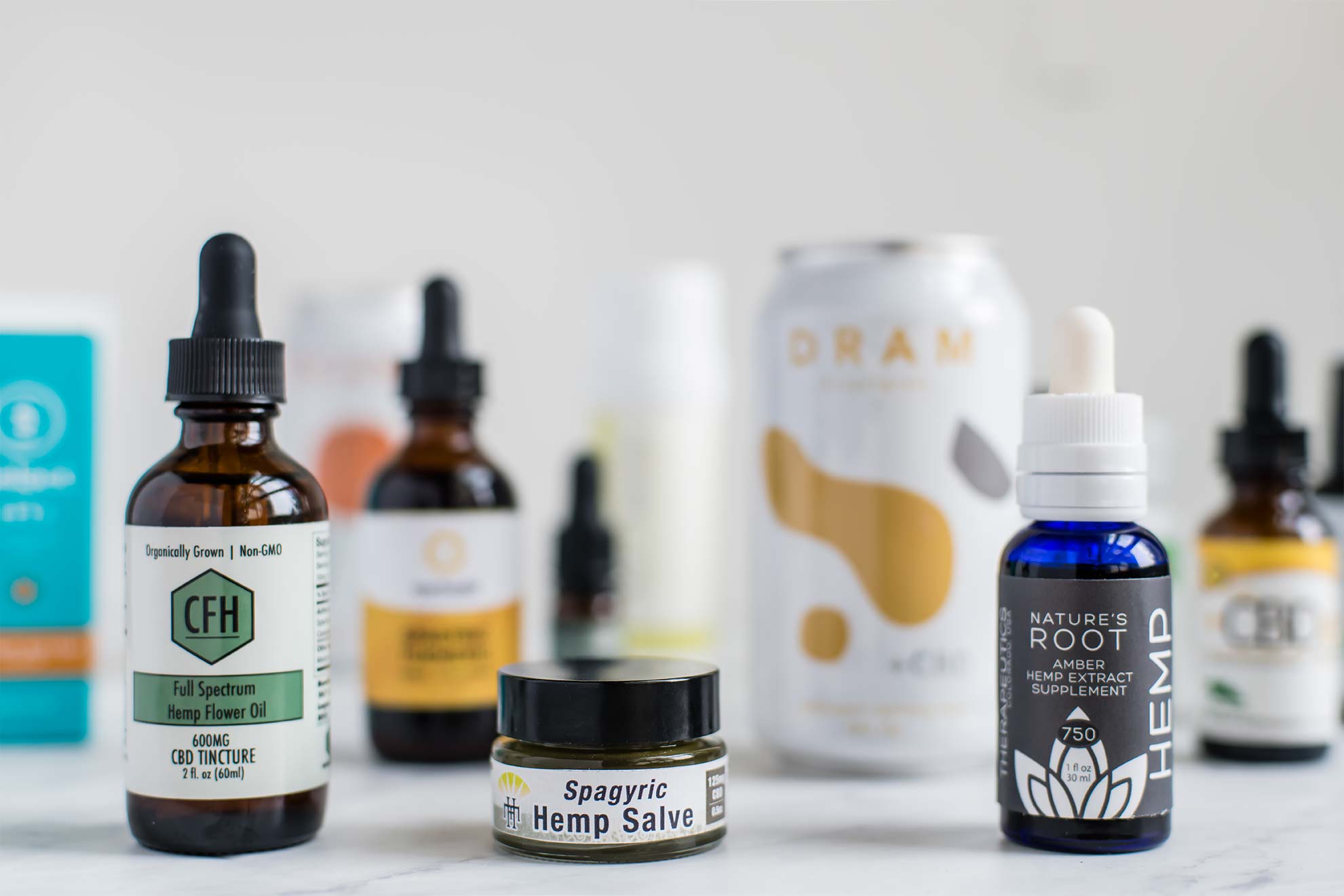
Just some of the many hemp-derived CBD products on the market today
In the EU, CBD is regulated as a Novel Food in a process that is triggered by a submission to the European Commission. The submission must include safety data that is evaluated by the European Food Safety Authority (EFSA). In England and Scotland, CBD products are also novel foods and are evaluated using a process like that in the EU. As in the US, it is the responsibility of an applicant to provide the safety data.
The standard used by the FDA to judge the safety of new food substances in all three pathways is that there should be a “reasonable certainty in the minds of competent scientists that the substance is not harmful under the conditions of its intended use.” The standard used by EFSA for novel foods is, “the food does not, on the basis of the scientific evidence available, pose a safety risk to human health.”
It is important to realize that both in the US and the EU the safety standard for evaluating new food substances only considers the safety of that substance. The laws or regulations that define agency authority do not allow for consideration of any potential benefits. Approval (or rejection) must be based solely on the safety of the substance. Further, safety is evaluated in the context of the intended use of the substance, the planned level of use and the resulting consumer exposure to that substance.
What do we know about FDA’s and EFSA’s current thinking about CBD safety?
Unfortunately, both the FDA and EFSA have made it abundantly clear that they believe the available scientific data does not meet the required safety standards. FDA has issued multiple warning letters to companies that sell CBD products and has rejected two NDI notifications for CBD. Although these actions were primarily based on non-safety issues (illegal health claims and the drug exclusion provision in the FD&C Act, respectively), in each case the FDA also raised safety concerns. This was done by saying that the agency is not aware of any data that would support a GRAS determination or that the products raise “concerns about the adequacy of the safety evidence.” This doubt echoes statements from the agency in public meetings and advisories. These doubts were expressed as recently as June 2022 during a meeting of the FDA Science Advisory Board.
Similarly, EFSA has stated that they feel that there are critical gaps in the existing CBD safety data. In April 2022, they published a statement with a detailed analysis of the relevant scientific literature and explicitly identified critical data gaps. EFSA said that these data gaps prevented them from evaluating CBD as a novel food.
What do the regulators see as data gaps?
Although the details of each of the data gaps are technically complex, for both the FDA and EFSA they fall into few broad categories.
The first is that the agencies feel that they need better information on how CBD behaves in the human body. This is described as understanding the absorption, distribution, metabolism and excretion (ADMA) of CBD. The agencies also would like to see data on whether repeated use of CBD might cause damage to specific organs that does not occur from single exposures.
The second need is for more data related to the negative effects that have been observed in some previous work. This includes effects on the liver and reproductive system. In particular, the agencies would like to know whether it is possible to identify a level of exposure that is low enough to not cause any negative effects. This is termed the No Observed Adverse Effect Level (NOAEL). In an ingredient safety assessment, the NOAEL is used to establish a safe intake level, called the Acceptable Daily Intake (ADI). Comparing the ADI to the expected exposure for the intended use allows the regulators to assess overall safety for a substance. If the expected exposure is below the ADI, the substance is considered safe. Both agencies feel that the existing data do not allow them to identify a NOAEL for CBD.
The third data need relates to the composition of the CBD products used in safety studies. Food safety determinations are based on the total composition of an ingredient that is produced using a fully defined process. Even if the potential ingredient is 95% or 99% pure, a safety evaluation needs to know what is in that other 5% or 1%, and that this is the same from batch to batch. For example, the presence or absence of residual processing chemicals (such as extraction solvents) and the nature and concentration of substances such as other cannabinoids and terpenes will differ between manufacturers and processes. These differences could affect the overall safety profile for each CBD product. Therefore, it is considered important that studies supporting a safety determination for a new substance be carried out with the actual article of commerce.
Unfortunately, many different CBD preparations have been used in past studies, and in most cases these preparations were poorly characterized. This makes it difficult or impossible to combine the safety data obtained using one product with data obtained with a different product. For example, data obtained using CBD isolates from two different sources cannot be combined unless it can be shown that they were made using the same process and have the same overall composition.
What does this mean for the future?
Neither the FDA nor EFSA is likely to take any positive action on CBD until they receive safety data that fill the gaps that they have identified.
Given these data problems, it is likely that there will be little or no movement on regulatory approvals for CBD in edibles (or dietary supplements in the US) for at least several years. In the US, these products will remain in legal limbo, with state regulations playing the leading role in determining what is allowed on the market. Products with health claims will continue to be particularly vulnerable to FDA action. The situation in the EU will be at least as confusing because, in the absence of action from EFSA, the regulatory and market status of CBD edibles will be determined by each member country independently.
In view of this uncertainty and business confusion, that are three ways that companies making CBD and CBD edibles can respond. First, in the short term, they can develop and implement manufacturing processes that ensure that their products are consistent from batch to batch and that they have the intended dose of CBD per serving or per product unit. This includes working with the analytical community and organizations such as AOAC and ASTM to ensure that there are validated testing methods available for the CBD and for the final edible products.
In the medium term, business risk management plans for companies that make CBD and CBD infused edibles should consider the possibility that new scientific data will push food safety authorities to actively conclude the CBD does not meet the current regulatory safety standards. In that case, the regulators might start to act against all CBD-containing products.
The structure of cannabidiol (CBD), one of 400 active compounds found in cannabis.
Businesses should also be aware that the agencies could make a positive safety determination but that they would use the available data to establish a low maximum allowed dose per serving or set very low limits on the presence of specific contaminants such as other cannabinoids.
In the longer term, the CBD industry as a whole might consider advocating for legislative changes. The best statutory fix is likely to be one that that regulates all cannabis-derived products in a system or agency that is separate from the food safety system. This approach is being used in Canada under the Cannabis Act. It is also similar to the way that alcoholic beverages are regulated in the US. This approach, if appropriately designed, could avoid the need for safety determinations but might also limit market access. While this approach could bring clarity and certainty to the market, it is important to remember that it will take time and effort to create a functionally system under this scenario.
There are many market reports that forecast on-going high rates of growth for the CBD market. However, the regulatory and scientific developments that are likely to occur of the next couple of years will determine whether those projections can become reality.
Companies making these products need to monitor changes and prepare to respond to either positive or negative events.
These companies should also remember that edible products are mostly made from food ingredients using standard food product processes. It is critical that these products be made under a system that prevents food-borne hazards.
This website uses cookies so that we can provide you with the best user experience possible. Cookie information is stored in your browser and performs functions such as recognising you when you return to our website and helping our team to understand which sections of the website you find most interesting and useful.
Strictly Necessary Cookies
Strictly Necessary Cookie should be enabled at all times so that we can save your preferences for cookie settings.
We use tracking pixels that set your arrival time at our website, this is used as part of our anti-spam and security measures. Disabling this tracking pixel would disable some of our security measures, and is therefore considered necessary for the safe operation of the website. This tracking pixel is cleared from your system when you delete files in your history.
We also use cookies to store your preferences regarding the setting of 3rd Party Cookies.
If you disable this cookie, we will not be able to save your preferences. This means that every time you visit this website you will need to enable or disable cookies again.



 In the aggregate, these challenges impact employers’ operational and logistics goals and diminish candidates’ interest to work in a highly scrutinized industry. Many trucking companies have found it a challenge to attract drivers. Low pay, grueling schedules, and zero-tolerance cannabis testing for drivers despite legalization have led to an exodus of truckers in the U.S. and Canada.
 While standard ecommerce jobs are synonymous with turnover, here lies an opportunity for cannabis operators to differentiate themselves. This is the cannabis industry, after all, and plenty of individuals who might not normally be interested in the transportation or supply aspect of ecommerce, might be far more open to those types of roles if they know the jobs involve cannabis.
 A transparent and robust HR plan that addresses safety concerns—COVID and beyond—can affect employees’ comfort for certain supply or transport positions that may involve increased public exposure or enhanced personal safety risks. Be clear with employees about the system that’s in place to support them in the event of unforeseen emergencies or injuries.