Tag Archives: medicine

FSC logo

Lab Accreditation Bodies To Meet At Food Safety Consortium

By Aaron G. Biros
No Comments
FSC logo

The Food Safety Consortium, taking place November 13-15 in Schaumburg, Illinois, will host a series of talks geared towards the cannabis industry this year. The newly launched Cannabis Quality Track features a number of panels and presentations designed to highlight the many intersections between food safety and cannabis.
FSC logoThe track will have presentations discussing food safety planning in cannabis manufacturing, HACCP, GMPs, regulatory compliance and supply chain issues among other areas. One particular topic of interest in the quality and safety of cannabis products is laboratory testing. At the event this year, leading laboratory accreditation bodies in the country will sit together on a panel titled Accreditation, Regulation & Certification: Cannabis Labs and Production.

Roger Muse, vice president at ANAB

Representatives from ANSI-ASQ National Accreditation Board (ANAB), the American Association for Laboratory Accreditation (A2LA) and Perry Johnson Laboratory Accreditation (PJLA) will host the panel on the morning of Wednesday, November 14.

Panelists will include:

  • Roger Muse, vice president of business development of ANAB
  • Christopher Gunning, life sciences accreditation manager with A2LA
  • Tracy Szerszen, president/operations manager, PJLA
  • Lauren Maloney, food safety program accreditation manager, Perry Johnson Registrars Food Safety, Inc. (PJRFSI)
Tracy Szerszen
Tracy Szerszen, president/operations manager, PJLA

Laboratories that are new to the industry and looking to get accredited should be aware of the new ISO/IEC 17025:2017 standard, which was released last year. According to Tracy Szerszen, labs that have already been accredited to the 2005 version will be required to transition to the 2017 version by November 29, 2020. “This can be done in conjunction with routine assessments scheduled in 2019 and 2020,” says Szerszen. “However, laboratories are cautioned to transition within a reasonable timeframe to avoid their 17025: 2005 certificate from lapsing prior to the transition deadline. Some of the changes to the standard include but are not limited to: the re-alignment of clauses similar to ISO 9001:2015 and other ISO industry standards, modifications to reporting and decision rules, the addition of risked based thinking and a new approach to managing complaints.” Szerszen, along with the other panelists, will go much more in-depth on changes to the new ISO 17025 and other topics during the panel at the Food Safety Consortium.

Some of the other topics the panel will discuss include:

  • ISO/IEC 17025 –what’s expected, benefits of accreditation, common deficiencies, updates to the new 17025 standard
  • Standards available for production facilities-GMPs & GFSI standards
  • How standards can be used to safeguard the quality of production and safety requirements
  • An open discussion with panelists from leading accreditation bodies on the state of cannabis lab testing
Christopher Gunning, life sciences accreditation manager with A2LA

According to Chris Gunning, many states are requiring accreditation to ISO/IEC 17025, the standard used throughout the world in many other high-profile industries such as the testing of food and pharmaceuticals, environmental testing, and biosafety testing. “In an industry where there are few standard methods, where one hears that you can ‘pay to play,’ and where there are ‘novice’ laboratories popping up with little experience in operating a testing laboratory, it is extremely important to have an experienced, independent, 3rd party accrediting body evaluating the laboratory,” says Gunning. “This process confirms their adherence to appropriate quality management system standards, standard methods or their own internally developed methods, and can verify that those methods produce valid results. Ultimately, the process of accreditation gives the public confidence that a testing laboratory is meeting their state’s requirements and therefore consumers have access to a quality product.” He says most states with legal cannabis recognize the need for product testing by a credentialed laboratory.

Lauren Maloney, food safety program accreditation manager, Perry Johnson Registrars Food Safety, Inc. (PJRFSI)

Another important topic that the panel will address is the role of food safety standards in the cannabis industry. Lauren Maloney says cannabis product manufacturers should consider GMP and HACCP certifications for their businesses. “Food safety is important to the cannabis industry because although individual states have mandated several food safety requirements there still considerable risks involved in the production of cannabis products,” says Lauren Maloney. “Consumers want the assurance that the cannabis products are safe and therefore should be treated like a food product. Because FDA does not have oversight of these production facilities, third party certification is essential to ensure these facilities implement a robust food safety system.”

The panelists will examine these issues along with other topics in greater detail during their talk at this year’s Food Safety Consortium.


Ellice Ogle headshot

Concentrate On a Food Safety Culture In Your Workplace

By Ellice Ogle
No Comments
Ellice Ogle headshot

In A Culture of Food Safety: A Position Paper (2018), the Global Food Safety Initiative (GFSI) defines food safety culture as the “shared values, beliefs, and norms that affect mind-set and behavior toward food safety in, across, and throughout an organization.” In other words, food safety culture in your workplace is the “this is how we do things around here.”

A food safety culture needs to be relentlessly communicated – everyone needs to know it is his or her job, not just a dusty slogan on the wall or a whisper down the halls.Building a strong food safety culture is particularly relevant to the cannabis workplace because of the unique history of the workers and the unique needs of the consumers. The cannabis industry is special in that it was an industry before it became regulated. As such, there are many workers in the industry who have a deep passion for cannabis products, but with experience rooted in working within only a few official standards. Thus, the behavior and mind-set of workers in the cannabis industry must adjust to new regulations. However, even currently, standards are ever changing and vary from state to state; this causes further confusion and inconsistency for you and your workers. On top of that, now that cannabis is legalized in certain pockets, cannabis reaches a larger, wider audience. This population includes consumers most vulnerable to foodborne illness such as people with immunocompromised systems, the elderly, the pregnant or the young. These consumers in particular need and deserve access to safe cannabis products every experience. Therefore, it is that much more important to develop a strong food safety culture in the workplace to promote safe, quality cannabis large-scale production for the larger, wider audience.

To achieve a food safety culture, GFSI emphasizes the vision and mission of the business, the role of the leaders in the organization, and the continuity of communication and training. GFSI also emphasizes that these components are interrelated and all are needed to strengthen a food safety culture. Food safety culture components can be simplified into: 1) things you believe, 2) things you say, and 3) things you do.“this is how we do things around here.”

Things You Believe

Food safety culture starts from the top, with the executive team and senior managers. It is this group that dictates the vision and mission of the business and decides to include food safety and quality as a part of this guiding star. Moreover, it is this group that commits to the support for food safety by investing the time, money and resources. The message then has to spread from the executive team and senior managers to an interdepartmental team within the workplace. That way, the values of food safety can be further shared to front-line workers during onboarding and/or continuous training. To restart a food safety culture, a town hall can be a useful tool to discuss priorities in the workplace. Overall, it is important to have every worker believe in producing safe food and that every worker is a part of and has ownership of contributing to the food safety culture at your workplace (GFSI, 2018).

Things You Say

A food safety culture needs to be relentlessly communicated – everyone needs to know it is his or her job, not just a dusty slogan on the wall or a whisper down the halls. The Food and Drug Administration (FDA) has a saying that “if it’s not written down, it didn’t happen.” Thus, the guidelines for a food safety culture need to be embedded in the policies, programs and procedures; and these guidelines need to be a part of training from day one and supplemented with periodic reminders. For effectiveness, make the communication engaging, relevant and simple – use your workers to pose for posters, use digital tools such as memes. In his presentation at the 2015 Food Safety Consortium, Frank Yiannas, vice president of food safety at Walmart, says “How many of you created training videos that you show the desired behavior once? You should probably show the behavior more than once and by a few different employees so that when they see it, they see multiple people in the video doing it and that’s the social norm.” By sending a consistent message, a food safety culture can flourish in your workplace.A food safety culture does not happen once; a food safety culture is a long-term commitment with continuous improvement.

Things You Do

A food safety culture does not happen once; a food safety culture is a long-term commitment with continuous improvement. Periodic evaluation of food safety metrics and alignment with business goals contribute to maintaining a food safety culture – it is useful to learn from successes as well as mistakes. In the same presentation mentioned above, Yiannas discusses “Learning from the wrong way [mistakes] lessens the likelihood that we will become complacent” where he defines complacency as “a feeling of quiet security, often while unaware of some potential danger or defect that lurks ahead.” Without the constant commitment, businesses can falter in their food safety and cause costly mistakes – whether that be recalls or illnesses or worse. By not becoming complacent and emphasizing constant accountability, a food safety culture can thrive at your workplace and make your workplace thrive.

With the regulated cannabis industry still in its infancy, the time is now for every cannabis workplace to instill a food safety culture. Before being mandated, the cannabis industry can rally for food safety because it is the right thing to do. With participation from each workplace, the industry as a whole can be united in producing safe product and be better positioned to change stigmas.

european union states

The Battle Over CBD Regulation Hits Europe

By Marguerite Arnold
3 Comments
european union states

With all the attention on the pending regs for the recreational industry in Canada plus the huge medical market under construction in the EU, it is easy to forget the other cannabis discussion in the room right now. Namely CBD in commercial food ingredients and supplements. Battles in the beauty space, while surfacing, are still much less avidly fought.

As a result, edible CBD is also rapidly becoming (another) big green elephant in the room. Globally. Starting with all the changing rules about mostly medical use of cannabinoids in general.

This is underway, sort of, in the United States, driven by state regulations and consumer protection initiatives, but delayed on a federal level by the fact that CBD is still scheduled, like THC, as a Schedule I drug.

In Europe, however, this is already a different animal.

The regulatory hammer also appears to be coming down in strategic country markets, with strange hybrid fights and issues emerging as a result.

For example, as cannabis crops (designed for both markets) begin to flourish in Spain buoyed by both the clubs in Barcelona and the growth of legitimate medical and other kinds of cannabis cultivation across the country – and much of that for export, authorities are cracking down on a federal level about labelling of not cannabis bound for clubs, but the CBD used in edibles.

In the last month, CBD industry blogs are reporting that the Spanish government is sending both warning letters to distributors and the police are apparently taking products off of shelves directly.

For all the direct showdowns about the cannabis plant this year, not to mention CBD, including British children ending up in hospital, this has got to make the top five list.

A Brief Modern History Of CBD Controversies On The Continent

The current complications have their roots in both the regulation of medical cannabis, health supplements and what are called “novelty” food items.

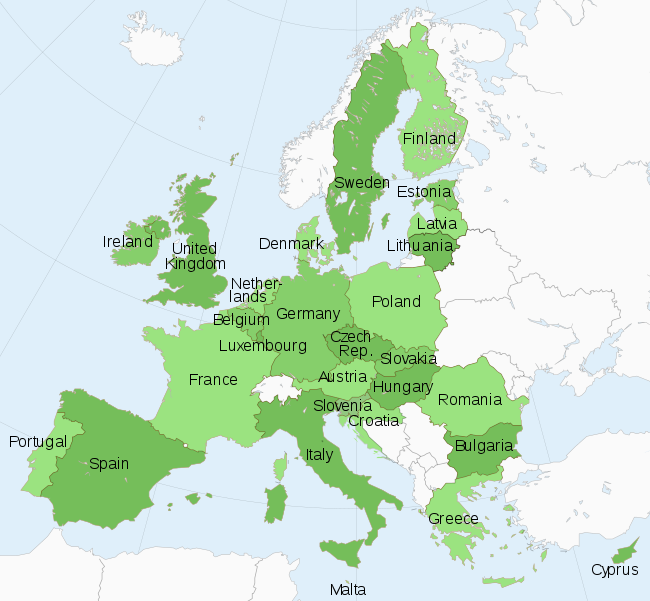
The food issue has been cooking for several years and for botanicals and additives far from cannabidiol. This year, on January 1, however, the entire EU brought in a new directive about the use of certain plants in food which seems to be affecting the edible cannabis conversation all over the continent. That said, countries are interpreting the same at different speeds and with different enthusiasm.

The EU looks poised to hop on the legalization train

Switzerland (not a member of the EU) is actually the only country on the European continent where so far, things have gone relatively smoothly. Their lack of EU membership is actually why. This also does not mean they have overcome some of the larger problems inherent in this entire discussion, but, if things go to form, it will be relatively drama free.

That is not the case in other places.

For example, at the end of 2016, British authorities made a splash about medical labelling with the Medicine and Health Care products Regulatory Agency (MHRA) also leaving the entire edibles discussion in limbo. Technically, low strength CBD can be sold in the UK but it must be labelled as a food product if not specifically made for the medical market. That flap is likely to take off again with the direct competition now of not only Tilray but Namaste and the changing scheduling of cannabis in the UK to a Schedule II in October. See the recent furore over the “unauthorized claims” supposedly made by the nascent Cannabis Trades Association in meeting, lobbying if not “working” with local authorities. The organization has literally blossomed within the last 18 months to over 300 members and 1,200 sellers in part to figure out what exactly the rules are, as authorities grapple with changing times.

tilray-logoNow jump the channel to Spain. The international focus of late has not been just the medical cannabis now sprouting in greenhouses owned by established pharmaceutical companies, or that bound for semi medical use in Barcelona, but the entire CBD edibles discussion.

Why?

On some levels, it is clearly an attempt to continue to set less than grey rules for the Spanish cannabis industry, which even in the club scene is regulating. But beyond that, this fight is altogether more complicated, and far from just regional, or even just a Spanish conversation.

European Food Regulation Meets The Cannabis Industry

CBD in edible products will, according to European regulation, make it a novel food or “additive” – namely that products containing the cannabinoid have not been used “safely”. Translated into English that crosses cultural boundaries, this definition really means that the substance in question must have been part of a regulated federal procedure – for at least 25 years in any third country. As such, it will have to be tested and regulated accordingly.In other words, until the EU can move to classify CBD as a novel food, in Spain, CBD products on the market must be labelled “external use only.”

One does not have to be an industry analyst to know this clearly excludes all parts of the cannabis plant. Everywhere. This is why the situation now unfolding in Spain is all the more worrying for the industry across Europe.

In Spain at least, the crackdown appears to be on any food item containing cannabis, which, according to European-wide regulations, has yet to be classified as a “novel food.” Namely, a food product which has not been consumed in a significant degree in the EU before May 15, 1987. See the guide for new applicants here.

In other words, until the EU can move to classify CBD as a novel food, in Spain, CBD products on the market must be labelled “external use only.”

Where Does This Leave The CBD Industry Across Europe?

As any manufacturer or vendor in any EU country could technically be required to register their new food, this means that cannabis producers and distributors in Europe need to be on their toes for the next several years as the regulatory schemata is worked out. Bottom line? Expect as much hullabaloo over this sector of the market as other places (even if over other issues).Both producers and distributors could easily face labelling problems

Here is the critical take-away. Regulation is coming to the entire industry in Europe in a way unseen in both Canada and the U.S. and from a much more granular perspective.

What “reigns in Spain” in other words right now, is a wake-up call for CBD producers across the continent, even if not involved in the medical space. Not to mention both U.S. and Canadian producers (in particular) looking for profitable market entry strategies. Labelling and standards, in other words, are clearly on the way, and beyond the drawing board, for all cannabinoids, not just those of the “medical” kind.

In the meantime, edible CBD products in Europe and in every country are ripe for the institution of new guidelines that are, as yet, formalized. Both producers and distributors, therefore, could easily face labelling problems for all their CBD products and product lines for the next several years.

tilray-logo

Tilray Enters Both U.S. & UK Markets

By Marguerite Arnold
No Comments
tilray-logo

Tilray has long been seen as one of the market leaders in the global cannabis space. They are strategically placed in several critical areas to continue to do well, and put up major competition for just about everyone else (including German market entry first Canopy, plus the other big players in both Canada and Europe) ever since. See Aurora, Maricann and Aphria, to name a few. On the EU front, they are also certainly giving Dutch Bedrocan (with not only existing government contracts, but a newly increased ex-im medical allowance across the open Schengen border) a run for its money. And appear to have broached a monopoly long held by GW Pharma in the UK. 

But first things first. Here is a brief list of accomplishments on the corporate CV so far.In the U.S., Tilray just scored a medical trial at the University of San Diego with a pill used to treat a nerve disorder.

Long (relatively speaking) before Europe was on the map for anyone but a couple of Canadian LPs, the company was exporting to Croatia (in 2016). Even the initial hiccups in delivery (a batch arrived in broken bottles), did not stop their foreign expansion plans. 

When the first German cultivation bid was due, the company also, at least according to their spokesperson in Berlin at the time, considered applying. However, by late summer last year, Tilray was actually the first to publicly tip their hands that not only were they bowing out of the German tender, but had rather decided to import to Germany from cheaper EU climes. See their production facilities in Portugal. Plus of course a mass distribution deal to German pharmacies via local distribution.

Then there is their social media presence on Leafly, which also competes with Weedmaps as both an information portal and dispensary finder in key markets (California and Canada). The German version of the website (Leafly.de), has created a reality, no matter where the server is located, of also connecting directly to patients in a market still finding its way. 

tilray-logoAdd all these elements together, and that puts the company behind it all in an unbelievably strong position to continue to gain both market access and market growth in multiple jurisdictions while carefully moving at literally the change if not bleeding edge of the law.

How much long term impact this will have, however remains to be seen. Why? The times are changing fast. And not everyone is following a policy of promotion timed around other large events (see Canadian recreational legalization and the timing of the company’s IPO). 

Here is another example: the company’s most touted recent double victory, on each side of the Atlantic. Why? This is a place where cannabis companies are starting to compete. And while notable, particularly in it’s timing, is clearly indicative of the next stage in the development of the legitimate medical cannabis industry– not just Tilray.

Trials As Market Entry Tools

Medical trials in both the United States and Europe right now (including the UK for now at least), are the best way for cannabis companies to enter and gain market share. In the U.S., Tilray just scored a medical trial at the University of San Diego with a pill used to treat a nerve disorder.

Last week, Tilray also announced that they had essentially become the first Canadian LP to successfully challenge GW Pharmaceuticals on its home turf in the UK, even if for now limited to one patient application at a time. That won’t last, nor will such a tight monopoly.From a medical point of view, it is a very positive sign, at least for now.

That cross-Atlantic connection is even more interesting, however, given U.S. market entry recently for GW Pharmaceutical’s product, Epidiolex. 

From a medical point of view, it is a very positive sign, at least for now. How it will end up in the future is anyone’s guess, including stock valuation. 

Most advocates, of course, still hope for a medical market where patients are not restricted from deciding between the whole plant, oils or even the pharmaceutical products they choose to take.

Tilray of course is also not the only large LP engaged in medical trials. They are going on all over Europe right now (even if not as well strategically publicized). Health Canada is also committing to trials in Canada over the next five years.

However, what this very clearly demonstrates is that the global medical market is now ripe pickings for companies who approach the entire discussion from a “pharmacized” product point of view. Even if that means in Europe, and including for Tilray, entering the German and other medical markets with flower, oils and medical products.

Marguerite Arnold

Canadian Regulatory Authorities Struggling To Define Rules

By Marguerite Arnold
No Comments
Marguerite Arnold

Now that Canada finally has a date for the recreational market start, the federal government, provinces and other regulatory authorities are beginning to issue guidelines and rules that are going to define the early days of the recreational industry.

These include regulations on retail trade, medical sales and use. However this is precisely where the confusion is growing.

The Government Will Continue To Run The Medical Cannabis System

In a move to protect patients, Health Canada has announced that it will continue to run the medical part of the market for at least the next five years. In good news for medical users, this announcement was made against calls from the Canadian Medical Association for the medical infrastructure developed on Canada’s path to recreational reform to be phased out. The reason, according to the CMA? Many doctors feel uncomfortable prescribing the drug because of a lack of research and a general lack of understanding about dosing.

Both patients and advocates have expressed support for continuing the medical system. This includes organizations like the Canadian Nurses Association who fear that if a focus is taken off of medical use, producers will ignore this part of the market to focus only on recreational sales.

In the future, after legalization, Health Canada will also continue to support more research and trials.

Provinces Are Setting Their Own Rules For Recreational Sales

Despite early statements, the recreational market is still in the throes of market creation and regulation. The laws are also changing in progress, a situation one regulator has described as building an airplane as it hurtles down the runway for take-off.

Athletes in Canada are still banned from using any kind of cannabis.For example, Ontario, the largest provincial market, is also delaying private sector sales in retail shops until next year. It is also moving away from a government-run dispensary model. Government sales will begin in October, but private dispensaries will have to wait until next April to open their doors (and existing operations will have to close their doors while they apply for licenses). This is also a reversal of the regional government’s position that it would only allow government-controlled shops to sell recreational cannabis.

But perhaps the largest unknown in both national and provincial policy outside of retail brick and mortars is in the area of online sales. A major fight is now brewing in many places where the established industry is now siding with the government about unregistered dispensaries (see Ontario) and established if not registered producers are competing directly with the government not only on main street but online as well.recreational users are beginning to sound alarms that they do not want the government to have so much personal information about them

Retailers with a web presence operating in a grey space will continue to pose a significant challenge to the online system now being implemented by the government for two reasons. Product availability (which will be far more limited on the government-run sites) and privacy.

Beyond the lack of diverse products and strains to be initially offered via the online government portals, recreational users are beginning to sound alarms that they do not want the government to have so much personal information about them – and point specifically to the differences in the regulated alcohol industry vs. the new regulations for the recreational cannabis market.

Beyond Market Rules, There Are Other Guidelines Coming

The Canadian military has now issued guidelines for active duty personnel and cannabis. It cannot ban it from soldiers entirely of course, and as it stands, the situation will be ripe for misunderstandings. For example, soldiers are prohibited from consuming cannabis 8 hours before any kind of duty, 24 hours before the operation of any kind of vehicle or weapon and 28 days before parachuting or serving on a military aircraft.

The only problem, of course, is being able to enforce the same. Cannabinoids, notably THC, can stay in the body for up to 30 days for casual users long after the high is over.

Athletes in Canada are still banned from using any kind of cannabis. The reason? They are subject to the Canadian Anti-Doping Program (CADP) under which the use of cannabis will still be prohibited.

That said, the Canadian Hockey League is reportedly now examining how to revise how it addresses the issue of medical use.

Packaging Design for Cannabis Products: How to Build Trust and Gain Customers

By Katie Lundin
No Comments

To sell more cannabis products, you must build trust with your customers. Design Shack Magazine explains: “Trust is a key component of user loyalty, and a reason why people come to your company or brand.”

If you don’t get your package design right, people might simply ignore your cannabis products.But building trust is a big challenge for new medical cannabis businesses. That’s where good design can help:“While a lot of trust comes from past performance and a brand’s track-record, it also comes from the design. How a website, poster or package looks can impact how users feel about it and whether they take the leap from casual looker to brand loyalist.”

For a cannabis health supplement business, the product packaging design is one of the most important ways to reassure consumers and build trust.

When a prospective customer first sees your product, they see the packaging before they can touch or see the product. Good product packaging can raise concerns or instill comfort and confidence in a potential buyer.

If you don’t get your package design right, people might simply ignore your cannabis products.

So, let’s take a look at what your business can do to create great product packaging designs that will win over the skeptics and gain customers.

Include the Right Content On Product Packaging

Designing packaging that inspires trust starts with including the right content.

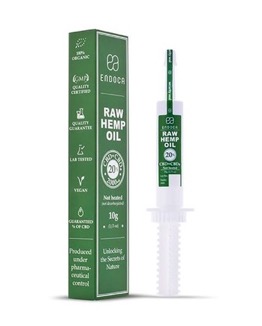
Start by telling people exactly what’s inside your packaging. For example, specify what your product is (CBD Extract Oil vs. Full-Spectrum Hemp Oil Caplets), how much of it there is, a production lot number and a potency level.

Include any qualifiers that may reassure your customers – such as “Organic,” “Non-GMO” or “CO2-Extracted.”

Image courtesy of Kannabia Seed Company

Communicate this information in clean, concise language that shows you have nothing to hide. And, speaking of not hiding – include contact information for your business. Many businesses bury their contact info on their websites and packaging. Don’t do that.

People trust businesses that are transparent and easy to reach. Customers want to know that if they have a question or something goes awry with an order that they can get help.

Including your web address, support email and phone number is a powerful way to reassure clients that your business is legitimate and trustworthy.

And, no packaging is complete without branding elements to help customers identify who your business is and what you’re about. This should include your company’s logo, identifying brand colors and any other small visual elements your brand may use.

Finally, make sure to follow the FDA guidelines for dietary supplement labels.

Your content checklist for product packaging

  • Include the essential details
    • What’s inside?
    • How much?
    • What’s the potency and dosage?
    • When does it expire?
    • What’s the lot number?
  • Include reassuring qualifiers that your audience will value
    • Organic, CO2-Extracted, Full Spectrum, Contains Less Than 0.3% THC, etc.
  • Include your company’s contact info
    • Web Address
    • Customer Support Email
    • Customer Support Phone number
  • Include your visual branding elements
    • Logo
    • Tagline
    • Brand Colors
    • Small branded graphic elements

Keep the Packaging Design Simple

Clean, simple design is reassuring and inspires trust.

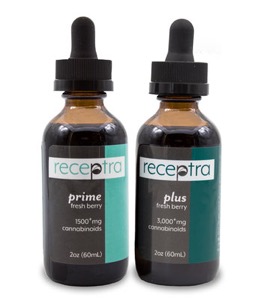
Image courtesy of Receptra Naturals

That’s because simple design makes it easy for customers to find what they need or want to know.

It’s easy to miss information in a cluttered design – and people know this.

People naturally mistrust the dense chunks of text at the bottom of many advertisements and product packages. On the other hand, clean, easy-to-read fonts and plenty of white space ensure that your audience can read your product packaging and find the information they want quickly without too much trouble.

With fewer words and graphics competing for attention, the important stuff naturally stands out. And, a simple design also sends the message that there are no hidden loopholes or secrets that may work against your customers.

Keep the Design Of Your Product Packaging Professional

It doesn’t matter how great your product is if your business comes across as unprofessional. And, for medical cannabis businesses, the bar for establishing professionalism is even higher than for most companies.

Keep these tips in mind to communicate professionalism and reliability.

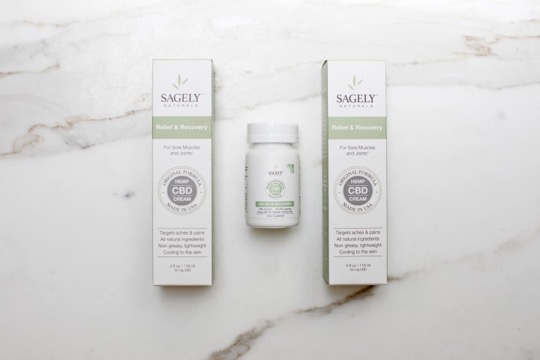
Image courtesy of Sagely Naturals

Make sure your packaging is error-free

Mistakes don’t look professional. How many times have you wondered how an error could have passed through so many hands unnoticed that it made it onto the final version?

Consumers notice errors in your packaging design. They see typos and often, discover incorrect or misleading information. Errors make customers think that your business is incompetent. Or worse – they might think that your business is deliberately misleading them. Make sure you proof-read everything before your packaging goes to production.

Showcase Your Cannabis Products Well Against Competitors

People buying your cannabis products will have other options. Don’t ignore your competition and be sure to understand how other dietary supplements and medicine is packaged.

Want to build trust by encouraging consumers to group your CBD products with other trusted medical brands? Follow these tips:

  • Provide a list of ingredients and instructions for safe dosing and usage. People expect this from reputable medicinal brands. Your product packaging should dothis too. And, remember to follow the FDA’s labeling requirements for dietary supplements.
  • Incorporate a safety seal into your packaging design. You’ll notice that most medicines, vitamins, and supplements have a safety seal to protect the contents. Whether you opt for a shrink-wrapped seal over the lid or a foil seal under the cap, adding a safety seal shows that your product has not been tampered with and implies that it’s safe to use.

Incorporating these elements will create a mental link between your product and other trusted medicinal products.

Be authentic to your cannabis brand

Last, but not least, your packaging design must align with your brand. When consumers sense a disconnect between the brand identity they’ve come to identify with your business and the packaging design for your products, it creates discomfort.

Image courtesy of Direct Cannabis Network

But packaging that is in line with (or expands upon) the brand identity consumers have come to know will create comfort and trust.

Kevin Keating at PKG Brand Design explains:

Your brand’s packaging design must reflect your company’s story, product, and values. If your packaging claims a “simple” snack product with dozens of ingredients, consumers are going to be left with a disingenuous feeling about your products and company. By ensuring that your messaging, design, and visual impact is in line with your company and your consumer’s preferences, you can build instant trust.

So, ensure that your packaging design is consistent with your existing visual identity. This includes the name of your business or cannabis product, your cannabis business logo, website, and marketing design.

A united and cohesive visual brand presence looks professional and helps to build familiarity – which is key to developing trust. Ultimately, many people judge products based solely on the product packaging. That’s why it’s essential to make sure your product packaging sends the right message.

Epidiolex-GW

GW Pharma’s Enormous Price for Epidiolex

By Marguerite Arnold
5 Comments
Epidiolex-GW

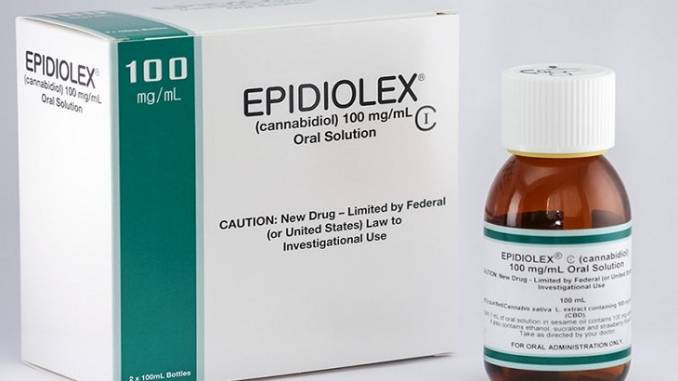
In a fascinating early August conference call with Seeking Alpha, British-based GW Pharmaceuticals finally revealed their retail price point for CBD-based drug, Epidiolex, as it goes into distribution in the U.S.

The drug is designed for the treatment of certain kinds of childhood epilepsy – although not all kinds. Also notable of course, is that GW Pharma’s “other” drug for treatment of resistant epilepsy failed in late stage trials in Eastern Europe earlier this year. It also knocked off 5% of the price of the company’s stock.The company is estimating it has a potential patient pool of between 25,000- 30,000 patients in the U.S.

British Advocacy Over Access And Pricing

The ineffectiveness of GW Pharma’s drugs for many patients (along with the cost charged for them) was responsible for pre-empting the entire access discussion in the UK this year. The mother of an epileptic British child tried to import a personal store of cannabis oil (produced by Canadian LP Tilray) only to have it confiscated at the airport this summer. Her son ended up in the hospital shortly thereafter.

The national uproar this caused pushed forward the country’s new medical cannabis policy– indeed drug rescheduling is due to go into effect in October. Conveniently, right as Epidiolex goes on sale in the U.S. (where cannabis remains a Schedule I drug).

The company is estimating it has a potential patient pool of between 25,000- 30,000 patients in the U.S.

Price Tags and Politics

What is the price of Epidiolex? $32,500 per patient, per year. If that sounds high, the company insists it is pricing the drug to be “in line” with other drugs for this segment of the market.

The majority of this cost will not be picked up by private health insurers but rather the federal governmentActually, according to industry analysis, this is about 70% more than the price of one comparable drug (Onfi), and slightly more expensive than Banzel, the two competing (non-cannabinoid based) medications now available in the U.S. for this market.

Here is the other (widely unreported) kicker. The majority of this cost will not be picked up by private health insurers but rather the federal government, which is also not negotiating with GW Pharma about that high price  (unlike for example what is going on in Europe and the German bid).

Why the difference?

Two reasons. The first is that Epidiolex has obtained “orphan drug” status (a medication for a disease that affects fewer than 200,000 patients in the U.S.) The second is that the majority of the insurance that will be picking up this tab is Medicaid. The patient pool will be unable to afford this. As a result, the bulk of the money will remit not from private insurance companies but rather federal taxpayers. And, unlike in say, Germany, none of this is pre-negotiated in bulk.

Epidiolex-GW
What is the price of Epidiolex? $32,500 per patient, per year.

Co-payments are expected to range from $5 to $200 per month per patient after insurance (read: the government) picks up the tab. This essentially means that the company plans to base participation at first at least on a sliding scale, highly subsidized by a government that has yet to reschedule cannabis from a Schedule I in the U.S.

Creating, in other words, a new monopoly position for GW Pharmaceuticals in North America.

A Hypocrisy Both Patients And The Industry Should Fight

The sordid, underhanded politicking that has created this canna monster is hardly surprising given the current political environment in both the U.S. and the U.K. right now. The people who benefit the most from this development are not patients, or even everyday shareholders, not to mention the burgeoning legitimate North American cannabis industry, but in fact highly placed politicians (like British Prime Minister Theresa May). Philip May, the PM’s husband’s firm is the majority shareholder in GW Pharma. Her former drugs minister (with a strong stand against medical cannabis) is married to the managing director of British Sugar, the company that grows GW Pharma’s cannabis stock domestically.

So far, despite a domestic outcry over this in the UK (including rescheduling), there has been no political backlash in the United States over this announcement. Why not?

Look To Europe For A More Competitive Medical Market

This kind of pricing strategy is also a complete no go in just about every other market – including medical-only markets where GW Pharma already has a footprint.

For example, German health insurers are already complaining about this kind of pricing strategy for cannabis (see the Cannabis Report from one of the country’s largest insurers TK – out earlier this year). And this in an environment where the government, in fact, does negotiate a bulk rate for most of the drugs in the market. Currently most German cannabis patients are being given dronabinol, a synthetic form of THC which costs far less.

GW logo-2On top of this, there are also moves afoot by the German government to begin to bring the costs of medical cannabis and medicines down, dramatically. And this too will impact the market – not only in Europe, but hopefully spark a debate in every country where prices are also too high.

The currently pending German cultivation bid for medical cannabis has already set an informal “reference” price of at most 7 euros a gram (and probably will see bid competitors come in at under half that). In other words, the government wholesale price of raw, unprocessed cannabis flower if not lightly processed cannabis oil is expected to be somewhere in the neighbourhood of 3-4 euros per gram come early next year. If not, as some expect, potentially even lower than that.

Processed Cannabis Medicine vs. Whole Plant Treatment

The debate that is really raging, beyond pricing, is whether unprocessed cannabis and cannabis oil is actually “medicine.” At the moment, the status quo in the U.S. is that it is not.

GW Pharmaceuticals, in other words, a British company importing a CBD-based derivative, is the only real “medical cannabis” company in the country, per the FDA. Everyone else, at least according to this logic, is placed in the “recreational camp.” And further, hampered still, with a lack of rescheduling, that affects everyone.

If that is not an organizing issue for the American cannabis industry, still struggling with the many issues inherent in the status quo (from insurance coverage and banking to national distribution across state lines) leading up to the midterms, nothing will be.

LabVantage Launches Cannabis-Specific LIMS

By Aaron G. Biros
1 Comment

LabVantage Solutions, known in other testing industries as a leader in laboratory information management systems (LIMS), has launched their own cannabis-specific LIMS. Unveiled at the Cannabis Science Conference in Portland, OR, the purpose-built software is designed specifically for cannabis testing and certification.

Here are a few key highlights of their system, taken from the press release:lab vantage logo

  • Available through perpetual licensing or SaaS
  • One platform for all tests, instruments, sample information, and results data, with option to embed ELN, LES, and other modules
  • Registers sample requests, including a portal for remote requests from growers and distributors
  • Fully audited sample lifecycle and audit trail
  • Certificates of Analysis customized for local regulatory requirements
  • Includes American Herbal Pharmacopoeia® tests for Cannabis Inforescense.
Bob Voelkner, vice president of sales and marketing

LabVantage says their system can support ISO/IEC 17025 compliance, ISO 9001:2015, 21 CFR Part 11 and Annex 11 and GLPs as well. According to Bob Voelkner, vice president of sales and marketing, it has a very open architecture as well as web services technology, which allows for integration with METRC and other traceability software platforms. “We know the testing methodologies these labs use, so the customer doesn’t have to create that from scratch,” says Voelkner. “This is meant to be out of the box and ready-to-use, so the customer can get up and running with minimal lag time.” LabVantage has actually been a provider of LIMS solutions for over 30 years and they serve a broad range of lab types.

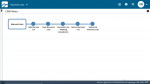
A screenshot showing the details collected in a harvest lot

Voelkner says they’ve been working with clients at cannabis labs over the past few years to configure their LIMS for this space specifically. “The lab managers can modify workflows on their own without having to write code,” says Voelkner. “We have a well-established solution with a good track record, that’s been around for a while and is proven. Some other players that are brand new to the space may be new to LIMS and that may not be a good thing. We are a market leader in the global LIMS space with a proven product that is very well established and very powerful.” Voelkner adds that lab managers get to own their data, not LabVantage. “You own the data. It is your database and it is proprietary to you. It is yours to use as you see fit.”

Lab managers have the option to configure the system to adapt to new compliance issues themselves, or work with the LabVantage professional services team to build it out further. “This particular space is new and emerging, it is pretty dynamic — we see a lot of change happening,” says Voelkner. “We believe this space needs a highly flexible platform and this is a proven technology solution with a lot of configurability built into it.”

How to Vet Suppliers in Cannabis Product Manufacturing

By Amy Davison
1 Comment

The quality of your edible cannabis product can only be as reliable as the components that comprise it. The three types of components include active ingredients (such as CBD oil), packaging components  (such as the bottles that hold finished product) and inactive ingredients (such as coconut oil). When evaluating a potential supplier for these three areas, a risk-based method follows a vendor selection process that highlights critical ingredients and also adequately assesses excipients. With this approach, the vetting process for a supplier is based on the impact the potential ingredient or component will have on the quality and purity of the finished product.

Choose only those suppliers who can provide certification that the packaging components are food-grade or food-safeThere are three basic categories to guide vendor assessment. Is the supplier providing 1) a packaging component with product contact, 2) an excipient, or inactive ingredient, or 3) the active ingredient? Regardless of the category, due to the factious nature of cannabis, it is important to first verify with a vendor that it will sell its products to a company in the cannabis industry. Once that is determined, the evaluation process may begin.

Packaging Components

Sourcing validation is a critical initial step in the production process. (image credit: Lucy Beaugard)

Packaging components, such as bottles and caps, are considered primary packaging because they have direct contact with the finished product. Suppliers of the primary packaging must be able to provide assurance that their goods do not contain additives that are harmful to consumers. Therefore, choose only those suppliers who can provide certification that the packaging components are food-grade or food-safe. Reputable vendors will also be able to provide a certificate of compliance, also known as a certificate of conformance, which states that the component meets specifications required for that part. Many cannabis regulations require finished products to be sold in child-resistant packaging, so the supplier will need to provide child-resistant certification for the packaging components, if applicable.

Excipients

Excipients are ingredients that are added to a product for the purposes of streamlining the manufacturing process and enhancing physical characteristics such as taste and color. Some examples could include coconut oil, starch and alcohol. Though they do not have the same critical nature as active ingredients, their potential risk to a finished product is generally greater than that of a packaging component. As such, there are additional factors to consider for an excipient vendor. Verify with the supplier that it can provide the following documentation. While governing regulations may not require some information, the data included in these documents are important to ensure the quality of your finished product.

  • Certificate of Analysis (or, certificate of conformance), for each lot of material. The information on a certificate, including the tests performed, specifications and test results must be sufficient to determine if the material is acceptable for use in the product.
  • Allergen Statement. This statement is important to accurately include or disclaim allergens on the finished product label.
  • Residual Solvent Statement. Solvents are commonly used to bolster the manufacturing process for a material. In order to maintain acceptable levels of residual solvents in a final product, it is necessary to also consider the toxicity and level of each solvent in the raw material.
  • Heavy Metals Certification. Since metals pose a risk to consumer safety, it is important to know what amounts, if any, are being contributed to your product by raw materials.

Because changes in an excipient can impact your finished product, make every attempt to obtain a commitment from a supplier to notify you if changes are made to the excipient’s specifications.

Active Ingredients

Cannabis oil is the ingredient that, when the edible cannabis product is consumed, is biologically “active.” Thus, it is considered to be the active ingredient in cannabis products. Since cannabis oil has a direct impact on the quality of a product, it is critical that the oil supplier be appropriately evaluated. One of the main considerations for a cannabis oil supplier is whether the supplier is willing to host initial and periodic audits of its manufacturing facility. Such audits are crucial in assessing the capability of the vendor to comply with regulatory requirements and established procedures – can the supplier consistently provide quality material? The answer to this question is too important to risk for you and your customers.As anyone working in the industry has experienced, anything related to cannabis is placed under an unprecedented critical lens.

Additionally, verify the oil supplier will provide key documentation, such as that listed above for excipients, to support the quality and purity of the oil. And last but not least, ensure the information reported by the supplier is adequate to meet the requirements of your finished product.

Evaluation guidelines and criteria such as these should be added to standard operating procedures to ensure consistency and quality across all products. As anyone working in the industry has experienced, anything related to cannabis is placed under an unprecedented critical lens. The importance of consumer safety and bolstering industry integrity is paramount. Sourcing validation is a critical initial step in the production process that can directly impact a company’s success and longevity in the cannabis industry.

Basic Training for Employers and Employees in the Cannabis Industry

Basic Training for Employers and Employees in the Cannabis Industry

By Lindsay Engle
4 Comments
Basic Training for Employers and Employees in the Cannabis Industry

The cannabis industry is evolving as more states begin to legalize; as the legalization of cannabis grows, the industry will need more well-informed dispensaries and dispensary employees.

Unfortunately, there are employees in dispensaries without proper training and some are put in positions to recommend specific strains to patients that may not be accurate. Getting proper training is important, no matter which cannabis job you want to pursue.

More Training Is Needed

Currently, there are no national standards for training dispensary employees, there is not even a licensing code. Therefore, it is important for owners to investigate state laws and understand legal minimums for worker education.

There are states, like Massachusetts, which requires a $500 fee for employee registration. There are other states that require cannabis employees receive a certain number of education hours on specific topics, like patient confidentiality.

Overall, more than fifty percent of cannabis dispensary staff has reported receiving some type of formal training and only twenty percent of staff members have received medical cannabis training.Basic Training for Employers and Employees in the Cannabis Industry

Dispensary staff should receive training on how and when to make appropriate suggestions to patients. Any successful dispensary owner will acknowledge that employee education pays off in reduced loss, increased sales and avoided fines. There are more benefits to employee training than just these and there are steps owners can take to ensure they are getting the most out of their business and employees.

Setting up a System

When a dispensary has protocols in place that show how the business operates, the company will have consistency and organization. No matter the task, all team members must follow specific procedural protocols.

Mostly, mistakes are made when steps are missed or misunderstood by new employees, but with proper and thorough training, this can be avoided. Owners should be investing in a POS software system that is straightforward; this will reduce training time and make it easier for new staff to be familiar with the system.Having budtenders that can educate and connect with the customers on a personal level is invaluable

Teaching budtenders to adopt a soft sell technique will be the most effective when it comes to increasing sales. Many customers seeking relief using cannabis are not going to respond to a hard sell technique, as this comes off pushy or aggressive.

There are going to be customers who are unsure of what products they want; theses customers will need guidance, and training employees to make suggestions based on what the customer is looking for is the best sales practice.

Having budtenders that can educate and connect with the customers on a personal level is invaluable; dispensaries that do this will have repeat customers.

More States Legalizing, More Dispensaries and More Employees

As the United States heads towards cannabis legalization, slowly but surely, we need to be prepared to train workers. When you have a dispensary that you have already spent millions of dollars on the application process, you don’t have time to be messing around with employees that are not serious.

There are many different options anyone in the cannabis industry can seek out to educate themselves more in the business.Those distributing cannabis must take their duties as seriously as pharmaceutical technicians, because in a sense that is what they are doing. They are giving information on the prescription or drug to a customer that is using it for an intended a purpose.

Cannabis users come in many different ages and aliments. It is important for budtenders and dispensary owners to understand the backgrounds of each customer to increase their up-sale potential.

While compassion isn’t something you can learn online or in a classroom, it is always a good idea to remind others to be compassionate. The budtender that asks the right questions, takes time with each patient to care for them and goes over practical products for the client will be the budtender with the most sales revenue.

Higher Learning

There are many different options anyone in the cannabis industry can seek out to educate themselves more in the business.

Some platforms are available online and are filled with important content that can teach you about different aspects of the cannabis plant and industry. These classes can prepare employees or owners for success.The most important training will be the training of patients

There are courses that can educate you in how to cook and healing with cannabis. You can also learn about laws on a state-by-state basis when you are enrolled in a cannabis-training program. The cannabis industry is large and growing; entrepreneurs, lawyers and caregivers can learn about the growing movement and expand their knowledge on this topic.

Patient Training

The most important training will be the training of patients, who will be navigating between the world of western medication and the new option of medicinal cannabis.

There are obviously many positive things that will come from the legalization of cannabis, one of the biggest being more options for pain management patients. There is a misconception that people are using medicinal cannabis as an excuse to get high; however, many patients in most states are over the age of 50.

In 2016, it was estimated that 650,000 Americans were using cannabis in compliance with the laws of their state. As legalization grows to a national level, we are going to need to be educating patients.

It is important for citizens to talk to their doctors about methods they believe will work best for them. It is necessary to communicate strains that are ineffective or unsatisfying. Keeping a cannabis journal is a good way to know what dose and strain you benefit from the most.

There are many ways patients can be educated in the cannabis industry, and dispensaries that encourage patient education will grow customer loyalty. The person who knows the facts and is confident in their information will be more successful than the person who guesses.

Be sure you, your staff and your customers know the laws, strains and can accurately answer questions about cannabis.