In New Jersey’s legal cannabis market and other states with newly legalized cannabis, a new market for security agencies has emerged. The increased demand, much like other aspects of the industry, has created a gold rush mentality with plenty of new and old security agencies looking to earn the industry’s business.
Kelly Conklin, founder and president of Superior Protection Professionals (SPP), wants to show people in the industry the difference between quality security agencies and those that simply hire guards and adjust their marketing for a new industry. Along with his son, Kelly Jr. vice president of SPP, they have developed a team of professionals that pride themselves in quality, integrity and trust.
Here, we sit down with Kelly Conklin for a brief chat to get his thoughts on New Jersey’s legalization and the need for heightened security in cannabis facilities.
Cannabis Industry Journal: How did you get into this business and how are you helping cannabis businesses stay safe?
Kelly Conklin (left) and Kelly Jr. (right)
Kelly Conklin: Thanks for speaking with us. We started SPP primarily because of the horrible uptick in mass shootings happening in all sorts of public spaces, like churches, synagogues, schools, and we wanted to do something that would make a positive and meaningful impact on people’s lives, to help people. We had a clear objective when we started. We wanted to build a premium brand and deliver a quality product.
CIJ: From licensing and planning to running a cannabis business, security is a big part of being in this market. What’s required and what do you suggest cannabis companies do to get ahead of the curve?
Kelly: The state requires security for all cannabis facilities. Theft at every step of the way, from the cultivation to manufacturing, to transportation and the dispensary, is a big potential problem. The presence of our agents helps to prevent these crimes. We also help to provide electronic security such as cameras, alarms, key FOB entry doors, monitoring and much more. Things like these are also mandatory for the facilities. You should take a good, hard look at the state’s requirements for security when developing your standard operating procedures and make sure you have every area of security covered.
CIJ:We’ve seen reports of armed robberies at dispensaries in various parts of the country. How do you staff a dispensary to help prevent those?
Kelly: Each dispensary has different needs based on their locations and foot traffic. We tailor our services to each and every client and give them exactly what they need specific to their facility. For example, at one of our dispensaries we have 2 armed guards inside and one unarmed guard at the door scanning IDs. Whatever’s needed, we provide. We like to provide an assessment done at each facility so the client knows exactly what to do to be compliant with all local and state regulations. We insist that if we work with someone, we want them to know us, and feel comfortable with us, knowing they are in good hands. We’re a quality security agency and we want our clients to understand exactly how to operate safely.
CIJ: You mentioned “quality security agency,” what do you mean by that?
Kelly: We work hard to deliver quality. To us, that means trained professionals, be it veterans of the military or federal, state and local law enforcement. Our staff are highly trained, skilled and capable, but most importantly, they care. We’re fully insured, licensed and bonded. Quality also means good customer service. Again, we tailor services to each individual client, we want people to feel comfortable, safe and happy around us. The state conducts audits with us as required by law and we pride ourselves in our ‘above and beyond’ approach. We’re looking forward to the industry’s growth and feel that we can lend a helping hand where it’s needed. Security isn’t just a state requirement that you have to comply with, it’s unfortunately necessary in the cannabis market to keep employees, customers and products safe. We welcome folks in the industry to reach out to us, by phone (908-783-1939) or email as well and we can answer any questions whatsoever.
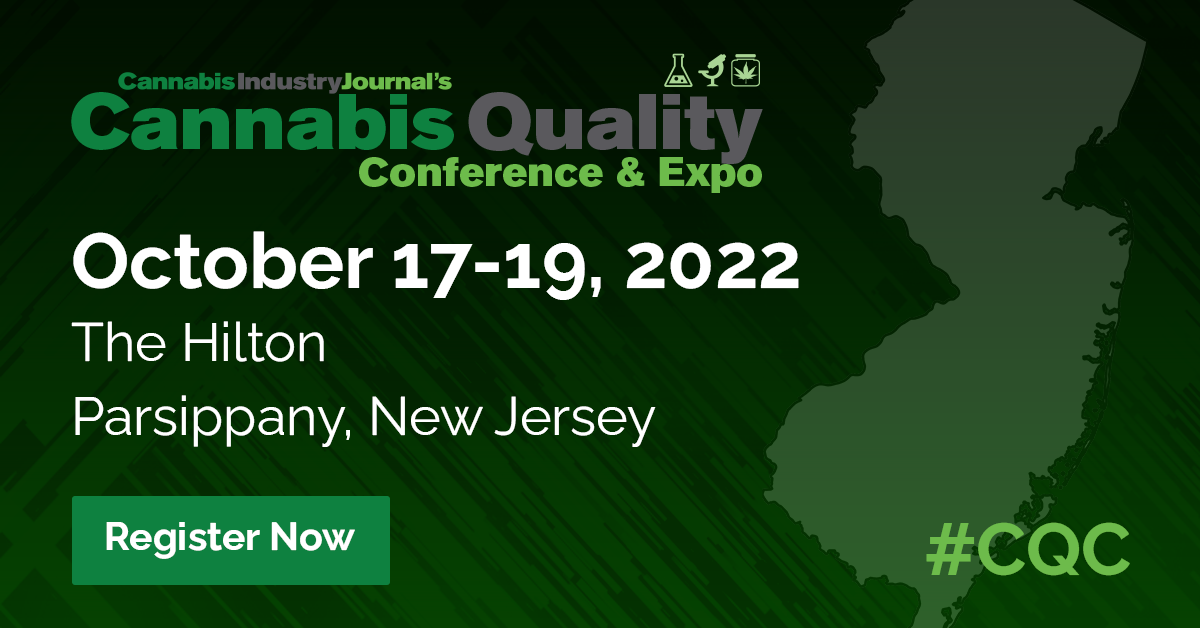
Innovative Publishing Company, Inc., the publisher of Cannabis Industry Journal has announced the return of the Cannabis Quality Conference (CQC), taking place October 16-18, 2023 at the Hilton in Parsippany, New Jersey. Presented by Cannabis Industry Journal, the CQC is a business-to-business conference and expo where cannabis industry leaders and stakeholders meet to build the future of the cannabis marketplace.
“New Jersey and the surrounding cannabis markets welcomed the CQC with open arms in 2022 and we’re excited to come back to North Jersey and expand on what we have built,” says Aaron Biros, editor of Cannabis Industry Journal and director of the Cannabis Quality Conference. “In addition to the sessions on cannabis quality, lab testing and infused products manufacturing, we will host sessions on the quality of business, strategic operational considerations and more.” The CQC is seeking abstracts for presentations and posters to be considered for the event. Click here to see the call for abstracts.
In addition to the two full days of cannabis education and programming, pre-conference workshops designed to address safety and compliance in cannabis edibles will take place on October 16. Also new to this year’s event is a strategic co-location with the Food Safety Consortium (FSC) running at the same time and in the same space as the CQC, allowing for food safety and cannabis professionals to meet and share best practices.
“We are bringing two great conferences together under one roof,” says Rick Biros, president of Innovative Publishing and director of the Food Safety Consortium. “The Food Safety Consortium will continue its strategic meeting of the minds format, but we are complementing that with the practical, boots-on-the-ground Food Safety Hazards track. Co-location with the CQC allows attendees to take advantage of additional education on product testing and quality assurance in the burgeoning cannabis market, as well as preconference workshops delving into infused product safety and compliance that will appeal to both food safety and cannabis professionals.”
Click here to stay up to date on lodging, early bird pricing, keynote announcements and more. All of these events will take place October 16-18, 2023 at the Hilton in Parsippany, New Jersey. For sponsorship and exhibit inquiries, contact RJ Palermo, Director of Sales, and Chelsea Patterson, Account Executive. Stay tuned for more information and when registration opens.
About Cannabis Industry Journal
Cannabis Industry Journal is a digital media community for cannabis industry professionals. We inform, educate and connect cannabis growers, extractors, processors, infused products manufacturers, dispensaries, laboratories, suppliers, vendors and regulators with original, in-depth features and reports, curated industry news and user-contributed content, and live and virtual events that offer knowledge, perspectives, strategies and resources to facilitate an informed, legalized and safe cannabis marketplace.
About the Cannabis Quality Conference
The Cannabis Quality Conference is an educational and networking event for the cannabis industry that has cannabis safety, quality and regulatory compliance as the foundation of the educational content of the program. With a unique focus on science, technology, safety and compliance, the “CQC” enables attendees to engage in conversations that are critical for advancing careers and organizations alike. Delegates visit with exhibitors to learn about cutting-edge solutions, explore three high-level educational tracks for learning valuable industry trends, and network with industry executives to find solutions to improve quality, efficiency and cost effectiveness in the evolving cannabis industry.
By Abraham Finberg, Simon Menkes, Rachel Wright No Comments
Click here to read Part One where we examined the state of the market, licensing, approvals and sales. Part Two delves into all things taxes.
A “Raft” of Taxes
Like New York, New Jersey cannabis companies will be dealing with a raft of taxes:
Federal Section 280E: Will It Apply in New Jersey? Well … Sometimes
Section 280E disallows deductions on federal returns for expenditures connected with the illegal sale of drugs, requiring retail cannabis businesses to add back such significant expenses as rent and wages for sales staff.
Much like New York, cannabis companies in New Jersey can expect a lot of taxes
Unlike New York, New Jersey’s recent cannabis legislation did not state that cannabis businesses were exempt from 280E. However, the state’s individual tax laws do not conform to the internal revenue code, and accountants are inferring that 280E won’t apply to sole proprietorships. Conversely, the state’s corporations must start their tax calculations using Federal taxable income, meaning 280E would apply.
Sales Tax
Retail sales of adult use cannabis are subject to a 7% sales tax. Beginning July 1, 2022, medical cannabis sales are exempt from sales tax.
Purchases by cultivators of farming equipment and related property, such as plants, fertilizer and drip irrigation, are exempt from sales tax. Purchases by all cannabis businesses of materials used to contain, protect, wrap and deliver adult use cannabis are exempt from sales tax.
Excise Tax
The CRC has been empowered to collect a “Social Equity Excise Fee”, to be adjusted annually. The fee is currently $1.10 per ounce, but the CRC is able, but not mandated, to amend the fees to between $10 and $60 an ounce after nine months of adult use sales. At least 70 percent of all cannabis tax revenue is earmarked for investing into impact zones.
The fee is imposed on any sale or transfer of cannabis from a cultivator (or alternative treatment center that also cultivates) to any other cannabis business. The fee is not imposed on transfers from one cultivator to another, or from a cultivator to an alternative treatment center. The facility that purchases the cannabis is responsible for collecting the fee and remitting it to the NJ Division of Taxation.
Local Cannabis Transfer and User Taxes
Each municipality is authorized to impose a Local Cannabis Transfer Tax on sales from one cannabis establishment to another (including from one cultivator to another), and on the sale of cannabis to retail consumers. The allowed rate is capped at 2% of receipts, with the exception of cannabis wholesaler sales, which are capped at 1%.
Atlantic City, which considers itself friendly toward cannabis, passed an ordinance in September 2021 authorizing the collection of a 2% tax on retail adult use cannabis sales and a 1% tax on wholesale sales. Many cities with alternative treatment centers already have a 2% tax on medical cannabis. It is assumed they’ll be enacting the 2% transfer tax on adult use sales if approved to operate.
Other Unique Points About New Jersey Cannabis
Adult use sales are limited: adults may possess up to one ounce total of cannabis products and can only purchase one ounce at a time.
New Jersey is the only state that has legalized cannabis, but kept it illegal for a cannabis consumer to grow their own weed. Growing even one cannabis plant can land the offender in prison for up to five years and incur a $25,000 fine.
About 400 municipalities have opted not to have retail cannabis shops; 98 have said yes. The new law has caused battles between mayors and their city councils, including the city of Paramus. 60% of Paramus residents voted in favor of adult use sales, and the mayor has stressed the benefit of the 2% transfer tax. Paramus city council unanimously rejected adult use cannabis, however. Some council members are against any sales, while others want to wait and see how other towns fare. Says Council Member Maria Elena Bellinger, “Ultimately … I feel that getting more data will only help us come to the right solution.”
Time Will Tell
New Jersey believes its careful approach will create the best adult use cannabis environment for its citizens. Only time will tell if the Garden State ends up avoiding some or all of the problems faced by states like California and New York.
By Abraham Finberg, Simon Menkes, Rachel Wright No Comments
This is Part One where we examine the state of the market, licensing, approvals and sales. Part Two will delve into all things taxes. Stay tuned for Part Two, coming next week!
On the surface, New Jersey’s new adult use cannabis program is similar to the program of its larger neighbor across the Hudson. Like New York, New Jersey is attempting to right generations of social wrongs by providing support for disadvantaged applicants and expunging people’s records for prior cannabis-related offenses.
However, the Garden State is in many ways a more cautious state. It is, after all, one of only two states where it’s still illegal to pump your own gas. Although the Cannabis Regulatory Enforcement Assistance and Marketplace Modernization Act (the CREAMM Act) became effective August 19, 2021, New Jersey has gotten off to a slow start. April 22, 2022 marked the first day of legal adult use cannabis sales, and only thirteen dispensaries participated, all of them Alternative Treatment Centers (medical cannabis dispensaries) who’d received a coveted “Authorization to Operate” from the state’s Cannabis Regulatory Commission (CRC).
Types of Licenses
In addition to the standard types of cannabis licenses: retailer, cultivator, manufacturer, wholesales, distributor and delivery, New Jersey has also approved a microbusiness license, which will be limited to 10 employees or less and 2,500 square feet or less of operation space. A cannabis business may apply for more than one type of license.
The State Capitol in Trenton, New Jersey
The CREAMM Act limits the issuance of cultivator licenses to 37 (not including cultivation licenses issued to microbusinesses). However, the state has decided to abolish that cap in order to boost the sagging cannabis market, and the cap will expire February 22, 2023.
The CREAMM Act also describes three special sub-types of licensees:
Social Equity business – owned by people who have lived in an Economically Disadvantaged Area. Will receive special priority.
Impact Zone business – located in an Impact Zone (towns with higher-than-average unemployment, crime and cannabis arrests), owned by people from an Impact Zone, or employing residents of Impact Zones. Will also receive special priority.
License Fees
Licensing fees vary widely, from $1,000 for a microbusiness, to $10,000 for a retailer and from $5,000 for a small cultivator to $50,000 for the largest cultivation operation. Alternative Treatment Centers applying for adult use licenses will pay $100,000 for a single dispensary, $400,000 for a single cultivation license and up to $1,000,000 if they’re a vertically integrated business with 3 adult use dispensaries.
“FINAL AGENCY DECISION: APPROVAL” Doesn’t Mean Approval To Operate
As of February 9, 2023, approximately 950 cultivators, dispensaries, and manufacturers had received CRC letters marked “FINAL AGENCY DECISION: APPROVAL OF CONDITIONAL LICENSE APPLICATION.” However, the letter stated recipients “shall not engage in purchasing, possessing, selling…cannabis or cannabis products.” Instead, it gave permission to 1) rent/purchase a site, 2) gain municipal approval and 3) apply to the CRC to for conversion to an annual license, which will allow them to actually operate. The conditional license phase is 120 days with an automatic 45-day extension.
On October 27, 2022, the first 18 annual adult-use licenses, which do allow the holder to open an adult use cannabis business, were issued, and as of January 13, 2023, only 46 annual adult-use licenses had been awarded.
Notoriety doesn’t seem to be moving the time table much faster. Famous rapper and actor Ice T and his ex-playboy bunny partner, Charris B, have been given conditional approval by the CRC and have obtained location approval from Jersey City. They are now waiting for conversion to an annual license, which as of mid-February 2023, they had still not been granted.
Current Sales
From April 22 to the end of June, New Jersey had collected $4,649,202 in tax revenue from sales of adult use cannabis. That amount included $219,482 in Social Equity Excise Fees and was based on $79,698,831 in total sales of adult use cannabis. The 3rd quarter of 2022, July through September, saw a jump in sales of adult use cannabis in New Jersey to $116,572,533. With medicinal cannabis sales included, the total went up to $177,710,764.
Stay tuned for Part 2, covering taxes in the Garden State, coming next week!
On December 29 just before the end of 2022, New York officially launched legal adult use sales in the state, but at only one location. The nonprofit dispensary Housing Works Cannabis Co. held a grand opening party complete with music, speeches from politicians and regulators and very, very long lines.
Chris Alexander, executive director of the New York Office of Cannabis Management (NYOCM), had the honor of making the first legal purchase, a pack of gummies and an eighth of flower, at the dispensary on the afternoon of December 29. “It’s been a lot of work that’s come to get us to this point,” Alexander told reporters on location. “We do have a lot more work to do, a lot more stores to open.”
New York originally legalized adult use cannabis in early 2021. Following almost two years of setbacks, missed deadlines and failed promises, the state just barely met one deadline: opening a dispensary in 2022. Governor Kathy Hochul has previously said that twenty stores would be doing business before the end of 2022. According to NPR, 36 dispensaries have been licensed, the NYOCM has another 139 licenses they need to issue and there are roughly 900 applicants that are still waiting.
To many in the cannabis space, New York is expected to become a massive boon to the country’s cannabis economy. It is just taking a bit longer than expected to materialize. Roy Bingham, CEO of BDSA predicts it will be the second largest contributor to growth in cannabis sales through 2026, just behind Florida. “With nearly 15 million residents over the age of 21 and tens of millions more tourists visiting the state annually, New York is one of the most exciting cannabis opportunities in 2023,” says Bingham. “Despite some expected growing pains in the early years, the market is expected to be the second largest contributor to sales growth through 2026, following Florida.” More dispensaries in New York are expected to open their doors in the early weeks of 2023.
In another second-place finish, New York follows New Jersey as the second state in the tri-state area to legalize adult use sales. New Jersey launched its market in April of 2022.
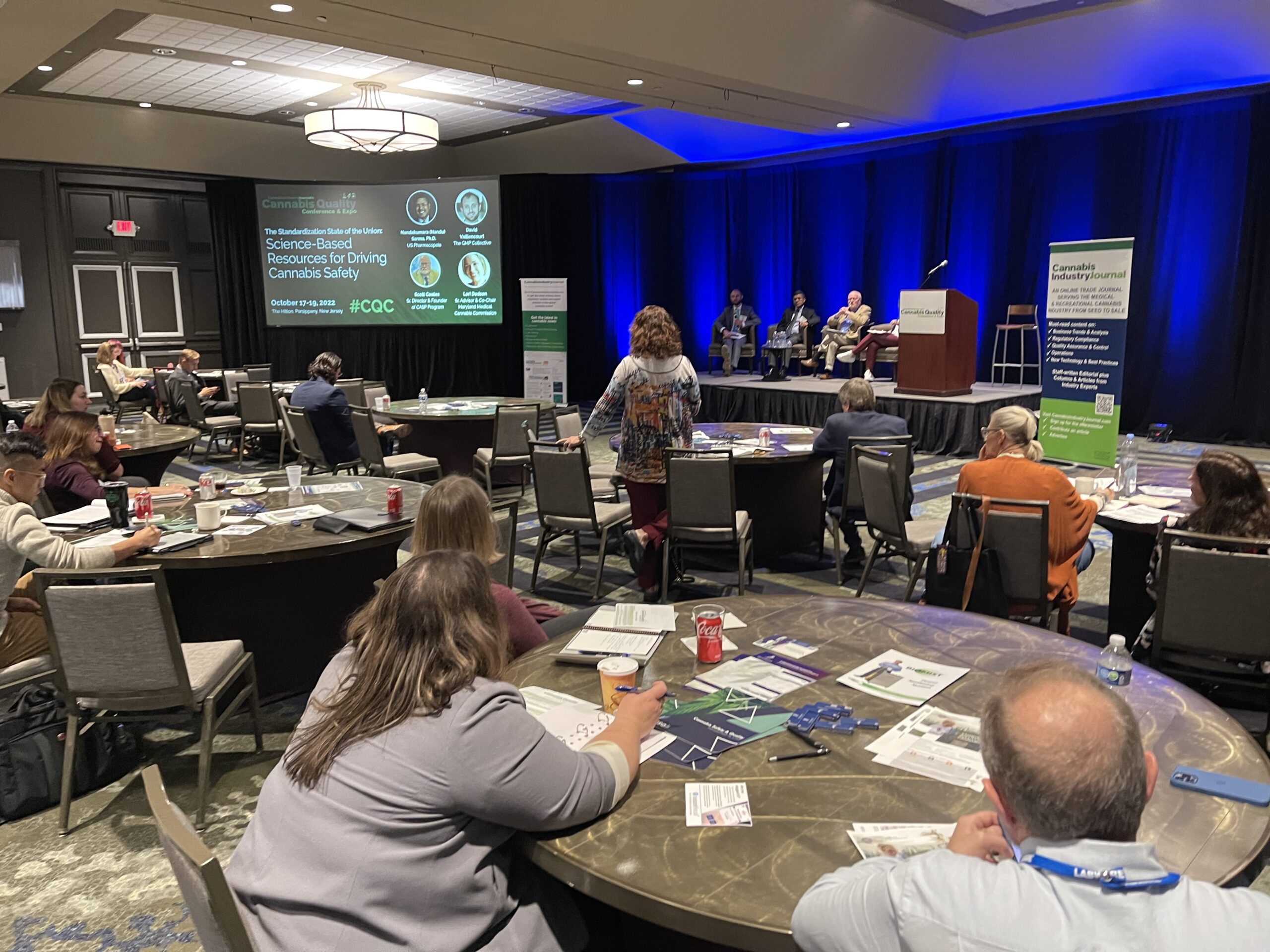
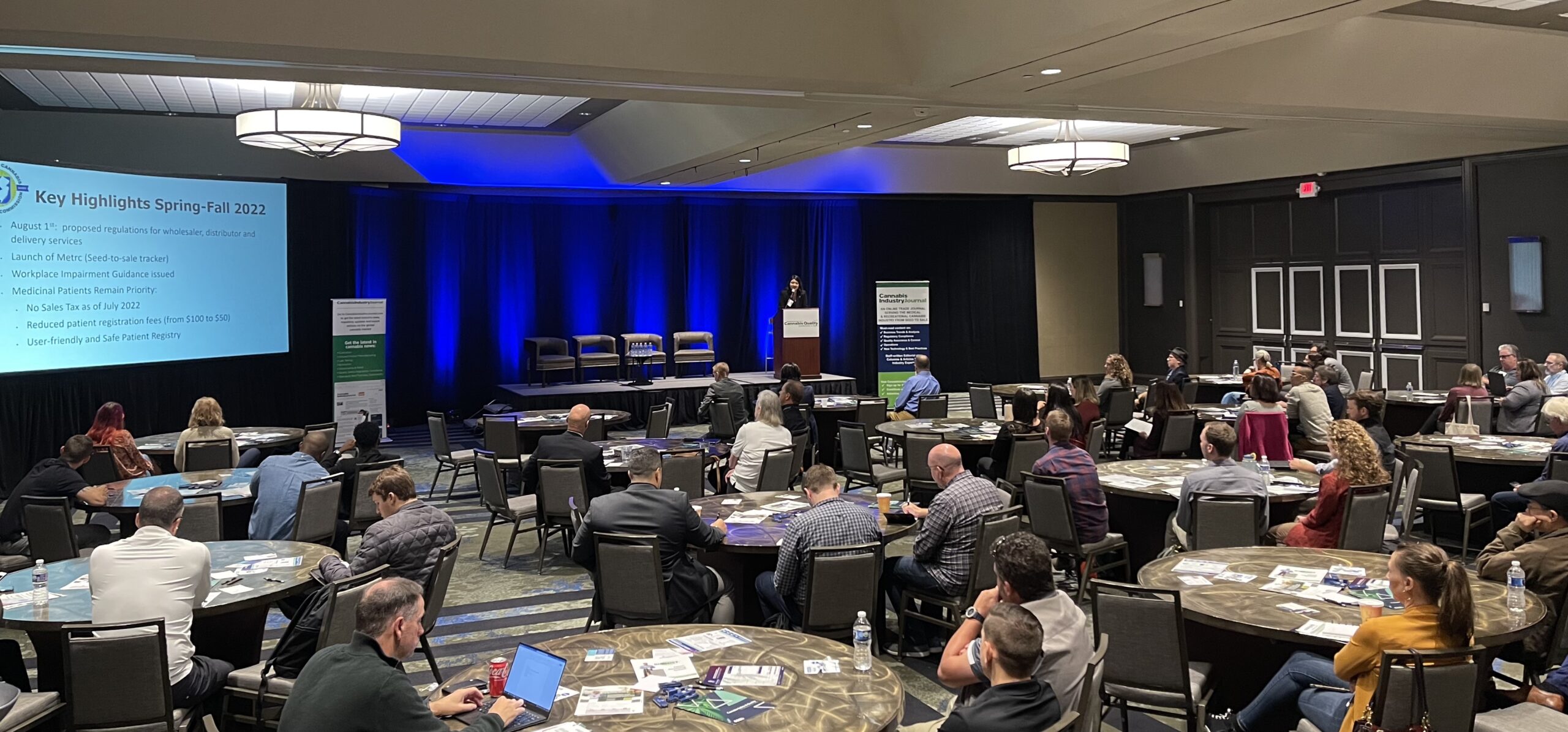
PARSIPPANY, NJ, October 17-19, 2022 – The Cannabis Quality Conference & Expo (CQC) took place in New Jersey last week. The agenda featured three tracks of educational talks, panel discussions, keynotes and breakout sessions.
Highlights from the 2022 CQC
At this year’s event, the conference featured three different keynote presentations, each on different days as well as Lunch & Learn sessions, led by Matthew Anderson, CEO of Vanguard Scientific. He sat down with two experts in cannabis law for interviews during the lunch hour on Tuesday, October 18.
Investigations & Enforcement: A Former Federal Prosecutor’s Perspective
Matthew Anderson spoke with Barak Cohen, Chair of the Cannabis Industry Group at Perkins Coie, to discuss federal investigations, Justice Department prosecutions and white-collar offenses.
Compliance is Key: Best Practices for Your New Jersey Cannabis Business
Anderson interviewed Casey Leaver, Director of Regulatory Compliance at Vicente Sederberg, to discuss compliance culture, quality controls, New Jersey regulations and more.
Commissioner Maria Del-Cid Kosso takes the stage on Monday
The conference began on October 17 with a keynote presentation led by Commissioner Maria Del Cid-Kosso of the New Jersey Cannabis Regulatory Commission. Commissioner Del Cid-Kosso highlighted the progress the state has made so far with respect to cannabis legalization as well as their goals for the future of the state’s new market.
On the second day of the CQC, Toi Hutchinson, President & CEO of The Marijuana Policy Project, kicked things off with an inspiring keynote discussion where she discussed racial disparities in the industry, social equity, progress and reform efforts.
What People Are Saying About The 2022 CQC
Below are some testimonials we found from this year’s event:
Toi Hutchinson delivers her keynote presentation on Tuesday
“What set the Cannabis Quality Conference apart from many others was the intentionality and focus on high value substance from the presentations.”
“Once again, excellent panels today at the CQC here in Jersey! Have I mentioned how much I love to learn? This industry is forever evolving and being able to observe and watch it roll out from infancy in New Jersey has been tremendous.”
“What an informative and motivating event!”
“I feel fortunate to have been in attendance for such inspiring, informative and REAL discussions being had by industry experts from all across the country.”
“It was so great to listen, meet and speak with so many industry influencers!”
Coming Soon For 2023
After a successful event in New Jersey, the conference begins its planning for next year. The Cannabis Quality Conference & Expo will be returning to New Jersey in 2023. Stay tuned for important announcements, like the dates and location, coming soon.
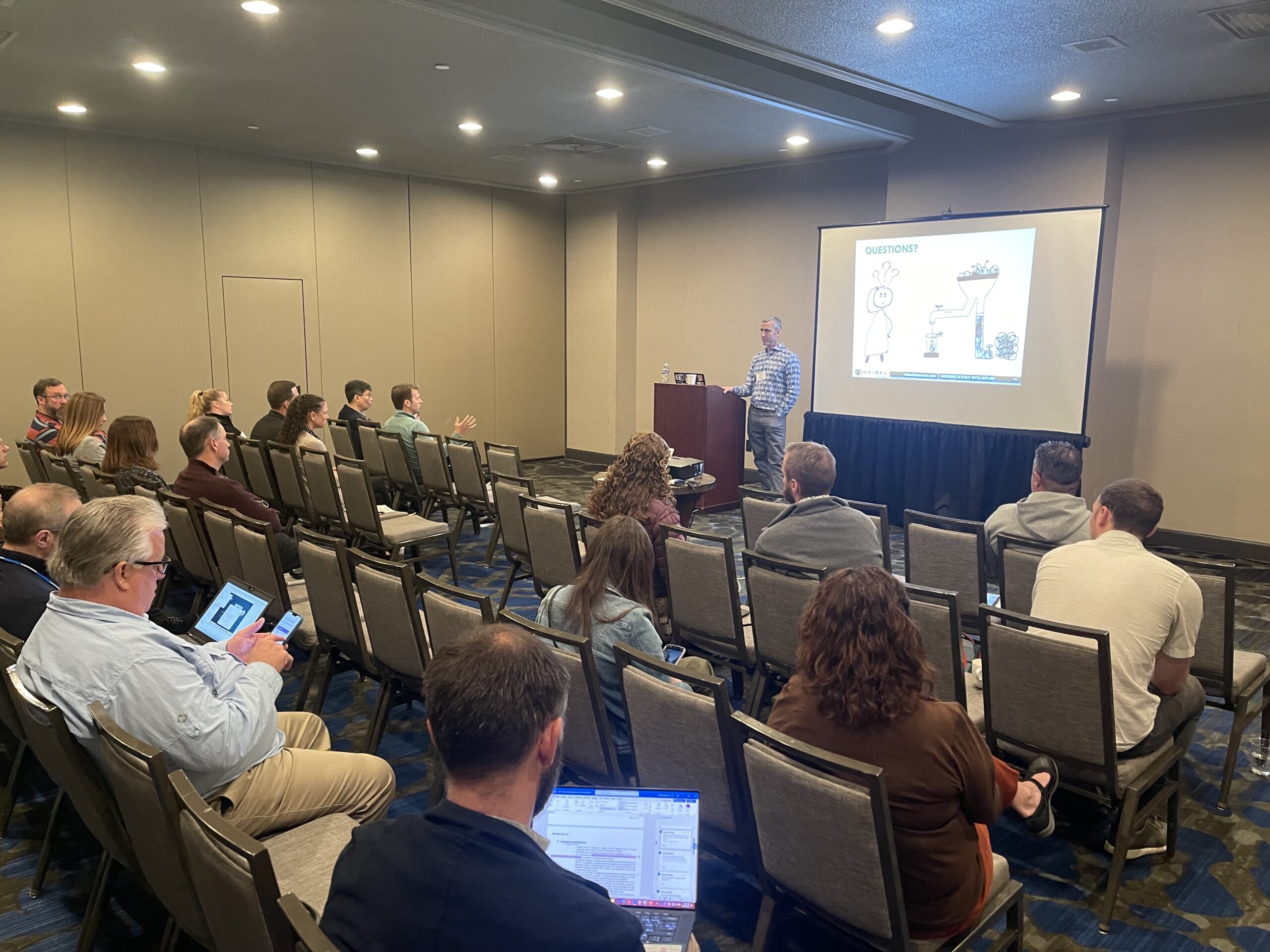
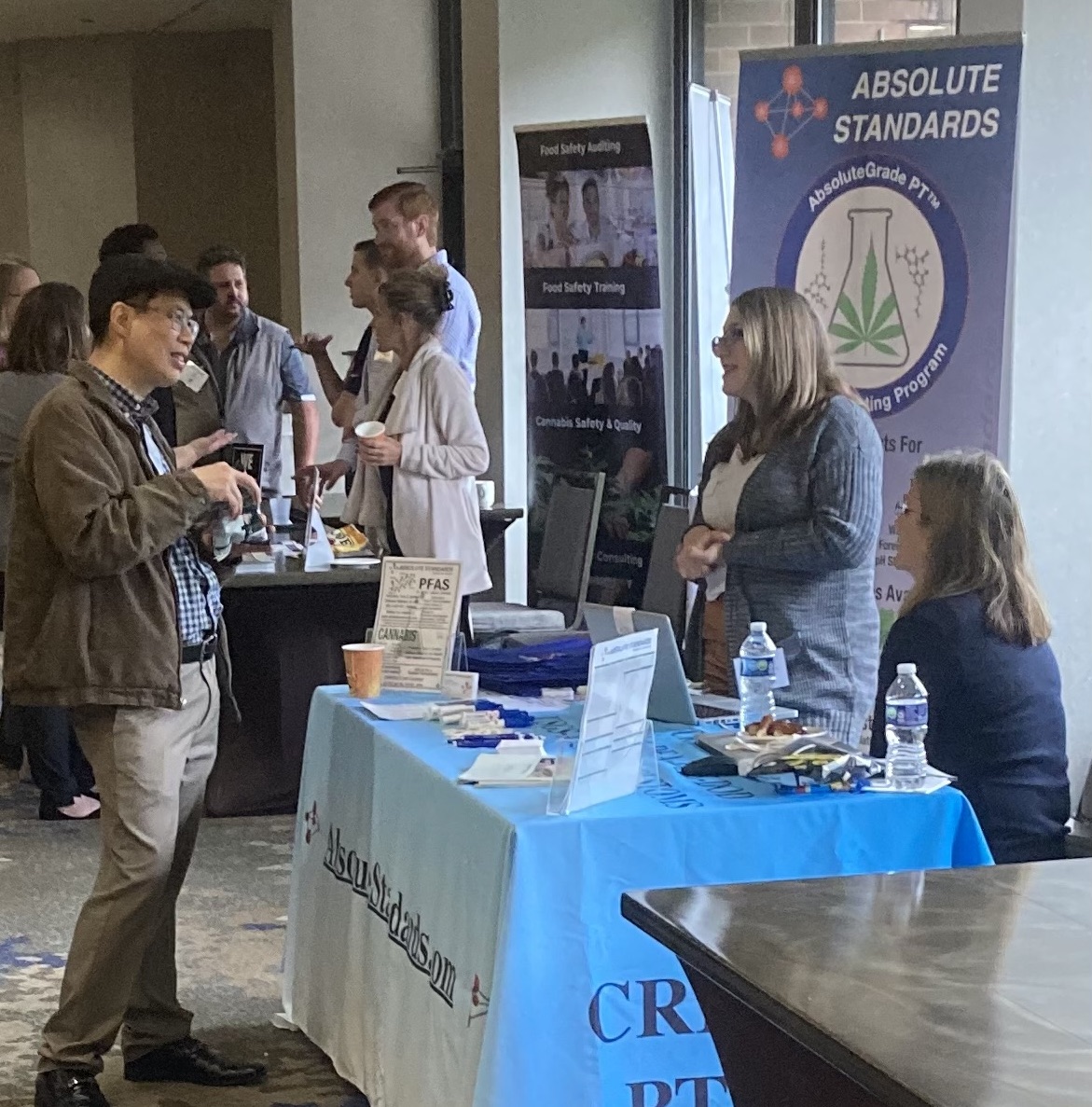
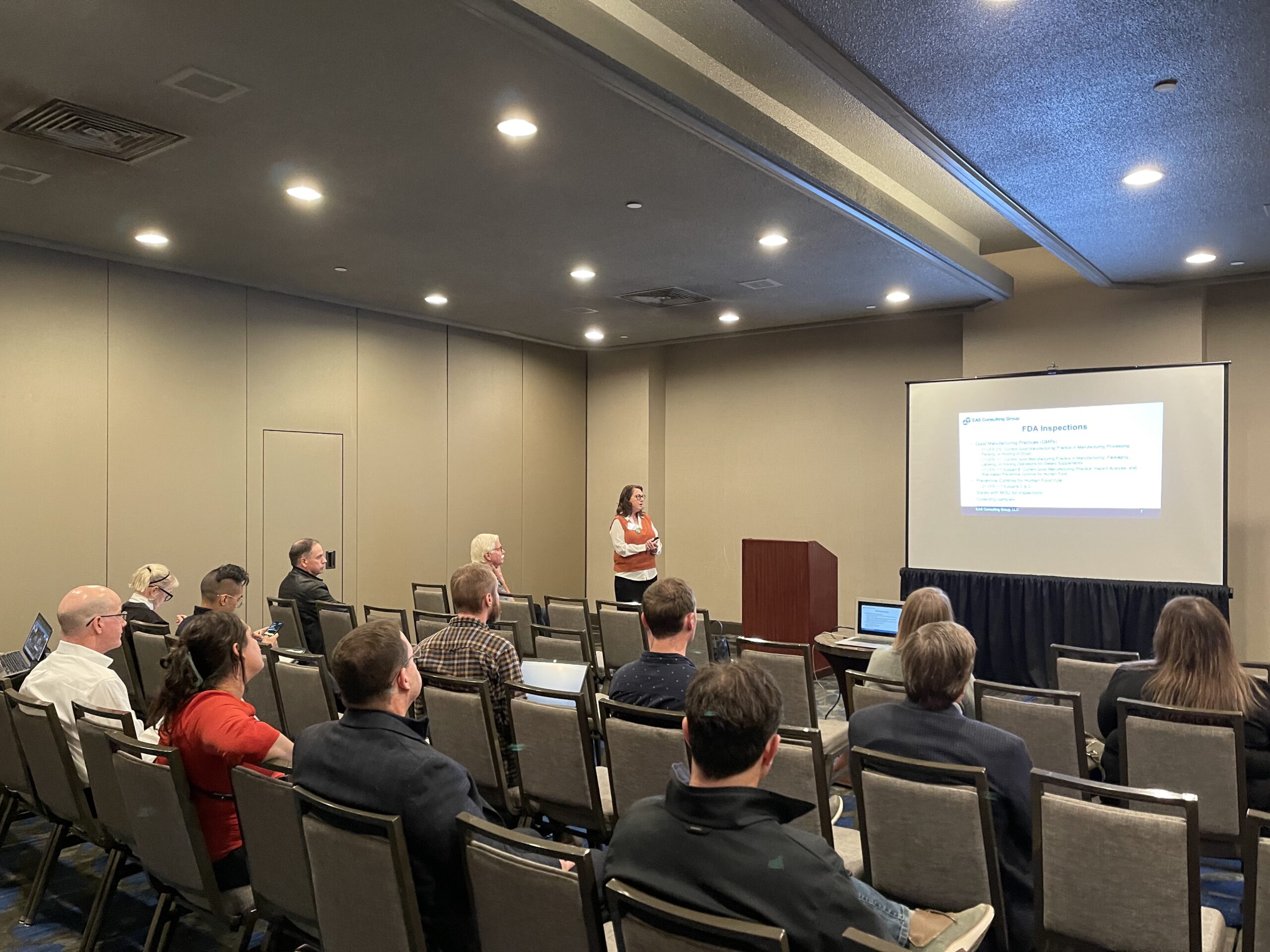
Scenes From The 2022 CQC
Below are some snapshots of what this year’s CQC had to offer.
About Cannabis Industry Journal
Cannabis Industry Journal is a digital media community for cannabis industry professionals. We inform, educate and connect cannabis growers, extractors, processors, infused products manufacturers, dispensaries, laboratories, suppliers, vendors and regulators with original, in-depth features and reports, curated industry news and user-contributed content, and live and virtual events that offer knowledge, perspectives, strategies and resources to facilitate an informed, legalized and safe cannabis marketplace.
About the Cannabis Quality Conference & Expo
The Cannabis Quality Conference & Expo is an educational and networking event for the cannabis industry that has cannabis safety, quality and regulatory compliance as the foundation of the educational content of the program. With a unique focus on science, technology, safety and compliance, the “CQC” enables attendees to engage in conversations that are critical for advancing careers and organizations alike. Delegates visit with exhibitors to learn about cutting-edge solutions, explore three high-level educational tracks for learning valuable industry trends, and network with industry executives to find solutions to improve quality, efficiency and cost effectiveness in the evolving cannabis industry.
PARSIPPANY, NJ, October 17-19, 2022 – The Cannabis Quality Conference & Expo (CQC) heads to New Jersey October 17-19 this year. The agenda features three tracks of educational talks, panel discussions, keynotes and breakout sessions.
At this year’s event, the conference will debut two new features of the program: Lunch & Learn sessions and Happy Hour Roundtables. Matthew Anderson, CEO of Vanguard Scientific, will sit down with two experts in cannabis law for interviews during the lunch hour:
Investigations & Enforcement: A Former Federal Prosecutor’s Perspective
Matthew Anderson will interview Barak Cohen, Chair of the Cannabis Industry Group at Perkins Coie, to discuss federal investigations, Justice Department prosecutions and white-collar offenses. This Lunch & Learn will take place 12:00 to 12:25 PM on Tuesday, October 18.
Compliance is Key: Best Practices for Your New Jersey Cannabis Business
Matthew Anderson will interview Casey Leaver, Director of Regulatory Compliance at Vicente Sederberg, to discuss compliance culture, quality controls, New Jersey regulations and more. This Lunch & Learn will take place 12:35 to 1:00 PM on Tuesday, October 18.
Following the conference agenda on Monday, October 17 and Tuesday October 18, attendees are invited to join the cocktail reception for Happy Hour Roundtables. From 4:45 to 5:45 PM, subject matter experts will be available to chat, answer questions & offer guidance on the following topics:
Regulatory Compliance: Jason Thomas, Precision Quality & Compliance
Banking, Finance & Real Estate: Steve Schain, Esq., Smart-Counsel LLC
Standards in Cannabis: David Vaillencourt, The GMP Collective
Social Equity & Justice: Ernest Toney, BIPOCANN
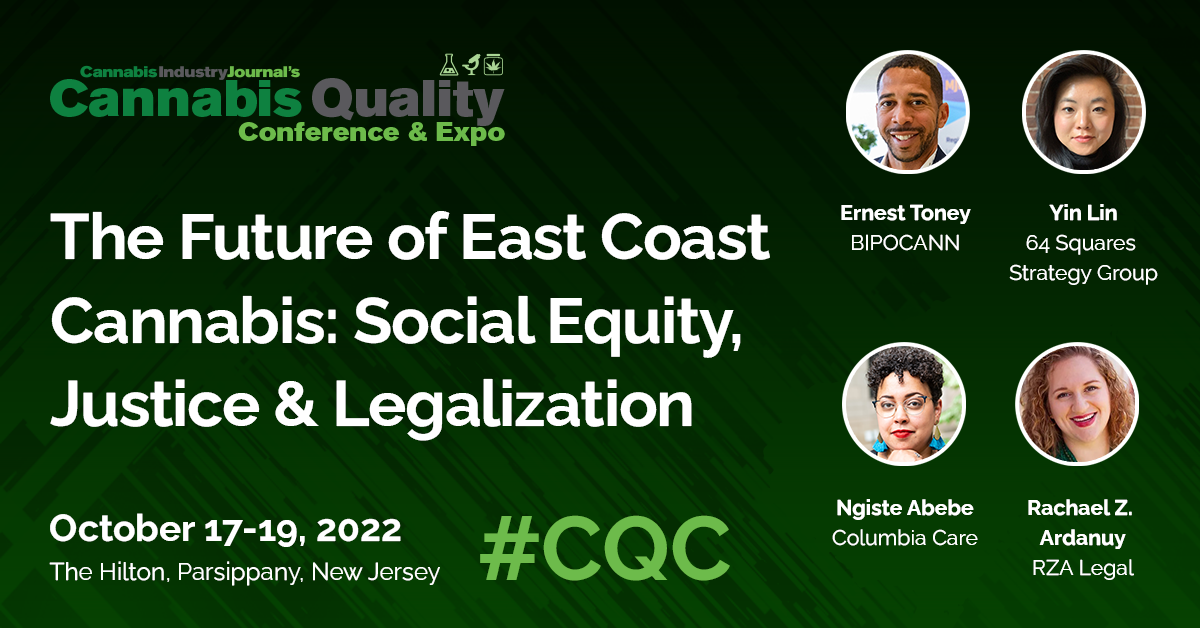
The conference will begin with a panel discussion on The Future of East Coast Cannabis: Social Equity, Justice & Legalization. Following that will be a panel on The Standardization State of the Union: Science-Based Resources for Driving Cannabis Safety with an overview of the New Jersey cannabis marketplace to end the first day.
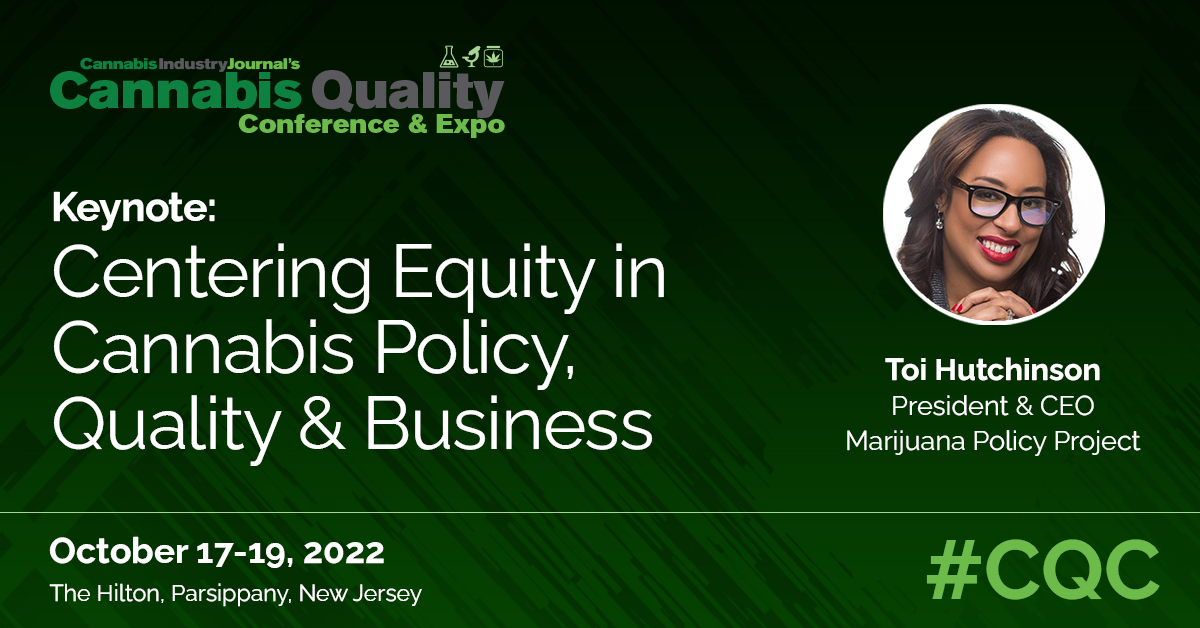
The second day will kick off with a Keynote titled Centering Equity in Cannabis Policy, Quality & Business with Toi Hutchinson, President & CEO at Marijuana Policy Project. Other agenda highlights include:
The State of the State: An Update on New Jersey Legalization by Steven M. Schain, Esquire, Attorney at Smart-Counsel, LLC
Tri-State Cannabis: Pro Tips for Winning Applications by Sumer Thomas, Director of Regulatory Affairs and Russ Hudson, Project Manager at Canna Advisors
Navigating Cannabis Testing Regulations for Multi-State Operations by Michael Kahn, President & Founder of MCR Labs
Keynote by Edmund DeVeaux, President of the New Jersey Cannabusiness Association
A Guide to Infusion Technology | Design Experiences that Inspire and Innovate with Cannabis Ingredients by Austin Stevenson, Chief Innovation Officer at Vertosa
Valuable Analysis Ahead of Asset Acquisition by Matthew Anderson, CEO of Vanguard Scientific
Registration options are available for in-person, virtual and hybrid attendance.
Event Hours
Monday, October 17: 12 pm – 6:30 pm (ET)
Tuesday, October 18: 8 am – 5:45 pm (ET)
Wednesday, October 19: 8 am – 12 pm (ET)
Cannabis industry professionals also interested in the food industry can attend the Food Safety Consortium, which begins on Wednesday, October 19 – Friday, October 21.
About Cannabis Industry Journal
Cannabis Industry Journal is a digital media community for cannabis industry professionals. We inform, educate and connect cannabis growers, extractors, processors, infused products manufacturers, dispensaries, laboratories, suppliers, vendors and regulators with original, in-depth features and reports, curated industry news and user-contributed content, and live and virtual events that offer knowledge, perspectives, strategies and resources to facilitate an informed, legalized and safe cannabis marketplace.
About the Cannabis Quality Conference & Expo
The Cannabis Quality Conference & Expo is an educational and networking event for the cannabis industry that has cannabis safety, quality and regulatory compliance as the foundation of the educational content of the program. With a unique focus on science, technology, safety and compliance, the “CQC” enables attendees to engage in conversations that are critical for advancing careers and organizations alike. Delegates visit with exhibitors to learn about cutting-edge solutions, explore three high-level educational tracks for learning valuable industry trends, and network with industry executives to find solutions to improve quality, efficiency and cost effectiveness in the evolving cannabis industry.
Despite the US making cannabis regulations challenging to navigate, the industry is snowballing toward profitability. New Jersey legalized adult use cannabis on April 21 this year. One month earlier, The Garden State began accepting applications for Class 5: Retailers, Dispensing and Delivery.
Although New Jersey isn’t shy about its licensing requirements and standards, many people want to know how retailers can stay in the game for the long run. So, let’s talk about risk management considerations New Jersey retailers need to know.
Top Risks Cannabis Retailers Face in New Jersey
Regardless of what kind of retailer you operate —medical or adult use — it’s critical to know what you’re up against. The following are the most common risks we’ve watched cannabis retailers face daily in New Jersey, making a customized risk management strategy necessary.
Theft
Like other retailers, New Jersey cannabis retailers are vulnerable to theft. Unfortunately, theft can come from various angles, such as in-store, in-transit and insider crime. Besides cannabis retailers typically having a well-stocked inventory, it’s not uncommon for them to have more cash on hand than most other businesses.
Although the SAFE Banking Act could positively impact the cannabis industry, it’s in a notorious stall yet again. Briefly, the SAFE Banking Act would no longer allow financial institutions, such as banks and credit card companies, to refuse to do business with cannabis companies. However, cannabis retailers must operate in a cash-only environment, for now, forcing them to make bank runs multiple times a day. We probably don’t have to explain how enticing a significant inventory and fat bank bags look to criminals.
Cybersecurity
Since the onset of the global health crisis, the cyber liability landscape has nearly spun into a death spiral. In other words, cybercriminals sat on the edge of their seats during the pandemic, waiting to pounce on anything that looked slightly vulnerable. Remote workers, small businesses, and emerging industries were hard-hit.
It’s no surprise that New Jersey cannabis retailers face many cybersecurity risks through their point of sale (POS) systems. Additionally, retailers often gather and store personal information, such as email addresses, credit card numbers, shipping addresses, etc. Hackers and cybercriminals gravitate to this vital data rapidly.
Property Damage
In addition to the risk of theft, as mentioned above, cannabis retailers must protect their property from losses. Without adequate protection, damage to equipment or buildings could add up to high out-of-pocket costs. Consider the damage a weekend office fire or late-night vandalism would cause. If property damage occurs, retailers must figure out how to sustain business operations while recovering from the loss simultaneously. As a result, New Jersey retailers must protect their property and maintain business continuity.
How to Customize a Risk Management Strategy
Watch or listen to any news reports and there’s a decent chance that you’ll feel some slight sense of doom and gloom. And sure, a lot is going wrong in our world; however, that doesn’t need to impact how you perceive your businesses. Instead of casting a massive net over every possible risk that you can imagine, we recommend trying the following 5-step approach. Here’s the gist:
Identify: Pinpoint high-level risks that are specific to the cannabis industry. Then, let the process trickle down to focus on company-specific exposures.
Analyze: Determine how badly a particular risk could harm your retail company. How much will this hurt should the “what-ifs” play out?
Evaluate: Categorize risks according to how risk tolerant your company is. Will you avoid, transfer, mitigate or accept the risk?
Track: Use your history or the stats from a similar retailer to map out how you’ve handled the risk over time. Older retailers have an advantage over younger retailers, of course, but you can still get a feel for your risk management style.
Treat: Make good on your evaluation promises by avoiding, transferring, mitigating, or accepting the various risks you identified.
Recommended Insurance for New Jersey Retailers
Sales totals in the first month of New Jersey’s adult use market
The New Jersey Cannabis Regulatory Commission issued detailed requirements for new cannabis businesses. That said, part of the application requirements considered is the plan for companies to obtain liability insurance. Many new retailers opted for a “letter of commitment” as opposed to a certificate of insurance (COI), stating their plans for obtaining the following coverages:
Commercial general liability: Protects cannabis companies against basic business risks.
Product liability: Protects against claims alleging your product or service caused injury or damage.
Property: Reimburses cannabis companies for direct property losses.
Workers’ compensation: Covers employees if they are injured on the job and can no longer work.
In addition to the required insurance coverages, we recommend New Jersey retailers customize their risk management package with these policies:
Crime: Protects your cannabis company against specific money theft crimes.
Cyber: Protects your cannabis company against damages from specific electronic activities.
Directors & officers: Protects corporate directors’ and officers’ personal assets if they are sued.
Employment practices liability: Protects cannabis companies against employment-related lawsuits.
Professional liability: Protects cannabis companies against lawsuits of inferior work or service.
With more states in the US entering the marketplace soon, New Jersey is doing its fair share of the heavy lifting by spearheading the onboarding process. Remember, doing your due diligence at the start pays off in the long run — New Jersey retailers are proving that. Consider teaming with a commercial insurance broker calibrated to the cannabis industry, so you get the most out of your broker, marketplace and the cannabis industry as a whole.
Christopher Lacy and The TGC Group recently won a Tier 3 conditional license under New Jersey’s social equity licensing program. Their story is one of misfortune, persistence, family and the dreadful effects that cannabis prohibition and the War on Drugs has had on impoverished BIPOC communities.
Chris’s father was a sharecropper in Mississippi before he moved to Illinois and started a family. Growing up in a poor neighborhood of Chicago, Chris was surrounded by gangs and crime. He started selling drugs when he was 12 and went to prison for cannabis before he was old enough to drink. When he got out, he saw firsthand the effects that incarceration has on a person, their family and their community.
When it was first announced, Illinois’s social equity program seemed revolutionary and one that other states soon followed, setting the stage for markets all over the country to establish social equity licensing programs. However, legal hurdles, red tape and intense litigation have bogged down the system, causing severe delays. Chris and Taneeshia are still waiting to hear back about approval of their license application, years later.
Good news came recently when they were notified that they were awarded a conditional license in New Jersey. With the help of his family, business partners and The Garden State, The TGC Group is moving forward with launching their business. We caught up with Chris, to check in on his business’s progress, hear his story and see if it might inspire others to take a similar path.
Cannabis Industry Journal: Tell me a little bit about yourself and your story with cannabis
Christopher Lacy, Founder of The TGC Group
Christopher Lacy: I grew up on a dead-end block in a little town in Illinois on the far south side of Chicago called Robbins. It has a very high crime rate and a very impoverished community so as you could imagine we grew up pretty poor. I personally didn’t feel the effects of poverty until just before I turned 13. I guess that became more obvious as I started hanging out and seeing that most of my friends had more than 2 pairs of pants. I starting selling drugs when I was 12 years old. When I was about 16-17 years old, I had started trying to grow cannabis. Like any task, it takes time to develop the skills produce a good product. Cannabis definitely has it challenges when it comes to cultivating a product that could be considered good.
It’s not like there was an abundance of information out there specific to cannabis cultivation to aid in the task so besides the basic book knowledge of horticulture, you had to grind it out. It took me a couple years to really get it figured out. Once I did get it going, I started expanding. At first it was basements in the suburbs. We’d grab really nice houses and fill the basements with plants. When that wasn’t enough, we started doing warehouses. There was no real limit, outside of capital and the desire to not draw attention via odor or traffic from workers, if you could produce it, the demand was there. I did go to prison for a short stint when I was 20 years old for delivery of a controlled substance. 0.8 grams. After I got out of prison, I had a very successful illegal operation growing and selling cannabis. Life was pretty good for a few years. I wasn’t rich or anything like that but I was able to be around my family and provide the things that I was denied when I grew up. I don’t blame my parents for what I went through growing up. Because of my father’s age, I’m generation 1 out of the sharecropping era. My parents believed in one thing and that was learning. I tried to instill that into my kids as well. Being a father feels really good to me. Unfortunately, that dream was ended when I was arrested in one of our warehouses in Illinois. I did 3.5 years, locked down 21 hours a day for growing weed.
While serving my time I was able to really take a look at myself and develop a new me. I established some new core principles that I would hold close to my heart. One of them being not going back to jail for the sake of a dollar. I was not going back to prison. I had kids when I was young so I missed out on a big part of their childhoods. I had three daughters and two sons at the time that were of an age where having a stable home plays a huge role on how the child will turn out in the future compared to a typical American lifestyle. When I got out of jail, my kids came and lived with me during and after high school but some serious damage had already been inflicted. I worked a job as a truck driver and did the best that I could to support my family, but I never really gave up on cannabis in the back of my mind. My older brother used to always tell me that I didn’t learn what I knew about weed for nothing and that one day it would all make sense.
Christopher with his wife, Taneeshia
For the next few years, we just grinded it out as a family. It wasn’t the ideal situation but we made it work. And when we couldn’t make it work, we lived with it! I just was glad to be there doing Chemistry homework with the kids. That shows what happens when a father is at home with his family. We get college grads.
When the message came out that Illinois was going to do craft grow licenses, I got really excited. I figured this was my chance to do what I love and to make a living doing it. I had no idea how I was going to get to where I wanted to be but I figured if I could just put one foot in front of the other, sooner or later I would get there. I caught a break when my nephew, Edward Lacy, introduced me to someone who understood the application process. She introduced me to some of the most wonderful/helpful people in the world. People who literally wanted to help true social equity applicants like myself. With the help of these new friends, we were able to drop our first application in Illinois. After we submitted that application, that is when the first story came out about us in Cannabis Industry Journal. This story helped me get into a conversation with Cresco labs and I was able to get into a situation that really changed how I saw cannabis production. I got to work around some of the smartest people in the industry for just under a year. I can’t thank Charlie, Barrington and the rest of the guys at Cresco enough for the opportunity. From there, I knew it had to be my destiny to grow cannabis for a living. I just kept beating up the phones and emails. Something was gone give.
CIJ: When we last spoke, you were trying to get a social equity license in Illinois, can you tell me about that? How did it go?
Chris: Ultimately, after 2 years of waiting, we were denied a license in Illinois. When I first got this news. it took me about a week to get out the bed. Lol. It took my wife to pull me through. I can only imagine the pain that all the other disappointed groups are feeling, Ultimately, we all couldn’t win in Illinois so it is what it is. But definitely a big shout out to all the successful applicants that did win. You all have a torch to carry that should ignite the black and brown communities.
From the political standpoint in Illinois, it’s just not conducive for social equity applicants to succeed due to all of the legal hurdles, courts, lawsuits, etc. Not to say that the Illinois process is truly different from other states going through similar processes, New Jersey and other states went through a similar process when social equity licenses were announced. The laws that helped me qualify are what came out of the legal battles in New Jersey. The issue is the resources available for legal fees, holding property, and the time required to see these things through; this all equals dollars and that’s just something lacking in most social equity groups.
CIJ: So, what made you look at New Jersey?
Chris: After I had submitted my application in Illinois, I began looking for financial support. I knew this would be my limiting factor because access to the type of capital required to get a grow facility off the ground is quite substantial. For the most part no one returned calls but I called one financial institution in particular, VenCanna Ventures, and for some miraculous reason, they returned my call. I’m not sure what made them; but we kept an open line of communication going all while we were dealing with Illinois. I knew these guys were good because they were behind an impressive project in Ohio that actually won LEED certification. When I look back on it, it felt like a one-year interview. Then one day this past winter David McGorman, the CEO, asked me to partner up with him in New Jersey. It was exactly what we both needed. He has the expertise in finance and I bring the operations side.
Christopher with his daughter, Janeace Lacy
Once we had that team together, we put together a strategy to try and apply in New Jersey. We built the application and New Jersey actually had some very unique laws. If you had a cannabis conviction, you could qualify. Also, my oldest daughter, Janeace, whom I think my prison time hurt the most, actually lives in New Jersey with my granddaughter. So, she’s our resident in the state that helped us win the application and now a part owner, which led us to where we are now. I just couldn’t be more excited about all of this. It just feels right
We won a tier 3 conditional license and now we’re working on finding a good facility and building the operation.
CIJ: How did you set up your social equity license application for NJ?
Chris: It was a process very similar to Illinois except that the process was split into two phases. A conditional license and an annual license. Phase one was winning the conditional license. This is a more condensed application compared to what I was used to. After filling out the application, we had to submit a bunch of documents and proof of incarceration. That was for the conditional license. We still have to convert the conditional to the annual. The conditional basically tells us that we qualify and we can move forward with the rest of the business plan, find some property and spend some money on a lease. We’re still in that process for converting to annual, but we have won the conditional.
CIJ: What is your plan now that you’ve received conditional approval?
Chris: Right now, we’re working on property and securing a space for our facility. We are pretty close to nailing down a couple good locations. One of the locations that I am really excited about is in Somerset County. If we can lock down the property, submit everything to the state as far as our SOPs, security plans, cultivation plan, design, etc. we can try get approval to convert to the annual license and then we can start the build out. The good thing about the two-step process is that it really helps when it comes to spending money. Basically, if you don’t win a conditional, don’t go out spending tons of cash trying to hold onto property.
CIJ: You’ve come a long way from being put in prison for cannabis, to now being close to establishing a business in New Jersey. What made you decide to stick with the business of cannabis?
Chris: You know, I can’t really describe it very well. It was just one of those feelings, you know it felt good to me. It drew me in when I was a young kid, although, I actually didn’t try using cannabis until I was 21. That’s when I first used it and it really jelled with me. Also, I’ve always loved gardening.
Chris Lacy
My father was a sharecropper in Mississippi, when our family moved to the suburbs of Chicago the first thing he did was plant a huge garden. I grew up in the garden and around plants. He used to spend so much time in that garden and I loved being there with him. We grew everything out there year after year until he was too old to keep it up. I can’t imagine a more peaceful environment then out in the fields with the plants.
It was also therapeutic, not just the obvious therapeutic aspects of cannabis, but also how therapeutic gardening is. Working with cannabis plants can be a challenge. To try to achieve unique terpene and cannabinoid profiles has always been a lot of fun for me. I love the challenge. Pushing genetics as far as I can to really experience what different cultivars have to offer. It is just one of those things that has always stuck with me and I really enjoy it. Once it became legal, a world of opportunity opened up for me.
You know, people say if you do something you love, you’ll never have to work a day in your life. I was a truck driver after I got out of prison, and I really didn’t like it. I had to have neck surgery from the pounding my spine took. I had to work long hours, man I hated doing it. On the flip side, cannabis is something I love to do. And this is about me trying to control my own destiny, control my own life. I don’t have to struggle mentally and physically just to provide for my family. That’s what keeps me going – the drive to do what I love to do to provide for my family. I see cannabis cultivation as more of an art than I do anything else. The guy behind the growing at any facility in the country could share with people what he believes to be fire. I just love to provide an experience and there’s nothing more satisfying than a satisfied customer. Everything about this process seems to fit perfectly with my life.
CIJ: It’s a pretty inspiring story. How do you hope your story might inspire others to follow in your footsteps?
Chris: I don’t want someone to follow in my steps as far as breaking the law and going to prison. I had to learn this the hard way, you know I didn’t agree with the law, but it doesn’t matter. Whether you agree or disagree with the law, I don’t advise anyone to be a criminal.
On the other hand, I do believe that black and brown people have been impacted by the war on drugs the most. In whatever capacity they can, they should chase the opportunity in this country as the cannabis market evolves. It’s a new industry, it’s a way for people to build wealth, to maybe raise their families out of poverty. So in that sense, yes, I do hope people see my story and see that they could do this too. And if you still out there getting it the best way you know how, God Bless you! Lord knows it breaks my heart every time I see someone get arrested for cannabis. Hopefully that shit stops soon and we can get these mothers and fathers who are basically prisoners of a bogus war, reunited with their families and hopefully they get a chance to rebuild.
This a chance to build generational wealth if it’s done right. I would hope that anyone looking for an opportunity, look into the cannabis space. I know its evolving fast and the window might seem like its closing but that isn’t the case. This is more like the 2nd inning of a baseball game. There plenty of time to get going.
I don’t think I’m the best role model. I just keeping fighting. And my advice for black and brown folks that might have gone to prison or might be put in a similar situation is this: Its never over. It’s never too late, no matter what somebody does. It’s not the end of the road. It’s just a bump at that moment. Just keep fighting. One step at a time. I do hope that people reach out to me.
I would love to work with anyone as long as they on a positive path, especially convicted felons. God Bless the felons! That’s my number one priority on my list. The guys that have been to prison, the non-violent drug offenders. Our society has a way of shunning those people. Some of the smartest people I’ve met in my life were in prison. It doesn’t speak to the character of an individual because they went to jail. If the system is supposed to work then why is it so hard for a convicted felon to get another chance? Of course, a few people have traversed this path successfully but there are so many more.
CIJ: I know your business is called The TGC Group. Out of curiosity, what does that acronym stand for?
Chris: We’re called TGC New Jersey under our license there and we applied in Illinois under the name, The TGC Group. TGC stands for a lot of things. It has a lot of meanings. I came up with it when I was in prison. I called it The Gathering Company. It was an idea I had because I was reading The Wall Street Journal every day in prison. I wanted to gather people under one umbrella.
But also, my name is Chris, my wife’s name is Taneeshia, (whom I am forever grateful for helping me pull my life together) and we have a son we named Grant. So, the first letter of each of our names also make TGC. It also stands for The Good Choice, because it is a good choice. The Ganja Connoisseur is another good one. I just hope that it grows to be known as a quality brand of cannabis that one can count on for consistent high-quality cannabis. Consistency and quality are what we’re striving for relentlessly.
I hope people read this article and feel inspired. We have a responsibility to give back to the community. We have a responsibility to rebuild what’s been destroyed in our communities. I am just trying to do my part. I was not a nice guy growing up, you know I was a gangbanger. But now, I want to rebuild and give back to my community the best way I can in Chicago. Not just my community, I want to give back to New Jersey communities, because we’re in their house now. I want to give back to Mississippi communities, where my family comes from. I’m not in this to get rich, I am in this to build communities. God willing, we will
Just over a month ago, a handful of dispensaries in New Jersey began selling cannabis to adults over the age of 21. The state issued licenses for adult use sales to seven alternative treatment centers (ATCs), otherwise known as medical cannabis businesses already established in the state. In total, thirteen dispensaries in the state started selling cannabis to adults over 21.
The seven companies awarded adult use licenses were Ascend, Curaleaf, GTI, Acreage, Verano, Columbia Care and TerrAscend. The state’s roll out created a lot of controversy over allowing already established, larger medical cannabis businesses and multi state operators to begin adult use sales before smaller businesses and social equity applicants get licensed.
Sales totals in the first month of New Jersey’s adult use market
Earlier this week, the New Jersey Cannabis Regulatory Commission (CRC) held a public meeting where regulators discussed progress, sales totals so far, conditional license applications and more. According to the meeting notes, between April 21 and May 21, retailers in New Jersey did $24,201,875 in cannabis sales with 212,433 transactions. During the meeting, regulators considered 46 conditional license applications and four testing lab license applications.
According to NJ.com, six new dispensaries were awarded licenses to begin adult use sales. Of the six new retail locations, Curaleaf opened their Edgewater location to adult use customers and Ayr Wellness received approval to begin adult use sales at all three of their medical locations in Eatontown, Union and Woodbridge. Ascend and TerrAscend also received approval to begin adult use sales act their locations in Montclair and Lodi, respectively.
About two weeks ago, the CRC testified before the state’s Senate Judiciary Meeting to share progress on the legal cannabis market, just over a year after the CRC was established. Jeff Brown, executive director of the CRC, discussed the agency’s goals and some challenges ahead of them. Brown says the CRC will be focusing on additional rules for adult use, modernizing the medical rules, enforcing regulatory compliance and information sharing in the near future. He also mentioned a couple challenges the industry is currently facing that they wish to address, including: expanding access to capital for entrepreneurs , removing impediments to finding real estate, educating municipalities to open up opportunities for applicants and ensuring medicinal cannabis access is unimpeded by recreational sales.
“We have made great strides in all of these efforts, and when we look at how New Jersey compares against other states, we fair pretty well,” Brown told lawmakers. “Beginning recreational sales on 4/21/22 was an important milestone. But it doesn’t mark the end of the process, it marks an important step in a multi-year effort to establish New Jersey as the premier cannabis market on the East Coast.”
This website uses cookies so that we can provide you with the best user experience possible. Cookie information is stored in your browser and performs functions such as recognising you when you return to our website and helping our team to understand which sections of the website you find most interesting and useful.
Strictly Necessary Cookies
Strictly Necessary Cookie should be enabled at all times so that we can save your preferences for cookie settings.
We use tracking pixels that set your arrival time at our website, this is used as part of our anti-spam and security measures. Disabling this tracking pixel would disable some of our security measures, and is therefore considered necessary for the safe operation of the website. This tracking pixel is cleared from your system when you delete files in your history.
We also use cookies to store your preferences regarding the setting of 3rd Party Cookies.
If you disable this cookie, we will not be able to save your preferences. This means that every time you visit this website you will need to enable or disable cookies again.



 Kelly: Each dispensary has different needs based on their locations and foot traffic. We tailor our services to each and every client and give them exactly what they need specific to their facility. For example, at one of our dispensaries we have 2 armed guards inside and one unarmed guard at the door scanning IDs. Whatever’s needed, we provide. We like to provide an assessment done at each facility so the client knows exactly what to do to be compliant with all local and state regulations. We insist that if we work with someone, we want them to know us, and feel comfortable with us, knowing they are in good hands. We’re a quality security agency and we want our clients to understand exactly how to operate safely.