Tag Archives: new jersey

New Jersey Launches Adult Use Sales

By Cannabis Industry Journal Staff
No Comments

On Thursday, April 21, a handful of dispensaries in New Jersey begin selling cannabis to adults over the age of 21. The state has so far issued licenses for adult use sales to seven alternative treatment centers (ATCs), otherwise known as medical cannabis businesses already established in the state. In total, thirteen dispensaries in the state can sell cannabis to adults over 21.

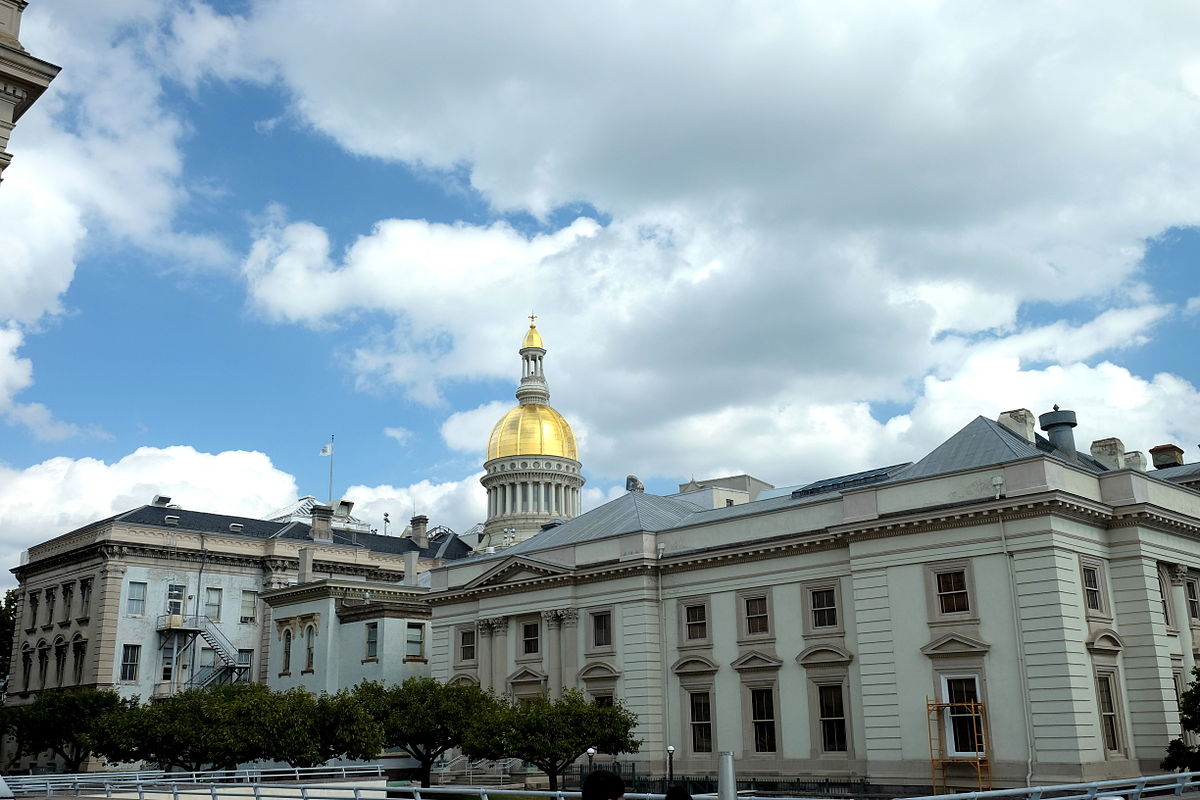
The Capitol in Trenton, New Jersey

The reason why adult use sales could not start on April 20 is because of “unmanageable logistical challenges for patients and other buyers, surrounding communities, and for municipalities,” Toni-Anne Blake, communications director for the New Jersey (CRC) told The Philadelphia Inquirer. “Regulators and industry representatives agreed it was not feasible.”

The seven ATCs awarded adult use licenses are Ascend, Curaleaf, GTI, Acreage, Verano, Columbia Care and TerrAscend. The state’s roll out created a lot of controversy over allowing already established, larger medical cannabis businesses and multi state operators to begin adult use sales before smaller businesses and social equity applicants get licensed.

According to The New York Times, the CRC gave condition approval to 102 companies for cultivation and manufacturing, but they need local approval and real estate before commencing operations. Another 320 organizations have applied for licenses for the New Jersey adult use cannabis market, but could wait up to a year or more before they begin operating.

Regulators in New Jersey say the seven companies commencing sales will need to follow social equity rules, including providing technical knowledge to social equity applicants. “We remain committed to social equity,” says CRC Chair Dianna Houenou. “We promised to build this market on the pillars of social equity and safety. Ultimately, we hope to see businesses and a workforce that reflect the diversity of the state, and local communities that are positively impacted by this new and growing industry.”

Jeff Brown, executive director of the CRC, says they anticipate long lines and crowds. “We expect 13 locations for the entire state will make for extremely busy stores,” said Jeff Brown, executive director of the New Jersey Cannabis Regulatory Commission. “The dispensaries have assured us that they are ready to meet the demand without disrupting patient access, and with minimal impact on the surrounding communities, but patience will be key to a good opening day.”

Adults in New Jersey can purchase up to one ounce of flower, up to five grams of concentrates or up to ten 100mg packages of edibles. Click here for a list of the locations opening their doors for business.

Biros' Blog

Happy 4/20, Blaze On!

By Aaron G. Biros
No Comments

Happy 4/20! The cannabis holiday with unclear origins is today and with it comes hundreds and hundreds of marketing and story pitches landing in every journalist’s inbox. Some of those pitches are impactful, some lack substance, some celebrate anniversaries, most offer discounts and sales and some are truly bizarre.

Every year, April 20th marks the cannabis holiday that people around the world celebrate with copious amounts of cannabis, concerts, festivals, deals, sales and marketing gimmicks. This year, here are some noteworthy (and weird) happenings going on as we celebrate the wonderful plant that brings us all together:

Leafly rings in the holiday on the NASDAQ: Leafly CEO Yoko Miyashita, surrounded by her colleagues, rang the opening bell for the NASDAQ Stock Exchange. The company began publicly trading on the NASDAQ as ‘LFLY’ back in February.

Smoke em if ya got em: Leafly CEO Yoko Miyashita, surrounded by her colleagues, rang the opening bell for the NASDAQ Stock Exchange

Americans for Safe Access (ASA) turned twenty on April 19: The policy, action and advocacy organization has been influential in passing medical cannabis laws throughout the country for twenty years now. The organization has trained thousands of public defenders, worked with thousands of incarcerated medical cannabis prisoners, organized protests all over the country, worked with regulators in dozens of states to pass safety rules, published reports, launched their Patient Focused Certification program and much more. Happy birthday ASA!

Emerald Cup and SC Labs celebrate thirteenth anniversary: The couple has been together now for thirteen years, with the Emerald Cup heading into their eighteenth annual competition next month. For the past thirteen years, Santa Cruz-based SC labs has worked with the Emerald Cup as their official testing partner, verifying COAs for potency and purity, gathering data on terpenes and classifying products and strains. Happy anniversary you two!

Smoking’ sandwiches: The cannabis-inspired, Arizona-based sandwich shop chain Cheba Hut celebrates the holiday with $4.20 “nugs” (pretzel nuggets) served on a frisbee and two PBRs for $4.20.

NORML stays busy: Executive Director Erik Altieri called for reforms in a press release: “While we have undoubtedly made immense progress in recent years, hundreds of thousands of our fellow citizens are still arrested each year for simple possession of a plant. That is why we are calling on all Americans to take time out of their day on 4/20 to help us finish the fight, both at the federal level and in those states that still are living under the dark ages of prohibition. We have an overwhelming mandate from the people and we intend to make sure that elected officials abide by it.”

New Jersey, a day late and a dollar short: The Garden State will begin adult use sales on April 21st at thirteen dispensaries. The delays, licensing process and regulatory hurdles have created confusion and frustration for the industry, but the state is moving forward with their plan and dispensaries will serve adults over 21 tomorrow, a day after the holiday.

Cannabis-infused Mac and cheese, a dangerously cheesy combination.

Sluggish Senate: The SAFE Banking Act has passed the House six (six!) times so far, most recently in February of this year. Sen. Cory Booker has long said he opposes the cannabis banking bill without wider legalization legislation (say that six times fast). Sen. Chuck Schumer also announced last week that his cannabis bill introduction is delayed. The CAOA won’t come until August now he says.

Cannabis Cuisine: Celebrity chef Todd English curates a “cannabis-curious cuisine” with infused Mac & Cheese via LastLeaf.

Erotic infusions: This CBD company offers 20% off their infused lubes, massage oils and products with code oOYes20. OoYes! CBD Lube is a female-founded formulations company focusing on the sex positive, “cannagasmic” hemp-derived CBD products space.

Backwards down the number line: Phish plays their first night back at Madison Square Garden in New York for a four-night run. Correctly guess the opener for tonight in the comments below and win a free beer and a burger with me at this year’s Cannabis Quality Conference & Expo.

That’s all folks! Thanks for reading and blaze on!

Blast from the past: Here’s a little treat if you’ve made it this far. This is me ten years ago today (back in college), smoking a joint on April 20, 2012. Time flies.

Cresco Labs To Acquire Columbia Care

By Cannabis Industry Journal Staff
No Comments

According to a press release published last week, Cresco Labs has come to an agreement with Columbia Care Inc. to acquire the company. The $2 billion deal, expected to close in the fourth quarter of 2022, will create the largest multi-state operator (MSO) in the country by pro-forma revenue.

Cresco Labs is already one of the country’s largest MSOs with roots in Illinois. With a footprint covering a lot of the United States, their brands include Cresco, High Supply, Mindy’s Edibles, Good News, Remedi, Wonder Wellness Co. and FloraCal Farms.

Columbia Care is also one of the largest cannabis companies in the US, with licenses in 18 jurisdictions and the EU. They currently operate 99 dispensaries and 32 cultivation and manufacturing facilities. Their brands include Seed & Strain, Triple Seven, gLeaf, Classix, Press, Amber and Platinum Label CBD.

Under the agreement, shareholders with Columbia Care will receive 0.5579 of subordinate voting share in Cresco for each common share they hold. Columbia Care shareholders will hold approximately 35% of the pro forma Cresco Labs Shares once the deal goes into effect.

Coming out of the deal, Cresco’s total revenue will hit $1.4 billion, making it the largest MSO in the country. Their footprint will reach 130 retail dispensaries across 18 different markets. The companies already have the largest market share in Illinois, Pennsylvania, Colorado and Virginia and are of the top three market shares in New York, New Jersey and Florida, which gives them unique opportunities to capitalize on emerging adult use markets.

Charles Bachtell, CEO of Cresco Labs, says the deal is very complementary and they are excited about long-term growth and diversification. “This acquisition brings together two of the leading operators in the industry, pairing a leading footprint with proven operational, brand and competitive excellence,” says Bachtell. “The combination of Cresco Labs and Columbia Care accelerates our journey to become the leader in cannabis in a way no other potential transaction could. We look forward to welcoming the incredible Columbia Care team to the Cresco Labs family. I couldn’t be more excited about this enhanced platform and how it furthers the Cresco Labs Vision – to be the most important and impactful company in cannabis.”

Registration Open for 2022 Cannabis Quality Conference & Expo

EDGARTOWN, MA, March 23, 2022 – Registration for the Cannabis Quality Conference & Expo, taking place October 17-19 at the Hilton Parsippany in New Jersey, is now open.

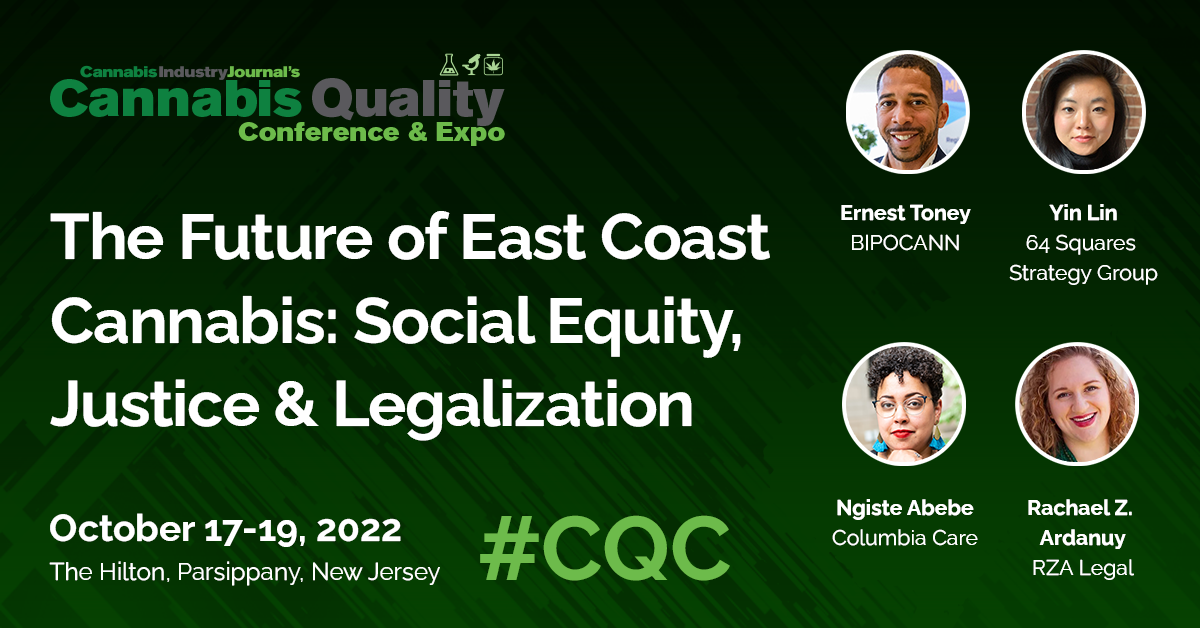
The agenda features breakout sessions, keynotes and panel discussions that will help attendees better understand the cannabis markets in the region and provide insights on best practices and business strategies. The conference will begin with a keynote presentation, then a panel on The Future of East Coast Cannabis: Social Equity, Justice & Legalization. Following that will be a panel on The Standardization State of the Union: Science-Based Resources for Driving Cannabis Safety with an overview of the New Jersey cannabis marketplace to end the first day.

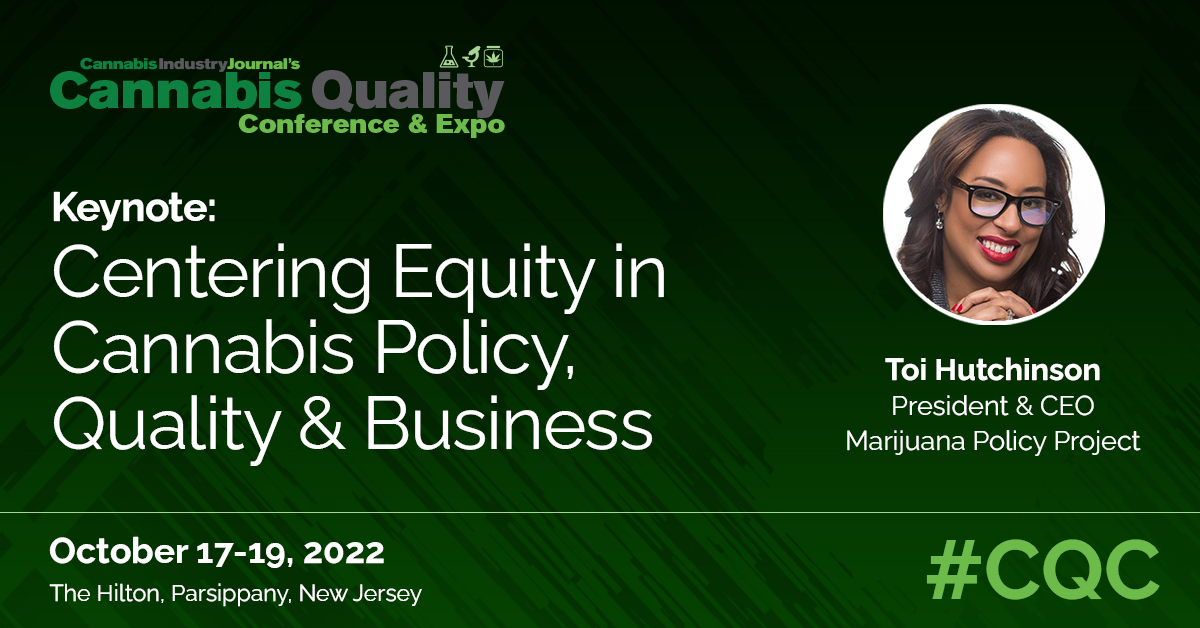
The second day will kick off with a Keynote titled Centering Equity in Cannabis Policy, Quality & Business with Toi Hutchinson, President & CEO at Marijuana Policy Project. Other agenda highlights include:

  • The State of the State: An Update on New Jersey Legalization by Steven M. Schain, Esquire, Attorney at Smart-Counsel, LLC
  • Tri-State Cannabis: Pro Tips for Winning Applications by Sumer Thomas, Director of Regulatory Affairs and Russ Hudson, Project Manager at Canna Advisors
  • Navigating Cannabis Testing Regulations for Multi-State Operations by Michael Kahn, President & Founder of MCR Labs
  • Keynote by Edmund DeVeaux, President of the New Jersey Cannabusiness Association
  • A Guide to Infusion Technology | Design Experiences that Inspire and Innovate with Cannabis Ingredients by Austin Stevenson, Chief Innovation Officer at Vertosa
  • Valuable Analysis Ahead of Asset Acquisition by Matthew Anderson, CEO of Vanguard Scientific

Registration options are available for in-person, virtual and hybrid attendance.

Event Hours

  • Monday, October 17: 12 pm – 6:30 pm (ET)
  • Tuesday, October 18: 8 am – 5:45 pm (ET)
  • Wednesday, October 19: 8 am – 12 pm (ET)

Tabletop exhibits and custom sponsorship packages are available. For sponsorship and exhibit inquiries, contact RJ Palermo, Director of Sales, and Chelsea Patterson, Account Executive.

Cannabis industry professionals also interested in the food industry can attend the Food Safety Consortium, which begins on Wednesday, October 19 – Friday, October 21. The program features panel discussions and breakout sessions that encourage dialogue among mid-to-senior-level food safety professionals. The Food Safety Consortium kicks off with an FDA Keynote and Town Hall, followed by a panel on the State of the Food Safety Industry and where it is going, led by Darin Detwiler of Northeastern University.

About Cannabis Industry Journal 

Cannabis Industry Journal is a digital media community for cannabis industry professionals. We inform, educate and connect cannabis growers, extractors, processors, infused products manufacturers, dispensaries, laboratories, suppliers, vendors and regulators with original, in-depth features and reports, curated industry news and user-contributed content, and live and virtual events that offer knowledge, perspectives, strategies and resources to facilitate an informed, legalized and safe cannabis marketplace.

About the Cannabis Quality Conference & Expo

The Cannabis Quality Conference & Expo is an educational and networking event for the cannabis industry that has cannabis safety, quality and regulatory compliance as the foundation of the educational content of the program. With a unique focus on science, technology, safety and compliance, the “CQC” enables attendees to engage in conversations that are critical for advancing careers and organizations alike. Delegates visit with exhibitors to learn about cutting-edge solutions, explore three high-level educational tracks for learning valuable industry trends, and network with industry executives to find solutions to improve quality, efficiency and cost effectiveness in the evolving cannabis industry.

Cannabis Quality Conference & Expo logo

Cannabis Quality Conference Dates, Location Announced

By Cannabis Industry Journal Staff
No Comments
Cannabis Quality Conference & Expo logo

EDGARTOWN, MA, Feb. 21, 2022 – Innovative Publishing Company, Inc., the publisher of Cannabis Industry Journal, has announced the return to in-person events with the Cannabis Quality Conference & Expo (CQC), taking place October 17-19, 2022 at the Hilton in Parsippany, New Jersey. Presented by Cannabis Industry Journal, the CQC is a business-to-business conference and expo where cannabis industry leaders and stakeholders meet to build the future of the cannabis marketplace.

“Cannabis markets in New Jersey, New York, Connecticut, Pennsylvania and Massachusetts are all beginning to get off the ground,” says Aaron Biros, editor of Cannabis Industry Journal and director of the Cannabis Quality Conference. “Taking place in a pivotal year for the cannabis industry and in a location surrounded by new market opportunities, the CQC will deliver hands-on education, networking and business discussions. The venue setting, just a short train ride from New York City and Newark International Airport, coupled with highly focused content, creates a unique business meeting environment.”

The 2022 program will have three separate tracks of educational presentations and panel discussions, focused on Regulations & Policy, Safety & Quality and Business & Operations.

Due to safety protocols and venue restrictions, limited space is available for sponsors and attendees. The CQC is a hybrid event, meaning attendees will have the option to either attend in-person in New Jersey, or attend remotely via the virtual platform. Registration is now open. Click here to stay up to date on lodging, early bird pricing, keynote announcements and more.

The CQC is co-located with the Food Safety Consortium, which will take place immediately following the CQC, October 19-21, 2022. For sponsorship and exhibit inquiries, contact RJ Palermo, Director of Sales, and Chelsea Patterson, Account Executive.

About Cannabis Industry Journal

Cannabis Industry Journal is a digital media community for cannabis industry professionals. We inform, educate and connect cannabis growers, extractors, processors, infused products manufacturers, dispensaries, laboratories, suppliers, vendors and regulators with original, in-depth features and reports, curated industry news and user-contributed content, and live and virtual events that offer knowledge, perspectives, strategies and resources to facilitate an informed, legalized and safe cannabis marketplace.

About the Cannabis Quality Conference & Expo

The Cannabis Quality Conference & Expo is an educational and networking event for the cannabis industry that has cannabis safety, quality and regulatory compliance as the foundation of the educational content of the program. With a unique focus on science, technology, safety and compliance, the “CQC” enables attendees to engage in conversations that are critical for advancing careers and organizations alike. Delegates visit with exhibitors to learn about cutting-edge solutions, explore three high-level educational tracks for learning valuable industry trends, and network with industry executives to find solutions to improve quality, efficiency and cost effectiveness in the evolving cannabis industry.

Legalization in the Northeast: Where the Dominoes are Falling

2021 has been very fruitful for cannabis legalization in the northeastern United States. First New Jersey legalized adult use cannabis, then came New York, then Connecticut, and now it is looking like Rhode Island should be able to get it done this year. Although technically not in the Northeast, Virginia also legalized adult use cannabis this year.

Quintessential New England: The Rhode Island coastline.

Those states are following in the footsteps of Maine, Massachusetts and Vermont who have all legalized cannabis previously. In addition, legislators in Pennsylvania and Delaware are both trying to advance bills to legalize adult use cannabis. While New Hampshire has a lot of support for legalization, progress in the legislature has stalled for now. And that just about covers the entire Northeast.

In a very interesting chain of events, the Northeast is legalizing adult use cannabis at a rapid pace in 2021. The incremental progress is similar to the history of legalization in the western United States and the events leading up to 2016.

In Rhode Island, senators approved Senate Bill 568 and now heads to the House where a legislative session ends in less than a week. While it is doubtful that representatives will be able to get it done before the end of the month, it is entirely possible that they could pass the bill and legalize cannabis before the end of this year.

Following Connecticut and hopefully Rhode Island, Pennsylvania lawmakers are building bipartisan support for legalization and are expected to introduce a bill soon.

New Jersey Legalizes Adult Use Cannabis

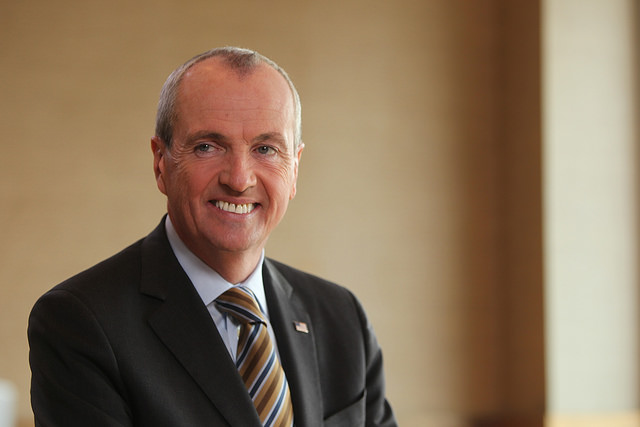
On February 22, 2021, New Jersey Governor Phil Murphy signed three bills into law, all of which legalize adult use cannabis in the state. A21 is the New Jersey Cannabis Regulatory, Enforcement Assistance, and Marketplace Modernization Act. A1897 is the accompanying decriminalization legislation and A5342 addresses discrepancies between the bills referencing underage possession.

Back in November 2020, voters in New Jersey overwhelmingly approved Question 1 by a 66% to 33% margin. That ballot measure made it to voters by way of the legislature, after New jersey lawmakers failed to pass a legalization bill in 2019. The legislation that Governor Murphy signed yesterday essentially put the will of the voters into law.

New Jersey Governor Phil Murphy

The legislation becomes effective immediately upon the Governor signing the bills, but New Jersey residents won’t see legal adult use cannabis until June 2021, the deadline for the five-member Cannabis Regulatory Commission to establish detailed regulations. Possession of cannabis will also not be legal until sales are underway.

The license application window will open 30 days prior to the regulatory deadline. The legislation provides for licenses in cultivation, manufacturing, wholesale, distribution, retail, delivery and testing labs. Until 2023, cultivator licenses will be capped at 37. 25% of all of the licenses are earmarked for microbusinesses that are owned locally and have less than ten employees.

According to New Jersey-based cannabis lawyer Jennifer Cabrera of Vicente Sederberg LLP, the bills include a number of provisions aimed at promoting social equity in the cannabis industry and repairing damage caused by prohibition. The language mandates that 30% of licenses must go to businesses owned by women, minorities or disabled veterans. At least 25% should be allocated to residents of impact zones, which are municipalities that have more than 120,000 residents that: rank in the top 40% of municipalities in the state for cannabis-related arrests; have a crime index of 825 or higher; and have a local average annual unemployment rate that ranks in the top 15% of municipalities.

The Capitol in Trenton, New Jersey

Advocates across the state are applauding the government’s work to include social equity provisions in the bills. States like Illinois and Massachusetts initially received a lot of praise for including a number of social equity provisions in their legalization plans, but the rollout has left a lot to be desired. Social equity applicants in Illinois are still waiting on licensing as lawsuits play out in court following allegations of corruption and ineffective distribution.

However, it looks like New Jersey is taking a much more thorough approach to social equity issues than other states. “New Jersey has adopted some of the strongest social equity provisions we’ve seen,” says Cabrera. “Contemplating these issues at the outset of the process will likely prove to be a big advantage for the state. It is much easier to build these considerations into the system than it is to go back and incorporate them later.” In other words, there is still a lot of work to be done to ensure an equitable regulatory framework is established.

Amol Sinha, executive director of the American Civil Liberties Union (ACLU) of New Jersey says the state’s laws can set a new standard for what justice can look like. “This is a new beginning – and the culmination of years of advocacy – and we must keep in mind that it is only the start,” says Sinha. “Signing these laws puts in motion the next phase of this effort: to work relentlessly to transform the principles of legalization into greater racial and social justice in New Jersey.”

It is estimated that New Jersey’s adult use cannabis market could be worth more than a billion dollars. As the state begins their rollout and implementation, all eyes are on New York and Pennsylvania, which are both expected to legalize adult use cannabis within the next two years. Both Governor Cuomo of New York and Governor Wolf of Pennsylvania have been clamoring for adult use legalization in recent months.

Analysis of 2020 Ballot Measures

By Laura Bianchi, Justin Brandt
No Comments

November 3 was a historic night for legalization across the country. Only a decade ago, cannabis was illegal for nonmedical use in all 50 states. Now, the tide has turned, and every presented cannabis-related initiative has passed, pushing the U.S. adult use cannabis market to 15 states with a population of over 110 million. If nothing else, this year’s election results provided clarity that American voters have become more open to the benefits of cannabis.

Here’s a list of states that passed cannabis-related measures in the 2020 election, along with an analysis of each initiative and what it means for the future: 

New Jersey: Public Question 1

New Jersey’s ballot proposed and ultimately passed the measure Public Question 1, making it the first Mid-Atlantic state to legalize adult use cannabis.
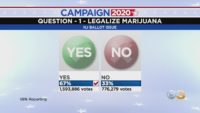
Expected to take effect January 2021, this measure legalizes the adult use of cannabis for anyone over the age of 21 along with cultivation, processing, and retail sales. The Cannabis Regulatory Commission oversees the state’s medical cannabis industry and will now be responsible for the new adult use cannabis market. However, since the ballot measure didn’t outline many details, it has left a lot of discretion up to the state’s legislature, leaving residents awaiting specifics about home-grow rules, possession limits, and other retail regulations.

Public Question 1 will apply the state sales tax of 6.625 percent. However, under this measure, the local jurisdictions are permitted to implement an additional 2 percent, so the final tax rates remain undecided. With New Jersey’s nearly 8.9 million residents, it’s projected to have adult use sales of around $375 million in just the first year and estimated to reach up to $900 million by 2024.

Mississippi: Initiative 65 & Alternative 65A

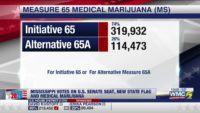
Mississippi had two competing measures on the ballot to legalize cannabis for medical purposes: Initiative 65 and Alternative 65A. Initiative 65 prevailed with 74 percent of the vote.
Between 2018 and 2019, over 228,000 Mississippi residents signed a petition that led to Initiative 65 appearing on the ballot. And by mid-2021, the legalization of medical cannabis is expected to take place. This initiative is designed to allow medical cannabis treatment for people with at least one of 22 specified qualifying conditions, including ALS, post-traumatic stress disorder (PTSD), epilepsy and Parkinson’s disease. The passage of the initiative allows those patients to possess up to 2.5 ounces of cannabis at one time with a cannabis sales tax set at the state’s regular sales rate of 7 percent.

The Mississippi Legislature proposed the competing ballot item, Alternative 65A, in what supporters of Initiative 65 believed was an effort to confuse voters. This measure restricted the use of cannabis to only terminally ill patients but did not specify qualifying conditions, possession limits or a tax rate leaving the results somewhat ambiguous with many details to be set by Mississippi Legislature. Initiative 65 easily won over the alternative with nearly 74 percent of voters approving versus just over 26 percent for Alternative 65A.

Montana: I-190 & CI-118

Montana became the 14th state to legalize adult use, passing both cannabis-related initiatives on the ballot: Initiative 190 (I-190), which creates a legal adult use cannabis market, and Constitutional Initiative 118 (CI-118), which supplements I-190, allowing the state to establish the legal purchasing, consumption or possession age of 21.

These ballot issues will go into effect beginning January 2021. Initiative I-190 legalizes the adult use and possession of up to one ounce of cannabis or 8 grams of concentrate. It also allows individuals to cultivate up to four cannabis plants and four seedlings in their residence.
Depending on the circumstances, anyone serving cannabis-related sentences for reasons no longer considered crimes under I-190 may request to be resentenced or have their conviction expunged.

Cannabis and infused product retail sales will be taxed at 20 percent. Following the Montana Department of Revenue’s deduction of administrative costs to enforce the measure, remaining tax revenue is set to be allocated to the state’s general fund, veterans programs, conservation programs, drug addiction treatment programs, and local law enforcement and healthcare workers.

South Dakota: IM-26 & CA-A

South Dakota made history as the first state to legalize both medical and adult use in the same election, moving from total prohibition to legalization in just one night. First came Initiated Measure 26 (“IM-26”), South Dakota’s medical cannabis ballot item, passing with nearly 70 percent of the vote. Then came the adult use initiative, Constitutional Amendment A (CA-A), narrowly passing with almost 54 percent of votes.
Both ballot issues are set to go into effect on July 1, 2021. IM-26 establishes a medical program for individuals with a physician-certified debilitating medical condition. Patients can possess a maximum of three ounces of cannabis and, for patients registered to cultivate at home, they will be permitted to grow up to three plants at minimum unless otherwise prescribed by their physician. However, under this measure, the Department of Health can limit the number of cannabis products each person may possess and make amendments to the conditions qualified as debilitating.

CA-A legalizes the adult use of cannabis for adults age 21 and older, allowing possession or distribution up to one ounce, and for those living in a jurisdiction with no licensed retail stores, permitting the growth of up to six cannabis plants in a private residence. This measure also requires the state to adopt hemp laws.

Marijuana sales will be taxed at 15 percent under Amendment A, estimating revenue of $29.3 million by 2025. After any revenue is used for costs associated with implementing this measure, remaining revenue will be divided between public schools and the state’s general fund. 

Arizona: Prop 207

On November 3, voter initiative Proposition 207 passed with 60 percent of the vote, and Arizona became the 13th state to legalize adult use cannabis – a movement that’s expected to make a great addition to the state’s already thriving medical cannabis program.

Also known as the Smart and Safe Act, this initiative legalizes the possession and use of cannabis for residents age 21 and older. It requires the Department of Health and Human Services to develop the rules regulating businesses in areas like licensing of retail stores, and production and cultivation facilities. Individuals will now be allowed to grow up to six plants in their private residences, with no more than 12 plants per household.

Prop 207 placed a 16 percent excise tax on cannabis sales in addition to the state’s 5.6 percent, totaling a 21.6 percent tax. It is estimated that legal cannabis will generate $300 million in revenue, which will be divided between community college districts, municipal police, sheriff and fire departments, fire districts, highway funds and a new Justice Reinvestment Fund. This initiative also allows anyone convicted of certain cannabis-related crimes like possession, consumption, cultivation or transportation to petition for the expungement of their record beginning July 2021.

Each of the initiatives above is expected to provide a wealth of job opportunities and economic growth for their state. This transition also allows those in the cannabis law and regulation industry the chance to develop and implement meaningful and accessible social equity licensing programs. In addition to day-to-day business needs, our firm will be working closely with clients as they transition from strictly medical cannabis licenses to dual licensing. We will also help new licensees build out and develop their adult-use licenses with long-term success in mind.

Cannabis has quickly become a mainstream health and wellness solution for people all across the globe. With the estimated annual national market for cannabis being $50-$60 billion, it’s believed to be a real solution to many local economic shortfalls caused by COVID-19, opening up the country and cannabis industry to a whole new world of opportunity.

Soapbox

The Cannabis Industry, After the Election

By Serge Chistov
No Comments

While the 2020 Presidential election didn’t exactly end up in a clear landslide victory for the Democrats, there is one group that did well: the cannabis industry.
The results clearly show that the expansion of cannabis is a recognizable part of today’s society across the United States. States like New Jersey, for example, partly thanks to New York and Pennsylvania—which already allow the use of medical cannabis—traffic will start to force the state of New York’s hand and that’s a big chunk of the population of the Northeast.

If the question of legalization was on the ballot, it was an issue that overwhelmingly succeeded in delivering a clear mandate. Adult use of cannabis passed handily in Arizona, Montana, South Dakota and as mentioned above, New Jersey, and was approved for medical use in Mississippi and South Dakota. 

With only 15 states remaining in the union that still outlaw the use of cannabis in any form, the new reality for the industry is here. All of these outcomes show promise as the industry’s recognition is growing. 

Election outcomes and the position of the average American on cannabis

Americans are definitely understanding, appreciating and using cannabis more and more. It is becoming a part of everyday life and this election’s results could be the tipping point that normalizes the adult use of cannabis. It is becoming more widely understood as an effective and acceptable means to help manage stress and anxiety, aid in sleep and general overall wellbeing. 

Voters in New Jersey overwhelmingly passed their adult use measure

This image of cannabis is aided by the many different forms of consumption that exist now: edibles, transdermal, nano tech, etc. No longer does a consumer have to smoke—which isn’t accepted in many circles—to get the beneficial effects of cannabis. 

Knowledge expansion is going to move these products across state lines and eventually, the federal government will have to take notice.

Do Democrats and Republicans view cannabis through the same lens?

Cannabis is and will always be state specific. Republicans in general tend to be a little bit more cautious and there are a lot of pundits who believe that as long as the Republicans control the senate, there isn’t much of a chance for federal legalization.  

President-Elect Joe Biden & Vice President-Elect Kamala Harris

There is some hope, however, that the industry will get support from the Biden administration. While President-Elect Biden has been on record as being against legalization of cannabis at a federal level, even he will eventually see that the train has left the station and momentum continues to build. In fact, Biden’s tone has changed considerably while he running for president, adding cannabis decriminalization to the Biden-Harris campaign platform.

Ultimately, how cannabis is viewed from each side of the aisle matters less than how it is viewed at the state level. 

Cannabis reform under Biden

Biden had an opportunity to legalize cannabis federally in the U.S. during the Obama administration and it didn’t happen. It’s clear that the mandates of the Biden-Harris administration are going to be overwhelmed by current issues, at least in the beginning: COVID-19, the economy and climate change, to name but three.

What will be interesting is if the Biden-Harris administration goes to greater lengths to decriminalize cannabis. For example, cannabis is still a Schedule 1 drug on the books, which puts it in the same class as heroin. Biden couldn’t unilaterally remove cannabis from all scheduling, but his government could reschedule it to reduce the implications of its use.  

This could, however, create more problems than it solves: 

“It’s generally understood, then, that rescheduling weed would blow up the marijuana industry’s existing model, of state-licensed businesses that are not pharmacies selling cannabis products, that are not Food and Drug Administration-reviewed and approved, to customers who are not medical patients.

Biden rescheduling cannabis “would only continue the state-federal conflict, and force both state regulators and businesses to completely reconfigure themselves, putting many people out of business and costing states significant time and money,” as Morgan Fox, chief spokesperson for the National Cannabis Industry Association, said in an email on Monday.” (Source) 

In reality however, there is little chance that Biden will spend any political capital that he has, particularly if the Senate remains in Republican control, dealing with the legalization of adult use cannabis.

What needs to happen for legalization to become a reality

Outside of the law, if Trump suddenly decided to legalize adult use cannabis before leaving the White House, the states would still need to agree on issues such as possession, transportation, shipment and taxation.  

It’s clear that further normalization of cannabis use is required—which will likely take a good couple of years—in order for it to become as understood and as simple as wine, liquor or cigarettes.

Beyond that, it’s Congress that dictated that cannabis be illegal at the federal level and it will have to be Congress that makes the decision to change that. Even the Supreme Court has been reluctant to get involved in the question, believing this to be an issue that should be dealt within the House.

What does all of this mean for investment in the cannabis industry?

Cannabis should be part of most long-term investors’ portfolios. Like a group of stocks in a healthy market with the right balance sheets, cannabis is an expanding industry and growth is there.  

Whether or not this is specifically the right time to invest, it’s always important to evaluate each stock or each company individually, from the point of view of the merits of the investment and investment objectives, as well as risk tolerance perspectives.  

There isn’t any unique or special place to buy into the cannabis industry, unless it is connected to some new real estate or other opportunity that is COVID-19 related. This moment in time isn’t really any different from any other when it comes to the opportunity to own some cannabis stocks. It’s always a good time.

The short term returns of this market shouldn’t be speculated upon. There are just way more factors than the fundamentals of a company that will affect the short-term play. The country is in a transition of power, in addition to much international change taking place that can also contribute to returns in the short term, making speculation unhelpful.

The cannabis market in 2021

The cannabis industry is likely to continue to expand and grow with the select companies acquiring more and more and getting back to their cash flow. Some companies will slowly be going out of business and/or will be acquired by others going into a certain consolidation period of time. Whatever the outcomes in specific tourism dominated markets, the industry as a whole can really go in one direction. 

Trichome Analytical Accredited, DEA-Registered

By Cannabis Industry Journal Staff
No Comments

In a press release sent out this week, Trichome Analytical, based in Mount Laurel, New Jersey, announced two new developments for their business: They have achieved ISO 17025:2017 accreditation and they are officially registered with the DEA for hemp compliance testing.

The press release also mentions their collaboration with Shimadzu, who supplies 80% of the lab’s equipment and supports the Trichome’s operations with technical guidance.

For the hemp industry, pre-harvest testing for THC levels is a requirement and labs are required to get registered with the DEA in order to perform that testing.

These announcements are somewhat timely, given the results of the election. Voters in New Jersey approved adult use cannabis legalization just last week.