
Tag Archives: consumer

Luxembourg Announces Plans For Two Year Transition To Recreational Use

By Marguerite Arnold
No Comments

For those who have been watching, Luxembourg has played an inordinately influential role on the entire cannabis discussion in Europe for the past year.

This summer, the country announced that it had plans to implement recreational use (for residents only) within two years.

Last summer, the country not only changed its medical use policy as the Deutsche Börse tried to halt the clearances of cannabis trades made in Germany (Luxembourg is the place where the stock trades clear), but set a five-year mandate and timeframe as well.

This new announcement certainly is an attempt to signal at any rate, that the government is not going to run out the clock. But, realistically, with the extra six months already in front of the start date necessary to enshrine the legislation, plus whatever complications arise after that, Luxembourg could initiate its market on January 1, 2022.

Or, as is more likely, it could not. Including rolling delays caused by everything from EU objection and internal logistical hurdles of other kinds to lack of access to product.

Refom Redux?

Will Luxembourg be the “Colorado of Europe?” Probably not.

Will Luxembourg “be the next Canada?” Probably not either. However it is also worth noting that legislators and lawmakers from Luxembourg have drawn recent inspiration via numerous fact finding trips to Canada of late.

It is also worth remembering that even Canada’s great, green, “well-oiled” cannabis machine delayed its recreational market start by months last year. And that was a scenario already a generation in the making.

Further, as some would argue this summer, certainly post CannTrust, the relative “speed” with which Canada embraced its recreational market is again being criticized for not only being precipitous but a direct cause of problems in financial compliance and tracking.

The lack of regulatory muster, in other words, that even allowed a CannTrust to happen, will not fly in Europe. Certainly not in a country where regulations, including that of the European kind, are decided upon (the other center of EU regmaking is of course Brussels).

For that reason, no matter how exciting the news to an industry fighting an uphill battle on medical efficacy, there is plenty of room to temper enthusiasm.

Luxembourg is not going to be “just like” anywhere seen so far. The needle has moved. And the conversation is morphing if not moving on.

One of the most intriguing aspects of all of this, of course, is how insurers will treat the entire discussion.

Holland Round 2?

Here is what Luxembourg also won’t be. A new tourist mecca for out of towners. At least according to the current discussion. How the government will prevent that, is of course unclear. The same grey areas exist in the law behind Barcelona’s social clubs. The Dutch have tried for most of this decade to discourage this – and have largely failed.

What it very well might be, however, is a catalyst for change.  A before and after moment if you will.
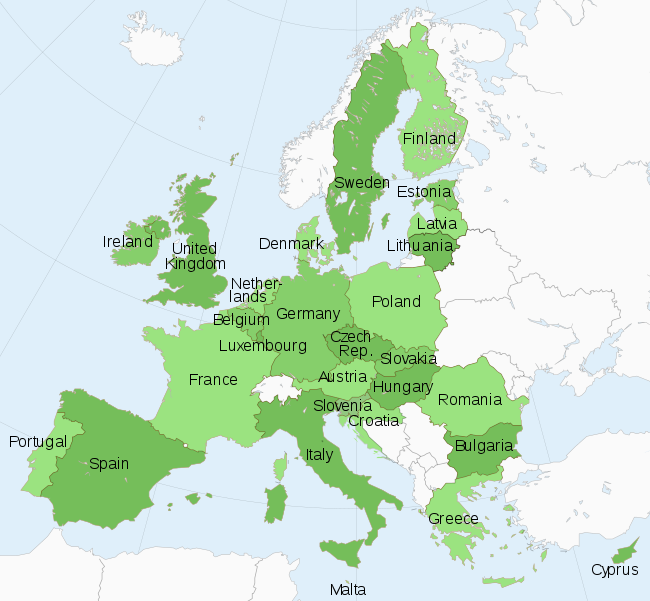
european union statesThe Swiss are moving ahead with recreational and medical trials. The British, whatever their relationship with the world after Halloween, are too.

Luxembourg, whatever it ends up being, in other words, is well timed, if nothing else, to be a reference point if not conversation starter about real reform.

Including of course, medical impact, if not, beyond that, efficacy.

Here is where Luxembourg might in fact, be much closer to the Dutch experiment than any other place. Despite the fact the country has had a coffee shop culture for over 30 years, and Dutch medical cannabis is exported to countries all over the world, here is what is missing in Holland: Medical health insurance coverage for patients. In fact, Dutch insurers, en masse, stopped reimbursing the drug as soon as Germany changed its insurance rules in March 2017.

If that is on the agenda for Luxembourg, in other words, no matter how exciting a timeline for recreational is anywhere in Europe, this will be a pyrrhic victory indeed.

Choosing Filling Machinery for CBD and THC Products

By Michelle Pudlo
4 Comments

As the legalization of cannabis continues to spread across the U.S., both THC and CBD products are rapidly growing in popularity, and we can expect that popularity to increase in the coming years. The cannabis industry alone is expected to account for nearly $16.9 billion in revenue this year.

Subsequently, there is a rising need among infused product manufacturers for sufficient filling machinery for CBD and THC products. These products, including CBD oil cartridges, require filling equipment that can provide quick turnaround, detailed parts and simple changeover and cleanup, among other factors. Let’s go over the different types of filling machinery used for these products.

Vial Filling Machines

For small vial packages made of glass, metal or plastic, vial filling machines are available. Often used for a variety of pharmaceutical products, they’re now suitable for filling liquid THC and CBD oil. Vial fillers are also often suitable for filling liquid products of varying viscosity levels, with either the installation of peristaltic pumps or volumetric filling stations.

Rotary Fillers

Rotary fillers can also fill containers at high speeds and with quick turnaround, and are ideal for filling various types and sizes of containers made of materials such as plastic, metal or glass. A good rotary filler will be able to meet the demands of high-speed environments consistently and with accuracy.

Fixed or Variable Volume Cartridge Filling ToolsAs the industry develops more demand for high-quality filling and other types of equipment, more machines are likely to be manufactured or configured specifically with these types of products in mind.

Fixed and variable volume cartridge filling tools often feature a single-handed operation and are used to rapidly fill cartridges for THC and CBD oils used for vaping. With fixed volume fillers, you’ll be able to designate a specific and consistent volume, while variable volume models allow for different fill volumes for applications requiring versatility.

Automatic Fillers

Automatic filling machines will be able to fill a large number of products at varying speed settings, without the need for manual operation. These machines can fill many different types of products with consistency that helps maintain optimal productivity. As with other fillers, automatic fillers are often customizable in a wide variety of configurations.

Filling Syringes

For concentrates, filling syringes are ideal in many cases. Many patients are in need of a specific dosage of oil, and a syringe can allow for accuracy through the inclusion of measurement indicators. Many dispensaries sell syringe units, so this type of packaging method is likely to continue to rise in popularity.

Other Types of Equipment for Liquid Cannabis Packaging

In addition to reliable filling systems, manufacturers should make sure every other aspect of their packaging lines is covered with high-quality equipment. Facilities will require a variety of conveyors to transport products from one end of the line to the other, cleaners to ensure that bottles or other containers are clean prior to filling, and labelers to apply custom labels to packaging, among other machinery.

With one or more of these types of liquid fillers in a facility, companies can maintain accuracy and efficiency throughout their operations when filling CBD or THC products. As the industry develops more demand for high-quality filling and other types of equipment, more machines are likely to be manufactured or configured specifically with these types of products in mind.

european union states

European Cannabis Summer Roundup

By Marguerite Arnold
2 Comments
european union states

There have been many significant developments this summer in Europe that will shape the debate about reform and the legal cannabis market that trails it, for at least the next year. Here is Cannabis Industry Journal’sroundup of our biggest events and trends over the summer so far.

Medical Sales Across Europe Are Slow

In Germany, it is easy to maintain a fairly ballpark understanding of patient count. Find the number of prescriptions issued in the trade press and divide by four. Everywhere else, however, the true realization of what is going on across Europe is slowly starting to hit everyone outside producers wanting to know what is going on.Establishing territorial footprint has been what the race in Europe has been all about since mid 2016 for the Canadian LPs so far.

This is going to start to hit stock prices soon beyond the wobbles already evident in the market thanks to this summer’s breaking industry scandals (CannTrust, lawsuits in every direction) to lack of financial performance for investors (Bruce Linton’s firing from Canopy). It is becoming increasingly obvious to everyone that just because a public Canadian company issues a press release about a (cultivation, import, export or processing) “event” does not mean anything other than a slew of social media telling everyone about it. The frustration with “forward looking” statements has hit European investors big time, from the retail to the institutional kind.

Despite a lot of press releases in other words, which clearly show market penetration, there is not much else going on from the sales perspective when it comes to growing those first numbers. Establishing territorial footprint has been what the race in Europe has been all about since mid 2016 for the Canadian LPs so far.

However, from an industry, if not investor and of course, patient perspective, patient numbers are what really count. And unlike Canada, where patients remain the biggest existential threat to the industry, the same industry may not sign them up or ship to them directly in Europe. For several reasons.

Germany is still the only country in Europe with a significant patient count, and while growing, slowly, is still a group where 2/3 of patients obtain dronabinol. It should shock nobody that the most accurate patient count right now in the UK is hovering somewhere under 20. For the whole country, 9 months after the law changed. While the peculiarities of Brexit are also in the room, this is so far, compared to U.S. state markets, Canada, Israel and Germany before it, pathetic.

The Industry Says It Supports Patients…But Does It?

There are several levels to this debate which start with the still appallingly high level of price gouging in the room. 2019 and certainly this summer is a time when the Canadian companies are clearly learning that European governments negotiate for drugs in bulk. Even (and especially in the near future) this one. See the difference between the EU and the US.

UKflagThe level of industry promotion vs patient access recently reached a new nadir this summer when it emerged that despite a great deal of interest, more people showed up (by far) to the week-long cannabis industry conference (European Cannabis Week in London in June) than there are legitimate patients in the UK right now.

That is about to change, but so far, industry support for trials has not materialized. When the various trials now being planned do get going, look for new battles over a couple of issues, starting with patient access to and control of their medical data.

Novel Food: The Regulation That Keeps On Giving

The issues involved in this discussion are complex, certainly by North American standards. This of course starts with the fact that there is no such regulation on the continent. But also rapidly bleeds into puncturing the amount of hot air entrepreneurialism there is in the room.

The structure of cannabidiol (CBD), one of 400 active compounds found in cannabis.

The CBD market in Europe that everyone got so excited about in investor releases, in other words, is basically dead for the time being. Yes, there are a few smart niche players weaving around the regs, but it is a full-time job.

Here is the reality: Since Christmas last year when Austria put the kabosh on all products containing the cannabinoid CBD, several major countries have weighed in on the issue. It is not going away. And it is here to stay, even after recreational.

Political Advocacy Is Stirring In Europe

Whether it is the vagaries of Brexit, the discussion across the continent about how the EU will work together, right wing populist screeds about “too much regulation” or national elections, cannabis is in the room from now until the end of at least 2021 as one of the hottest global political issues under the sun. That includes of course, a discussion about global climate change, sourcing, pricing and resource use so far unaddressed but rapidly looming.

german flag
Photo: Ian McWilliams, Flickr

Further, patients are still having a voice – whether it is making sure that their children obtain imported CBD, or that they can obtain their own THC prescriptions without going bankrupt or having to solicit in the black market.

Cultivation Bids Looming?

One of the surest signs yet that the German authorities at any rate, are in no mood to solve the cultivation issues still on the ground and the bid itself, is that the government just renegotiated, for the second time since last fall, the amount of medical cannabis to come over the Dutch-German border. Who is going to go next? With the Italian hybrid now done and dusted, Poland is likely to be next. And when that happens, expect a raft of similar initiatives across Europe. But probably not until then.

And in the meantime? Distributors are looking for product. The demand is clearly there. But across Europe this summer there is a clear sense that the hype machine that has been the industry’s mouthpiece is at minimum overenthusiastic about the bottom-line details behind it all.

Poland Pushes Forward On Reform

By Marguerite Arnold
1 Comment

Given all the fuss about newly opened markets in Europe of late (see all the hullabaloo recently in the UK), it would be remiss for anyone in the industry to forget about Poland.

The Eastern European country that shares a large part of its border (if not recent history and long cultural influence) with Deutschland has been proceeding slowly into the cannabis space for the last couple of years.

There are a couple of similarities (and differences too) about the market development in the country to its Teutonic sister to the West as well as the emerging fight over access that is sparking patient revolutions all over the continent now.

A Brief History Of Polish Cannabis Reform

Like other culturally conservative places (see state reform in the United States in places like Georgia), Poland has moved towards reform in a way that may make political sense, but has left patients in much the same boat as British ones. Reform began happening without access as of late 2017.

Polish Flags Image: włodi, Flickr

Poland, or so the joke goes in Germany, is Deutschland’s “trailing sister,” on most things, and cannabis reform in some ways, is absolutely following that pattern. But it is not exactly analogous, starting with patient access. In fact, the first opening of the market did not touch import much less cultivation. It only authorized patients to cross borders in search of their medication. No matter the high cost involved. And of course, the still dodgy proposition of returning across a border with a highly stigmatized narcotic product.

Fast forward a year? Many of the major Canadian cannabis companies had achieved some sort of import (mostly of small amounts of the drug and mostly to single hospitals). See the announcement of Aurora last October on the same day that the Polish government announced a change in the law that they had imported in bulk to a hospital.

But what is going on now, particularly with a growth in acceptance of the medicinal impact of the drug across Europe? And will the Poles, like the Germans, launch a domestic cultivation bid anytime in the near future? Not to mention learn the lessons that so far have continued to stymie German domestic cultivation as well as frustrate a smooth supply chain if not operations on the ground?

The Market Is Coalescing

According to Andrew Makatrewicz de Roy, managing director of Bearstone Global, a market research and investigative firm moving into the cannabis space, Poland has one of the more progressive laws in Europe, but still is lagging behind other countries in terms of organisation and a political lobbying movement.

“There is a lot of vibrancy in the market, but we want to make sure that there is an initial forum where the market can meet and discuss the industry here”.There are also a few (low volume) transactions taking place.

However, as in other places (see the UK in particular), there is a lot of heat if no fire yet behind the scenes. Both individuals and companies are starting to appear who will help build a wider ecosystem in the cannabis space.

As in other countries in Europe, despite the market potential, there is still a general political lag in further development of the industry. Perhaps because of complications in the German market. And almost certainly because of complications with German reform and its own cultivation bid. There have been rumours of a Polish bid circulating for at least a year. Licensed cultivation is beginning to take place.

In response, Makatrewicz de Roy is moving to establish one of the first industry conferences in the country in October. In late July, he also held the first precursor to the same – an online streamed event that attracted 70 major thought leaders from the industry including many members of the political class, producers and distributors (including some of the biggest Canadian ones), doctors and patients.

“We want to build an ecosystem,” de Roy said. “There is a lot of vibrancy in the market, but we want to make sure that there is an initial forum where the market can meet and discuss the industry here”.

CBD Health Claims Spur FDA Warning & Product Seizure Threats

By Greg Boulos
3 Comments

The 2018 Farm Bill gave cannabis businesses around the country a legal path to market and sell hemp and hemp-derived products. Despite the groundbreaking law, several regulatory uncertainties remain. The FDA has been a source of many of those uncertainties, but recent action suggests that the agency plans to impose heavy burdens on companies selling CBD products that claim to provide health benefits. Recently, the FDA held a public hearing during which it signaled that health claims associated with cannabis-related products was a primary concern. Congress subsequently pressured the FDA to develop a regulatory framework for the cannabis industry and the agency announced that it was expediting its efforts to do so, promising an update on its progress by this fall.

FDAThen, on July 22, the agency issued a warning letter to Curaleaf regarding its claims that several of its products provide specific health benefits. The agency included a threat to seize Curaleaf’s products if the issues raised in the letter are not resolved. How the FDA ultimately regulates cannabis products going forward will have a significant impact on the industry as a whole. Indeed, the agency has significant powers over product manufacturers, including the ability to seize products through the U.S. Marshalls. This article will delve into the specifics on the FDA’s warning letter and address how manufacturers can limit the risks associated with making health-related claims.  

The FDA’s Warning: Beware of “Unsubstantiated” Health Claims

The FDA’s letter explained that it determined several of Curaleaf’s CBD products “are unapproved new drugs sold in violation of sections 505(a) and 301(d) of the Federal Food, Drug, and Cosmetic Act (FDCA).” The letter goes on to say that one of Curaleaf’s pet CBD products “are unapproved new animal drugs that are unsafe.” Curaleaf has 15 days to respond to the agency’s letter. The agency cited the following health claims as problematic, among others.

  • “CBD has been demonstrated to have properties that counteract the growth of [and/or] spread of cancer.”
  • “CBD was effective in killing human breast cancer cells.”
  • “CBD has also been shown to be effective in treating Parkinson’s disease.”
  • “CBD has been linked to the effective treatment of Alzheimer’s disease ….”
  • “CBD is being adopted more and more as a natural alternative to pharmaceutical-grade treatments for depression and anxiety.”
  • “CBD can also be used in conjunction with opioid medications, and a number of studies have demonstrated that CBD can in fact reduce the severity of opioid-related withdrawal and lessen the buildup of tolerance.”
  • “CBD oil is becoming a popular, all-natural source of relief used to address the symptoms of many common conditions, such as chronic pain, anxiety … ADHD.”
  • “What are the benefits of CBD oil? …. Some of the most researched and well-supported hemp oil uses include …. Anxiety, depression, post-traumatic stress disorders, and even schizophrenia …. Chronic pain from fibromyalgia, slipped spinal discs . . . Eating disorders and addiction . . ..”
  • “[V]ets will prescribe puppy Xanax to pet owners which can help in certain instances but is not necessarily a desirable medication to give your dog continually. Whereas CBD oil is natural and offers similar results without the use of chemicals.”
  • “For dogs experiencing pain, spasms, anxiety, nausea or inflammation often associated with cancer treatments, CBD (aka cannabidiol) may be a source of much-needed relief.”

The letter explicitly warned, “Failure to correct the violations promptly may result in legal action, including product seizure and injunction.” The FDA has a history of seizing products it deems non-compliant with its regulations. Recently, the U.S. Marshals, at the direction of the FDA, seized 300,000 units of a cosmetic company’s product. The impact of such a seizure on a business’ profits and operations is staggering. FDA action also has a direct impact on publicly traded cannabis companies’ stock price. When news of the FDA’s Curaleaf letter circulated, Curaleaf shares plunged 8%.

Balancing Regulatory Risk and Business Objectives

While the FDA’s letter appears to create a new risk for the cannabis industry, the stock market’s reaction is arguably overblown. The fact that the FDA would question a product’s ability to kill cancer cells is not surprising. I am not familiar with Curaleaf’s research efforts and it is not my goal to pass judgment on their claims. Rather, my point is that manufacturers need to make sure legitimate scientific studies underpin all of their health claims, regardless of the industry. Manufacturers will never be able to avoid regulatory scrutiny or even litigation regarding their health claims entirely. Instead, cannabis companies should take steps to ensure that they can credibly respond to regulatory scrutiny or present strong defenses in potential litigation. Establishing a robust research department is a start. But manufacturers must develop institutional knowledge of the most cutting-edge research regarding their products.Developing in-depth institutional knowledge regarding the state-of-the-art scientific research on your product is a must. 

Manufacturers that market products primarily for their health benefits should consider working with clinical researchers to study their products. There should be written policies and guidelines, as well as employee training, for conducting these studies and dealing with researchers in order to protect the quality of the study. For purposes of mitigating regulatory and litigation risks, the perceived quality of these studies can be just as important as their actual quality. Regulators and plaintiff’s attorneys can easily misinterpret (sometimes intentionally) written communications between a manufacturer and researcher in ways that suggests a particular study was outcome-driven and not a legitimate scientific undertaking. Manufacturers should consult with attorneys experienced in defending product liability and mass tort litigation so that their labeling and research practices are based on historical examples of successful (and sometimes, unsuccessful) product manufacturers.

Key Takeaways

Manufacturing consumer products comes with substantial litigation and regulatory risks. There are several historical and current examples of product labels, health claims, and warnings leading to thousands of lawsuits filed simultaneously across the country against a single manufacturer. Fees associated with defending against even meritless claims can force a manufacturer into bankruptcy. The regulatory risks can also have devastating effects on the day-to-day business operations of any manufacturer. Eliminating these risks is impossible, but addressing them upfront before a product launch, regulatory crackdown, or lawsuit is considerably less expensive than dealing with costly litigation or government seizure of entire inventories. Developing in-depth institutional knowledge regarding the state-of-the-art scientific research on your product is a must. Also, consider working with a clinical researcher to support any claimed health benefits or even discover new health benefits associated with your product. Finally, consult a lawyer with experience in product liability and mass tort litigation to strengthen your policies and procedures regarding research, develop credible health claims, and craft strong warnings.

Sweden Joins Italy In Path To Defining CBD Oil Regulations

By Marguerite Arnold
2 Comments

The highest court in Sweden has weighed in on the novel food, and the darling of the Swiss marketplace, CBD conversation. Further, it has done so in a move that seems predetermined to push the so-far escalating novel food debate EU-wide. Along, of course, with what constitutes “narcotic” cannabis.

Namely, Sweden’s highest court ruled in June that CBD oil with any concentration of THC falls under the narcotic jurisdiction.

Sound confusing? Welcome to the world of every CBD producer and purveyor on the “right”  side of the Atlantic.

Beyond The Lingo and Legal Mumbo Jumbo

When one follows the logic, there is one, hidden in the Swedish meatball of careful legal wording. Here is a translation, more or less of what the court intended.

The first is that the Swedes, along with the Italians (and expect this attitude to be reflected all over Europe) accept that cannabidiol when it comes from hemp, if not CBD oil derived from the same, generally, is excluded from the definition of cannabis (as a narcotic). Therefore it is not a narcotic drug.

However, according to the court, the loose definitions of what “CBD oil” is both legally and in the marketplace, no longer applies if the plant has been converted into a preparation containing THC. This is a clear shot across the bow of the “Cannabis Lite” movement that has been so popular across the continent for the last year or so and has absolutely electrified certain regions (see not only Switzerland but the UK and Spain).

This has added to the sky-high evaluations of the cannabis industry (or even the CBD part of it) in certain industry predictions, rosy scenarios and forward-looking statements.

However, in a nod to reality, the court also recognized that there is an exemption for trace amounts of CBD in the current frameworks, although it is indeterminate. In other words, this is a move to force regulators to determine what trace levels of THC are permitted. And further, to force regulation and licencing of the so-far, fairly free-wheeling industry that hoped, much like Holland, to establish itself in the grey spaces between the regulatory schematic of Europe.

Just some of the many CBD products on the market today.

No dice. See Holland of late. But also see Italy, Austria and Germany.

For those who still held out a vague dream of hope that this whole issue was going to go away, or get swept under the carpet of anti-regulatory Brexit mania (in the British case), think again.

In the Swedish situation, much like the Italian CBD caper, the individual at the heart of the court case was a man who escaped a minor drug charge for possession of CBD oil. However, the message is clear: Large scale distribution of CBD oil with “undeterminable” levels of THC (essentially all of it in the market until the rules are set), is courting a criminal drugs charge.

Look for licensing definitions soon.

What Does This Say About The CBD Future In Europe?

Much of this debate is also caught up in larger issues, namely labelling. The British, for example, have just seen recalls at some of the largest supermarkets in the country because of the same. It is a hot topic in several places.

The structure of cannabidiol (CBD), one of 400 active compounds found in cannabis.

Europeans, in general, and this includes the British, are generally also horrified at how Americans in particular, consume food and other products exposed to chemicals they know are toxic. However common chlorinated chicken is in the U.S., for example, this is a discussion as toxic to all Europeans, including the British, as well, chemically treated anything.

This is also a reflection of the much “greener” lifestyle Europeans aspire to lead (even with bizarre gross-outs like “fatbergs” in the Victorian recesses of London sewers). Even if they have not managed it yet, here. Climate change denial, especially in mostly air-conditioner free Europe, and especially this summer, is a rare concept indeed.

The novel food issue where it crosses with cannabis, in other words, has just popped up again, in Sweden. And given its proximity to not only recent legal decisions on the same, especially by their neighbors, if not on the calendar, the industry and all those who hope to chart its projections if not successfully surf its market vagaries, need to take note if not adjust accordingly.

FDAlogo

FDA Sends Warning Letters to Curaleaf

By Aaron G. Biros
No Comments
FDAlogo

Curaleaf Hemp, a well-known and publicly traded cannabis company, made headlines this week for all the wrong reasons. The US Food & Drug Administration (FDA) sent a warning letter to Curaleaf President Joseph Lusardi for making unsubstantiated health claims and for misbranding their products as drugs.

FDAThe health claims in question appear to be removed from their website and social media accounts. In the warning letter, the FDA cites numerous claims made on Curaleaf’s website, Twitter and Facebook accounts. You can check out the health claims they found here, but it’s essentially a list of instances where Curaleaf said their products can be used to treat specific conditions. They claimed their CBD vape pen can be used for chronic pain and said another one of their products is a “[S]oothing tincture for chronic pain.”

For most of the health claims the FDA cited, it appeared they were articles or blog posts on Curaleaf’s website. Take a look at some examples of statements that should not be posted on a CBD products website (taken from the warning letter found here):

  • “CBD has also been shown to be effective in treating Parkinson’s disease.”
  • “CBD has been linked to the effective treatment of Alzheimer’s disease . . ..”
  • “CBD is being adopted more and more as a natural alternative to pharmaceutical-grade treatments for depression and anxiety.”
  • “CBD can also be used in conjunction with opioid medications, and a number of studies have demonstrated that CBD can in fact reduce the severity of opioid-related withdrawal and lessen the buildup of tolerance.”
  • “CBD has been demonstrated to have properties that counteract the growth of spread of cancer.”
  • “CBD was effective in killing human breast cancer cells.”
  • “Heart disease is one of the leading causes of death in the United States each year, and CBD does a number of things to deter it. The two most important of these are the ability to lower blood pressure, and the ability to promote good cholesterol and lower bad cholesterol.”

While the FDA is expediting their push to roll out hemp and CBD regulations, companies should still be cautious when marketing their products for interstate commerce. Dr. Amy Abernathy, Principal Deputy Commissioner and Acting CIO, said in a series of tweets earlier this month that the FDA is eager to get to work and plans to report on their progress by the end of summer. The public hearing they held back in May helped jumpstart their efforts to begin investigating regulation of the market.

Still, companies need to be careful when marketing CBD products. The FDA has made it abundantly clear in a lot of warning letters that drug claims are not allowed. Here are two articles that give advice on how companies should proceed with marketing and how to go about properly labeling their products.

Sustainable Plastic Packaging Options for Your Cannabis Products

By Danielle Antos
7 Comments

A large part of your company’s brand image depends on the packaging that you use for your cannabis product. The product packaging creates a critical first impression in a potential customer’s mind because it is the first thing they see. While the primary function of any cannabis packaging is to contain, protect and identify your products, it is a reflection of your company in the eyes of the consumer.

For all types of businesses across the US, sustainability has become an important component for success. It is increasingly common for companies to include sustainability efforts in their strategic plan. Are you including a sustainability component in your cannabis business’ growth plan? Are your packaging suppliers also taking sustainability seriously? More and more, consumers are eager to purchase cannabis products that are packaged thoughtfully, with the environment in mind. If you are using or thinking about using plastic bottles and closures for your cannabis products, you now have options that are produced from sustainable and/or renewable resources. Incorporating sustainable elements into your cannabis packaging may not only be good for the environment, but it may also be good for your brand.

Consider Alternative Resins

Traditionally, polyethylene produced from fossil fuels (such as oil or natural gas), has been used to manufacture HDPE (high density polyethylene) bottles and closures. However, polyethylene produced from ethanol made from sustainable sources like sugarcane (commonly known as Bioresin) are becoming more common.

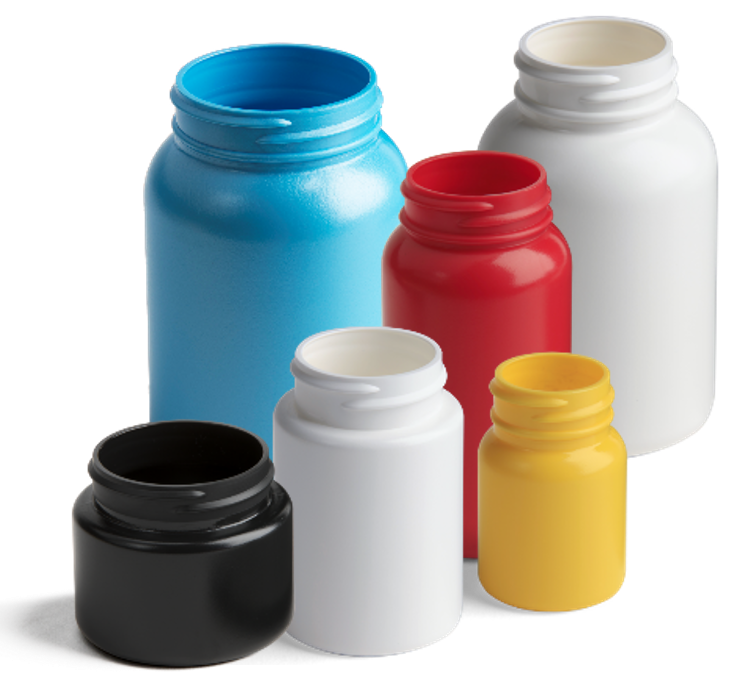
HDPE bottles produced with Bioresin.

Unlike fossil fuel resources which are finite, sustainable resources like sugarcane are renewable – plants can be grown every year. For instance, a benefit of sugarcane is that it captures and fixes carbon dioxide from the atmosphere every growth cycle. As a result, production of ethanol-based polyethylene contributes to the reduction of greenhouse gas emissions when compared to conventional polyethylene made from fossil fuels, while still exhibiting the same chemical and physical properties as conventional polyethylene. Although polyethylene made from sugarcane is not biodegradable, it can be recycled.

Switching to a plastic bottle that is made from ethanol derived from renewable resources is a great way for cannabis companies to take positive climate change action and help reduce their carbon footprint.

For instance, for every one ton of Bioresin used, approximately 3.1 tons of carbon dioxide is captured from the atmosphere on a cradle-to-gate basis. Changing from a petrochemical-derived polyethylene bottle to a bottle using resins made from renewable resources can be as seamless as approving an alternate material – the bottles look the same. Ensure that your plastic bottle manufacturer is using raw materials that pass FDA and ASTM tests. This is one way to help reverse the trend of global warming due to increasing levels of carbon dioxide (CO2) in our atmosphere.

PET bottles derived from 100% recycled post-consumer material.

Another option is to use bottles manufactured with recycled PET (polyethylene terephthalate). Consisting of resin derived from 100% recycled post-consumer material, it can be used over and over. This is an excellent choice because it helps keep plastic waste to a minimum. Regardless of the resin you select, look for one that is FDA approved for food contact.

Consider Alternative Manufacturing Processes

Flame Treatment Elimination

When talking about plastic bottle manufacturing, an easy solution to saving fossil fuels is eliminating the flame treatment in the manufacturing process. Historically, this process was required to allow some water-based adhesives, inks, and other coatings to bond with HDPE (high density polyethylene) and PP (polypropylene) bottles. Today, pressure-sensitive and shrink labels make this process unnecessary. Opt out and conserve natural gas. For instance, for every 5 million bottles not flamed approximately 3 metric tons of CO2is eliminated. This is an easy way to reduce the carbon footprint. Ask your cannabis packaging manufacturer if eliminating this process is an option.

Source Reduction (Right-Weighting)

When considering what type and style of bottle you want to use for your cannabis product, keep in mind that the same bottle may be able to be manufactured with less plastic. A bottle with excess plastic may be unnecessary and can result in wasted plastic or added costs. On the other hand, a bottle with too little plastic may be too thin to hold up to filling lines or may deform after product is filled. Why use a bottle that has more plastic than you actually need for your product when a lesser option may be available? This could save you money, avoid problems on your filling lines, and help you save on your bottom line. In addition, this will also help limit the amount of natural resources being used in production.

Convert to Plastic Pallets

If you are purchasing bottles in large quantities and your supplier ships on pallets, consider asking about plastic pallets. Reusable plastic pallets last longer than wood pallets, eliminate pallet moisture and improve safety in handling. They also reduce the use of raw materials in the pallet manufacturing process (natural gas, metal, forests, etc.) aiding in efforts towards Zero Net Deforestation. And, returnable plastic pallets provide savings over the long term.

If You Don’t Know, Ask Your Cannabis Packaging Partner

It is important to find out if your plastic packaging partner offers alternative resins that are produced from renewable sources or recycled plastics. It is also prudent to partner with a company that is concerned about the impact their business has on the planet. Are they committed to sustainability? And, are they eliminating processes that negatively affect their carbon footprint? What services can they provide that help you do your part?

When you opt to use sustainably produced plastic bottles and closures for your cannabis products, you take an important step to help ensure a viable future for the planet. In a competitive market, this can improve the customer’s impression of your brand, increase consumer confidence and help grow your bottom line. Not only will you appeal to the ever-growing number of consumers who are environmentally-conscience, you will rest easy knowing that your company is taking action to ensure a sustainable future.

margueriteICBC

The Face Of Cannabis Education In Europe

By Marguerite Arnold
No Comments
margueriteICBC

More than a few cannabis “education companies” – mostly from Canada and the U.S. but some with Israeli ties, plus German and British efforts have targeted Europe as the next logical expansion plan in their global roadmap.

These include most recently Cannvas Medtech Inc., and several initiatives funded by Canopy Growth, including teaching children about the drug. It also includes training programs for frontline staff, launched by Organigram (although in this case it appears to be geared towards “brand education.”)

There are also doctor training programs launching in the UK.

In Germany, there are several efforts underway, helmed by both doctors and cannabis advocates generally, in several cities around the country.

But how effective is all of this “education” in both preventing illegal use, and promoting legitimate sales?

Particularly if such “education” platforms are exported from a foreign market for use in Europe?Canopy_Growth_Corporation_logo

Education Is Desperately Needed, But So Is Channel Penetration

Nobody is arguing that “education,” as well as trials and more information for payers and doctors are not required. The problem is that some education is more effective than other campaigns. And most of the talk in most places is more a discussion of the need for further regulatory reform, more trials and more investigation.

That has to get paid for somewhere.

That, at least in Europe is also tricky, as both early educational movers Weedmaps and Leafly have both found out, especially in medical only markets in the EU. Why? There are also highly limited opportunities for advertising either a drug, or to doctors.

Different Regulatory Environments Cause Bigger Issues

Even in Canada and the United States, there is an ecosystem of supplying the demand that has very much grown up customized by the strange paths to reform if not the first mover discussion.

That is not going to be the case in Europe, which in effect creates a brand-new ecosystem to educate, with new players, and every ecosystem participant group has a different kind of educational needs.

Here is one example of where this shows up. So far, in most countries, doctors are still highly resistant to prescribing the drug. Nurses, on the other hand, in both the United States and Canada at least, have proven to be a much more reliable source of converts for the cannabis cause. That approach of course is not possible in places like Germany where only doctors may issue prescriptions, including of the cannabis (and narcotic) kind.

european union statesAccess issues also play a big role in just about every country- from cost to privacy. And on the privacy front, it is not just foreigners who are getting used to new rules. So are German doctors.

The pharmacy discussion is also very much in the room – and this is not “just like” approaching a “dispensary” from North America. They are regulated chemists. Which causes a whole new set of issues and a serious need for new kinds of educational materials.

In Germany, for example, pharmacists are being recruited and trained by not only staff recruiters specializing in the same, but also sent on special training courses funded by the big Canadian companies (Tilray being the noticeable one recently). The brick and mortar vs. online discussion is also a big topic across Europe. Notably, where it is allowed and where it is, as in Deutschland, verboten.

And, of course, the big green giant in the room everywhere in Europe, in particular, is payer/insurance approvals, which are based on a kind of education called proven medical efficacy.

And that, so far, is in markedly short supply.

In the UK, it is so far the main reason that NHS patients (for example) cannot access coverage for the drug to treat conditions like chronic pain.

In the meantime, the most widespread “education” that is going on, is still mostly at the patient level. Especially when patients sue their insurers, or lobby doctors to prescribe.

The cannabis industry may be maturing, in other words, to be able to answer these questions – but there is also clearly a long way to go.

How Half-Baked Labels Can Destroy a Cannabis Business

By Greg Boulos
2 Comments

Cannabis manufacturers and consumers are currently in a honeymoon phase. Consumers love their CBD gummies and believe wholeheartedly in the benefits of cannabis-related products. But it is only a matter of time before industrious plaintiffs’ lawyers take a close look at ways to attack manufacturers. We know from other industries that product labels tend to be the entry point for plaintiff lawyers eyeing manufacturers and looking for easy targets. Any company in the business of manufacturing cannabis-related products needs to devote significant time and resources to developing labels that minimize the risk of bet-the-company litigation down the road. Most notably, manufacturers need to think through whether there are any adverse effects associated with their products of which consumers should be aware. Also, manufacturers must scrutinize any “all natural” or “organic” claims on their labels to ensure that they are not misleading consumers.

Failure to Warn of Potential Detrimental Effects

Most manufacturers are well aware of state mandated labels for cannabis products. And, based on the recent FDA public hearing on cannabis, the industry will likely see FDA labeling requirements in the near future. However, simply complying with these requirements does not insulate a manufacturer from litigation, particularly failure to warn claims. One example, dating back to the 1970s, relates to OSHA’s regulation of asbestos-containing products as it became more and more clear that certain types of asbestos could cause a rare form of cancer, mesothelioma. Among other things, OSHA required manufacturers of asbestos-containing products to add a warning to all packaging. The mandated warning included very specific language. Manufacturers largely complied and added the OSHA-mandated label to their product packaging.

FDAFast-forward 40 years and today, several of those manufacturers are now bankrupt due to litigation based on their alleged failure to warn consumers that asbestos can cause cancer. Plaintiffs have been successful in bringing these claims because the OSHA label only warned that asbestos could cause harm, but it did not mention the word cancer. Some juries have found that the language in the warning was not sufficient to caution end users of the increased risk of developing cancer. While there have also been numerous defense verdicts in asbestos litigation and many asbestos-related cases lack merit – especially against certain defendants – the plaintiffs’ verdicts and legal fees to defend these cases are staggering. Recent plaintiffs’ verdicts have ranged from $20 to $70 million.

Of course, asbestos is an extreme example since CBD has not been associated with an increased risk of developing cancer. But there are other health concerns that manufacturers should consider. For instance, one group of doctors claim to have linked consuming cannabis before the age of twenty-five to development delays. Another study purports to link cannabis consumption to increased risk of premature birth. If there are legitimate studies underpinning these concerns, manufacturers can become the target of potential lawsuits. Beware that when plaintiff law firms find a manufacturer to target, they often file thousands of cases around the country – not just one. Even if the claims are entirely bogus, the legal fees to merely defend these cases are crippling and can lead to a swift bankruptcy.

While there are risks involved with failing to warn consumers of possible adverse effects of a product, manufacturers should not try to mention every alleged adverse effect on its labels. Rather, manufacturers must do their due diligence and investigate whether claimed adverse effects are legitimate, then warn of those that appear to be based on valid scientific studies. Each manufacturer’s research department should assess the credibility of any study linking cannabis use to an adverse health effect and have a candid discussion with their attorneys on whether a warning is warranted. Do not fear lawsuits, they are unavoidable. Rather, work toward ensuring that the company and product(s) have a strong, defensible warning in the event litigation arises.

Questionable “All Natural” and “Organic” Claims

It seems like every CBD product on the market has an “all natural” or “organic” claim on the label. If the product is truly organic, fantastic. Flaunt that organic label. But several food companies have landed in hot water with these labels when there is a hidden ingredient that is not natural. What’s more, manufacturers have been sued when their product contain genetically modified organisms, or GMOs. These lawsuits come in the form of class actions at the state and federal level. Class action litigation is very expensive to defend. And they typically result in settlements for beaucoup bucks – typically multi-million-dollar settlements. Plaintiffs lawyers love these claims because their fees typically also end up in the millions. One example of this kind of class action is a case involving the well-known Kashi brand. Kashi was accused of misleading consumers by including the words “All Natural” on some of its products. Plaintiffs asserted that the products contained bio-engineered, artificial and synthetic ingredients. The class action was settled for $3.9 million.

Just some of the many CBD products on the market today.

How can all natural or organic claims lead to millions of dollars in damages? Here is an example of how these cases usually work: A group of consumers determine that an “all natural” product is not “all natural.”  Let’s call this Product A and assume it sells for $5 per unit. The consumers then find a similar product that is not labeled “all natural.” That product is $2 per unit. The consumers argue that they overpaid for Product A by $3 per unit because they thought the product was all natural. Three dollars may not sound too bad, but if the class consists of two-million consumers, each entitled to $3, that’s a $6 million damages claim against a company. That does not count the hundreds of thousands of dollars that will be spent on legal fees defending the class action.

Cannabis manufacturers should not use all natural labels loosely and should consult with an attorney experienced in product labeling class actions to determine whether they should forgo these labels. The same is true for any labels that claim a product provides unique health benefits. 

Key Takeaway

When manufacturers are excited about introducing a product to the market, trying to compete with other manufacturers and already dealing with miles of regulatory red tape, it may be tempting to avoid self-imposed labeling requirements. But to ensure their businesses are sustainable over the long-term, manufacturers need to take necessary steps now that will limit future litigation risk.  The cost of taking preventative measures to develop a meaningful label is considerably less than the types of product labeling verdicts and settlements affecting other industries. Focus on warnings and the use of all natural labels as a starting point. Then speak with an attorney about the unique aspects of your product, potential adverse effects and the adequacy of your warning. We are here to help.