Tag Archives: government

Cannabis M&A in the Post-COVID Era

By Jose Sariego
No Comments

After a slow start following a disappointing 2019, M&A in the cannabis space closed 2020 with a bang, with more than $600 million in deals announced immediately following the November elections. Prospects for the New Year are expected to continue the explosive year-end trend with a backlog of nearly $2 billion in deals heading into 2021. The COVID-19 pandemic boosted sales of cannabis products, and election results opening up five new states to legal cannabis use and possible federal regulatory reform are further boosting prospects. Analysts now predict the U.S. cannabis market is poised to double by 2025.

Growth is expected to be led by multi-state operators who have achieved scale, cleaned up their balance sheets and stockpiled dry powder for roll-up acquisitions. Cannabis companies raised nearly $134 million in the two weeks before Election Day, a 185% increase over the same period last year. Most of the money flowed to multistate operators. In addition, the biggest stocks by market capitalization saw a roughly 20% bump ahead of the election and now are trading at record volumes, providing plenty of stock currency for further acquisitions.

Among the headline acquisitions last year:

  • Curaleaf continued its multi-state expansion with two of its largest acquisitions – the all-stock purchases of its affiliated cannabis oil company Select and of Grassroot, another MSO player. Curaleaf is now the largest cannabis company in the world based on annualized revenues, with annualized sales of $1 billion and operations in 23 states and 96 open dispensaries. Curaleaf also raised $215 million privately last year end for further expansion.
  • Close behind, Aphria and Tilray announced in December that they will merge, creating what they say will be the largest cannabis company in the world with an equity value of roughly $3.8 billion. The combined entity will have facilities and offices in the U.S., Canada, Portugal and Germany. The deal is expected to close during the second quarter of this year.
  • Also in December, Illinois-based Verano Holdings LLC unveiled plans to go public at a $2.8 billion valuation through a reverse takeover of a Canadian shell company. That deal followed the announcement that Verano will merge with Florida-based AltMed.
  • In addition, publicly traded New York cannabis firm Columbia Care signed a definitive agreement last month to acquire Green Leaf Medical, a privately held Maryland-based cannabis manufacturer and retailer, for $45 million in cash and $195 million in stock. The acquisition is expected to close this summer. Including Green Leaf’s inventory, the Columbia Care will operate 107 facilities, including 80 dispensaries and 27 cultivation and manufacturing facilities. Columbia Care also took advantage of cannabis fever last year by raising $100 million privately.
  • Also in December, Ayr Strategies announced it would acquire Liberty Health Sciences, one of the largest cannabis companies in Florida, for $290 million in stock, as well Garden State Dispensary, a New Jersey marijuana company for $41 million in cash, $30 million in stock and $30 million in the form of a note. This follows Ayr’s $81 million acquisition of an Arizona medical marijuana operator in November. Voters approved marijuana use in Arizona and New Jersey in November.  Ayr has completed a string of acquisitions in Nevada, Massachusetts, Pennsylvania, Arizona, Ohio and, upon the closing of December’s deals, New Jersey and Florida.

Not all cannabis companies will rely on acquisitions, however. Trulieve, as an example, has focused its efforts on Florida and organic growth. It remains to be seen whether a multi-state approach fueled by acquisitions or a single-state organic growth model will prove the more lasting. Growth and profitability in the short term likely will continue to be hampered by limits on economies of scale due to federal restrictions and differing state laws.

In light of the maturing industry and the 2019 bust, the valuation model for acquisitions in the cannabis space is evolving from one based on sales, typically associated with emerging growth industries, to a more mature industry model based on profits or Earnings Before Interest, Taxes, Depreciation, and Amortization (EBITDA). Most cannabis MSOs have stabilized and generate positive EBITDA, which justifies the evolution away from a sales-driven model.

From a legal standpoint, the same limitations that have vexed the cannabis industry for years will continue to challenge deal makers until there is greater clarity on the federal front. Institutional investor reluctance, financial industry constraints, haphazard state regulation and the unavailability of federal forums such as national copyright and trademark registration will continue to be issues for acquirers and their lawyers in the space.

Acquisition agreements will continue to have to address the federal Damocles’ sword should expected relaxation of federal enforcement under the Biden administration and further legislative relief does not materialize as expected. Although the U.S. House in December passed the “Marijuana Opportunity Reinvestment and Expungement Act” (MORE) to remove cannabis from the Controlled Substances Act, the Senate did not take up the bill in 2020 and it will have to be re-introduced in 2021. Notably, the MORE Act does not affect existing federal regulation of cannabis, such as the Food, Drug and Cosmetics Act, under which the FDA has limited the use of CBD in certain products despite hemp being removed from the Controlled Substances Act in 2018.

The cannabis M&A market is moving into a more mature phase, as MSOs will be choosier in their approach rather than continuing the land-grab mentality of years past. Due to improved financial strength, 2021 should see these MSOs continuing to expand their footprints either within existing states or new ones. Although uncertainties abound, further consolidation and expansion through add-on acquisitions is likely to continue apace in 2021, providing plenty of opportunities for deal makers and their lawyers.
New Trade Organization Launches: The Sustainable Cannabis Coalition

By Cannabis Industry Journal Staff
2 Comments

According to a press release published today, a number of businesses in the cannabis cultivation market have announced they are launching the Sustainable Cannabis Coalition (SCC). The group’s purpose is to “measure, document and improve sustainable cannabis cultivation and manufacturing through education and proliferation of best practices.”

The SCC founding members include: ​Cohn Reznick​, ​Anderson Porter Design​, ​Valiant​, ​Wholly H2O​, ​Cloud Farming​, ​Argus Controls​, ​Conviron, Gro iQ​, ​Trulieve​, ​Byers Scientific​, ​365 Cannabis​, GMP Collective​, ​Omega Equipment and Supply​, ​Simplifya​, ​PathogenDx,​ Grow Generation​ and ​Outlaw Technology​.

The press release says that the SCC will work with industry stakeholders to promote environmental sustainability best practices that can be implemented at scale. “The SCC will be a trusted resource providing foundational best practices to further promote economic benefits of sustainability as the industry continues to grow.”

The SCC will begin its campaign by publishing informative blog posts and podcast interviews on a biweekly basis, with plans to address each vertical in the cultivation and manufacturing supply chain, highlighting environmental sustainability best practices.

According to Peter Dougherty, CEO of Gro IQ and co-founder of the SCC, their mission is to get leaders in the industry to collaborate on promoting the best ways for businesses to become more sustainable. “We will accomplish this by having our founding members companies, which

represent every major link in the cannabis cultivation, manufacturing and distribution supply chain, provide data driven business cases for sustainability based on their area of expertise and then amplifying that content through each other’s websites and social media channels,” says Dougherty.

“With investors across the industry incorporating Environmental, Social and Governance (ESG) factors into the investment process, the creation of a coalition to address sustainability in this space is critical,” Dougherty says. “​The SCC is uniquely poised to impact the industry as it continues to rapidly evolve. As leaders in this space, it is our responsibility to provide data driven sustainability guidance to the industry while protecting both consumers and the environment.”

Their content will be available for free to anyone on their website. Dougherty says they have already received a tremendous amount of interest prior to the launch, so he expects their sphere of influence to expand rapidly.

As of now, the SCC serves as an informal coalition among businesses with no plans to expand too much beyond their current size. The primary goal is dissemination of educational content to start. However, they do encourage folks to check out their website and sign up.

CORRECTION: ProVerde’s Portland, Maine Location Temporarily Closed

By Cannabis Industry Journal Staff
No Comments

Editor’s Note: This article has been edited and updated upon receiving comments from ProVerde Laboratories. This article originally stated that ProVerde was not licensed, but that was incorrect as the company had a 6-month temporary license from the state.


ProVerde Laboratories has cannabis testing laboratories in Milford, Massachusetts and Portland, Maine. They have been operating in Maine for several years now, well before the existence of any licensing process. According to the Press Herald, the city of Portland, Maine shut down ProVerde Laboratories, prohibiting them from conducting business in their Maine location and forcing them to remove cannabis products from the premises. However, the lab was shut down for a seemingly innocuous reason: city permits.

The city issued citations for operating without a permit or a business license back in December, hence why the city shut down the laboratory this month, pending a reinspection in February. ProVerde has already applied for a change-of-use permit, but that process was still in review when the lab was shut down.

The Press Herald says that because of the still pending review process, ProVerde does not have approval from Portland to operate. Citing a violation notice, they say that ProVerde had not yet applied for a cannabis testing facility license. ProVerde had been issued a temporary license, but that expired before the application for a full license was completed.

However, things get a little murky because Chris Hudalla, founder and CSO of ProVerde, told the Press Herald that Maine only requires testing licenses for adult-use labs, not medical testing labs. He is asking for clarification from regulators.

When reached for comment, Hudalla told Cannabis Industry Journal that last April they were given a 6-month temporary license. “When the Maine regulators created a pathway for licensure for adult-use marijuana testing, we started the process for the application of that license,” says Hudalla. “However, as I’m sure you well know, application processes for any type of marijuana license are complex and time consuming, worsened by the impact of COVID, when we had less staff resources available to work on the application.”

Hudalla went on to add that even getting out-of-state fingerprinting for Maine is a challenge, as local police departments were not letting the public in the police station to get fingerprinting, and Maine would not accept electronic transmittal of digital fingerprint records. “We had not completed our application when the temporary license expired, and no extension of the temporary license was granted. Based on that, we were asked to halt our laboratory operation until receipt of that license, which we complied with immediately.”

Until the reinspection next month, Proverde’s operation in Maine looks like it is currently on hold. However, Hudalla says they are working with the State and the City of Portland to get back up and running as quickly as possible. “Our application is in progress, and we are working to get the lab back into operation.”

Advancements in Extraction & the Growth of the Concentrate Category

By Dr. Dominick Monaco
No Comments

Due to quick progressions in legalization, today’s cannabis industry bears little resemblance to the industry of five years ago. As the cannabis space gains mainstream acceptance, it resembles more “traditional” industries closely. In turn, how we consume cannabis has changed dramatically within this novel legal framework.

A brief visit to a cannabis dispensary quickly illuminates just how much the industry has changed in the past few years.

Within the dynamic of modern cannabis, perhaps no vertical has seen the same advancements as cannabis extracts. It’s precisely the growth of the concentrate category that has given rise to the many branded products that define the legal market.

To give a clear picture of how advancements in extraction have stimulated the concentrate category’s growth, we put together this brief exploration.

Standards & Technology

extraction equipmentBefore legalization, the production of cannabis extracts was a shady affair done in clandestine and often dangerous ways. Especially concerning BHO (Butane Hash Oil), home-based laboratories have long since been notorious fire hazards. Even more, with a total lack of regulation, black-market extracts are infamous for containing harmful impurities.

In the few short years that cannabis has been legal in Nevada, Washington and other states, extract producers have adopted standards and technology from more professional arenas. By borrowing from the food and pharmaceutical industries, concentrate companies have achieved excellence undreamed of a decade ago.

Good Manufacturing Practices

One of the essential elements in the extracts vertical advancements is the adoption of good manufacturing practices. According to the World Health Organization website, “Good Manufacturing Practice (GMP) is that part of quality assurance which ensures that products are consistently produced and controlled to the quality standards appropriate to their intended use.”

When adult-use cannabis was legalized in markets such as Colorado, cannabis companies were able to come out of the shadows and discuss GMPs with legit businesses. In doing so, they implemented professional controls on extract manufacturing in accordance with “quality standards” of state regulatory agencies.

Supercritical CO2 Extraction

As cannabis businesses adopted GMP from other industries, extract producers also embraced more sophisticated technology. Of these, supercritical CO2 has pushed the cannabis concentrates vertical into the future.

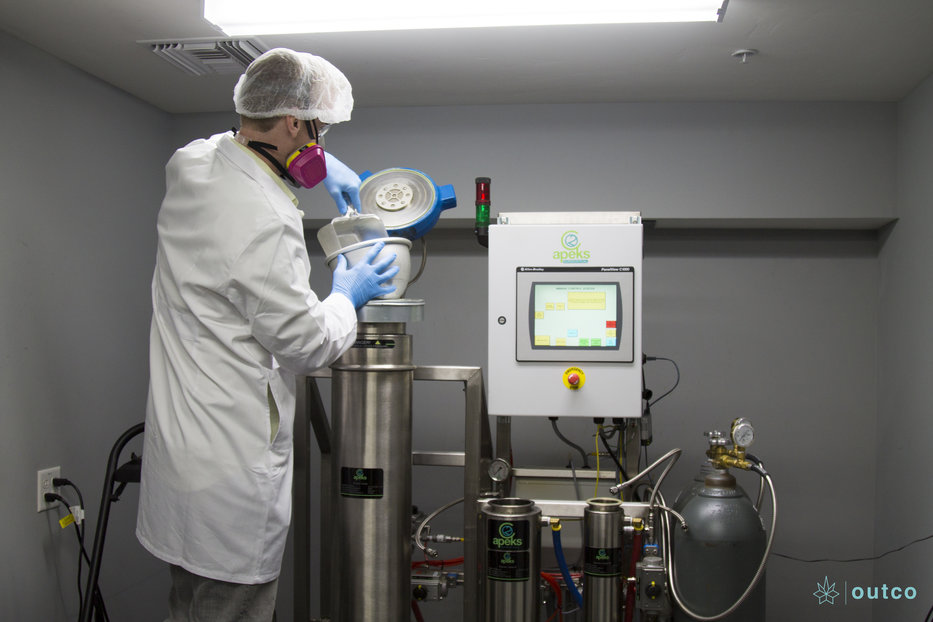
IVXX processingAccording to the equipment manufacturer Apeks Supercritical, “CO2 is considered to be a safer method of extraction because the solvent is non-volatile. The extract is purer because no trace of the solvent is left behind. It is also versatile and helps protect sensitive terpenes, by allowing cold separation.” By deriving methods from food production, supercritical equipment manufacturers have given cannabis companies a viable option for the commercial production of extracts.

Supercritical technology has helped push the concentrates vertical forward by providing a clean and efficient way to produce cannabis extracts. Nonetheless, supercritical CO2 equipment is highly sophisticated and carries a hefty price tag. Producers can expect to pay well over $100,000 for commercial supercritical CO2 extraction setup.

Products

Just as standards and technology have evolved in the cannabis extracts vertical, we have also seen products rapidly mature. Notably, the legal environment has allowed manufacturers to exchange ideas and methods for the first time. In turn, this dialogue has led to the development of new products, like isolates and live resin.

Isolates

Just as the name implies, isolates are concentrates made from a singular, pure cannabinoid. In today’s market, CBD isolates have grown increasingly popular because people can consume pure CBD without ingesting other cannabinoids or plant materials, including the legal 0.3% THC found in hemp.

Isolates are made by further purifying cannabis extracts in the process of purification, filtration and crystallization. As seen with other concentrates, isolates are used as the base for many cannabis products, such as gummies.

There is also growing interest in CBG isolate, which is another non-psychoactive cannabinoid when consumed orally.

Live Resin

The cannabis concentrate live resin has taken the industry by storm over the past few years. Live resin is a form of extract that is originally sourced from freshly harvested and frozen cannabis plants. The primary selling point behind this extract is the fact that fresh flowers produce much more vibrant aromas and flavors than dried cannabis. Interestingly, this pungency is tied to the preservation of terpenes in live resin.

Just a few of the dozens of various products types on the market today.

To make live resin, producers “flash freeze” fresh cannabis plants immediately after harvest. Valuable cannabinoids and terpenes are then extracted from the fresh, frozen plant material using hydrocarbon solvents. This whole process is done at extremely cold temperatures, ensuring no thermal degradation to the precious and volatile terpenes.

In lieu of these intricate steps to preserve the flower and extracts, live resin has continuously gained popularity. Namely because vaping with live resin is the best way to sample fresh cannabis terpene profiles in its most authentic fashion

It is amazing to see how much cannabis extracts have grown and progressed with legalization. Due to such amazing advancements in standards, technology, and products, the concentrates category has exploded on the dispensary scene. In today’s market, flowers have been largely sidelined in favor of concentrate-based products like gummies. These products now adorn dispensary shelves in beautiful packaging replete with purity and testing specifications.

It’s an often-overlooked fact that the purity standards of the legal extracts have made reliable cannabis brands possible in the first place. You cannot develop a cannabis brand without consistent products that customers can rely on; all things considered, it can be said that advancements in extraction have not only stimulated the concentrate category but the entire industry as we know it today.

The Evolution of Cannabis Entrepreneurship

By Jonathan Monk
No Comments

Cannabis presents a plethora of challenges for entrepreneurs not seen in more traditional industries. Akin to the dot-com boom of the early 2000s, the cannabis industry has seen an astonishing flurry of business over the past decade. Within this dynamic landscape, new cannabis companies come and go on a near-daily basis.

To capitalize on novel markets’ potential, hopeful entrepreneurs from all walks of life have “jumped headfirst” into the cannabis space. This new breed of entrepreneurs must not only be smart, but they must also be challenging. Yet, as the cannabis industry evolves under the forces of legalization and innovation, our understanding of what defines cannabis entrepreneurs continues to change.

Cannabis businesses are shaped by the regulations, challenges and opportunities of specific market niches. As such, cannabis entrepreneurs have evolved with the environments in which they do business.

California & Proposition 215   

California paved the way for the industry of today by legalizing medical cannabis in 1995. Since the passage of historic Proposition 215, cannabis has continued to gain momentum across the globe. This progress has happened through the visions and hard work of small business owners.

The early days of legal cannabis in California are now criticized for their lack of regulation. During the late 1990s and early 2000s, all you needed to start a cultivation business in California was a place to grow a garden. While early dispensaries did need local business licenses, they could legally purchase and sell untested products from unlicensed growers.

The genealogy of the modern cannabis industry can be traced directly back to the days of California’s Prop 215. During this era, the first cannabis dispensaries were founded – this model has since been replicated thousands of times. Also, the Prop 215 model gave rise to America’s first legal, commercial cannabis farms.

Cannabis entrepreneurs in California’s medical space focused primarily on developing the blueprints for a brand-new industry. To this end, they did not have the time or luxury to finetune the businesses for such things as operational efficiency and brand awareness. Even more, these people did not have to deal with such complexities as employee screening, product testing and seed-to-sale tracking.

Medical Cannabis Entrepreneurs

New medical markets stand in stark contrast to those seen in the early days of California. To this end, today’s medical markets operate within a web of stringent government regulations. For entrepreneurs, these rules set forth major emphases on both compliance and technology.

The Pennsylvania medical cannabis industry provides an excellent platform for understanding how the regulatory system of a market shapes entrepreneurial paths. For instance, medical cannabis cards are only issued to patients that meet the minimum criteria of 23 qualifying conditions, including severe conditions like aids, cancer and epilepsy. Beyond that, cannabis dispensaries in Pennsylvania must meet a slew of challenging criteria to operate and pay large sums of money in licensing fees.

To handle the regulatory requirements in places like Pennsylvania and remain profitable, medical cannabis entrepreneurs are incredibly dependent on technology. To this end, dispensaries utilize point-of-sale (POS) and seed-to-sale software to track inventory and stay compliant carefully. Even more, they use state-of-the-art security systems to safeguard their operations.

Cannabis entrepreneurs in medical markets must be able to run compliant operations and support their businesses with requisite technology. These elements stand in stark contradiction to the “wild west” mentality that pervaded the early industry. As such, it’s safe to assume that the rules of today’s markets force entrepreneurs to be more professional than in the days of CA Prop 215.

Adult-Use Cannabis Entrepreneurs

The most considerable difference between medical and adult-use cannabis companies has to do with their available customer base. Importantly, adult-use cannabis companies are only bound by minimum age requirements and state borders. Furthermore, limited restrictions on licensing create highly competitive markets that require sophisticated sales and marketing operations.

As there are no limits on potential customers, and limited regulations on license counts, business opportunities in adult-use markets are primarily directed by supply and demand rules. Because competition is the driving force in adult-use markets, entrepreneurs in this vertical have a good deal in common with peers outside the cannabis industry.

Perhaps the most defining characteristic of adult-use entrepreneurs is an emphasis on branding and marketing. As adult-use markets mature in places like Colorado, a phenomenon known as “brand concentration” occurs when a few companies come to dominate a majority of the market. As smaller companies fight for market share, they must develop professional brands that appeal to a broad customer base.

Cannabis entrepreneurs in adult-use markets must master the skills required in medical cannabis while also expanding their knowledge base in modern business dealings. Of these, the development of professional brands is one of the most defining characteristics of adult-use entrepreneurs.

It’s astonishing to see how much the cannabis industry has grown and matured looking back just a few short years. As business opportunities come about with new legalization efforts, entrepreneurs quickly rise to take advantage of untapped markets. As the cannabis business continues to evolve with the times, entrepreneurs must pivot to stay compliant, relevant and successful.

While the early Prop 215 market in California barely resembles today’s industry, it’s important to remember where we came from. Namely, our understanding of the contemporary cannabis business results from everyone who came before us. As the industry progresses, we will continue to complement established best practices with the requisite innovations that come with new opportunities.

Soapbox

Break Up Vertical Integration

By Ryan Douglas
No Comments

Editor’s Note: This is an excerpt from chapter ten of From Seed to Success: How to Launch a Great Cannabis Cultivation Business in Record Time by Ryan Douglas. Douglas is founder of Ryan Douglas Cultivation, a cannabis cultivation consulting firm. He was Master Grower from 2013-2016 for Tweed, Inc., Canada’s largest licensed producer of medical cannabis and the flagship subsidiary of Canopy Growth Corporation.


Cultivation businesses should consider specializing in just one stage of the cannabis cultivation process. The industry has focused heavily on vertical integration, and some regulating bodies require licensees to control the entire cannabis value chain from cultivation and processing to retail. This requirement is not always in the best interest of the consumer or the business, and will likely change as the industry evolves. Not only will companies specialize in each step of the value chain, but we’ll see even further segmentation among growers that choose to focus on just one step of the cultivation process. Cannabis businesses that want to position themselves for future success should identify their strengths in the crop production process and consider specializing in just one part.

Ryan Douglas, former Master Grower for Tweed and author of From Seed to Success: How to Launch a Great Cannabis Cultivation Business in Record Time

Elsewhere in commercial horticulture, specialization is the norm. It is unlikely that the begonias you bought at your local garden shop spent their entire life inside that greenhouse. More likely, the plant spent time hopping between specialists in the production chain before landing on the retail shelf. One grower typically handles stock plant production and serves as a rooting station for vegetative cuttings. From there, rooted cuttings are shipped to a grower that cares for the plants during the vegetative stage. Once they’re an appropriate height for flowering, they’re shipped to the last grower to flower out and sell to retailers.

Cannabis businesses should consider imitating this model as a way to ensure competitiveness in the future. In the US, federal law does not yet allow for the interstate transport of plants containing THC, but the process can be segmented within states where vertical integration is not a requirement. As we look ahead to full federal legalization in the US, we should anticipate companies abandoning the vertical integration model in favor of specialization. In countries where cannabis cultivation is federally legal, entrepreneurs should consider specialization from the moment they begin planning their business.

Cultivators that specialize in breeding and genetics could sell seeds, rooted cuttings, and tissue culture services to commercial growers. Royalties could provide a recurring source of income after the initial sale of seeds or young plants. Contracting propagation activities to a specialist can result in consistently clean rooted cuttings that arrive certified disease-free at roughly ¼ the cost of producing them in-house. This not only frees up space at the recipient’s greenhouse and saves them money, but it eliminates the risks inherent in traditional mother plant and cloning processes. If a mother plant becomes infected, all future generations will exhibit that disease, and the time, money, energy, labor, and space required to maintain healthy stock plants is substantial. Growers that focus on large scale cultivation would do well to outsource this critical step.

From Seed to Success: How to Launch a Great Cannabis Cultivation Business in Record Time

Intermediary growers could specialize in growing out seeds and rooted cuttings into mature plants that are ready to flower. These growers would develop this starter material into healthy plants with a strong, vigorous root system. They would also treat the plants with beneficial insects and inoculate the crop with various biological agents to decrease the plant’s susceptibility to pest and disease infestations. Plants would stay with this grower until they are about six to 18 inches in height—the appropriate size to initiate flowering.

The final stage in the process would be the flower grower. Monetarily, this is the most valuable stage in the cultivation process, but it’s also the most expensive. This facility would have the proper lighting, plant support infrastructure, and environmental controls to ensure that critical grow parameters can be tightly maintained throughout the flowering cycle. The grower would be an expert in managing late-stage insect and disease outbreaks, and they would be cautious not to apply anything to the flower that would later show up on a certificate of analysis (COA), rendering the crop unsaleable. This last stage would also handle all harvest and post-harvest activities—since shipping a finished crop to another location is inefficient and could potentially damage the plants.

As the cannabis cultivation industry normalizes, so, too, will the process by which the product is produced. Entrepreneurs keen on carving out a future in the industry should focus on one stage of the cultivation process, and excel at it.

Heat-Not-Burn: A Q&A with Mike Simpson, CEO and Co-Founder of Omura

By Aaron Green
No Comments

Heat-not-burn is a non-combustion technology consisting of a heating source and either an oven that the user packs cannabis into or a stick pre-filled with cannabis. The cannabis is heated to a lower temperature than a combusted joint or bowl to create an aerosol that the user inhales. Heat-not-burn in this way is distinct from traditional vaping where a liquid or oil is heated to become a vapor and inhaled.

Omura is a design company that has developed a platform product for the heat-not-burn market.

We spoke with Mike Simpson, CEO and co-founder of Omura. Mike co-founded Omura in 2018 after an international design career where he spent much of his time in Japan working with consumer products.

Aaron Green: Mike, what trends are you following in the market?

Mike Simpson: I’m always tracking trends in the heat-not-burn space. Because of my background, I know that the tobacco industry inspires a lot of the technology in the cannabis space. If you look at all the vape pens, that technology was initially developed for big tobacco, which then later was adopted by cannabis. I’m always looking to stay educated on what’s happening in the tobacco industry, as I know it’s directly tied to my work in cannabis.

I’m also looking at what’s happening all over the world with legislation. I’ve been studying it for years, but this past year has been phenomenal. Seeing five new states go to some level of legalization, the federal law and new states legalizing cannabis in the 2020 Election. I believe the Biden/Harris victory will have a major impact on the industry, however we still have to see what happens with the Senate. These next couple of years are going to be very interesting to see how things shape out for cannabis.

Aaron: What are you personally interested in learning more about?

Mike Simpson, CEO and co-founder of Omura

Mike: I am interested in learning how the world is going to behave next year with this new life that’s been thrusted upon us. How effective is the new vaccine going to be? How are people going to retrospectively look at this year, and the lifestyle that they used to have before going into COVID? How much of it’s going to become permanent? How much of this Zoom life will we continue to enjoy? In the future, will office spaces become obsolete? How much will we still be using home deliveries? Do we actually want to go to restaurants again? That’s what I’m very interested in learning about is how human behavior and the world will change because of what’s happening right now.

Aaron Green: How did you get started at Omura?

Mike Simpson: Great question. I moved to Japan as a designer working for Lego and set up their design office for Lego toys. After Lego, I started working instead with Nike and Adidas designing performance sneakers and apparel for a couple of years until I found Big Tobacco — which is where my Omura story begins. I rapidly found myself in a position where I was creating new technologies, for the consumption of nicotine and tobacco. While working on an early project, I was asked if I knew any science fiction writers. Thanks to Lego, I just so happened to know Syd Mead, the designer for popular sci-fi films including BladeRunner, Tron and Aliens. So, I called him and we worked on a project which was aimed at setting the future of the smoking industry. Obviously, this was a brilliant project for someone like myself to get involved in. We came up with several scenarios that depicted the future of what tobacco consumption would look like, and each of them essentially included vaporization. This was before the vaporization days which made it kind of a difficult sell. I spent many years working on where we could use existing technologies in order to execute some of these scenarios. Ten years later, I moved to California, and I started studying the cannabis space for Big Tobacco which ultimately led me to Omura.

Aaron: Can you give me a reference point on the date when you were back in California?

Mike: I came here eight years ago, and I was in Japan pretty much 10 years prior to that.

Essentially what I realized when I got to California was that cannabis was perfect for heat-not-burn because of all the cannabinoids and the terpenes. You heat it up, and you get all of the good properties out of it without the need for combustion. There were already hundreds of products in the market, which validated that people love doing it.

However, there was a ritual: you needed to buy the flower, grind it, pack the device, select the temperature and then use the same mouthpiece repeatedly. And it doesn’t stop there. When the session is finished, you dig out the used flower with a metal spatula or brush. After every 10 or 15 times you have to clean it with rubbing alcohol to get rid of any existing residue from those sessions. This is just a big messy job with a massive amount of inconsistency and variability. For me, it was mind blowing that people would even go through this procedure. With Omura, I knew we needed to simplify that process. Our product comes with a pre-filled flower stick with an exact dose, that you place in the device very simply. You then use the stick as the mouthpiece and when you’re finished, throw the flower stick in the trash. It’s compostable and biodegradable. So we eliminated all of those pain points.

Aaron: Great! Where are you guys based out of?

Mike: Venice, California.

Aaron: So, what makes the Omura vaporizer different from other heat-not-burn products? You mentioned you have the disposable cartridge. Is there a design philosophy around it that you can talk more about?

Mike: Omura comes with 12 flower sticks in child-proof packaging. What makes us different is that we have our proprietary flower stick and device that work together. With our heat-not-burn technology, you get all the terpenes, but when you set fire to it, as you would with other products, you mask that with smoke. Our product is different from anything else in the market, because it has simplified the user experience through efficiency, user interaction and also through design as well.

The other founders come from deep design and technology backgrounds, designing technologies for Apple and Philips Electronics, so it was an important focus for us with Omura. Our newest device, the Series X was designed by Michael Young, a world-renowned industrial designer who has built an impressive portfolio of innovative products.

The Omura Series X

With Omura, we’re bringing sophistication of the design world into the cannabis world. It’s not just about simplifying the experience and making a great kind of efficient method of consumption, it’s also about creating something for everyday use that is beautifully designed and easy to use.  

Aaron: The Series X is Omura’s latest device. Can you tell me what changes you’ve implemented to make it better than the first version?

There are a few differences between the Series 1 and Series X: First, the new design fits in the palm of your hands so it’s discreet. It comes with a USB-C charging base that automatically connects with magnets. We’ve also improved the efficiency of the oven. The first device boiled 94% of the cannabinoids, this one now boils 99%. We’ve increased user-efficiency, by removing the button from the Series 1 making it so all you have to do is put the flower stick in and the device starts automatically. Additionally, we wanted to give users an option between a hotter or cooler experience so we added an extra heat curve, as we recognize that some of our CBD users prefer more of a terpene experience.  

Aaron: Can the user modify that with an app?

Mike: It is a very simple switch on the bottom of the device that allows you to toggle between the higher and lower temperature curves

Aaron: Okay, cool. Can we talk about your supply chain a little bit here? Do you manufacture everything in Los Angeles? Or do you have partners? 

Mike: Everything is designed in the US and manufactured in China. Which is fairly common throughout the industry. Shenzhen is well known for making products for the vaping industry. We create empty tubes filled in a batch production process. All the flower is grown here in the US. To clarify, we aren’t a plant-touching company. We don’t have a cannabis license. When it comes to THC, we have partnership deals. We work with select cannabis brands which is how we are able to sell in dispensaries. On the other hand, our CBD model is split. We have two brands of our own. Libertine, which is more of a male-focused Gen Z brand. Then we have Oriel, which is more of a wellness brand, catered to women.

Aaron: So how would an aspiring brand get on your platform?

Mike: Good question. Any brand or company who is interested in partnering with Omura can contact us through our website, www.omura.com, on Instagram @Omura or via email: hello@omura.com. We would then assess them to see if they’re a good fit. Currently we’re looking to span quite a large kind of demographic as far as appeal. So, if these prospective partners are in a territory, whether it be California or another state, have good market share and high-quality flower, then we would be very open to having a conversation.

Aaron: That’s the end of the interview — thanks Mike!

extraction equipment

The Hidden Costs of Non-Compliance for Consumers

By Mark Slaugh
No Comments
extraction equipment

Anyone owning and operating a cannabis business should know the value of proactive compliance management to operate successfully. For consumers, the view into the world “behind the budtending counter” is limited to the cool looking packaging, test results and the overall “vibe” of products they may want to try.

In our experience, as the oldest cannabis compliance firm, we’ve audited and visited hundreds of facilities and have seen the proverbial “Wizard behind the curtain”. We know “how the sausage is made.” And, as one can expect, it’s not always as glamorous in the back of the house as it appears on the shelf.

As markets expand and people buy into existing or new cannabis businesses, amid a world of thousands of competing companies and products, consumers need to ask themselves: “What do I know about the companies and products I consume?”

More and more, the question of consistent quality keeps coming up in the cannabis industry. Recalls are still ongoing in the news as products continually fail testing for potency and contamination.

Colorado, for example, is considered the shining jewel of the US industry in terms of experience, quality and integrity. However, consumers may be shocked to learn that a majority of dispensaries in the state do not operate by stringent SOPs, nor do they verify packaging and labeling for compliance, or review test results of products coming in and going out of their shops.

Starting January 1, 2021, these retailers finally have to develop and implement recall procedures in the event of contaminated products or cannabis that is causing adverse side effects. Later this year, vape pens will finally have their vapor tested instead of just the concentrate therein.

These liabilities or lack of compliance infrastructure may very well be a ticking time bomb no consumer in their right mind would want to deal with.

Bad Product/Brand Experience

Non-compliance and inconsistency on the part of operators translates directly into negative experiences for consumers. Whether its consuming a product that tastes like chlorophyll or enjoying a product the first time only to find a completely different experience the next time around, consumers experience the cost of non-compliance the most.

Beyond products, most consumers recognize their brand experience when shopping for products. Since the invention of Weedmaps, customers have always expressed their like or dislike for particular dispensaries and delivery services. Operators know these reviews from a customer’s experience can make or break their business and brand.

We always tell cannabis operators that a brand is a double-edged sword. As easily as it can strike through competitors, it can just as easily damage one’s own business.

Examples include SweetLeaf and Kushy Punch whose brands, once well-known and popular, are now synonymous with the worst of the worst given their histories of non-compliance and shut downs.

For consumers, finding consistent, quality products at a fair price is often the most important consideration to avoid the cost of a bad experience with cannabis. For visitors or first-time consumers, this could mean the difference between trying cannabis again or deciding it’s simply not for them.

Contamination & Illness

control the room environment
Preventing contamination can save a business from extremely costly recalls.

The worst-case scenario for consumers, especially patients, is the cost of consuming contaminated products or otherwise having adverse effects from the use of cannabis. While cannabis itself is one of the least harmful substances known to man, contaminated cannabis can be dangerous or deadly.

In the early days of the industry and in many emerging markets with poor to no oversight, these lessons are learned most severely. From the use of non-commercial washing machines being used for water-based extracts that tested positive for E. coli to recalled products ladened with Eagle 20 (which contains the harmful pesticide known as Myclobutanil), the industry has been reactive to safety measures and complying with best practices.

Still, some states persist with limited to no testing and simply label products with a warning to consumers that they are using cannabis at their own risk without testing for safety or efficacy.

Most consumers may be shocked to know that most cannabis companies do not adhere to good agricultural practices or good manufacturing practices (GAP/GMP) to ensure consistent quality and safety standards in similar industries such as nutraceuticals and food manufacturing.

Patients already weakened by disease states – including auto-immune disorders – are most at risk and understand all too well the costs of hospitalization, medical bills and loss of quality of life. For the average adult user, these risks are the same and there is often little to no recourse with the dispensary or product manufacturers if the product slips through contamination testing because of the non-compliance of product validation on flower or infused products.

For companies, outdated and inaccurate SOPs as well as production batches are the only line of defense to protect the company from product liability lawsuits filed by consumers in the event of contamination and illness. Most cannabis companies do not manage this aspect of their business effectively and simply assume they are sufficiently compliant without proactively measuring such compliance and adjusting operations as necessary.

Long-Term Consequences

Consumers would do well to remember that the modern industry is infantile in its development compared to other heavily regulated industries. Cannabis companies are babies learning to crawl while major food and beverage, pharmaceutical and nutraceutical, and alcohol and tobacco industries are far ahead of the game. The US industry, is arguably, already behind the compliance curve comparative to other nations already placing stricter regulations and standards on licensees.

For customers, this can be a confusing experience given that no two batches of flowers will taste the same let alone give a consumer exactly the same effect.

Already, customers are learning Sativa and Indica are imaginary cultural terms to describe generalized characteristics of major and minor cannabinoids and terpenes in each strain which produces a variety of effects – despite state limitations on labeling these active ingredients.

Vape pens are under increasing scrutiny as regulators discover long-term effects of vape use from the tobacco industry causing EVALI in consumers and being deemed as dangerous. As with anything new, the data and science simply aren’t there to truly tell customers what the effects may be over the long run. It has taken decades for tobacco, as an example, to go from doctor-recommended to carcinogenic.

Consistency in quality standards requires meticulous SOPs

Similarly, Big Cannabis of the future may be facing similar concerns that aren’t being warned about currently on their products and consumers could face unknown long-term consequences. In no way is this a condemnation of cannabis and early research shows cannabis is much safer than either alcohol or tobacco.

The point is to emphasize that over the long run, compliance is key to tracking the consistency and safety of products to avoid long-term liability and costs on consumers. Consumers would be wise to gravitate towards compliant brands and companies that focus on consistent quality and safety to minimize potential long-term negative impacts and costs.

Accountability & Transparency

Customers must first understand where the buck stops and who is responsible for what as it applies to cannabis and the cannabis products they consume. This can vary between states from vertically integrated models to horizontal models which allow for independent businesses to buy and sell cannabis between each other.

In the case of cannabis, the restrictions on METRC and other state “seed to sale” tracking systems make it nearly impossible for customers to return products and unclear on how to file complaints.

METRC and other seed to sale systems dictate that dispensaries must be able to track originating sources of cannabis back to another licensed facility. As such, once the consumer buys a faulty vape pen, for example, it’s gone from the dispensary inventory. Bringing it back in physically creates non-compliance issues for the dispensary as they cannot virtually account for the physical addition back into inventory.

No one ever said making sausage was a pretty or easy process. That’s why most consumers don’t want to think about how it’s done.

This example is a simple one to showcase the importance of compliance in the cannabis business and the complexities businesses must go through to operate. What is more applicable and important for consumers to understand is how non-compliance and inconsistency can affect them negatively – beyond messy fingers from leaky vape carts.

extraction equipment
Consumers should ask cannabis companies about their product quality standards

These types of unexpected issues represent significant costs for cannabis operators in recalls, fines, lawsuits and fees which is what most people think the “costs of non-compliance” mean.

However, and in addition to the literal cost mandated by regulation, there are the costs owners don’t think about: in the time and fees charged by the professionals to solve these issues, the time and stress spent on production, the increase or decrease in supply, mitigating product liability, and brand recognition and damage due to poor quality or recalls.

All of these factors simply drive up the costs of products for consumers and decrease the reliability of finding consistent, quality products and brands that customers can count on.

As we always say at iComply:

“It is always more cost-effective to be proactive, rather than reactive, when it comes to operational cannabis compliance management.”

Consumers would be wise to recognize which companies are proactive in managing their compliance. And companies would be wise to get ahead of these customer costs by being the proactively compliant companies that consumers want and need.

The Cannabis Industry and Tax Implications of Entity Structure: Issues to Consider

By Calvin Shannon
2 Comments

This piece is intended to provide some considerations that current and potential license holders should think about as they work with advisors to make entity selection decisions or consider potential tax elections. Please note that this article is a high-level overview and is not intended to declare the best type of entity structure for a license holding entity. Although there are numerous tax variables that should be contemplated, tax issues are not the only concerns relevant to determining entity type. In addition, some states may tax entities differently than how the entity is taxed for federal purposes.

First, let’s look at the legal entity types that may be set up to hold a license, operate a business and what that may mean for how an entity is taxed. Often, entities are set up as either limited liability companies or corporations.

If a limited liability company is organized and the entity is owned by only one owner, a single member LLC, the default tax treatment would be that the entity is disregarded for tax purposes. In other words, it would not file a separate federal income tax return, except in some states including CA, TX, TN and RI. All the tax consequences of the activities within the legal entity are reported on the tax return of the owner of the entity.

If a limited liability company is set up and the entity is owned by more than one owner, a multiple member LLC, the default tax treatment would be that the entity is taxed as a partnership. An entity taxed as a partnership reflects the tax consequences of the activities within the legal entity on a partnership return. The partnership generally does not pay tax on the activity, but rather the taxable income and loss are passed through to the owners of the LLC. The owners of the LLC reflect the taxable income or loss on their tax return and are responsible for paying any resulting tax. In the rare instance of an entity being audited, there is a possibility that the entity may have to pay tax on the partners behalf, depending on the ownership structure. Either a single member LLC or a multiple member LLC may elect to treat the LLC as a C-corporation or an S-corporation for tax purposes.

The Taxation of C-Corporations & S-Corporations

The default treatment for an entity set-up as a corporation is the entity will be taxed as a C-corporation. An entity taxed as a C-corporation, including an LLC electing to be taxed as a C-corporation, pays the tax on any taxable income generated by activities within the entity.  Additionally, any distributions of earnings from the C-corporation to the owners of the entity are generally considered dividends which are required to be reported as taxable income by the owners when received. In other words, the earnings of an entity taxed as a C-corporation are potentially taxed twice. Once, as they are earned within the entity, and then again upon distribution to the owners of the entity.

An entity set-up as a corporation, a single member LLC or a multiple member LLC may elect to be treated as an S-corporation. Like an entity taxed as a partnership, an S-corporation does not pay tax at the entity level, but rather passes the taxable income and loss through to the owner or owners. Additionally, like a partnership, distributions from an S-corporation are not taxable as dividends to the owner when received.

Since we covered how different entities are taxed based on how they are set-up, and what elections they may or may not make, we will explore some of the issues that should be considered when making an entity selection. We will also address potentially electing to treat an entity one way or another for tax purposes. 

S-Corporations 

Advantages: The advantages of an S-corporation are limited to the avoidance of double taxation associated with C-corporations, as well as some potential benefits of lower Social Security and Medicare taxes.

Disadvantages: The primary disadvantage of an S-corporation for a license holding company is any non-deductible expenses resulting from 280E are passed through to the owner(s), which then reduces the ownership’s tax basis in its investment in the entity. A reduction in tax basis is determinantal to owners of an entity because the basis is used to reduce taxable income when/if the owner liquidates ownership in the entity.

Other disadvantages of S-corporations include but are not limited to restrictions on ownership of the entity, a requirement for reasonable compensation paid to owners and a lack of flexibility in the allocations of earnings among owners.

Partnerships

Advantages: The advantages of a partnership include but are not limited to the avoidance of double taxation associated with C-corporations, flexibility in the allocation of earnings and losses among owners, and flexibility in the type of owners of the entity.

Disadvantages: Like S-corporations, the primary disadvantage of a partnership is any non-deductible expenses resulting from 280E are passed through to the owner(s).

Other disadvantages of partnerships include potential self-employment taxes on earnings allocated to active owners, potential complexity in the allocations of taxable income and losses among partners in entities with many owners or different classes of ownership.

C-Corporations

Advantages: In contrast to S-corporations and partnerships, the tax basis resulting from the ownership’s investment in the entity is not subject to reductions from non-deductible expenses being passed through to owners. This protection of tax basis is particularly important to owners of license holding entities.

An additional advantage of C-corporation tax treatment may be a lower tax rate applied to taxable income.

Disadvantages: The most significant disadvantage of C-corporation tax treatment is the potential double taxation of earnings that might be applicable if the entity does have earnings that are distributed.

In addition to the items address above, the advantages and disadvantages of the entity type and related tax elections, additional considerations include:

  1. How much of the 280E nondeductible expenses will the taxpayer be subject to?
  2. How much earnings will the entity be distributing to the owners?
  3. How complex is the entity’s ownership?
  4. The lack of certainty regarding whether or not the qualified business income deduction (QBID) enjoyed by pass-through entity owners is allowable as a deduction by owners receiving pass-through income from an entity subject to 280E.
  5. Are there plans for selling the entity and if so, what is the time horizon for doing so?

At Bridge West, we advise taxpayers to consult with cannabis advisors who have experience in the industry, can help navigate the complexities of tax compliance and Code Section 280E and are experienced with entity structures.

An In-Depth Breakdown of Prop 207 in Arizona

By Laura Bianchi, Justin Brandt
No Comments

To say 2020 was a historic year is an understatement.

Arizona landed in a solid eighth place among the top ten most successful cannabis states thanks to its expansive medical cannabis program. To close out the year, voters approved Proposition 207, also known as the Smart and Safe Arizona Act (SSAA), making Arizona one of 15 states, plus Washington D.C., to legalize the adult use of cannabis, which is expected to rocket the state’s overall cannabis sales to new heights.

It’s essential to this conversation that we clarify the two sides of this rapidly growing industry. Medical cannabis is a form of treatment, the adult use and consumption of cannabis is a choice. During the pandemic, in many medical cannabis states, the medical cannabis industry was deemed an essential service and allowed to continue providing valuable medicine to patients and caregivers. As medical cannabis programs continue to provide safer therapeutic options which are complementary to or serve as an alternative to many traditional treatments and narcotics, especially opioids, patients can be confident the need for medical programs will continue. Arizona’s adult use cannabis program imposes greater limitations on quantity and potency, while also requiring higher standards for packaging. We saw a trend during the pandemic as again, many states prioritized and allowed their medical programs to continue, while limiting adult use facilities, in the same manner as other non-essential businesses.

It’s also worth noting that we have seen many inevitable changes in patient behaviors during the pandemic, including an increased need for medical cannabis. There was a patient demand for convenience, safety and no-contact services, increased online ordering, scheduling and curbside pick-up or delivery. Many of these services were already on the rise in popularity throughout the various legal states. While Arizona’s recreational program prohibits delivery until at least 2023, retail adult use consumers will expect some of these services to extend to the new market. As life after the COVID-19 pandemic continues on and the need for some of these safer more convenient options also continues, we hope to see them more permanently implemented from a legal and regulatory perspective. For now, here are the highlights we’ll see come into play in the first few months of 2021 as Arizona adopts its new adult use cannabis program.

Smart and Safe Arizona Act (Prop 207):

  • Legalizes the sale, possession (one ounce) and consumption of adult use cannabis for adults at least 21 years old.
  • Adds a 16 percent excise tax on adult use cannabis sales, in addition to the state’s 5.6 percent, totaling a 21.6 percent tax.
  • Allocates an estimated $300 million in Arizona revenue to be divided between community college districts, municipal police, sheriff and fire departments, fire districts, highway funds, public health programs, infrastructure, and a new Justice Reinvestment Fund.
  • Allocates more than $30 million annually for addiction prevention, substance treatment, teen suicide prevention, mental health programs, and justice reinvestment projects.
  • Provides opportunities for expungement of certain lesser cannabis-related crimes such as possession, consumption, cultivation or transportation.

But of course, state law is just one part of the equation. Adult use cannabis facilities must be licensed separately from state to local levels, including counties to cities to local municipalities, all of which may also adopt rules and requirements through zoning and land use ordinances. Swift and certain timelines established by the Smart & Safe Act dictate the speedy launch of this new program, first utilizing the existing medical cannabis infrastructure.

Many Arizona consumers are under the impression that they’ll be able to walk into a dispensary on January 1, 2021 and buy cannabis. But that is not the case. They’ll have to wait until the Arizona Department of Health Services (AZDHS) completes the early applicant licensing process, which begins in January 2021. Currently, local and multistate operators are waiting for AZDHS to complete the rules and regulations for the adult use cannabis program. Here are two of the most significant steps to be navigated in the upcoming weeks:

Smart and Safe Arizona Act (Prop 207) – Step 1: The Rulemaking Process

AZDHS has been tasked with developing the rulemaking process for the Smart & Safe Act. The first draft of the adult use cannabis program rules has already been released, primarily consisting of the application requirements for the early applicant process.  AZDHS collected its first round of public comments for consideration on Thursday, December 17, 2020.  The exact details and parameters of the adult use cannabis program will not be finalized or known for certain until AZDHS completes the rulemaking process. We anticipate the next draft of adult use cannabis rules to be released sometime in early January.

Smart and Safe Arizona Act (Prop 207) – Step 2: The Application Process

AZDHS will begin accepting early applicants under the Smart & Safe Act on January 19, 2021, closing the process on March 9, 2021. Current medical cannabis license holders who apply for and acquire an adult use license in the early applicant process will be authorized to a dual-licensed dispensary (both medical and adult use license), as well as one offsite manufacturing facility (which may later be amended to include both medical and adult use manufacturing license), and offsite cultivation.

Early adult use license applicants are reserved for those that currently hold in good standing at least one Medical Marijuana Registration Certificate (“Medical Marijuana License”) and applicants applying to counties with no current operating dispensaries. Any county with a single operating dispensary (a medical cannabis dispensary) will be allocated an adult use license (dual license) as long as the medical license holder is in good standing for the application.  All adult use licenses allocated to those counties without a current operating dispensary must keep that dispensary within that county.

AZDHS will have 60 days to process each application. Adult use licenses for counties without a current operating dispensary will be allocated through a random selection process, if more than two applications are received for that county. Additionally, upon the conclusion of the early applicant process, any adult use license that has not yet been awarded through that process, will be available to the general public and allocated through a random selection process.

This brings us to later phases of implementation of the Smart & Safe Act: within approximately six months of the adoption of the initial recreational program rules, AZDHS must develop and adopt the rules and regulations for the Social Equity Ownership Program (SEOP). The primary goal of the SEOP is to allocate 26 adult use licenses to “communities disproportionately impacted by the enforcement of previous cannabis laws.” In other words, communities disproportionately and negatively impacted by cannabis criminalization. Smart & Safe is light on the exact manner and process at this point, so Arizona voters and cannabis companies will look to AZDHS for the development and implementation of this important part of the adult use program. Stay tuned.