On-demand cannabis delivery services are a rapidly growing part of the industry. Having a delivery option available for your dispensary’s patient population is a critical component of your service offering. This is especially true when considering medical cannabis patients who might have conditions that hinder their mobility or patients who just prefer the anonymity or convenience of delivery rather than visiting a dispensary.
So I ask you – why don’t you have a delivery service option available for your dispensary?
While there are several models for cannabis delivery, depending on the state you live in, the biggest challenge dispensary owners face is ensuring that their delivery service continues to meet all compliance standards.
Beware, one misstep in your delivery process could mean serious implications for your dispensary and you – including being shut down.
Keep reading to learn how you can provide your customers and patients with a delivery service while remaining compliant with your state’s rules and regulations.
How to Keep Your Cannabis Delivery Service Compliant
Part of keeping your cannabis delivery service compliant is understanding how to start a delivery service from the ground up. Keep in mind that the costs will vary depending on how you structure your company. Things to think about – insurance, technology, merchant processing, driver recruiting and whether or not your drivers will be independent contractors or employees.
Some states require a retailer’s license while others require a specific deliver license
Additionally, you will have to consider the regulations that are standard in your state.
For instance, if you don’t do your research, you won’t know whether or not you need two drivers in the car, whether or not you need a lockbox, or if you’re required to have handhelds for payment. Other requirements will depend on the state in which you live.
Here are the most important things you’ll need to do to get started:
Do Your Homework
The first thing you need to do to ensure that your service is compliant is research your state’s delivery protocol. That means obtaining the proper licensing or certifications necessary to move cannabis products from one place to another.
It should be noted that in some states, like Washington, cannabis delivery providers must also obtain a retailer’s license. You’ll also need to determine whether your state allows delivery for only medical cannabis or both medical and recreational.
Please keep in mind the following – cannabis is not federally recognized as legal. Therefore, the only deliveries you can make are intrastate deliveries.
In some states you’re required to have handhelds for payment.
Lastly, you’ll need to pay close attention to how you can advertise your cannabis delivery service. The guidelines vary from state to state, and they typically include regulations for content, imaging and location.
Is Owning a Delivery Service Right for You?
Delivery, in general, is not easy. The delivery business is difficult to integrate into the highly regulated cannabis market; it becomes extraordinarily difficult to manage.
It’s great to have a delivery service, but are you a good salesperson? Do you understand marketing, positioning and messaging? Have you ever written SOPs or standard operating procedures? There are so many questions to ask yourself when you want to own a business.
Consider Working With Logistics Experts
While it may be tempting to create an in-house delivery service all on your own, think twice.
It’s best to partner with a third-party logistics partner, like Scarlet Express. These partners are experts in cannabis delivery services and will arm you with everything you need to be successful.
Most cannabis logistics companies can also scale right along with your business, so you don’t have to worry about “outgrowing” their services.
As a new or small dispensary owner, taking on the challenges of cannabis delivery can be incredibly difficult but not impossible when you work with a company that has tried and true systems in place. Lots of things to consider, seek out experts – like Scarlet Express.
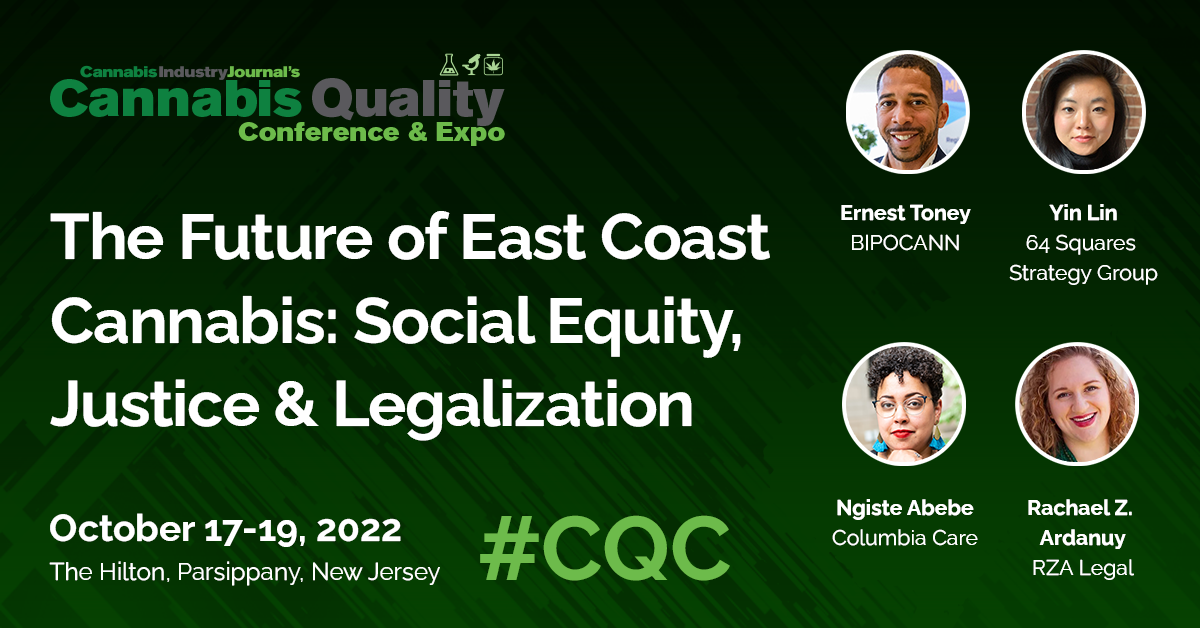
The agenda features breakout sessions, keynotes and panel discussions that will help attendees better understand the cannabis markets in the region and provide insights on best practices and business strategies. The conference will begin with a keynote presentation, then a panel on The Future of East Coast Cannabis: Social Equity, Justice & Legalization. Following that will be a panel on The Standardization State of the Union: Science-Based Resources for Driving Cannabis Safety with an overview of the New Jersey cannabis marketplace to end the first day.
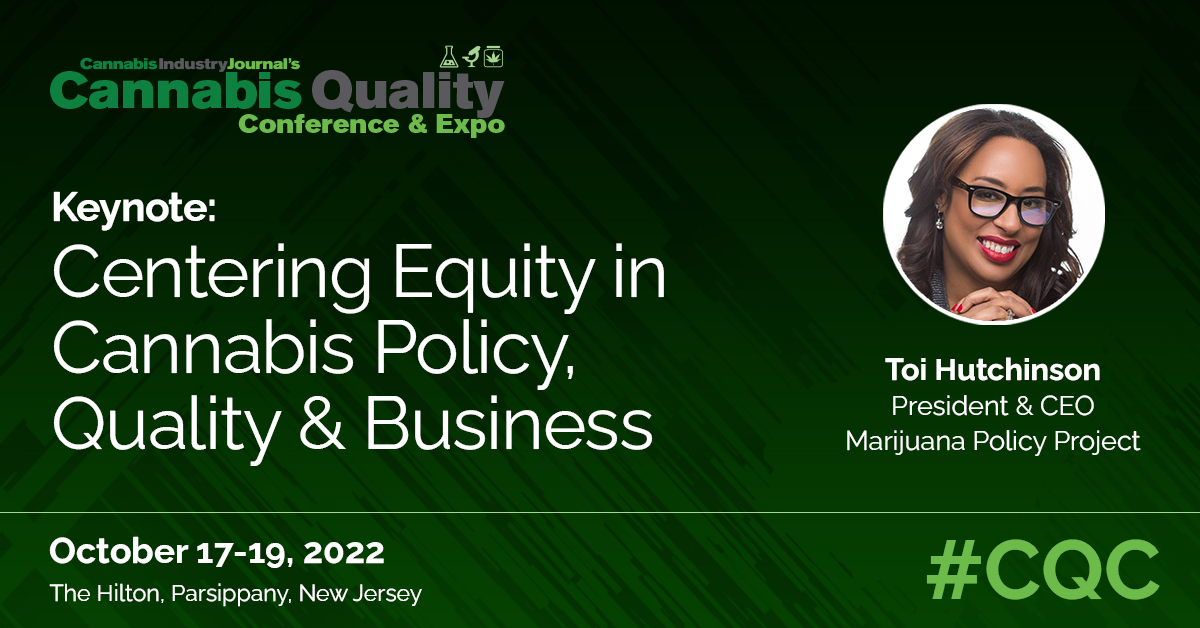
The second day will kick off with a Keynote titled Centering Equity in Cannabis Policy, Quality & Business with Toi Hutchinson, President & CEO at Marijuana Policy Project. Other agenda highlights include:
The State of the State: An Update on New Jersey Legalization by Steven M. Schain, Esquire, Attorney at Smart-Counsel, LLC
Tri-State Cannabis: Pro Tips for Winning Applications by Sumer Thomas, Director of Regulatory Affairs and Russ Hudson, Project Manager at Canna Advisors
Navigating Cannabis Testing Regulations for Multi-State Operations by Michael Kahn, President & Founder of MCR Labs
Keynote by Edmund DeVeaux, President of the New Jersey Cannabusiness Association
A Guide to Infusion Technology | Design Experiences that Inspire and Innovate with Cannabis Ingredients by Austin Stevenson, Chief Innovation Officer at Vertosa
Valuable Analysis Ahead of Asset Acquisition by Matthew Anderson, CEO of Vanguard Scientific
Registration options are available for in-person, virtual and hybrid attendance.
Cannabis industry professionals also interested in the food industry can attend the Food Safety Consortium, which begins on Wednesday, October 19 – Friday, October 21. The program features panel discussions and breakout sessions that encourage dialogue among mid-to-senior-level food safety professionals. The Food Safety Consortium kicks off with an FDA Keynote and Town Hall, followed by a panel on the State of the Food Safety Industry and where it is going, led by Darin Detwiler of Northeastern University.
About Cannabis Industry Journal
Cannabis Industry Journal is a digital media community for cannabis industry professionals. We inform, educate and connect cannabis growers, extractors, processors, infused products manufacturers, dispensaries, laboratories, suppliers, vendors and regulators with original, in-depth features and reports, curated industry news and user-contributed content, and live and virtual events that offer knowledge, perspectives, strategies and resources to facilitate an informed, legalized and safe cannabis marketplace.
About the Cannabis Quality Conference & Expo
The Cannabis Quality Conference & Expo is an educational and networking event for the cannabis industry that has cannabis safety, quality and regulatory compliance as the foundation of the educational content of the program. With a unique focus on science, technology, safety and compliance, the “CQC” enables attendees to engage in conversations that are critical for advancing careers and organizations alike. Delegates visit with exhibitors to learn about cutting-edge solutions, explore three high-level educational tracks for learning valuable industry trends, and network with industry executives to find solutions to improve quality, efficiency and cost effectiveness in the evolving cannabis industry.
By Abraham Finberg, Simon Menkes, Rachel Wright 1 Comment
New York is embarking on a great social undertaking. In awarding its adult-use cannabis licenses, under the plan laid out by Gov. Kathy Hochul on March 10, the state is attempting to right generations of wrongs caused by the war on cannabis. The wrongs are numerous and include mass incarceration and complex generational trauma, prevention of access to housing and employment and the forming of an illicit market – all of which have had a disproportionate impact on African-American and Latinx communities.1
In addition to generating significant revenue for the state, New York hopes to make substantial investments in the communities and people most affected by cannabis criminalization and address the collateral consequences of that criminalization, reduce the illicit market for cannabis and illegal drugs, end the racially disparate impact of existing cannabis laws and strengthen New York’s agriculture sector.2
50% of All Licenses Will Be Social Equity
To accomplish these lofty aims, the state’s goal is to award 50% of adult-use cannabis licenses to social and economic equity applicants – and these licenses will be the first issued.3,4 The state’s entire focus is on this social equity licensing program; issues regarding non-social equity licenses are not being addressed at this time.
No one knows yet how many licenses will be issued. There are currently only 38 medical licenses in the state, although everyone expects the number of adult-use licenses to be significantly higher. (These medical licenses serve around 140,000 patients with sales in 2021 of around $300 million.)
The First 100 to 200 Licenses
Chris Alexander, executive director of the state’s Office of Cannabis Management, says he expected between 100 and 200 licenses to go first to people who were convicted of a cannabis-related offense before the drug was legalized, or those who have “a parent, guardian, child, spouse, or dependent” with a cannabis conviction. Alexander also said his office would evaluate applicants on their business plans and experience in retail.5
What’s the Timeline?
In a recent Q&A interview, Tremaine Wright, chair of New York’s newly-formed Cannabis Control Board (CCB), which will be overseeing the licensing process, stated: “We are setting up a system soup-to-nuts … [final] regulations for the state’s marijuana startups will be issued by the Cannabis Control Board this winter [2022] or early spring [2023] … recreational dispensaries should be licensed to operate by summer 2023.”6
Whom Is New York Looking For?
New York has defined social equity applicants as being:
Individuals from communities disproportionately impacted by the enforcement of cannabis prohibition
Minority-owned businesses
Women-owned businesses
Minority and women-owned businesses
Distressed farmers
Service-disabled veterans.7
Extra priority will be given to an applicant who:
Is a member of a community disproportionately impacted by the enforcement of cannabis prohibition
Has an income lower than 80% of the median income of the county in which the applicant resides
Was either: (a) convicted of a cannabis-related offense prior to the effective date of the N.Y. Cannabis Law; (b) or had a parent, guardian, child, spouse or dependent; or was a dependent of an individual who was convicted of a cannabis-related offence prior to the effective date of the N.Y. Cannabis Law.8
Social Equity Licenses Come With Strings Attached
Social equity licenses cannot be transferred or sold within the first three years of issue. An exception will be made if the license is transferred or sold to another qualified social and economic equity applicant, but this must first be approved in writing by the CCB.9
Types of Licenses
While most people appear to be interested in a cannabis dispensary or lounge license, there will be nine types of licenses available: cultivator, nursery, processor, distributor, retail-dispensary, delivery, on-site consumption, adult-use cooperative and microbusiness.
“I don’t hear many people [talking about] processing and manufacturing,” says CCB chair Wright. She noted that processor licenses cover the production of edibles like candy and baked goods, which create a good opportunity to establish a brand.10
CCB Priorities
Wright also noted delivery companies would likely be capped at 25 employees in order to prevent behemoths like Uber from entering the market. “We’re trying to focus on not creating a space where monopolies can take over and kill all our small businesses,” Wright says.11
License Application Costs
The cost for an adult-use cannabis license in New York is still unknown, so the experts are looking at the cost for a medical cannabis license as the baseline, with a greater cost likely for adult-use. Each applicant was required to submit two fees with its medicinal application: a non-refundable application fee in the amount of $10,000 and a registration fee in the amount of $200,000. The $200,000 registration fee was refunded to the applicant only if the applicant was not issued a registration.12
The Marijuana Regulation and Taxation Act (MRTA) states, however, that fees may be waived for social equity applicants.13
Funding Assistance for License Applicants
Because of the requirement that each applicant be from one or more of the social equity classes, it is quite likely many of the applicants will lack the necessary funding to open a cannabis business currently.
New York Governor Kathy Hochul
On January 5, 2022, Gov. Hochul pledged to commit $200 million to support social equity applicants in building adult-use cannabis businesses. New York’s Office of Cannabis management expects that around $50 million of the fund will be raised from registered organizations licensed to operate medical cannabis businesses in NY and that $150 million will be raised from private investors.14
Wright commented, however, that those loans aren’t guaranteed to be available for the first round of licensing because the money to fund them will largely come from tax revenue generated by the industry. “[The Office of Cannabis Management] is not going to be able to right all the wrongs of the financial services industry,” she added.15
This lack of capital will offer opportunities to those who might want to invest with a social equity license applicant.
Requirements for Those Who Invest With Social Equity Applicants
Any person or entity investing with a social equity applicant must keep in mind the State’s following requirements:
Any entity applying for a New York cannabis license will need to be owned at least 51% by a social equity class applicant.
That ownership must be “real, substantial, and continuing.”
The social equity applicant must have and exercise the authority to control independently the day-to-day business decisions of the enterprise.
The individual or entity seeking the license must be authorized to do business in the state and be independently owned and operated.
The individual or entity must be a small business.16
Business Experience & Labor Union Representation Needed
The state is also looking for applicants with previous successful business experience and competency, and preference will be given to those who can demonstrate such experience.17
Additionally, the state would like to see that the applicant “has entered into [an] … agreement with a bona-fide labor organization that is actively engaged in representing or attempting to represent the applicant’s employees, and the maintenance of such [an] agreement shall be an ongoing material condition of licensure.18
New York’s Careful Approach
New York has moved slowly and thoughtfully in getting into the recreational cannabis market. Its leaders have studied the experiences of other states, noting complications and pitfalls that have arisen in such states as California, where small cannabis operators have been squeezed out and a large illicit market has grown to dwarf the tax-paying legal sector.
By opening up New York’s initial adult-use licenses to small, social equity applicants and requiring they have solid business experience, New York is hoping to give awardees a foothold in the cannabis market, enabling them to flourish and build strong roots before the onslaught of sophisticated, multi-state cannabis operators enter the fray.
Additional Keys to a Successful Application
New York City Image: Rodrigo Paredes, Flickr
Beyond fulfilling the ingredients of the social equity applicant “recipe” outlined above, the key to a successful application will come down to the perception it gives the Cannabis Control Board of the applicant’s commitment to the state’s mission. In other words, how committed is the applicant to using his or her license and business to attempt to right some of the social wrongs perpetrated by the state and federal war on cannabis?
In addition to having an owner-applicant from a social equity class, the MRTA gives other clues of steps applicants can take (and discuss in their application) which could put them ahead of the competition in obtaining licensure.
The MRTA suggests the applicant demonstrate that they will “contribute to communities and people disproportionately harmed by enforcement of cannabis laws … and report these contributions to the board.”19
The MRTA asks each applicant to submit documentation of the racial, ethnic and gender diversity of the applicant’s employees and owners. In addition, the MRTA suggests each applicant consult with the CCB’s Chief Equity Officer and Executive Director “to create a social responsibility framework agreement that fosters racial, ethnic, and gender diversity in their workplace.”20
New York is serious about its mission to use the legalization of cannabis to right some of the social wrongs of the past. An applicant’s dedication to this mission, as evidenced by a well-crafted application that emphasizes these values, may be the deciding factor on whether that applicant is rewarded with one of the state’s “Golden Tickets”. With a population of 20.2 million citizens, New York will be the second largest adult use cannabis marketplace behind California. Initial access to such a valuable and important market is worth the commitment of resources to creating not only a well-crafted application, but a well-crafted management team and business as well.
References
New York Consolidated Laws, N.Y. Cannabis Law § 2, added by New York Laws 2021, ch. 92, Sec. 2 (eff. 3/31/2021) [hereinafter, N.Y. Cannabis Law].
Cannabis continues to be a hot sector across the United States; buoyed by its ‘Essential Business’ status during the pandemic, a surge of plant touching and ancillary service providers have set up shop in the past 12 months to capture a share of this burgeoning growth. The cannabis industry is currently the leading job creator in the country, employing almost 430,000 workers according to a recent report from Leafly. Estimates on the overall size of the industry vary depending on the source, but projections of over $100bn in value by 2030 are not uncommon, while M&A activity continues to gather pace after a downturn in 2019. Clearly, investors and the public are bullish on the industry as a segment, with further state legislation to expand the number of adult use and medical markets to come. So why is the directors & officers (D&O) and management liability insurance market not embracing this growth industry?
At its core, a good D&O policy will protect the individual directors, officers and executive teams of companies, including their personal assets, in the event of suits and allegations filed based on their running and oversight of their business. For private companies, this also extends to balance sheet protection and coverage for the entity; for public companies, coverage for securities suits and claims.
The cannabis industry, despite the macro factors propelling its growth, faces numerous challenges when trying to procure D&O insurance. Very few D&O and management liability carriers are willing to entertain cannabis and related risks; even fewer are specialty underwriters willing to provide meaningful, expert coverage which truly addresses the exposures faced by executives and operators in the cannabis industry.
Cannabis D&O premiums can cause sticker shock, typically priced 4 to 10 times higher than non-cannabis businesses. Some operators have an air of invincibility and forego the purchase, believing it is not worth the cost. Meanwhile, the ability to attract and retain talented executives and directors away from other industries typically depends on having this coverage purchased and in place. Yet the outlay can be a burden in an industry which already faces fierce competition for market share, and a disparate tax treatment at a state and federal level.“The value of a D&O policy cannot be overstated.”
Even those carriers and underwriters who do entertain cannabis risks are constantly evaluating the nuances of the space: an ever changing complex state regulatory environment; the relative immaturity of the industry and the hyper-focus on growth; the lack of standardized valuation and accounting; the lack of access to institutional financing; the continued uncertainty of insolvency or restructuring in lieu of federal bankruptcy protections for plant touching companies; the operating inefficiencies for MSOs across state lines and the lack of interstate commerce; in short, the cannabis industry certainly poses its own unique and evolving risks for D&O insurers.
Ultimately the market will continue to evolve for cannabis insureds, as the data matures and the regulatory landscape become clearer. The value of a D&O policy cannot be overstated. Most public companies purchase D&O as a matter of course, but even for private cannabis companies, the right coverage is invaluable. Not having the protection afforded by a D&O policy can be ruinous for a cannabis operator, particularly in a niche area where defending claims and circumstances is complex, time consuming and ultimately expensive – typically much more so than the upfront cost of the D&O policy.
Partnering with the right broker who specializes in both management liability and cannabis is step one to getting the best value coverage. Step two is securing a policy from a dedicated market with underwriters who truly understand the cannabis space and tailor coverage to protect the executives, boards and companies that are driving this exciting growth industry.
Federal regulation of the cannabis and hemp sectors is coming sooner rather than later — and this is mostly good news for cannabis businesses and consumers. But cannabis producers already struggling to meet complex and ever-changing local regulations (where they exist) will be facing a new set of challenges with another level of regulatory oversight and compliance.
Navigating multi-jurisdictional regulatory compliance management requirements is near-impossible with legacy manual systems. That’s why it’s time to leverage the right enterprise resource planning (ERP) system, so that you and your team can meet these compliance management complexities with confidence and ease. Whether you manufacture flower, edibles, beverages, supplements or other dispensary products, here’s what you need to know to stay agile and profitable as more changes loom.
Federal Legalization is Coming
To date, there are 18 states with adult use cannabis markets, 37 with medical cannabis programs, and an additional 13 that have some level of decriminalization. At the federal level, there have already been several attempts at cannabis law reform, with even more on the table in the coming year.
One of the most promising is the Republican-led States Reform Act, filed in November 2021. The central tenant of this proposed legislation is to remove cannabis and cannabinoids from listing as a Schedule 1 Drug under the Controlled Substances Act.
Importantly, if this law passes, it would allow individual states to pursue their own cannabis policies and remove the current risks companies face when going against current federal anti-cannabis scheduling.
The States Reform Act also proposes a three percent federal tax on all cannabis sales and that all cannabis sales fall under the Alcohol and Tobacco Tax and Trade Bureau’s (TTB’s) control. The States Reform Act would — finally — guide the regulation of hemp-derived products through the Food and Drug Administration (FDA).
US Senate Majority Leader Chuck Schumer has also been working on another reform bill, specifically the Cannabis Administration and Opportunity Act (CAOA), which he plans to introduce in April 2022 to further emphasize the criminal justice aspects of legal reform in the context of the War on Drugs.
While the government’s track record on cannabis regulatory reform hasn’t been as progressive as many would like, at this point there is widespread public support and proposed bills from both sides of the aisle. As a result, the US may finally see some movement on cannabis law reform in the very near future.
How to Prepare for Federal Regulatory Compliance Management
With federal regulation looming, it’s time for licensed producers to elevate their internal systems. Whether you work with tetrahydrocannabinol (THC) or cannabidiol (CBD), the regulatory protocols in an already complex marketplace are going to change.
This is especially paramount for those producing cannabis or hemp beverages, edibles and supplements. You will need comprehensive and efficient systems to facilitate this transition. An ERP should reduce compliance headaches and ensure your business is ready to scale when a national marketplace launches.
Automate Data Gathering
It is no longer cost effective to manage seed-to-sale traceability with manual data capture. With the thousands, if not tens of thousands, of data points required at most commercial facilities on a routine basis, data logging is by far the best way to start compliance automation.
Automated ERP systems, which capture essential information across your entire operation, ensure access to real-time data for forecasting, accounting, regulatory compliance reporting and traceability. That means using software that captures and logs intel from across your organization about quality control, inventory and traceability, all without arduous manual input.
The best and most successful ERP systems should be used by all employees to collect data, from sorters/pickers to fork lift drivers to supervisors to senior management. For this to happen easily, the solution must be accessible and user friendly for all employees. ERP systems that can be easily integrated with tablets and smartphones (as well as IoT devices) reduce the need for expensive terminals on the production floor and make data collection a straightforward part of daily operations.
Build Systems to Facilitate Growth from the Start
A rigid ERP system that can’t grow with you is not a smart long-term investment. An adaptable multi-platform system evolves with your company and constantly changing regulatory compliance requirements. A solution that provides access to the entire facility, instead of being limited to individual users, ensures that growing teams can easily contribute to data quality from the plant floor all the way up to the executive office for actionable insights.
Markets are opening up across the country and quite soon, many companies will be looking to expand their operations nationally. As a result, you’ll need systems that can scale, cover additional facilities, keep up with increased production, and even work across different jurisdictions.
Having instant access to detailed operational information delivers greater business oversight at the micro and macro levels – insight that is crucial for expansion, profitability, and cost-cutting measures. Companies with the right systems in place will effectively manage the resulting federal complexities to deliver on regulatory expectations and capture a competitive market share.
Leverage Regulatory Frameworks and Technology from the Food Industry
The Canadian example demonstrates clearly that the regulatory frameworks from the food and beverage industry are the most applicable to the cannabis sector – more so than for pharmaceuticals, nutraceuticals or alcohol. This is most obvious in lucrative value-added markets like edibles and extracts, which are actually also food products.
Issues like dosage standardization, controlling common hazards, managing traceability chains and inventory, and introducing quality standards (including third party certifications like organic and SQF) are all crossovers from the food industry.
Just as the compliance automation wave has hit the food industry in recent years, manufacturers of infused products and extracts can then use the same technology to reduce safety and quality control costs as well as documentation and administrative costs. The lesson? Cannabis industry leaders don’t need to totally reinvent the wheel.
Cannabis Producers Need an ERP System Tailored to Their Needs
In Canada, cannabis manufacturers have learned all too well what a few little mistakes can do to reputation and profitability. MJBiz Daily reported in 2021 that the Canadian government had issued more than CDN $1.3 million (USD $1 million) in fines since legalization. That’s a lot of regulatory compliance issues. Considering there are nearly 500 compliance fields to fill out for monthly reporting, mistakes are difficult to avoid, especially if you rely on a manual system.
The story is similar in the United States. State regulatory compliance management requirements are complex and arduous for individual companies and employees. When federal regulation does come, US-based producers will very likely face even more strenuous reporting requirements to multiple jurisdictions.
Cannabis companies will need a data-driven system in place to align with the FDA’s Cannabis-Derived Products Data Acceleration Plan. Finding food safety and traceability software that makes reporting easier, automatic, and less prone to human error is paramount to success. As you prepare for the looming federal legislation, look for an ERP system that covers all the bases, including one that:
Improves Market Agility: Expedites opening new facilities in new markets as they come online
Evolves with Regulatory Changes: Facilitates the transition from unregulated markets into federally regulated ones
Automates Reporting: Protects you from regulatory compliance management bumbles stemming from manual input and human error
Reduces Workload: Optimizes workflow and reduces labor costs associated with manual input
Is Comprehensive: Covers all bases, including food safety, quality control, traceability, production management, and even occupational health and safety
If you aren’t automating the capture of essential information across the entire operation, you won’t be prepared for the regulatory burdens likely to come with federal cannabis legislation. To stay compliant and on top of what will likely be an incredibly competitive marketplace, you are going to need real-time data — data that will provide precise seed-to-sale traceability, product recall capability, and reporting.
Digitizing safety, traceability and complex production management through one state-of-the-art ERP system allows cannabis companies to reap the rewards of data-driven, automation technology almost immediately without the significant capital expenditure on large-scale equipment or robotics. From there, navigating regulatory complexity becomes not only streamlined and operationalized, but an actual market advantage for future growth.
The scent of pine from your Christmas tree. The fragrance of a ripe summer peach at the farmer’s market. The whiff of eucalyptus and lavender that greets you when you enter a spa.
Aroma is a keystone in how we experience the world. In any given environment, aroma can help shape your mood, solidify memories and instantly transport you to another place or time.
I have focused my career on studying the fascinating compounds that are often behind these powerful aromas: terpenes. They form the largest class of natural products (compounds produced by living organisms), found in nearly all living beings. There are around 50,000 currently known terpenes in nature — with potentially thousands yet to be discovered.
Terpene-rich plants you might be most familiar with are lavender, mint, oranges (in the peel), and yes, cannabis. In recent years, terpenes have rightfully become a central discussion in the recreational cannabis world. This is because terpenes — not THC level, not “Indica-Sativa” classification — are a key determinant of cannabis’s effect, both psychoactive and non-psychoactive. But the current lack of prioritization and understanding of the crucial role terpenes play may put the collective quality of U.S. cannabis at risk.
At this crucial inflection point for legal cannabis, on its path to becoming a $70 billion dollar global industry by 2028, we need to ensure that everyone across the cannabis space, from breeders to testers, growers and consumers, understands which traits to prioritize for a cannabis world brimming with diversity and predictable effects.
What the cannabis industry has to lose
What do we lose if the cannabis industry continues to scale without a clear understanding of the compounds that define the uniqueness of each variety?
There is a ripple effect across the ecosystem. For cannabis testing labs, focusing on only twenty of the most dominant terpenes means we are missing out on tapping into potentially over a hundred of less common terpenes in cannabis. For the cannabis consumer, lack of understanding on the breeding and testing side may make it difficult to find cannabis that delivers on its promised effect time and time again. And, most detrimentally for breeders, not understanding the direct correlation between genetics and the formation of terpenes means we will have increasingly fewer terpene profiles and combinations to work with, especially when the industry-dominant focus has been on cannabinoid potency.
Let’s explore some misconceptions related to potency. In recent years, many breeders have prioritized high THC levels over genetic diversity. Consumers often associate high THC levels and that telltale strong “skunky” aroma with a strain’s quality and effect, when in reality, these are poor indicators of potency. (In fact, recent research indicates that this specific cannabis aroma is caused by a family of sulfur compounds.) Terpene profiling is a much more accurate way to determine a variety’s given effect. In focusing too much on increasing THC, breeders miss out on the true potency powerhouse: tapping into the terpene diversity that’s out there.
Terpenes are responsible for giving flowers (including cannabis), fruits and spices their distinctive flavors and aromas. Common terpenes include limonene, linalool, pinene and myrcene.
To illustrate the impact of breeding practices that prioritize crop yield over product quality, I first have a question for you: When was the last time you enjoyed a really good tomato?
If you’re lucky enough to have a great farmer’s market nearby, maybe you purchased an heirloom tomato at peak freshness last August. It was likely fragrant, flavorful and didn’t need much preparation to be enjoyable.
Or maybe you can’t remember the last time you’ve eaten a good tomato, as the last standard grocery store tomato you purchased was watery, tasteless and essentially scentless.
Tomatoes are a prime example of what is unfortunately true for a whole host of traditional crop plants in the U.S. When yield is the goal, flavor and aroma profiles often suffer. The culprit: lack of genetic diversity in the breeding process. The tragedy of the tomato serves as a harbinger for the cannabis industry — and we can draw parallels to what we’ve seen happen to cannabis.
What the cannabis industry should do: Tap into the diversity that’s out there
An important aspect of preventing cannabis from going the way of the tomato is to better understand the genes that generate these different terpene profiles. Different cultivars with varying aromas will hold different collections of genes. We as an industry must learn more about which terpenes correlate with desirable aromas, and then access already existing genetic diversity.
We have just begun to scratch the surface of the potential of terpenes in cannabis. With the right alignment across the industry and a stronger focus on genetics in breeding, we will see the rise of completely unique cannabis varieties. They will smell like lavender, lilac, orange peel or even brand-new aromas that have yet to be discovered. To ensure this future, we need to prioritize the right traits and the right genetics.
EDGARTOWN, MA, Feb. 21, 2022 – Innovative Publishing Company, Inc., the publisher of Cannabis Industry Journal, has announced the return to in-person events with the Cannabis Quality Conference & Expo (CQC), taking place October 17-19, 2022 at the Hilton in Parsippany, New Jersey. Presented by Cannabis Industry Journal, the CQC is a business-to-business conference and expo where cannabis industry leaders and stakeholders meet to build the future of the cannabis marketplace.
“Cannabis markets in New Jersey, New York, Connecticut, Pennsylvania and Massachusetts are all beginning to get off the ground,” says Aaron Biros, editor of Cannabis Industry Journal and director of the Cannabis Quality Conference. “Taking place in a pivotal year for the cannabis industry and in a location surrounded by new market opportunities, the CQC will deliver hands-on education, networking and business discussions. The venue setting, just a short train ride from New York City and Newark International Airport, coupled with highly focused content, creates a unique business meeting environment.”
The 2022 program will have three separate tracks of educational presentations and panel discussions, focused on Regulations & Policy, Safety & Quality and Business & Operations.
Due to safety protocols and venue restrictions, limited space is available for sponsors and attendees. The CQC is a hybrid event, meaning attendees will have the option to either attend in-person in New Jersey, or attend remotely via the virtual platform. Registration is now open. Click here to stay up to date on lodging, early bird pricing, keynote announcements and more.
Cannabis Industry Journal is a digital media community for cannabis industry professionals. We inform, educate and connect cannabis growers, extractors, processors, infused products manufacturers, dispensaries, laboratories, suppliers, vendors and regulators with original, in-depth features and reports, curated industry news and user-contributed content, and live and virtual events that offer knowledge, perspectives, strategies and resources to facilitate an informed, legalized and safe cannabis marketplace.
About the Cannabis Quality Conference & Expo
The Cannabis Quality Conference & Expo is an educational and networking event for the cannabis industry that has cannabis safety, quality and regulatory compliance as the foundation of the educational content of the program. With a unique focus on science, technology, safety and compliance, the “CQC” enables attendees to engage in conversations that are critical for advancing careers and organizations alike. Delegates visit with exhibitors to learn about cutting-edge solutions, explore three high-level educational tracks for learning valuable industry trends, and network with industry executives to find solutions to improve quality, efficiency and cost effectiveness in the evolving cannabis industry.
According to a press release published last week, Curaleaf Holdings, Inc. announced the opening of two new dispensaries in Pennsylvania. Their newest location in State College opened its doors to patients this week and the company is expecting to open an new dispensary in Erie next month, pending regulatory approval.
With those two additions to the Curaleaf portfolio, the company will have 127 retail dispensary locations across the United States, with sixteen of them being in Pennsylvania. In addition to their new locations in State College and Erie, Curaleaf also has dispensaries in Altoona, Bradford, Brookville, City Avenue, DuBois, Gettysburg, Greensburg, Harrisburg, Horsham, King of Prussia, Lebanon, Morton, Philadelphia and Wayne
Just last month, they acquired Bloom Dispensaries, adding four dispensaries in Arizona, in addition to the 44 locations they already had in Florida.
“Curaleaf is excited to begin serving our newest patient communities in State College and Erie through our premium medical products and inclusive retail experiences,” says Joe Bayern, CEO of Curaleaf. “Expanding our presence within Pennsylvania enables us to further support our patients by providing them with quality products and service to make confident and informed decisions about their medical marijuana journeys.”
In the cannabis industry, it’s crucial to be able to predict the future, to adapt and survive in a competitive industry that is arguably regulated more closely than any other.
From licensing to buildout, there are a growing number of barriers to entering the cannabis industry as a cultivator. Those who are lucky to successfully establish a grow operation are well aware that one of the crucial hurdles is managing space to maximize facility efficiency and capacity.
To stay profitable, the more plants you can grow and harvest at a time in a continuous cycle, the better. From an economic and environmental perspective, managing cost, space and time comes down to automation and efficiencies. One of the most efficient ways we optimize is through the practice of vertical farming.
Vertical farming maximizes canopy square footage while minimizing Cost of Goods Sold (COGs) to produce high-quality cannabis at scale year-round, and the industry is slowly finding that this method is an incredibly efficient and profitable way to maximize cannabis output.
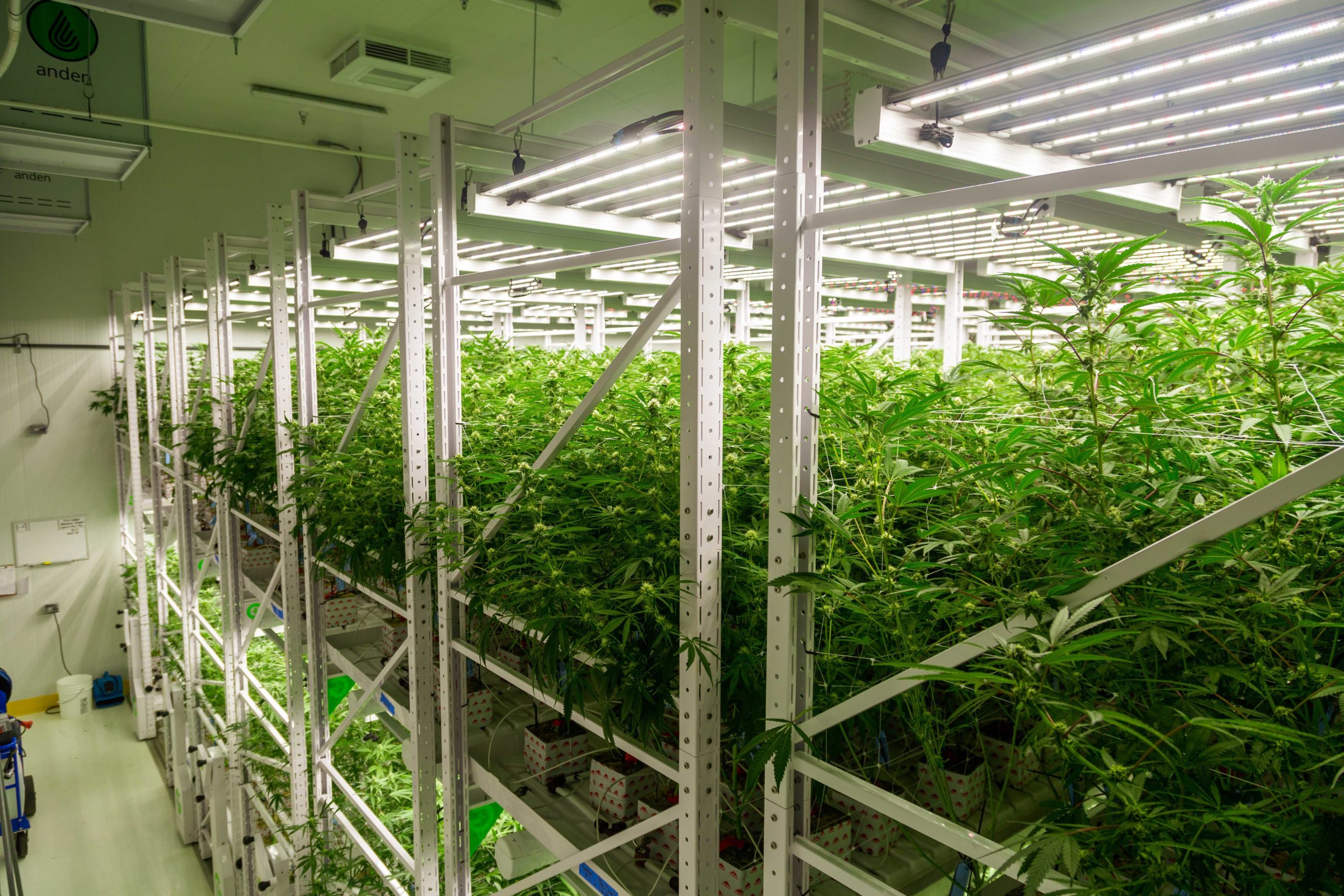
Yellow Dream Farm is our family-owned cannabis cultivation, manufacturing and distribution company based in San Bernardino County, California, often known as the Silicon Valley of cannabis. Our craft, boutique-style cannabis is grown from floor to ceiling in the 30,000-square-foot facility. We’re using cutting-edge technology that’s only come to market in the last five years and using a variety of sustainable practices. With environmental and feeding efficiencies, we’re able to harvest 300 pounds per week when compared to 150 pounds per week from a facility of the same size.
Vertical Farming for Space Optimization
Like any medical field, cannabis has seen large numbers of outside investments into the space, bringing ideologies and efficiencies from other time-tested industries. One such efficiency is vertical farming – a practice already seen in large-scale agriculture.
The Yellow Dream Farm vertical cultivation facility
We choose vertical farming to maximize our canopy square footage and minimize COGs to produce high-quality cannabis at scale. The barrier to entry into the cannabis industry is expensive, and you must utilize every square inch to stay profitable. We believe vertical farming is the most efficient and most profitable way to maximize output and our numbers can back that up; for example, we can produce double the amount of flower than the average single-tier room with the same square footage, without doubling the cost.
Our rooms contain double stacks to double room capacity by using ceiling heights instead of square footage. Even though vertical farming has larger start-up costs, we can maximize square footage and output, allowing us to get a better and faster ROI. Vertical farming can be done in many different ways but the way we built our facility was always with a sustainable outlook. We also look to improve and remove human error; with full irrigation control and crop steering technologies, we can recalibrate sensors, irrigation media and environmental sensors when needed based on successes, challenges or environmental constraints. Additionally, we have a few other sustainable practices that make a difference.
Water Conservation, Lighting and Automation
Being a California-based grower, water conservation is a key part of our operations. With San Bernardino County being located in the heart of the high desert, conserving water is not only a requirement but a competitive advantage. Our practices provide cost savings which we then pass along to our customers. Each cannabis plant on average requires between a half gallon and one gallon of water per day, which we then recirculate through condensate water from our A/C and dehumidifiers. All runoff nutrient water is re-filtered and reused to get the most out of our nutrients before discarding waste. Our freezer panel walls hold temperatures at consistent rates, and we have a fully automated system to dial in specific needs at any given time.
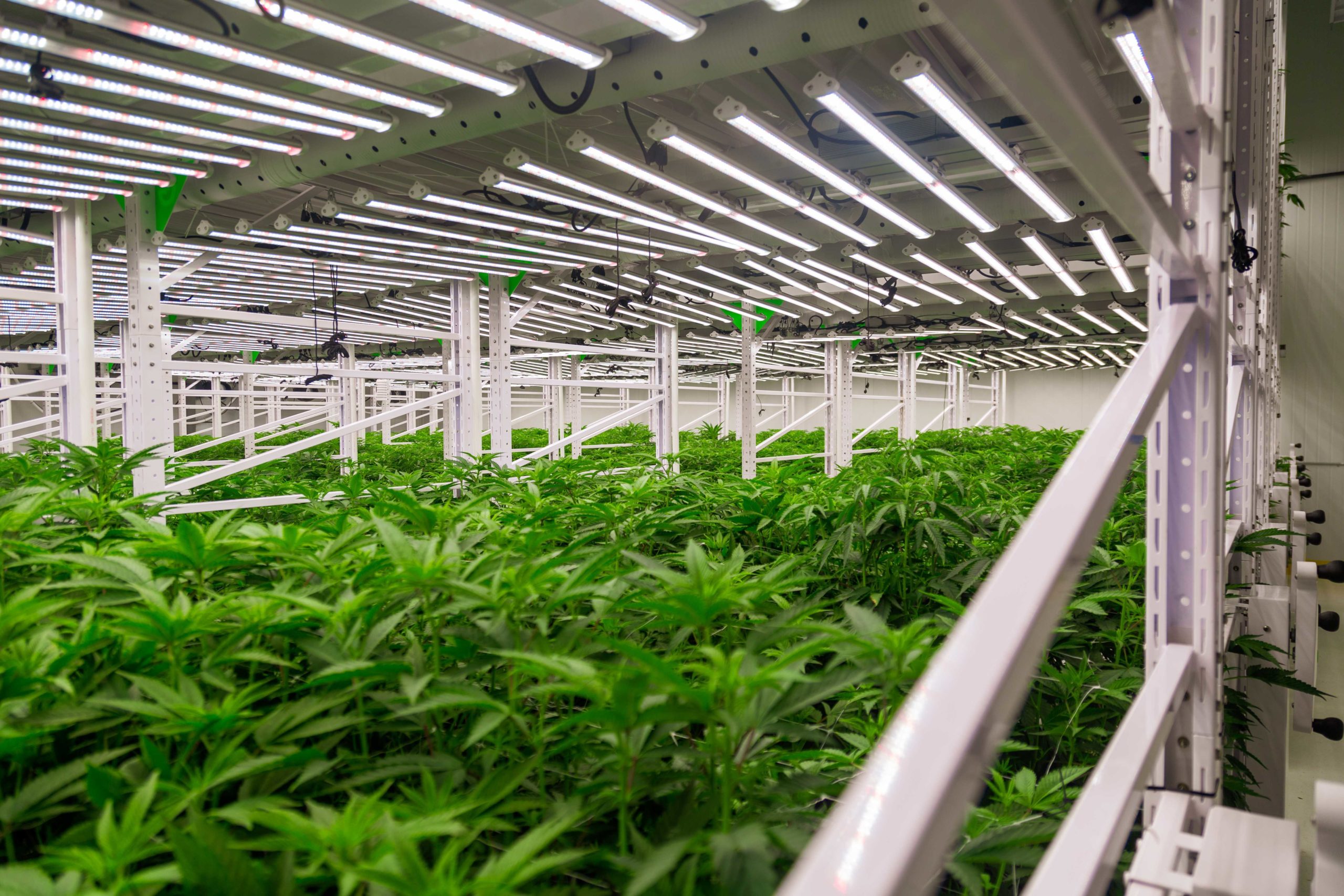
LED lights above a crop at Yellow Dream Farm
Lighting is another major environmental and capital cost. Our primary lighting system is LED technology, and we use LED spectrums to find which spectrum benefits the plant most. With LEDs, our energy consumption is 30 percent less.
Vertical Farming Is the Future of Cannabis and Agriculture
Vertical farming has been hailed as the future of many agricultural industries and cannabis is no different. We already see large vertical farms in most legal states, but surprisingly it’s still not a common style of growing. As the price per pound steadily declines in California, being able to keep COGs down will allow vertical farmers to sustain and thrive in this volatile industry.
In order to adapt, grow and leave a positive mark on the industry, we must pave the way for new styles of growing and utilizing new technology and science that was not available to growers in the past. We can use these advanced new technologies to make real-time changes to each sector of our facility and optimize both people power, and energy efficiency. And most importantly, we’ll be able to produce top-quality cannabis for adults to enjoy at affordable prices.
Cannabis products and medicines are progressing rapidly, eating away at the market share of smokable flower. Currently, the general adult use cannabis market is split in three, in order of popularity: cannabis flower, vaporizers and ingestible products like edibles or capsules. In the medical market, flower is increasingly being replaced by alternative methods of delivery – and the same trend is now starting to be seen in the adult use market.
This is to be expected to some extent. Initially, only flower was available to medical cannabis users. On top of not everyone feeling comfortable with smoking, inhaling a combustible substance into the lungs is not the healthiest consumption method for those already suffering from a serious illness.
In the present day, there are new alternatives to smoking that come without the risk and actually have additional benefits. For example, there are now much more precise ways to measure your cannabinoid intake than weighing out the flower you’re about to burn. As technology develops, there is an expectation that – despite flower sales being fairly stable last year – we will see continued incremental growth in the non-flower category, especially on the medical side.
Oral Cannabinoid Delivery
Thankfully for those who want to use non-smokable products, there are a growing number of alternative oral products that are currently available in the market or are under development.
Some of the many infused products on the market today.
Cannabis edibles might be the first products to come to mind when you think about non-smokable products – but for many medicinal users, these are actually a fairly unpopular option. While having a cannabis-infused brownie or gummy might be quite discreet compared to smoking a joint, the need for patients to take in extra sugar or extra calories every time they need to take their medicine can be off-putting. Additionally, tradionally infused edibles can take between one to three hours to feel as the body needs time to digest.
Cannabinoid capsules or pills have recently emerged as an equally discreet alternative to edibles. These pills come in many forms, including hard capsules containing ground cannabis flower, softgel capsules containing measured doses of cannabis extract, and gelatin-free alternatives. Though these pills, like edibles themselves, do come with a relatively long onset time.
Cannabinoid capsules
Pills and edibles are also both affected by first-pass metabolism. This means that the active cannabinoids will be processed through the digestive system and the liver before passing onto the brain or the other organs. During this process, some amount of CBD or THC will likely be broken down by the body before it can make its effect felt, leading to inaccuracies between the labelled dose of a product and the active dose that reaches the brain or target area in the body.
To avoid these problems with first-pass metabolism, some have turned to use sublingual cannabis oils and tinctures. By placing a measured dose of oil under the tongue using a dropper, this theoretically allows for the fast absorption of THC or CBD into the bloodstream without the product being processed by the digestive system. However, in practice, these sublingual tinctures need to be held under the tongue for around ten minutes before they are fully absorbed. This is fairly difficult to do without accidentally swallowing some amount of the tincture, and so this still introduces some amount of uncertainty with dosing.
Fast-Acting Absorption
Fast-acting absorption techniques and nano emulsions are also gaining in popularity. Nanotechnologies and techniques have been developed by many firms, and boast claims of increasing absorption through the digestive system in order to effectively double the volume of cannabinoids absorbed into the body. Nano emulsions are also promising, which come with claims of up to four to five times more improved absorption. Such technologies rely on cannabis oils being immiscible with water-based substances, and process these cannabis oils in such a way that they become nanoscale droplets suspended in a larger mixture. Because of their size, these small pockets of cannabis oil are able to be absorbed rapidly through the gastrointestinal tract and into the bloodstream.
A drink additive, made by Splash Nano, that uses nano emulsion technology
Older liposomal and newer nano-liposomal combinations have also boasted similar claims. Liposomes are commonly used as a novel drug delivery system for pharmaceutical products to facilitate the absorption of drugs into the body, and the adaption of such techniques for the cannabis sector is also intended to dramatically improve the absorption of cannabinoids into the bloodstream. Given the marketing of these products, it can become confusing to know which is the best. The only way to know for sure is to have either a breath or blood analysis to see which style works and is best for the individual consumer.
As manufacturers progress from flower and basic products, the largest brands and more advanced medical companies are all producing ingestible products with fast absorption methods and additives. The difference is pronounced and significant enough that consumers and patients are starting to demand fast absorption products. As the market becomes more educated, you can expect that the market for fast absorption ingestible products will greatly outpace the older, more basic formulations. Of course, some emulsion additives will increase the operating costs for businesses, but over time, this difference will likely be fairly minimal.
Microencapsulation to boost cannabinoid absorption
Microencapsulation is another new method for producing drugs with high bioavailabilities, and the technique has recently made headlines in the cannabis industry.
Using a technique known as ionic gelation, or ionotropic gelation, scientists are able to trap drugs inside nano- or microscale capsules. These tiny capsules are robust enough to be able to protect the active drug ingredient–which in this case would be CBD or another cannabinoid–against the harsh environment of the gastrointestinal tract without necessarily limiting bioavailability.
The structure of cannabidiol (CBD), one of 400 active compounds found in cannabis.
Unlike the other oral dosing methods, cannabinoid microcapsules are not yet a commercially available product. However, there is early research indicating that this drug delivery technology could be a significant step forward in terms of improving cannabinoid bioavailability and absorption.
Published in the journal PLOS One, a new study from a team of Australian scientists reports that CBD microcapsules used in combination with a permeation-modifying bile acid can boost the peak concentration of CBD reaching the brain by 300 percent. These peak concentrations of CBD in the body also happened much earlier with the CBD microcapsules than with regular CBD oil, reflecting a faster absorption by the body.
This improved absorption and bioavailability addresses many of the limitations seen with traditional oral cannabinoid delivery. However, there is still potentially a very long road before these microcapsules are approved for general use in humans, making them an unrealistic option at present.
Metered Dose Inhalers
So far as innovative cannabis dosing technology that is currently available on the market goes, metered dose inhalers lead the way. Making up one-third of the market share, these devices are easy to use, discreet and are far less invasive than burning cannabis flower.
A metered dose inhaler by MÜV
Heating and vaporizing a purified cannabinoid also exposes the user to fewer potentially harmful combustion products than smoking flower. Using vapes, manufacturers are also able to adjust the formulation of vape oils in order to deliver a truly consistent product. This can help the consumer to truly measure their intake of beneficial cannabinoids.
Vaporizers for general adult use are very common now and come in many forms and flavors. Until recently though, there were very few vaporizers that met the specific needs of the medical market, like being able to deliver very controlled doses of cannabinoids. Now, innovation in the sector has led to a number of companies developing special metered dose inhalers for this purpose. These devices use smart technology to only heat and vaporize a pre-set controlled dose of cannabis oil from their compatible cartridges, allowing for intake to be tracked more precisely. This is different from regular vapes, where the amount inhaled can vary depending on how deeply a person inhales, or other environmental factors.
Recently, Syqe Medical received approval from Health Canada for their metered dose cannabis vaporizer. There is already a similar registration for approval in the US and Europe that looks promising for similar devices.
Recreational acceptance of products, like these high-tech vaporizers, drives up spending on innovations that would otherwise just be novel ideas. The cannabis industry has a wealth of creative talent, and with the market beginning to tear away from flower and towards novel and innovative products, like vaporizers and fast acting ingestible products, now is the time for the medical market to invest in this talent and follow the demand and the money.
This website uses cookies so that we can provide you with the best user experience possible. Cookie information is stored in your browser and performs functions such as recognising you when you return to our website and helping our team to understand which sections of the website you find most interesting and useful.
Strictly Necessary Cookies
Strictly Necessary Cookie should be enabled at all times so that we can save your preferences for cookie settings.
We use tracking pixels that set your arrival time at our website, this is used as part of our anti-spam and security measures. Disabling this tracking pixel would disable some of our security measures, and is therefore considered necessary for the safe operation of the website. This tracking pixel is cleared from your system when you delete files in your history.
We also use cookies to store your preferences regarding the setting of 3rd Party Cookies.
If you disable this cookie, we will not be able to save your preferences. This means that every time you visit this website you will need to enable or disable cookies again.