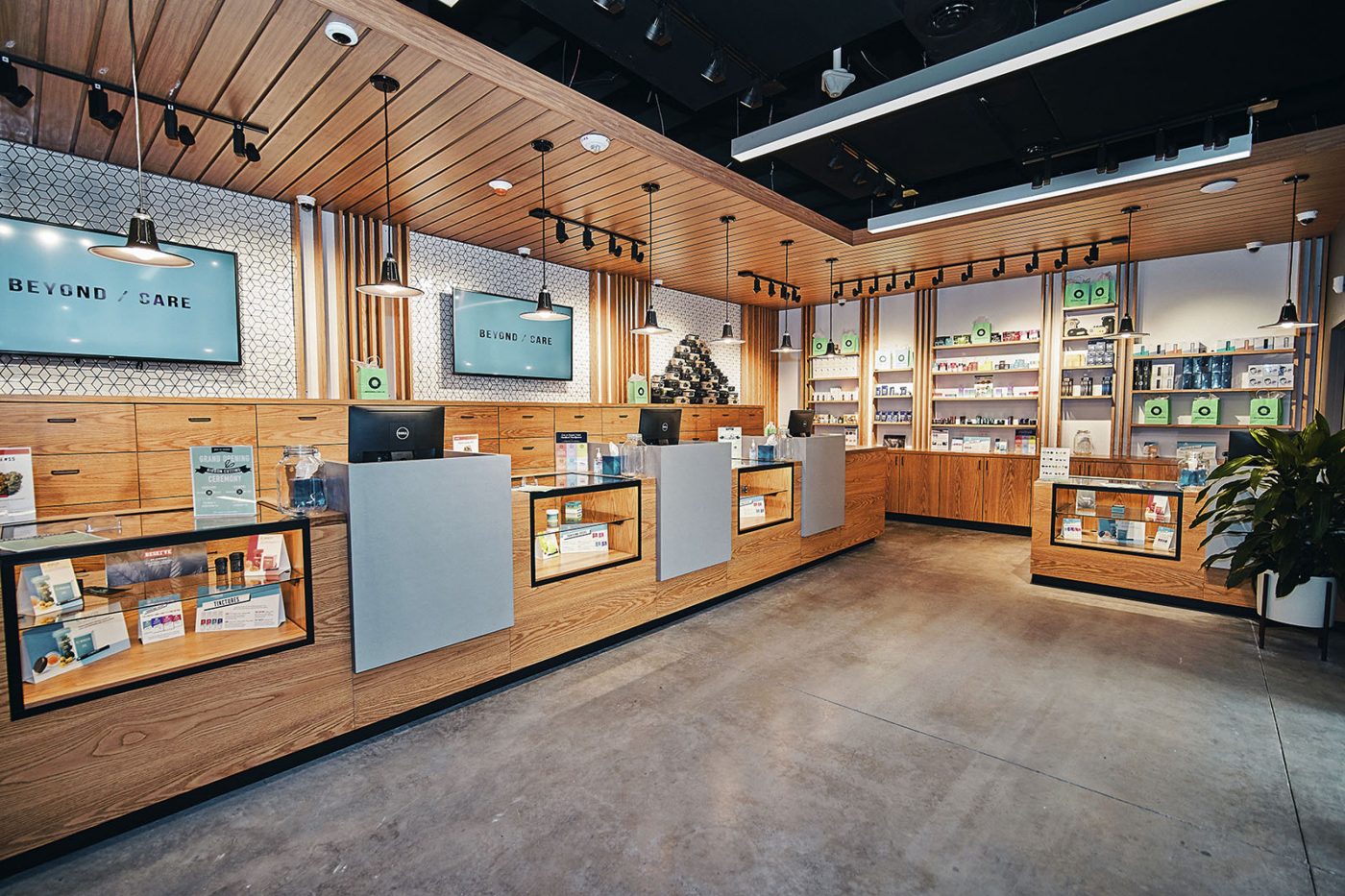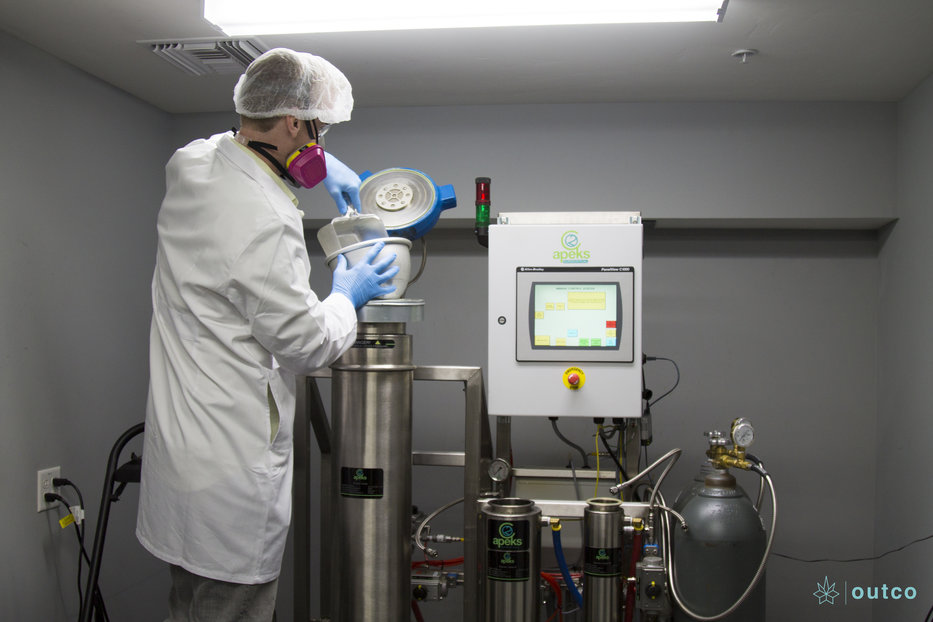
Tag Archives: quality

Flower-Side Chats Part 9: A Q&A with Andrew Thut, Chief Investment Officer of 4Front Ventures

By Aaron Green
No Comments

In this “Flower-Side Chats” series of articles, Green interviews integrated cannabis companies and flower brands that are bringing unique business models to the industry. Particular attention is focused on how these businesses integrate innovative practices to navigate a rapidly changing landscape of regulatory, supply chain and consumer demand.

4Front Ventures Corp. (CSE: FFNT) ( OTCQX: FFNTF) is a multi-state operator active in Washington, Massachusetts, Illinois, Michigan and California. Since its founding in 2011, 4Front has built a reputation for its high standards and low-cost cultivation and production methodologies earned through a track record of success in facility design, cultivation, genetics, growing processes, manufacturing, purchasing, distribution and retail. To date, 4Front has successfully brought to market more than 20 different cannabis brands and nearly 2,000 unique product lines, which are strategically distributed through its fully owned and operated Mission dispensaries and retail outlets in its core markets.

We interviewed Andrew Thut, chief investment officer of 4Front Ventures. Andrew joined 4Front in 2014 after investing in the company in 2011. Prior to 4Front, Andrew worked in investment banking and later moved on to public equity where he was a portfolio manager at BlackRock.

Aaron Green: How did you get involved in the cannabis industry?

Andrew Thut: I came at it from the investment side of things. I started my career as a junior investment banker right out of school and then I was a public equity analyst and Portfolio Manager. I ran small-cap growth portfolios for BlackRock where I was on the team for a better part of 11 years.

Andrew Thut, Chief Investment Officer of 4Front Ventures

One of my friends, Josh Rosen, who came from the finance industry, got interested in the cannabis industry really in 2008. He founded 4Front as a consulting company officially in 2011 and I came in as an investor. After that original investment, I left BlackRock and I was looking for something different to do. I was tired of chasing basis points and running public market portfolios. Josh said to me “This industry needs more talent,” and I became more and more involved at 4Front as the years went on. In 2014, I came into the business full time. Originally, I was someone that was kind of the gray hair in the room when we were applying for licenses. We had to go to different municipalities and convince them that we were going to be responsible license holders. I also spent a lot of time on the capital raising side for our business leveraging my career in corporate and more traditional public finance. These are incredibly complex businesses that require a fair amount of capital in some places. So, that’s how I originally got into the business.

These are complicated businesses in a lot of cases. The “sausage making” in cannabis is incredibly complicated. There’s friction at every step along the way. As an example, when you’re buying a building where you want to cultivate your product, you can’t get a mortgage from a typical bank.

While those of us that have been in the industry like to gripe and complain about it, this friction is also the opportunity. Because more traditional investors can’t invest in this industry yet, it allows us more time to build our businesses and have some protective moats around it from a competition standpoint until those folks do come in. So, all this friction is a pain and it’s brutal, but it’s also the opportunity here in cannabis.

Green: Can you speak to the transformation of 4Front from consulting to MSO?

Thut: The original business was consulting. Our original investor was sensitive about touching the plant – it’s one thing to offer services to a federally illegal business, it’s another thing to directly run a federally illegal business. For example, 4Front would have consulting clients that were interested in acquiring a license in Massachusetts. Because of our expertise and our standard operating procedures, we could apply for licenses in limited license states on behalf of our clients and help them show regulators competence and give the regulator’s confidence that these operators knew what they were doing. So, we would help our clients win the licenses and then once those licenses were won, our operations folks would come in and help them get up running.

When I came into the business we said, “well, geez, we have quite a track record helping clients win licenses and get open. If we’re good at winning these licenses and getting them open, why aren’t we just doing this on our own behalf?” So, in 2015, we shifted the business from consulting to being a multi-state operator. We leveraged our capabilities in regulatory compliance and winning licenses to go and get those on our own behalf. We also leveraged our financial expertise in M&A to add to our portfolio, so what we ended up with was a seven-state portfolio at the time.

Green: Chief Investment Officer is an uncommon title, even in the MSO space. What does your day-to-day look like?

Thut: I spend an awful lot of time helping management plot our strategy, and then figuring out how we are going to pay for our growth. Not only structuring finances for the company, but also having contact with our existing and new investors.

I spend a lot of my day to day thinking about where we want to be as a business and what geographies we want to be in. If you look at cannabis longer term, we have less interest in being cultivators or farmers. We think that’s going to be the most quickly commoditized piece of the value chain. We like retail as a business, but I think that we have less interest in managing hundreds of retail locations scattered across the country. We ultimately want to be a finished goods manufacturer. What we think is going to matter longer term is establishing low-cost production.

There is a lot of price elasticity in the end markets for cannabis meaning if you get customers a quality product at a much better price than the competitor, you’re going to take outsize market share. To offer that lower price, you have to be efficient. Over the years, we have figured out how to bring the labor cost out of our production. We have 25 different brands with 1000s of different SKUs of products that have dominant market share in states like Washington. And we’re now putting them into Illinois, Massachusetts, California, Michigan, and hopefully New Jersey.

Green: Do you have a preference towards acquisition, or do you seek growth through internal investments?

Thut: We are always weighing build versus buy. We want our products to have dominant market share, or very strong market share in every state we are in, and we have a lens towards what gets us there faster and most efficiently. For instance, we have two cultivation facilities and one production facility here in Massachusetts – about 15,000 square feet of canopy in the state. That will just about serve our three retail locations in Massachusetts.

Back to our bigger investment thesis, we believe that we should be a finished goods wholesaler in every state that we’re in. We know our products are incredibly well received and we know that consumers love our price point. In Massachusetts, for instance, we’re currently evaluating if we need more capacity from a cultivation standpoint and a production standpoint. And if we do where do the lines cross in terms of whether we should build versus buy that additional capacity?

We are currently in five states, including our facility in Washington has dominant market share in one of the toughest markets in the world for cannabis – somewhere close to 9% market share in Washington. Our brands are in the top 10 of every single category from flower to vapes, to edibles everything across the board. And what we’re doing our strategy is simple. It’s taking those tried-and-true products and operating procedures that have been so effective in Washington, and we’re replicating them in other states where we have licenses: Massachusetts, Illinois, and Michigan, California and hopefully New Jersey. We’re looking for more state, but we want to be deep in the states we’re in.

We also have a lot of confidence that you know, having been having translated some of these, having been able to effectively take our Washington success story and port it to other states. We’re looking for other states to sort of bring into the portfolio because we feel like we’re in a position now to stamp it out.
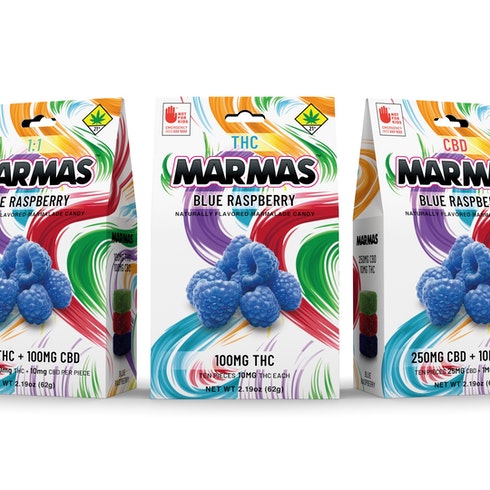
At our facility in Washington, which is the number one edibles manufacturer in that state, we produce the edible Marmas which is our the number one selling gummy in Washington. We produce 3,500 boxes of those in one shift using 25 people in Washington. Our facility is one of the lowest cost producers in the country.

We are opening what we think is going to be a very disruptive facility in Southern California right now. The facility is 170,000 square feet of purely automated finished goods production. So, rather than making 3,500 boxes of our gummy squares in one shift using 25 people, with the automation that we have in California, we can make 30,000 boxes. So, 10x one shift for the same number of people. We look more like the Mars Candy Company than most investors would think of when they see a typical cannabis company. We’re bringing that kind of scale and automation.

Green: What are some of the industry trends that you’re watching closely?

Thut: We keep a close eye on limited license states. States like Massachusetts and Illinois. For various reasons Massachusetts is very tough to get zoned. So, there’s going to be a limited number of players in a state like Massachusetts, which means you can have pretty good moats around your business and pricing will hold up over several years. We love limited license states like that, where price is going to hold up. On the other hand, we’re not afraid to enter a state like California where we think our low-cost production expertise uniquely qualifies us to go into a huge market like that and be disruptive and take a lot of the pie.

“You’re starting to see the market expand. There’s some anecdotal evidence that we’re taking a fair amount of share from the beer industry.”What we’re seeing in terms of industry trends, particularly on the THC side of this business, has just been phenomenally strong. You’ve had robust medical markets where, by and large, we’re seeing those dominoes start to fall quickly and going recreational. When that happens, the size of the market increases – call it from 2% of the population to as much as 10% of the population. So, from a state regulatory standpoint, having states go form medical to adult use is a huge deal in terms of the market opportunity.

We’re also seeing states get a lot more comfortable with the idea of selling cannabis. I’ve been around for close to seven years in this industry. When I started and I went into a municipality, and I said we wanted to open a cannabis store you’d have people following me to my car with pitchforks. As these municipalities open and public acceptance comes around, people are realizing that these stores are providing jobs and providing a good tax base for communities. So, the acceptance of cannabis has a snowballing effect that just continues to roll.

It’s not just the ultra-frequent users of cannabis who are totally driving the bus in terms of the demand growth for your business. You’re starting to see the market expand. There’s some anecdotal evidence that we’re taking a fair amount of share from the beer industry. So, the fundamentals of this industry are phenomenal. I think that we’re probably in the second inning of what is a mega-trend of legalization of cannabis and the investment opportunity here.

Green: I think one of the interesting things about the fundamentals is you’ve got this hardship of 280E, that all the companies are facing, and yet you still have groups that are surviving, profitable and growing. What are your thoughts on 280E’s effect on cannabis businesses? Do you foresee anything happening there?

Thut: There was a huge liquidity crunch in cannabis in 2019, meaning it was hard for people to come up with capital to grow their businesses. You had a bunch of companies that had licenses who didn’t really know how to operate and weren’t really focused on profitability. That liquidity crunch of 2019 made people get religious about being profitable and being efficient with capital allocation. Fast forward to 2021 and if you look at the top 10 cannabis MSOs in the US, I think we’re all profitable.

So, here you have an industry with accelerating top line growth and they’re already profitable. That profitability should only improve as you’re able to leverage your operating expenses and that’s a unique thing. When the internet craze was started in 1999 you had companies that a weren’t profitable, didn’t have business models, and no one really knew what they wanted to be. You have companies here in cannabis that are growing the top line 50% a year, and they’re profitable, and they’re trading at under 10 times EBITDA, which is totally disjointed.

Sen. Schumer unveiling the Cannabis Administration and Opportunity Act

So, that leads me to your question on to 280E. 280E has been a problem. Banking has been a problem. Having to list our companies over the counter instead of on exchanges like the NASDAQ and NYSE – that’s been a problem in terms of attracting capital. But the good news is Senator Schumer, Senator Booker and others have put out some bold initiatives on what they want to achieve from a legalization standpoint. From an investment standpoint, the biggest thing that investors should be focused on is access to banking, which is included in the senators’ proposed legislation.

Once we get access to banking services, the federal government is basically acknowledging cannabis as an industry will be able to not only have more traditional financing for our growth, but it will also lead to uplift into exchanges and real institutions like the Fidelity’s and the BlackRock’s of the world being able to come and invest in these companies. It also acknowledges 280E is an antiquated law. Getting rid of 280E will give us a much lower tax rate and will allow us to have a bigger proportion of our pretax cash flow into growing our businesses rather than having to go outside for that funding. My crystal ball is probably no better or worse than others in the industry, but if you fast forward 18 months to two years, I have a tough time seeing 280E still in place.

Green: Last question here. What’s the thing you’re most interested in learning about in the cannabis industry?

Thut: I’m just fascinated to see how these various business models will play out. People are placing bets on picks and shovels. People are placing bets on whether being a finished goods manufacturer works. People are placing bets on whether a retailer business model is going to win the day.

If you look at the leadership in the cannabis industry today, it’s totally different than it was four years ago. People that were foregone winners four years ago like MedMen had to do significant recaps. I put Acreage in that sort of bucket too. The leadership had shifted and so I’m really curious to see just from an intellectual standpoint, how this business evolves.

I sometimes scratch my head, you know, do you really want to be a cannabis company with 200 retail locations? You’re going to have a tough time growing same store sales in three to five years in 200 retail locations. So, I’m just most curious in proving out our thesis of being finished goods producers and low cost finished goods producers in the value chain. I’m most curious in seeing how that plays out. I think we are seeing our strategy play out in the most competitive markets in the world. We have a high degree of conviction that we’re on the right track here, but our eyes are always open and we’re always making little pivots here and there trying to make sure to stay on top of the sweet spot in the value curve.

If you describe the cannabis industry generically and you didn’t say cannabis, you said “widget” I think it’s the most fascinating Business School case ever presented. If you’re taking this market that already exists, it’s just illegal. So, all it needs to do is switch from the black market to the legal market and then you’re always trying to plot a course and steer the ship towards where the highest value creation can be. So, I’m fascinated to see how it’s going play out here.

Green: That concludes the interview. Thanks Andrew!

Thut: Thanks Aaron.
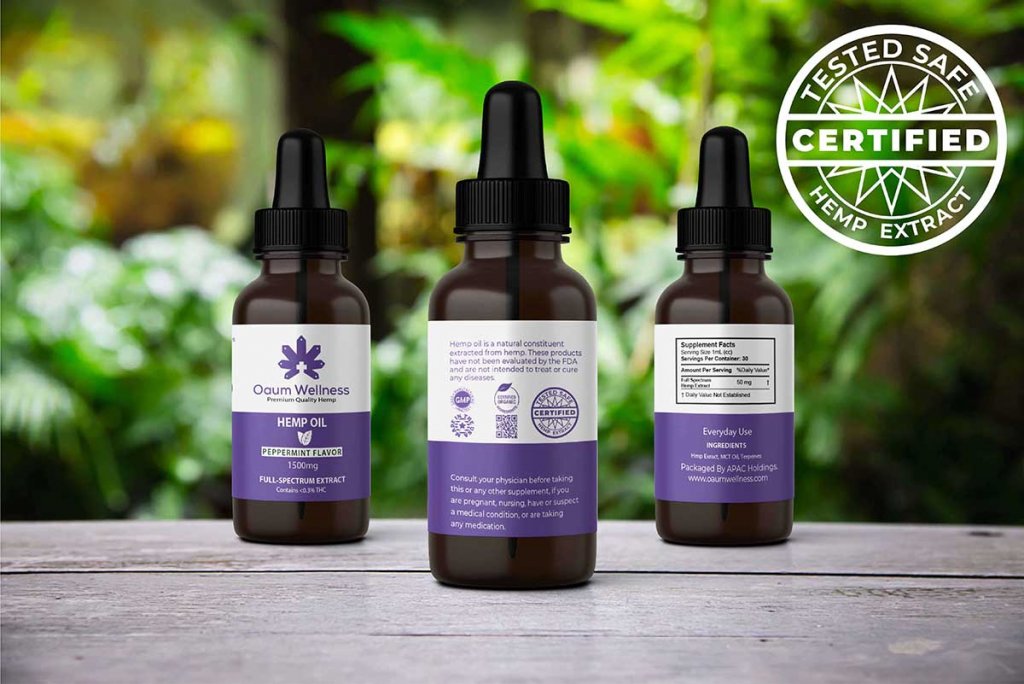
ACS Laboratory Launches Tested Safe Certified Seal Program

By Cannabis Industry Journal Staff
No Comments

ACS Laboratory, a cannabis and hemp testing lab based outside of Tampa Bay, Florida, announced the launch of their “Tested Safe Certified Seal” program. The program is designed to help raise standards and put more consumer trust in safe, tested products.

The “Tested Safe Certified Seal” on a hemp oil product

ACS Laboratory is an ISO 17025-accredited and DEA-licensed cannabis testing company founded in 2008. Last year they were certified by the Florida Department of Health to perform cannabis testing for state-licensed cannabis companies. In addition, the company acquired Botanica Testing, Inc. in 2020, adding more than 500 hemp and CBD clients to their portfolio. They now perform hemp testing for clients in more than 44 states.

The “Tested Safe Certified Seal” program allows companies to adorn their products with the trademarked seal following testing, informing consumers that their product has met safety standards and a full panel of compliance tests. “Unlike a mandated QR code that links to a Certificate of Analysis (COA) with detailed test results, the Seal shows visual proof at a glance that consumers can trust a brand,” reads the press release.

The program is also endorsed by the American Cannabinoid Association (ACA). “It is exciting to see our industry legally providing cannabis and cannabis-derived products on a commercial scale,” says Matthew Guenther, founder of the ACA. “As with any consumer product, safety and quality control remain our absolute priority.”

To earn the seal, companies send their products to the ACS lab for a full panel of safety and potency tests. ACS has a scope of services that includes: potency testing for 21 cannabinoids, 38 terpene profiles, 42 residual solvents, screening for 105 pesticides, moisture content, water activity, microbiology panels, heavy metals screening, flavonoid testing for 16 profiles, micronutrient testing, mycotoxins, Vitamin E acetate, shelf life & stability, plant regulators (PGRS), PAH testing and Pharmacokinetic Studies (PK) aka human trials.

Kaycha Labs Joins NIST’s CannaQAP

By Cannabis Industry Journal Staff
No Comments

Kaycha Labs, a cannabis lab testing company headquartered in Fort Lauderdale, Florida, has announced their participation in the National Institute of Standards and Technology’s (NIST) Cannabis Quality Assurance Program (CannaQAP).

The NIST is an organization under the U.S. Department of Commerce that promotes innovation through standards, technology and advancing science. The NIST’s CannaQAP platform works with cannabis labs to help improve competence in analytical science and standardization.

The program requires participating labs to conduct exercises that help inform the NIST about current industry standards and capabilities for hemp and cannabis testing. One of the goals of the program is aiding in the design and characterization of cannabis reference materials.

Kaycha Labs took part in two exercises for the CannaQAP study. Exercise 1 included testing for potency with 17 cannabinoids in hemp oil and Exercise 2 included potency, heavy metals and moisture content testing in plant materials.

Chris Martinez, president of Kaycha Labs, says the program can benefit the entire industry when it comes to regulatory compliance testing. “As a leading cannabis lab company with a network of labs in multiple states, it is imperative we demonstrate that our labs apply compliant and consistent testing methodologies,” says Martinez. “Assuring all industry participants, including State and Federal government regulators, that precise and consistent testing data is the norm will benefit the entire industry.”

Kaycha Labs, while based in Fort Lauderdale, actually has cannabis testing labs in California, Colorado, Florida, Massachusetts, Nevada, Oklahoma, Oregon and Tennessee, making them an ideal candidate for CannaQAP.

Exercise 1 has been completed in its entirety and published here. Exercise 2 has completed the participation and data submission legs of the study and NIST is preparing it for publication. On their website, it says that announcements about their upcoming Exercise 3 are coming soon.

ASTM Proposes New Standard on Change Control Process Management

By Cannabis Industry Journal Staff
No Comments

Change control, when it comes to quality management systems in manufacturing, processing and producing products such as cannabis edibles or vape pens, is a process where changes to a product or production line are introduced in a controlled and coordinated manner. The purpose of change control process management is to reduce the possibility of unneeded changes disrupting a system, introducing errors or increasing costs unnecessarily.

ASTM International, the international standards development organization, is developing a new standard guide that will cover change control process management for the cannabis and hemp market. The guide is being developed through the D37 cannabis committee.

The WK77590 guide will establish a standardized method for change control process management for cannabis companies so that they can document and track important decisions in manufacturing and quality systems.

For example, an edibles manufacturer would utilize change control process management if they want to use a different type of processing equipment or introduce a new shape or design of their product. Without change control process management, that edibles producer might switch to a new piece of processing equipment without knowing that it requires more energy or uses different raw materials, thus making production unexpectedly more expensive.

While that’s a very cursory example, the premise is simple: Before you undergo a change to your process, plan it out, analyze it, review it, test it out, implement it and make sure it works.

Change control process management can often be summarized in six steps:

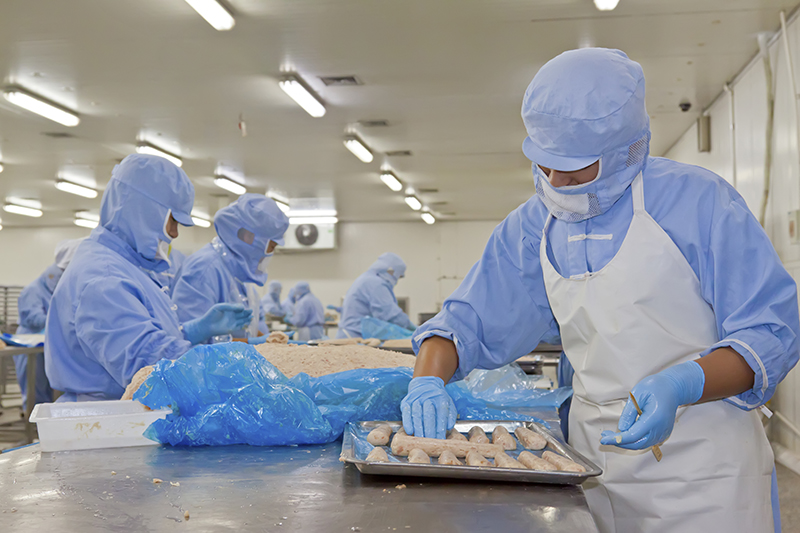
Food processing and sanitation
Change control is designed to coordinate changes to manufacturing so they don’t disrupt a process. 
  1. Plan/Scope
  2. Assess/Analyze
  3. Review/Approval
  4. Build/Test
  5. Implement
  6. Close

Maribel Colón, quality assurance consultant and vice chair of the ASTM subcommittee on cannabis quality management systems, says producers and testing labs will benefit the most from the guide. “As the cannabis industry grows, the quality, expectations, and control challenges grow within,” says Colón. “The creation and implementation of this standard guide will increase cannabis business efficiency and minimize risk, time, and potential cost of poorly managed changes.”

According to a press release, ASTM International is open to collaboration on this as well. Specifically, they are looking for professionals with change control who might be interested in helping advance and develop this guide.

AOAC Approves Two New Microbiological Assays

By Cannabis Industry Journal Staff
No Comments

On August 11, PathogenDx announced that they received an AOAC Performance Tested Methods Certificate for their QuantX total yeast and mold test. Six days later, on August 17, Medicinal Genomics announced that AOAC approved their PathoSEEK 5-Color Aspergillus Multiplex Assays under the same AOAC Performance Tested Methods program.

Both assays are specifically designed with cannabis and hemp testing in mind and designed to expedite and simplify microbiological testing. PathogenDx’s QuantX quantifies the total amount of yeast and mold in a sample while also measuring against safety standards.

In addition to the total yeast and mold count test, PathogenDx has also introduced a 96-well plate, improved sample preparation and new data reporting with a custom reporting portal for compliance testing.

The Medicinal Genomics platform can detect four species, including A. flavus, A. fumigatus, A. niger, and A. terreus in both flower and infused edibles. The PathoSEEK microbial testing platform uses a PCR-based assay and provides an internal plant DNA control for every reaction.

This technique verifies the performance of the assay when detecting pathogens, allegedly minimizing false negative results commonly due to set up errors and experimental conditions.

AOAC International is a standards organization that works in the cannabis testing space through their CASP program to evaluate and approve standard testing methods for the industry.

Reducing Cross Contamination in Your Lab

By Nathan Libbey
No Comments

Cross Contamination

Cross Contamination – noun – “inadvertent transfer of bacteria or other contaminants from one surface, substance, etc., to another especially because of unsanitary handling procedures. – (Mariam Webster, 2021). Cross contamination is not a new concept in the clinical and food lab industries; many facilities have significant design aspects as well as SOPs to deliver the least amount of contaminants into the lab setting. For cannabis labs, however, often the exponential growth leads to a circumstance where the lab simply isn’t large enough for the number of samples processed and number of analytical instruments and personnel needed to process them. Cross contamination for cannabis labs can mean delayed results, heightened occurrences of false positives, and ultimately lost customers – why would you pay for analysis of your clean product in a dirty facility? The following steps can save you the headaches associated with cross contamination:

Wash (and dry) your hands properly

Flash back to early pandemic times when the Tik Tok “Ghen Co Vy” hand washing song was the hotness – we had little to no idea that the disease would be fueled mostly by aerosol transmission, but the premise is the same, good hand hygiene is good to reduce cross contamination. Hands are often the source of bacteria, both resident (here for the long haul; attached to your hands) and transient (easy to remove; just passing through), as they come into contact with surfaces from the bathroom to the pipettor daily (Robinson et al, 2016). Glove use coupled with adequate hand washing are good practices to reduce cross contamination from personnel to a product sample. Additionally, the type of hand drying technique can reduce the microbial load on the bathroom floors and, subsequently tracked into the lab. A 2013 study demonstrated almost double the contamination from air blade technology versus using a paper towel to dry your hands (Margas et al, 2013).

Design Your Lab for Separation

Microbes are migratory. In fact, E. coli can travel at speeds up to 15 body lengths per second. Compared to the fastest Olympians running the 4X100m relay, with an average speed of 35 feet per second or 6 body lengths, this bacterium is a gold medal winner, but we don’t want that in the lab setting (Milo and Phillips, 2021). New lab design keeps this idea of bacterial travel in mind, but for those labs without a new build, steps can be made to prevent contamination:

  • Try to keep traffic flow moving in one direction. Retracing steps can lead to contamination of a previous work station
  • Use separate equipment (e.g. cabinets, pipettes) for each process/step
  • Separate pre- and post-pcr areas
  • Physical separation – use different rooms, add walls, partitions, etc.

Establish, Train and Adhere to SOPs

Design SOPs that include everything- from hygiene to test procedures and sanitation.

High turnover for personnel in labs causes myriad issues. It doesn’t take long for a lab that is buttoned up with cohesive workflows to become a willy-nilly hodgepodge of poor lab practices. A lack of codified Standard Operating Procedures (SOPs) can lead to a lab rife with contaminants and no clear way to troubleshoot the issue. Labs should design strict SOPs that include everything from hand hygiene to test procedures and sanitation. Written SOPs, according to the WHO, should be available at all work stations in their most recent version in order to reduce biased results from testing (WHO, 2009). These SOPs should be relayed to each new employee and training on updated SOPs should be conducted on an ongoing basis. According to Sutton, 2010, laboratory SOPs can be broken down into the following categories:

  • Quality requirements
  • Media
  • Cultures
  • Equipment
  • Training
  • Sample handling
  • Lab operations
  • Testing methodology
  • Data handling/reporting/archiving
  • Investigations

Establish Controls and Monitor Results

Scanning electron micrograph shows a colony of Salmonella typhimurium bacteria. Photo courtesy of CDC, Janice Haney Carr

It may be difficult for labs to keep tabs on positivity and fail rates, but these are important aspects of a QC regimen. For microbiological analysis, labs should use an internal positive control to validate that 1) the method is working properly and 2) positives are a result of target analytes found in the target matrix, not an internal lab contamination strain. Positive controls can be an organism of choice, such as Salmonella Tranoroa, and can be tagged with a marker, such as Green Fluorescent Protein in order to differentiate the control strain. These controls will allow a lab tech to discriminate between a naturally contaminated specimen vs. a positive as a result of cross-contamination.

Labs should, in addition to having good QC practices, keep track of fail rates and positivity rates. This can be done as total lab results by analysis, but also can be broken down into customers. For instance, a lab fail rate for pesticides averages 4% for dried flower samples. If, during a given period of review, this rate jumps past 6% or falls below 2%, their may be an issue with instrumentation, personnel or the product itself. Once contamination is ruled out, labs can then present evidence of spikes in fail rates to growers who can then remediate in their own facilities. These efforts in concert will inherently drive down fail rates, increase lab capacity and efficiency, and result in cost savings for all parties associated.

Continuous Improvement is the Key

Cannabis testing labs are, compared to their food and clinical counterparts, relatively new. The lack of consistent state and federal regulation coupled with unfathomable growth each year, means many labs have been in the “build the plane as you fly” mode. As the lab environment matures, simple QC, SOP and hygiene changes can make an incremental differences and drive improvements for labs as well as growers and manufacturers they support. Lab management can, and should, take steps to reduce cross contamination, increase efficiency and lower costs; The first step is always the hardest, but continuous improvement cannot begin until it has been taken.


References

Margas, E, Maguire, E, Berland, C. R, Welander, F, & Holah, J. T. (2013). Assessment of the environmental microbiological cross contamination following hand drying with paper hand towels or an air blade dryer. Journal of Applied Microbiology, 115(2), 572-582.

Mariam Webster (2021. Cross contamination. Retrieved from https://www.merriam-webster.com/dictionary/cross%20contamination

Milo, M., and Phillips, R. (2021). How fast do cells move? Cell biology by the numbers. Retrieved from http://book.bionumbers.org/how-fast-do-cells-move/

Robinson, Andrew L, Lee, Hyun Jung, Kwon, Junehee, Todd, Ewen, Perez Rodriguez, Fernando, & Ryu, Dojin. (2016). Adequate Hand Washing and Glove Use Are Necessary To Reduce Cross-Contamination from Hands with High Bacterial Loads. Journal of Food Protection, 79(2), 304–308. https://doi.org/10.4315/0362-028X.JFP-15-342

Sutton, Scott. (2010). The importance of a strong SOP system in the QC microbiology lab. Journal of GXP Compliance, 14(2), 44.

World Health Organization. (2009). Good Laboratory Practice Handbook. Retrieved from https://www.who.int/tdr/publications/documents/glp-handbook.pdf

4 Trends Propelling the U.S. Cannabis Testing Market: 2021-2027

By Priya Deshmukh
1 Comment

As the legalization of cannabis in the U.S. continues to grow, stringent regulatory requirements around the country are being adopted to ensure that only safe and high-quality cannabis is sold. The U.S. cannabis testing market is estimated to see tremendous growth over the coming years. Further, the FDA has made several resources available for addressing cannabis products like CBD to ensure that consumers and stakeholders are getting safe products.

According to Global Market Insights, Inc., U.S. Cannabis testing market size is projected to surpass USD 4.1 billion at a CAGR of 10.4% through 2027, in light of below mentioned trends:

Strategic initiatives by major industry players

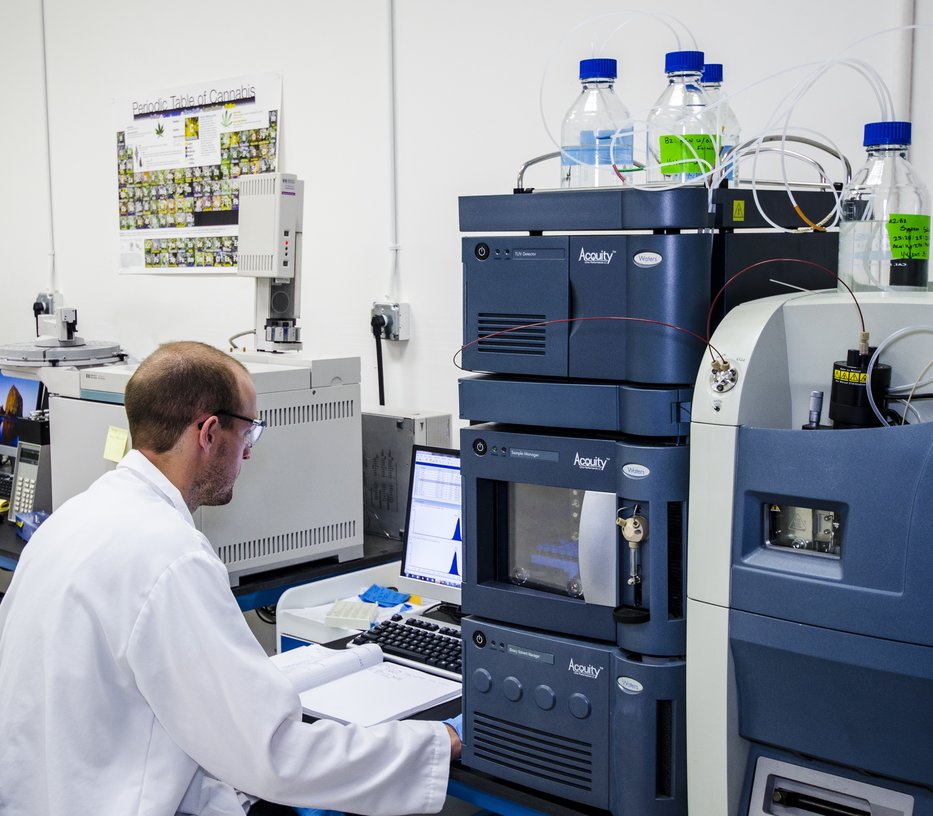
HPLC (high pressure liquid chromatography) instrument.

Prominent players operating in the U.S. cannabis testing market such as CannaSafe, Anresco, Collective Wellness of California, EVIO Inc., Digipath Inc., PSI Labs, SC Labs, Inc., Steep Hill, Inc. etc. are focusing on developing enhanced cannabis testing solutions and accreditation for gaining strong market presence. For example, earlier this year SC Labs developed a comprehensive hemp testing panel that is purported to meet testing standards in every state with a hemp program.

Citing another instance, in 2019, a leading cannabis resource Leafly, introduced the Leafly Certified Labs Program, under which a network of labs is independently assessed by Leafly for quality and accuracy. This program has been designed to address inconsistency in cannabis testing by ensuring that lab data comes from labs that have been confirmed to provide accurate results.

Rising adoption of high-pressure liquid chromatography (HPLC) technique

A lot of cannabis testing procedures are carried out using liquid chromatography. It is estimated to witness higher preference over the coming years. In 2020, the liquid chromatography segment recorded a valuation of USD 662.4 million. Further, liquid chromatography is a valuable alternative to gas chromatography when it comes to analysis of cannabinoids, pesticides and THC which is why this technology is often preferred for potency testing as it offers more precise analysis. Moreover, purification standards are highly controlled in liquid chromatography which helps in obtaining accurate results, which is complementing the segment growth.

Growing popularity of heavy metals testing for cannabis

Cannabis samples are liquified in strong acid in a pressurized microwave prior to evaluation for heavy metal content. Image courtesy of Digipath, Inc.

Heavy metals are known to be one of the major contaminants found in cannabis and its products apart from residual solvents, microbial organisms and pesticides. In addition, heavy metals are highly toxic in nature and on exposure can lead to poisoning and other complications. As a result, heavy metal testing for cannabis and its products is increasingly becoming popular. Several government organizations have made heavy metal testing mandatory for cannabis products. Moreover, increasing legalization of cannabis across several countries for adult use and medical purposes is likely to instigate the demand for heavy metal testing of cannabis products, thereby fostering the growth of heavy metals testing segment over the coming years. For the record, in 2020, the segment had recorded a market revenue of USD 352.5 million.

Increasing support from government bodies in the Mountain West

With increasing legalization for medical and adult use, the cannabis testing market in the Mountain West zone of the U.S. is likely to observe a tremendous growth over time. Moreover, growing support from various government bodies is playing a key role in enhancing the business space. For example, Montana’s Department of Revenue helps labs get licensed along with the state’s environmental laboratory that oversees inspections and licensing. Further, presence of a large number of cultivators of cannabis and manufacturers of cannabis-based products are also positively influencing the regional market growth. Considering the significance of these growth factors, the U.S. cannabis testing market in the Mountain West is estimated to register a substantial CAGR of 9.6% through 2027.

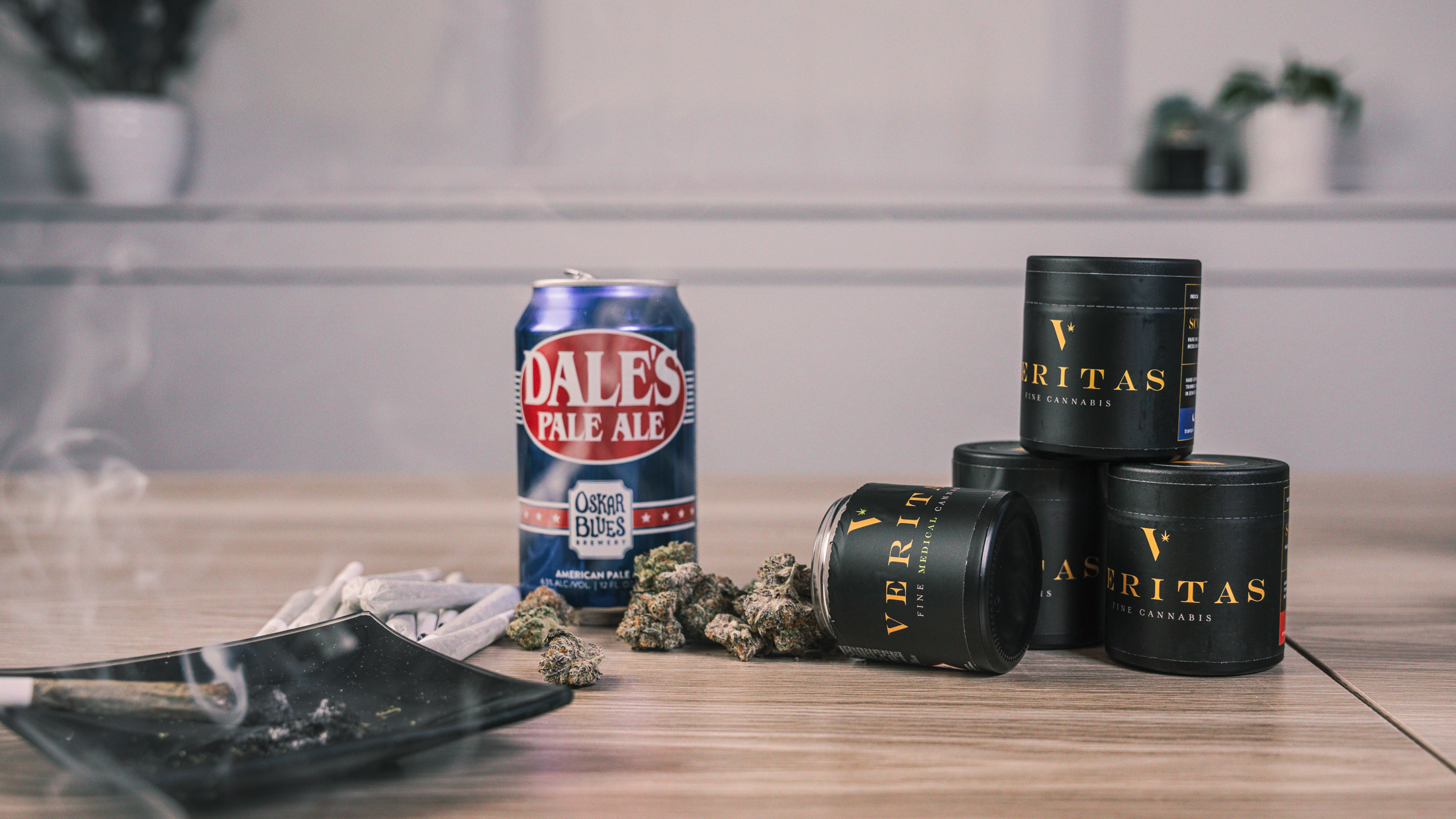
Craft Beer & Cannabis: Oskar Blues Founder Joins Veritas Fine Cannabis

In 2002, Dale Katechis revolutionized craft beer. A seemingly simple packaging decision, putting craft beer in a can, sparked an international movement and put craft beer on the map.

Before the craft beer market really gained steam, consumers associated good beer with glass bottles and larger brands selling cheap beer with cans. Through education, creative marketing and a mission to put people over profits, Dale helped the craft beer market expand massively while sticking to his roots. He also managed to convince people to drink good beer from a can.

When Dale founded Oskar Blues about twenty years ago, he didn’t just succeed in selling beer. Through collaboration and information sharing, Dale propelled craft beer as a whole and lifted all boats with a rising tide. He’s hoping to achieve similar results with his new role in the cannabis space.

Dale Katechis, Founder of Oskar Blues & recent addition to the Veritas Fine Cannabis team

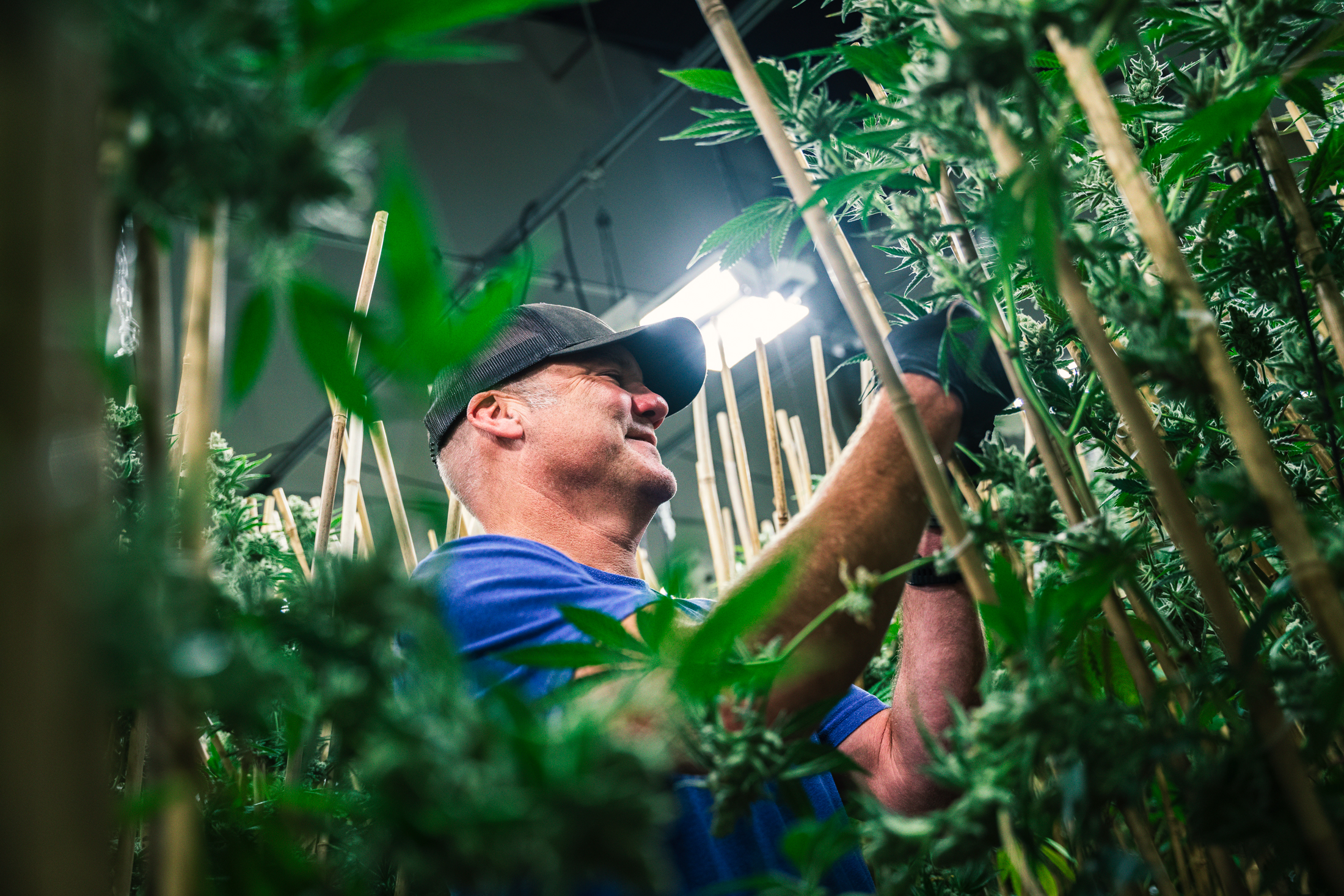
Veritas Fine Cannabis, the first craft cannabis cultivator in Colorado, announced that Dale joined the company’s leadership team. Jonathan Spadafora, partner and head of marketing and sales at Veritas, told us that he’s excited about working with Dale. He says Dale is already helping them open a whole world of branding and marketing opportunities. “This is our Shark Tank moment – we’ve got someone who’s been through the fire before and will help us keep differentiating, finding new avenues and new ways to solve problems,” says Spadafora.

His colleague, Mike Leibowitz, CEO of Veritas, shares the same sentiment. “Dale maintained company culture and quality as he grew Oskar Blues into a household name,” says Leibowitz. “Maintaining our unique company culture is paramount as we work to build Veritas Fine Cannabis into the same.”

Dale’s role in the leadership team at Veritas is about sticking to his roots. Through raising industry standards in the best interest of quality products and consumers, the team at Veritas hopes to expand the brand nationally, just like Oskar Blues did, while instilling a culture of disruption and innovation without compromising quality.

We caught up with Dale to learn more about his story and what he hopes to bring to Veritas, as well as the cannabis industry at large. And yes, I had a couple of Dale’s Pale Ales (his namesake beer) later that evening.

Aaron Biros: Your success with Oskar Blues is inspiring. Taking an amazing beer like Dale’s Pale Ale and putting it in a can sounds simple to the layperson, but you launched a remarkable movement to put craft beer on the map. How do you plan to use your experience to help Veritas grow their business?

Dale Katechis: I am hoping that I can apply some of the lessons that I’ve learned through making mistakes of growing a business from the ground up. There’s obviously a lot of road blocks in cannabis and that is certainly one of the qualities of Veritas – how they’ve grown and how they had to do it in an environment that is much more challenging than the beer space.

My experience in small business development could potentially help them navigate this next renaissance of the space. I’m going to help them compete and bring the industry to a level that helps everybody win. I certainly felt that way in the craft beer movement. It was very important to us to bring the whole industry along because we were educators, we weren’t salesmen. In doing that, lifting everyone to a level where the industry benefits as a whole is a part of small business growth. To me that’s the most fulfilling part. It wasn’t just about the Oskar Blues ego at the time, it was about the craft beer scene. And what’s happening in cannabis now is very similar to what happened in the nineties with the craft beer scene.

Aaron: How did you get interested in joining the cannabis industry? What made you choose Veritas?

Dale: Most of my life, I’ve been an enjoyer of cannabis. Very recently, in the last two years, I’ve been intrigued by getting involved in the space. I’ve been shopping around for opportunities and nothing really excited me until I met Jon Spadafora and Mike Leibowitz.

It was really the two of them, the comradery and how they treat their staff that was so similar to the culture at Oskar Blues. Call it a “passion play” if you will, but this was the best opportunity to get involved with a small company and hopefully be a value add for them being in the room and sharing ideas.

Aaron: As a pioneer and leader in the craft beer space, do you notice any commonalities between the growth of the craft beer market and the legal cannabis market?

Dale: It is kind of crazy how many similarities there are. Not just the industry as a whole, but specifically the commonalities between my business, Oskar Blues, and Veritas. Overall, that’s really what allowed me to want to lean in a bit more. I wasn’t in the place where I wanted to start anything on my own. I didn’t want to be involved in fixing anything. I’ve been involved in those situations before and I’m at a point in my life that I don’t want to fix anything. Thankfully there’s nothing that needed to be fixed at Veritas. That was an exciting piece of the equation for me.

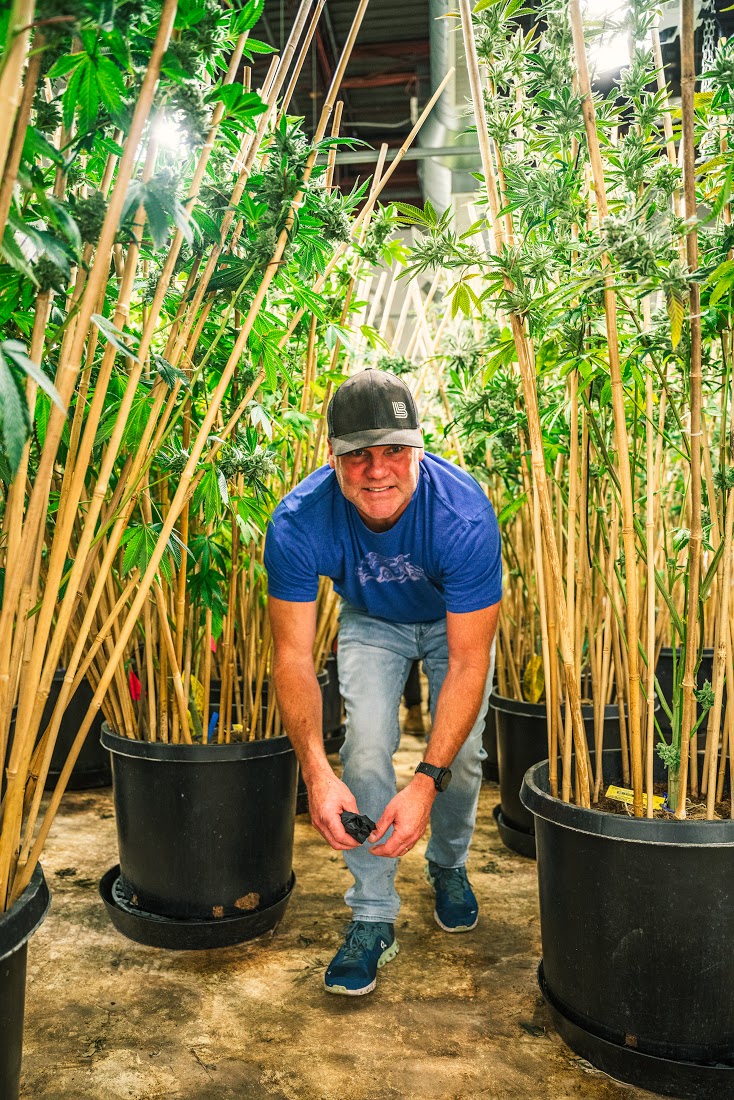
Dale takes in the view, getting up close and personal with the plants at a Veritas cultivation facility

Back to your question, how the consumer looks at cannabis versus how the consumer looks at beer in the craft beer space is very similar. There is a bit of an educational piece that’s happening where it’s almost a requirement in the cannabis industry and Veritas is leading that charge out front.

That’s what’s going to catapult Veritas and other companies if they follow suit. It’s their mentality and their philosophy of bringing the industry along as a whole, and I think it’s going to end up boding well for the consumer. The craft beer space was the same.

We had to educate people on a beer can and why we felt like a can of beer was important and exciting. The industry and the consumer associated cans of beer with large, industrial lagers and the can got a bad rap as a result. Not because it wasn’t a great package, but because they were putting bad beer in a good package. So, we had a long road of educating the consumer on the benefits of the can and I think what Veritas is doing with packaging now, how they use quality as such a fundamental pillar of their business, how they focus on the employee experience and the consumer experience sets them up for success, instead of just looking at the bottom line.

I’ve said it throughout my entire career, and at Oskar Blues, we never focused on the profits. You do the right thing for the biggest group of people moving the ball forward and the bottom line takes care of itself. Jon and Mike understand that so I don’t need to fight that battle. It’s another big similarity to the craft beer space.

Aaron: How can cannabis companies keep their craft? How can we, as an industry and as individual businesses, celebrate craft cannabis and follow in the footsteps of independent craft beer?

Dale: I believe that we’re starting to see some of that consolidation [that has been taking place in the craft beer market]. We’re at a time in the market right now where companies with such a solid foundation like Veritas don’t need to go that route to grow. I think we’ll start to see a lot more consolidation in the cannabis industry soon.

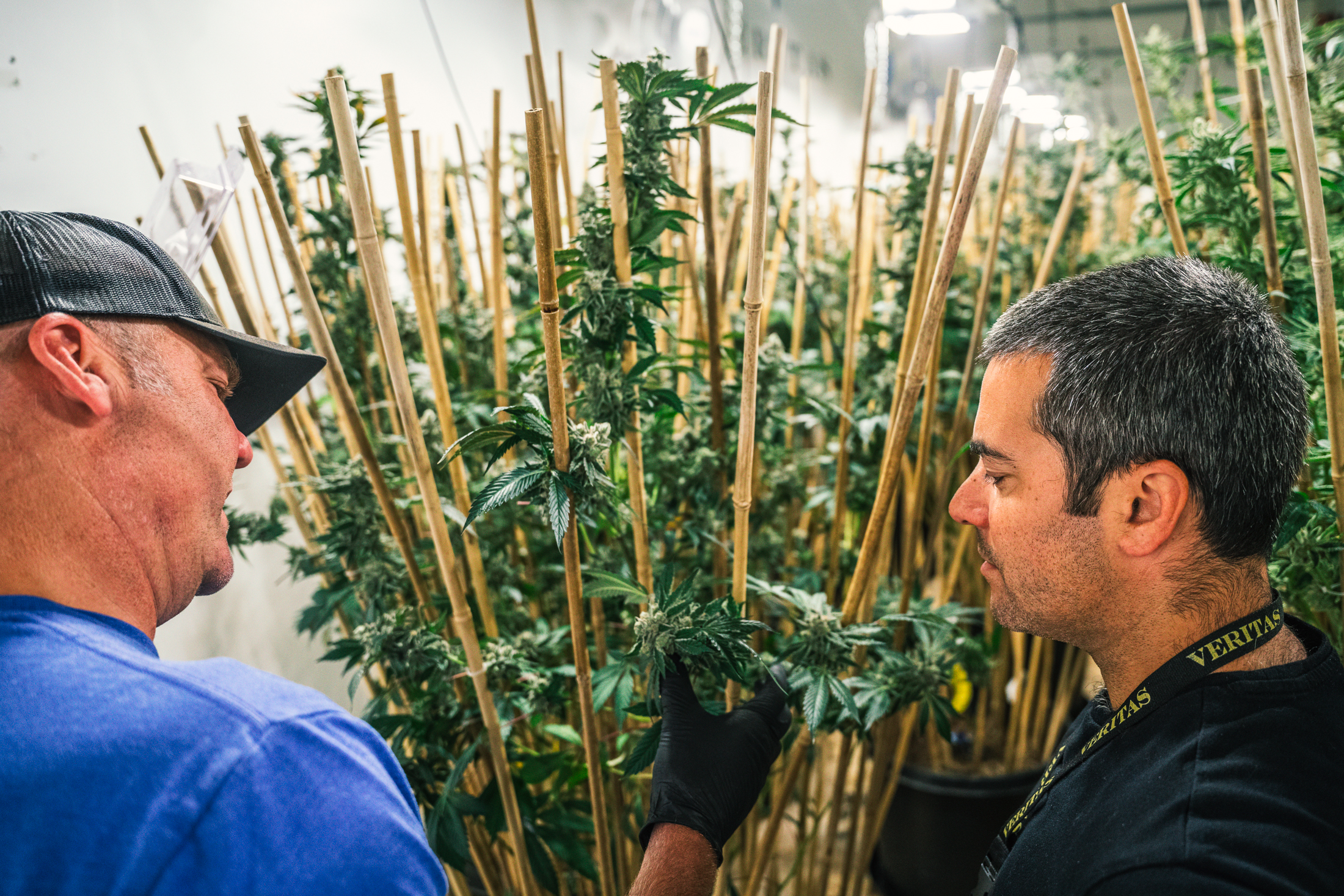
Veritas CEO Mike Leibowitz (right) showing Dale (left) a fresh harvest

Back to the point of bonding together as an industry and as a whole. Championing some of the regulatory hurdles that are coming and sticking together is crucial. One company can’t do it. There’s going to have to be some comradery in the industry among everyone trying to hold the bar up high instead of racing to the bottom. You die by a thousand cuts. I’ve lived that life in craft beer and we saw what happened 6-7 years ago when the industry overexpanded because of exponential growth. A lot of egos got in the room, and a lot of breweries spent a lot of money building out capacity and then that same year the market popped out. Everyone who didn’t have a solid foundation, got washed out of the industry.

That’s why I appreciate what Jon and Mike are doing and how they built Veritas. It’s very similar to how we built Oskar Blues. We had humble beginnings; we didn’t spend money on things outside of our core competency. We focused on quality, employee experience, morale and holding on to the culture of Oskar Blues. That’s what Jon and Mike are doing with Veritas and I think that’s really important.

Flower-Side Chats Part 8: A Q&A with Andreas “Dre” Neumann, Chief Creative Director of Jushi Holdings Inc.

By Aaron Green
No Comments

In this “Flower-Side Chats” series of articles, Green interviews integrated cannabis companies and flower brands that are bringing unique business models to the industry. Particular attention is focused on how these businesses integrate innovative practices to navigate a rapidly changing landscape of regulations, supply chain and consumer demand.

Jushi Holdings Inc. (OTCMKTS: JUSHF | CSE: JUSH) is a multi-state operator with a national footprint and core markets in Illinois, Pennsylvania and Virginia, with developing markets in California, Nevada, Massachusetts and Ohio. In addition, Jushi maintains offices in Colorado, New York and Florida. In Q1 2021 they posted $42M in revenue representing 30% growth over Q4 2020 and 77% of their sales were conducted online. Jushi brands include Beyond / Hello, The Bank, The Lab, Tasteology, Sēchē, Nira CBD and Nira+ Medicinals.

We interviewed Andreas “Dre” Neumann, Chief Creative Director of Jushi Holdings. Dre joined Jushi in February 2020 after connecting to the founders through a colleague and running a large user experience research project. Prior to Jushi, Dre cut his teeth in advertising and branded entertainment. He was a startup founder at TalentHouse.com and a Partner at Idean, which he later sold to Capgemini.

Aaron Green: How did you get involved in the cannabis industry?

Andreas Neumann: I’m a guy who has been interested in many genres – I’m always looking for the next big thing. I started out in advertising and then I faded into branded entertainment when the traditional advertising wave was kind of shaky due to the digital attack of the internet with platforms like Facebook and Myspace.

I’ve also been fascinated by digital which led me to move into Silicon Valley. I had a startup called TalentHouse.com which was like LinkedIn for creative people. I learned a lot there about building a company in Silicon Valley. It was the first time I was confronted with experienced customer and user experience people. CX and UX was already kind of a thing in Silicon Valley at the time. My last company I was a partner in was a company called Idean, a Silicon Valley-based user experience company which we sold to a French company called Capgemini about four years ago.

I continue to be involved in the entertainment industry as kind of a creative outlet. I’m working with a lot of big rock bands like The Foo Fighters and Queens of the Stone Age. I just did the last Foo Fighter album. Photography is my last domain of total creativity where I can do whatever I want specifically in the rock business.

Andreas “Dre” Neumann, Chief Creative Director of Jushi Holdings Inc.

Coming to the cannabis point, I was actively looking for a partner to do a cannabis brand with The Queens of the Stone Age. I met Jushi through a very interesting coincidence. I was on the way to do a shoot in Silicon Valley with a guy called Les Claypool, who is from a famous band called Primus. I shot Les there and I was driving through Silicon Valley and remembered I had a friend nearby I should talk to. So, I called him and he was in Singapore. He called me right back (he never calls back normally) and said “You’ve got to talk to Jushi! You’ve got to talk to these guys Jim Cacioppo and Erich Mauff (two of the founders). They are starting something very exciting. They could be your partners.”

This is where the conversation started. It was my first time confronting a cannabis MSO and understanding how this works. I had just exited from my last agency and put together the best people from my previous endeavor to create a new sort of “creative collective” of UX and marketing experts. We did a test project for Jushi, a big research project on cannabis for California in retail, which was super interesting. It was a 200-page document – the first phase of user experience of the process before you build something – and through that I saw this as a big opportunity. I spoke to the founders again and came fully onboard in February 2020, just before the pandemic hit. From then on, it’s been a real amazing journey with me and the team. And it was the right moment to jump on the Jushi train as it was just about to leave the station.

Green: Can you talk about some of the geographies you are active in?

Neumann: Jushi is a multi-state operator. The most important state for Jushi is Pennsylvania. That’s where we have the most stores and we are building more stores there this year as well, very aggressively. We currently have 13 Beyond / Hello medical cannabis dispensaries in the state with many more to come, bringing an unmatched in-store experience, coupled with online reservations and in-store express pick-up.

The next important market for us is Virginia. We have a unique position there in Manassas with a cultivation facility and manufacturing and extraction facility, with the license for up to six stores. We started store number one in the facility, and we are rolling it out in HSA II. We are the only ones who can open stores in HSA II and this is straight on the border to Washington D.C. We call Virginia the “sleeping giant.” So much happened in the last year in Virginia around regulation and the industry, and now flower is finally legal.

Then we have Illinois – super interesting stores there. We have two flagship stores located straight on the border of Missouri, basically in East St. Louis. They are our biggest performers in the whole network because of the location. You have people coming over from Missouri, which is really in the beginnings of a medical market, and Illinois, which is now adult use. It was a super cool experience to see a medical market change to adult-use and be part of that change.

In other states, we recently announced the acquisition of Nature’s Remedy in Massachusetts, where we will have cultivation, processing and stores there. In Nevada, we have a grower-processor and we’re looking at opportunities in retail as well. At the moment, we have all our brands launched there. We are also continuing to build out our processing and cultivation capabilities in Ohio.

Last but not least is California. I’m based in California and the whole creative team is here. It’s a vanity market and it’s very competitive, but you’re in the capital of the world of cannabis in terms of brands and retail. California is in the future compared to the other states. So, we need to be here. It’s just like a soccer team. You must compete against good people or you’re not going to grow. So, that’s why competing here in California is key.

Green: How do you think about brand development, specifically in the cannabis CPG space?

Neumann: California is the king of brands. There are more products than brands in the cannabis industry at the moment. The products may have nice packaging, but brands aren’t really out there yet. The only states where you have “brands” as I would call them are California, Colorado and Oregon. I think we are just about to get to the place where the first rush is over and people with more experience about brands come in and build on the story of the brand. The myths, the cult, the legend of that story is important, and I think this is just about to get started.

Our brands, The Bank and The Lab, have good stories. They have been around a long time. We acquired them from a company in Colorado and we rolled them out in Nevada with a total revamp of look and feel as well as story. The Bank is celebrating this kind of roaring 20s idea. We have a lot of images, from black and white prohibition-style photos to this black-gold, very high-end, adult use tailored brand.

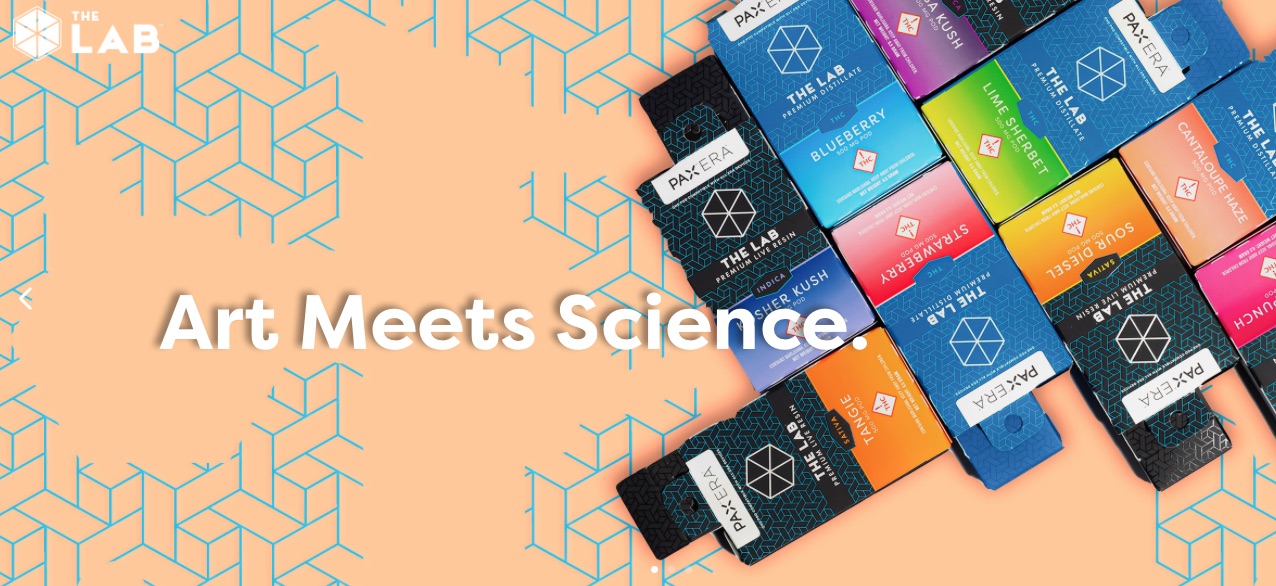
Vaping products from The Lab brand in Colorado

The Lab is a solid vaping brand from Colorado, and one of the 8th best-selling vape brands of all time. We revamped The Lab image to “take the lab out of the lab.” So basically, take the hairnet and the lab coat out of the vibe and add a whole new energy, with symmetry and nature in a leading role.

Tasteology, which is one of our self-made, self-created brands, was all based on customer research. In Pennsylvania, we have thousands of people we can communicate with, and we can test our brands. So, we’ve done focus groups and testing to see what sticks, and the name Tasteology came out of a huge research project with hundreds of names.

The last brand comes back to your question “Where are the brands going?” I think our brand Sēchē is the first one of our own creation and has this total lifestyle feel. It’s fine grind flower which normally might make its way to extraction. We treat it well and then we sell the raw flower, as well as a pre-roll line. It’s this kind of a young, cost effective, very affordable pre-roll and pre-ground brand, which is fabulous. And Sēchē really gets a lot of traction – flies off the shelves in Pennsylvania. It is a great product.

So, this is now the first stage where brands are created, but I think overall, there’s not many brands yet. They have to find their stories and their real purpose, I think. But California is ahead of it. And there’s some of them coming out now. So, I think there’s a new wave coming. It always goes in phases.

Green: How do you think about brand partners?

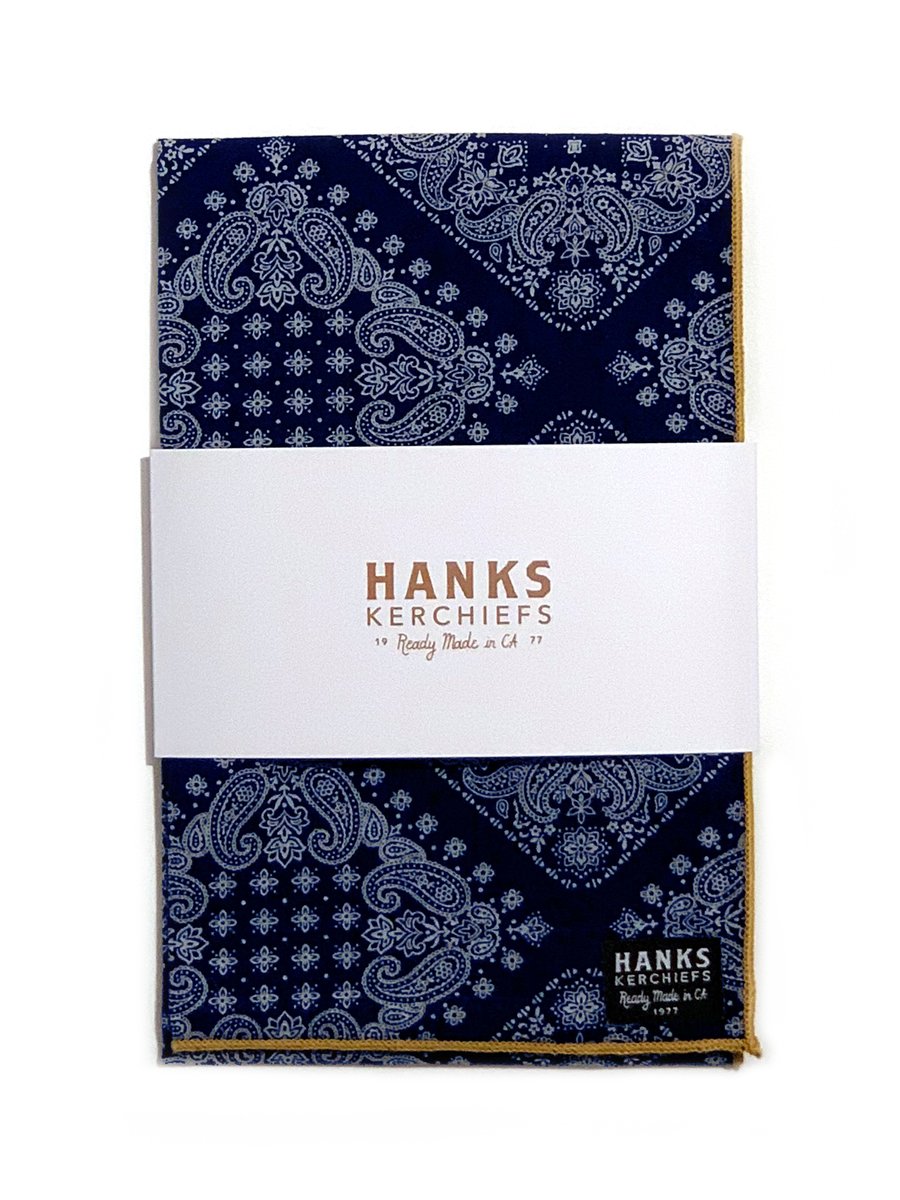
Neumann: We did the first step towards outside partnerships recently. We just partnered with Colin Hanks, Tom Hanks’ son, on his handkerchief line called Hanks Kerchiefs and we’re going to sell these in our stores. Hanks Kerchiefs has nothing to do with cannabis, but it takes our stores to a place where it’s not only cannabis products, it’s more the retail scene, the lifestyle scene. If we go into future partnerships with people, we would partner with big talent agencies to create something special. Maybe it’s limited editions, maybe it’s something more story-driven, but it doesn’t have to be there forever. I see using outside partnerships for more “drops,” as we call it. But we will see. You cannot force these collaborations. They have to come at the right time and need to be real. That’s what people feel. If it’s real you can feel it.

Green: Do you notice any differences in consumer preferences between the states you’re in and do you have to tailor your messaging differently?

Neumann: This is a super interesting question. I’ve been working in Europe, and you have all these different countries, so every market is different. Every market gets different messages. Every market gets different commercials. It’s the same in cannabis in the United States! The only difference is that it’s so regulated. I could launch a gummy in Virginia and all Virginia would know about it. It would become a household name, and everybody uses that gummy. But in California, no one will hear about it. No one would care about it. And the same vice versa, right?

So, different states, different brands. With our acquisitions, we are acquiring new brands, which then live only in those states. Then we have to support that. If the data would show we should then we do it. When we acquire something we consumer test in many states, and specifically in the states where the acquisition happened.

Overall, you can say flower is always what people want. But in markets like Virginia, we cannot sell flower at the moment. In Pennsylvania you have flower, but you can’t have edibles. Do Pennsylvanians want edibles? Of course, they want it but it’s not allowed yet. So, there’s always this to consider.

Green: What are some of the forward-looking opportunities that you see to merge product with technology?

Neumann: It’s interesting that flower, the most old-fashioned thing you could have, is the biggest thing. If you get into it, it’s pure, you can smell it, you can trust it. Flower has its own charm.

The Beyond / Hello retail location in Scranton, PA

So, asking about merging technology and product is like asking what technology comes with drinking wine. There’s lots of stuff around it. I think in the end the technology will be more about how you can create a product which delivers high THC, fast and controlled. The technology that goes into making stuff like live resin has a big future, because not everybody can make it. It has a very complicated process of freezing the product within four hours after the harvest, and then cold extraction. So, I think technology there has a big impact and gets the experience of the consumption right.

In the consumer world, people have tried a lot of things with technology. For example, limiting doses and inserting flower into a device. There are people trying all kinds of stuff. Common sense is always the key. What do you want to use most? Do you want to have a pre-roll and just enjoy it? A long one when you have friends around? A short one if you’re alone walking a dog? I think you have to keep it simple. That’s the most difficult thing most of the time.

Green: Final question here. What are you most interested in learning about? This can be personal life or cannabis.

Neumann: When I entered the cannabis industry, I hadn’t been a consumer since I was 18. I was more of an alcohol guy, but then later I stopped drinking alcohol, so I was totally clean the last 15 years until I entered the cannabis industry.

When I do something like making films about a jet fighter, I have to fly the jet fighter. If I make a film about jumping out of a plane, I have to jump out of the plane. So, if I work in the cannabis company, I have to consume cannabis. I cannot not consume it. So, I started professionally consuming cannabis every day. From day one when we started research, every day I tried other products and I became a real user. Not during the day, but in the evening when it’s the right time.

First of all, I compare it a lot with music. It’s like a feeling. Everybody feels it differently. I think what it does – and this fascinates me about it and it’s why I love to be in this industry – is it seems to be slowing down the world a little bit and your desperation. This slowing down of desperation actually opens you up to receive and when and you receive good stuff it comes to you kind of effortlessly. Not only is it great for medical use – it has helped me for pain as well – but also as a receiver of energy. I think it clears a lot of the “signal.” I’m always interested in learning more about this incredible plant.

Green: Thanks Dre, that concludes the interview.

Neumann: Thanks Aaron.

Soapbox

Can Cannabis Avoid Alcohol’s 3-Tier Distribution System?

By Rick Kiley
No Comments

As an experiential marketer that works with a lot of vice-oriented brands, I’ve always been fascinated by the story of the rise of spirits in the US – a history marked by ingenuity in the face of heavy restrictions, clashing social norms, crime and political ideals. Since then, those same qualities have emerged in the story of cannabis and how, against all odds, it has recently begun to push its way into the mainstream. But on the path to legalization, cannabis can also learn a lot from the spirits industry about what not to do.

For example, when laws governing the spirits industry were written in the post-Prohibition 1930s, the federal government wanted to create an equitable landscape. So, they created a 3-tier system – manufacturers or importers must sell to wholesalers, wholesalers must then sell to retailers and retailers sell to us. They figured that keeping manufacturing interests separate from wholesale and retail interests would keep any large company from owning an entire supply chain, muscling out smaller competitors.

In theory, it’s not a bad idea. Imagine the consequences of massive companies like Diageo or AB InBev using their money to pay bars and liquor stores to only stock their brands and not competitors. Add on the Tied House Laws, which basically says an entity in one of the three categories cannot have an ownership stake in any of the others, and you get a seemingly even-handed marketplace.

Tied House Laws theoretically limit one entity from monopolizing a supply chain

In truth, it makes it almost impossible to be disruptive or for new brands to break through. Other industries have innovated by cutting out the middleman and selling direct-to-consumer – something that simply cannot happen in alcohol (minus the wineries and distilleries that can sell direct out of their tasting rooms). Also, now distributors are so consolidated that there are only one or two big distribution companies in each state. So, as a company trying to bring a new product to market, you have to get into one of these highly selective and competitive distributors if you are going to be successful – a challenging ask for a small, independent brand.

Protection racket

Now, imagine that same challenge coming to the cannabis space. With legalization around the corner, the adult use (as opposed to medical use) cannabis industry could easily look like alcohol in the rules that will be set up.

The demand for high quality cannabis continues to increase, but the prices need to level out to stave off the black market.

Right now, adult use manufacturers can sell their products to dispensaries directly. Some use a distributor, but there is no nationwide mandate to – which is probably for the best. If a distributor isn’t a requirement, it forces brands to offer something new to differentiate themselves. It will spark innovation, rather than add an extra profit margin that will get rolled into the final price – a price that is already higher than it should be due to the murky federal legal status. Adding complexity and cost will only make it harder to compete with the illicit market. For the industry to grow, costs for illicit cannabis can’t be lower than its legal counterpart.

Of course, we are in the nascent stages of legalization here and we’ve come a long way culturally and technologically since the 30s. But remember, the rules governing alcohol were written nearly 100 years ago along with the passage of the 21st amendment repealing prohibition. Startlingly, those laws haven’t changed that much since they were written, so any mistakes made now in dealing with the cannabis industry could last for a long time.

A new way forward

What the cannabis industry needs is a new model for the adult use/recreational space, keeping some of what exists in the alcohol industry but without ever mandating use of a distributor – the middle tier. This would mean keeping Tied House Laws in place and applying them to cannabis so that a manufacturer could never hold an interest in a retailer, while still allowing them to sell directly to dispensaries and to consumers. Currently, some states allow for vertical integration, which would change under Tied House Laws.

This should be pretty simple, since most states are already separating licenses by type of activity (manufacturer, retailer, etc.) and it would promote competition while bringing the widest array of products possible to each consumer. Also, it would prevent any behemoths from squeezing out the up and comers.

extraction equipment
Constant innovation is a hallmark of the cannabis market and a key factor in continuous growth.

Of course, some retail license allowances could be considered on a case-by-case basis. For example, I would carve out an exception that growers/manufacturers could sell direct to consumers through a single “tasting room” at their brand home. This is similar to the operations of microbreweries, distilleries and wineries. It would encourage education for consumers, and provide great opportunities for brands to show why their products are better or unique.

Given the technology and logistics solutions available to businesses in a 21st century economy, mandated distributors create a sometimes-unnecessary barrier to an already efficient supply chain. If mandated, prices will inflate to cover added margin, thus making it harder to bring consumers over from the legacy market to the legal one. I’m not against the idea of a distributor – they can add tremendous value, but the mandate would seriously curtail industry growth.


Direct-to-retail and direct-to-consumer sales are necessary for the economic health and growth of the industry. Without this, using alcohol as a cautionary tale, at some point the middle tier cannabis brands will inevitably begin to wield an outsized amount of power. We are living at a time where innovation is going to be the key to explosive growth in the cannabis industry, so it’s important to do everything possible to let the market find its way without falling into a century-old trap.