

Tag Archives: quality

Marguerite Arnold

Canopy Growth Makes Multi-Billion Dollar Conditional Acquisition Deal

By Marguerite Arnold
1 Comment
Marguerite Arnold

The first German cannabis bid may have come to an end more or less, and with a whimper rather than a bang (not to mention the inevitable still-to-be-settled legal challenges). However even as the dust settles, one of the biggest “names” in cannabis and the company formerly expected to win at least a few of the tender lots is looking elsewhere.

Namely Canopy Growth, which was a finalist in the first round of the tender, has not shown up as a finalist firm in Germany this time (at least not so far).

However, it is clear the firm has other intentions afoot, namely U.S. expansion.

In an unprecedented move, Canopy announced its intent to buy the largest U.S. based producer of cannabis, a firm called Acreage Holdings, just before Easter. The conditional deal is being consummated in both cash ($300 million) plus stock swaps, and will not finally close until federal reform has come in the U.S. In fact, the deal makes the bet that the entire issue of U.S. federal reform will be solved within the next decade.
Canopy_Growth_Corporation_logoIn the meantime, however, what this also does is place one of the world’s largest cannabis companies in the middle of what is largely seen as the world’s most valuable overall cannabis market. Further it does so in an environment where the company benefits from Acreage’s considerable market and political clout. Former speaker of the U.S. House of Representatives John Boehner (a fierce opponent of legalization until it was personally convenient and profitable) is on the board of Acreage.

But there are those who might still be confused about why this deal happened. Canopy after all is fond of saying that its first focus is the “more valuable” medical rather than recreational market. And the U.S. market has many challenges still, that stem from a lack of federal reform. In fact, Canopy has frequently said in the past that they would not enter the U.S. until federal reform occurs. What gives?

What The Deal Also Does…

It is not “just” entry into the U.S. recreational market, albeit still on a state level that is significant about the deal. That starts with its timing.

When trying to understand the motivations of Canadian cannabis companies, especially ones who have eschewed the U.S. market in the past (at least until federal reform passes), it is also necessary to understand that they operate in a shifting world of global strategy that is never as straightforward as one might think. And often has nothing to do with cannabis per se.

Namely, while this deal places Canopy in the middle of the U.S. state industry it also does something else. It positions Canopy as a U.S. producer just two months after a new international pharmaceutical trade deal went into force (on February 8) called an MRA.

MRA agreements, also known as Mutual Recognition Agreements, are essentially trade deals between countries to accept the equivalency of their pharmaceutical production and supply chain.

On the cannabis front, the existence of MRAs between existing countries as cannabis has become legal, has also largely dictated the new international cannabis trade (see Canada and Germany as a perfect example) although this has been held as a closely held secret by the largest cannabis company executives (some of whom have previously denied that this was driving their expansion across Europe).

However, thanks to the agreement on this MRA in February, as of July of this year, Europe and the U.S. will formally kick off a situation where the European and therefore German health authorities will formally recognize American GMP processes.

That means that on the pharma front, Canopy has also essentially re-entered the European market, albeit by a bit of a backdoor. It also means that Canopy can immediately start to import cannabis drugs at least, made in the U.S. into the European and by extension, German market.

Cannabis drugs have been going in the opposite direction across the Atlantic to the U.S. for at least a year now (see the GW Pharma’s Epidiolex adventure last year). And further over the U.S.-Canadian border if now only bound for academic research (see Tilray).

It also may mean that they can import medical cannabis itself to be used as “medicine” or processed into one in Europe.

Does This Mean That U.S. Federal Reform Is Imminent?

Not necessarily. In fact, keeping the U.S. market in general out of the global cannabis trade, while allowing the top companies to participate both in the cross-state market and the global pharmaceutical one benefits the biggest companies. Conveniently, this also allows U.S. cannabis “pharmaceutical” producers to enter the EU in force just as Israel is expected to (third quarter this year). This also puts the “deal” U.S. President Trump and Israeli President Netanyahu cut on the subject to delay Israeli sales in an entirely new light (and one that should outrage both Americans and Israelis in the industry on this front even more). Not to mention every European hopeful producer unaware of the larger game afoot.

That said, what federal U.S. legalization will do is drop the operating costs of the larger U.S. entities now engaged in multi-state operations.

Cannabis in other words is not likely to be legalized in the U.S. before the next presidential elections for reasons that have everything to do with the profits of a few – and for that reason will certainly be a major theme in the next national political race.

And in the meantime, the biggest companies, Canopy included, are not only laughing all the way to the bank (although their shareholders are another story), but setting themselves up to be at the ground floor DNA of the global cannabis business as it establishes itself in every country of the world.


Jennifer Whetzel

Eating Your Words: How to Avoid Legal Issues Marketing Cannabis Consumables

By Jennifer Whetzel
1 Comment
Jennifer Whetzel

Selling in a grey market isn’t for the faint of heart. You have to deal with the stigma surrounding your products and services, the potential for legal troubles, along with bureaucratic hurdles that all businesses face.

Acceptable marketing language surrounding consumable THC and CBD products encapsulates all of these issues, and it’s why everyone in the industry needs to pay close attention to what they’re saying. One innocent turn of phrase could have the Food & Drug Administration (FDA) shut down your business faster than you can say, “Oops.”

Avoiding this fate means making some adjustments to how you think about your marketing language, but this knowledge quickly becomes rote. Take a moment to learn how to protect yourself so that you can run your business rather than run afoul of the law.

Food, Drugs and Dietary Supplements

Scroll through Instagram for a few minutes and you’ll encounter a deluge of companies making claims about cannabis and CBD products. Many, if not most, are going about it incorrectly. Part of the confusion surrounds the fact that under the FDA’s rules, foods, drugs and dietary supplements are treated differently.

FDAlogoHow does the FDA decide what’s what? Based on how you advertise the product. If labeling suggests the substance is “intended for use in the diagnosis, cure, mitigation, treatment, or prevention of disease, or is an “article” (other than food) intended to affect the structure or any function of the body of man or other animals,” the FDA will regulate it as a drug.

The language and regulations surrounding drugs are extremely strict. On December 20, 2018, the FDA put out a statement reiterating that these rules are in effect for cannabis products. In other words, you can only make a drug claim if you have received approval from the FDA on your New Drug Application (NDA). Since approval requires hundreds of millions of dollars worth of clinical trials, this option is out of reach for most companies.

The rule states that you may not say that your product diagnoses, cures, mitigates, treats or prevents any disease, or any recognizable symptom of a disease. Disease is defined as: damage to an organ, part, structure, or system of the body such that it does not function properly (e.g., cardiovascular disease), or a state of health leading to such dysfunction it (e.g. hypertension). Examples of diseases would include cancer, multiple sclerosis, epilepsy, autoimmune diseases, Lyme disease and more. In other words, you couldn’t say your product “prevents memory loss due to Alzheimer’s” or “treats symptoms of fibromyalgia.”

If you’re making any claims about curing anything in your cannabis business name, product name, packaging, web copy, advertising or marketing materials, you are at risk for breaking these rules and getting caught. The FDA’s regulations dovetail with the Federal Trade Commission’s truth-in-advertising laws, which state that your claims must be backed by legitimate research (such as peer-reviewed journal articles or double-blind studies) and must not mislead consumers. These rules are already being enforced within the cannabis industry, so pay close attention to what you’re putting out there.

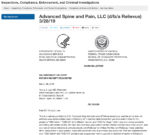
An example of a warning letter the FDA sent to a CBD products company making health claims

However, you can’t avoid penalties by using this kind of language and claiming your product is a dietary supplement or food, either. According to the FDA, products that contain THC or CBD cannot be sold as dietary supplements. Their reasoning for this decision is that THC and CBD are active ingredients in FDA-approved drugs, such as Epidiolex and Dronabinol. Active ingredients in approved drugs may not be introduced into the food supply as dietary supplements or otherwise.

The language rules surrounding food can be equally complex. Foods approved by the FDA can make nutritional claims about how a nutrient impacts the structure/function of the body, such as “Calcium builds strong bones.” The problem for cannabis products is that these statements need to be authorized or qualified by the FDA and have significant scientific evidence and consensus. However, this consensus doesn’t exist for THC and CBD, meaning that you’re barred from making these kinds of claims.

Note that these rules don’t just apply to human supplements. They also apply to ones for pets. Many people don’t realize that a supplement for a pet is considered an “illegal drug of low regulatory concern.” But if you add in THC or CBD, a supplement becomes an illegal drug of—you guessed it—higher regulatory concern.

At a Loss for Words?

By now, you may be wondering what you can actually say to market your product; it may feel as though there are more restrictions than guidelines. Fortunately, the FDA hasn’t left us completely out at sea.

Just because we’re in a strange place under federal law operating our businesses every day doesn’t mean that we should disregard fundamental rules and regulations that all businesses must follow. The FDA published a final rule in the Federal Register in 2000 defining strict rules that govern the types of statements that may be used on a label without prior review of the agency. These are called structure/function claims. According to the FDA, “Structure/function claims may describe the role of a nutrient or dietary ingredient intended to affect the normal structure or function of the human body.” In contrast, statements that claim to diagnose, cure, mitigate, treat or prevent disease require prior approval by the FDA and are only for products that are approved drugs. Don’t use any of those words. Ever.

You can use the following words in your cannabis product names, advertising or marketing, as long as you’re not connecting them to a disease state: restore, support, maintain, raise, lower, promote, regulate, stimulate. You must specifically state that the claim relates to a non-disease condition; otherwise, you’ll be in trouble with the FDA. To go back to an earlier example, you cannot say that your product “prevents memory loss due to Alzheimer’s.” However, stating that your product “helps maintain a healthy brain” is fine.

Just because we’re in a strange place under federal law operating our businesses every day doesn’t mean that we should disregard fundamental rules and regulations that all businesses must follow. Following these rules does more than keep our enterprises out of trouble. It reinforces the idea that our industry is responsible, legitimate, and—perhaps most importantly—here to stay.

german flag

How Germany Gets Its Cannabis

By Marguerite Arnold
No Comments
german flag

The German cannabis cultivation bid may be mostly done and dusted (although the last four lots are now up for legal challenge) but the drama is only intensifying on the ground in Germany. Namely, where is the cannabis being consumed on the ground now actually coming from?

For the past several years (in fact since 2016 when a Frankfurt-based start-up called Medcann imported the first Canadian medical cannabis into the German market in partnership with Canopy Growth), the conventional wisdom has been that Holland and Canada were the only two countries allowed to import medical cannabis into the country.

Canopy_Growth_Corporation_logoAs is usually the case in the cannabis industry, when it comes to such things, there were also multiple and highly creative explanations about this strange state of affairs that sounded oddly exotic enough to be plausible. This is after all, the international cannabis business.

These explanations also usually referenced conventional industry “lore” including such tall tales as these two countries were not signatories to an international drug treaty (not true), to being European (nope) or even a member of the EU (also completely false).

Yet there was always something strange with such urban legends – perpetuated by insiders across the German industry. Starting with a deliberate vagueness about details. Especially as in the summer of 2017 when Tilray announced grow facilities in Portugal, and by the end of it, Canopy was moving into Spain, and later by early 2018 Denmark and more. Italybegan to appear on the radar of multiple big Canadian companies. Clearly all these big companies seemed to know something that those outside did not. See Greece. Not to mention the teeth-gnashing of the Israelis– repeatedly shut out of the German market by not being allowed to export by their own government until Christmas Day, 2018.

The mystery deepened in March in fact, as a furore rocked the German-based cannabis industry over the last weeks. Farmako, a new, Frankfurt-based distributor, not only announced that it was importing 50 tonnes of cannabis into the country– and from Poland (where production of such bulk has not even been seeded) – but then gave additional details on a Bloomberg appearance that appeared to indicate that in fact the medical cannabis they were already selling (sourced from other places) had come from Macedonia. 

Certification, and most certainly paperwork are the name of the gameIn fact, no such transfer of cannabis had occurred from the Macedonian side (yet), although the firm in question at the other end of the deal was subjected to considerable harassment in the German canna-specialty press in the meantime.

The news, that occurred right at a time when Tilray is clearly training pharmacists for the German market, the first bid is concluding, Greece issues even more cultivation licenses, Canadian companies are clearing still stepping up their production game, and South Africa is also getting into the formal licensing act, with all sorts of interesting things afoot in Uruguay, also set off what appears to be an official investigation of the firms involved at the governmental level.

Insiders are tight lipped and nobody is willing to talk on record. However, the distribution firm, Farmako, has subsequently reported that in the month of March, they became the top selling cannabis specialty distributor in Germany. And since they are not out of business, it is also clear that while their PR may have been a little premature if not easily misunderstood, the broader message is very obvious.

What is also very clear at this point, in other words, is that the German door for cannabis and the international industry appears to be opening to product sourced from many places. Further by extension, the German government is in the process of recognizing foreign GMP certification processes from multiple countries all over the world as being equal to its own – at least on the cannabis front.

In fact, this has been going on relatively quietly for the past six months or so.

What Are The Standards, Certifications, and Qualifications?

A press release from January of this year, issued from an Australian firm called MCA, announced they had accepted the first letter of intent to ship to a German firm (in 2020). The company is currently accepting pre-orders as it finishes construction and achieves EU GMP certification. The same (female founded) firm was also present at the ICBC in Berlin this year in March, reporting that German demand from a universe of local distributors was already greater than they could fill. The news that their first sale went to German firm Lexamed, the controversial German wheelchair distributor who helped bring down the first German bid, was also largely unremarked upon at the time by most of the industry press and in fact, ever since.

GMPIn truth, it appears that the countries and companies that have the right to import to Germany must first have their own national GMP certification recognized as being equal to German standards – or a so-called Mutual Recognition Agreement (or MRA) must exist between the importer and exporter nations. It still means that to be really EU-GMP compliant, inspectors have to walk your cultivation floors. But first your country has to have the MRA. And that is a matter for lawyers and regulators to decide.

In the Australian case, the GMP equivalence for cannabis production apparently became reality within the last six months although no one is giving exact dates. In the case of Macedonia, this is pending, with German inspectors now apparently scheduled to begin inspecting domestic cultivation facilities within the next month to six weeks.

The biggest news, of course, which makes even more sense on the heels of Canopy’s latest “record breaking” U.S. acquisition, is that the EU and the U.S. will enter into an MRA in July that was finally agreed to in February of this year. This will also mean that cannabis “medicines” potentially even beyond CBD, produced via U.S. GMP processes, will be allowed to enter Europe if not Germany in the near future – and from the U.S. for the first time. Ahead of federal legalization in the U.S.

It also means that Israeli and American firms will be allowed to enter the European and thus German market for the first time (on the ground with product) by at latest, the third quarter of this year.

Caused By The Bid….and Likely Shorter Term Outcomes

What the events of the last several weeks make clear is that the bid is not only insufficient for demand, but the authorities are officially, if quietly recognizing the same. There are already rumours about the next cultivation tenders in Germany, and there is a high likelihood that other countries (see Poland in particular) may also follow suit shortly.

Further, the difficulties in making sure that not only countries but the companies based in the same remain compliant with EU and further German sanctified EU- GMP processes (for one) is likely to be an issue that continues to bubble. Why? It is a problem already in the broader pharmaceutical market here.

The Plusses and Minuses of The News

The first thing that is also obvious is that even Wayland cannot source the entire German market with the product it has begun to grow here no matter who ends up with the last four cultivation licenses this time around. Further, that the other winning bid firms (Aphria and Aurora as known at this point) without cultivation on the ground, are sourcing from somewhere that is also probably at this point, not even Canada. No matter how much expansion is going on in Canada, in other words, what is now entering the German market may bear a Canadian brand but could just have easily been sourced from almost anywhere in the world.

That also means that enterprising firms (see Australian MCA) can skip the Canadian introduction to the German market and sell directly to local producers before they even have crops on the ground, as well as the burgeoning German cannabis distributors across the country.

For such firms now wanting to enter the market, however, it is not all clear sailing. The events of the last few weeks clearly show that the government is watching, including reading English language industry press, and willing to pursue any firms it deems are breaking the rules on both sides of national borders.

Certification, and most certainly paperwork are the name of the game, as well as greater accuracy in company intentions (even if in the near term).


Disclaimer: Nysk, the Macedonian firm referred to in this story, is a sponsor of the MedPayRx pilot to market program

Soapbox

Interstate Hemp Transportation: A Cautionary Tale

By Robert M. Kline
3 Comments

Two bags are sitting on the table in front of you. The first bag contains legal hemp. The second one contains illegal marijuana. Can you tell which is which? Neither can state troopers at a traffic stop.

On January 24, 2019, Dennis Palamarchu, an interstate truck driver, had 6,700 pounds of hemp in his rig. Mr. Palamarchu had picked up the load at Boones Ferry Berry Farms in Hubbard, Oregon. Before he reached his destination at Big Sky Scientific, LLC (“Big Sky”) in Aurora, Colorado, the Idaho State Police stopped him on I-84, outside of Boise. Mr. Palamarchu indicated that he was hauling hemp. He did not try to run or escape, and he never tried to dispose of the load. The bill of lading showed that the shipment consisted of approximately 7,000 pounds of hemp. The Idaho State Police arrested Mr. Palamarchu for felony trafficking in marijuana.

Around the same time, Pawhuska police in Oklahoma seized over 17,000 pounds of hemp on its way from Kentucky to Colorado. The cargo was valued at about $850,000. A spokesman for the Oklahoma Bureau of Narcotics and Dangerous Drugs Control said, “We don’t know if it is marijuana. We don’t know if it is hemp.”

I-84 outside of Boise, Idaho
Image: David O., Flickr

The recent events in Idaho and Oklahoma are inevitable consequences of the passage of the Agriculture Improvement Act of 2018, Pub. L. 115-334 (“2018 Farm Bill”). The 2018 Farm Bill provides that no state shall be allowed to prohibit the transportation of hemp through the state. However, a product that contains more than 0.3% THC – in the eyes of federal law – is marijuana, not hemp. Unlike hemp, marijuana still is subject to state statutes and the federal Controlled Substances Act. The legal distinction between hemp and marijuana is too subtle for the human eye, or a trained K-9’s impressive nose, and it has created a quandary for interstate hemp shippers like Mr. Palamarchu and Big Sky.

When Idaho State Police seized Big Sky’s hemp, Big Sky went to federal court1. On February 19, 2019, the United States District Court for the District of Idaho recognized that in the 2018 Farm Bill, Congress legalized the interstate transportation of hemp grown in the United States so long as the hemp was “produced in accordance with subtitle G” of the Agricultural Marketing Act of 1946. However, the federal plan is undeveloped and Oregon does not have a federally-approved plan, so no one knows what it means to be “produced in accordance with subtitle G.” The federal court therefore concluded that Big Sky’s hemp could not possibly have been “produced in accordance with subtitle G.”

The court recognized, “[a]t some future date, industrial hemp that has been ‘produced in accordance with subtitle G’ will undoubtedly be transported in interstate commerce across states like Idaho that have not legalized industrial hemp.” In the meantime, however, the court found that Idaho could keep Big Sky’s cash crop, which sits deteriorating in the possession of law enforcement. Big Sky has appealed to the United States Court of Appeals for the Ninth Circuit.

The hemp market is projected to approach $2 billion by 2020. By then, hopefully, federal law will clarify what it means for hemp to be “produced in accordance with subtitle G.” In the meantime, Idaho’s House of Representatives recently passed a bill that would allow hemp producers from the 41 states that have legalized hemp to transport their crops and products through Idaho, so long as they get a permit from the state and do not unload any of their cargo there. Idaho Senators then added a section to that bill, announcing their intent for Idaho to legalize hemp in time for the 2020 growing season. The House, however, never signed off on the Senate amendments, effectively killing the bill. Until such a bill becomes law, transporters of interstate hemp should consider taking the long way home.


References

  1.  Big Sky Scientific, LLC v. Idaho State Police, et al., No. 19-cv-00040-REB, Dkt No. 32 (D. Id. Feb. 19, 2019)

Federal Funding Is Flowing To Canada’s Cannabis Production

By Marguerite Arnold
2 Comments

The Canadian federal government is going where the U.S. (for now) is not: namely allowing provinces to channel federal agricultural funds into commercial cannabis production on the provincial level. The program is called the Canadian Agricultural Partnership (or CAP), which is a $2.2 billion annual initiative designed to support agricultural businesses across the country.

So far, not every province has opened this funding to cannabis production, although British Columbia already has, and Alberta is currently considering it.

Even more intriguing of course, are other programs that tie into such agricultural subsidies (including government support for exporting product). See Europe for one.

These programs are of course nothing new, including in the United States.

What is new, different and intriguing, is that unlike the United States, for the first time such government funds are being used to support not only the domestic cultivation of cannabis, but its global export. If there ever was the beginning of a “green new deal” then this might be it.

Canadian companies are certainly seeming to benefit from this federal largesse at the production point. For example, in the first weeks of April, CannTrust Holdings Inc. announced that its entire 450,000 square foot, perpetual harvest facility in Pelham, Ontario is fully licensed and will be online by summer 2019. THC BioMed just announced that it received Health Canada’s permission to begin additional production at its flagship location in Kelowna, B.C. And Beleave has just commenced sales of cannabis oil products at licensed facilities in Hamilton, Ontario.

The Rise of Government Funding In a “Publicly Owned” Company Environment

One of the more intriguing impacts of the rise of government funding for the industry comes at a time when the industry itself, certainly coming out of Canada, is facing a bit of a zeitgeist moment.

Sure, the industry has gained legitimacy, and there might be nascent cannabis funds in the UK, Switzerland and Germany, but the entire “public cannabis company” discussion is hitting a bit of a reset at the moment.

It was after all, ostensibly “public” Wayland that just dusted much higher fliers from the stock price perspective on winning the German cultivation bid. In fact, some insiders on the ground have commented that it is precisely because Wayland is not a stock market favorite, rather focused on fundamentals that they got chosen in the first place. Starting with the old-fashioned idea of committing resources and elbow grease to create production on the ground, locally.

There are also firms who are benefitting from the first tax funds that have flowed to promote the hemp industry (those are available from state governments here).

However, it is not just Germany where this discussion is going on in Europe right now. In Spain, there is political discussion about ensuring that the nascent and valuable cannabis industry does not end up in the control of “outsiders.” Namely international firms who have more of an eye on profit than community building. The idea of the cannabis industry as an economic development tool has certainly caught on in Europe (see Greece and Macedonia). And core in that idea is that the euros generated by this still remarkably price-resilient plant, and the products produced from it, should stay local.

Cannabis Socialism?

For now, and certainly in Canada, federal public funding looks pretty much like a fancy agricultural grant. But in the future as prices drop and the wars over strains and “medical” vs. “recreational” really begin to rage in Europe, the idea of government-funded cannabis cultivation may be an idea whose time has come.

The German automobile industry, for example, did not come from nowhere – and even today receives massive government funding. For now, certainly in Deutschland, that is not the case with cannabis, but things may be changing with the resolution of the first tender bid.

In the future, in other words, as countries across Europe begin to think about posting their own production bids and Germany contemplates additional ones, government funding of the industry and certainly incentives to help its growth will become much more widespread.

Introducing the Cannabis Quality Conference & Expo

By Aaron G. Biros
1 Comment

An educational and networking event for cannabis safety and quality solutions: Innovative Publishing and Cannabis Industry Journal are pleased to present the first annual Cannabis Quality Conference & Expo (CQC). The conference will take place October 1-3, 2019, hosted at the Renaissance Schaumburg Convention Center in Schaumburg, Illinois.

The inaugural CQC will consist of two separate tracks: The Cannabis Labs track, focused on all things cannabis lab testing, and the Cannabis Quality track, focusing on quality in cannabis product manufacturing.

Sharing an exhibit hall and meeting spaces right alongside the Food Safety Consortium Conference & Expo, the CQC allows cannabis professionals to interact with senior level food quality and safety professionals, as well as regulators. Visit with exhibitors to learn about cutting-edge solutions, explore two high-level educational tracks for learning valuable industry trends, and network with industry executives to find solutions to improve quality, efficiency and cost effectiveness in a quickly evolving cannabis marketplace.

The CQC will be hosted at the Renaissance Schaumburg Convention Center in Illinois (just outside of Chicago)

With the cannabis industry in the Midwest growing at a rapid pace, the CQC offers attendees, exhibitors and sponsors unparalleled access to explore these emerging markets, their regulations, opportunities for business growth and best practices from the more established food industry.

For information on speaking opportunities and to submit an abstract, click here to view the Call for Proposals. The CQC will be accepting abstracts for consideration until June 3, 2019. For information on exhibiting, as well as additional sponsorship opportunities, contact RJ Palermo, Sales Director, rj@innovativepublishing.net, (203) 667-2212.

Take advantage of this chance to connect with cannabis industry and food safety professionals in the Greater Chicago Area. Don’t miss this opportunity to network with hundreds of industry stakeholders, get the latest on regulatory developments and see the newest technology disrupting the cannabis space.

A2LA Accredits GoodCat Analytical to ISO/IEC 17025

By Aaron G. Biros
1 Comment

According to a press release published last week, the American Association of Laboratory Accreditation (A2LA) announced the accreditation of GoodCat Analytical, LLC, a cannabis testing laboratory based in Naples, Florida. This marks the first time that A2LA has accredited a cannabis testing lab in the state.

Adam Gouker, A2LA General Manager, says this is a momentous achievement for GoodCat Analytical. “A2LA is excited to expand our cannabis accreditation program into yet another state, promoting the value of independent third-party accreditation to support quality products in the industry,” says Gouker. “We congratulate GCA Laboratories in achieving this milestone for their organization and wish them all the best as they move forward with this new endeavor.”

According to Jimmy Dodsworth, chief science officer at GoodCat Analytical, they had to develop a lot of methods on their own. “I can’t say enough about each of our staff members efforts to develop and validate each analytical method,” says Dodsworth. “The level of quality for these internally developed tests is amazing considering we started from scratch.”

Raymond Keller, owner and president of GoodCat Analytical, says A2LA’s support was an incredibly valuable resource for them. “We also need to acknowledge the tremendous guidance and support from the A2LA staff,” says Keller. “There is no doubt that they had a hand in making our lab the impressive operation it is today and know they will continue to do so moving forward.”

Child-Resistant Packaging Designed for Adults

By Pate Gustafson
9 Comments

As the cannabis industry grows so does the crucial need for child-resistant (CR) packaging solutions. There’s a long list of federal regulations that are required for any cannabis product to ensure that the package is both difficult for children to open, yet easily accessible for adults. This formula can often be difficult; add design into the mix and your packaging solution just got extremely complex.

However, brand image and appeal does not need to be sacrificed over packaging requirements. With the use of print effects, interactive elements, and captivating colors and designs, companies can create the ideal paperboard packaging for cannabis products while staying within federal regulations.

Let’s start with the packaging requirements first.

Child-resistant packaging can look aesthetically pleasing with the right design

CR Packaging Requirements for Cannabis Products

Depending on the state you do business in, your cannabis product is subject to a variety of child-resistant regulations that will keep children safe from potentially harmful materials. These regulations create packaging that is unappealing and inaccessible to children. Key elements of CR packaging for cannabis include:

  • Packaging must have resealable features
  • Packaging must exhibit a clear and detailed information label
  • Packaging must have an opaque appearance
  • Packaging must make product unappealing and unattractive to children

CR compliance requires that packaging undergo rigorous tests. The general concept is for the packaging to be difficult for children under 5 to open, while simultaneously being easy for adults to open and close.

These regulations create an immensely safer product for children. However, these same regulations limit the creative opportunities that normal packaging can provide, making most packaging for cannabis unattractive for adults.

CR Regulations & Packaging Challenges

Although CR regulations for cannabis products are vital to keeping children safe, these regulations cause a lot of roadblocks in the creative department.

Follow these tips to create a high-quality, CR-compliant cannabis carton packaging that the market will love.One of the most significant impacts these regulations have made on cannabis companies is the difficulty to align a brand image with these regulations. Every company has a brand image with which they need to align their entire marketing plan, including packaging designs. Add in strict CR regulations, and it becomes extremely difficult to balance the two.

Another key challenge in this process is structural design limitations. Businesses use inventive and innovative structural designs to help differentiate their products in a growing and crowded market. Cannabis products experience a significant disadvantage here. Cannabis companies must incorporate an opaque appearance and resealable features while also attempting to design a packaging structure that is attractive and eye-catching to consumers.

Designing CR-Compliant Cannabis Packaging that is Appealing to Adults

Although CR requirements make it challenging for companies to inject creativity into packaging designs, innovative solutions in the market do exist. These offer the best of both worlds by meeting the necessary CR guidelines, while maximizing branding, structural elements and print effects.

Incorporate Captivating Colors

Since there are no color restrictions for CR packaging, one of the best ways for a brand to express itself is through color. Companies are free to express themselves to tell a brand story utilizing unique colors in their packaging.

Before choosing a color palette, brands should ensure that packaging designs meet overall branding requirements. Consistency across branding, marketing and other avenues, will make any brand more recognizable and memorable. Colors can also set cannabis products apart from the hundreds of other products.

Smart packaging design can be simple with some good printing effects

Get Creative with Structural Design

Although CR regulations seem extremely restricting structurally, there are plenty of ways to still have a structurally appealing cannabis carton packaging while still in compliance with CR regulations. Just remember that cannabis packaging must be resealable and opaque.

In order to capitalize on your structural design process, experiment with different carton structures. Generally, carton packaging is rectangular or square but there’s ample opportunity for a variety of forms. Experimenting with designs, whether a straight carton or cartons with built-in trays, is an important step in finding the best packaging design that protects, promotes and differentiates the product it holds.

Never Overlook Print Effects & Finishes

Print effects and finishes are often an afterthought for cannabis carton packaging. Print effects and specialty finishes can make all the difference when looking for ways to set any cannabis product apart. The perfect finishing can take an average cannabis carton to the next level. Popular print effects include:

EmbossingJust because you have to stay aligned with CR regulations doesn’t mean that packaging should be plain and unattractive. 

Embossing is the art of incorporating a raised image, design, or pretty much any textural component in a packaging’s design. The process of embossing allows for artwork and specific elements to stand out against the background of the paperboard material.

Debossing

Debossing, as its name implies, is the opposite of embossing. Instead of creating a raised pattern, debossing creates a pressed imprint. It’s a great way to create a tactile experience and bring something extra to a packaging design while staying compliant with CR regulations.

Embossing and debossing can be used in conjunction with a variety of foil effects and other print finishing processes.

Making Interactive Experiences

The packaging is only as memorable as the process of opening it. Making packaging memorable requires focusing on creating an experience. Elements such as reveal flaps, tear-aways, doors and more are unique ways to add interactivity to a package design. This is great for increasing engagement and brand loyalty within your target market. Who says adults can’t have fun too?

Just because you have to stay aligned with CR regulations doesn’t mean that packaging should be plain and unattractive. Follow these tips to create a high-quality, CR-compliant cannabis carton packaging that the market will love.

Soapbox

Third-Party Cannabis Safety Audits & How to Prepare in 7 Steps

By Tyler Williams
2 Comments

Unlike the food industry, the cannabis industry is still in its infancy. Which means there is not a push from retailers demanding cannabis farmers, extractors or manufacturers to get third-party audits. In fact, most grow operations supply into their own dispensaries. So why should a cannabis farmer, extractor or manufacturer get a third-party audit? Third-party audits are crucial to maintaining product safety and quality by providing a third set of eyes to verify what is working and what is not. Besides regulatory requirements and customers requiring your facility to get a third-party audit, there are numerous other benefits to receiving an audit. Some of these benefits include:

  • Improvement to product safety
  • Improvement to product quality and consistency
  • Meeting regulatory compliance
  • Eliminating potential risks and possible recalls
  • Marketing advantages over competitors who are not audited by a third-party
  • Improvement to consumer confidence and an increase to brand loyalty

How to Prepare for a Third-Party Audit

Working for a certification body, I am in the unique position to see numerous sites go through the certification process. In this position I have seen both extremes: Sites that spend 6-8 months and a lot of resources preparing for an audit, as well as sites that wait until the day before to even look at the audit standard. Unfortunately, the latter is almost always going to fail the audit. Here are seven steps for preparing for your next third-party audit.“By failing to prepare, you are preparing to fail.”– Benjamin Franklin

  1. Start Preparing Early

Think of your third-party audit as a college exam one month away. You could start studying for the exam now and get a real understanding of the material or you could wait until the day before to start your no-sleep, energy drink-fueled, 24-hour cram session. We all know which preparation method will get a better score on the exam. Now let’s apply that same strategy to your third-party audit. Once you have decided what audit is best for your site and have those specific standards in your hand, the clock starts ticking and you should already be preparing for the audit, whether it is one month or six months away.

  1. Get Management Commitment

It is essential to the entire cannabis safety and quality system to have commitment from top down. Without this, the site will not get the resources (people, equipment, money, time, etc.) they need to pass a third-party audit. Management commitment is so important that it is often seen as its own section in most modern audit standards. It is very easy for third-party auditors to identify when there is a lack of management commitment in a site. Therefore, if you don’t get management commitment, then you are already starting off the audit on a bad note.

  1. Create a To-Do-ListGMP

Think of the entire audit checklist or standard as your long to-do list. Some things, like attaining a certificate of analysis (COA) from a supplier, may only need to be done annually. While other things, such as ensuring employees are following Good Manufacturing Practices (GMPs), will need to be done continuously throughout day to day operations. Go through the audit checklist and separate what needs to be done annually, semiannually, quarterly, monthly and continuously throughout day to day operations. This will give you a list with all of the frequencies of each different requirement.

  1. Teamwork“Teamwork makes the dream work, but a vision becomes a nightmare when the leader has a big dream and a bad team.” – John C. Maxwell

The preparation of an audit should never rest on the shoulders of one person. Yet this is something I tend to see too often in both food and cannabis facilities alike. Your site should establish a cannabis safety and quality team of multidiscipline personnel that have an impact on product safety and quality. Once the team is established, various tasks from the to-do-list can be disbursed among all the members of the team. Collaboration is key to successfully preparing for a third-party audit, especially when the timelines are very stringent.

  1. Training

Training is essential to preparing for your third-party audit. This is what closes the gaps between what the safety and quality department have developed and what your front-line employees are applying. All employees should know what part of the audit standard applies to them. Additionally, employees should be trained on interview questions that the auditor might ask them during the audit. Helping them prepare for these types of questions will help ease their nerves and allow them to answer the questions with self-assurance when it comes time to the actual audit.

  1. Conduct Internal Audits

Conducting internal audits is not only a great way to prepare for your third-party audit, it’s a requirement. You should always use the audit checklist to observe your documents and facility to see where there are gaps. If possible, the person or team conducting the internal audit should never review their own work. Additionally, all issues or non-conformances should be noted, evaluated, corrected and closed out.

  1. Third-Party Pre-Assessment or Mock Audit (Optional)

A third-party pre-assessment or mock audit is the closest thing you can get to an actual audit. This is where a company would come in and evaluate your site to the specific standards and give a formal report over any deficiencies found during the assessment and how to fix them. This is a great way to test your preparedness before the actual audit.

Marguerite Arnold

Farmako Inks Deal To Import 50 Tonnes of Polish Cannabis Into Germany

By Marguerite Arnold
No Comments
Marguerite Arnold

The ex-im cannabis map of Europe has been promising to get interesting for some time. And in March, it’s long promised potential just bloomed a little more as Frankfurt-based Farmako announced a first-of-its kind import deal of 50 tonnes of medical cannabis (and from Poland no less) over the next four years.

Farmako was just founded in September 2018. They began distribution to German pharmacies this month. They also have an office in London and cross-European aspirations.

While Farmako is the first to announce such a unique cross-border production and distribution agreement, however, they are far from the only ones planning the same. In fact at least Tilray is expected to announce that their newly-minted Portuguese crop is being processed into oil bound for German pharmacies any day now. It is also not unrealistic to expect that (at least) Canopy Growth, of the big Canadian producers at least, will soon announce the same situation for their crops in countries across the continent, starting with Spain.

Outside Germany of course, this kind of entrepreneurial endeavour is already underway. In the UK, a new import group just announced the first bulk shipment of Dutch medical cannabis into the country, distributed directly to over 1,000 pharmacies nationwide.

There still are a couple of jaw-dropping things to consider about this new German development. Namely, that the amount of just this deal over the next four years between two (relatively new, non-Canadian) companies is approximately five times the amount currently called for in the still pending domestic cultivation bid in Germany.

The second, of course, is that the Polish company on the other side of the border and this ex-im deal, PharmaCann Polska, is a uniquely positioned conglomeration of individuals with apparently Canadian and Israeli market experience. This means that they are already positioned to access the biggest two production markets in the world and are certain to be looking to exploit other Eastern European connections (at minimum). If not ones further afield than that.

One thing is absolutely certain far beyond the particulars of this one deal. The current import limitations from Canada and the Netherlands into the German market appear to be a thing of the past. And the cross-border trade for medical cannabis is now clearly entering a new phase.

Implications

Farmako clearly intends to go after the existing Canadians in the market on price, which means both Canopy Growth and Tilray. But it also means Wayland, at this point is the largest domestic certified producer (albeit with Canadian roots and partners) and an entire licensed facility in eastern Germany ready to go. That is not an insignificant threat and sets up another looming question: Which will actually be cheaper in the long run? Domestically grown German cannabis, or that imported from adjacent countries with lower paying labor markets?

This announcement also means that the “cannabis shortage” in the country is officially over as of this spring. And that won’t just come from Farmako but others already in the market and those angling now to get in via other creative means.

Regardless, what that will do to overall sales, patient numbers and overall speed is another matter.

Other Looming Problems

There are two big issues that this development does not solve of course. The first is the ability of patients to find doctors willing to prescribe the drug, and further to make sure they spend the time filling out the paperwork and negotiating with the patient’s insurer, to make sure that patients can actually get it. Starting with affording medical cannabis in the first place. Most patients on what is known as “statutory” health insurance (90% of the country) cannot afford the out of pocket cost at pharmacies without insurance approvals. Once they get them, they pay up to $12 for a month’s supply (in the case of flower, about an ounce).

german flag
Photo: Ian McWilliams, Flickr

The second issue is that it is currently unclear, mostly due to the lack of granularity provided by the country’s statutory health insurers, what is actually being prescribed for which kind of condition and to whom. Earlier this month, new information was made available about the overall growth of coverage of medical cannabis in Germany. While the total spending, and rough breakdown of flowers vs. product was provided, it is unclear beyond that, where this is going. There were also apparently just over 46,000 patients in Germany as of December 2018. And this is a growth trend that while clearly on an upward trajectory for the last three quarters is slow and steady as she goes. The sudden uptick in the market seen in the second quarter of last year appears to be an anomaly.

Further, understanding market price points is also hard. Flos and prepared pharmaceuticals such as Sativex are highly expensive right now. In the case of the Canadian firms, their medical exports are being sold at about twice the price of their domestic recreational sales points. Look for this to change dramatically as real competition heats up across Europe (and from more distributors than just this Frankfurt upstart).

What the news in other words about Farmako really signifies is that the price barriers in the medical market are about to come down at the point of sale- and hopefully in the short term, patients will not have to rely on the approval of their insurance companies to be able to access the drug because they will be able to afford it themselves. No matter what happens with the bid. Although this too will also serve to lower prices.

The great medical normalization race for medical cannabis in Europe is now officially “on.” And that is good news not only for patients, but of course, the industry.