Tag Archives: Testing

OHA Addresses Oregon Growing Pains, Changes Testing Rules

By Aaron G. Biros
No Comments

Last week, the Oregon Health Authority (OHA) published a bulletin, outlining new temporary testing requirements effective immediately until May 30th of next year. The changes to the rules come in the wake of product shortages, higher prices and even some claims of cultivators reverting back to the black market to stay afloat.img_6245

According to the bulletin, these temporary regulations are meant to still protect public health and safety, but are “aimed at lowering the testing burden for producers and processors based on concerns and input from the marijuana industry.” The temporary rules, applying to both medical and retail products, are a Band-Aid fix while the OHA works on a permanent solution to the testing backlog.

Here are some key takeaways from the rule changes:

Labeling

  • THC and CBD amounts on the label must be the value calculated by a laboratory, plus or minus 5%.

Batch testing

  • A harvest lot can include more than one strain.
  • Cannabis harvested within a 48-hour period, using the same growing and curing processes can be included in one harvest lot.
  • Edibles processors can include up to 1000 units of product in a batch for testing.
  • The size of a process lot submitted for testing for concentrates, extracts or other non-edible products will be the maximum size for future sampling and testing.

    Oregon Marijuana Universal Symbol for Printing
    Oregon Marijuana Universal Symbol for Printing

Sampling

  • Different batches of the same strain can be combined for testing potency.
  • Samples can be combined from a number of batches in a harvest lot for pesticide testing if the weight of all the batches doesn’t exceed ten pounds. This also means that if that combined sample fails a pesticide test, all of the batches fail the test and need to be disposed.

Solvent testing

  • Butanol, Propanol and Ethanol are no longer on the solvent list.

Potency testing

  • The maximum concentration limit for THC and CBD testing can have up to a 5% variance.

Control Study

  • Process validation is replaced by one control study.
  • After OHA has certified a control study, it is valid for a year unless there is an SOP or ingredient change.
  • During the control study, sample increments are tested separately for homogeneity across batches, but when the control study is certified, sample increments can be combined.

Failing a test

  • Test reports must clearly show if a test fails or passes.
  • Producers can request a reanalysis after a failed test no later than a week after receiving failed test results and that reanalysis must happen within 30 days.

Gov. Kate Brown Photo: Oregon Dept. of Transportation
Gov. Kate Brown
Photo: Oregon Dept. of Transportation

The office of Gov. Kate Brown along with the OHA, Oregon Department of Agriculture (ODA) and Oregon Liquor Control Commission (OLCC) issued a letter in late November, serving as a reminder of the regulations regarding pesticide use and testing. It says in bold that it is illegal to use any pesticide not on the ODA’s cannabis and pesticide guide list. The letter states that failed pesticide tests are referred to ODA for investigation, which means producers that fail those tests could face punitive measures such as fines.
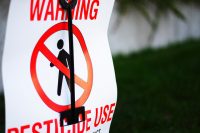
Photo: Michelle Tribe, Flickr

The letter also clarifies a major part of the pesticide rules involving the action level, or the measured amount of pesticides in a product that the OHA deems potentially dangerous. “Despite cannabis producers receiving test results below OHA pesticide action levels for cannabis (set in OHA rule), producers may still be in violation of the Oregon Pesticide Control Act if any levels of illegal pesticides are detected.” This is crucial information for producers who might have phased out use of pesticides in the past or might have began operations in a facility where pesticides were used previously. A laboratory detecting even a trace amount in the parts-per-billion range of banned pesticides, like Myclobutanil, would mean the producer is in violation of the Pesticide Control Act and could face thousands of dollars in fines. The approved pesticides on the list are generally intended for food products, exempt from a tolerance and are considered low risk.

As regulators work to accredit more laboratories and flesh out issues with the industry, Oregon’s cannabis market enters a period of marked uncertainty.
First Nevada Cannabis Lab Receives ISO 17025 Accreditation.

By Aaron G. Biros
1 Comment

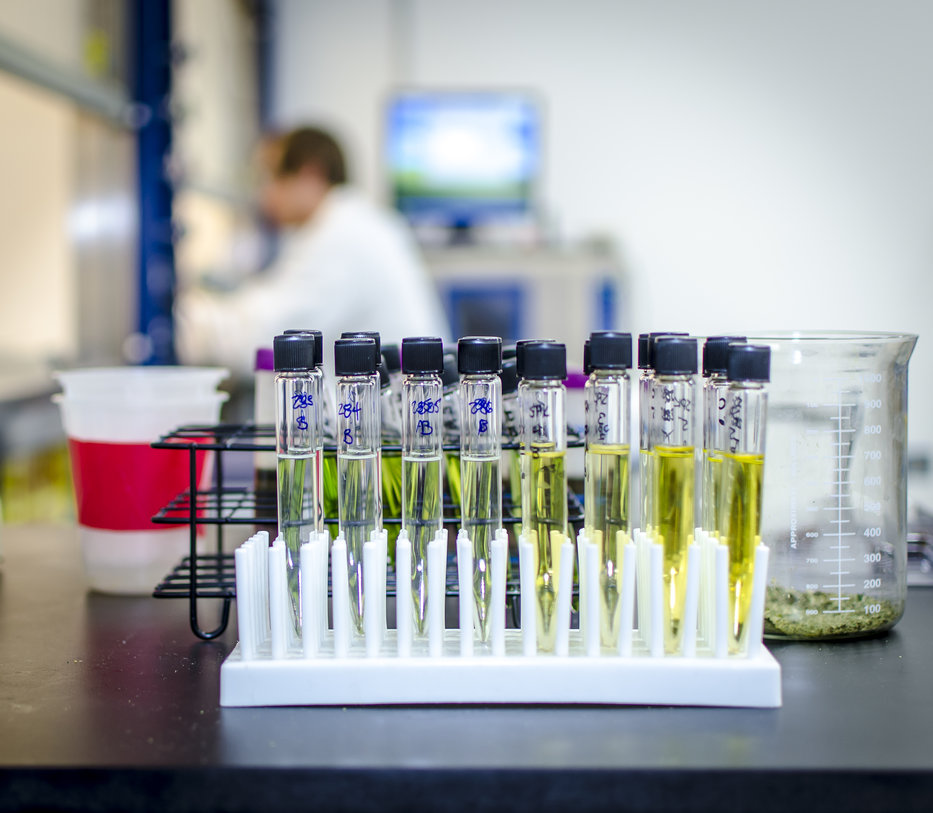
On December 7th, 374 Labs received ISO 17025 accreditation, becoming the first in Nevada to do so. The laboratory, based in Sparks, Nevada, is state-certified and now the only ISO 17025 accredited lab in the state, according to a press release. The laboratory is a member in both the Association of Commercial Cannabis Laboratories (ACCL) and the Nevada Cannabis Laboratory Association (NVCLA).

Managing Partner Alec Garcia at the LCMS/MS

“As Nevada transitions into an adult-use cannabis market, it’s very important that the state’s cannabis testing laboratories are held to the highest standards – and ISO 17025 is a requirement of top testing laboratories in all industries from biotech to forensics in most major countries,” says Dr. Jeff Angermann, assistant professor in the University of Nevada, Reno’s School of Community Health Sciences.

Laboratory Technician Bevan Meade working on sample preparation.

According to the release, 374 Labs was a driving force behind Nevada’s round robin cannabis lab testing program. That program, administered by the Nevada Division of Public and Behavioral Health (DPBH) and the Nevada Department of Agriculture (NDA), sends cannabis samples to each state-certified cannabis lab for a full analysis, measuring the consistency in test results across labs. “In other states proficiency involves testing pre-prepared, purified samples and neglects the challenges of coaxing out delicate analytes from the complex array of compounds found in actual marijuana,” says Laboratory Director Jason Strull. “I commend the DPBH and NDA for facilitating such an advanced quality program.”

Also notable is the announcing of their partnership with Clean Green Certified, a third-party certification (based on USDA organic certification) for sustainable, organically based cannabis cultivation. “Nevada allows certain levels of pesticides like Myclobutanil on its certified marijuana, so we wanted a way for patients and consumers to able to distinguish marijuana that is grown using organic methods,” said Laboratory Director Jason Strull. According to Michael Seibert, managing member of 374 Labs, they have already started performing inspections for the third-party certification and the first facility inspected was Silver State Trading in Sparks, Nevada (certified for both production and cultivation).

Steep Hill, ACCL Find Pesticides in Over 50% of Cannabis Samples

By Aaron G. Biros
4 Comments

On Election Day, voters in California passed Proposition 64, establishing a recreational cannabis market and regulatory environment. While the state won’t issue the first licenses under the new regulatory scheme until 2018, the medical cannabis industry is already well established.

Steep Hill Labs, Inc., based in Berkeley, California, found in October that 84.3% of samples submitted tested positive for pesticide residue, according to a press release. The announcement came before Election Day, but is particularly eye opening given the massive new market created overnight by Prop 64.rsz_steephill_lab_images_25_of_415_copy

Particularly concerning is their detection of Myclobutanil, which was found in more than 65% of samples submitted to the lab. According to the press release, when Myclobutanil is heated (i.e. smoked or vaporized), it is converted to Hydrogen Cyanide, which is extraordinarily toxic to humans and can be fatal in higher doses.

Reggie Gaudino, Ph.D., vice president of scientific operations and director of genetics at Steep Hill Laboratories. (photo credit: Preston Gannaway)
Reggie Gaudino, Ph.D. (photo credit: Preston Gannaway)

According to Reggie Gaudino, Ph.D., vice president of science, genetics and intellectual property at Steep Hill, their more recent study shows they detected pesticides in roughly 70% of the samples they received and 50% of those contained Myclobutanil. Gaudino says that up to a third of those samples would have failed under Oregon’s regulatory standards.

If a lab test were failed, it would contain pesticides at or higher than the required action level. Oregon’s action level, or the measured amount of pesticides in a product that the OHA deems potentially dangerous, for Myclobutanil is 0.2 parts-per-million (PPM). Steep Hill’s instrumentation has a method detection limit down to the parts-per-trillion (PPT) level, which is a more precise and smaller amount than Oregon’s action level.

“Those in the cannabis community who feel that all cannabis is safe are not correct given this data – smoking a joint of pesticide-contaminated cannabis could potentially expose the body to lethal chemicals,” says Jmichaele Keller, president and chief executive officer of Steep Hill. “As a community, we need to address this issue immediately and not wait until 2018.”

Potentially harmful pesticides, and specifically Myclobutanil, have been detected in Colorado and Washington’s recreational markets on a number of occasions, proving this is a widespread issue. Steep Hill’s release suggests that California regulators take a look at Oregon’s pesticide regulations for guidance when developing the regulatory framework.

What’s even more troubling is that not all laboratories have or had the capability of detecting pesticides at sufficiently low levels and because of this, other labs had significantly lower rates of pesticide detection, suggesting possible inconsistencies in testing methods, instrumentation, sample preparation or other variations. During a 30-day period in late September and early October, Steep Hill found, using publicly available data, or data from contracted testing, that other labs were only reporting between 3% and 21% pesticide detection.

Examination of cannabis prior to testing- credit Steep Hill Labs, Inc.

It is important to note that those samples were not identical and there could be a great degree in variation on the quality of samples sent to different laboratories, so it is not an entirely accurate comparison. Steep Hill does however detect pesticides down to the parts-per-trillion level, whereas many common methods for detecting pesticides look at the parts-per-billion level.

Reggie Gaudino says the Association of Commercial Cannabis Laboratories (ACCL) is using this data to work with Steep Hill and a number of other labs to address these issues. “As a member of the ACCL, and after discussion with ACCL, we have agreed that all future discussion of this issue should not include laboratory names, as this is about educating the industry in general, and making sure all members of the ACCL are developing the best possible methods for detecting pesticides,” says Gaudino. “The ACCL has responded to this data, by inquiring on a larger, industry-wide basis, which represents a better picture of the issue, rather than only in California’s still-technically unregulated market.” The important message is this is a major issue that needs addressing urgently. “As such, the troubling issue remains, across the larger ACCL membership, there is still detection of pesticides in at least 50% of the cannabis being tested.”

ACCL logoAccording to Jeffrey Raber, Ph.D., president of the ACCL, the industry is experiencing a pesticide problem, but it is very difficult to quantify. “It is fair to say that around 50% of the cannabis being tested contains pesticides, but we really don’t know that exact number until a much more comprehensive statistical analysis is performed,” says Raber. “We agree this is a big problem and that it needs to be addressed, but we are not sure just how big of a problem it really is.” With so much variation in labs in a state where not everyone is required to test products, it is very difficult to pin down how consistent lab results are and how contaminated the cannabis really is. “If all of the labs had the same methodology, samples and shared statistical analyses for a real study then we can look at it closely but it seems we are a ways off from that. I can say confidently however that this is a pretty significant problem that needs addressing.”

Still, Steep Hill detecting pesticides in a majority of their samples and some labs finding as little as 3% should raise some eyebrows. “Unfortunately, our recent study discovered that 84.3% of the samples assessed by our triple quadrupole mass spectrometer contained pesticides,” says Keller. “As of today, this tainted product could be sold in most dispensaries throughout the state of California without any way of informing the patients about the risks of pesticide exposure.”

These findings could mean potentially enormous health risks for medical and recreational cannabis consumers alike, unless regulators, labs and growers take quick action to address the problem.

teganheadshot
Quality From Canada

Near Infrared, GC and HPLC Applications in Cannabis Testing

By Tegan Adams, Michael Bertone
5 Comments
teganheadshot

When a cannabis sample is submitted to a lab for testing there is a four-step process that occurs before it is tested in the instrumentation on site:

  1. It is ground at a low temperature into a fine powder;
  2. A solution is added to the ground powder;
  3. An extraction is repeated 6 times to ensure all cannabinoids are transferred into a common solution to be used in testing instrumentation.
  4. Once the cannabinoid solution is extracted from the plant matter, it is analyzed using High Pressure Liquid Chromatograph (HPLC). HPLC is the key piece of instrumentation in cannabis potency testing procedures.

While there are many ways to test cannabis potency, HPLC is the most widely accepted and recognized testing instrumentation. Other instrument techniques include gas chromatography (GC) and thin layer chromatography (TLC). HPLC is preferred over GC because it does not apply heat in the testing process and cannabinoids can then be measured in their naturally occurring forms. Using a GC, heat is applied as part of the testing process and cannabinoids such as THCA or CBDA can change form, depending on the level of heat applied. CBDA and THCA have been observed to change form at as low as 40-50C. GC uses anywhere between 150-200C for its processes, and if using a GC, a change of compound form can occur. Using HPLC free of any high-heat environments, acidic (CBDA & THCA) and neutral cannabinoids (CBD, THC, CBG, CBN and others) can be differentiated in a sample for quantification purposes.

Near Infrared

Near infrared (NIR) has been used with cannabis for rapid identification of active pharmaceutical ingredients by measuring how much light different substances reflect. Cannabis is typically composed of 5-30% cannabinoids (mainly THC and CBD) and 5-15% water. Cannabinoid content can vary by over 5% (e.g. 13-18%) on a single plant, and even more if grown indoors. Multiple NIR measurements can be cost effective for R&D purposes. NIR does not use solvents and has a speed advantage of at least 50 times over traditional methods.

The main downfall of NIR techniques is that they are generally less accurate than HPLC or GC for potency analyses. NIR can be programmed to detect different compounds. To obtain accuracy in its detection methods, samples must be tested by HPLC on ongoing basis. 100 samples or more will provide enough information to improve an NIR software’s accuracy if it is programmed by the manufacturer or user using chemometrics. Chemometrics sorts through the often complex and broad overlapping NIR absorption.

Bands from the chemical, physical, and structural properties of all species present in a sample that influences the measured spectra. Any variation however of a strain tested or water quantity observed can affect the received results. Consistency is the key to obtaining precision with NIR equipment programming. The downfall of the NIR technique is that it must constantly be compared to HPLC data to ensure accuracy.

At Eurofins Experchem , our company works with bothHPLC and NIR equipment simultaneously for different cannabis testing purposes. Running both equipment simultaneously means we are able to continually monitor the accuracy of our NIR equipment as compared to our HPLC. If a company is using NIR alone however, it can be more difficult to maintain the equipment’s accuracy without on-going monitoring.

What about Terpenes?

Terpenes are the primary aromatic constituents of cannabis resin and essential oils. Terpene compounds vary in type and concentration among different genetic lineages of cannabis and have been shown to modulate and modify the therapeutic and psychoactive effects of cannabinoids. Terpenes can be analyzed using different methods including separation by GC or HPLC and identification by Mass Spectrometry. The high-heat environment for GC analysis can again cause problems in accuracy and interpretation of results for terpenes; high-heat environments can degrade terpenes and make them difficult to find in accurate form. We find HPLC is the best instrument to test for terpenes and can now test for six of the key terpene profiles including a-Pinene, Caryophyllene, Limonene, Myrcene, B-Pinene and Terpineol.

Quality Systems

Quality systems between different labs are never one and the same. Some labs are testing cannabis under good manufacturing practices (GMP), others follow ISO accreditation and some labs have no accreditation at all.

From a quality systems’ perspective some labs have zero or only one quality system employee(s). In a GMP lab, to meet the requirements of Health Canada and the FDA, our operations are staffed in a 1:4 quality assurance to analyst ratio. GMP labs have stringent quality standards that set them apart from other labs testing cannabis. Quality standards we work with include, but are not limited to: monthly internal blind audits, extensive GMP training, yearly exams and ongoing tests demonstrating competencies.

Maintaining and adhering to strict quality standards necessary for a Drug Establishment License for pharmaceutical testing ensures accuracy of results in cannabis testing otherwise difficult to find in the testing marketplace.

Important things to know about testing

  1. HPLC is the most recommended instrument used for product release in a regulated environment.
  2. NIR is the best instrument to use for monitoring growth and curing processes for R&D purposes, only if validated with an HPLC on an ongoing basis.
  3. Quality Systems between labs are different. Regardless of instrumentation used, if quality systems are not in place and maintained, integrity of results may be compromised.
  4. GMPs comprise 25% of our labour costs to our quality department. Quality systems necessary for a GMP environment include internal audits, out of specification investigations, qualification and maintenance of instruments, systems controls and stringent data integrity standards.
Soapbox

Labeling Cannabis Products is a Booming Market

By Marsha Frydrychowski
1 Comment

Legal marijuana sales are expected to hit $6.7 billion in 2016, with the market expected to climb to $21.8 billion in sales by 2020. As legal cannabis sales rise, cannabis labels are quickly becoming one of the fastest growing markets for label manufacturers.

An Industry Gaining Legitimacy

Since California first legalized medical cannabis in 1996, the cannabis industry has grown considerably. Voters in four states legalized recreational cannabis last week on Election Day, including California, which is currently the world’s 6th largest economy. Voters in another four states legalized medical cannabis as well, bringing the total to 28 states with some form of legalization measure.

The market is moving ahead and will not be limited to small businesses and dispensaries either. Already, more than 50 publicly traded companies have blitzed the market, including pharmaceuticals, medical growers and even major tech companies.

An example of a cannabis flower label in Oregon with all of the required information.

What’s more, public support for full cannabis legalization is at an all-time high 61 percent, according to a recent survey from the AP-NORC Center for Public Affairs Research. The market is here to stay.

Cannabis flower labels

Legal cannabis has primarily consisted of dispensaries selling cannabis flower or leaves (ready-to-smoke marijuana) in pouches or childproof containers. Regulations have essentially required two cannabis labels for the pouches: a branded label on the front and a regulatory label on the back. Many dispensaries also use pre-printed pouches.

Similar to the way alcohol labels must contain information for alcohol content, the informational labels that sit on the backs of pouches are legally required to provide certain accurate information, including:

The universal symbol required on all cannabis products in Colorado
  • THC %
  • CBD %
  • Net weight in grams
  • Lab name and test number confirmation
  • Batch number
  • Date tested
  • Strain name
  • Warning Label

And cannabis flower labels are just the beginning. Many smoke-free product categories are emerging with similar labeling requirements. These often allow for increased branding opportunities that will afford better profit margins for label suppliers. Some of the many products in this young category include:

  • Edibles — such as dark chocolates, baked goods, snack crackers and teas infused with cannabis.
  • Topicals — such as pain-relieving lotions and creams.
  • Tinctures — cannabis-infused oils that are applied in drops to the tongue.

Bottom line: For label and packaging suppliers, cannabis represents one of the fastest growing market opportunities today and the opportunities extend way beyond labeling for the flower itself.

Managing Compliance

As more and more states move toward legalization and regulation, uneven laws in different states are increasingly governing the market. Businesses must respond to ever-changing requirements, including labeling standards. While many dispensaries have gotten away with minimalist labels, states are increasingly demanding dispensaries meet more stringent legal requirements. For example, Oregon passed new labeling requirements this year and products that failed to meet them by October 1, 2016 were not allowed on store shelves.

Label suppliers entering the market must keep abreast of the changing regulations and be able to help brands navigate them. They need to work to understand the intricacies of this new market, rather than simply looking to redirect the capabilities they already possess. See the original post here.


Second Oregon Health Alert for Tainted Cannabis with Pesticides.

By Aaron G. Biros
No Comments


Three health alerts were issued Thursday, November 4th for contaminated cannabis sold to consumers at North Bend, Salem and Eugene dispensaries. Green-Way Medicinal in Salem and Stonies in North Bend sold two strains of cannabis flower found to have high levels of piperonyl butoxide, an ingredient commonly found in pesticides that acts as a synergist to amplify the effects of certain compounds.

The two batches in question, including the strains Pleeze (batch number G6J0039-02) and Dryzl (batch number G6J0039-01), were found to contain the potentially dangerous chemical at levels of 15.39 ppm and 16.24 ppm, respectively. The Oregon Health Authority (OHA) action level for piperonyl butoxide is 2.0 ppm. To see the full health alert, click here.

The dispensary in Eugene, Flowr of Lyfe, sold one strain of cannabis that had levels of the insecticide spinosad over the 0.2-ppm action level. The very popular indica hybrid, Dutch Treat (batch number G6J0018-01), was found to contain 0.9-ppm of spinosad. Though it still tested above the 0.2-ppm action level for that insecticide, it pales in comparison to October’s health alert, where a batch of cannabis had over 200 times the acceptable level of that insecticide. Both spinosad and piperonyl butoxide are considered toxic to humans.oha_logo_lrg

According to the health alert, “All tests were performed by an OHA-accredited and Oregon Liquor Control Commission-licensed laboratory.” It is unclear exactly how or why the cannabis was able to get transported and transferred from the grower to the dispensary and then sold to consumers after failing the pesticide test. According to Jonathan Modie, spokesman for the OHA, they are currently investigating the matter and following up with the dispensaries and growers to find out what happened. “We need to find out how this got transferred in the first place and then sold,” says Modie. “They had access to the test results and should have been able to determine for themselves that these products should not have been sold or transferred.”

“We don’t know, we are still gathering information, there is a risk of civil penalty as well as losing your registration for a dispensary or grower that illegally transferred products that have tested for analytes above the action levels,” says Modie, when asked if punitive measures would be taken. While there are no particular regulations for this scenario in performing a mandatory recall, the OHA is obligated under law to issue health alerts when there is a situation that might affect public health, according to Modie.

“We deal with this with infectious disease outbreaks or during a food borne illness outbreak; if they [the public] can avoid it by hearing from us then we want to get the word out and this is a very similar situation.” For medical patients that purchase potentially contaminated cannabis such as this, it is easy to contact them to have the patient dispose or return the cannabis. Dispensaries are not required to collect information from recreational customers, and most dispensaries do not, which is a major problem when this situation happens, as it has twice in the past two weeks.

“We can never do too much communication,” says Modie. “We will let the public know in any way possible that they should return this product or dispose of it responsibly.”

Oregon Issues Health Alert for Contaminated Cannabis

By Aaron G. Biros
No Comments

According to Jonathan Modie, spokesman for the Oregon Health Authority (OHA), on Friday, October 21st, the OHA issued a ‘health alert’ regarding cannabis products sold from a McMinnville dispensary that were possibly tainted with extremely high levels of Spinosad, an insecticide commonly used to combat mites and other pests. “My understanding is that two medical patients purchased the cannabis products whom we had contact info for, but most of the purchasers were recreational customers,” says Modie. “Because it is not required to get contact info for recreational customers, we issued the health alert to get the word out as quickly as possible because we didn’t know who bought the product.” The OHA is urging consumers who purchased cannabis from New Leaf CannaCenter in McMinnville to check the labels and see if they purchased potentially dangerous cannabis, and to either return the cannabis to the dispensary or dispose of it appropriately.

oha_logo_lrgThe action level, the measured amount of pesticides in a product that the OHA deems potentially dangerous, for Spinosad is 0.2 parts-per-million (PPM). The two batches in question are the strains Dr. Jack (batch number G6J0051-02) and Marion Berry (batch number G6J0051-01), which were tested to contain approximately 42 PPM and 22 PPM respectively, much higher than the OHA’s action level.

While this is the first health alert issued in Oregon in connection with potentially contaminated cannabis, Modie says he expects there will be more health alerts in the future. “Unfortunately the product was inappropriately transferred from the grower to the dispensary and from the dispensary to customers, so we are working to get the word out to dispensaries, growers and processors about the testing rules to prevent this from happening in the future,” says Modie. “We want to make it clear that any grower, processor or dispensary that does not follow the testing requirements or fail to label, store or retain batches that fail a test will be subject to enforcement actions such as fines, penalties, suspension or revocation of their license.” The OHA has a list of pesticide analytes and their action levels on their website.

“We are advising recreational and medical users alike to read the product labels closely; the labels must have the license or registrant number, the packaging or distributor license number, the name of the strain and the universal symbol,” says Modie. “We are also suggesting consumers request a copy of pesticide test results from the dispensary.” It is unclear at this time if all of the cannabis products in question have been properly disposed of, but OHA was informed that New Leaf has pulled all products in question off of the shelf.

Steep Hill Labs Expands to Pennsylvania, Washington, D.C.

By Aaron G. Biros
No Comments

Last week, Steep Hill Labs, Inc. announced plans to expand on the East Coast, including licensing for laboratories in Washington, D.C. and Pennsylvania. The cannabis testing company now is operating or developing in seven states, the District of Columbia along with an official arrangement with a research university in Jamaica, according to Cathie Bennett Warner, director of public relations at Steep Hill.

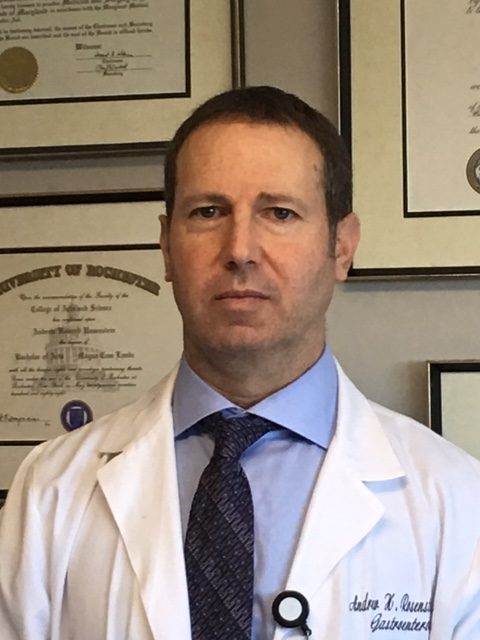
The same team of physicians that oversees the Steep Hill laboratory in Maryland will operate the Pennsylvania and D.C. labs. Heading that team is chief executive officer Dr. Andrew Rosenstein, chief of the division of Gastroenterology at University of Maryland Saint Joseph Medical Center and assistant clinical professor of Gastroenterology and Hepatology at the University of Maryland Medical Center. Dr. Rosenstein has been recognized by Baltimore Magazine as a top doctor in the Baltimore area, according to a press release.

Dr. Andrew Rosenstein, CEO of Steep Hill Maryland, PA and D.C.

According to Dr. Rosenstein, they want to provide accurate clinical results for trials with patients using cannabis. “All clinical trials will require a competent, credible and reliable lab partner and that is what we are bringing to the field- and that is why we are working with Steep Hill,” says Dr. Rosenstein. With team members having backgrounds in pathology, molecular diagnostics, clinical chemistry, microbiology and genetics, it should come as no surprise that they plan to participate in clinical research.

Dr. Rosenstein’s vested interest in cannabis safety stems from prior experience with his patients using cannabis. “Over the past five years, we have seen an increased number of patients using cannabis, particularly for managing the side effects of Crohn’s disease and cancer treatment,” says Dr. Rosenstein. “They would bring it up to us and at the time I didn’t know much about it, but anecdotally it’s really clear that a lot of patients have great responses to it.” Not knowing much about the preparation or safety of cannabis at the time led Dr. Rosenstein to advise patients to be very careful if they are immunocompromised.

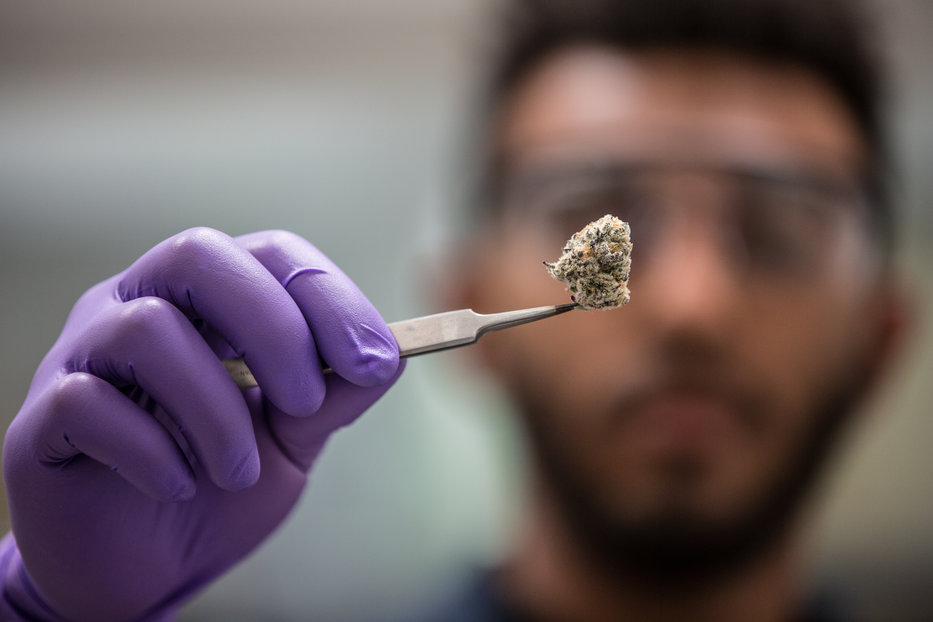
Examination of cannabis prior to testing- credit Steep Hill Labs, Inc.
Examination of cannabis prior to testing- credit: Steep Hill Labs, Inc.

“When a patient is immunocompromised, a bacterial or fungal infection can be lethal, so because we had patients using cannabis, we wanted to make sure it was safe,” says Dr. Rosenstein. So when Maryland legalized medical cannabis, Dr. Rosenstein and his team saw the need to protect patient safety and Steep Hill was a perfect fit. “We really didn’t want to reinvent the wheel so we looked for someone to partner with,” says Dr. Rosenstein. “Steep Hill has the best technology and the best credibility and we didn’t want to compromise on quality and safety issues. They felt the same way so we partnered with them and culturally it has been a great fit.”

Steep Hill Express in Berkeley, CA- MD,PA and D.C. will have a similar offering of instant potency analysis

The new laboratories plan to offer a similar range of services that are offered at other Steep Hill labs, such as rapid potency testing for THC-A, ∆-9-THC, CBD, CBD-A and moisture. But Dr. Rosenstein sees clinical opportunities in the East Coast medical hubs. “We want to provide the testing component for studies, providing clinical reproducibility and consistency, and those are the things as a top-notch lab that we are interested in doing.”

A petri dish of mold growth from tested cannabis- Photo credit: Steep Hill-
A petri dish of mold growth from tested cannabis- Photo credit: Steep Hill Labs, Inc.

With a physician-led group that has experience in molecular diagnostics, partnering with Steep Hill is about being medically focused, according to Dr. Rosenstein. “First and foremost, this is about patient safety.” Because of that, he emphasizes the need for required microbiological contaminant testing, particularly because of his experience with patients. “If you’re a cancer patient and you get a toxic dose of salmonella or E. coli, that can kill you, so testing for microbiologic  contamination is of the highest priority.”

According to Warner, bridging the medical cannabis science gap with Steep Hill’s professionalism and experienced doctors practicing medicine is a big deal. “We are working very closely with their medical team to make sure these standards are medically superior,” says Warner. “To have these doctors with such a high level of knowledge in medicine working with us in cannabis analytics is a breakthrough.”

Oregon October 1st Compliance Deadline: What You Need to Know

By Aaron G. Biros
2 Comments

Oregon cannabis regulators began enforcing new rules over the weekend when the October 1st compliance deadline passed. Compared to the relatively cut-and-dried new Colorado regulations, the Oregon cannabis market faces more complex and changing regulatory compliance issues.

The new rules in Oregon address changes to testing, packaging and labeling regulations along with concentration and serving size limits, according to a bulletin published by the Oregon Health Authority (OHA) and the Oregon Medical Marijuana Program (OMMP) earlier this week. Most of the new rules are meant to add safeguards for public health and consumer safety, while putting an emphasis on keeping cannabis away from children.oha_logo_lrg

Around the same time, the Oregon Liquor Control Commission (OLCC) published a bulletin with a new temporary rule that is meant to prevent marketing to children. The OLCC’s temporary rule clarifies “restrictions on product wording commonly associated with products marketed by or to children.” The OLCC reviewed around 500 strain names and found roughly 20 of them that could appeal to children. The OLCC will not approve labels that include strain names like Girl Scout Cookies, Candyland and Charlotte’s Web, among others. This means that breeders and growers have to change strain names on labels like Death Star, Skywalker and Jedi Kush because they contain a reference to the Star Wars franchise, which is marketed to children.

Oregon Marijuana Universal Symbol for Printing

The new testing regulations establish requirements for testing cannabis products for THC and CBD concentrations, water activity, moisture content, pesticides and solvents in concentrates. They also stipulate that ORELAP-accredited laboratories must perform the testing. In the time leading up to the compliance deadline, many lacked confidence that ORELAP would accredit enough laboratories to meet the demand for testing. “We have heard from existing accredited labs that they can meet demand for cannabis product testing,” says Jonathan Modie, spokesman for the OHA. “We don’t yet know how much product requires testing, so we can’t speculate on whether labs will indeed be able to meet demand.” It is still unclear at this time if there are enough laboratories to perform all of the testing for cannabis products in the state.

img_6245
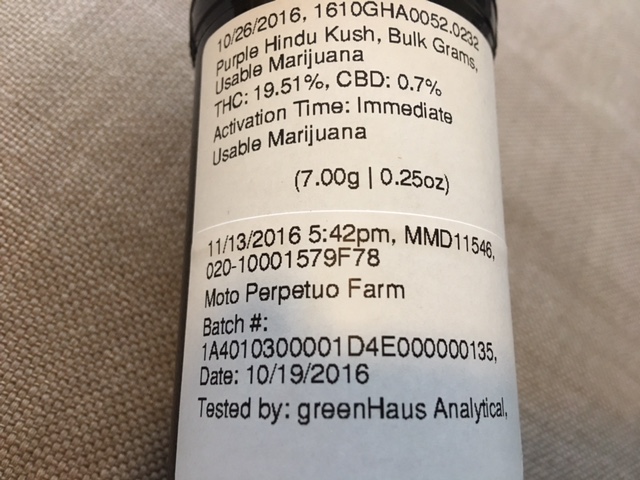
The universal symbol on a label of a cannabis product purchased after Oct. 1

At this time, 16 laboratories have been accredited for some form of testing, but only four labs have been accredited for pesticide testing. A list of the labs that ORELAP has accredited can be found here. Notably, only one lab is accredited for testing microbiological contaminants, such as E. coli. Testing for microbiological contaminants is not required for all cannabis products sold, rather it is only required upon written request by the OHA or OLCC.

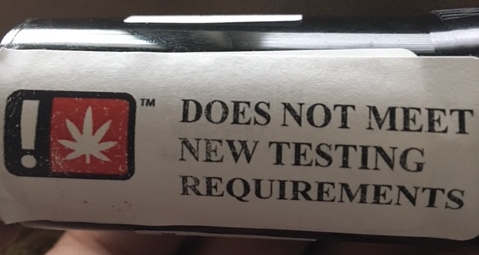
The new labeling and packaging requirements concern testing, consumer education, childproofing and preventing marketing to minors. All cannabis products must contain a label that has been pre-approved by the OLCC. “Cannabis products have to be clearly labeled, showing that is has been tested, or if it has not been tested then it must display ‘does not meet new testing requirements’,” says Modie. “It [the label] must be clear, legible and readable, so they [the consumer] know exactly what it contains, including what cannabis product is inside the package, how much of it, how much THC, and where the product came from.”

According to Modie, it is particularly important that the packaging is not attractive to minors. Cartoons, designs and names that resemble non-cannabis products intended for, or marketed to children, should not be on the packaging or label. “Part of our education to the public and recreational cannabis users focuses on keeping these products out of reach of children in the first place, like storing cannabis in a locked area or an area where a child cannot reach or see,” says Modie. “Our goal is always to protect public health.”

The Nerd Perspective

Detecting the Undetectable

By Amanda Rigdon
4 Comments

In my last column, I took a refreshing step out of the weeds of the specifics behind cannabis analyses and took a broader, less technical look at the cannabis industry. I had envisioned The Nerd Perspective being filled with profound insights that I have had in the cannabis industry, but I have realized that if I restricted this column to insights most would consider profound…well…there would not be many articles. So in this article, I want to share an insight with you, but not one that is earth shattering. Instead, I want to talk about a simple concept in a way that might help you think a little differently about the results your lab generates, the results you have to pay for or even the results printed on a cannabis product you might purchase.

This article is all about the simple concept of concentration – the expression of how much of something there is in relation to something else. We use expressions of concentration all the time – calories per serving, percent alcohol in beer, even poll results in the presidential election circus. Cannabis is not excluded from our flippant use of concentration terms – percent cannabinoid content, parts-per-million (ppm) residual solvents, and parts-per-billion (ppb) pesticides. Most of us know the definition of percent, ppm, and ppb, and we use these terms all the time when discussing cannabis analytical methods. During my career in analytical chemistry, it has occurred to me that parts per billion is a really infinitesimal amount…I know that intellectually, but I have never tried to actually visualize it. So being the nerd that I am, I went about comparing these often-used concentration terms visually in my kitchen.

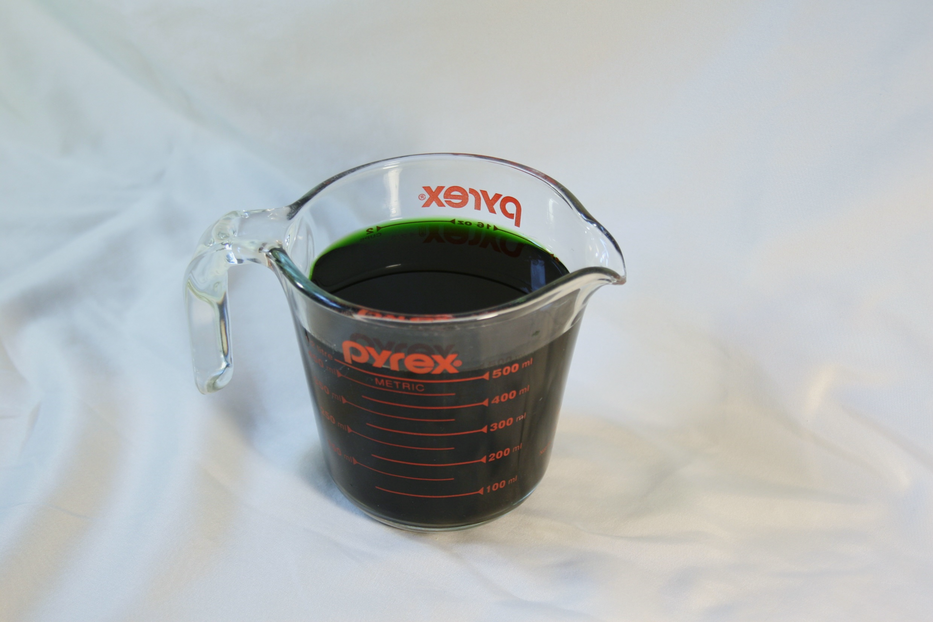
I started by preparing a 1% solution of food coloring paste in water. This was accomplished by weighing out 5g of the food coloring and dissolving it into 500mL of water (about one teaspoon into a pint). The resulting solution was so dark it was almost black:

rsz_percent2

The picture above expresses the low end of what we care about in terms of cannabinoid concentration and a pretty normal value for a high-concentration terpene in cannabis.

I then took one teaspoon of that mixture and dissolved it into 1.32 gallons of water (5mL into 5000mL), resulting in a 10ppm solution of green food coloring in water:

rsz_ppm

I did not expect the resulting solution to be so light colored given the almost-black starting solution, but I did dilute the solution one thousand times. To put this into perspective, 10ppm is well above many state regulatory levels for benzene in a cannabis concentrate.

I then took one teaspoon of the almost-colorless 10ppm solution and dissolved that into another 1.32 gallons of water, resulting in a very boring-looking 10ppb solution of green food coloring in water:

rsz_1ppb

Obviously, since I diluted the almost-colorless 10ppm solution a thousand times, the green food coloring cannot be seen in the picture above. As a reference, 10ppb is on the low end of some regulations for pesticides in food matrices, including – possibly – cannabis. I know the above picture is not really very compelling, so let’s think in terms of mass. The picture above shows eleven pounds of water. That eleven pounds of water contains 50 micrograms of food coloring…the weight of a single grain of sand.

To expand on the mass idea, let’s take a look at the total mass of cannabis sold legally in Colorado in 2015 – all 251,469 pounds of it. To express just how staggeringly small the figure of 10ppb is, if we assume that all of that cannabis was contaminated with 10ppb of abamectin, the total mass of abamectin in that huge amount of cannabis would be just 1.143g – less than half the mass of a penny.

To me, that is an extremely compelling picture. The fact is there are instruments available that can measure such infinitesimal concentrations. What’s more, these tiny concentrations can be measured in the presence of relatively massive amounts of other compounds – cannabinoids, terpenes, sugars, fats – that are always present in any given cannabis sample. The point I’d like to make is that the accurate measurement of trace amounts of cannabis contaminants including pesticides and residual solvents is an astounding feat that borders on magical. This feat is not magic though. It requires extremely delicate instrumentation, ultra-pure reagents, expert analysts, and labor-intensive sample preparation. It is far from trivial, and unlike magic, requires a large investment on the part of the laboratories performing this feat of science. Other industries have embraced this reality, and the cannabis industry is well on its way toward that end…hopefully this article will help put the job of the cannabis analytical lab into perspective.