Tag Archives: Federal

Leaders in Extraction & Manufacturing: Part 5

By Aaron Green
No Comments

Cannabis extraction and manufacturing is big business in California with companies expanding brands into additional states as they grow. This is the fifth and final article in a series where we interview leaders in the California extraction and manufacturing industry from some of the biggest and most well-known brands.

In this week’s article, we talk with Kristen Suchanec, VP of Production at Island. Kristen converted her experience in traditional consumer packaged goods to cannabis to help create a brand that is sought after by many. The interview with Kristen was conducted on August 21, 2020.

Aaron Green: Good afternoon Kristen, I am glad we were able to put this interview together. I know you have been very busy!

Kristen Suchanec: I’m so sorry this took so long to actually work! Thank you for bearing with me. I’m happy we are able to talk.

Aaron: Great! I like to start off the conversation with a question that helps our readers get to know you a little better. So, Kristen can you tell me how you got involved at Island?

Kristen Suchanec, VP of Production at Island

Kristen: My background is in manufacturing and planning for consumer packaged goods. I had a friend of a friend and we were just at a happy hour and I asked what he was up to. He was actually our VP of Finance at Island and he handed me a box of pre-rolled joints. They were our Island Minis and I thought it was a great customer experience. I loved the brand and packaging which made it a consumer product versus, you know, this was a few years back where cannabis wasn’t necessarily commoditized or branded. I got really excited about that because I feel like cannabis should be traditional CPG and it should appeal to different people and it should have different brands that appeal to those different groups. So I literally just started a conversation. His brother is our founder and CEO and they needed someone to run production so that was my background and it all kind of lined up and I ended up being employee number five at Island!

Aaron: Wow, employee number five – awesome! OK, great. That is some nice background about how you got involved at the company. The next questions get into product development and manufacturing. The first question is: what’s your decision process for starting a new product?

Kristen: Yea, we are right now owning the lane between cultivation and distribution. So, getting those raw materials for whether it be concentrates or flower and then converting them into that final packaging for everything. So that is what we focus on and spend all of our time with automation and trying to make that process as efficient as possible.

When we’re looking at a new product we’re not necessarily creating a new extraction, we are really looking at the market and the end consumer and what people want. At Island we’ve really focused on vape, pre-roll and packaged flower. Those are the three categories we are working on right now. We are expanding and looking to move more towards vape and live resins and specialty concentrated products that we haven’t really had in our portfolio before. What we would like to do is make sure we have the capability to manufacture that and then take a look at where we think the market is going. We are trying to go in the flower, pre-roll and vape because that is where we spent so much of our time getting pieces of automation so not everything we are bringing in house is manual.

Aaron: Now when you say the capability to manufacture that are you talking about from a packaging perspective or…?

Kristen: Yes, so we won’t do any extraction on site. It’s getting distillate, shatter and flower and then we take that and convert that either into pre-rolled joint, a package of flower or any other final product. So, we are looking at automating that packaging piece.

Aaron: Got it. OK, so the next question — and I think you kind of touched on this as well — are you involved in manufacturing to the extent that you are manufacturing the packaging?

Kristen: Yes absolutely. My whole team’s manufacturing is based out of Oakland. That’s where we do all the conversion of products. I oversee that entire team and have been really involved in a lot of the equipment that we have sourced and iterations that we’ve gone through to make sure that we’re able to automate as much as possible. We’ve really focused on the issue of weighing the material. For our flower line everything is weighed and put into a jar, capped, sealed and labeled for it to come off our lines. We don’t have anyone in packing or anything like that. Our pre-rolls manufacturing is an automated machine where it actually weighs the flower before going into the cone so we’re not having to weigh after the fact and take into account the weight of the cone because that’s so variable so we know that the customer is getting consistency. Then for the vapes, it’ssame thing – the volumetric doses everything.

I have to give my credit to everyone on the floor who is doing the day to day, they find so many new solutions since they are the ones that are hands on.  I am really involved in what new equipment we need, what problems we are looking to solve and what’s causing our bottlenecks so we can continue to improve our process week over week and year over year.

Aaron: We’ll dig into some of those problems in a bit. What is your process for not just starting new product but for developing a new product?

Kristen: Yeah, absolutely. So, I think it’s really interesting to see where the market is going. What’s selling really well and especially over the past year pre rolls have been a huge growth platform for us. And especially now, we’ve seen some changes because of COVID as well. We have single joints. But then we have our Minis, which I’ve mentioned before, which are half gram joints. We’re seeing sales on those actually increased because I think people are sharing joints as people want individual things because of this pandemic.

When we go through this process, we’re really – again – we’re so focused on what the consumer wants, and what we think is going to add to our portfolio. Then when marketing and our product team comes to me, we really focus on our machinery, what we can do with it currently, and if we would need something additional. So,we’re excited about expanding into 510s right now. We’re looking at how we can automate the process of capping – we can fill right now, but not cap. And then we also take a look at packaging.

I think it’s a little different than creating like a whole new product, extraction or anything like that, but we were looking at more sustainable options for packaging for child resistance because we’re trying to move away from barrier bags as much as possible. We’re looking at, okay, how many stickers do we need to put on there? What is the labor time going into each piece of product? And again, how are we eventually going to get some consistency across product lines, etc.

So, it’s really taking all three of those components, making sure we’re getting out the customer that feels like they want. I’m having it either fit into our process or again, then go through and look at what automations meanand automation equipment investment you want to make for long term future investments.

Aaron: Are you developing new products internally, or are you relying on outside manufacturers for that?

Kristen: Not everything we do is internal. We have a big network of, you know, cultivators and extractors we work with, but we’re in the midst of getting our own cultivation and manufacturing in house by working with other companies. So with that we’re doing everything.

Aaron: Do you ever bring in external product development consultants for helping out with your processes?

Kristen: No, we don’t bring in consultants. But we have brought in another brand into our fold via a brand called Neutron Genetics. That is part of our overall portfolio. We work very closely with the founder because he has a lot of trade secrets, a lot of his own processes to make sure you’re getting the best product for that specific brand.

Aaron: In your product development, what does getting stuck look like to you?

Kristen: That’s a good question. I think one of the biggest challenges is working with the plant itself, because it’s not consistent and it’s not homogenous. You could get the same strain from the same cultivator, but it’ll be a different batch. It might be a little stickier or a little larger, etc. When you’re looking at traditional manufacturing and automation, you want consistency, homogenized liquids, same viscosity every time, and we don’t have that because the plant itself is natural and is going to have all these different expressions depending on the batch and how it was grown and how it was trimmed even.“I think it’s really the proper equipment, the proper training and then, again, continuing to evolve as a team.”

So, getting stuck means finding an off-the-shelf solution that might work for, you know, nuts and bolts or some kind of food production and then you’re going to have to convert it to actually work with the cannabis plant. So that’s what makes it so challenging, but also really exciting. In the bud, humidity and air can really throw off a manufacturing process which is really different than just doing beverages for example.

Getting stuck means really having to work with the plant concentrates specifically if you think about just the nature of those whether it be shatter, distillate or very sticky product. So again, working with machinery isn’t always what goes hand in hand. So, getting stuck is dealing with all those different formats and inconsistency using the same product day after day.

Aaron: It sounds like consistency is kind of a main topic here?

Kristen: Yeah, I think it depends on what product format we have. For example, about a year ago, we launched infused pre-rolls for Neutron where we’re putting flower, kief and shatter into a joint. So that’s going to perform differently on a piece of machinery than just straight flower.

I think it all depends on the product. Usually it happens when it’s in that machine, you’re trying to get a good flow and a good consistency. You want to have time studies, you know how long it takes to make each batch. But if a certain flower mix is performing differently, it’s getting the settings of the machine dialed, right? It’s also properly training personnel so people know how to react when things get going. Sometimes things get physically stuck in the machine as well, so to be able to react on that.

I think it’s really the proper equipment, the proper training and then, again, continuing to evolve as a team. So for our pre-roll machine, we are now on our third version of it, just because we kept running into the same roadblocks and I’m hoping that continues to evolve and we just continue to get better equipment year after year.

Aaron: I see, do you ever hire outside consultants when you do get stuck?

Kristen: We’ve worked closely with vendors. I will say that we’re not a machine shop or engineering firm. So we’re not the ones creating a lot of what we use on the floor. We’ve partnered with various vendors, which has been helpful, but we haven’t used external consultants.“When you see the huge potential and then see how much is taken out from illegal activity right now, it is frustrating to see.”

Aaron: Okay, now imagine that you have a magic wand and somebody can come in and help you. What does your magic helper look like?

Kristen: I could probably make a really long list if I’m focusing on just my manufacturing and everything! I think the next thing which we’re already thinking about that magic wand is how to get a perfectly rolled joint without having so much manual human touch to it. And like I said, we’ve really attached to that weighing problem. And we’ve seen solutions out there that you know, claim to twist and have that “perfect roll” and you don’t need to even touch it. But I think the biggest challenge there is it depends how well it’s packed. You know, you don’t want it too tight. You don’t want it too loose for that customer experience. So getting that quality, if I could wave a magic wand where I’m putting in, you know, paper on one side and out comes perfectly rolled joints, that would be my magic wand for sure. Okay, I think there’s a lot of solutions out there but to get that quality and that consumer experience that we want, I haven’t seen working practice yet.

Aaron: Okay, What’s the what’s the most frustrating thing you’re going through with the business right now?

Kristen: Again, that could be a long list! I think from a more macro-level, it’s definitely the competition with the illicit market and just how there’s not enough outlets for legal cannabis right now in the state of California. When you see the huge potential and then see how much is taken out from illegal activity right now, it is frustrating to see. We’re going to get this growth and projection of the right number of dispensary licenses and things like that are definitely a huge frustration as well as with the tax structure right now because it’s obviously contributing to people going to the illicit market.

Aaron: So what are you following in the market? And what do you want to learn more about?

Kristen: Yeah, I think that’s a great question. I think the thing I’m most excited about for the larger population isjust more research to come out about the actual attributes of the plant, or how different cannabinoids react together and can have different effects. How terpenes can affect the high, how things can be used and distantly, recreationally, etc. And really, hopefully evolve and move away from strictly some sativa, hybrid,indica classifications, and really be able to educate the consumer more about the plant so people can have a more a personal relationship to understand how cannabinoids or specific terpenes are going to give them a different effect. And again, I think that’s so interesting because it could be used for therapeutic reasons that people do consume cannabis or it could just make it a better experience for people who want to take this as an escape or a way to relax and everything. So I’m really excited because more research is going to be able to get done and we can really learn more about how all of these things interact in the body and then people can take it to a whole new experience and be more educated all around.

Aaron: Alright that’s the end of the interview Kristen! Nice chatting and meeting you!

Kristen: Alright, thanks Aaron!

Soapbox

A Response to Governor Wolf’s Call for the Legalization of Recreational Cannabis

By Chris Visco
4 Comments

As a medical cannabis professional, I, like most industry leaders, have been left out of the conversation around the Governor’s call to legalize recreational cannabis. Much like flying a plane without the advice of the pilot, those of us who are rooted in this space should be given a seat in the cockpit if we’re headed in this direction.

While Governor Wolf has called for legalization, which is absolutely necessary, those who understand where legislation has gone wrong and what works well – including business owners and most importantly, patients – have been largely left out of the conversation.

I meet regularly with legislators and unlike many, I speak and listen to both sides. I applaud the call for legalization by Governor Wolf, however, I question his true intentions. Is this political posturing to make Republicans look out of touch? Any political strategist would say that if you actually want something done, you must work with the opposition. Like many issues today, change can only be created once we come together. This is no different.

Few people understand that cannabis was used as medicine for thousands of years and legal in the U.S. until 1969. In 1971, Nixon told us that cannabis was “bad” and drug abuse was public enemy number one, so Americans listened. Nixon then goes on to break American law, be impeached, resigns, and yet, Americans continue to follow his lead, vilifying cannabis users, 46 years later. As a society, we are taught to conform to what we are told by elected officials and community leaders as truth.

PA Governor Tom Wolf
Image: Flickr

Act 16 legalized cannabis – a term illegal to use by someone like me, who has been mandated by The Commonwealth of Pennsylvania, to use ONLY the racist term “marijuana” – but in a way that shames users. The system fails our patients at every turn leaving business owners hostage to an unmanageable “seed to sale” platform, leaving many patients without access to their medicine. Low income patients have been left out of our program by high prices and have not received any of the subsidies they were promised, even though the program has produced hundreds of millions of dollars.

Pennsylvania law strictly prohibits anyone charged with the use of cannabis to work in the industry. You cannot own a cannabis business or work for a cannabis company if you have been arrested for possessing a $10 joint. Yet, my customers skip to their cars with hundreds of dollars of weed in their bags and go about their day. Meanwhile, a 19-year-old black kid’s life just ended after he was pulled over, driving while black and the officer finds a joint. He can never receive financial aid for college or get a job because he has “a record.” The reality is, the black teen’s life will most definitely come to an end because of a joint while others can smoke walking down Broad Street and no one blinks.

Pennsylvanians want legal cannabis. It has a consistent history of reducing opioid deaths, state by state, by 25%. How many lives would be saved if we allowed those who cannot afford legal cannabis but fear prosecution for illegal use, to grow their own?

I have no judgement against those who have been conditioned to believe cannabis is an “illicit drug” because this is how we’ve been programmed. Cannabis has healed but has killed no one. We must educate our legislators before we vilify them. There are more Republicans quietly for legalization than against, but they need information, not shaming.

Legalization of cannabis is necessary to preserve our health and welfare, because we’ve become a society addicted to chemically derived pharmaceutical drugs designed to cause dependence. Cannabis is not physically addicting. It can prevent and eliminate seizures, shrink and even kill cancer tumors, settle the nervous system from diseases like Parkinson’s and MS and help those with anxiety, depression and PTSD. Legalize cannabis and clean up our homelessness, allow people of color to profit from an industry which has capitalized on them, allow low income people and all people to grow their own medicine, and reduce the violence in our streets caused by prohibition.

Pennsylvania needs a legalization law that includes real, hard-working Americans. I am one of the few, born and bred small business cannabis owners in Pennsylvania and I want opportunity for my neighbors and fellow Pennsylvanians in this space. We need legalization to save our communities, but we need two separate application processes – one that is directed toward those disproportionately impacted by the war on drugs which should be crafted to protect applicants who cannot afford thousands of dollars of application fees and the uncertainty of losing hundreds of thousands of dollars via legislative delays. The system is broken. There must be two points of entry.

Pennsylvania Republicans will legalize cannabis. Pennsylvania Democrats will not. Democrats hold no power or authority in our Republican controlled state, and they have shown no attempt to educate. Cannabis legalization is necessary to save the state, but money should not be the reason. Pennsylvanians deserve the education to understand what they do not understand.

Instead, lets legalize and allow 50% of the licenses to be awarded to social equity applicants (those disproportionately affected by the war on drugs) with a bill that is written in the best interest of the social equity applicant and the consumer. The other 50% of the applications should be open to current license holders (who should be grandfathered in with a high price license acceptance fee) and small business owners from Pennsylvania. (It is federally illegal to require residency requirements).

We must not eliminate the Multi State Operators (MSOs) because a free market depends on expertise and stability – and whether anyone wants to hear it or not, being disadvantaged is not enough to be a successful businessperson. We need a balance, but more importantly, as with our nation in crisis, we need to come together.

We CAN… 

  • Provide affordable, non-addictive medicine to patients.
  • Allow people to grow their own cannabis.
  • Create BILLIONS in tax revenue nationally by taxing adult use cannabis.
  • Demand social equity reform where anyone can profit from the plant.
  • Free Americans from prisons and parole and expunge records.

All of this is a cry for peace. As a wise person once said, “Drunk men in a bar start a fight, high men start a band.”  Spread peace not hate. Thousands die from excessive alcohol consumption every year, but legalization of cannabis does not increase usage. No one has ever died from cannabis. Tell me again why we shouldn’t legalize? Those who believe we should not might as well push for alcohol prohibition again – it has no medicinal properties and kills.

Hopes and dreams will not help our humanitarian crisis – but action and education just might…

FDAlogo

Consumer Class Actions Against CBD Companies Are Hitting a Snag

By Seth A. Goldberg, Justin M. L. Stern
No Comments
FDAlogo

Over the past year, more and more consumer class actions have been filed against manufacturers and distributors of CBD-infused products. These actions typically assert claims based on how the product is marketed, such as whether it (i) contained the advertised amount of CBD, (ii) contained more THC than it should have or (iii) has the ability to provide the therapeutic benefits touted. The marketing of these products is subject to regulation by FDA, which has yet to issue pertinent regulations that have been expected since passage of the 2018 Farm Bill legalizing hemp and CBD products derived therefrom. Thus, in recent months, a number of federal courts have stopped these class actions in their tracks pending further guidance from FDA as to how CBD-infused products should be regulated. This growing body of precedent should be welcome news for the CBD supply chain, as it may provide a disincentive to the plaintiffs’ bar to expend their resources on similar actions until the regulatory framework is clear.

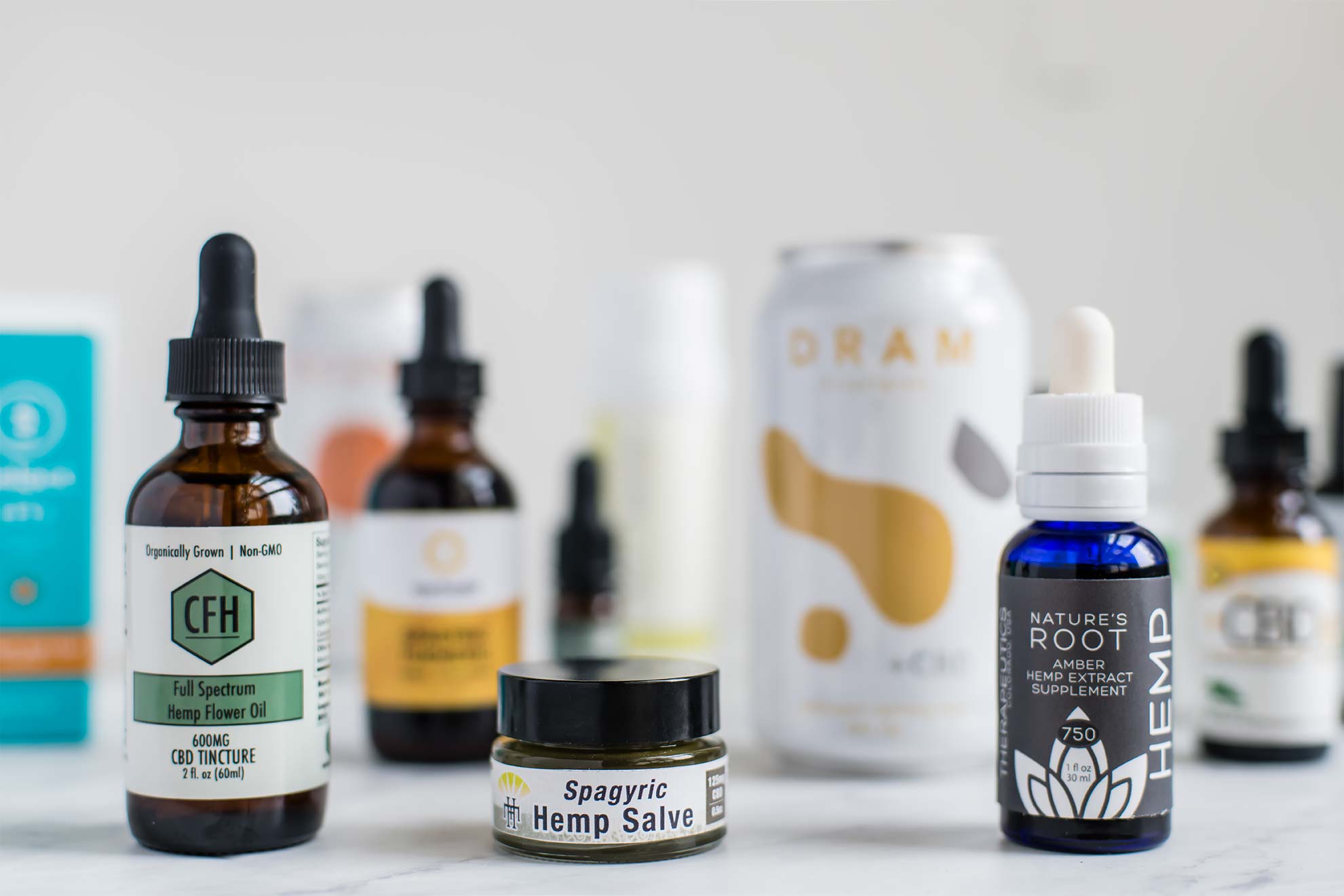
Just some of the many CBD products on the market today.

The first case that was put on hold until the “FDA completes its rulemaking regarding the marketing, including labeling, of hemp-derived ingestible products” was Snyder v. Green Roads of Florida, a case about the content of CBD in Green Roads’ products pending in the U.S. District Court for the Southern District of Florida. Then, in May, a judge in the U.S. District Court for the Central District of California took the same approach, deciding to stay the case of Colette v. CV Sciences, Inc., also on account of the lack of FDA regulations. Less than one month later, a judge in the U.S. District Court for the Eastern District of California, relying on the rulings in Snyder and Colette, stayed Glass v. Global Widget, LLC, also under the primary jurisdiction—a doctrine implicated where the claims involve a federal agency’s expertise concerning a regulated product.

On August 11, 2020, two federal judges became the most recent to stay putative class actions involving the sale of CBD products under the primary jurisdiction doctrine: Pfister v. Charlotte’s Web Holdings, Inc., in the U.S. District Court for the Northern District of Illinois, and Ahumada v. Global Widget LLC, in the U.S. District Court for the District of Massachusetts. Both were stayed on account of a lack of regulatory direction from FDA.

A trend appears to be developing, but not all courts faced with the option to stay the proceedings pursuant to the primary jurisdiction doctrine have chosen to put their respective cases on hold. In March, the judge overseeing Potter v. Diamond CBD (pending in the U.S. District Court for the Southern District of Florida) declined to stay the proceedings despite the absence of FDA regulations concerning ingestible CBD products. Despite the defendant’s objection, the court declined to stay the proceedings, finding that to the extent FDA regulations were forthcoming, they would be unlikely to change the food labeling requirements which were at issue in that case.

The stays of federal court cases involving CBD products highlight the need for FDA to issue regulations that cover the marketing of them. They also may provide the CBD product supply chain with a break in the number of consumer class actions filed until such regulations are issued.

Leaders in Extraction & Manufacturing: Part 3

By Aaron Green
No Comments

Cannabis extraction and manufacturing is big business in California with companies expanding brands into additional states as they grow. This is the third article in a series where we interview leaders in the California extraction and manufacturing industry from some of the biggest and most well-known brands.

In this week’s article we talk with Joaquin Rodriguez, chief operations officer at GenX Biotech. Joaquin was introduced into the cannabis industry through a close personal relationship and has spent seven years researching and navigating the cannabis market before jumping into his career with GenX Biotech. The interview with Joaquin was conducted on August 4, 2020.

Next week, we’ll interview Michael Schimelpfenig, head of R&D and BHO extraction manager at Bear Extraction House. Stay tuned for more!

Aaron Green: Hi Joaquin! I appreciate you taking the time to chat today. I’m glad we were able to connect!

Joaquin Rodriguez: Absolutely! I’m looking forward to it.

Aaron: Me too! So, I like to start off the interview with a background question so people get a chance to know about you better. How did you get involved with GenX Biotech?

Joaquin Rodriguez, chief operations officer at GenX Biotech

Joaquin: I went to school at Cal Poly for mechanical engineering and spent some time in the oil industry. In 2011 I was introduced to who would be the future founder of GenX Biotech, Shea Alderete. I spent 7 years diving into cannabis industry to better understand the landscape and Prop 215 (California’s Compassionate Use Act of 1996) and then Prop 64. In late 2017, I joined GenX Biotech to spearhead the acquisition of licensing and scale up distillate manufacturing.

Aaron: Awesome. My next questions are focused on product development. What is your decision process for starting a new product at GenX Biotech?

Joaquin: Our founder, Shea Alderete, is an innovator in product development. He specializes in formulations and new formulas for vape products. We are big on gathering empirical data. In any new product we will run a small batch and test first with heavy cannabis users to gauge their reaction to the product. We will then test with light cannabis users and finally new cannabis users so we get the full spectrum of user experiences. Throughout the process, we are gathering empirical data on things like taste and perceived therapeutic effects.

Aaron: Are you personally involved in manufacturing? Tell me about your process.

Joaquin: I am, yes. We specialize in large scale distillate manufacturing to make THC oil and we formulate batches using cannabis-derived terpenes. This what we call Sauce, a full spectrum high-terpene extract obtained from a butane hash oil (BHO) process. This is a separate extraction method from our alcohol extraction process.

Aaron: Very insightful! What is your process for developing new products?

Joaquin: GenX Biotech’s core mission is to bridge the gap between cannabis culture and the science behind cannabis. We focus more on therapeutic effects as well as recreational. We keep a pulse on the industry as a whole to see what people are doing and saying as well as new extraction methods. When we capture that data we evolve and adapt and create new formulations based on that preference and test it out. It’s a constant game of “does this look good? taste good? make you feel good? how is the potency?” It’s really a big collaboration with our end users.

We will also collaborate with other brands and manufacturers to stay ahead of the curve, share information that can make us a better company, more power in numbers is what we say. As an example, Wonderbrett is known for their high-quality flower. They have a high-end product and high-end brand recognition. We would, for example, strategize and collaborate together to utilize a unique cannabinoid and terpene profile and test that with our vape products in the market. It’s more of a collaboration than a white label relationship. In this way, Wonderbrett can expand into the extracts space via their brand. We do this with other brands as well where we’ll use their raw material and joint market the brands on the final product.

Aaron: Fantastic. Are you developing new products internally?

Joaquin: We develop all our products 100% internally.

Aaron: Do you ever bring in external product development consultants?

Joaquin: Not for products, however there are certain situations, like hardware development, where we will work with outside groups that specialize in equipment manufacturing to create something specific and one off for us. We are currently working on bringing to the market an FDA-approved inhaler technology device that is a non-combustible metered delivery device that we are really excited about. In addition, we have an incubator program with our LA partners to introduce new brands to the market which is a great asset for consulting brands looking for a home and multistate resources.

Aaron: Very cool, that’s the first I have head of inhalers in the market. For my next question feel free to answer however you like. What does being stuck look like for you?

Joaquin: Getting stuck can happen in a few different areas. With respect to manufacturing, the main bottleneck issues are consistent quality of the raw biomass materials. Mother nature does not duplicate the same results exactly every time and fluctuations can affect the cost and quality of raw goods. Other things like wear and tear on manufacturing equipment are not normally an issue as everything is stainless steel and pretty stable. But things like valves, gaskets and grommets tend to wear down with consistent use. When those fail, a whole operation can be shut down. We keep a stockpile of those on hand to make sure we stay in production.

“I support the leaders that help increase the overall knowledge for consumer and patents to know the difference between a quality product and a boof product.”Aaron: If you get stuck is it usually the same place? Or is it different each time?

Joaquin: Like I said, if we get stuck its usually in the sourcing of raw materials. Cultivators can have a bad crop or weather might affect their crop. It almost always comes down to the relationship with your cultivators. They fuel the industry and are the back bone of the whole supply chain. If they have any issues it affects everyone down line.

Aaron: Do you ever hire outside consultants when you get stuck?

Joaquin: Not really. We rely on our experience and years of operating and going through our own failures to navigate any issues with manufacturing. Collectively we work together to pivot and adapt to the ever-changing legal cannabis landscape. We do on occasion outsource to a 3rd party to help acquire raw goods. On the other hand, we separately consult for other people and groups looking to build out labs!

Aaron: That’s an excellent position to be in! For the next question imagine there’s a magic wand. What does your magic helper look like?

Joaquin: Someone that can come in and help with taxation. Triple taxation is tough. There’s the cultivation tax, manufacturing tax, state tax and local taxes. Long Beach recently lowered their local tax from six to one percent, so that is encouraging, but there needs to be a fair taxation for this industry to really thrive.

Aaron: What’s the most frustrating thing you are going through with the business?“I’m really excited for the continued education and deregulation of cannabis and its medical applications.”

Joaquin: I think that would be sales downline. With Prop 215 and the transition to prop 64, legal outlets have been heavily truncated. There are now approximately 600 legal retail outlets down from a high of about 4500 prior to prop 64. The competition landscape is really high and it’s hard to get product on the shelves without proper capital to keep the brand going. It is advantageous to partner with an established distro in order to get involved with their downline and run lean and mean.

Aaron: Now for our final question. What are you following in the market and what do you want to learn about?

Joaquin: I’m really excited for the continued education and deregulation of cannabis and its medical applications. It never should have been illegal to begin with, but with government corruption and greed it was targeted and use for multiple agendas. I support the leaders that help increase the overall knowledge for consumer and patents to know the difference between a quality product and a boof product. You have seen the results of the vape scare and there’s a good reason for it. Most people don’t want to pay the high ticket for legally compliant product so they turn to the illegal side where no regulation or testing is conducted to ensure they are getting safe, quality products.

In addition, the demand is so strong that illegal producers are able to put whatever they want in their products and sell them as if they are legit, provided they have the knock-off packaging, and those operators further harm those people because the state they are selling in hasn’t adapted to the times and has prohibited the availability of legal cannabis. Their inaction and support of the continued “war on cannabis” makes them just as guilty in the results of those people who have fallen ill or been hospitalized.

There have been lots of new studies published that are slowly making their way into social media and reaching consumers so that is encouraging. Another important element is the education of bud tenders because they are the face of the brand when the customer or patient is at a legal dispensary so they need to be educated on what makes for a quality product and how it can help or achieve a desired result for a customer or patient.

Aaron: Well, that concludes the interview Joaquin. Thanks for taking the time today to talk. This is all awesome feedback for the industry. Thanks so much for these helpful insights into product development in the cannabis industry.

Joaquin: Thanks, glad to help!

Soapbox

Politically Motivated Investigations of Legitimate Cannabis Businesses: One More Reason for Cannabis Operators to Return to the Black Market?

By Tracy A. Gallegos
1 Comment

In June 2020, John W. Elias, a prosecutor in the United States Department of Justice’s Antitrust Division, testified to the U.S. House Committee Judiciary that investigations of cannabis mergers were pursued based on Attorney General William Barr’s personal dislike for the cannabis industry rather than legitimate antitrust issues. Specifically, Elias testified, among other things, that since March 2019, the Antitrust Division has conducted ten investigations of mergers in the cannabis industry. Further, Elias testified that, “While these were nominally antitrust investigations, and used antitrust investigative authorities, they were not bona fide antitrust investigations.” Elias went on to state that, with respect to a proposed $682 million merger between two cannabis companies, MedMen and PharmaCann, career staff in the Antitrust Division initially examined the transaction to determine whether there should be no investigation, a brief investigation or a full investigation. Upon conclusion of its review, career staff determined that “the cannabis industry appeared to be fragmented with many market participants in the states that had legalized the product.” Accordingly, staff concluded that the proposed combination between MedMen and PharmaCann was “unlikely to raise any significant competitive concerns.”

John W. Elias, DOJ whistleblower and acting Chief of Staff to the Assistant Attorney General

Notwithstanding the career staff’s determination, Attorney General Barr ordered the Antitrust Division to issue “Second Request” subpoenas. According to Elias’s testimony, a “Second Request” subpoena is a full investigation of a proposed merger. Moreover, Elias stated, “Across the entire American economy, the Antitrust Division performs the full Second Request investigation on around 1-2% of the thousands of mergers filed each year – ordinarily, only the most concerning deals.” Based on the foregoing, Elias testified that Attorney General Barr’s decision to pursue the MedMen/PharmaCann combination was based on his dislike for the cannabis industry rather than any legitimate antitrust concerns.

There are some immediate impacts to Attorney General Barr’s decision – not limited to the MedMen/PharmaCann merger but potentially reaching any cannabis companies considering a merger or similar transaction. For example, a politically motivated probe would more than likely result in a drop of stock prices for publicly trade cannabis companies. Moreover, non-bona fide antitrust investigations of cannabis businesses could result in proposed merger transactions eventually not coming to fruition.

However, Attorney General Barr’s decision could arguably have longer term and more widespread effects on the cannabis space, and could affect situations not involving mergers or other proposed business combinations. In particular, the fact that legitimate cannabis businesses that comply with all applicable laws are still subject to unwanted and unnecessary scrutiny conceivably could lead to something that regulators had hoped would be curbed through the legalization of cannabis for adult use: cannabis operators gravitating towards the omnipresent black market. Despite cannabis being legal in 33 jurisdictions for medicinal use and 11 jurisdictions for adult use, the black market continues to thrive for several reasons, one of them being that the cost of regulatory compliance is so significant. Attorney General Barr’s decision may have created another reason for cannabis operators to abandon their plans to continue operating as or become legitimate businesses and instead revert back to operating in the black market.

Indeed, Attorney General Barr’s decision is a concern for cannabis operators because it shows that, notwithstanding that any particular operator may be compliant with state and/or local regulations, it does not mean that such cannabis operator is going to be permitted to conduct “normal” business that a non-cannabis business would be able to conduct, simply because of the underlying nature of the business. Stated differently, following the rules does not mean that a cannabis business will be left alone by people in charge who simply do not like the cannabis space.

Attorney General William Barr

Cannabis operators are very mindful of being targeted because of the nature of their business, and having regulations in place with which they could and would comply provided them with some level of certainty that they would not be targeted, or so they thought. Particularly in states like California where the regulations are complex, current and aspiring cannabis operators tend to be very concerned about being compliant with cannabis regulations from the inception of their business operations, believing that being compliant will assist them in flying under the proverbial radar and not become targeted unnecessarily simply because they are in the cannabis space. Attorney General Barr’s decision may have taken away or, at the very least, significantly decreased, that level of certainty. His decision to investigate a proposed merger of two legitimate cannabis businesses sends the message that it does not matter if a cannabis business is being compliant, and that there are other, completely subjective reasons why its operations could be investigated. This makes it extremely difficult for current and aspiring cannabis operators to determine what actions they can take to avoid unwelcome investigations or other scrutiny. If a cannabis operator is unable to mitigate scrutiny by complying with rules, this raises the concern that cannabis businesses will go back to black market activity, not only because the cost of compliance is high, but because being compliant does not necessarily protect them.

Attorney General Barr’s decision is likely not the only instance of a decision regarding cannabis businesses that was made notwithstanding existing statutes or regulations that do not support such a decision. In fact, since adult use became legal in certain jurisdictions it is not uncommon to see news discussing applicants for cannabis licenses who were denied licenses, notwithstanding that those applicants complied with all applicable laws and regulations. When applicants were denied even after complying with all rules and regulations, and when no other legitimate reason was cited for the denial, there is an indication that the denial was based on political or other personal feelings concerning the cannabis space. This not only potentially calls into question the integrity of the cannabis space, but again could lead cannabis operators back to the black market.

There are many costs of regulatory compliance for a cannabis operator, including, without limitation, high application and license fees, development and mitigation fees and exorbitant taxes. Other than the fees and taxes assessed on cannabis businesses, there are other expenses, such as the cost to construct a facility, security costs and the general operational costs that all businesses must pay, such as rent or payroll. What incentive does a cannabis operator have to expend significant resources – time, money and otherwise – to become a legitimate, licensed cannabis business if doing so does not provide any type of protection against investigations that are politically motivated or otherwise based on negative personal feelings toward the cannabis space? It may be that Attorney General Barr’s decision has given cannabis operators one more reason to reconsider going back to black market activity.

Cannabis & COVID: Changes, Advances & Opportunities

By Laura Bianchi
No Comments

The onset of the COVID-19 pandemic sent shockwaves around the world, and they’re still rippling today. Businesses had to quickly pivot from in-person transactions and services to virtual operations, or close down until stay at home orders and other restrictions eased or lifted. While it varies from state to state, due to statutory and rule based operating requirements, requiring facilities to be open a certain amount of hours per week, many were deemed essential. These circumstances create a huge set of complex challenges for anyone in business to navigate, from workers and their families to management and owners, let alone vendors and ancillary businesses.

The bright side is being in an industry where plot twists are not uncommon. Cannabis is legal and highly regulated state by state, illegal on a federal level, so it’s always full of strategic problems to solve. With so many people, businesses, ever-shifting regulations, and financial interests at stake, the need for strategic legal services are the constant. From a purely business and regulatory standpoint, the pandemic has provided some in the cannabis industry with quantum leaps forward in operations and service, and many of them may likely become the new norm.

For people with anxiety (#everydemographic2020) and other debilitating medical conditions, perception is shifting towards the importance and benefits of cannabis as a medicine and alternative therapeutic treatment option, on pace with a larger global trend towards personal and shared wellness. There’s more freedom for consumers to participate recreationally in states with adult use programs too. Extended families and friends in other states may not have the same access to cannabis. We live in a socially driven world, and the awareness of the medicinal properties of cannabis has rapidly grown nationwide across broad demographics. The gateway drug stereotype and stigma is slowly but surely fading away.

Momentum and shift in consumer behavior, need and the shifting perspective of healthcare providers is affecting more state regulators. They’ve worked with the cannabis industry to modify and adjust operational rules as needed to ensure medicinal access during the ever-changing COVID climate. Although current rules and regulations haven’t been lifted in any way, this is a step in the right direction. However, recreational states are less likely to consider that portion of the cannabis market essential and look for ways to prioritize medical dispensaries over recreational.

Medical Cannabis Businesses Deemed Essential

The most immediate problems to solve in many states were social distancing and waiting areas – where to keep patients/customers? There are state guidelines and regulations for operations during COVID, plus CDC general safety and sanitation considerations for workers and consumers alike. Lawyers and regulators are working to make sure that these stores are open and operating safely, have established safety protocols, number of customers allowed inside the store, minimum hours of operation, and to allow for special elderly hours and accommodating patients with compromised immune systems.

One of the biggest operational changes has been an increase in the facilitation of online ordering and curbside pickup to help keep patients safe. Employees are wearing gloves and PPE as an added precaution. This puts the health of the patients and employees first, while still allowing businesses to operate.

More and more patients are not all that enthusiastic about making in-person appointments that may put them at risk. In every state, people waver between venturing out for necessities so they’re buying larger quantities and stocking up when they can, and cannabis is no different. Cash-paying customers must still pay in-person. As federal regulations continue to hinder additional payment options and protections, demand for change grows on both sides.

Staffing in a Pandemic

Like all employers, it’s easier for larger cannabis companies to accommodate employees who are sick or may have been exposed. It’s often more difficult for smaller operations. For many employees, the decision to go into work sick means rent and food, because the employer can’t offer additional sick pay.

In most states, employees have to have some type of state card to work in a store. It’s hard to find replacements and pay for sick leave. There’s no call for a temp agency solution due to clearance needed by cannabis employees. If the business has to shut down, it might not be able to bounce back. So in some states, cannabis businesses have suffered setbacks, but not to the extent as other industries such as hospitality, food and beverage, and tourism.

Crunching the Numbers

The cannabis industry is also excluded from PPP loans and other federal aid. True plant-touching cannabis companies can’t access those funds, adding extra financial stress to operations. The irony is for the majority of cannabis operations nationwide, the biggest change was not the increased regulatory requirements for social distancing, sanitation and safety, it was handling the incredible increase in product demand under circumstances that include financial and staffing stress.

One Arizona-based dispensary was averaging around $300K a month before COVID-19. Today, business has more than tripled to nearly $1 million a month. In mature legal state Colorado, a record $155 million in recreational product sales for June reflects a six percent increase over the previous month’s sales. The Colorado Department of Revenue collected $33.6 million from the industry in June. Colorado’s medical dispensary sales record was set in May, just shy of $43 million, dropping down to about $40.8 million in June. Both are still setting records for business volume. For 2020, revenue already exceeds $203.3 million, in contrast to roughly $302.5 million in cannabis-related revenue in 2019.

Heightened Supply, Demand & Opportunities

Heightened demand and the search for new market ventures means investors are taking notice. People sheltering or working from home are spending more time online, too. Many are searching for healthcare; others for promising investment opportunities. Legalization has been a long journey, state by state. Everyone inside the cannabis and hemp industries has learned to roll with the punches – expect ongoing legal needs, and to do strategic short- and long-term planning. How to anticipate change and pivot on a dime. It’s a must.

With the healthcare system struggling or strained in many areas of the country, non-essential primary care has shifted to telemedicine. Federally, the DEA granted permission to do so that extends for the duration of the COVID-19 public health emergency. The problem? State-level regulations may prohibit the prescription of Schedule III drugs via telemedicine, or limit the amount and refills. For essential healthcare, limited appointments or emergency-only availability remains a concern. Innovative new cannabis products help fill that gap.

There will be more challenges as elections approach and beyond. For those in cannabis, we’re used to being ready for anything. Stay tuned.

CBD You in Court: Consumer Class Actions Involving Hemp-Derived CBD Products

By David J. Apfel, Nilda M. Isidro, Brendan Radke, Emily Notini, Zoe Bellars
No Comments

Consumer demand for products containing cannabidiol (CBD) is on the rise across the country, with industry experts estimating that the market for CBD products will reach $20 billion by 2024. This boom in consumer demand has outpaced the regulatory framework surrounding these products. While the 2018 Farm Bill decriminalized hemp, it left much up to individual states and preserved the FDA’s jurisdiction over dietary supplements, foods and cosmetics. The FDA has not yet issued any specific rulemaking for CBD products.

The structure of cannabidiol (CBD), one of 400 active compounds found in cannabis.

Against this background, it is not surprising that consumer class actions regarding hemp-derived CBD products are flourishing. Over the past year alone, the plaintiffs’ bar has filed approximately twenty putative class action lawsuits against manufacturers of hemp-derived CBD products. The cases are primarily in federal court in California and Florida, with additional cases in Illinois and Massachusetts. Plaintiffs challenge the marketing and advertising of a variety of CBD products, including oils, gummies, capsules, creams, pet products and more.

The cases so far follow a familiar pattern seen in prior consumer class actions, especially in the food and beverage industry. Read on to learn what plaintiffs have claimed in the CBD lawsuits, how companies are defending their products, and how best to position your hemp-derived CBD products in light of lessons learned from past litigation.

What These Lawsuits Are Claiming, and How Companies Are Defending Their Products

In most of the recent CBD lawsuits, plaintiffs claim either that: 1) product labels over- or understate the amount of CBD in the products; and/or 2) the sale of CBD products is inherently misleading to consumers because the products are purportedly illegal under federal law. Regardless of which theory underlies the claims, plaintiffs typically frame their claims as consumer fraud, false advertising, breach of warranty, unjust enrichment, and/or deceptive trade practices.

Just some of the many CBD products on the market today.

In most cases, defendants have filed motions to dismiss seeking to have the cases thrown out. In these motions, defendants argue that plaintiffs’ claims are “preempted” by the Federal Food Drug and Cosmetic Act (FDCA), and that only the federal government can enforce the FDCA. Some defendants have additionally argued that if the court is not prepared to dismiss the claims as preempted, the doctrine of “primary jurisdiction” applies. This means that the issues raised regarding CBD are for the FDA to decide, and the cases should be stayed until the FDA finalizes and issues rules on products containing hemp-derived CBD. Many defendants have also advanced dismissal arguments for lack of standing, claiming that the individuals bringing the lawsuits are trying to sue for conduct that never harmed them personally (e.g., because they never purchased a particular product), or will not harm them in the future (e.g., because plaintiffs have stated they will not buy the product again). The standing arguments often apply to particular claims or products within the lawsuit, rather than to the lawsuit as a whole.

Current Status of the Cases

Of the approximately twenty consumer class actions filed over the last year, about half remain pending:

  • Five have been stayed pursuant to motions filed by defendants;
  • Two have motions to dismiss pending;
  • One has a pending motion to vacate a default judgment against defendants;
  • One was filed earlier this month, and defendant’s deadline to respond has not yet elapsed.

FDAlogoTo date, none of the cases (currently pending or otherwise) has proceeded to discovery, and no class has yet been certified. That means that no court has yet determined that these cases are appropriate to bring as class action lawsuits, rather than as separate claims on behalf of each individual member of the putative class. This is significant, because plaintiffs’ ability to achieve class certification will likely influence whether these CBD lawsuits will continue to be filed. Consumer fraud cases like these typically do not claim any physical injury, and the monetary damages per individual plaintiff are relatively low. As such, the cases often are not worth pursuing if they cannot proceed as class actions.

Of the cases that are no longer pending, all but two were voluntarily dismissed by plaintiffs. While the motivation behind these dismissals is not always announced, approximately half of the voluntary dismissals came after defendants filed a motion to dismiss, but before the court had ruled on it. One Florida case was mediated and settled after the court denied defendant’s motion to dismiss.1 A California court spontaneously dismissed one matter (without the defendant having filed any motion) due to a procedural defect in the complaint, which plaintiffs failed to correct by the court-imposed deadline.2

Early Outcomes on Motions to Dismiss 

Of the thirteen motions to dismiss filed to date, only five have been decided. So far:

  • No court has dismissed a case based on federal preemption grounds. Courts have either deferred ruling on preemption, or denied it without prejudice to re-raising it at a later time.
  • Four courts have stayed cases based on primary jurisdiction.3
  • Only one court has denied the primary jurisdiction argument.4
  • Standing arguments have been successful in three cases,5 and deferred or denied without prejudice to later re-raising in the other two cases.6 However, the standing arguments applied only to certain products/claims, and were not dispositive of all claims in any case.

These rulings show a clear trend towards staying the cases pursuant to primary jurisdiction. In granting these stays, courts have noted that regulatory oversight of CBD ingestible products, including labeling, is currently the subject of FDA rulemaking, and that FDA is “under considerable pressure from Congress” to expedite the publication of regulations and guidance.7

Any label claims need to meet FDCA regulations and applicable FDA guidance.

Plaintiffs may be recognizing the trend towards primary jurisdiction as well, since there is now at least one case where plaintiffs agreed to a stay after defendant filed a motion to dismiss asserting, among other things, primary jurisdiction.8 But some plaintiffs are still resisting. For example, in the first case to have been stayed plaintiffs have since filed a motion to lift the stay. The motion—which was filed after the case was reassigned to a different judge—argues that primary jurisdiction does not apply, and that the FDA’s recent report to Congress suggests no CBD-specific rulemaking is forthcoming.9 The motion is pending.

Lessons Learned From Food Industry Consumer Class Actions

The motions to dismiss that have been filed to date in CBD-related class actions follow a tried and true playbook that has been developed by defense counsel in other food and beverage industry class actions. For example, the primary jurisdiction arguments that have been gaining traction in the CBD consumer class actions are very similar to primary jurisdiction arguments that were successful years earlier in cases involving the term “natural” and other food labeling matters.10

Similarly, the standing arguments that have succeeded in the early motions to dismiss CBD consumer class actions followed similar standing arguments made years earlier in food and beverage class actions.11

Work with reputable labs to ensure the potency stated on the label is accurate

The preemption arguments that have largely been deferred in CBD consumer class actions to date could become a powerful argument if and when the FDA completes its CBD rulemaking. The preemption defense has been particularly effective when the preemption arguments focus on state law claims that require defendants to omit or add language to their federally approved or mandated product labeling, or where plaintiffs otherwise seek to require something different from what federal standards mandate.12 These arguments could be particularly compelling once the FDA issues its long-anticipated rulemaking with respect to CBD products.

Until then, primary jurisdiction will likely continue to gain traction. The FDA’s comprehensive regulatory scheme over food, dietary supplement, drug, and cosmetic products, combined with the FDA’s frequently-expressed intention to issue rulemaking with respect to CBD-products, and a need for national uniformity in how such rulemaking will interface with state requirements, converge to make primary jurisdiction especially appropriate for CBD-related class actions.13

How to Best Position Your Products

Until the FDA issues its long-awaited rulemaking regarding CBD products, companies can take the following steps to best position their products to avoid litigation and/or succeed in the event litigation arises:

  • Work with reputable labs to ensure the amount of CBD stated on product labeling and advertising is accurate;
  • Ensure that the product is manufactured according to appropriate current Good Manufacturing Processes (cGMPs);
  • Ensure that any claims made on product labeling and/or in advertising are consistent with FDCA requirements and applicable FDA guidance to date – for example, if the product is a dietary supplement, avoid making express or implied claims that it can cure or prevent disease;
  • Maintain a file with appropriate substantiation to support any claims stated in product labeling and advertising;
  • Work with legal counsel to stay abreast of developments in federal and state laws applicable to hemp-derived CBD products, and how any changes might impact potential class action defenses; and
  • If a lawsuit arises, work with legal counsel to develop a strategy that not only resolves the current litigation as efficiently as possible, but also positions the company strategically for any future consumer claims that may arise.

References

  1. Final Mediation Report, Potter v. Potnetwork Holdings, Inc., 1:19-cv-24017-RNS, (S.D. Fla. July 30, 2020).
  2. Court Order, Davis v. Redwood Wellness, LLC, 2:20-cv-03273-PA-JEM (C.D. Cal. Apr. 10, 2020).
  3. Electronic Order, Ahumada v. Global Widget LLC, 1:19-cv-12005-ADB (D. Mass. Aug, 11, 2020); Memorandum and Order, Glass v. Global Widget, LLC, 2:19-cv-01906-MCE-KJN (E.D. Cal. June 15, 2020); Order Granting in Part Defendant’s Motion to Dismiss and Staying Remaining Causes of Action, Colette et al. v. CV Sciences Inc., 2:19-cv-10227-VAP-JEM (C.D. Cal. May 22, 2020); Order on Motion to Dismiss, Snyder v. Green Roads of Florida LLC, 0:19-cv-62342-AHS (S.D. Fla. Jan. 3, 2020).
  4. Order on Motion to Dismiss, Potter v. Potnetwork Holdings, Inc., 1:19-cv-24017-RNS, (S.D. Fla. Mar. 30, 2020).
  5. Order Granting in Part Defendant’s Motion to Dismiss and Staying Remaining Causes of Action, Colette et al. v. CV Sciences Inc., 2:19-cv-10227-VAP-JEM (C.D. Cal. May 22, 2020); Order on Motion to Dismiss, Potter v. Potnetwork Holdings, Inc., 1:19-cv-24017-RNS, (S.D. Fla. Mar. 30, 2020); Order on Motion to Dismiss, Snyder v. Green Roads of Florida LLC, 0:19-cv-62342-AHS (S.D. Fla. Jan. 3, 2020).
  6. Electronic Order, Ahumada v. Global Widget LLC, 1:19-cv-12005-ADB (D. Mass. Aug, 11, 2020); Memorandum and Order, Glass v. Global Widget, LLC, 2:19-cv-01906-MCE-KJN (E.D. Cal. June 15, 2020).
  7. Order on Motion to Dismiss at 12, Snyder v. Green Roads of Florida LLC, 0:19-cv-62342-AHS (S.D. Fla. Jan. 3, 2020).
  8. Minute Entry, Pfister v. Charlotte’s Web Holdings, Inc., 1:20-cv-00418 (N.D. Ill. Aug. 11, 2020).
  9. Plaintiff’s Motion to Lift Stay, Snyder v. Green Roads of Florida LLC, 0:19-cv-62342-AHS (S.D. Fla. July 13, 2020).
  10. See, e.g., Astiana v. Hain Celestial Grp., Inc., 905 F. Supp. 2d 1013 (N.D. Cal. 2012), rev’d on other grounds, 783 F.3d 753 (9th Cir. 2015); Taradejna v. Gen. Mills, Inc., 909 F. Supp. 2d 1128 (D. Minn. 2012).
  11. See Miller v. Ghirardelli, 912 F. Supp. 2d 861, 869 (N.D. Cal. 2012) (holding that the named plaintiff lacked standing where the products purchased by the putative class members were not “substantially similar” enough to those purchased by the named plaintiff); Colucci v. ZonePerfect Nutrition Co., No. 12-2907-SC, 2012 WL 6737800 (N.D. Cal. Dec. 28, 2012) (finding one of two named plaintiffs lacked standing because, even though the other named plaintiff (his fiancée) purchased the nutrition bars for him, he himself did not purchase any of the bars); Veal v. Citrus World, Inc., No. 2:12-CV-801-IPJ, 2013 WL 120761 (N.D. Ala. Jan. 8, 2013); Robinson v. Hornell Brewing Co., No. 11-2183 (JBS-JS), 2012 WL 6213777 (D.N.J. Dec. 13, 2012) (holding that there was no Article III standing because the named plaintiff had testified and stated in written discovery that he would not purchase the product in the future).
  12. See, e.g., Turek v. Gen. Mills, Inc., 662 F.3d 423 (7th Cir. 2011); Lam v. Gen. Mills, Inc., 859 F. Supp. 2d 1097 (N.D. Cal. 2012); Veal v. Citrus World, Inc., No. 2:12-CV-801-IPJ, 2013 WL 120761, at *9-10 (N.D. Ala. Jan. 8, 2013).
  13. See, e.g., Astiana v. Hain Celestial Grp., Inc., 905 F. Supp. 2d 1013 (N.D. Cal. 2012), rev’d on other grounds, 783 F.3d 753 (9th Cir. 2015); Taradejna v. Gen. Mills, Inc., 909 F. Supp. 2d 1128 (D. Minn. 2012).

Why Organic Should be the Future of CBD

By Josh Epstein
No Comments

The hemp industry is rapidly growing, but it’s no secret that it suffers from a major legitimacy problem. When manufacturers choose to certify their products and processes under a third-party agency, such as the USDA, it is a way for those companies to gain credibility with new customers.

USDA LogoThe USDA’s organic certification program is a great way to increase transparency and trust with both ingredients and processes used within the hemp industry. Organic certification is a rigorous audit program to review both manufacturing facility design and production process plans with the ultimate goal of increasing supply chain sustainability.

Investing in organic certification is a smart business decision – especially in today’s competitive CBD market. A recent Bloomberg report has shown that COVID-19 has actually accelerated organic food sales in the US due to increased demand for health-conscious foods and drinks. “Sales of organic food and drinks surged 25% during the 17-week period ended June 27,” according to Nielsen Data.

Organic certification is one way to differentiate between the thousands of seemingly identical CBD products being sold in the marketplace today. From a consumer perspective, organic certification provides both supply chain transparency and increases confidence with brands and products they already love. It also provides a form of quality assurance to skeptical consumers, especially those who avidly read product labels prior to making a purchasing decision. Members of this “label reader” demographic will consistently choose organic products for the quality and transparency it provides with pure and natural ingredients.

Not only does certification support ethical practices, it’s also good for business. According to the USDA, “Food labeling can be confusing and misleading, which is why certified organic is an important choice for consumers. Consumers are willing to pay a premium for food that carries the USDA organic seal, or that contains organic ingredients.”

Organic farming and production processes significantly contribute to increasing sustainability within the CBD industry. In general, organic farming is a growing practice for farmers across the US. According to the Pew Research Center, “There were more than 14,000 certified organic farms in the United States in 2016, according to the latest available data from the U.S. Department of Agriculture’s National Agricultural Statistics Service. This represents a 56% increase from 2011, the earliest comparable year.” The USDA has found that organic production practices can improve water quality, conserve energy, increase biodiversity and contribute to soil health. In terms of organic farming, soil ecology and water quality are both protected by farmers committing to working within regulated guidelines.

Organic certification ensures transparency and trust with a consumer-friendly approach to ingredient products. This comes on the heels of research showing that the CBD market lacks credibility. Organic CBD should be the next step all brands should take to ensure they’re adapting to changing consumer preferences.

Spanish Cannabis Approved for Import to Germany

By Marguerite Arnold
2 Comments

It is official. BfArM, the German version of the Food and Drug Administration and the federal agency with oversight of the national cannabis program, has approved Spanish medical cannabis imports into the country. Indeed, three German companies are now finalizing their paperwork to allow the transfer to be completed.

As Cannabis Industry Journal has learned, at least one of the companies on the Spanish side of the equation is the ever-interesting Alcaliber (Linneo Health). So far, the privately funded company has made smart, strategic business moves through a challenging transition period. With one of the few EU GMP-recognized licenses in Spain, it is a logical choice for German distributors in search of foreign-produced, but up-to-snuff product.

This is a positive and widely predicted turn of events as Germany begins to institutionalize its cannabis program at the next level. As of this fall, three producers will begin to distribute domestically grown cannabis in Germany. However, there is a clear need for a vibrant import market here and there will be for a long time to come.

Domestically grown cannabis, by design at least so far, was never intended to serve the entire base of medical cannabis patients in Germany. And Spain has been, from the beginning of the discussion, along with Portugal, Greece, Poland, Eastern Europe and of course Italy, an attractive market to produce high quality cannabis for export to (at minimum) Germany.

The European Ex Im Market Is Opening

While the Canadians still have an outsize impact on this market, that is clearly a period of time that is coming to an end. Indeed, Canadian produced cannabis is being turned down at the German border for quality issues linked to certification.

This is not a new issue. It has haunted the German market since 2017 and the beginning of the discussion about the German cultivation bid. But now it is official. Beyond Holland, and even Canada, in other words, lower cost cannabis is now entering the German market and from other European countries.

While Portugal and Denmark beat Spain to the punch, however, this is likely to be an impactful development for not only patients, but the entire price discussion. Distributors are clearly on the front lines of not only obtaining high quality cannabis (from somewhere), but meeting a price that is increasingly on the downward slide, just from the pressures of domestic production and the price structure created around the same by the German government.

Producers have been feeling the pinch, no matter where they are based, for at least the last 12 months.

The Impact On The Spanish Cannabis Discussion

It is unlikely that this development will not be duplicated by other Spanish companies vying for entry into the European and German markets. Spain has a thriving grey market cannabis economy in the form of Cannabis Clubs. It also, like Holland, has allowed a semi legitimate market as well as a distribution network to spring up around the same.

However, the times are also clearly changing. Holland is in the midst of regulating even its coffee shop cultivation economy as it becomes one of the most important exporters of medical cannabis to Germany. Expect the same trend in Spain, especially as Europe increasingly comes to the same conclusion as everywhere else. The regulated medical cannabis industry is great for economic development, especially for countries like Spain, with great weather and perhaps an overreliance on the tourism industry.

The Other European Producers Now In View
Beyond Spain, Portugal and Denmark have the right to import medical cannabis to Germany. This list is expected to continue to expand as patient numbers grow. Because of the price restraints now placed on the entire market by the German government, however, entering the country with an attractively priced product that will pass muster, not only with regulators but doctors and insurers, is now absolutely the name of the game.

And that is of course, before the recreational and CBD topic even enters the discussion – and both are clearly on the agenda now, across Europe.

Cannabis Industry Journal

Cannabis Property Coverage: Understanding Risk Management & Communication

By Bradley Rutt
No Comments
Cannabis Industry Journal

For cannabis companies, property coverage can cost as much as seven to 10 times what traditional manufacturing and retail outlets pay. That is, of course, because of the inherent hazards involved in manufacturing and selling cannabis, in a difficult insurance market.

For landlords and building owners, taking in a cannabis tenant can be tricky as well. Because of the higher theft and manufacturing risks, many underwriters are unwilling to offer coverage. And, failure by a landlord to disclose a cannabis tenant is likely to result in a denied claim. Keeping property coverage in check by implementing risk management best practices and working to expand coverage and reduce premium costs can propel a cannabis business even further.  

Moreover, some landlords and building owners will require businesses to maintain occurrence-based liability coverage, which is harder to secure when running a cannabis operation. An occurrence-based liability policy is one that covers the renter for an accident occurring during the policy period, regardless of when a claim is made.

Instead, some insurance companies will only cover cannabis business’ high risks with a claims-made policy, or one in which claims must be made during the policy period only. Landlords will often stipulate their requirement for an occurrence-based policy in their lease. That means that cannabis businesses with a claims-made policy could unknowingly be in violation of their lease.

These issues and others have allowed landlords to command premium rent from cannabis business owners who find obtaining the right property coverage difficult.

To calm the rising tide of rent and property coverage costs, cannabis business owners and operators can engage in the following risk management considerations.

 Risk Management Considerations for Facilities with a Cannabis Operation 

Carriers are more likely to provide a policy to cannabis businesses that are doing what they can to minimize their risk. Here are six ways cannabis businesses can reduce their costs, minimize exclusions and obtain broader property coverage.

  1. If you are a retailer, have a plan to prevent or respond in the event of a robbery.
  2. Install and know how to use vaults and safes properly.
  3. Install central station alarms, cameras and other safeguards. Have them tied to your phone for easy access.
  4. Depending on the nature of the operations, install and regularly test fire sprinklers on site to make sure they are in working order.
  5. Consider hiring a third party, properly-insured, armed guard to safeguard your storefront on a regular basis.
  6. Institute industry-known best practices for high-risk manufacturing processes, like oil extraction.

Insurance Considerations for Facilities with a Cannabis Operation 

Risk management is critical to controlling risk, and insurance considerations can help your cannabis business obtain broader coverage and reduce premium costs.

  1. Communicate with your insurance broker.If you’re a landlord and you want to rent to a cannabis tenant, have a conversation with your insurance carrier at least 30 days before the lease begins. Even if you do, there’s a good chance that your carrier will issue a notice of cancellation (NOC) because they don’t want to engage with cannabis risk. On the other hand, if you don’t disclose the new tenant risk, should a claim be filed, it will could be denied, and the non-disclosure could cost you your policy.
  2. Engage a broker/carrier that specializes in cannabis.In such a volatile market, it is important to work with a broker and carrier that specialize in cannabis. This will enable hidden exclusions to be removed and help you procure the best policy and pricing possible for your organization.
  3. Tell your insurance “story.”Let the carrier understand your business and its risks by telling them your “story.” Tell them what your business does well, including current risk management practices and how you’ve been able to reduce claims. This will go a long way toward potentially minimizing premium costs and exclusions and obtaining broader coverage.
  4. Get another set of eyes. Most carriers will require a lengthy application from cannabis businesses in which the carrier may require the business to comply with certain requirements like having an approved safe or vault room. Your business will be held to the requirements stipulated in the application should you sign and submit it. Ask your broker or a reliable attorney to review the contract for anything you may have missed. Some carriers will incorporate the submitted application into the policy. Any changes between policy inception and a claim could cause coverage issues.

The fast-growing nature of the cannabis industry has ushered in a new set of challenges for business owners and operators. Keeping property coverage in check by implementing risk management best practices and working to expand coverage and reduce premium costs can propel a cannabis business even further.