
Tag Archives: legalization

The Cannabis Industry and the Science of Seasonality

By Blaise Lucey
1 Comment

Let me be honest: I’ve only been part of the cannabis industry for six months. Before that, I worked at B2B tech start-ups and ad tech companies like Roku and Criteo. The most valuable thing I learned is that most good ad campaigns are linked to seasonality.

When I worked at Criteo, the vast majority of our clients were retail and ecommerce. Seasonality initiatives were critical. The more relevant your ads to an upcoming seasonal event, the more relevant they were to the audience. Think about any window display you’ve seen recently – the CVS near me has had Valentine’s Day products in the window since at least mid-January.

When I worked at Roku, we got to take a look at TV streaming behavior. For example, when Ben Affleck started dating Jennifer Lopez again, searches for their movies and music videos skyrocketed. During the space race, general space-related (think Star Trek) TV content went up.

That’s not seasonality – that’s psychology.

As the cannabis industry matures, businesses should start thinking about what seasonal, psychological and cultural factors impact their consumers. Cannabis consumption could be said to be the art of the business, but understanding what cannabis consumers want is the science. Here are three ways to think about that science:

1. The Science of Stash

One analyst recalls that cannabis sales reached “unimaginable” highs in 2020. He called this “pantry-loading” behavior. Let’s call it “stash” behavior.

The buying behavior of a cannabis buyer who buys an eighth is fundamentally different from someone who buys a six pack. The six pack is gone in a weekend. Which flower buyers are buying an eighth just for a weekend? A week? A month?

During the height of the pandemic, with nowhere to go and a lot of anxiety, dispensaries provided at-home entertainment for cannabis consumers. That’s why sales grew by 46%. Cycles of consumption naturally went up. In this case, I think of streaming TV, too – Netflix added 36 million subscribers in 2020 and Roku saw 58.7 billion hours streamed in 2020.

Is there a correlation? Well, stashing behavior obviously correlates with couch behavior. When people spend more time inside, they’re more tempted to go through their stash and cannabis sales increase.

Cannabis isn’t affected by just regular old seasons – it’s affected by what we could call personal, seasonal patterns. Just like streaming TV, when consumers spend more time inside, they buy more cannabis because they consume it faster.

What is the stash turnover rate for your different audiences? What factors make that turnover rate go faster or slower?

Analyzing stash behaviors can reveal your most loyal and high value customers, and offer new perspectives on how to market to different groups.

2. The Science of Celebration.

One estimate shows that Illinois cannabis sales jumped up by 10% in July due to Lollapalooza. Makes sense – more than 385,000 people attended.

women grow event
“When people are coming into cities for events, they’re picking up cannabis then and there, and likely consuming it in true real-time.”

Looking at our own data, there’s a clear spike around St. Patrick’s Day – cannabis sales are 70% higher than average daily sales in February and 54% higher than average compared to March daily sales. This goes against stashing behavior, because the sales happen on the same day.

This is a different science. When people are coming into cities for events, they’re picking up cannabis then and there, and likely consuming it in true real-time.

Event trends can have a huge impact on cannabis sales and psychology. Where there’s a celebration, there’s going to be cannabis buyers. Event trends often translate to tourism trends. And these cannabis buyers aren’t just tourists to cities, a lot of them are likely tourists to cannabis itself as well – novelty consumers who go into a dispensary for the specific event and pick up a little bit of everything.

That’s an opportunity for new brands and more niche categories (beverages, pills, edibles) to connect with a new group of customers. That said, after that initial purchase, how can the brands stay in touch? That’s where dispensaries and cannabis brands need to come up with new strategies for managing cannabis customer data.

3. The Science of States.

Events like Lollapalooza are regional – and so are cannabis markets. In Massachusetts, BDSA data shows continued growth. In the West Coast, analysts call it a “rollercoaster.”
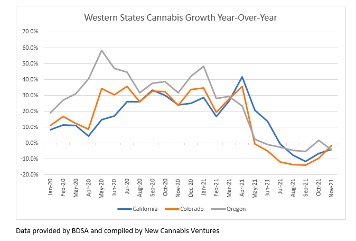
Note the specific pandemic trend lines. Any state that suddenly saw more than 50% sales one year and a sudden slump the next year at the same is bound to see a market crash. It also made it easy to ignore a lot of structural problems – which states like California are now trying to correct.

Legal cannabis sales are radically different depending on the maturity of the market. Let’s not forget that this goes deeper than just states. Only 32% of the California market even has legal dispensaries open right now.

What are regional trends? What are event trends? What are cultural trends?

The more dispensaries and cannabis brands can proactively market to anticipate these needs – and get the message out there to the right audience segments – the better.

Making Cannabis Personal

What keeps becoming apparent is that above all, cannabis is personal. Everyone is looking for something a little different. A consumer’s tastes can change based on all sorts of factors – or not change at all. Different products might suit different occasions. Different messages will talk to different use cases – some people want cannabis that can make a concert better. Others want it to sleep. Dispensaries need to figure out who’s who.

At the end of the day, that’s what makes the cannabis industry so unique. It is an end-to-end experience like no other. From researching products and dispensaries to analyzing brands and products to consuming it, every interaction a consumer has with a cannabis business is very personal. And if they don’t like their personal experience, they won’t come back.

As the industry looks ahead into a competitive 2022, the mission should be simple: make every touchpoint for every customer a great experience, from start to finish.

New Jersey Adult Use Program Likely Delayed

Back in November of 2020, voters in New Jersey overwhelmingly approved Question 1, the ballot measure to legalize cannabis. On February 22, 2021, New Jersey Governor Phil Murphy signed three bills into law, laying out the framework for how the state would move forward with legalized adult use cannabis.

New Jersey Governor Phil Murphy

The legislation became law once the Governor signed the bills, tasking a five-member Cannabis Regulatory Commission (CRC) with developing regulations for the market by June of 2021. The CRC set a deadline of February 22, 2022, six months after the regulations have been established, for when they wanted to officially launch the adult use cannabis program and commence sales.

It looks as though the Garden State is not quite ready to meet that deadline. According to NJ.com, the setback is due to a couple issues, namely municipalities dragging their feet and worries about a weak supply chain. Before a CRC meeting kicks off today, Jeff Brown, executive director of the CRC, told NJ Cannabis Insider that they still have work to do before they can give the green light. “Feb. 22 is not a concrete date to open,” says Brown. “There is no firm commitment on timing of when recreational sales will begin.”

Among the issues that are causing these delays is local approval. Municipalities need to first approve and adopt the cannabis rules before allowing businesses to open. “One of the biggest deficiencies we’re seeing is a lack of municipal approval,” Brown told NJ Cannabis Insider. “That’s an issue, and supply continues to be issue. It’s the priority of the CRC to get recreational sales started as soon as we can, but we have to do it in a way that’s compliant with the law. We need the industry to get there.”

As Brown noted, the CRC also thinks they need to make sure there is adequate supply before the state opens the market. However, businesses appear to be ready and chomping at the bit to get started with the adult use program. Patrik Jonsson, regional president of the northeast for Curaleaf says they have been ready. “Give us 48 hours, and we can pretty much do whatever the state wants, and we’ll open,” says Jonsson. “We have product, the people and the facilities. There are a few minor things we need clarified around the product. But we are very much ready for turning it on as soon as the state lets us.” Curaleaf is the biggest cannabis company in New Jersey and has two cultivation facilities and three retail locations across the state.

While the February 22 deadline is still in place, questions still linger about when exactly the state will be ready to launch its adult use cannabis program and commence sales.

Thinking of Starting a Cannabis Delivery or Transport Business? Here’s What You Need to Know

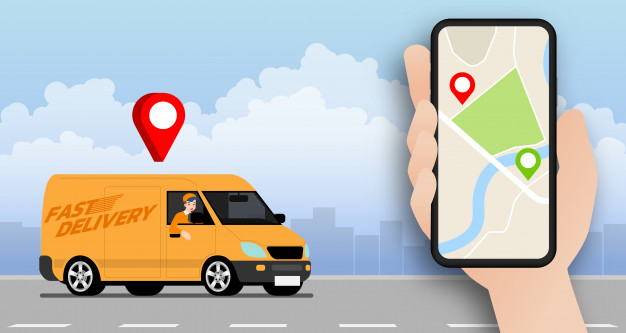
Ask any cannabis connoisseur, and they’ll likely tell you that cannabis delivery services have been around for a long, long time. Given the distancing requirements of the COVID years, the increasing number of medical cannabis patients who need or would like cannabis delivered to their door and the surge in recreational adult use sales, cannabis delivery is coming out of the shadows and into the legal cannabis industry.

Proponents of cannabis delivery say that creating a legal structure and guidelines that allow cannabis home delivery encourages people to buy from legal sources rather than the legacy market. In some cases, it’s a way to entice legacy cannabis delivery operators to transition to the licensed and regulated market. While many states remain hesitant to allow adult use cannabis delivery, some do, and others have taken the first step, allowing delivery to registered medical cannabis patients and caregivers.

Where is Cannabis Delivery Legal?

According to Cannabis Business Times, states that permit medical cannabis delivery as part of another license type, retail, for example, or with a specific delivery license include: Arizona, Arkansas, California, Colorado, Maine, Maryland, Massachusetts, Michigan, Nevada, New Mexico, New York, Oregon, Rhode Island and Vermont. Complex reports that delivery service is legally available without any restrictions to anyone 21 years or older in California, Nevada and Oregon.

Medical or adult use, there are restrictions on where cannabis can be delivered, even within states that allow it. For instance, you can’t legally deliver cannabis to college or university campuses. Although many people still discreetly deliver and receive cannabis products on campuses, it’s illegal to do so since cannabis is a federally controlled substance and higher education institutions that receive federal funding must prohibit its use and distribution.

It’s noteworthy that some states without legal cannabis delivery regulations have a “loophole” through which some delivery businesses operate. Gifting, for example, is an established, though not entirely legal, delivery practice. According to NJ.com, New Jersey falls into the gifting loophole category:

Licenses to sell legal weed are still months away, but there’s a handful of entrepreneurs coming into the scene through a possible legal loophole — “gifting” cannabis. It’s a scheme popular in other states and particularly in Washington, D.C. A company lets you buy cookies, snacks or brownies that come with sticker shock of $50 or more. But when they make the delivery, it comes with a suggested gift: maybe a cannabis edible or an ounce of flower.

 Although many underground businesses thrive in the Garden State’s “in-between” market, NJ.com also reports that gray market operators have faced legal penalties and even jail time.

Why Are Cannabis Delivery Services Popular? 

Cannabis delivery services have a rich cultural history in the underground market. Rather than making a transaction in public, home delivery provides a more intimate and secure way of selling cannabis to consumers. 

Cannabis delivery has skyrocketed in popularity due to the COVID-19 crisis. MJBizDaily reports that online cannabis orders boomed during the pandemic, increasing the need for cannabis delivery services. 

Historically, cannabis delivery services also help registered medical cannabis patients receive access to their medicine since their disability or chronic condition might prevent them from leaving the house and visiting a dispensary. This can be especially true for seniors, even if they aren’t a registered patient, but live in a state with adult use cannabis.

What’s the Difference Between Cannabis Delivery and Transport Licenses?

There is real confusion surrounding the differences between delivery and transport licenses.  Basically, delivery licenses are B2C (business to consumer), and transport licenses are B2B (business to business).

Cannabis delivery and courier licenses allow licensees to deliver cannabis products directly to patients, caregivers, and in some states, consumers. While the name of the license differs depending on the state in which you seek to operate, delivery licenses tend to allow operators to act as a retailer without a traditional bricks and mortar location. Delivery licensees purchase and store wholesale cannabis products and sell them via the delivery model. Couriers, however, are traditionally hired by retailers as their delivery arm. In this model, the retailer takes the order, and the courier delivers, like Door Dash or Uber Eats. One key difference between a delivery and courier license is the significantly lower cost of entry for couriers as they don’t have facility, inventory, or storage costs, and generally have lower operational expenses.

But what about transport licensees? Rather than delivering to individuals, transport licensees typically deliver cannabis products between licensed cannabis facilities, such as a cultivator or manufacturer to a retail dispensary or testing facility.

In Massachusetts, there are three delivery and transport licenses (courier, delivery operator, and transporter) as well as a delivery endorsement that allows certain licensees to deliver directly from a licensed establishment to consumers.

The first step to operate a cannabis delivery or transport business is determining whether you want to deliver for retail establishments, buy product and deliver directly or transport cannabis between licensed cannabis businesses. Each model has its plusses and minuses, just depends on what you want. It’s important to note that Massachusetts delivery operator licenses are currently reserved for social equity participants, as reported in the Milford Daily News:

“The new “marijuana delivery operator” licenses…will be available exclusively to participants in the CCC’s social equity program and economic empowerment applicants for the first three years.”

Once you decide which type of license you want, the next steps are first to familiarize yourself with your state’s cannabis rules and regulations, and then to complete and submit a license application.

How to Apply for a Cannabis Delivery or Transport License

While the delivery and transport license application process looks different in each state that allows them, all states require applicants to be 21 years of age or older and most require operators to be current residents of the state where they intend to operate. There are also required, non-refundable application and licensing fees. While these fees are not insignificant, the good news is that they tend to be lower than the fees required for other cannabis business license applications.

Since compliance with state rules and regulations is a condition of licensure, licenses are awarded to some or all applicants that meet the application and regulatory requirements. Once awarded, cannabis delivery and transport licensees must maintain compliance or risk hefty fines and/or face a temporary or permanent shut down. One regulatory example is that delivery operators must digitally verify any and every customer’s photo ID before and when a cannabis product is delivered to a recipient; missing this critical step can put your businesses at serious risk of legal and financial consequences.

How to Maintain Compliance Once You’re Licensed

Maintaining compliance for any cannabis business can be challenging. There are strict guidelines on marketing and advertising, security, employee training, inventory management and more. Additionally, there are restrictions specific to cannabis delivery services, particularly limits on how much product can be delivered per order/transaction.

What does cannabis compliance specifically look like for cannabis delivery licensees? For one, all merchants must verify ID before an order is fulfilled. In states with medical cannabis, this would require medical card ID verification. Otherwise, for adult use markets, a driver’s license or other state-issued photo ID with a valid birthdate is acceptable. Some states require recipients to sign a manifest or receipt acknowledging that they accepted the cannabis order and for the licensee to maintain a record of that acknowledgement for a specified number of years.

There are many other regulations that delivery operators must adhere to and many ways to stay up to date and compliant. Tasking a staff member to handle all things compliance is one option. Another is hiring a compliance professional to set up and oversee a compliance operating system and/or partnering with a compliance software solution provider.

Cannabis delivery services can be very profitable. In comparison to other cannabis licenses, they don’t require as much finance capital to get started. Once a license is obtained, your priority will turn to maintaining compliance. Too many delivery services exist in a precariously legal gray area; don’t let yours be one of them.

Louisiana Senate Candidate Smokes Blunt in Campaign Ad

By Cannabis Industry Journal Staff
No Comments

Last week, Gary Chambers Jr., a Baton Rouge native, launched his political campaign to run for a U.S. Senate seat in Louisiana. He took the internet by storm with his first political advertisement, a 37-second-long video where he advocates for cannabis legalization, discussing the disproportionate effects that cannabis prohibition has on communities of color.

But that’s not why he made such a splash on social media; the campaign ad made headlines as possibly the first major party candidate to smoke a cannabis blunt in an advertisement.

The timing of the video is also very intentional, lasting 37 seconds. “Every 37 seconds, someone is arrested for possession of marijuana,” Chambers says in the video. “Since 2010, state and local police have arrested an estimated 7.3 million Americans for violating marijuana laws, over half of all drug arrests. Black people are 4 times more likely to be arrested for marijuana laws than white people.”

Chambers is running against Sen. John Kennedy, the Republican incumbent with support from Trump and very deep pockets.

“Most of the people police are arresting aren’t dealers, but rather people with small amounts of pot just like me,” says Chambers. “I’m Gary Chambers, and I’m running for the U.S. Senate.” Click here to see his campaign website and make a donation.

Research Suggests Cannabis Could Help Treat Covid-19

By Cannabis Industry Journal Staff
No Comments

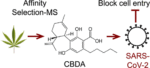
One study published in the Journal of Natural Products two weeks ago proposes using the cannabinoid CBDA in conjunction with vaccines to prevent SARS-CoV-2 (Covid-19) infection. The study was conducted in a lab and says that cannabinoid acids (CBGA, THCA-A, CBDA, etc.) can bind to the SARS-CoV-2 spike protein, blocking cell entry and effectively prevent infection.

Another study published in Science Advances claims cannabidiol (CBD) inhibits SARS-CoV-2 replication and helps prevent infection by inducing endoplasmic reticulum stress response and innate immune responses. The study was conducted in cells and mice, but also had groups of human patients that tested positive for Covid-19 less after taking CBD. “In matched groups of human patients from the National COVID Cohort Collaborative, CBD (100 mg/ml oral solution per medical records) had a significant negative association with positive SARS-CoV-2 tests,” reads the abstract.

Two studies in Israel, one proof-of-concept study and one early-stage clinical trial, have just launched examining the effects of CBD on patients already infected with Covid-19.

The structure of cannabidiol (CBD), one of 400 active compounds found in cannabis.

All of this research already underway does not mean that cannabis prevents Covid-19. In fact, one clinical trial in Brazil that has finished, found no evidence that CBD helped patients with mild Covid-19. Published in the Cannabis and Cannabinoid Research Journal, patients with mild Covid-19 received 300 mg of CBD for 14 days or a placebo. The study suggests that clinical trials should be conducted for the effects of CBD on patients with severe Covid-19, not just mild symptoms.

The clinical trial in Israel that is trying to study the effects of CBD on patients with severe Covid-19 is having trouble finding participants because the newer Omicron variant mainly produces only mild to moderate symptoms.

It is far too early to tell if any of these studies will show evidence of cannabis treating Covid-19, let alone if they mean cannabis products can be used as a treatment or preventative for Covid-19. However, the research is significant and we should keep an eye on any developments that come from those studies.

Statnews.com said it best:

“The latest hubbub is an example of both the promise of cannabinoids — components of cannabis — as potential therapies, but also the hype around them, which can far outpace the evidence that they work. It’s left researchers and consumer advocates scrambling to warn people that patients shouldn’t be turning to over-the-counter products or recreational marijuana in hopes that it might protect them from Covid-19.”

2022 Cannabis Labs Virtual Conference: January Program

2022 Cannabis Labs Virtual Conference: January Program

Sponsored by Hardy Diagnostics and Bio-Rad.

Click here to watch the recording

Agenda

What does Lean Mean to the World of Cannabis Testing?

  • Rob Radke, President, Method Testing Labs

In this session, Rob Radke delves into the world of Lean management, how Lean process implementation can enhance quality in a lab setting, what it means for customers and why it is unique and effective in the cannabis industry.

TechTalk: Hardy Diagnostics

  • Jessa Youngblood, Food & Beverage Market Coordinator II, Hardy Diagnostics

How Cannabis Labs Can Prepare for Accreditation?

  • Renee Delauter, Cannabis Program Manager, A2LA

Learn when to apply for your lab’s accreditation, what to expect during your ISO/IEC 17025 audit and find guidance on how to approach deficiency findings.

TechTalk: Bio-Rad

  • Helen Fong, Product Manager, Food Science Division, Bio-Rad

The Challenges and Benefits of National Standardization for Hemp Testing

  • Dillon Burns, Lab Manager, Infinite Chemical Analysis Labs

This presentation takes a deep dive into current hemp regulatory programs, why standardization is crucial and some shortcomings in current regulations.

R&D Lab Testing: Ensuring Success with Results

  • Christian Sweeney, President, Sonoma Labs

Attendees of this session will learn:

  • How R&D lab testing can help you
  • Prepare for compliance batches
  • Successfully launch new products
  • Amp up your quality control

Click here to watch the recording

Curaleaf Acquires Bloom, Opens New Florida Dispensaries

By Cannabis Industry Journal Staff
No Comments

Curaleaf Holdings, Inc., a Florida-based cannabis company operating in 23 states and Europe, made two big announcements earlier this morning. First, they acquired Bloom Dispensaries for $211 million. As part of the acquisition, Curaleaf is purchasing Bloom’s four dispensaries in Phoenix, Tucson, Peoria and Sedona. They also acquired Bloom’s cultivation and processing facilities outside of Phoenix.

Bloom’s revenue last year was near $66 million, with EBITDA margins above 40%. Boris Jordan, executive chairman of Curaleaf, says the Bloom acquisition is huge for the company’s position in Arizona, a state with a billion-dollar-market. “Bloom is an excellent strategic fit for Curaleaf as it further expands our capacity and retail footprint in Arizona with an attractive set of assets, enabling us to better serve the state’s US$1.4 billion-plus annual market opportunity,” says Jordan. “Adding to these benefits, Bloom will be immediately accretive to our adjusted EBITDA margins.”

Now that they have 121 retail locations across 23 states and over 5,000 employees, Curaleaf is on a path to become one of the largest cannabis companies in the world.

On a more local level, Curaleaf also announced the launch of two new dispensaries in Tampa Bay and Largo, Florida. They now have 44 retail locations in Florida.

According to Matt Darin, president of Curaleaf, their growth strategy is continuing well into 2022. “We are excited to kick off this year continuing our momentum of expansion and growth in Florida,” says Darin. “Throughout this year our patients can expect to see Curaleaf continue to lead the Florida market with new innovative products and convenient new locations.”

Cannin Commentary

Is Tilray Stock a Buy Post Fiscal Q2 Results?

By Cannabis Industry Journal Staff
No Comments

Canadian cannabis giant Tilray (NASDAQ:TLRY) announced its fiscal second quarter of 2022 results last week. The company reported net revenue of $155 million in Q2 which was an increase of 20% year over year. Tilray attributed these gains to its expansion in verticals that include alcohol as well as hemp-based wellness.

Despite an uptick in sales, Tilray’s gross margin reduced by 7% to $32.8 million as the Canadian cannabis market continues to wrestle with oversupply issues resulting in lower-priced products. Alternatively, Tilray claimed its cost-reduction program is running ahead of schedule and it expects to save $100 million by 2023, up from its earlier forecast of savings of $80 million.

Tilray reported a net income of $6 million in Q2, compared to a year-ago loss of $89 million. The fiscal second quarter was also the 11th consecutive quarter where Tilray reported an adjusted EBITDA. This figure stood at $13.8 million in Q2.

Tilray stock rose by 15% in the two trading days following its Q2 results.

What impacted Tilray in Q2 of fiscal 2022?

Tilray explained its Q2 results were solid as it has successfully built a cannabis and lifestyle brand. Further, the company continues to benefit from its scale, global distribution capabilities as well as operational excellence allowing it to increase sales and maintain profitability despite macro-economic headwinds.

Last year, Tilray completed its merger with Aphria making the combined entity the largest cannabis producer in Canada in terms of market share and sales. Tilray maintained its leadership position in the country despite market saturation and rising competitive challenges.

The company enjoys strong brand recognition and is focused on ensuring an adept pricing environment. It also believes marketing adjustments will allow Tilray to aggressively capture market share going forward.

Germany is the largest medical cannabis market in Europe where Tilray has a 20% share. It’s well-positioned to capture the adult use cannabis market as well in Europe, if and when cannabis is legalized in this region.

Tilray, similar to most other producers aggressively acquired companies in the past. Its acquisition of the U.S.-based SweetWater Brewing and Manitoba Harvest provides it a foothold in the world’s largest cannabis market. These two companies have invested in product innovation to enhance awareness and distribution.

Further, SweetWater and Manitoba Harvest are profitable and provide Tilray an opportunity to launch THC-based products in the U.S. when pot is legalized at the federal level.

What next for TLRY stock?

During its earnings call, Tilray disclosed its new parent name called Tilray Brands. It reflects the company’s evolutions from a Canadian licensed producer to a global consumer packaged goods company with a leading portfolio of cannabis and lifestyle CPG brands.

german flag

Tilray aims to post annual sales of $4 billion by 2024 which is quite optimistic given analysts expect revenue to grow to $980 million in fiscal 2022 and $1.2 billion in fiscal 2023. In order for Tilray to reach its lofty goals, it will have to acquire other licensed producers resulting in shareholder dilution.

Germany is expected to legalize marijuana at the federal level, making it the largest country to do so in terms of population. Tilray already has an EU GMP-certified facility operating in Germany which can increase production capacity to accommodate demand from the adult use segment.

Bottom Line: Is Tilray Stock a Buy Post Fiscal Q2 Results?

While Tilray’s stock gained pace, following its Q2 results, investors should understand that it was estimated to report revenue of $171 million in the quarter. Despite the cost synergies enjoyed by Tilray, the adult-use market in Canada is crowded as well as highly fragmented and should consolidate in the upcoming years which will allow companies to improve the bottom line.

Tilray stock is valued at a market cap of $3.2 billion which suggests its forward price to sales multiple is over 3x. Unlike most cannabis producers in the U.S. Tilray continues to post an adjusted loss making it a high-risk bet at current multiples.

What Can Cannabis Do For Montana?

By Abraham Finberg, Simon Menkes, Rachel Wright
1 Comment

When Montana became a territory in 1864, its legislators chose as its motto the Spanish words “Oro Y Plata” which means “Gold and Silver.” Gold and silver discoveries brought people to the new territory in droves, and everyone expected to get rich.

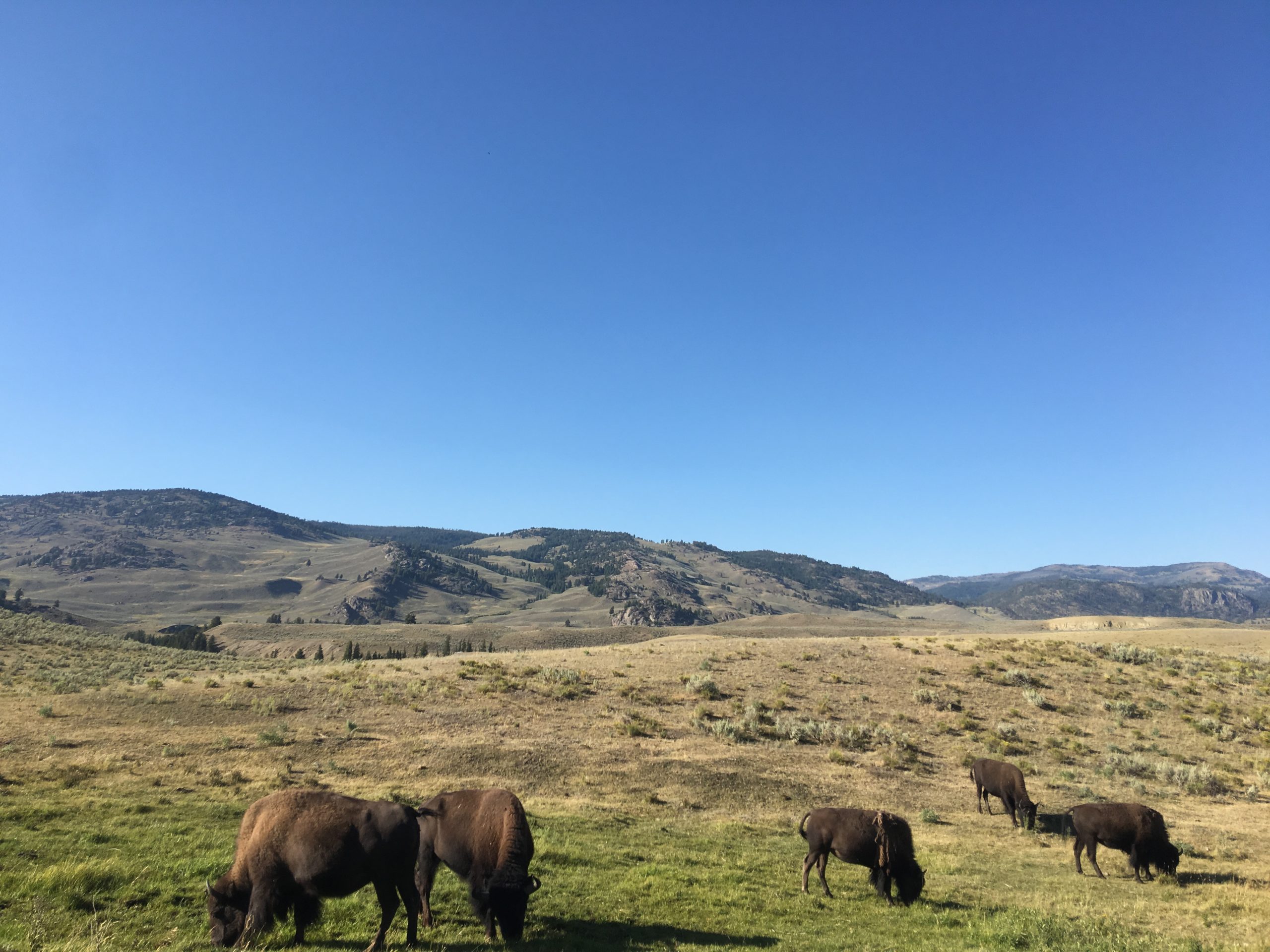
Near the North entrance of Yellowstone in Park County, Montana

Nowadays, the newest gold rush to open up in Montana is the state’s adult use cannabis market, which began operation this past January 1, 2022. The Cannabis Control Division (CCD) of the Montana Department of Revenue expects total adult sales in 2022 to top $130M. With a population just over a million residents, that works out to about $120 per person, which would be more than California’s benchmark $111 per person. Montana’s cannabis industry is expecting exciting and enriching times ahead!

We advise our Montana clients to be cautious, however, and to keep an eye on the “cannabis tax ball.” Why? You can be killing it in sales but still get dragged under by a heavy tax burden, especially in adult use sales, or worse, not keep up with your tax obligations and run afoul of the Department of Revenue or Big Brother IRS.

Montana’s initial foray into cannabis began in 2004, when the state passed Initiative I-148, allowing patient cultivation and use of marijuana but left the legality of commercial sales ambiguous.1 The government reactionaries jumped in and used legislative action to tighten and limit that law.2 Then, in 2016, Montana voters legalized the medicinal sale of cannabis with I-182,3 and in 2021, adult use was legalized with I-190, allowing existing dispensaries to sell recreationally beginning January 1, 2022 in counties which voted yes on the initiative.4,5

From a federal taxation standpoint, of course, Montana’s cannabis operators are only allowed to deduct Cost of Goods Sold under Internal Revenue Code (IRC) 280E, and in general, the state of Montana’s tax code conforms with the Internal Revenue Code.6,7 However, the Montana Department of Revenue departed from the IRC in 2017 and allowed normal business deductions for licensed (legal) cannabis corporations.8 The Montana Department of Revenue also interpreted the law for pass-through entities and individuals with licensed cannabis operations to allow deductions of ordinary and necessary business expenses.9 This is what makes it possible to do business in cannabis in the state of Montana.

But what about Montana’s cannabis taxes? How big are they, and how do they compare with other states?

Montana charges a regular sales tax as well as either a 4% cannabis tax on medical sales or a 20% cannabis tax on adult use (recreational) sales.10 Some good news: wholesale sales are exempt from this tax.11 More good news: Both the retail tax and the regular sales tax are exempt from the taxable price i.e., the state does not charge “tax on tax.”12,13 However, be warned: be careful of offering discounts as it is assessed on the regular retail price rather than the actual discounted price.

Pray, a town near Livingston, Montana

Montana assesses the Cannabis Tax on the retail price and excludes discounts or even product given away.14 As of this writing, Park, Yellowstone and Missoula (medical only for Missoula) Counties have an additional 3% Local Option Tax based on the same state retail price definition with an exclusion for discounts or gifted products.15

So, with all these different taxes, is Montana actually a low tax state for cannabis? To begin with, the state is at least “in the ball game” by allowing the deduction of regular operating expenses on state income taxes. In addition, Montana has a relatively low tax which only applies at the retail level for medical sales and a relatively high tax on adult use. Adult use tends to be the vast majority of sales for dispensaries, so this does not bode well for retail cannabis operators.16

But before you throw in the towel and start looking to move to California (or Oklahoma, another cannabis-friendly state), a look at the whole Montana cannabis picture provides a rosier outlook. Montana income tax is relatively low, and since cultivators and manufacturers do not have to pay any cannabis excise taxes (especially as compared to California, with its cultivation tax and a functional 27% excise tax charged to retailers – a tax theoretically assessed to the consumer but in reality charged by a distributor to a retailer) or cultivation taxes on weight that enters the commercial market. All-in-all, Montana is actually a low-tax state for cannabis operators!

Disclaimer: This article has been prepared and published for informational purposes only and is not offered, nor should be construed, as legal advice.

References

  1. https://ballotpedia.org/Montana_Medical_Marijuana_Allowance,_I-148_(2004)
  2. https://legiscan.com/MT/text/SB423/id/277384
  3. https://sosmt.gov/Portals/142/Elections/archives/2010s/2016/I-182.pdf
  4. https://sosmt.gov/wp-content/uploads/I-190.pdf
  5. https://leg.mt.gov/bills/2021/billpdf/HB0701.pdf
  6. Montana Code Title 15, Chap. 30 Part 21 10 (2021)
  7. Montana Code Title 15, Chap. 31 Part 1 13 (2021)
  8. Montana Code Title 15, Chap. 31 Part 1 14 (2021)
  9. Montana Department of Revenue, “Montana Tax News You Can Use,’ December 14th 2017.
  10. Montana Code Title 15, Chap. 64 Part 1 02 (2021)
  11. Montana Code Title 15, Chap. 64 Part 1 02 (2021)
  12. Montana Code Title 15, Chap. 68 Part 1 01 (2021)
  13. Montana Code Title 15, Chap. 64 Part 1 01 (2021)
  14. Montana Code Title 15, Chap. 64 Part 1 01 (2021)
  15. https://montana.servicenowservices.com/citizen/kb?sys_kb_id=37c9bc641bbcc150d707a82eac4bcb67&id=kb_article_view&sysparm_rank=1&sysparm_tsqueryId=a2d72fcd1b380950135cebdbac4bcbc8
  16. Author’s experience with clients from California Oregon, Washington State and Nevada; states with both adult use and medical sales as of this writing. Montana does not have a commercial adult use program as of this writing.

Cannabis in 2022 – Hurry Up and Wait

Here we are entering a new year. Finally, many states in the United States have agreed to legalize adult-use cannabis either through medical or adult-use programs. In 2021, we saw Connecticut, New Mexico, New Jersey, New York and Virginia all legalize adult-use, bringing the total to 18 states that now allow adult-use and 36 for medical use.

State-led initiatives have been the backbone for this emerging industry. Yet, it’s the advocates who are moving the ball forwards through education, research and real-world case studies showing the benefits cannabis can have across many medical ailments. These grassroots efforts must stay vigilant and persist considering the slow progress on the Federal government level.

The Capitol Building, Washington D.C.

It isn’t so much a matter of “if” Washington will legalize cannabis, but a matter of “when.” There has been some progress with the Marijuana Opportunity Reinvestment and Expungement (MORE) Act to end the federal criminalization of cannabis. Also, the Secure and Fair Enforcement (SAFE) Banking Act, allowing cannabis businesses to work with traditional financial institutions was established and introduced. In 2021, the number of cannabis-focused advocacy groups on the Hill multiplied and large public companies like Amazon even turned their attention, and lobbying dollars, towards cannabis issues too.

Unfortunately, these two significant bills mentioned above are moving slowly through the political process and will take a concerted effort to get them across the finish line any time soon. It’s a delicate balancing act that will continue for the foreseeable future as we navigate our way through regulation and compliance issues.

I live in New York, and over the last several months watching counties and municipalities opt-in or opt-out for dispensaries and consumption sites has been fascinating. The Rockefeller Institute of Government has created a Marijuana Opt-Out Tracker. The data shows – 730 out of 1,521 municipalities opt-out of dispensaries and 830 out of 1,521 opt-out for consumption sites. You can see the opt-out number is relatively high. The insights show local municipalities are taking a wait-and-see approach, seeing how the initial rollout goes, and then opt-in later.

New York City
Image: Rodrigo Paredes, Flickr

The data doesn’t correlate for me because if you look at a recent Gallup poll, 68% of adults in the United States approve of cannabis and 18% of Americans admit to using it, up from 10% in 2005.

There is still a disconnect that will require ongoing advocacy and education/research to present fact-based data that cannabis is safe to consume in moderation. Cannabis consumers should have the ability to purchase cannabis products from legal and regulated industry infrastructure in their town and not have to travel over an hour to get products from another location.

I have been in the cannabis industry since late 2017. Over the last four years, the industry has matured across many fronts, including new consumer products, processing technologies, dispensary formats and buying channels. However, I believe ongoing advancements from advocates, new manufacturing processes and technology platforms will lead the cannabis industry into a fully functional marketplace that is regulated and taxed relatively like any other industry.

As the adage goes, all good things are worth waiting for, and a high percentage of global adult individuals want to move forward with cannabis in their lives. Once we start categorizing cannabis as a wellness product and not a gateway drug, we will see both government and industry move quicker together.