
Tag Archives: medicine

The Secret to Marketing Cannabis to Women

By Jacquie Maynard
2 Comments

The world is changing, and women are the ones changing it. Classic methods of advertising to women just don’t work anymore, and worse, make you seem outdated and out of touch.

According to a 2017 study by BDS Analytics, 45 percent of cannabis users are women and that number is quickly rising. It could be even higher since according to Van Der Pop’s Women & Weed survey, 66 percent of women hide their cannabis use. No one seems to be able to agree on the exact figure, but experts do agree that women are the fastest growing market in the cannabis industry.

Harvard Business Review reported in their 2009 article “The Female Economy” that worldwide, women control nearly $30 trillion in household spending and make the majority of purchasing decisions in the family. If they’re not directly purchasing something with their $18 trillion in collective income, they are influencing others’ purchasing decisions. Often, they are the primary caregivers in their family circles, making them responsible for buying things for their children, or on behalf of their elderly loved ones.

Gender can often be a marketing blind spot, even though it’s the biggest influence on consumer behavior, according to a 2017 report from The Journal of Business and Management. Now that the number of women working in the cannabis industry is at 36 percent and rising, they are using their experiences and perspectives to market effortlessly to women, and it shows. If your brand is ignoring this powerful demographic, you’d better catch up quick.

Why do women use cannabis products?

Women are into cannabis wellness, but like to get high, too.

In Headset’s 2019 report entitled “What Women Want in Cannabis: Shopping Trends Among Female Cannabis Consumers,” some of the most popular cannabis products among women are still classics like flower and pre-rolls, but women are more likely than men to try capsules, topicals and sprays. They are fascinated by the concept of CBD helping them with issues like menstrual cramps, body and muscle pain, and even sensitive skin, but enjoy products with THC as well.

In general, women’s purchases in the cannabis industry end up being more centred towards wellness, but it’s not all about spa treatments and relaxing.

Sex sells, but not in the way you think.

The structure of cannabidiol (CBD), one of 400 active compounds found in cannabis.

There has been a growing interest in using cannabis and CBD for women’s sexual health. Researchers haven’t quite caught up with the science yet, but researchers at the Center for Sexual Health at Saint Louis University think that cannabis and CBD can help women overcome pain and anxiety during sex. Foria Wellness is a brand that sells CBD suppositories and lubricants that help women have a better sex life. Not only are their products seemingly effective, but they provide loads of education to their audience and work with influencers to build their community.

Beauty is Pain.

Being a woman is hard. Or at least, painful. Between walking in heels, getting in an intense workout, and feeling the stress of general life, women end up with quite a few aches and pains. Topicals and bath bombs seem to be leading the way in this area. Celebrity stylists have been using CBD lotions on the feet of starlets before a long night on the red carpet, and more brands are marketing their products to fitness buffs.

Market to specific kinds of women.Skincare is another burgeoning market. Van Der Pop reports that 60 percent of women are interested in cannabis skin care. Again, the science hasn’t quite caught up, but anecdotally it has been shown to have anti-bacterial and anti-inflammatory properties when applied to the skin. Women with psoriasis, eczema and other skin troubles are also finding relief with CBD. A bunch of large retail brands have already jumped on the bandwagon and indie brands are starting to pop up as well.

Life is Stressful.

A report from Spate and Landing International found that there has been a 24 percent increase in consumer interest in anxiety. Young people these days are under more pressure than ever, and they are turning to their products to solve it. The American Psychological Association says that 12 percent of millennials are officially diagnosed with an anxiety disorder, so it’s no surprise that anxiety and depression are the fastest-growing search terms associated with CBD.

Does this make me a bad mom?

Being a mom is stressful, and a lot of moms have been toking since before their kids were born, so after the kids are asleep they relax on the porch with a joint. It’s right for them, but the stigma is still there and they can feel it. Over 70 percent of women believe that there is still a stigma attached to cannabis use. The answer is not only marketing to Mary Jane moms but also using marketing to help end the stigma around cannabis consumption.

What do women look for in cannabis brands?

Women use cannabis for different reasons than men, so it makes sense that they would look for different things in a cannabis brand.

“Traditionally, marketing weed to men has either been about projecting fantasy, or appealing to the everyday guy that men feel like they could smoke a bowl with,” Mary Pryor, CEO and co-founder of Cannaclusive, told AdAge. “But women want to know what gets the job done without having to do too much work to know what we’re going to get.”

That means lots of education and support at the customer level. Women are used to a higher level of customer service and will most certainly take their business elsewhere if they feel they aren’t being heard or served effectively.

Women buy things that make them feel good, or items that help them express themselves, so aesthetic is important, too. There was a time in cannabis culture when most cannabis accessories had flames, or skulls, or aliens, and while that may appeal to some women, the majority want a more feminine and streamlined look. Brands like Van Der Pop offer modern designs that will readily fit into the consumer’s decor, and Lord Jones packages their CBD oil with an ornate style that invokes more of a luxury perfume brand than a cannabis product. Women are looking for a product that will look good on their shelf or in their homes.

The Secret? Know Your Audience

The first rule of marketing to women is: don’t market to women.

The absolute best way to reach women is to create authentic content for women, by women, addressing their specific concerns.At least, not women as a mass, general group. Market to specific kinds of women. Like cannabis, women come in many beautiful and exotic varieties, each one more interesting and lovely than the last, and each with their own values and shopping habits. For example, the wellness guru will have different needs from the sun-weathered gardener, who will have different needs from the stressed-out mom with a sore back.

Here are some time-tested generalizations that could help you out, though. The Journal of Business and Management reports that women are more likely to appreciate finer distinctions and enjoy more of a conversational style dialogue. When it comes to problem-solving, women care more about how a problem is solved, and like sharing and discussing it. Similarly, shopping is also a process where women tend to enjoy more interaction and take more pride in finding the best bang for their buck and the best product for them.

According to Bloomberg, you should study women as if they were a foreign market. All groups of women have their own culture, values and even language. The key here is to get to know each and every one of these personas so that you can create a targeted strategy to reach them specifically.

The absolute best way to reach women is to create authentic content for women, by women, addressing their specific concerns. Create a community for them. Formulate products for them that actually work. Hire them, listen to them, hear them and they will choose your brand every time.

Managing Cannabis Waste and Protecting Your Business from Risk

By David Laks
3 Comments

Cannabis producers know that they cannot treat plant waste like common yard waste. They need to develop a detailed waste disposal plan in order get a license to operate.

Failing to follow the approved plan and improperly disposing of dry waste materials and waste products from oil extraction leads to fines, liabilities or even having your license rescinded.

Learning to deal with cannabis waste appropriately is crucial to the success of an operation. There are a number of strict controls in place for dealing with any kind of hazardous waste, which can’t just be sent to a landfill or composting facility.

In the US, the EPA and state governments provide guidelines for disposing of hazardous waste properly, and other countries have federal and local requirements as well. The EPA, like other environmental bodies, differentiates between two types of waste: solid and liquid.

Solid waste disposal: The guideline for identifying solid waste is that it’s “unrecognizable and unusable.” This means no one should be able to look at a bag of waste and know immediately that it is cannabis. Many cannabis operations have a facility on site for grinding down the waste into smaller bits. If the waste is non-hazardous, it is mixed with other non-cannabis organics such as garden trimmings and then composted or sent to the appropriate landfill. If it’s hazardous, it’s mixed with cat litter, sand, plastic or sawdust and sent to the appropriate landfill.

Liquid waste disposal: Liquid waste is a bit more complicated. It must be disposed of properly or sent to a hazardous waste treatment facility. Cannabis operations must partner with a shipping company to dispose of the hazardous waste appropriately, unless they transport it themselves.

It can be confusing to manage the risks of proper disposal of cannabis waste. Keep it simple by following these three tips:

  1. Become an expert in all the legal restrictions – and follow them. Federal restrictions will guide you overall, but local (i.e., state and municipal) restrictions are equally important and may vary.
  2. Seek out experienced, reputable disposal companies – and hire the best one.Look for one that is familiar with handling hazardous waste in general and cannabis waste in particular.
  3. Familiarize yourself with the guidelines for proper tracking, transportation and sign-offs – and follow them.Completing all appropriate documentation ensures you have a paper trail to protect you in the event of an audit. Much of the documentation creates a written record so inspectors can confirm appropriate handling.

Waste disposal policies should be reviewed regularly as state and municipal regulations can change. At the same time, it would be wise to review your environmental insurance policy to ensure your business is covered for any accidental releases.

It can be tempting to take shortcuts – saving both money and time – when it comes to hazardous waste disposal. But properly disposing of hazardous materials can demonstrate your organization’s credibility and financial wellbeing, and it can also save you from unnecessary risk.

aurora logo

Aurora Medical Cannabis Flower Unavailable In Germany Pending Review By Authorities

By Marguerite Arnold
No Comments
aurora logo

For now, at least, Aurora is AWOL in German pharmacies.

Sources who did not wish to be identified from apothekes here confirmed to Cannabis Industry Journal that Aurora product was currently unavailable throughout the country. The same sources also confirmed that Aurora contacted them about the suspension.

The fallout over less than quality cannabis entering at least the Danish and German markets, as reported by CIJ repeatedly this year, continues to make waves, globally. This newest development seems to be a step up in seed to sale inspections of late as a response from governments who have to deal with normalizing cannabis laws and different standards no matter what else is going on.

That this development also comes on the heels of not only the scandals at CannTrust and Hexo (both Canadians with aspirations in the EU), but many reports on the ground from distributors and pharmacies in Germany of mouldy if not pesticide tainted cannabis ever since 2017, is also significant.

Substandard product is clearly coming from somewhere.

As CIJ also reported, this issue also appears to have flared between Holland and Poland this year right before Italy also cancelled one of Aurora’s cultivation licenses lately on the grounds of GMP compliance this fall.aurora logo

High Quality Supply Chain Issues Are In The Room

This newest development with Aurora is the first sign that German authorities at least, appear to be taking notice.

As Marijuana Business Daily is reporting, the review is of a “proprietary step” in the production process related to a method used to ensure the shelf life of flower cannabis. Aurora has stated in return, that their “products are sourced from an EU GMP certified facility and are safe to consume.”

Sourced or not from a certified facility, the devil, when it comes to EU GMP, is in the details at the source. Not to mention the product on the ground as it ages. And those particularities, on a global level, are still being worked out in a process known broadly as “harmonization.”

When it comes to the cannabis industry in particular, this is also very much in the room thanks to two large treaties with North America of late. Namely CETA, the broad trade agreement between Canada and the EU, which, among other things replaces the old MRA pharmaceutical agreement that existed previously. And of course, the EU-US MRA agreement, which came into full force this July.

As the discussion between Poland and Holland this year demonstrates clearly, one country’s definition of GMP even within the EU can differ.

Product grown and processed in a foreign third-party country, no matter the designation of the actual facility itself in this environment, is bound to get a review. Especially cannabis from Canada.

Put in context of the market itself, this is even more significant, especially given Aurora’s presence in the German market not only as provider as the holder of most of the licenses (5) awarded to three cultivators – a title won with lots of blood on the ground. Not to mention many casualties – including of course the first tender bid itself.

Will This Impact The German Cultivation Bid?

In the current environment, with Aurora announcing retreats on construction in progress just about everywhere, both in Europe and at home, this could easily also be a warning shot across the bow by German authorities.

german flag
Photo: Ian McWilliams, Flickr

While the hijinks of the cannabis industry seem to get a wink and a nod just about everywhere else cannabis reform has come, that is not true on the ground here. Further, Germany very much is a land of laws and regulations. And the average German, no matter how much they kvetch about the same, has by now more or less accepted that medical cannabis that can help very sick people get better is ok. The issue of who should pay for it is another question. Regardless, none of the cannabis in the market here is what could be termed as “cheap.” The idea that such medicine might be of less than required medical quality is one that is, as a result, indefensible.

While nobody (so far) has come forward to the press from the patient side with proof that can be validated, there have been distributors and pharmacies discussing issues surrounding the quality of product for some time now too. None want to be quoted for this story, but the noted focus on seed to sale quality issues by all of the big producers (see Aphria of late as just one example), are clearly a response to the same.

It is also unlikely that Aurora will lose its cultivation licenses in Germany – although again, this review by the German government also may be a second look into the company’s finances and ability to build a high-class facility in the country capable of producing the five lots now required.

Their inability to service this contract seems unlikely on financial grounds, no matter how retrenched Aurora has been of late.

Given the current environment, however, the events of the last six months, and the reality on the ground, this latest inspection seems to be an almost inevitable warning shot across the bow to not only Aurora but all cannabis producers at a time when the first German cultivated medical cannabis (see ICC) is now in pharmacies.

Not to mention high quality product from other parts of the world. If the Canadians can’t cut it, the message seems to be, there are others who are now stepping into the ring who can.

Khiron Life Sciences Makes Strategic Moves In South America

By Marguerite Arnold
No Comments

Khiron Life Sciences Corp. has played an interesting game globally for some time now. Far from a “high flier” in the first tiers of Canadian cannabis companies to watch, that may be changing. Not to mention, this fall, what exactly do these labels mean right now as almost all the first movers retrench and reconsider?

How and where Khiron’s influence will be felt however, is still very much a question in the air.

The big news? The company has obtained authorization from the Colombian government to commercialize high-THC cannabis, and further, for both domestic and international consumption.

There are several interesting things about this announcement.

The first is that Khiron inevitably got its domestic license to supply a 15,000-patient trial “at home” in Columbia (and for the prestigious Latin American Institute of Neurology and the Nervous System).

The second is that the company will also be exporting – and to where.

Uruguay is at the top of that list – starting with the fact that the country has had a “recreational market” that actually predates Canada’s. To import medical cannabis here in other words, is also an interesting statement in and of itself. Namely, what is wrong with domestically produced Uruguayan product? Even and especially in this case, for the medical market? (The answer of course has more to do with U.S. banking law than product quality).

The second is the UK where the company will also supply the patient trial there – Project Twenty21. This is even more intriguing considering that the NHS has just denied the efficacy of cannabis for treating neurological conditions and pain and only recently agreed that Sativex was “cost effective” after negotiating a lower bulk price with GW Pharmaceuticals made possible by the new NICE guidelines.

The third is Brazil – a growingly valuable market now firmly on the radar of those watching all things cannabis-related in the hemisphere.

Regardless, it shows that the lights are on in the executive suite at Khiron. The question is, will this early mover advantage pay off – and more interestingly, where?

A Hemispheric Play – But In Which Long Term Direction?

While the UK at least seems to be Brexiting itself off a cliff of free trade agreements with the world (and expect cannabis to be in the early room of conversation about commodities in this regard), is Latin American cannabis really price impactful in low price per gram Europe long term? Especially given the inclinations of a company whose CEO admits in press statements that he wants to be a “Starbucks of Cannabis” – selling not coffee beans at “80 cents a pound…” but rather a cup of coffee “for four dollars.”

That is a still-to-be answered question. Especially in an environment where the German government has announced its essential reference wholesale price for floss at €2.30 per gram (around four dollars American). Not to mention what is going on domestically in countries across the continent from Denmark and Portugal to Poland.

However, what all this positioning also does of course, is pose questions for Khiron’s intentions throughout the American hemispheres, both more locally and of course north of the Rio Grande (in the U.S. market) not to mention Canada.

This is the kind of reverse hemisphere play of course that everyone in North America has been expecting since Uruguay’s early market movement earlier in the decade. The great South American fruit and veg market is finally allowed to turn to legal production in the form of cannabis.

Is the “Drug War” finally in its last, dying days? The answer appears to be yes. Trade wars, inevitably, however, are looming. Protectionism in the cannabis industry may be a new flavour of the day but not in any other agricultural or indeed any other kind of commodity. And on this front, things are also likely to be fierce.

israel flag

Portrait Israel: Exports Over Domestic Cannabis A Priority?

By Marguerite Arnold
No Comments
israel flag

With all the fits and starts involved with getting the Startup Nation out of the box on cannabis exports, every new twist and turn of the story is intriguing. There are indeed reports that officials have suggested that the Israeli export market might finally, formally open for business as of early next year. However, and this is a big caveat, such exports can only occur if the domestic supply has been met.

cannabis close up
The Tikun Olam strain Avidekel being grown in Israel.

And herein lies the rub. According to the Times of Israel, Israeli patients face a huge shortage of access to product, and in a story that is still universal at this juncture, turning again to the “black market.” Even though in the case of Israel, what constitutes really “black” if not “grey” is still as much in flux here as anywhere else.

Tikkun Olam, the first company to obtain a license from the Health Ministry, also reportedly lost the permit based on a police recommendation.

Who is black, grey and allowed to become legitimate appears to be on the same slippery, often fraught path here as it has been this summer in places like Canada. Or even the United States at a state level. See California.

In truth, this may signal a readiness to license more firms in Israel for both domestic consumption and export. The timing suggests that both are in the offing as the world enters not only the third decade of this century, at what is not quite yet, unbelievably the second of the legal cannabis industry everywhere outside Israel.

Not A New Problem

In truth, the dilemma facing Israel is one that has plagued governments since the beginning of not only cannabis reform on a widespread level at the earlier this decade, but market economics beyond that.

Tel Aviv, Israel

In the world of cannabis, this discussion is actually turning up in several places. It was present in Canada – indeed the biggest Canadian companies began to look to Europe as Canadian patients continued to successfully defend their right to grow in court circa the summer of 2017. It is also in the room across Europe as price economics clash with early reformers. Denmark, for example, might have welcomed outside money to kick-start their medical trial, but nobody seriously thought (at least on the Danish side) that their home-grown product would be able compete on price with say Portugal, Spain or Greece.

In a world where cannabis pricing in even Europe is starting to normalize, and higher prices and profits can be found abroad, what indeed, should cash-strapped governments do?

The answer is actually very easy as much as most governments still do not want to admit the same in most of Europe at least. Do what the Israelis appear in fact to be finally doing, which is democratizing the cultivation market. Once that occurs, the incentives for “black” market will disappear here as in other places.

The Bottom Line- Good News?

Israel has never intended to sit this issue out. The spoils on both the tech and IP fronts are just too great beyond the plant itself. The Israeli government, even with American and other foreign money, has also supported the industry for the last twenty years certainly in a way unseen anywhere else. And the modern “industry” itself, even at the small R&D end, is over fifty years old here.

The backlog of research and knowledge, beyond any individual strain or plant, in other words, is about to be let loose on the world as of next spring. And there will be no turning back.

Soapbox

Hemp in the United States: An Opinion

By Dr. Anthony Macherone
No Comments

The Agriculture Improvement Act, also known as the Farm Bill, was signed into law in December 2018. A major provision in the law legalizes hemp as an industrial crop. In August of 2016, USDA, DEA, and FDA published a Statement of Principles in the Federal Register (FR 53365) that defined industrial hemp as any part or derivative (including seeds) of the plant Cannabis sativa L. with a dry weight concentration of tetrahydrocannabinols not greater than 0.3% (wt/wt).

USDA LogoGlobally, the hemp market was estimated at $3.9 billion in 2017 and the hemp seed segment is predicted to grow “at a CAGR of 17.1%” through 2025. Some of the markets affected by hemp production include nutraceuticals, food, textiles, construction materials, and personal care products. It is also anticipated that cannabidiol (a non-psychoactive cannabinoid extracted from hemp) production will grow to support the burgeoning recreational and medicinal cannabis markets in the U.S., Canada and other countries around the world.

In U.S. states and Canada where recreational or medicinal marijuana programs have been legalized, regulations have been defined to assure the safety and quality of the products sold to consumers. These regulations include analytical chemistry and biological assays to identify and quantify pesticides, mycotoxins, heavy metals, residual manufacturing solvents, terpenes, and microbial contaminates. With regards to hemp, the USDA recently released guidelines for testing of hemp. To date, the only required test from the Federal perspective is total ∆9-tetrahydrocannabinol (THC) content < 0.3% by weight. Total THC is essentially the sum of tetrahydrocannabinolic acid (THCA) and THC (Total THC = 0.877(THCA) + THC) but this may be eventually expanded to include all salts and isomers of cannabinols as noted above. Another complication: what constitutes “dry”? The CFR does not answer this.

Agilent Technologies has invested in the development and implementation of the analytical protocol, the services needed to support these assays, the required consumables, reagents, and supplies, and the training of sales and support personnel to comprehensively ensure compliance of hemp with USDA regulations.

Harvest Connect Aims to Advance Georgia Hemp Market

By Aaron G. Biros
No Comments

Georgia doesn’t have a hemp market yet, but that is about to change. In 2019, the Georgia state legislature passed two bills: HB 213, the Georgia Hemp Farming Act and HB 324, the Hope Act, which legalized low-THC oil. While the regulatory framework for the program is still being decided, the market in the state is now beginning to materialize.

Kevin Quirk, CEO of Harvest Connect LLC, wants to be a pioneer for the hemp industry in the Southeast. With a strong focus on local economic growth, Quirk is moving quickly to corner the market and establish a thriving enterprise. His background is in consumer packaged goods (CPG). He’s worked for Anheuser-Busch, Coca Cola and Minute Maid before becoming an entrepreneur in the CPG space. He started White Hat Brands, a children’s health and wellness company, where they worked with the Juvenile Diabetes Research Foundation to co-develop wellness brands for children.

Kevin Quirk, CEO of Harvest Connect LLC

During that time, he saw two major trends unfolding in the CPG arena: organic health and wellness products and hemp-derived CBD products. “Every year we’d see more and more CBD products on the market,” says Quirk. “Almost a year ago, we decided to get into the hemp space coinciding with Georgia’s push around the hemp and medical cannabis market.” That’s when Georgia’s state legislature introduced those two bills.

In October of 2018, Hurricane Michael wiped out an entire season of crops for Georgia farmers, an almost $3 billion hit to the local agricultural economy. Farmers in Georgia were devastated, taking massive losses. “That put momentum behind the hemp program and gave Governor Kemp the impetus to move forward right after the 2018 Farm Bill passed,” says Quirk. With the launch of his newest venture, Harvest Connect LLC, a Georgia-based hemp-derived CBD extraction and retail company, he saw a way to help some farmers get back on their feet.

Quirk says he expects the state will have applications ready for submittal in the next 60-90 days. The state is going to issue permits to processors and farmers. For farmers, the barriers to entry are pretty low- just $50 per acre for a hemp farming permit with a $5 thousand dollar cap. For a processing permit, the barriers are higher and include an application fee, a surety bond and a minimum of at least five Georgia farmers committed to process in a permitted facility. According to Quirk, it is also critical to understand how to manufacture quality products in a highly regulated environment. Quirk has experience in building and running food-grade USDA and FDA manufacturing facilities and already has a number of farmers signed up to process with them once the program gets off the ground. Many of them are tobacco and cotton farmers hit hard in the aftermath of Hurricane Michael.

Harvest Connect, through its subsidiary Graceleaf, is planning to launch a series of retail CBD stores throughout the state. “This will help us  meet the demand in Georgia, which will help patients in Georgia and which will then help farmers in Georgia,” says Quirk. Georgia hasn’t launched a new agricultural product in decades at least, so for Quirk and Harvest Connect, this is about putting Georgia farmers first. “We plan to work very closely with our growers as partners to make sure everyone succeeds,” he added.

Quirk predicts the Southeast will be a leading producer of hemp for years to come. “I think it’s going to be huge,” says Quirk. “With just the pure amount of agricultural land mass that we have, plus the ideal climate, we’ll be able to turn 2-3 crops a year in the southern parts of Georgia. We actually think Georgia could be one of the most significant producers of hemp in the country.”

While the state is working on promulgating the rules, establishing the licensing process and rolling out the hemp program, Quirk is working to iron out the details of his business so they are ready as soon as the time comes. “We expect to be up and running with our processing facility by Q2 of 2020.”

Is Australian Cannabis Going Corporate?

By Marguerite Arnold
1 Comment

Patient numbers in Australia are going in only one way – up. As of last month, the Australian government reported that it had approved a record 3,594 cannabis prescriptions in October 2019 – or about twice as many as it had approved in only July.

As patient numbers have grown, plans have proceeded afoot Down Under to capitalize on the growing willingness in Australia to accept that cannabis is not only medicine – but can now be prescribed by regular GPs – as opposed to specialists. Not to mention exported to a global medical market suddenly looking for high quality product at affordable prices in far afield places.

Leafcann is one of the companies in that elite territory right now. The new approval by the government for the expansion of facilities to both produce and research cannabis will double the company’s facility somewhere in Adelaide (the location is not being disclosed for security reasons). The new facility will also be the first in the world to produce oil from plant genes and distribute the same to patients.

But they are not the only ones. According to the latest market report by Aussie-based Fresh Leaf Analytics, the numbers of patients domestically are set to jump dramatically again next year.

And as the Australian market mushrooms (indeed European farmers are fielding interest from distributors from the region lately), will the Aussies, rather than any EU-based rival, become the first real global competition to the Canadians first in the race on the flower front?

Don’t count on that. There are too many contenders now for quality cannabis all over Europe for low priced medical cannabis from Down Under to be able to do any more than secure a few early harvests. See the activities of Aphria in the UK for example. Or the proclivities of Lexamed and a few other distributors in Germany.

However, what this development clearly shows is that the Aussie market for oil is not only driving large and well-funded production at home, but also having a knock-on effect internationally.

Whatever else is going on, in other words, the Australians are not only gearing up to go big on the weed front domestically, but driving the market for oil just about everywhere. Starting with CBD.

Don’t Bet The Farm On Aussie Production

Looking at what is going on, in fact, by the numbers, it appears that the Australian market is getting going in ways impossible for their northern brethren. In part that has to do with both Australian federal and state legislation.

It also, when you look at the numbers, is still a market dominated by less than THC medical grade product – the vast majority of patients are still only receiving CBD and most of them in oil form. Australian cannabis bound for pharmacies is also so far clocking in far closer to European prices than Canadian – in part because Canadian companies can ship directly to patients. Australia is also following a European distribution model. And recreational is off the table for now (at least until New Zealand does it). In the meantime, the medical business is proceeding apace.

This means two things: CBD oil is going nowhere either in or outside Australia unless it is either GMP or Novel Food certified – and that takes cash up front. Regardless, will the Aussie market look financially like the salad days of Canada’s medical market? Do not count on it. The flameouts of public companies if not volatility of the public sector, not to mention the growing longevity of the legal biz is creating other paths to financing. Including the fact that most savvy investors at any rate understand that price sensitivity is in the room from the beginning.

So yes, there certainly have been and will continue to be large, well-funded, corporate Aussies – indeed that is the shape of the future just about everywhere. But don’t expect the corporate playbook to be the same as the ones played by the Canadians so far.

What’s Going Down In The Danish Cannabis Market?

By Marguerite Arnold
1 Comment

Despite the fact that the Danes are going to do something that is still verboten in Germany and many other European locales (namely allow a recreational trial), the overall bloom is off the first heady days of the cannabis rose here in Denmark.

Medical sales have stalled of late because of both supply (and in part CannTrust problems) and of course price in a market with a lot of cultivation enthusiasm, but also one which still imports its medical cannabis (although domestic production is coming online soon).

This is even more interesting of course given some ideas floating in the current Euro cannosphere – namely that Canadian funded, Danish based cultivators are or were planning on importing to both Germany and Poland this fall. In other words, low sales at home for expensive product that can be bought for less at the revived Christiana marketplace are not a market entry strategy that brings ballast to balance sheets. And while the rec market is coming (obviously), the trial is in early days yet.

Further, while the German market certainly presents an opportunity for higher priced cannabis coming out of Denmark (for now), that also will not last. And is certainly not the case in Poland.

For that reason, it is clear there is at least temporary trouble brewing in what some initially thought was going to be a European-based cannabis paradise. But that too, is so 2018.

A Few Numbers

The medical trial in Denmark is now entering the beginning of its third year as of 2020. There are, according to official estimates just over 4,000 legal patients. 34 companies have permits to cultivate cannabis, including all the usual suspects – starting with Canopy Growth, Aurora, Aphria, ICC (Wayland) and The Green Organic Dutchman, plus of course all the indie locals.

Put this in perspective and is it really any wonder why Aurora also just recently announced the halting of partly built construction in both Denmark and Canada this month?

aurora logoEspecially with problems in Poland, slower than expected legal sales in Germany and of course the disaster that is still the UK, this newest setback for the company is also not exactly unexpected. The only cannabis company, European or not, who benefitted from the recent NHS pivot on medical cannabinoids was the home-based GW Pharmaceuticals, albeit at lower negotiated prices as the total pool of patients is now increased with the new NICE guidelines.

Given all of these headwinds, even with a few export possibilities, the Danish market that supposedly offered a promised respite from the problems of the German one (certainly on the cultivation front), has run into a similar problem at point of prescription and sales.

Even Danish patient number growth is anaemic compared to Deutschland – which is, by all reports, not even close to considering a recreational trial in Berlin, Bremen or any other jurisdiction which has suggested the same.

With bulk, high-grade production coming online, there is clearly going to be a regulated cannabis market in Denmark. How the decisions about who will qualify for medical will be made in the future is another question. And one that certainly the larger producers at least, are responding to in kind.

The Winds of Change

Given the amount of compliant cannabis now in the pipeline for the continent (and not just domestically) it will be interesting to see how 2020 shapes up. However, no matter how still sluggish the numbers, another domestic cannabis market has begun to come into its own as the continent moves forward on the issue generally.

FDAlogo

FDA Issues Warnings to 15 CBD Companies, Updates Safety Concerns

By Aaron G. Biros
1 Comment
FDAlogo

On November 25th, the U.S. Food and Drug Administration (FDA) sent out warning letters to 15 different companies for “illegally selling products containing cannabidiol (CBD) in ways that violate the Federal Food, Drug, and Cosmetic Act (FD&C Act).” They also published a “Consumer Update” where they express concern regarding the general safety of CBD products. The press release also states that at this time the FDA cannot say that the CBD is generally recognized as safe (GRAS). To see the list of companies that received warning letters, check out the press release here.

The structure of cannabidiol (CBD), one of 400 active compounds found in cannabis.

While the FDA is still trying to figure out how to regulate hemp and hemp-derived CBD products, they published these releases to let the public know they are working on it, according to FDA Principal Deputy Commissioner Amy Abernethy, M.D., Ph.D.:

“As we work quickly to further clarify our regulatory approach for products containing cannabis and cannabis-derived compounds like CBD, we’ll continue to monitor the marketplace and take action as needed against companies that violate the law in ways that raise a variety of public health concerns. In line with our mission to protect the public, foster innovation, and promote consumer confidence, this overarching approach regarding CBD is the same as the FDA would take for any other substance that we regulate. We remain concerned that some people wrongly think that the myriad of CBD products on the market, many of which are illegal, have been evaluated by the FDA and determined to be safe, or that trying CBD ‘can’t hurt.’ Aside from one prescription drug approved to treat two pediatric epilepsy disorders, these products have not been approved by the FDA and we want to be clear that a number of questions remain regarding CBD’s safety – including reports of products containing contaminants, such as pesticides and heavy metals – and there are real risks that need to be considered. We recognize the significant public interest in CBD and we must work together with stakeholders and industry to fill in the knowledge gaps about the science, safety and quality of many of these products.”

The Warning Letters

The warning letters sent to those 15 companies all mention a few types of violations to the FD&C Act. Those include marketing unapproved human and animal drugs, selling CBD products as dietary supplements and adding CBD as an ingredient to human and animal foods. All 15 companies are using websites, online retailers and social media in interstate commerce to market CBD products unlawfully, according to the press release.

FDAThis is not the first time the FDA has sent out warning letters to CBD companies. Previously, most of the warning letters were sent out regarding companies making unsubstantiated drug and health claims. This new round of 15 warning letters reaches beyond just unsubstantiated claims and identifies a few new areas of regulatory oversight that CBD companies should be wary of.

Of the 15 warning letters sent out, some were sent to companies that are marketing CBD products to children and infants, some were sent to companies using CBD as an ingredient in food products, some were marketed as dietary supplements and one company marketed their products for use in food-producing animals, such as chickens and cows. With this press release, the FDA is saying loud and clear that the above list of marketing strategies are currently unlawful, that is, until they finish their work in devising a regulatory framework for hemp-derived CBD products.

Updated Safety Concerns

Regarding the FDA saying they cannot deem CBD as generally recognized as safe (GRAS), they published a fact sheet titled “What You Need to Know (And What We’re Working to Find Out) About Products Containing Cannabis or Cannabis-derived Compounds, Including CBD.” The key words there should be noted in the parentheses: And What We’re Working to Find Out. The FDA’s research is by no means over with and, if anything, has only just begun. Refer to the fact sheet to see why the FDA couldn’t say that CBD is GRAS.

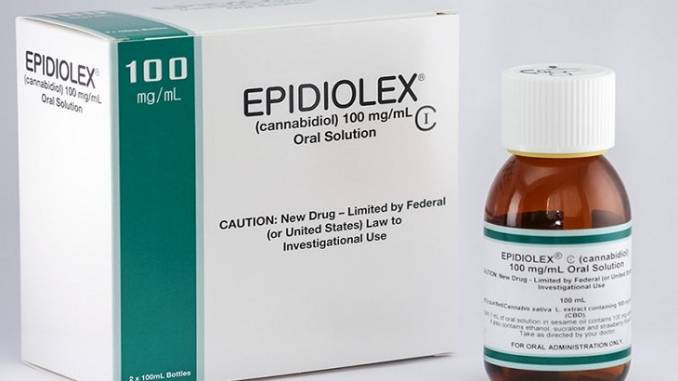
Epidiolex-GWIn the FDA’s research, they have found a few potential health problems associated with taking CBD. During the marketing application for Epidiolex as a new drug, the only approved CBD drug on the market, the FDA identified a couple of safety risks. The first one is liver injury, which they identified in blood tests, but mentioned that it could be managed easily with medical supervision. Without medical supervision, potential liver injury due to CBD consumption could go undetected, according to the FDA.

The second health concern is drug interaction. During the new drug approval process for Epidiolex, they found that other medicines could impact the dose of CBD and vice versa. The other major health concern they have is male reproductive toxicity. The FDA says that studies in lab animals showed male reproductive toxicity, including things like decrease in testicular size, inhibition of sperm growth and development and decreased circulating testosterone. They do mention, however, that “it is not yet clear what these findings mean for human patients and the impact it could have on men (or the male children of pregnant women) who take CBD.” The fact sheet also some side effects that CBD use could produce including sleepiness, gastrointestinal distress and changes in mood.

What Now?

The FDA says they are actively researching and working on learning more about the safety of CBD products. They listed a couple risks that they are looking into right now: Those include, cumulative exposure (What if you use CBD products daily for a week or a month?), special populations (effects of CBD on the elderly, pregnant or nursing women, children, etc.) and CBD in animals (safety of CBD use in pets or food-producing animals and the resulting safety of human food products like milk or eggs).

While the CBD products market could still be classified as a bit of a gray market currently, the FDA says they are working on researching it more to develop an appropriate regulatory framework. What that might look like is anyone’s guess. One thing that remains clear, however, is that the FDA will not tolerate CBD companies marketing products in ways described above. Those include making unsubstantiated health claims, marketing to children, using CBD as an ingredient in foods and marketing it as a dietary supplement.