
Tag Archives: policy

Can NY’s Legal Stores Compete with an Eight-Billion-Dollar Illicit Market?

By Pam Chmiel
No Comments

The recent Business of Cannabis Summit in New York City brought together industry professionals at the trendy Wythe Hotel in Williamsburg, Brooklyn, for a day focused on tackling the cannabis industry’s toughest challenges: price compression, retail survival, and the slow but steady shift from legacy to legal markets. The conversations offered a candid look at what it takes to survive and thrive as New York’s regulated cannabis industry matures. Many speakers agreed that while consumer demand is there, the framework that supports retailers is still developing, creating a volatile environment.

Joanne Wilson, owner and CEO of Gotham Dispensaries, offered a candid take on the current retail climate, warning that now is not the time to buy when asked about future expansion plans. “The market’s going to fall,” she said, predicting that many New York dispensary owners, especially small operators who invested personal and family funds, will face financial hardship as taxes and operating costs outpace returns. “It’s really… the whole thing is just a shambles,” Wilson added. Many panelists throughout the day were blunt about their dissatisfaction with the Office of Cannabis Management’s rollout of the New York market. Several attendees said they remain hopeful, but stressed the need for more consistent enforcement and clearer rules of engagement for retailers and brands.

David Vautrin, CEO of Fluent, echoed her caution, advising new entrants to start small. “Go for a smaller space,” he said. “A lot of folks went big in the beginning, and the overhead is enormous. Your costs are only going up while your margins are going down. The tax situation is grim.” With sales volume softening and price compression tightening profits, Vautrin said retailers must operate lean and avoid getting “too far over your skis.”

Vautrin points to being brand-centric. “Because we’re restricted to three adult-use stores, our biggest opportunity has really been in wholesale,” he said. “Our wholesale business is growing very rapidly, and we’re servicing a few hundred customers already.”

From a retail perspective, Vautrin said success stresses the importance of having the right SKU selection to build sticky customer relationships. There is a dizzying number of strains available. “Retailers need to have a great menu, a good variety, and a very well-educated team in order to sell these products and help move people up the value chain,” he said. His team partners with SeedTalent to train budtenders so they can serve as informed guides for consumers, ideally emphasizing terpene profiles and product effects, not just high THC numbers.


Has the Market Reached Its Limit?

“I think we’re there,” said Wilson. “And what’s equilibrium anyway? In ten years, maybe, but five years from now you’ll see a lot of large brands—maybe Gotham will be one of them.” She went on to explain her vision for a balanced ecosystem similar to other mature retail sectors. “There will always be large department-store-style dispensaries, but you’ll also have smaller neighborhood shops, like the local wine or nail salons, where you know the owner and just need something quick. That’s where we’ll end up in terms of balance.”

Wilson said the illicit market remains a major issue. “Every cop in New York City knows where these underground places are, and they have to be stopped, because that’s business they’re taking away from us,” she said. “If you’re going to grow a business, then give us the tools to grow a business. If they did this in the tech industry, you wouldn’t have the big tech companies you have today. They would have all walked away.”

Vautrin countered that true equilibrium is still a long way off. “We’re far from that stage,” he said. “We haven’t even captured a material chunk of the illicit market yet. In the long run, it’s going to be a branding game—brands that can build authentic relationships with customers will end up winning.” He pointed out that “gummy consumers tend to be the most loyal because they want to repeat that experience, while flower consumers tend to be the least loyal because of the variability,” suggesting that future growth will depend on how brands educate and build brand awareness.


Bridging Legacy and Legal Markets

Vladamir Batista, co-owner of Happy Munkey dispensaries, offered a more optimistic take, praising the OCM for creating “bridges instead of moats” that allow legacy operators like himself to enter the legal market. “New York has created a program where somebody who was in the illicit market can create a brand, open their own dispensary, and come to the legal market,” Batista said. “I’ve already seen that happening with people I know, and it’s going to continue.”

New York’s legal market has generated around $2 billion in revenue so far this year, and many at the summit predicted the illicit market could be $4 billion. Batista thinks it’s far higher than official estimates and is worth $8 to $10 billion. “New York City is the highest-consuming cannabis city in the world,” he said. “I keep my ear to the ground, the legacy market is definitely shrinking—it’s not as conducive as it once was because price compression in the legal market also drives down prices in the illicit market.”

He believes that as more legacy creativity and customer loyalty migrate to the regulated space, the industry will strengthen rapidly. “As more of that creativity crosses over to the legal market, more consumer emails and databases will get converted to the legal market. It’s going to get really robust, really fast,” Batista said.

Despite acknowledging challenges, he credited the state for giving social equity entrepreneurs a chance to participate. “Without programs like this, you’d lose the battle against the legacy market every time,” he said. “At the end of the day, they’ve been around for 80 years. You’re not going to overtake them—you can only embrace them and help them cross over.”

Inside New York’s Cannabis Rollout: What’s Working, What’s Not

By Pam Chmiel
No Comments

A panel discussion at the recent Business of Cannabis event in NYC analyzed the serious issues still facing the industry rollout in New York. What has been touted as a social equity-first initiative has been riddled with significant challenges and lawsuits.

To date, the Office of Cannabis Management has awarded 56% of licenses to those who paid for the war on drugs. While this is the most any state has done to be fair, the road to success is still a long way off.

Panelist Ethan Nadelmann, Founder of the Drug Policy Alliance, called New York the epicenter of racial inequity, where young men of color were overwhelmingly arrested on marijuana charges. Even though it has been a rocky rollout, and New York was a laughing stock for a couple of years, he praised the accomplishment so far and reminded everyone that it wasn’t too long ago that the notion that people who have a marijuana conviction should even be allowed to get licensed was inconceivable. “So the kind of 180 on that, where people who actually have a conviction are in the head of the line, is a remarkable breakthrough development,” he said.

Nadelmann posed the questions: What will all of this look like 5 or 10 years from now? What percent will still be equity licenses? To what extent are just a small number of people benefiting from this equity thing? Will we see the continuing equity? Will it be meaningful? Were there better ways that equity might have been done? Should the OCM be given a time limit to accomplish its goals, similar to other industries?


The True Party of Interest Debate

The conversation then turned to one of the biggest sticking points in the state’s rollout — the True Party of Interest (TPI) rules, which determine who can invest and own across different parts of the supply chain.

Attorney David Feldman explained that while the rules were originally designed to prevent “Big Cannabis” from dominating the market, they’re now creating unintended barriers for small operators. “They’re actually hurting small businesses,” he said, noting that restrictions prevent multi-state operators and out-of-state investors from putting capital into New York dispensaries if they own cultivation or processing assets elsewhere. “Small businesses need access to experienced investors and operators to survive, and right now, they can’t raise that capital.”

Simone Washington, Head of Equity at the Office of Cannabis Management, defended the policy’s intent, emphasizing that the agency’s Trade Practices Bureau was established to monitor ownership and ensure the market remains rooted in equity. “We hear the concerns,” she said, “but we must protect the spirit of the MRTA and make sure this market primarily benefits people harmed by past drug laws.”

Nadelmann added that other states have found a more balanced approach. In Connecticut, for example, larger operators can hold minority stakes in equity businesses — a model he called a “net positive” that brings both capital and expertise. He also cautioned that the industry must prepare for broader shifts ahead. “If federal legalization comes — and it might — many of these restrictions could vanish overnight. We need to be ready for what a national market could mean.”


A Call for Unity

If the TPI debate highlighted how regulatory complexity is stifling opportunity, the next topic revealed an equally daunting challenge: the lack of unity across the industry itself. Despite sharing common goals, operators, activists, and policymakers often find themselves working at odds with one another — sometimes in court.

Moderator Sam Reisman noted that despite common ground under the pro-legalization umbrella, competing interests have fragmented the movement. Advocacy groups, equity operators, and businesses have pursued separate agendas, occasionally securing injunctions that slowed the entire rollout.

Ethan Nadelmann acknowledged feeling “deeply conflicted” as both a reform advocate and a board member of a multi-state operator, but emphasized that industry and activism have more in common than they think. “We all want intelligent regulation,” he said. “Bad regulation helps no one.” He praised collaborations like the Last Prisoner Project, which unites both sides to address lingering injustices from the War on Drugs.

Simone Washington called for more open communication, noting that “people are very siloed” and rarely come together to identify shared objectives.

Attorney David Feldman agreed, pointing out that the industry’s fragmented advocacy sends mixed signals to lawmakers. “What we need is a single, strong trade organization that represents all sides under one coherent vision,” he said.


The Double-Edged Sword of Federal Rescheduling

As talk of federal rescheduling continues to swirl, panelists debated what moving cannabis from Schedule I to Schedule III could mean for New York’s developing market. Moderator Sam Reisman noted that while the proposal has stalled, its potential ripple effects could be profound.

Attorney David Feldman outlined three major outcomes. First, eliminating IRS code 280E would allow cannabis operators to deduct ordinary business expenses for the first time — a “game changer” that could lower effective tax rates from as high as 80% to something sustainable. Second, rescheduling would open the door to expanded research, long hindered under Schedule I restrictions. And third, Feldman said, it could enable the FDA to establish a federally recognized medical cannabis framework without new legislation. That, in turn, could pave the way for interstate commerce, trademarks, and institutional investment.

But not everyone was optimistic. Simone Washington expressed concern that rescheduling could jeopardize New York’s equity commitments. “This administration has shown it’s anti-equity,” she said. “If the federal government takes control, the businesses will swallow the market, and the equity operators will be pushed out.”

Ethan Nadelmann echoed her caution, adding that full federal legalization — depending on how it unfolds — could also accelerate consolidation. “When you open the door to interstate commerce, it’s not just the MSOs,” he warned. “It’s Big Alcohol, Big Tobacco, and Big Consumer Goods that come rushing in. That could wipe out the small operators entirely.”


Fixing the Fallout from Proximity Rules

Among the most contentious issues now facing New York’s cannabis rollout is the recent reinterpretation of the state’s proximity rules, which prohibit dispensaries from operating too close to schools and places of worship. The abrupt regulatory change has left several operators — who had already secured leases and invested heavily in buildouts — suddenly out of compliance, sparking calls for legislative amendments to the MRTA.

Simone Washington acknowledged the strain the new guidance has created. “We require people to have locations before they can even apply for a license, and that’s causing a lot of friction,” she said. With downstate real estate scarce and landlords taking advantage of operators desperate for compliant spaces, Washington said the Office of Cannabis Management is exploring ways to introduce lease protections and other structural reforms to prevent further exploitation. “It’s not necessarily about changing the MRTA itself,” she added, “but it does mean looking at solutions from a legislative standpoint.”

Attorney David Feldman called for more sweeping reforms. “The proximity rules need to be relaxed so more people can actually participate,” he said, also urging limits on local zoning powers that have allowed some municipalities, particularly on Long Island, to obstruct the state’s authority. Feldman argued that New York should rethink restrictions on ownership caps as well. “If someone builds one successful dispensary, why can’t they have four or five? No one tells Starbucks they can only open three locations in New York City.”

Ethan Nadelmann took a broader view, arguing that New York needs to learn from other states rather than repeating their mistakes. “I’d love to see New York take the lead in bringing together the most thoughtful stakeholders from both the industry and regulatory sides to really assess what’s worked and what hasn’t around the country,” he said. He also warned that regulators must be proactive in addressing the growing overlap between the hemp and cannabis sectors. “This hemp thing is a massive knuckleball coming into the industry,” he said. “One way or another, the two are going to merge — whether through drinks, flower, or something else. New York should be ahead of the curve instead of just reacting.”

The State of Ohio’s Cannabis Legal Landscape

By Ice Miller Law Firm
No Comments

This has been a whirlwind year in Washington, D.C., with the inauguration of President Donald Trump and the swearing in of a new Republican majority in the U.S. Senate. The “Republican trifecta” of the House, Senate, and administration has led to stalled progress with cannabis legalization, specifically the effort to reschedule cannabis from Schedule I to Schedule III.

In 2023, the Biden administration set the ball rolling on rescheduling cannabis by asking for an analysis and recommendation from the Department of Health and Human Services and the Drug Enforcement Administration. HHS subsequently recommended that cannabis be rescheduled to Schedule III, and in 2024, the DEA published a notice of proposed rulemaking moving cannabis from Schedule I to Schedule III. However, the DEA process to finalize the rule has been stalled since January, with no particular movement in sight.

Fast forward to today: The federal government has been operating under a lapse of appropriations and has been shut down since October 1. Trump has mentioned in statements that his administration is “looking at” reclassifying cannabis and has posted to social media about it, but federal agencies have shown very little momentum on rescheduling. With midterm elections on the horizon, 2026 will be an interesting year for policymaking in D.C. Many are questioning whether the administration will undertake rescheduling, as it could be considered a hot-button political issue. If we know anything about the Trump administration, however, it is that it keeps everyone guessing.


Ohio’s Legal Medical Marijuana and Adult-Use Cannabis: What Is the Status, and What Changes Could Be on the Horizon?

We are nearly two years out from the effective date of Issue 2, the voter-initiated statute that legalized adult-use marijuana in Ohio in November of 2023 through the enactment of Chapter 3780 of the Ohio Revised Code. The statute became effective on December 7, 2023, and legal adult-use sales commenced in August 2025. Since that time, the state has seen over $900 million in adult-use sales.

Some key metrics for the program to date include:

  • 24 active Level I (large) cultivation licenses
  • 15 active Level II (small) cultivation licenses
  • 46 active processing licenses
  • 6 active testing labs
  • 179 active dispensary licenses (with an additional 109 in development)

The Division of Cannabis Control is actively engaged in the rulemaking process to implement regulations pursuant to Chapter 3780. This process, initially scheduled to be completed by September 7, 2024 —just one year after the statute’s effective date —is now nearing completion. As part of this process, the DCC recently approved the sale of pre-rolls in licensed marijuana dispensaries in the state, a major milestone for the program. Until this time, marijuana flower was not permitted to be consumed through combustion in Ohio, dating back to the beginning of Ohio’s medical marijuana program in 2017. Rules Package 7, which addresses testing standards among other items, is expected to be released for industry stakeholder feedback within the next several weeks.

Recently, the Ohio House passed Sub Bill 56, a comprehensive overhaul of Ohio’s regulatory framework for adult-use marijuana, hemp, and intoxicating hemp products, consolidating oversight under the state’s Division of Cannabis Control and Department of Agriculture.

The bill would make the following changes to the existing adult-use marijuana law in Ohio:

  • Transfer adult-use marijuana regulation from repealed Chapter 3780 to an expanded Chapter 3796 (the existing law that legalized medical marijuana).
  • Establish unified licensing, enforcement, and operational standards for medical, adult-use, and homegrown marijuana.
  • Address potency limitations for marijuana concentrates.
  • Limit delivery of licensed marijuana products to medical patients only.
  • Retain the home-grow limits of six plants per person and 12 plants per household; clarify the legality of homegrown marijuana for adults 21 and over; and enact possession, transfer, and transportation restrictions applicable to homegrown marijuana.
  • Cap the total number of licensed marijuana dispensaries in the state at 400 and retain the cap on ownership of licensed marijuana dispensaries at eight.
  • Clarify transportation, packaging, and consumption rules for marijuana and marijuana paraphernalia.
  • Revise licensing procedures for licensed cannabis businesses.
  • Update patient and caregiver rights for medical marijuana.
  • Expand the enforcement authority of the Department of Public Safety and the Ohio Investigative Unit to assist in the enforcement of adult-use and medical marijuana laws.

The bill also contemplates comprehensive updates to the state’s management of hemp and intoxicating hemp products.

The bill now goes to the Ohio Senate, where it is expected to be met with some objection. The bill will then likely go to a conference committee, where the two chambers will attempt to reach a consensus on what should be included in a final version of the bill.


Key Cases Affecting Ohio’s Cannabis Landscape and Other Cannabis Litigation Updates

 Ancient Roots LLC, et al. v. Ohio Division of Cannabis Control

On September 17, a group of Ohio dual-use licensed cannabis cultivators, processors, and dispensaries brought suit against the DCC. The plaintiffs argue that DCC guidance regarding packaging, advertising, and new product approvals for Ohio’s dual-use licensees was adopted without authority and without following proper rulemaking procedures under Ohio law. The suit asks the court to declare the DCC’s advertising and product-approval rules invalid and to prevent the DCC from issuing any new guidance unless it follows the proper rulemaking steps.

The plaintiffs also filed a motion for a temporary restraining order seeking to immediately halt the contested rules. The DCC opposed the motion for a temporary restraining order by challenging the court’s ability to hear the case altogether. The DCC argued that dual-use licensees, like the plaintiffs in this case, agreed that the DCC alone has the power to handle licensing, make rules, and decide discipline when they signed their dual-use agreements. Therefore, only the DCC, not the courts, can resolve disputes about those rules.

The court denied the motion for a temporary restraining order on October 9, finding that the plaintiffs did not meet the legal standards for emergency relief. But the court did, however, express concern that the DCC could not point to an administrative appeal process for the businesses’ complaints about the advertising rules.

The plaintiffs have since filed an amended that clarifies and expands their claims. The DCC filed its opposition to the amended complaint on November 3.


Titan Logistics Group LLC, et al. v. Mike DeWine et al.

On October 8, Ohio Governor Mike DeWine issued Executive Order 2025-05D, requiring intoxicating hemp products to be removed from public display and prohibiting the sale of such products for 90 days. That same day, Titan Logistics Group LLC, along with several other sellers of hemp-derived products, sued to challenge the order. The plaintiffs also filed a motion for a temporary restraining order and preliminary injunction, both of which sought to immediately block the order from going into effect.

On October 14, the court granted a temporary restraining order, which lets sellers keep selling intoxicating hemp products while the lawsuit continues. That order will remain in effect through December 2, when the court will hear argument on the plaintiffs’ motion for preliminary injunction. In the meantime, Executive Order 2025-05D is on pause.

Recent developments in the Ohio legislature, as discussed above, may render this case moot before the court decides the preliminary injunction. If the Ohio Legislature is successful in passing a bill regulating sales of intoxicating hemp products prior to the December 2 hearing, the parties will likely dismiss this lawsuit.


Other Litigation

General business litigation continues to affect Ohio’s licensed cannabis operators. In the past month, disputes have arisen from contracts related to the purchase of companies and assets. Ohio cannabis operators have also seen the beginnings of labor disputes regarding working conditions, pay, and overtime hours.

The end of 2025 and the beginning of 2026 promise more changes in the ever-evolving field of cannabis law. Those working in the market should expect some shifts, but also greater clarity, in Ohio’s cannabis regulations. Legal challenges will also continue to shape the market as regulators and market participants respond to new regulations and their enforcement.

New Insurance Risks as Cannabis Lounges Open Across the US

By Jason Scheurle
No Comments

In a growing number of communities around the U.S., new cannabis lounges are offering a social setting where guests can openly use cannabis products. Colorado and New Mexico both saw their first cannabis lounges open in April, Michigan’s first cannabis lounge is set to open this summer, and officials in Nevada are currently discussing how the recently approved class of businesses should be regulated. In West Hollywood, California, where the state’s first cannabis lounge opened in 2019, multiple new lounges are now in the works after two years of slowdown due to the pandemic.

The bar-like establishments add a new dimension of potential revenue — and risk — to an industry that is expected to add almost $100 billion to the U.S. economy this year. This new and emerging segment within cannabis isn’t happening in every legal state, but more are starting to enact regulations to provide for some type of on-site consumption.

These new ventures need insurance policies tailored to address the risks of serving cannabis products, which could be looked at similarly to liquor liability for bars and restaurants.

Whether it’s alcohol or cannabis, these products impair people’s judgment, meaning everyone reacts differently to them. But how do you know when to cut someone off?

Cannabis lounges could be held liable & run risk of being sued for overserving

If a cannabis lounge faced a lawsuit alleging that it overserved a patron, leading to a third-party bodily injury, the business’ Commercial General Liability (CGL) Insurance and Products Liability Insurance could potentially cover costs such as legal defense, medical expenses and settlement amounts. Until such a case occurs, it is not yet known how exactly these lawsuits would be covered by insurance.

Because of the short history of cannabis lounges in the U.S., something like this is largely untested, making it hard to speak to exactly how a scenario would play out. Many of the existing cannabis insurance policies are highly exclusionary, meaning it could exclude a loss that is deemed to have arisen out of the use of cannabis.

Recent liquor liability lawsuits have shown the potential for a significant loss is clear. In early April 2022, a $20 million lawsuit was filed against a nightclub in Houston, Texas, alleging it overserved customers and allowed underage drinking, contributing to a drunk driving crash that killed a teenager.

In December 2021, a jury in Texas awarded the family of two drunk driving victims over $301 billion after a lawsuit alleged the driver was overserved at a bar before the accident; though largely symbolic, the settlement marked the largest personal injury award in U.S. history.

The Barbary Coast lounge in San Francisco

With these cannabis lounge establishments more or less encouraging intoxication of patrons on their premises, it’s very similar to a liquor liability type situation. If someone overindulges at a lounge, leaves and causes a crash resulting in injury or death, that could come back to the establishment.

While it remains to be seen how cannabis overserving lawsuits could play out in American courts, it’s worth noting Canada forbids on-site consumption of cannabis products and any loss or damage will not be covered by their insurance policies – despite it being legal country-wide.

Lawsuits possible over product issues, budtender advice

Even cannabis operations that do not allow on-site consumption can face liability related to the products they sell, making Products Liability Insurance and Product Recall Insurance necessary for growers and retailers. They should also consider Employment Practices Liability (EPL) Insurance to cover staffing-related allegations such as discrimination and ask their insurance broker whether budtender liability is included in their CGL Insurance policy.

Budtenders must walk a fine line between giving advice versus general information on products.

Budtenders, or individuals who work at cannabis retailers, are not allowed to offer medical advice to consumers. They must walk a fine line between giving advice versus general information on products. Although we are not aware of lawsuits that have been filed over a budtender’s advice, it would ultimately be up to the courts and lawyers as to how those proceedings would play out.

Budtender liability is not very different from professional liability insurance, and it’s more like an incidental coverage based off the budtender’s informal advice. There are, indeed, insurance carrier partners today that offer that service.

CGL Insurance can also cover in-store slip-and-falls and other third-party injuries and property damage. Because most cannabis retail stores are fairly small, these incidents have been rare, but GCL cannot be overlooked. Businesses must be prepared for anything to happen – and need to know that no risk is too small.

Theft, vandalism among top threats to cannabis businesses

Whether or not a cannabis business includes a lounge for cannabis use, any business in this industry may be more vulnerable to certain risks, including theft and vandalism.

In the U.S., where many cannabis companies operate on a cash-only basis because of banking difficulties tied to recreational products being federally illegal, a recent surge in cannabis shop robberies has led to calls for a new banking bill. Some of these incidents have even turned deadly, including an April 30 dispensary robbery in Los Angeles, California, during which one man was reportedly shot and killed.

Many insurance carriers require retailers to install alarm systems, video monitoring equipment or safes

Large amounts of cash are on-hand daily at these premises, and workers might have to make multiple bank runs throughout the day, leaving a heightened exposure and risk for robberies.

From robberies and vandalism to fires and flooding, Commercial Property Insurance is a key protection for cannabis retailers. Equipment Breakdown Insurance may also be needed, particularly when the stores contain expensive refrigeration equipment. The potential loss is large in this industry, especially at growing facilities, and there’s a lot at stake with such high-value equipment.

Security systems, employee training can help reduce risks

Many insurance carriers require business owners to install alarm systems, video monitoring equipment or safes to help reduce potential property losses, and employees should be trained to use the alarm systems consistently. Policyholders and business owners should also know there is a lot they can do to curb some of the risks, such as businesses doing background checks on every hire and taking steps to ensure they are hiring individuals they can trust.

Installing bars on glass windows and doors is another loss prevention measure that is strongly encouraged because it adds an additional layer of security to get through – it won’t be an easy or quick process to break-in and will trigger the alarm system.

The importance of working with an insurance broker

Working with an insurance broker who is specialized in the cannabis industry can help business owners better explore available coverage options. With cannabis or any type of risk, you should always work with someone who has knowledge and expertise in that area. When you work with someone who knows the ins-and-outs of the regulations, you can have more peace of mind.

You might have a risk warranty that always requires two drivers in that vehicle, or GPS monitoring on the vehicle.

Understanding your policy in its entirety is also essential, as these policies have any number of different limitations and exclusionary forms that could preclude you from collecting if you had not understood and followed the language of the policy.

In a transportation situation, for example, you might have a risk warranty that always requires two drivers in that vehicle, or GPS monitoring on the vehicle. In the event of a claim, if the investigation determines the business did not have those items present at the time of loss, that claim will not be covered.

In a rapidly growing and changing industry, business owners should not underestimate the value of working with a team of insurance experts who keep a close pulse on the quickly evolving industry. Brokers are aware of the different legal environments in each state or even each city or county. Cities and counties can add different levels of compliance matters, so as a buyer, you can be confident that you have the most recent information and are in compliance with state law and any insurance requirements that may be present. Being able to explain the differences between the markets and the coverage options is beneficial to any business owner in this ever-changing industry.
Registration Open for 2022 Cannabis Quality Conference & Expo

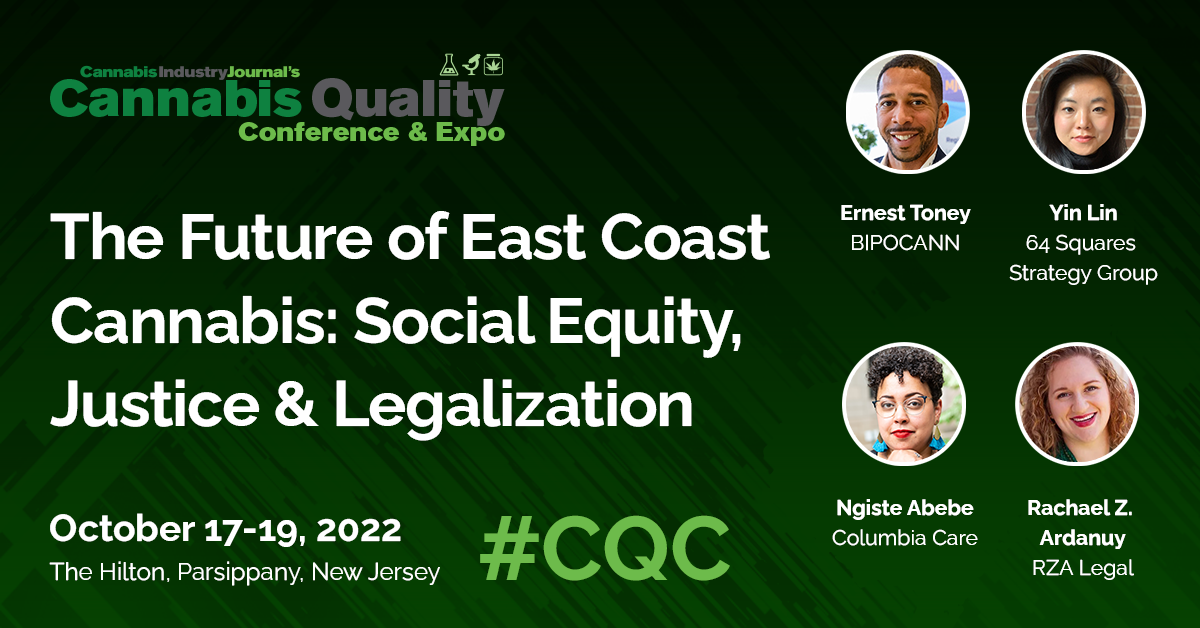
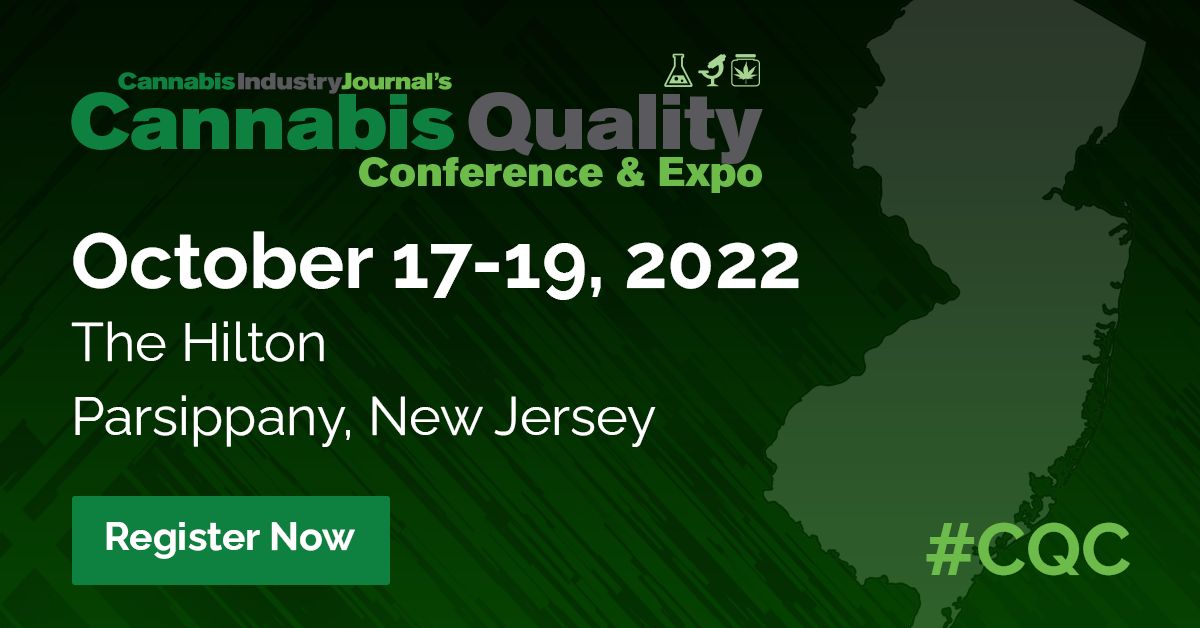
EDGARTOWN, MA, March 23, 2022 – Registration for the Cannabis Quality Conference & Expo, taking place October 17-19 at the Hilton Parsippany in New Jersey, is now open.

The agenda features breakout sessions, keynotes and panel discussions that will help attendees better understand the cannabis markets in the region and provide insights on best practices and business strategies. The conference will begin with a keynote presentation, then a panel on The Future of East Coast Cannabis: Social Equity, Justice & Legalization. Following that will be a panel on The Standardization State of the Union: Science-Based Resources for Driving Cannabis Safety with an overview of the New Jersey cannabis marketplace to end the first day.

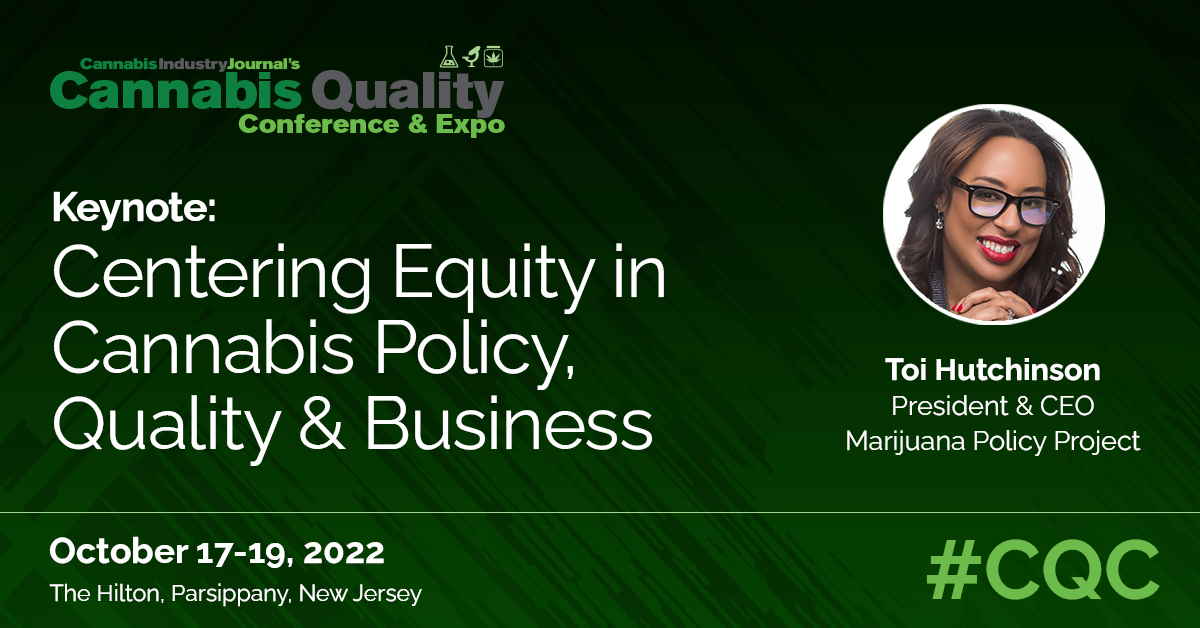
The second day will kick off with a Keynote titled Centering Equity in Cannabis Policy, Quality & Business with Toi Hutchinson, President & CEO at Marijuana Policy Project. Other agenda highlights include:

  • The State of the State: An Update on New Jersey Legalization by Steven M. Schain, Esquire, Attorney at Smart-Counsel, LLC
  • Tri-State Cannabis: Pro Tips for Winning Applications by Sumer Thomas, Director of Regulatory Affairs and Russ Hudson, Project Manager at Canna Advisors
  • Navigating Cannabis Testing Regulations for Multi-State Operations by Michael Kahn, President & Founder of MCR Labs
  • Keynote by Edmund DeVeaux, President of the New Jersey Cannabusiness Association
  • A Guide to Infusion Technology | Design Experiences that Inspire and Innovate with Cannabis Ingredients by Austin Stevenson, Chief Innovation Officer at Vertosa
  • Valuable Analysis Ahead of Asset Acquisition by Matthew Anderson, CEO of Vanguard Scientific

Registration options are available for in-person, virtual and hybrid attendance.

Event Hours

  • Monday, October 17: 12 pm – 6:30 pm (ET)
  • Tuesday, October 18: 8 am – 5:45 pm (ET)
  • Wednesday, October 19: 8 am – 12 pm (ET)

Tabletop exhibits and custom sponsorship packages are available. For sponsorship and exhibit inquiries, contact RJ Palermo, Director of Sales, and Chelsea Patterson, Account Executive.

Cannabis industry professionals also interested in the food industry can attend the Food Safety Consortium, which begins on Wednesday, October 19 – Friday, October 21. The program features panel discussions and breakout sessions that encourage dialogue among mid-to-senior-level food safety professionals. The Food Safety Consortium kicks off with an FDA Keynote and Town Hall, followed by a panel on the State of the Food Safety Industry and where it is going, led by Darin Detwiler of Northeastern University.

About Cannabis Industry Journal 

Cannabis Industry Journal is a digital media community for cannabis industry professionals. We inform, educate and connect cannabis growers, extractors, processors, infused products manufacturers, dispensaries, laboratories, suppliers, vendors and regulators with original, in-depth features and reports, curated industry news and user-contributed content, and live and virtual events that offer knowledge, perspectives, strategies and resources to facilitate an informed, legalized and safe cannabis marketplace.

About the Cannabis Quality Conference & Expo

The Cannabis Quality Conference & Expo is an educational and networking event for the cannabis industry that has cannabis safety, quality and regulatory compliance as the foundation of the educational content of the program. With a unique focus on science, technology, safety and compliance, the “CQC” enables attendees to engage in conversations that are critical for advancing careers and organizations alike. Delegates visit with exhibitors to learn about cutting-edge solutions, explore three high-level educational tracks for learning valuable industry trends, and network with industry executives to find solutions to improve quality, efficiency and cost effectiveness in the evolving cannabis industry.

Cannabis Quality Conference & Expo logo

Cannabis Quality Conference Dates, Location Announced

By Cannabis Industry Journal Staff
No Comments
Cannabis Quality Conference & Expo logo

EDGARTOWN, MA, Feb. 21, 2022 – Innovative Publishing Company, Inc., the publisher of Cannabis Industry Journal, has announced the return to in-person events with the Cannabis Quality Conference & Expo (CQC), taking place October 17-19, 2022 at the Hilton in Parsippany, New Jersey. Presented by Cannabis Industry Journal, the CQC is a business-to-business conference and expo where cannabis industry leaders and stakeholders meet to build the future of the cannabis marketplace.

“Cannabis markets in New Jersey, New York, Connecticut, Pennsylvania and Massachusetts are all beginning to get off the ground,” says Aaron Biros, editor of Cannabis Industry Journal and director of the Cannabis Quality Conference. “Taking place in a pivotal year for the cannabis industry and in a location surrounded by new market opportunities, the CQC will deliver hands-on education, networking and business discussions. The venue setting, just a short train ride from New York City and Newark International Airport, coupled with highly focused content, creates a unique business meeting environment.”

The 2022 program will have three separate tracks of educational presentations and panel discussions, focused on Regulations & Policy, Safety & Quality and Business & Operations.

Due to safety protocols and venue restrictions, limited space is available for sponsors and attendees. The CQC is a hybrid event, meaning attendees will have the option to either attend in-person in New Jersey, or attend remotely via the virtual platform. Registration is now open. Click here to stay up to date on lodging, early bird pricing, keynote announcements and more.

The CQC is co-located with the Food Safety Consortium, which will take place immediately following the CQC, October 19-21, 2022. For sponsorship and exhibit inquiries, contact RJ Palermo, Director of Sales, and Chelsea Patterson, Account Executive.

About Cannabis Industry Journal

Cannabis Industry Journal is a digital media community for cannabis industry professionals. We inform, educate and connect cannabis growers, extractors, processors, infused products manufacturers, dispensaries, laboratories, suppliers, vendors and regulators with original, in-depth features and reports, curated industry news and user-contributed content, and live and virtual events that offer knowledge, perspectives, strategies and resources to facilitate an informed, legalized and safe cannabis marketplace.

About the Cannabis Quality Conference & Expo

The Cannabis Quality Conference & Expo is an educational and networking event for the cannabis industry that has cannabis safety, quality and regulatory compliance as the foundation of the educational content of the program. With a unique focus on science, technology, safety and compliance, the “CQC” enables attendees to engage in conversations that are critical for advancing careers and organizations alike. Delegates visit with exhibitors to learn about cutting-edge solutions, explore three high-level educational tracks for learning valuable industry trends, and network with industry executives to find solutions to improve quality, efficiency and cost effectiveness in the evolving cannabis industry.
Top Five Insurances Cannabis Businesses Need in 2022

By Eric Rahn
No Comments

Cannabis remains one of the fastest growing industries with no signs of slowing down. According to a recent article in Forbes Magazine, the legal cannabis market is poised to grow 20-30% per year to the tune of $50 billion by 2026.[1]With great opportunity comes numerous risks. Claims and lawsuits against cannabis businesses are increasing in frequency and magnitude. As an insurance broker who specializes in the cannabis industry and works with a wide variety of cannabis, hemp and CBD businesses in every state where cannabis laws are established, our recent analysis has unveiled the top five insurances your cannabis business needs in 2022.

  1. General Liability

General liability is the most essential coverage your business needs to protect you from a variety of claims including personal injury, bodily harm, property damage and other situations that may arise including slander, libel, copyright infringement and more.

Since general liability is not always required to obtain a cannabis license, many businesses are tempted to forgo the expense. This is one of the biggest mistakes you can make as one single lawsuit has the potential to cripple your business. With a comprehensive, cannabis-specific general liability insurance policy in place, your insurance company, not you, will pay medical expenses and property damage claims from third parties, in addition to hefty legal fees and fines.

  1. Property & Casualty Insurance
P&C insurance is an important part of your security and protection plan.

If you own a dispensary, grow operation, warehouse, testing facility or any other type of cannabis business with inventory, you need to protect your assets from potential loss or damage. Property & casualty (P&C) insurance safeguards your business against common and costly perils such as a fire, lightning, explosion/implosion, and even less common – but still possible – risks like riots, strikes and terrorism.

P&C insurance not only pays for damages to your business property resulting from a covered loss but it also covers the contents within your place of business, including office furniture, computers, inventory and other assets essential to your business operations. There are policies that will also provide the funds required to keep your business afloat until the damages from the loss are repaired. Any cannabis business with a physical property and location(s) should have a comprehensive property and casualty P&C policy in place.

  1. Product Liability/Product Recall

Recently, we’ve seen a dramatic influx of product liability claims, and in particular, product recalls. Lawsuits have ranged from a single plaintiff seeking damages for personal injuries to class action lawsuits where a defective product is tied to an entire group of claimants.

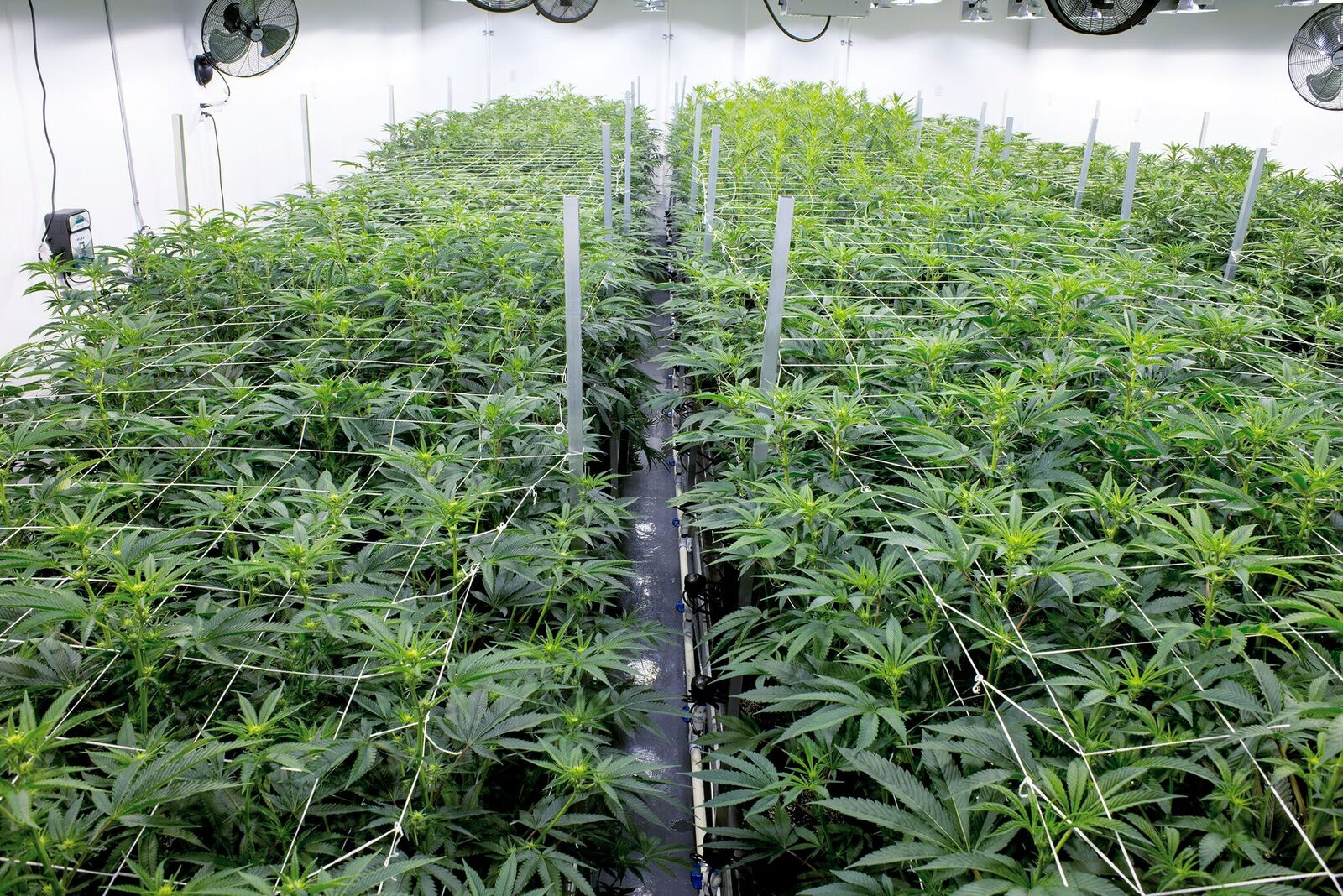
control the room environment
Preventing contamination can save a business from extremely costly recalls. Having the right insurance can prevent a recall from becoming costly in the first place.

As a cannabis business owner, you can be sued for any damage resulting from products that cause harm to others, this includes false advertising, mislabeled or defective products. No matter where you are in the supply chain, your business could be held liable. The process of defending litigation or reaching a settlement agreement can completely drain a company’s resources. You’ll have to deal with regulatory compliance, producing and distributing product warnings, recalling products, claim investigation, product testing and additional risk assessment.

Product liability insurance is often overlooked, especially by small to mid-size businesses. However, your cannabis business needs this type of coverage if you sell any goods or products that end up in the hands of the public. In fact, your business may be contractually obligated to have product liability insurance. One such lawsuit is enough to fold a business due to costly legal fees and fines, as well reputation damage beyond repair.

Product liability insurance is designed to protect your cannabis company from claims that can happen anywhere along the supply chain, including product contamination, mislabeled products, false advertising or defective products. With proper coverage, your insurance company will pay for damages and legal expenses if you are sued, up to your policy limits. Your product liability policy will also cover any medical expenses for those who are harmed by your business. Making sure your insurance policy includes product liability insurance should be a top priority in 2022.

  1. Cyber Defense/Data Breach Insurance

Cyber fraud and data breaches are two of the greatest risks facing cannabis companies in 2022. With so much cash pouring into the space, cannabis businesses of all sizes are bulls-eye targets for cybercriminals. Even the smallest of cannabis businesses are at risk of data breaches because they are part of a larger interconnected network of seed to sale vendors. These types of crimes can have detrimental effects on your business in numerous ways. In the case of a data breach resulting in the disclosure of a third party’s private information, the third party could sue your business. The SEC could also find your company negligent in cyber fraud cases and impose significant fines.

By forgoing cyber defense & data breach insurance, your business will be solely responsible for expensive legal bills, significant revenue losses and hefty fines and penalties from regulators. Cyber defense & data breach insurance is a must-have coverage in 2022, and beyond, to protect your business from cybercrimes.

  1. Directors & Officers Insurance

If you are looking to secure venture capital or funding from investors in 2022, and/or attract and retain qualified leadership, you need directors & officers (D&O) Insurance. D&O protects corporate directors and officers, as well as their spouses and estates, from being personally liable in the event your company is sued by investors, employees, vendors, competitors, customers, or other parties, for actual or alleged wrongful acts in managing the company. In the event of litigation, your D&O insurance will cover legal fees, fines, settlements and other expensive costs.

D&O is often the most overlooked coverage because many cannabis businesses are independently run, and no one foresees the potential for operational failures and mismanagement. However, businesses with any sort of vision for growth should make D&O a top priority. It not only protects your current executives and board members but is critical in attracting leading talent in the space, as well as drawing in new investors to scale up your business. In fact, we’re seeing more prospective investors and board members requiring D&O insurance prior to engaging with a company to ensure they are fully protected in the event of litigation.

When it comes to mitigating risk in this business, the stakes are sky high. Cannabis companies that have not incorporated risk management into their business/operational plans will need to in 2022. It all boils down to the THREE P’s: being “Proactive, Prepared and Protected.”

Best Practices for Training New Hires and Documenting Operations

By Dede Perkins
No Comments

Let’s just say it. There is an undeniable chaos in the cannabis industry. It doesn’t matter if you’re a big or small operator, it’s likely that you don’t have a documented system for creating and managing ever-changing SOPs or for consistently training all employees on the most current versions of those SOPs. This chaos is often the result of rapid growth, mergers and acquisitions, and the ever-present turnover in our industry. When department leadership changes, and it often does, established policies and procedures are often left behind. In some cases, this is a positive sign of growth. As a company outgrows SOPs and as it develops more sophisticated ways to cultivate, extract, process, manufacture, package and sell cannabis and cannabis products, inevitably, the old ways of doing business need to be replaced. For those operators who have prioritized operational excellence, whether they want to position their company for new investment, merger or acquisition, or just want to create a consistent and standardized, branded product, it’s critical to get control of SOPs, training and documentation.

Food processing and sanitation
By standardizing and documenting safety procedures, manufacturers mitigate the risk of cannabis-specific concerns

As with most big goals, to obtain operational excellence, you need to break the goal into manageable steps. Assuming you have accessible quality policies and procedures in place, properly training employees when they first start work and on an ongoing basis as policies and procedures change is the number one key to successful operations. When employees know how to do their job and understand what is expected of them, they are positioned for success. When employees are successful, it follows that the company will also be successful. Documenting operations is a second important step in obtaining operational excellence. While training and documentation appear to be different, in best-practice organizations, they are inextricably linked.

One Set of SOPs

Those of us who have been in the cannabis industry for a while have experienced firsthand or heard stories of facility staff working off of two sets of SOPs. There’s the set of SOPs that are printed or digitally available for the regulators, let’s call them the “ideal” set, and then there are the SOPs that actually get implemented on a day-to-day basis. While this is common, it’s risky and undermines the foundation of operational excellence. Employees often know there are two sets of SOPs. Whether they express it or not, many are uncomfortable with the intentional or unintentional deception. When regulators arrive, will they have to bend the truth or even lie about daily operations? Taking the time to establish and implement one set of approved SOPs that is compliant with both external regulations and internal standards is good for employee morale, productivity and ultimately, profits.

What’s the best way to get control of a facility’s SOPs? Again, break it into manageable steps:

  • First, task someone with reviewing all SOPs that are floating around. Determine if any are non-compliant, which ones need to be tossed and which ones need to be revised so they work for the company as well as outside regulatory authorities.
  • At a minimum, establish a two-person team to draft, review, publish and distribute the final SOPs. Ensure that at least one member of the team has management level authority. Assign that employee the responsibility of reviewing the SOPs before “publication” and distribution.
  • Archive, delete, or actually throw away outdated or non-compliant SOPs
  • Revise or create new best-practice SOPs that are in compliance with external regulations and internal standards
  • Establish a system to update SOPs when external regulations and internal standards change
  • Use a naming convention that distinguishes draft SOPs from final SOPs, for example, “Post-Harvest Procedure, FINAL”
  • Inform employees that they will be retrained on the new SOPs and that approved SOPs will always have the word “Final” in the title
  • Store the final SOPs in an easily accessible location and give employees access, not only during training, but on an ongoing basis

Centralized Repository for Final SOPs

Storing final, approved SOPs in one easily accessible, centralized location and giving employees access sounds simple, but again, this is the cannabis industry, so this often doesn’t happen. Many of us have or are currently working for an organization that stores SOPs in multiple places. Each department may have its own way of updating, disseminating and storing SOPs. Some SOPs are stored in a printed binder stuffed in a drawer or left on a bottom shelf. Others are stored digitally. Some use both systems, which creates confusion. Who knows if the digital versions or the printed versions are the most current? Surely someone knows, but often the front-line staff do not.“Once you’ve established a single set of compliant SOPs and have stored them in one accessible location, it’s time to train your employees.”

Establishing a centralized repository for final, approved SOPs is the foundation of operational excellence. It lets employees know that operations are organized and controlled, and it reassures regulatory authorities and external stakeholders—think insurers, bankers, investors—that the company prioritizes compliance and organization. And external stakeholders who believe that an organization is proactive and well-run tend to be more forgiving when the inevitable missteps occur. Companies that are organized, have effective training systems, regularly conduct internal audits to identify potential issues and take identifiable action steps when necessary to remediate issues, receive fewer deficiency notices, violations and fines than their less organized competitors.

Train Employees

Many states require cannabis operators to provide a specific number of training hours prior to an employee beginning work, and a specific number of continuing and refresher training hours annually. Once you’ve established a single set of compliant SOPs and have stored them in one accessible location, it’s time to train your employees. To do so, set clear expectations and decide who is responsible for what. Is the HR manager responsible for initial onboarding and training? Are department managers responsible for ongoing and annual training? Create a training responsibility chart that works best for your company; write it down and share with all stakeholders.

Documenting all key areas of operation on a recurring basis will help you keep track of a large facility and workforce

The next step is to figure out how to train your employees. Individuals have different learning styles, so ideally, you’ll offer multiple ways for them to master the requirements of their position. Assign written materials and if possible, attach short videos showing the best way to complete a task. Follow up with a quiz to determine comprehension and a conversation with a department lead or manager to answer questions and review the key take-aways. Ideally, the department manager or lead employee will work with the employee until they are competent and comfortable taking on new assigned tasks and responsibilities.

Sum It Up 

Operational excellence begins with:

  • Knowledge of and access to current external rules and regulations and internal standards
  • One set of approved and easily accessible policies and SOPs that comply with both external and internal standards
  • An initial training system with clearly assigned roles, responsibilities, and goals
  • An ongoing training system with clearly assigned roles, responsibilities, and goals
  • Systems to:
    • Test knowledge before employees begin unsupervised work
    • Stay up-to-date with all changes to external rules and regulations and internal standards
    • Control policy and SOP revision process
    • Inform all stakeholders when policies and SOPs change
    • Test that employees understand new standards
    • Document all key areas of operation on a recurring basis
    • Address deficiencies and evaluate whether SOP revisions are warranted
    • Document and implement necessary remediation when necessary

For those of you rolling your eyes and thinking you don’t have time for this, ask yourself, “Can you afford not to?”

For those of you committed to operational excellence and doing what it takes to get there, congratulations on being a visionary leader. Your efforts will pay dividends for your own company and will help the cannabis industry grow into a well-respected, profitable industry that improves lives.

Support Grows for Federal Cannabis Legislation with the SAFE and CLAIM Acts

By Jay Virdi
No Comments

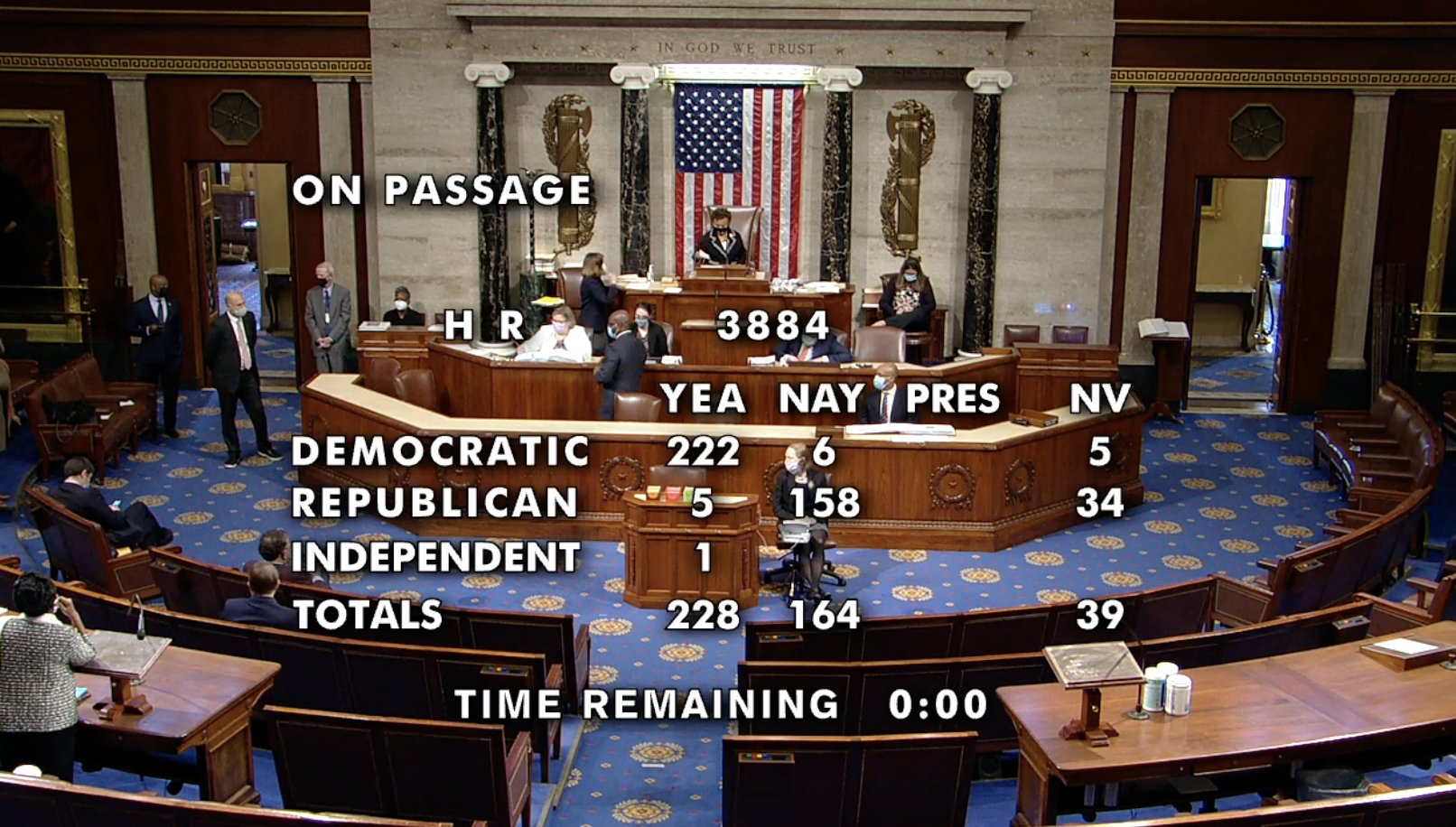
Things are about to change for cannabis and cannabis-related businesses, as landmark legislation to reform federal cannabis banking and insurance laws is just around the corner with the SAFE and CLAIM Acts now making their way through Congress.

The Secure and Fair Enforcement (SAFE) Banking Act, which already passed in the House, would allow financial institutions to do business with cannabis companies without facing federal penalties. There are high expectations the proposal will make its way through the Senate and onto President Biden’s desk.

The Clarifying Law Around Insurance of Marijuana (CLAIM) Act was introduced in Congress in March and is in the first stage of the legislative process. If it passed, it would allow insurance companies to service cannabis businesses without the threat of federal penalties.

For years, fear of sanctions kept banks and credit unions from working with the cannabis industry, forcing cannabis businesses to operate on a cash basis which made them targets of crime and created complications for financial regulators. This is a significant first step for cannabis businesses toward conducting more legitimate and safe operations.

The SAFE Banking Act: Providing a Legitimate Avenue to Banking and Loans

With 37 states and D.C. having taken action to legalize cannabis in some way, it is clear the federal cannabis regulatory model has shifted and the path forward for the SAFE Banking Act shows promise.

The bill creates a safe harbor for banks and credit unions to the extent they would not be liable or subject to federal forfeiture action for providing financial services to a cannabis-related business.More competition means greater capacity and lower premiums for all. 

The bill would prohibit a federal banking regulator from:

  • Recommending, incentivizing or encouraging a depository institution not to offer financial services to an account holder affiliated with a cannabis-related business or prohibit or otherwise discouraging a depository institution from offering services to such a business
  • Terminating or limiting the deposit insurance or share insurance of a depository institution solely because the institution provides services to a cannabis-related business
  • Taking any adverse or corrective supervisory action on a loan made to a person solely because the person either owns such a business or owns real estate or equipment leased to such a business. 

The CLAIM Act: Backing Cannabis Businesses with the Right Insurance Coverage

Should the CLAIM Act pass, it will protect insurance companies that provide coverage to a state-sanctioned and regulated cannabis business. It would also prohibit the federal government from terminating an insurance policy issued to a cannabis business and protect employees of an insurer from liability due to backing a cannabis-related business.

The CLAIM Act will be a boost for the insurance market and drive more underwriters to write cannabis policies. More competition means greater capacity and lower premiums for all. The act would also have a notable impact on currently hard-to-source policies like Cyber coverage, Directors & Officers (D&O) insurance, Errors & Omissions (E&O) and other management liability policies that have been extremely limited to cannabis businesses.

Cannabis Sales Still Growing Strong Globally 

The cannabis market is not slowing down in the United States or globally. Recent forecasts have U.S. sales reaching $28 billion in 2022.

As was the case in Canada where cannabis was made federally legal in 2018, there’s going to be a steep learning curve industry-wide for financial services and insurance vendors who don’t yet understand the risks and liabilities of cannabis operations, even if the SAFE and CLAIM Acts pass this year. And yet this is one giant step in the right direction toward the safe and equitable sales of cannabis country-wide.

Defining Hemp: Classifications, Policies & Markets, Part 2

By Darwin Millard
2 Comments

In Part 1 of this series we answered the question: What is “hemp”; and addressed some of the consequences of defining “hemp” as a thing. In Part 2, I will explore this topic in more detail and provide some commonsense definitions for several traditional hemp products based on a classification approach rather than separating “cannabis” from “hemp”.

Classifications, Specifications, and Test Methods – Establishing Market Protections for Hemp Products Through Standardization

Does making a distinction between “hemp” and “cannabis” make it easier to protect the interests of the seed and fiber markets?

On the face of it, this question seems obvious. Yes, it does.

Up to this point in history, the bifurcation of the cannabis plant into resin types and non-resin types has served to provide protections for the seed and fiber markets by making it easier for producers to operate, since the resins (the scary cannabinoids, namely d9-THC) were not involved. Today, however, the line in the sand, has been washed away, and “hemp” no longer only refers to non-resin producing varieties of the cannabis plant.

The structure of cannabidiol (CBD), one of 400 active compounds found in cannabis.

As more and more hemp marketplaces come online with varying limits for d9-THC the need for standardization becomes even more pressing. Without standardization, each marketplace will have its own requirements, forcing businesses looking to sell their products in multiple jurisdictions to comply with each region’s mandates and adds a significant level of burden to their operations.

Providing an internationally harmonized definition for hemp is an important first step but allowing the d9-THC limit to vary from jurisdiction to jurisdiction has some unintended (or intended) consequences (#NewReeferMadness). These discrepancies between legal marketplaces will inevitably lead to the establishment of global trade regions; where, if your product cannot meet the definition of “hemp” in that region, then you could effectively be barred from participating in it.

A process which has already started. Harmonizing around 0.3% is great for the US, Canada, and European Union, but what about other stakeholders outside of these markets?

And, at what point does the conflict of hemp from one region with a d9-THC content of 0.3% and hemp from another region with a d9-THC content of 1% being sold into the same market become a problem?

Perhaps a better long-term solution for protecting the market interests of “hemp product” stakeholders would be to establish specifications, such as identity metrics, total cannabinoid content, especially d9-THC, and other quality attributes which have to be verified using test methods for a product to be classified as “hemp”. This system of standards (classifications, specifications, and test methods) would allow for more innovation and make it significantly easier for cannabis raw materials that meet these specifications to find a use rather than being sent to the landfill. Bolstering advancements and opening the door for more market acceptance of the cannabis plant, its parts, and products.

An Alternative Approach to Defining Hemp

Below are some proposed definitions related to common terminology used in the hemp marketplace based on the concept that there are no hemp plants, there are only cannabis plants that can be classified as hemp, and hemp products are simply cannabis products that meet certain specifications to allow them to be classified and represented as hemp.

  • Hemp, n—commercial name given to a cannabis plant, its parts, and products derived therefrom with a total d9-THC content no more than the maximum allowable limit for the item in question. (Maybe not the best definition, but it makes it clear that not only does the limit for d9-THC vary from jurisdiction to jurisdiction it varies from product type to product type as well.)
  • Hemp flower, n—commercial name for the inflorescence of a cannabis plant that can be classified as hemp.
  • Hemp seed, n—commercial name for the seeds of a cannabis plant which are intended to be used to grow another cannabis plant that can be classified as hemp.
  • Hempseed, n—commercial name for the seeds of a cannabis plant which are intended to be used as food or as an ingredient in food.
  • Hemp seed oil, n—commercial name for the oils expressed from the seeds of a cannabis plant.
  • Hemp seed cake, n—commercial name for the solid material byproduct generated during the expression of the oil from the seeds of a cannabis plant.
  • Hemp flour/meal/dietary-fiber, n—commercial name for the powdered seed cake of a cannabis plant intended to be used as a food or as an ingredient in food with a protein content no more than 35% by weight.
  • Hemp protein powder, n—commercial name for the powdered seed cake of a cannabis plant intended to be used as a food or as an ingredient in food with a protein content between 35% and 80% by weight.
  • Hemp protein isolate, n—commercial name for the powdered seed cake of a cannabis plant intended to be used as a food or as an ingredient in food with a protein content above 80% by weight.
  • Hemp fiber, n—commercial name for the cellulosic-based natural fibers of a cannabis plant.
  • Hemp shives, n—commercial name for the hurd of a cannabis plant which have been processed to defined specifications.
  • Hempcrete, n—commercial name for a solid amalgamation of various aggregates and binders, typically comprised of the hurd (shives) of a cannabis plant and lime.

The d9-THC limits for each product were purposefully omitted because these specifications still need to be defined for each product type. Leaving the d9-THC limit up to each authority having jurisdiction, however, is not the answer. It is fine if you comply with a lower d9-THC limit and want to sell into a market with a higher d9-THC limit, but what do you do if you are above the limit for the market you want to sell into? For now, you lose out on potential revenue.

Hemp-derived CBD extract

I am not advocating that everyone starts selling “hemp” as “cannabis,” or vice versa, far from it. I am advocating for a more commonsense and inclusive approach to the marketplace though. One that would allow for the commercialization of materials that would normally be going to waste.

To me it is simply logical. There are no hemp plants, there are only cannabis plants that can be classified as hemp. There are no hemp products, there are only cannabis products that can be classified as hemp. In order for a cannabis product to be marketed, labeled, and sold as a hemp product, i.e. to be classified as a hemp, it would need to meet a set of specifications and be verified using a set of test methods first. But fundamentally the product would be a cannabis product being certified as “hemp”. And that is the shift in thinking that I am trying to get across.

Exclusionary Actions – Disenfranchising Stakeholders

The cannabis plant is an amazing plant and to fully capitalize on the potential of this crop we have to start allowing for the commercialization of cannabis raw materials that are not controlled by the UN Single Conventions, i.e. the seeds, stalks, roots, and leaves when not accompanied by the fruiting tops or the resin glands. Not to do so disenfranchises a significant number of stakeholders from participating in established legal avenues of trade for these goods. A concept proposed and endorsed the ASTM D37 in the published standard D8245-19: Guide for Disposal of Resin-Containing Cannabis Raw Materials and Downstream Products.

If you are stakeholder in the hemp marketplace, you may feel threatened by the idea of the market getting flooded with material, but how are the demands of the so called “green economy” going to be met without access to more supply? Organic hemp seed for food production is scarce but there is plenty of conventional hemp seed for the current demand, but what happens when hempmilk is positioned to displace soymilk in every major grocery store? To feed the growth of the human population and allow for a transition to a truly “green economy,” we need to ensure that the policies that we are putting in place are not excluding those looking to participate in the industry and disenfranchising stakeholders from burgeoning marketplaces, nor alienating a segment of the marketplace simply because their plant cannot be classified as “hemp”.

Until next time…

Live long and process.