Tag Archives: retail

Unnecessary Obstacles for the Canadian Edibles Market

By Steven Burton
1 Comment

The edible cannabis market in Canada is still green. Delayed by a year from the legalization of dried flower, the edibles and extracts market poses significant opportunities for manufacturers. Edibles and extracts typically have higher profit margins than dried flower (“value-added” products) and consumer demand appears to be high and rising. So, what is causing trouble for cannabis companies trying to break into edibles and extracts? Below are four observations on the market potential of edibles in Canada.

Canada’s Edibles Market: The Numbers

In 2020, Canada – the largest national market in the world for cannabis products – grew more than 60%, largely as a result of the introduction of new products introduced in late 2019, often called “Cannabis 2.0,” which allowed the sale of derivative products like edibles. Deloitte estimates that the Canadian market for edibles and alternative cannabis products is worth $2.7 billion, with about half of that amount taken up by edibles and the rest distributed amongst cannabis-infused beverages, topicals, concentrates, tinctures and capsules. More recently, BDSA forecasts the size of the Canadian edibles market to triple in size by 2025 to about 8% of the total cannabis dollar sales.
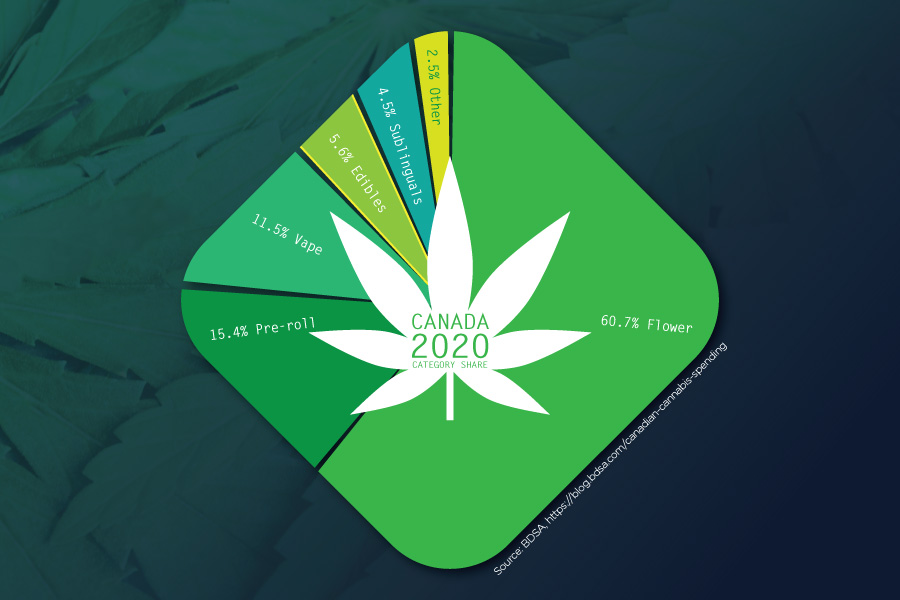
Source: BDSA

In December 2020, the Government of Canada reported that edibles made up 20% of total cannabis sales; Statistics Canada data shows that 41.4% of Canadians who reported using cannabis in 2020 consumed edibles. While sales have gone up and down over the course of the COVID-19 pandemic, there are clear indications that there is a substantial demand for edibles and extract products, which can be consumed more discreetly, with greater dosage precision and with fewer adverse effects (as opposed to smoking).

While sales of regulated edibles products continue to grow, edibles, extracts and topicals sales in Canada are facing a similar problem as dried flower sales: inventory growth is outpacing sales. Unsold stock sitting in inventory is growing at a dramatic pace, showing a clear lag in demand for these products on the legal market. How do we understand this contradiction?

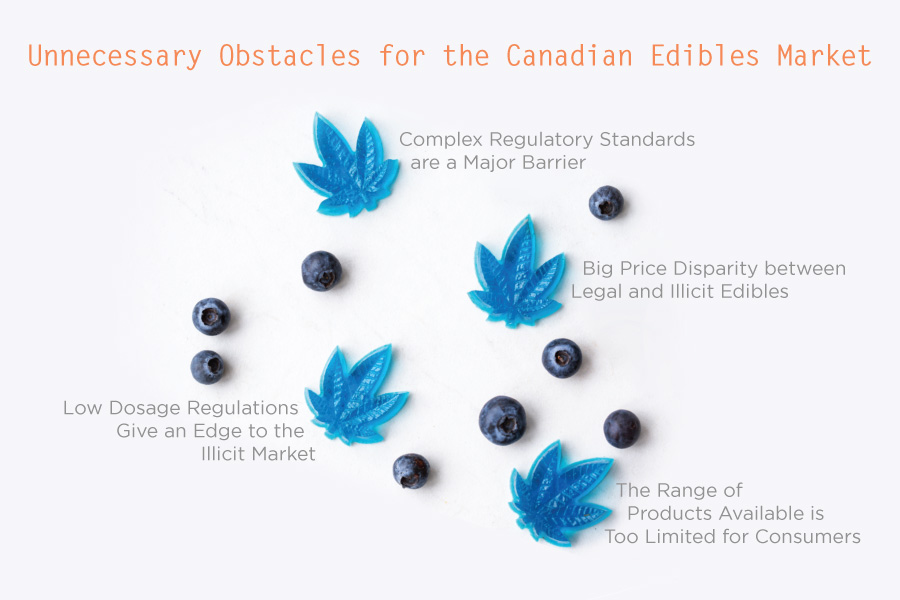
1) Complex Regulatory Standards are a Major Barrier

Cannabis edibles compound the already existing problems around the conceptualization of cannabis products regulation. How should it work? Edibles can be considered in any of the following categories:

  • Cannabis as a pharmaceutical with medical application. Requires strict dosage and packaging requirements;
  • CBD as a nutraceutical with health benefits claimed. Requires specific nutraceutical regulations be followed;
  • Food product to be consumed. Must comply with food safety regulations around biological, chemical, physical hazards through a risk-based preventive control program. A full supply chain and ready-to-recall based system of regulatory standards need to be followed.

Incorporating elements from each of these three regulatory regimes into a single regulatory standards body is a confusing logistical and compliance challenge for both the regulators, and the producers and retailers of the product.

In mid-2019, the Government of Canada released the Good Production Practices Guide for Cannabis. This merged cannabis-specific regulations with food safety-specific regulations. Rigorous food safety requirements were combined with equally rigorous cannabis production and processing requirements, resulting in extremely laborious, detailed and specific regulations. These span everything from building design and maintenance, to pest control, to employee sanitation, to traceability – at all levels of the process. Navigating these regulations is a challenge, especially for many smaller producers who lack the necessary resources, like automation technology, to devote to understanding and tracking compliance.

2) Low Dosage Regulations Give an Edge to the Illicit Market

When edibles were legalized, THC dosage was capped at 10mg per package. For more experienced consumers, especially those who are dealing with chronic pain and other medical needs, this limit is far too low – and the unregulated market is more than able to fill this gap. One analyst from Brightfield pointed out that the dosage restriction, in combination with other regulations, will make it harder for the edibles market to grow in Canada.
It also makes the unregulated market almost impossible to beat. Barely more than half of cannabis consumers in Canada buy exclusively from government-licensed retailers, while 20% say that they will only buy unregulated products. According to a Deloitte report, 32% of legacy cannabis consumers said that unregulated products were better quality, and 21% reported that they preferred unlicensed products because there were more options available. Almost half of respondents also reported that quality was the biggest factor that would cause them to switch to regulated sources, and 28% said that higher THC content would prompt them to switch.

3) There is a Big Price Disparity between Legal and Illicit Edibles

As a result of dosage requirements and other factors, price per gram of regulated edible product is much higher than that of flower, unregulated edibles and edibles available through regulated medical distributors.

If you take the BC Cannabis Store’s price for Peach Mango Chews as an example: a 2pc package is $5.99. Since the dosage limits at 10mg per package, that’s the equivalent of $0.60/mg or $600/gram. A quick Google search reveals that an easily available edible from a medical cannabis distributor contains 300mg of THC and sells for $19.00, a price of $63.00/gram.

That means that not only is 10mg too low a dose for many users to achieve the result they were looking for, but the dosage restriction also makes the products less attractive from both a nutrition and cost standpoint. Deloitte reportsthat higher prices is the reason that 76% of long-time cannabis consumers continued to purchase from unregulated sources. The regulated industry as a whole is missing its legal market opportunity, where consumers prefer a lower price product with a greater range of dosage availability.

4) The Range of Products Available is Too Limited for Consumers

For most of 2020, chocolate edibles were the dominant product in this category in the Canadian market, garnering 65% of all edibles sales. But is this reflective of consumer wants? Despite a demand for other kinds of edibles like the ever-popular gummies, there are still only a few edible brands that offer the range of products consumers are asking for. According to research from Headset, there are 12 manufacturers in Canada making edibles but only two of them produce gummies. In comparison, 187 brands make gummies in the United States.

While some of this delay is likely due to the long licensing process in Canada and the newness of the market, there are other factors that make it challenging to bring a variety of products to market. The province of Quebec, Canada’s second-largest province, has banned the sale of edibles that resemble candies, confections, or desserts that could be attractive to children – giving yet another edge to unregulated sellers who can also capitalize on illegal marketing that copies from existing candy brands like Maynard’s.

When companies do want to introduce new products or advertise improvements to existing product lines, they are restricted by stringent requirements for packaging and marketing, making it harder to raise brand awareness for their products in both the legal and unregulated markets. Industry players are also complaining about government restrictions on consumers taste-testing products, which further compounds challenges of getting the right products to market.

In the meantime, illicit producers have also shown themselves to be savvy in their strategies to capture consumers. It is not uncommon to find illicit products packaged in extremely convincing counterfeit packaging complete with fake excise stamps. New consumers may assume the product they are purchasing is legal. Availability of delivery options for higher dosage, lower price illicit products is also widespread. All of this adds up to significant competition, even if it were easier to meet regulatory requirements.

Conclusion: Significant Room for Growth Remains Limited by Government Regulations

These four challenges are significant, but there are a number of opportunities that present themselves alongside them. A year and a half into the legalization of edibles, cannabis companies are getting a better picture of what Canadian consumers want and low dosages are proving to be desirable for Canadian consumers in some areas.
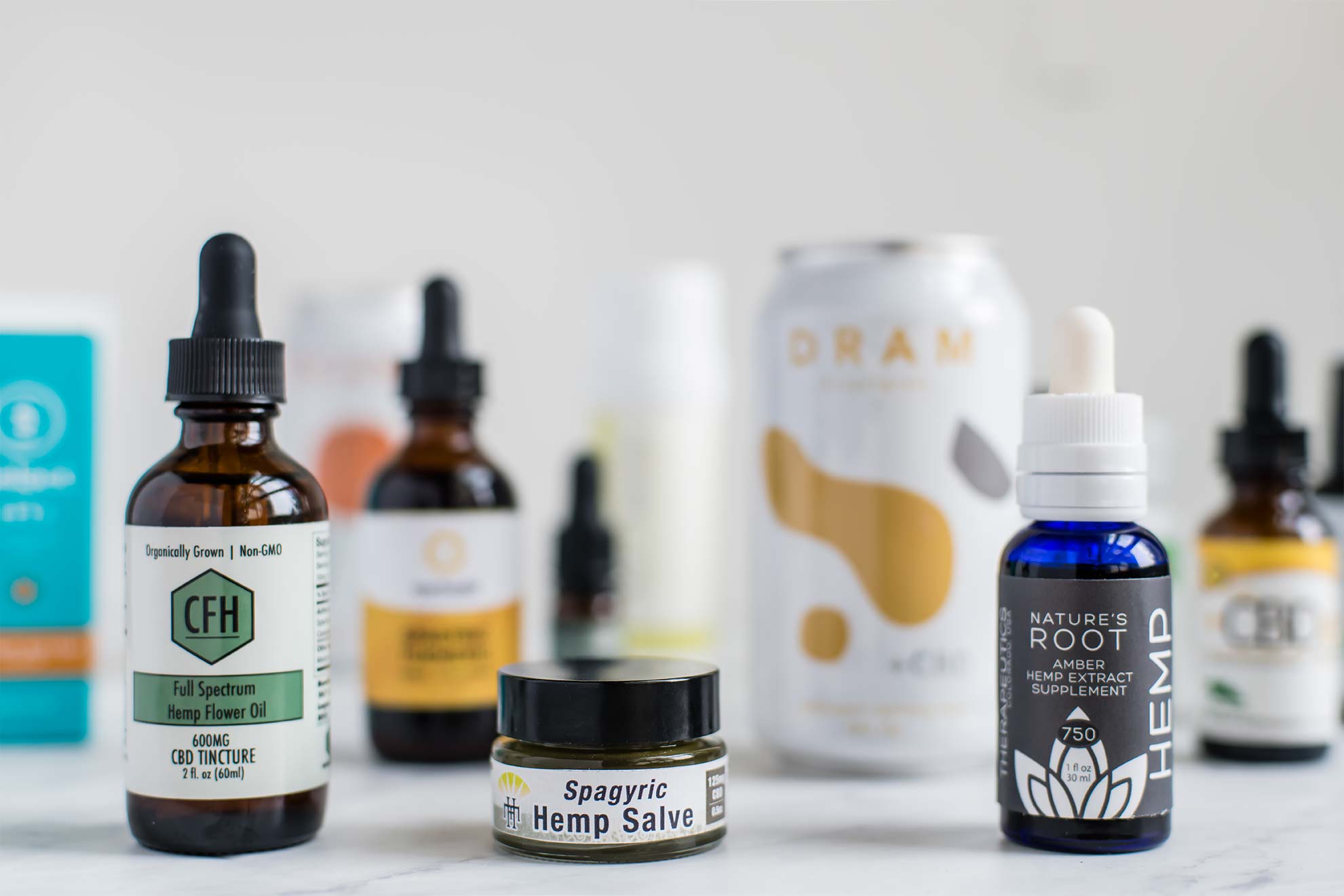
Some of the many infused products on the market today

In particular, sales of cannabinoid-infused beverages far outpaced other edibles categories last year, likely tied to the availability of these products in stores over the summer of 2020. BDSA’s research has shown that, in contrast with American consumers, the lower THC dosage for cannabis beverages is an advantage for Canadian consumers. Major alcohol brands like Molson Coors and Constellation Brands are investing heavily in this growing product area – though there the dosage limits also apply to how many products a consumer can buy at a time.

At the same time, the large quantity of unsold cannabis flower sitting in storage also poses an opportunity. While its quality as a smokeable product may have degraded, this biomass can be repurposed into extracts and edibles. Health Canada has also shown some responsiveness to industry needs when it shifted its stance to allow for Modified Atmosphere Packaging (MAP), which will help improve shelf life of products.

While strict regulatory obstacles remain, challenges will continue to outweigh opportunities and the illicit market will remain a strong player in the edibles market. As regulations become clearer and producers become more accustomed to navigating the legal space, barriers to entry into the regulated cannabis market and specifically the extracts and edibles market, will decrease. Meanwhile, those getting into the edibles market will do well to be wary of the challenges ahead.
Connecticut Legalizes Cannabis

Update: Governor Ned Lamont has signed S.B. 1201 into law, officially legalizing cannabis in the state of Connecticut


On June 16, 2021, the Connecticut House of Representatives voted to pass their version of S.B. 1201, a bill that legalizes adult use cannabis. Following the House’s approval of the changes, the bill made its way back to the Senate on June 17, where they approved all changes. It now heads to the Governor’s desk, where Gov. Ned Lamont is expected to sign it into law.

Connecticut Governor Ned Lamont

With Gov. Lamont’s signature, Connecticut will become the 19th state in the country to legalize adult use cannabis. The bill is slated to go into effect on July 1, just a couple of weeks away.

Come July 1, adults in Connecticut can legally possess up to 1.5 ounces of cannabis in public and up to five ounces at their home. The bill allows for adults to grow at home, just not until 2023 unless you are an existing patient registered in the medical program.

According to the Marijuana Policy Project (MPP), the bill will expunge cannabis records for low-level crimes and puts “the bulk of excise tax revenues into a Social Equity and Innovation Fund, which will be used to promote a diverse cannabis industry and reinvest in hard-hit communities.” Half of the cannabis business licenses issued will go to social equity applicants that can receive funding, workforce training and other types of assistance from the program.

Connecticut state flag

DeVaughn Ward, senior legislative counsel at MPP, says the bill includes provisions to repair harm done by the prohibition of cannabis. “The Connecticut Legislature’s commitment to legalizing cannabis through a justice-centered approach is commendable,” says Ward. “For decades, cannabis prohibition and criminalization has harmed some of the state’s most vulnerable communities. This bill not only ends this failed and unjust policy, but it also includes measures that will work to repair the harm that it has caused. This state will be a model for others to follow.”

The bill includes strong protections for employees, tenants and students by limiting discriminatory actions based on positive drug tests. It also dedicates 25% of tax revenue from cannabis to go toward mental health and substance use treatment.

Interestingly, the bill has a THC cap in it. Cannabis flower sold at dispensaries is capped at 30% THC content and concentrates (except for vape carts) are capped at 60% THC. To read more about the nuances of the legislation, the MPP has a helpful summary of the bill you can find here.

How Effective is Your Internal Auditing Program?

By David Vaillencourt
No Comments

The word “audit” evokes various emotions depending on your role in an organization and the context of the audit. While most are familiar with and loathe the IRS’s potential for a tax audit, the audits we are going to discuss today are (or should be) welcomed – proactive internal quality audits. A softer term that is also acceptable is “self-assessment.” These are independent assessments conducted to determine how effective an organization’s risk management, processes and general governance is. 

“How do you know where you’re going if you don’t know where you’ve been” – Maya Angelou

Internal quality audits are critical to ensuring the safety of products, workers, consumers and the environment. When planned and performed periodically, these audits provide credible, consistent and objective evidence to inform the organization of its risks, weaknesses and opportunities for improvement. Ask yourself the question: do your clients/vendors rely on you to produce reliable, consistent and safe products? Assuming the answer is yes, what confidence do you have, and where is the documented evidence to support it?

Compliance units within cannabis businesses are typically responsible for ensuring a business stays legally compliant with state and federal regulations. This level of minimum compliance is critical to prevent fines and ensure licenses are not revoked. However, compliance audits rarely include fundamental components that leave cannabis operators exposed to many unnecessary risks.

Internal quality audits are critical to ensuring the safety of products, workers, consumers and the environment.

As a producer of medical and adult-use products that are ingested, inhaled or consumed in other forms by our friends, family and neighbors, how can you be sure that these products are produced safely and consistently? Are you confident that the legal requirements mandated by your state cannabis control board are sufficient? Judging by the number of recalls and frustrations voiced by the industry regarding the myriad of regulations, I would bet the answer is no.

What questions do internal audits address? Some examples include:

  • Are you operating as management intends?
  • How effective is your system in meeting specified objectives? These objectives could include quality metrics of your products, on-time delivery rates and other client/customer satisfaction metrics.
  • Are there opportunities to improve?
  • Are you doing what you say you do (in your SOPs), and do you have the recorded evidence (records) to prove it?
  • Are you meeting the requirements of all applicable government regulations?

There are potential drawbacks to internal audits. For one, as impartiality is essential in internal audits, it may be challenging to identify an impartial internal auditor in a small operation. If your team always feels like it is in firefighting mode, it may feel like a luxury to take the time to pull members out of their day-to-day duties and disrupt ongoing operations for an audit. Some fear that as internal assessments are meant to be more thorough than external assessments, a laundry list of to-do items may be uncovered due to the audit. But, these self-assessments often uncover issues that have resulted in operational efficiencies in the first place. This resulting “laundry list” then affords a proactive tool to implement corrective actions in an organized manner that can prevent the recurrence of major issues, as well as prevent new issues. The benefits of internal audits outweigh the drawbacks; not to mention, conducting internal audits is required by nearly every globally-recognized program, both voluntary (e.g. ISO 9001 or ASTM Internationals’s Cannabis Certification Program) and government required programs such as 21 CFR 211 for Pharmaceuticals.

Internal Auditing is a catalyst for improving an organization’s effectiveness and efficiency by providing insight and recommendations based on analyses and assessments of data and business processes. Additional benefits of internal audits include giving your organization the means to:

  • Ensure compliance to the requirements of internal, international and industry standards as well as regulations and customer requirements
  • Determine the effectiveness of the implemented system in meeting specified objectives (quality, environmental, financial)
  • Explore opportunities for improvement
  • Meet statutory and regulatory requirements
  • Provide feedback to Top Management
  • Lower the cost of poor quality

Findings from all audits must be addressed. This is typically done in accordance with a CAPA (Corrective Action Preventive Action) program. To many unfamiliar with Quality Management Systems, this may be a new term. As of Jan 1, 2021, this is now a requirement for all cannabis licensed operators in Colorado. Many other states require a CAPA program or similar. Continuing education units (CEUs) are available through ASTM International’s CAPA training program, which was developed specifically for the cannabis industry.

Examples of common audit findings that require CAPAs include:

  • Calibration – Production and test equipment must be calibrated to ensure they provide accurate and repeatable results.
  • Document and record control – Documents and records need to be readily accessible but protected from unintended use.
  • Supplier management – Most standards have various requirements for supplier management that may include auditing suppliers, monitoring supplier performance, only using suppliers certified to specific standards, etc.
  • Internal audits – Believe it or not, since internal audits are required by many programs, it’s not uncommon to have a finding related to internal audits! Findings from an internal audit can include not conducting audits on schedule, not addressing audit findings or not having a properly qualified internal auditor. Are you looking for more guidance? Last year, members of ASTM International’s D37 Committee on Cannabis approved a Standard Guide for Cannabis and Hemp Operation Compliance Audits, ASTM D8308-21.

If you are still on the fence about the value of an internal audit, given the option of an inspector uncovering a non-conformance or your own team discovering and then correcting it, which would you prefer? With fines easily exceeding $100,000 by many cannabis enforcement units, the answer should be clear. Internal audits are a valuable tool that should not be feared.

Flower-Side Chats Part 6: A Q&A with Fabian Monaco, CEO of Gage Cannabis

By Aaron Green
No Comments

In this “Flower-Side Chats” series of articles, Green interviews integrated cannabis companies and flower brands that are bringing unique business models to the industry. Particular attention is focused on how these businesses integrate innovative practices in order to navigate a rapidly changing landscape of regulatory, supply chain and consumer demand.

The Michigan cannabis market is making pace with big time cannabis players like California (#1) and Colorado (#2). For the first quarter of 2021, combined cannabis sales in Michigan were nearly $360 million. At that pace, Michigan could see combined sales of $1.4 billion — well outpacing 2020 sales of $984 million.

Gage is the exclusive cultivator and retailer of world-leading cannabis brands including Cookies, Lemonnade, Runtz, Grandiflora, SLANG Worldwide, OG Raskal, and its own proprietary Gage brand portfolio in Michigan. The company recently secured a $50M investment in an oversubscribed round which included a $20M investment from JW Asset Management.

We spoke with Fabian Monaco, CEO of Gage Cannabis. Fabian started Gage in 2017 after meeting his operating partners in Michigan. Prior to Gage, Fabian worked as an investment banker racking up a number of firsts in cannabis industry financing and M&A transactions.

Aaron Green: Tell me how you got involved in the cannabis industry.

Fabian Monaco: My background is in investment banking – specifically 10 years of capital market experience. I was fortunate enough to be part of the initial team that brought Tweed, now Canopy Growth public. In fact, I worked on a lot of firsts in the industry: the first acquisition, the first $100 million financing, the first IPO in the space. Shortly after that, I went to XIB Financial, which co-founded Canopy Rivers with Canopy Growth. I was working on that when I encountered these two phenomenal operators. At the time, I had visited over 100 of these cultivation facilities and these were some of the best operators in the business. So that led me to start Gage in 2017.

Green: Where is Gage currently operating?

Fabian Monaco, CEO of Gage Cannabis

Monaco: In the U.S., we are purely operating in Michigan. We do have a licensing agreement with a small producer in Canada, so you will see the brand there.

Green: Tell me about your choice to settle the company in Michigan initially?

Monaco: If you look at Michigan as a historical cannabis market, it was the second largest cannabis market from a medical card holder standpoint for nearly a decade, only behind California. This was probably the case until 2019, where they went to adult use. So, for us, we knew this medical base was going to be a great platform to an outsized adult-use market. And already we see that April was $154 million in sales, adding up to over a $1.8 billion dollar run rate. That’s the third highest run rate in the country, only behind California and Colorado.

Green: What is it that makes Michigan different? You talked about medical cannabis already. Is there anything else about the demographics in Michigan or the consumer base that makes Michigan special in that sense?

Monaco: In Michigan, over 70% of the population is old enough to consume. So, when you take a look at how much of the population is 21-years-old plus, relative to other markets, the total addressable market in Michigan is just huge. Then when you take a look at their consumption habits, especially when it comes to flower, Michigan is consuming some of the highest amounts on a per capita basis. Those two stats set up a scenario where we foresaw the potential of the market. To be honest, the market has exceeded our expectations. We didn’t think it would be this strong this quickly. Right now, the state is looking to be a $3 billion market by 2024 – and it could easily surpass that.

Green: Any plans for expansion beyond Michigan?

Monaco: We’ve been to eight or so different states in the past 60 or 75 days really trying to educate ourselves on the licensing structure, the markets there and the key players in those respective markets. What are some of the costs, in terms of acquisitions? We really want to branch out the Gage brand into other states across the US. The thing is, we believe in the model that Trulieve deployed. They really focus on being the number one player in a very, very big market. For instance, Trulieve is obviously one of the top players in Florida. We’re trying to mimic that strategy.

Trulieve is a dominant market force in Florida

Once we have that deep market penetration, that market share, then we’ll start to get into other states. But for now, why would you want to go and rush out to another state when you’re already in the third largest market in the country?

Green: Are there any criteria you look for in a potential expansion state?

Monaco: We look at consumption habits. We want states with similar demographics to Michigan. Close proximity states also allows us to quickly go from one state to the other without having to take a multi-hour flight to get there. States we’re considering are Northeast and Midwest states, like Illinois, Pennsylvania, Ohio, New Jersey, Massachusetts and Maryland.

Green: What kind of consumer trends are you seeing in Michigan as it relates to products?

Monaco: Flower continues to dominate. In a market like Michigan, we have some of the top flower consumers in the country on a per capita basis. We specialize in flower and flower only, so this created a perfect scenario where we are able to ramp up our brand quite quickly, from a flower standpoint.

Now that we have that brand equity, that brand power, we are going to potentially delve into other categories, including extract-based products, such as vape carts and concentrates. You hear talk about these new beverages, but we’re not seeing that take off in this market as much as people think it would. Flower still remains at the top and that’s something we highly anticipate going after for quite some time.

Green: Can you tell me about your vertical integration strategy?

Monaco: We’re one of the larger retail portfolios in Michigan right now. We have 13 locations. Nine are operational. So, we’re really in a great spot overall in terms of how big of a platform we do have – one of the larger ones – and, frankly, in one of the larger markets in the country.

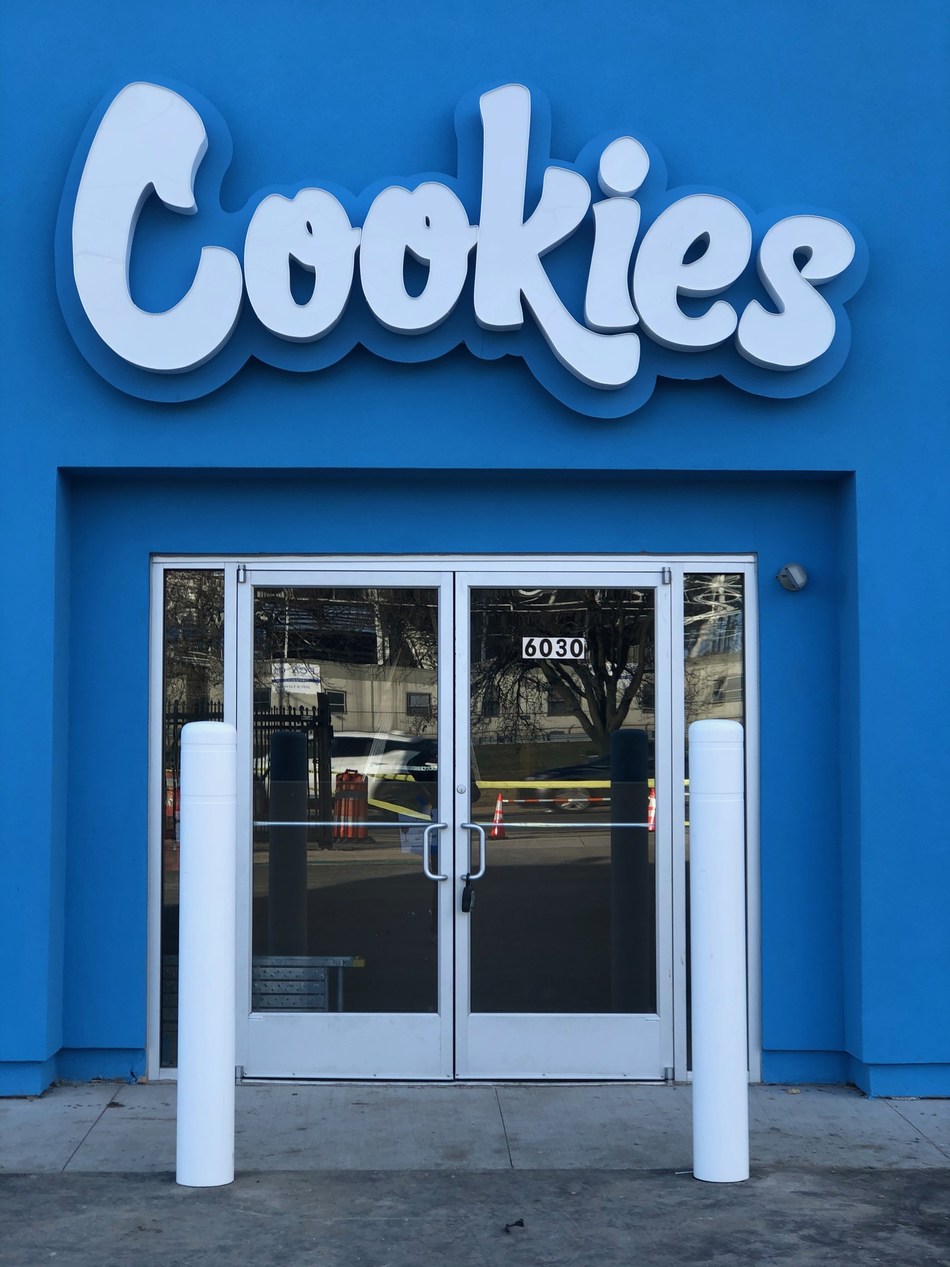
The Cookies flagship dispensary in Detroit, Michigan

We actually have a little bit of a unique scenario on the cultivation side of things. We have our own three cultivation assets that are going to be producing, on average, about 1,000 pounds of product over the next couple of months as they fully ramp up. We’ve actually contracted out a lot of our cultivation. Cultivation is time consuming, and it’s also very, very costly to build out. Luckily for us, we’re a really well-established and strong brand. We had the opportunity to contract out our growing. So, we have 10 different contract growth partners. These are phenomenal cultivators, again, some of the best in the state. They grow Gage and Cookies branded product for us. We have a great breakdown from a financial standpoint. We share the retail revenue with them on a 50/50 basis. They pay a little bit too, for packaging and testing. So, basically for $0 we’re getting product on the shelf where we’re achieving 50% plus gross margins. It’s a phenomenal setup for us on the cultivation side where we went from two cultivation assets in the latter half of last year to now eight different cultivation assets, moving to 13 by the end of the year.

On the processing side, we’re just actually finishing our processing lab. We should have extract-based products launched in Q3. We’re really excited to have our own line of extract-based products. We plan to focus on vape carts to start – a very popular category in Michigan on the retail side of things.

Green: Are those cultivations all indoor?

Monaco: Yes, we’re big proponents of indoor flower. It allows us to control the quality of our flavors and consistency in our strains when we grow indoors. From our consumers, there is a very strong demand for indoor grown high-premium, high-quality products.

Green: What sets Gage apart from other competitors in Michigan?

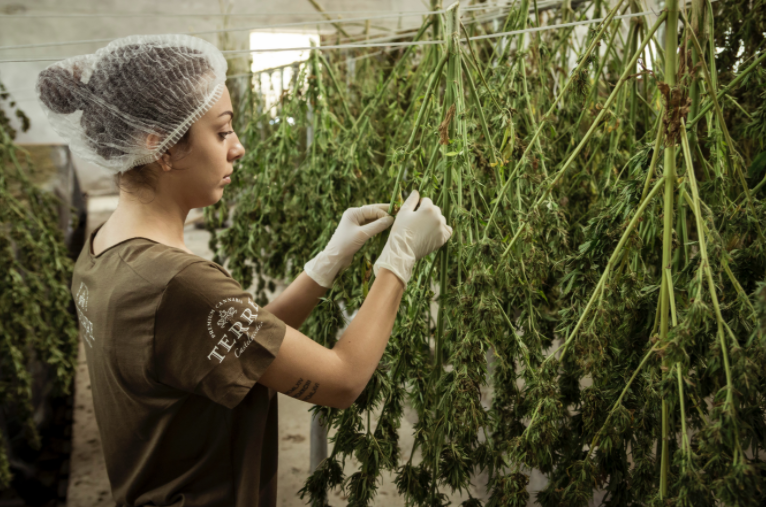
Monaco: I think focus. We just focused on our flower. We focus on our post-production process. We hang dry everything, we hand trim everything, and we hand package everything. That’s a little bit more time consuming. It’s a little more costly. But all that effort shows in the end product which is key.

A lot of people think you can grow great quality product, you cut it down, you dry it and put it in the pack and it’s going to be great. You really need a strong attention to detail, especially in a big consuming market like Michigan, because again, they are a refined consumer. They’re looking for the best. They’ve already been consuming some of the best quality products in the country for many years now. So for us, we put a painstaking process in place for flower production, not only from the growing standpoint, but also through the end of that post production process.

Ancillary to our cultivation process is also consistently providing new varieties of flavors on the flower side of things to the consumers. When you look at the successful brands in California, what makes them special is that they’re consistently pheno hunting, coming out with new flavors. This is similar to the wine industry where the best wineries come out with a new kind of grape or mix and consumers get excited, they rush out and buy half a dozen bottles or a dozen bottles.

It’s a very similar scenario in the cannabis industry. I hate when people say that cannabis is a commoditized industry. It’s so far from the truth. You look at brands like us or Cookies, Jungle Boyz and you can see their constant innovation, their constant drive. They are always bringing something new for the consumers to try. That’s what really sets apart the best brands.

Green: What’s got your attention in the cannabis industry? What are you interested in learning more about?

Monaco: I’m always intrigued with new ways of consuming. Across the U.S. and well-developed markets like California and Colorado, you see all these interesting new ways to consume the product. You’ve got patches, sublingual strips, etc. There are so many unique ways. I am currently seeing how they play out. Are they fads? Do people get excited about them initially, and then go back to their vape carts, pens and typically dried flower pre-rolls? I’m always trying to educate myself to see what’s on the market. What’s new? Who has a new drink? How does it hit? Are people excited about it?

Also, I am constantly learning about new brands that come out. There are so many new small brands that don’t necessarily have the scale or the capital to really expand, but are producing some of the best products in the country in a cool, unique form of packaging, etc..

Green: Alright, great. That concludes the interview!

Monaco: Thanks, Aaron.

Amazon Now Backs Federal Legalization

By Cannabis Industry Journal Staff
No Comments

Amazon’s Senior Vice President of worldwide operations, Dave Clark, wrote a blog post yesterday that is making headlines in the cannabis community. Clark’s blog announced a couple of major changes coming to the company’s operations.

Clark first touted changes to their “Time off Task” policy, a way to measure employee’s time spent logged in to company software. The changes basically boil down to averaging over a longer period of time to better gauge how employees spend their time.

Dave Clark, Senior Vice President of Worldwide Operations & Worldwide Consumer CEO

The second company policy change is why the blog post made headlines in the cannabis community. Clark says in the blog that Amazon will adjust its drug testing policy and no longer test for cannabis use in their drug screening program. “We will no longer include marijuana in our comprehensive drug screening program for any positions not regulated by the Department of Transportation, and will instead treat it the same as alcohol use,” says Clark.

The new drug testing policy change is big news for such a large and influential employer to make the shift in the United States, where surely other companies will follow. But even more influential is their backing of federal legalization. “And because we know that this issue is bigger than Amazon, our public policy team will be actively supporting The Marijuana Opportunity Reinvestment and Expungement Act of 2021 (MORE Act)—federal legislation that would legalize marijuana at the federal level, expunge criminal records, and invest in impacted communities,” says Clark. “We hope that other employers will join us, and that policymakers will act swiftly to pass this law.”

Given Amazon’s extremely large influence in American business and policy, the company backing federal legalization is sure to lead other large companies down a similar path. The show of support for the MORE Act represents the growing normalization of cannabis use and brings us another step closer to federal legalization.

The Importance of Smart Cannabis Packaging

By John Shearman
No Comments

Regardless of their size, all consumer package brands spend a significant amount of money and resources on packaging to attract consumers’ attention. We are all very visually oriented and gravitate to items that pique our interests. Cannabis brands are no exception when it comes to branding their products. Packaging plays a big part in carrying their brand forward and standing out on the dispensary shelves. When I was in Las Vegas at a CBD tradeshow in early 2020, I visited a dispensary, and it was beautiful. I remember commenting to a colleague that was with me how spectacular the product packaging was in the glass cases. One had unique artwork on each different product they offered, and it was indeed art. Yes, I did purchase this one that pulled me in.

The cannabis industry in the United States presents a challenge to brands because there is no overall federal guidance for packaging. Each state is controlling the cannabis legislation and, with it, the packaging guidelines. So multi-state operators (MSOs) have to manage each state as a separate entity and abide by the packaging regulations, which is not very efficient and adds a cost burden. As the industry matures and becomes federally legal across the country, packaging regulations will be easier to implement.

Louis Vuitton bags are one of the many goods that are commonly counterfeited
Image: UK Home Office, Flickr

Let’s take a look at counterfeit products across all product categories. There is a significant global problem with counterfeits, as articulated by the below statistics.

The total global trade in fakes is estimated at around $4.5 trillion. 

Fake luxury merchandise accounts for 60% to 70% of that amount, ahead of pharmaceuticals, entertainment products and representing perhaps a quarter of the estimated $1.2 trillion total trade in luxury goods.

Digital plays a big role in this and perhaps 40% of the sales in luxury fakes take place online.

Customs and Border Patrol confiscated $1.3 billion worth of counterfeit goods in the U.S. for Fiscal Year 2020. (The value of 2020’s seizures are actually down compared to the $1.5 billion worth of counterfeit goods seized by CBP in 2019).

Unfortunately, the figures above are concerning, and the cannabis industry will face the same counterfeit issues that will add to these stats in the future. What can be done to help fight the problem and alleviate the pain for cannabis brands? Smart technology.

The trend towards “smart technology” varies by sector, but the underlying concept involves building levels of technology systems designed to impede or limit the highly sophisticated counterfeiter from replicating or replacing products. These levels typically include a forensic level control on the product, digital systems to track the material and customer facing systems to articulate the underlying value to the consumer.

Building these levels of smart technology into cannabis-products and packaging allows consumers to authenticate real versus fake, and in the case often in cannabis, legal versus illegal. Molecular technology is one forensic level of control option that can be used as a unique identifier for product authentication. Each brand would get its unique identifier to apply to the raw materials that make up its product, such as oil or an isolate. Then a sample can be tested at the origin point and subsequent nodes in the supply chain using a remote testing device. All the digital data is captured in a secure cloud database for traceability and transparency to the end consumer, to show them the authenticity of the product they are consuming. The same molecular technology can be applied to the ink or varnish for packaging and labels. A great application to help combat counterfeits and product diversion across the globe.

Counterfeiters can create near duplicate versions of the original

Another engaging platform is called StrainSecure by TruTrace Technologies. Their SAAS platform allows cannabis manufacturers to track all their product batches and SKUs tied to a blockchain. It also facilitates the interaction between the manufacturer and third-party testing facilities to conduct product testing and reporting. The data is captured within the platform, and with easy access dashboard views, it provides the insights to authenticate products at any time.

A company out of Australia called Laava is producing a product called Smart Fingerprints. It’s the next evolution of QR codes. The Smart Fingerprints can be applied to each package, providing a unique identifier that consumers can read with a mobile phone application. The consumer is provided with information concerning the product’s authenticity and any additional information the brand wants to share with the user. Smart Fingerprints are a great example of customer engagement at the point of activity that is secure.

The above three solutions show the availability of advanced technologies the cannabis industry can implement on its packaging and products to ensure authentic and safe products are sold to consumers. It provides consumers with vital information and insights about products so they can make informed buying decisions. There is no one silver bullet solution that provides all the answers. As with every high value product, counterfeiters will work to create near duplicate versions of the original until it becomes unsustainable to do so. It will take a technology ecosystem to seamlessly connect and provide actuate and timely information between supply chain partners and ultimately the end consumer. As the US works to separate the legal from illegal production for both the adult use and medical supply of cannabis, the looming challenge will be on protecting and communicating authenticity, packaging will be the first step in this.

Growing the Seed of Sale: Integrating Security with Business Opportunity

By Ryan Schonfeld
No Comments

Anyone in the cannabis industry is well aware that theft of crops can economically devastate a grower. Security is critical, and thankfully, growers and dispensaries have many tools available to protect their investment. There is simply no excuse for not having a solid security posture to keep your business in compliance, from public-private partnerships to advanced security tools – in fact, it’s required in most jurisdictions.

In 2020, nationwide cannabis sales increased 67%, and support for legal marijuana reached an all-time high of 68%. New Frontier Data found that U.S. legal cannabis market is projected to double to $41.5 billion by 2025.

The industry’s advancement impacts numerous areas such as job and tax revenue creation and providing a wide variety of valuable opportunities. For cannabis facilities to keep up with the market expansion and experience success, they must face two significant challenges: achieving adequate security and efficient business operations. Though both can be seen as separate concerns, growers and producers must merge processes and solutions to tackle the issue as a whole.

Dispensaries are prime targets for burglary. Defending your storefront requires a comprehensive security plan

Along with rapid growth, dispensaries face traditional security risks, such as workplace violence and retail theft, while cybersecurity risks have also become more prevalent. These potential issues make it clear that the stakes are high, and as the potential impact on a business rises, the need for real-time, predictive response increases. Insider threats are another issue plaguing the industry when you look at the rate of theft, diversion and burglary that is attributable to employees.

The cannabis market is complex: it’s expanding rapidly, has to meet essential regulatory requirements and faces high-security risks. Therefore, security needs to be looked at holistically since it can be challenging to determine where a potential threat may originate.

With security top of mind, it is critical to move away from responsive behaviors and seek ways to manage security in a manner that gets ahead of threats, prevent them before they happen and respond to them in real-time. But does a grower or retailer have the time and expertise to manage all this while keeping an eye on how security affects the business?

Remote Security Operations

The ability to comply with government regulations and protect a valuable cannabis crop at all stages of its journey from seed to sale makes security systems a mission-critical asset for cannabis growers. Security operations centers create a safer and more productive environment and provide state-of-the-art tools to protect employees, retail locations and grow facilities. But some businesses in the cannabis market may not have the resources or space to have their centralized security operations, leading them to piece-meal security together or do the best with what they can afford at the time. Running these facilities can also be prohibitively expensive.

Security operations centers create a safer and more productive environment and provide state-of-the-art tools to protect employees, retail locations and grow facilities.

But new options take the process of security off the table. The business can focus on the growth of its core functions. Remote security operations services allow companies to take advantage of advanced security services typically only possible in larger enterprise environments. These services are offered on a subscription basis, delivered through the cloud, and are entirely customizable to detect risks unique to your business operations while saving each company significant expense.

Centralized security operations centers leverage intelligent tools, standard operating procedures and proven analytic methods to provide cannabis facilities with the information and guidance necessary to mitigate issues like retail or grow theft before they can have a significant impact.

The integrated, holistic response center staffed by experienced operators and security experts delivers a comprehensive security and regulatory compliance method. This approach is designed to provide complete data about what is happening across a cannabis business, from seed to sale, and how individual events can impact the company as a whole. As a result, stakeholders get the security intelligence they need, without the high overhead, personnel investments and complex daily management.

For those businesses in the cannabis market looking to supplement their security operations with other workforce but may not have the budget or infrastructure to do so, remote security operations services are something you should consider. With the experts handling all the heavy lifting, leaders can focus on growth. And, right now, in the cannabis industry, the sky is the limit in terms of opportunity.

CBD Blending, Transportation & Supply – How Sustainable Manufacturing Can Improve Your Cost-Efficiency at all Stages

By Rachel Morgan
No Comments

Environmentally conscious manufacturing has never been more important; for the survival of both the planet and your business. The internet makes CBD product comparisons quick and efficient, so consumers can interrogate every aspect of your product and processes before deciding to make a purchase. Sustainability credentials are now a primary decision making factor for your customers.

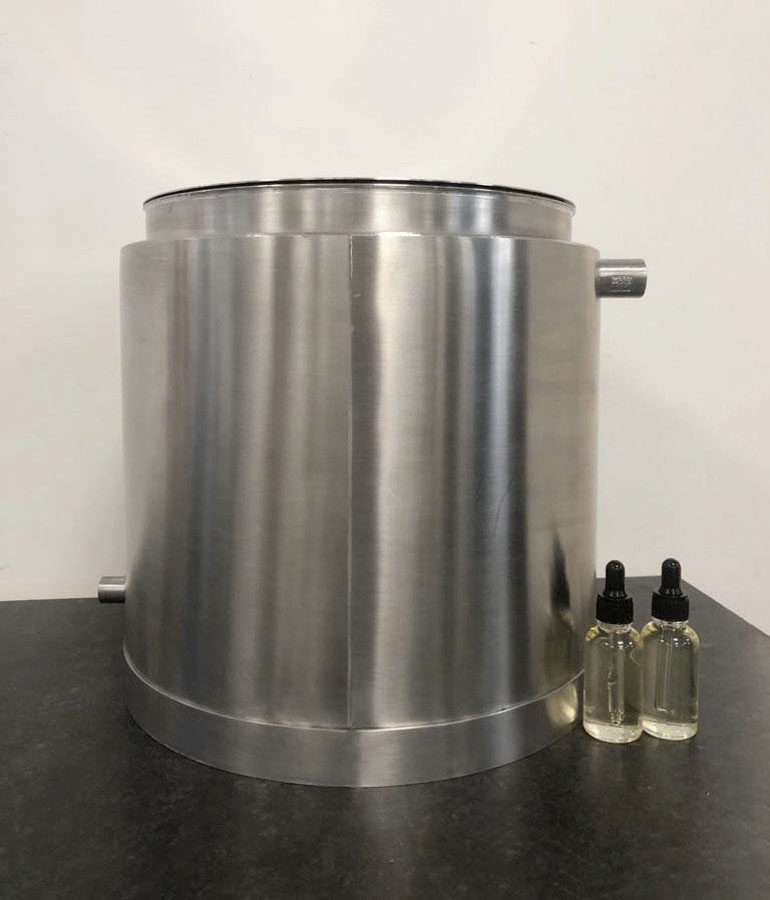
Water jacketed vessels are a cost-effective way of achieving more consistent blends than is possible manually

For business of all sizes, improving resource use and efficiency is a great place to start. This will reduce waste and improve your environmental impact, and has the added benefit of improving your return on investment!

I always recommend investing in stainless steel equipment for manufacturing and distributing CBD oils. Stainless steel is one of the most environmentally efficient raw materials, because of its durability and ability to be recycled. Vessels last an extremely long time, and even once their service life is over, they should never enter the waste stream. Many of our US customers transport their CBD products around the world in stainless steel vessels, which can then either be shipped back for re-use, or re-used at the recipient site.

In terms of finding your ideal equipment supplier, those who have won awards for their environmental initiatives are the cream of the crop; they can be a real asset to your business and will often collaborate on sustainability-themed social content, which is really valuable to get in front of your customers.

Once you’ve investigated the credentials of suitable suppliers, how do you make sure their blending equipment will perfectly meet your needs?

Here are my recommended four points for consideration:

  1. Adding Toggle Clamps keeps your products airtight and reduces the chance of contamination in transit

    Vessel Capacity: Vessel capacity must be considered in two ways; maximum and minimum working capacity. Standard vessels have their capacity listed as ‘brim full’ – suppliers tell you the total overall volume of space in the vessel. However, maximum capacity must allow for 10-20% free space below ‘brim full’, so that if product is being mixed and stirred, there is no overspill. For example; to blend 75L batches of CBD oil, it’s generally recommended to purchase a 100L mixing vessel.

  2. Vessel Bottom Shape: Standard vessels have flat bottoms, which makes it difficult to drain them to completely empty. An experienced supplier such as Pharma Hygiene Products has the capability to modify standard vessels, to include a sloped bottom at 3 degrees, which reduces leftover product pooling when draining your oils. Vessels can also be custom-made with a cone or dish shaped bottom, whereby a valve can be positioned in the centre of the base to allow full draining, to reduce waste and increase profitability.
  3. Stainless Steel Grade: Stainless steel blending vessels for CBD oils are generally offered in 304 or 316L pharmaceutical-grade material. A simple description of the difference is that 316L grade contains an extra 2% molybdenum, for additional corrosion-resistance. Increased regional and interna­tional legislation concerning CBD products has come hand-in-hand with tighter interrogation of hygiene practices. Contaminant-free materials such as stainless steel are ideal to ensure international pharma-quality compliance for your business’ blending processes. Critically, at Pharma Hygiene Products a comprehensive range of compliance certification is available to confirm the grade of material, to prove surface smoothness, and to guarantee that no cross-contamination from BSE or CJD diseases occurs.

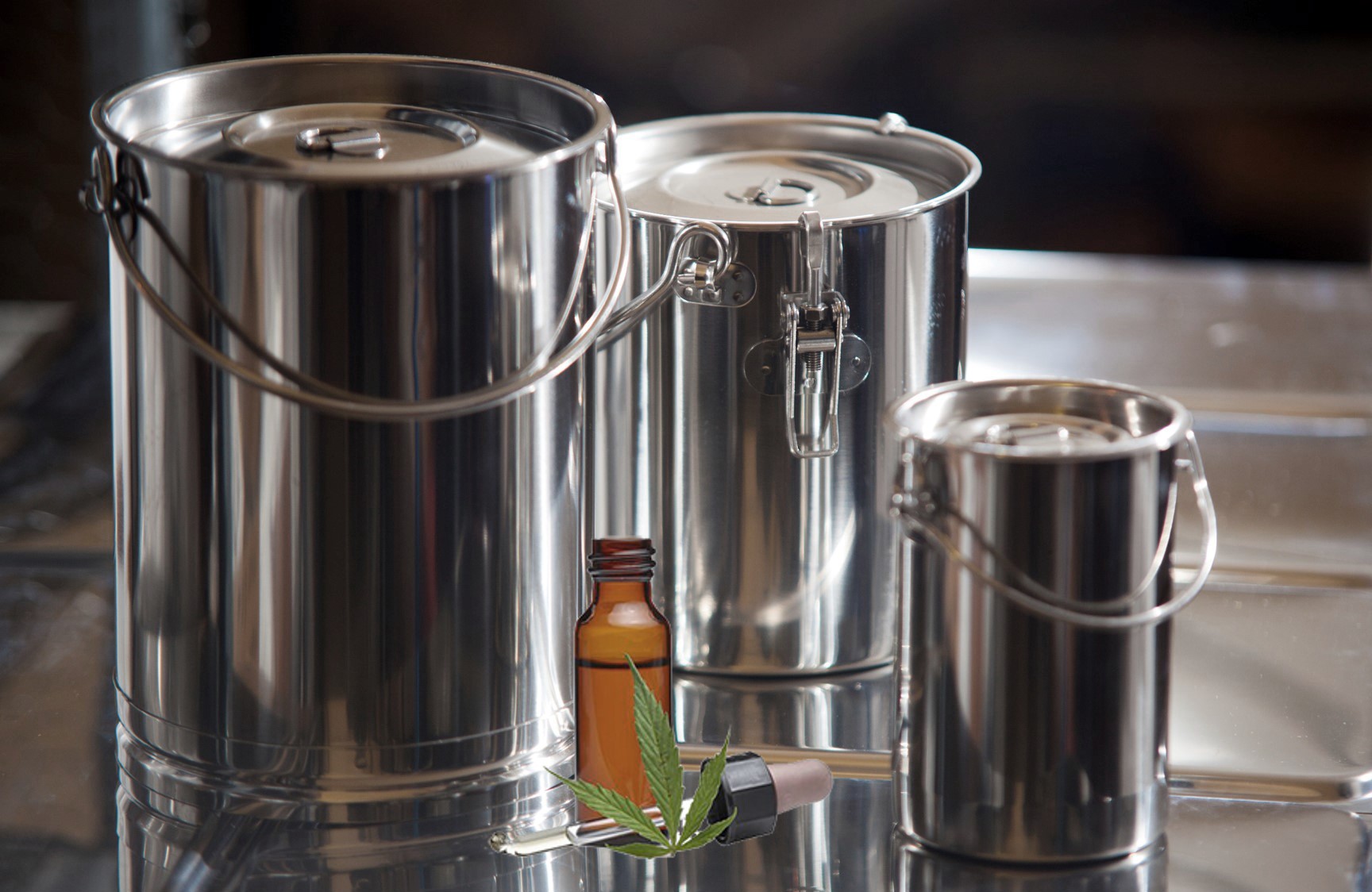
    Hygienic stainless steel CBD storage & transportation vessels
  4. Lastly, don’t forget to let your supplier know in advance if you have any special requirements for your product or vessel. Some common examples include:
  • Flammable product components – Requiring ATEX certified blending equipment.
  • Temperature control – Adding a water jacket to your vessel is a simple solution for heating, cooling or maintaining the temperature of your product as it blends.
  • Toggles and seals – For airtight, contaminant-free transportation.
  • Viewing holes – For easy visual inspection whilst blending.

Your equipment supplier can be a real financial and reputational asset, so be sure to do your homework before making an investment!

The New Delta 8 THC Market: A Q&A with the Founders of DeltaVera

By Cannabis Industry Journal Staff
No Comments

Delta 8 THC (delta-8-tetrahydrocannabinol) sprung onto the scene late last year in a big way. While similar to the much more widely-known delta-9-tetrahydrocannabinol that produces a lot of the psychoactive effects associated with ingesting cannabis, delta 8 THC can be derived from hemp with less than 0.3% delta 9 THC. Given the legality of hemp-derived products following the 2018 Farm Bill, delta 8 THC can be produced in some states where delta 9 THC still remains illegal.

While delta 8 is considerably different in its psychoactive effects from its cousin, it does overlap in some ways. It can still produce some more manageable, less “heady” versions of delta 9’s effects like euphoria and relief found in the many medical applications of cannabis. DeltaVera, a company that launched less than six months ago, aims to share that more manageable THC experience with the masses.

The sharp rise of the delta 8 market means that DeltaVera is poised for growth. With distribution contracts inked, exciting partnerships in the works and a large surge in consumer demand, the founders of DeltaVera are at the ready to capitalize on this lesser-known molecule and bring it to the forefront of the nascent hemp industry. Starting out as a small family business, Sam and Craig Andrus launched DeltaVera with their third founder, PK Isacs.

We sat down with Sam Andrus and PK Isacs, two of the founders of DeltaVera, an award-winning brand, to ask them about their plans for expanding, how they became entrepreneurs and why they think delta 8 is the next big thing in cannabis.

Cannabis Industry Journal: Tell me about your company. How did you get started in the cannabis space?

Sam Andrus, cofounder of DeltaVera

Sam Andrus: I had an early start in the Delta 8 THC industry on the sales side. We knew we wanted to get into the market, but observed a number of aspects in the space that needed to be addressed: the most important being quality control, transparency and brand trust. With this as a backdrop we launched DeltaVera. Highly curated, approachable, transparent and value-oriented with a strong focus on reliability and trust. The DeltaVera family is made up of three operating managers and the sales team. We are three founders with complementary skill sets: Craig, who has domain expertise in finance, governance and startups, PK who has experience in business and marketing and my sales experience round out the management team.

We have yet to solicit outside capital and have funded ourselves internally as we create our brand and refine our product offering. That said, we are seeing numerous opportunities in strategic partnerships and expansion, which will require additional capital. And we are excited to start this expansion process.

CIJ: What makes the Delta 8 space so remarkable? Why are your SKUs primarily formulated with Delta 8?

Sam Andrus & PK Isacs: Delta 8 THC is an alternative/complement to delta 9 THC, CBD and other cannabinoids. Its status as non-federally scheduled and its less potent psychoactive effects make it appealing in its own right. Delta 8 THC can help with healthier sleep patterns and with pain management in a way that CBD can’t, without a strong “head high” that many of our customers like to avoid. Additionally, it’s shorter lived and doesn’t give you any negative residual effects, which makes it beneficial for people on tighter schedules. These factors make it easier for us to approach markets that are inaccessible to both delta 9 THC and CBD, such as older demographics. In a world where delta 9 is legal, there will still be a place for delta 8.

PK Isacs, cofounder of DeltaVera

While we are very proud of our suite of smokable products, we are currently focusing our efforts on edibles: our Delta Discs are our mainstay, though we are expanding our product line to include nano-emulsion products such as liquid shots and nano gummies. They strongly appeal to our target demographics; additionally, the edible market is growing very quickly in states that allow the sale of hemp-derived consumables.

CIJ: Continuing on the delta 8 front – right now it is considered a cannabinoid legal for interstate commerce, much like CBD, correct? Do you think that will change? 

Sam & PK: That is currently the case. Delta 8 THC is newer, and as such, it has even more ambiguity in regards to its legal future. But what’s most exciting (and our most challenging task right now), is informing consumers about the benefits of delta 8. We are one of a few companies solely focused on the consumption of delta 8, because of its similar benefits to delta 9 and CBD – our products are the perfect happy medium: a high with less psychoactive effects and all the health benefits of both, making it a desirable alternative to all consumers.

In addition, we are looking at some combinations of delta 8/CBDA, delta 8/CBN, delta 8/THCV and are very excited to begin test marketing these combinations. These proprietary blends of minor/major cannabinoids can cater to a niche target demographic as they can be curated to have very specific and unique effects when combined in the right quantities with the right delivery system. They will also be able to serve a larger customer base as these cannabinoids can all be derived from hemp.

CIJ: How do you think the FDA would regulate your product? Do you welcome federal oversight?

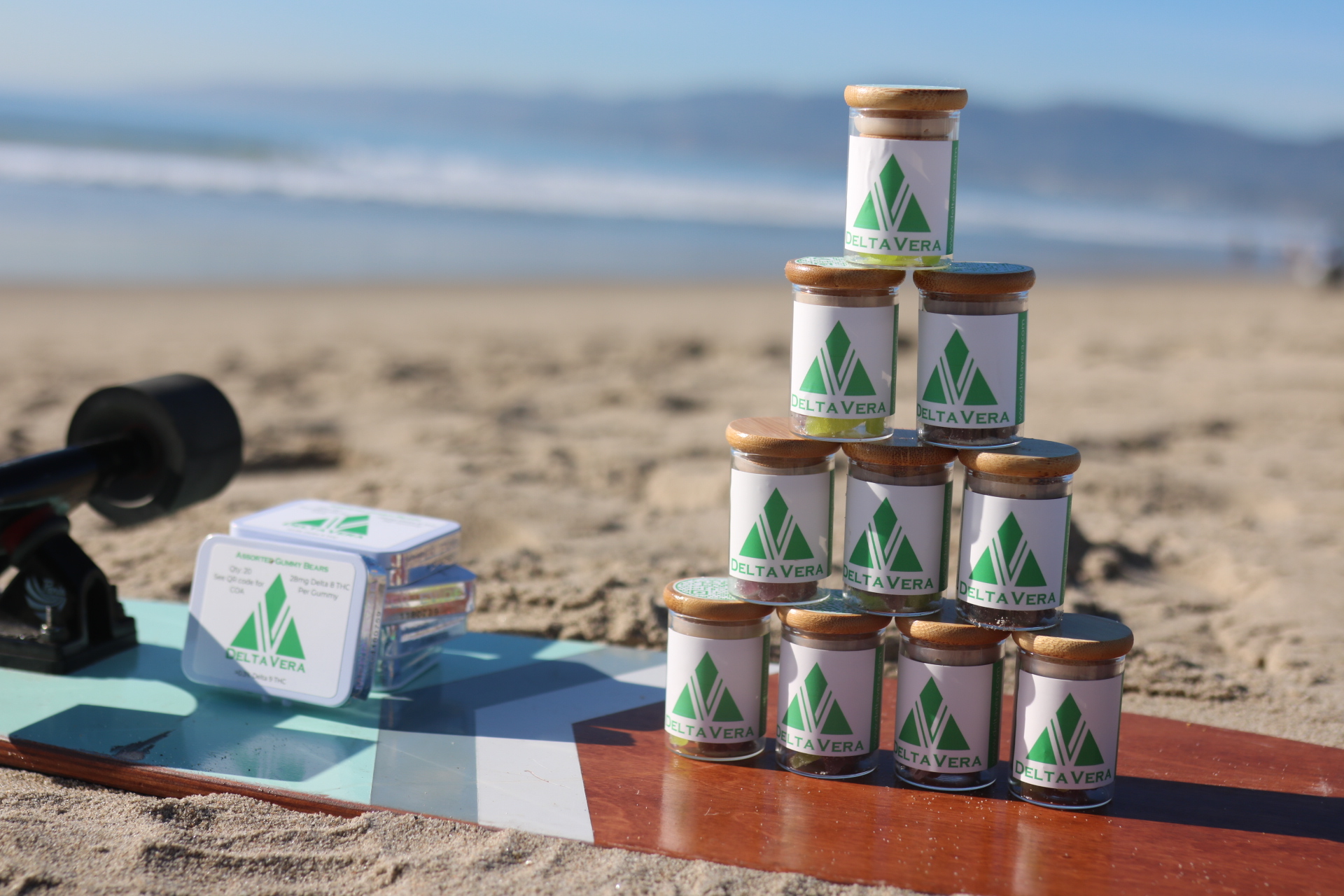
DeltaVera gummy products

Sam & PK: Regardless of whether or not we are regulated we are committed to a high level of transparency and trust. As noted in unregulated markets, like the supplement market, you don’t always know what you are getting in terms of purity and potency. We are changing that paradigm by adding unique QR codes to our sustainable containers which reference COAs [certificates of analyses] specific to the contents of the case. A lot of the space is naturally trying to avoid that kind of regulatory interference, but we are currently doing our best to self-regulate and make sure that our consumers are fully informed about what they’re receiving.

We will be the first to say that there aren’t as many laws governing delta 8 THC as there could be, and that’s why we’ve spent so much time and money on self-regulation. All of our products have very clear nutritional information in addition to test results down to one hundredth of one percent. As for what category these products should fall under: we have a wide range of products, and each one has its place under a different umbrella of regulation. We hope that the federal government will take advantage of the vast array of studies that have been conducted on delta 8 THC since it was first extracted in 1942 to step up to this product that is, in our experience, helping so many people.

CIJ: Tell me about how your business has grown so far.

Sam & PK: When we sell to a retailer, we try to provide them with as much material as possible on what delta 8 THC is and what differentiates DeltaVera’s products. Still, we’ve had some difficulty in places with limited delta 8 THC exposure. That being said, when someone tries our product, there is a high likelihood that they become a repeat customer (and they tell their friends). Given our newness to the market (Our brand launched in January 2021) initial indications are – we have a good rate of repeat orders, and we’ve heard the same from our brick-and-mortar partners.

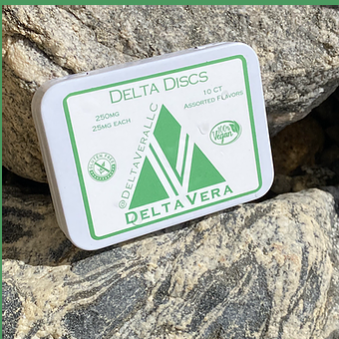
The DeltaVera Delta Discs

Our distribution network has grown tremendously; we’ve taken a three-pronged approach to distribution: partnerships with like-minded companies in compatible spaces, an e-commerce market on our website, and a commission-based sales structure to reach brick-and-mortar establishments. To date, most of our distribution takes place in the latter two spaces, due to the added time and commitment involved in forming partnerships. As a company we are taking a more creative approach on how we present our product and alternative ways to consume it. We have some exciting collaborations in the works; follow us on social media to stay up to date with everything on the horizon. We are very enthusiastic about our partnerships however, with our first collaboration with WaxNax, a Denver-based company revolutionizing the cannabis dabbing experience, hitting the shelves this week.

CIJ: What is your marketing plan?

Sam & PK: We are working on building a social media presence. Natalie, who is leading the charge on social media, recommended we take an organic approach to build our base. We want to avoid falling into the “paid ad”, “spam” vibe as long as we can. We are currently focused on building a community through delta 8. Our mission is making DeltaVera a brand for all lifestyles, athletes, creatives, travelers or business professionals. We’re confident in our product, and have faith that it can speak for itself.

CIJ: How do you ensure quality in your products?

Sam & PK: Our products are of guaranteed quality with our licensed growers and manufacturers. We provide COAs, informing the retailer & consumer about each product, displaying full panel tests on cannabinoids and heavy metals. These preliminary and secondary lab tests ensure our product is below 0.3% delta 9 THC in all our products. Through third-party labs, we run full panel tests which pick up a variety of cannabinoids; for most of our products we focus on the level/purity of delta 8. Our products are screened for both contaminants and heavy metals.

All this information is housed conveniently on our website that can be reached through our QR codes.

CIJ: What are your plans to grow the business in the future? 

Sam & PK: We feel very confident in our three methods of distribution: partnerships, e-commerce and a commission-based sales structure. We’ve made tremendous ground on partnerships, and are very excited about numerous partnerships we have in the pipeline. We’ve reached out to some incredible groups in the CBD space, the THC space and a few groups that you wouldn’t normally associate with cannabinoids, but with whom we’ve workshopped some really creative ideas that we’re really looking forward to bringing to market.

Readers can use promo code “CIJ” to get 15% off their first order here. 

Support Grows for Federal Cannabis Legislation with the SAFE and CLAIM Acts

By Jay Virdi
No Comments

Things are about to change for cannabis and cannabis-related businesses, as landmark legislation to reform federal cannabis banking and insurance laws is just around the corner with the SAFE and CLAIM Acts now making their way through Congress.

The Secure and Fair Enforcement (SAFE) Banking Act, which already passed in the House, would allow financial institutions to do business with cannabis companies without facing federal penalties. There are high expectations the proposal will make its way through the Senate and onto President Biden’s desk.

The Clarifying Law Around Insurance of Marijuana (CLAIM) Act was introduced in Congress in March and is in the first stage of the legislative process. If it passed, it would allow insurance companies to service cannabis businesses without the threat of federal penalties.

For years, fear of sanctions kept banks and credit unions from working with the cannabis industry, forcing cannabis businesses to operate on a cash basis which made them targets of crime and created complications for financial regulators. This is a significant first step for cannabis businesses toward conducting more legitimate and safe operations.

The SAFE Banking Act: Providing a Legitimate Avenue to Banking and Loans

With 37 states and D.C. having taken action to legalize cannabis in some way, it is clear the federal cannabis regulatory model has shifted and the path forward for the SAFE Banking Act shows promise.

The bill creates a safe harbor for banks and credit unions to the extent they would not be liable or subject to federal forfeiture action for providing financial services to a cannabis-related business.More competition means greater capacity and lower premiums for all. 

The bill would prohibit a federal banking regulator from:

  • Recommending, incentivizing or encouraging a depository institution not to offer financial services to an account holder affiliated with a cannabis-related business or prohibit or otherwise discouraging a depository institution from offering services to such a business
  • Terminating or limiting the deposit insurance or share insurance of a depository institution solely because the institution provides services to a cannabis-related business
  • Taking any adverse or corrective supervisory action on a loan made to a person solely because the person either owns such a business or owns real estate or equipment leased to such a business. 

The CLAIM Act: Backing Cannabis Businesses with the Right Insurance Coverage

Should the CLAIM Act pass, it will protect insurance companies that provide coverage to a state-sanctioned and regulated cannabis business. It would also prohibit the federal government from terminating an insurance policy issued to a cannabis business and protect employees of an insurer from liability due to backing a cannabis-related business.

The CLAIM Act will be a boost for the insurance market and drive more underwriters to write cannabis policies. More competition means greater capacity and lower premiums for all. The act would also have a notable impact on currently hard-to-source policies like Cyber coverage, Directors & Officers (D&O) insurance, Errors & Omissions (E&O) and other management liability policies that have been extremely limited to cannabis businesses.

Cannabis Sales Still Growing Strong Globally 

The cannabis market is not slowing down in the United States or globally. Recent forecasts have U.S. sales reaching $28 billion in 2022.

As was the case in Canada where cannabis was made federally legal in 2018, there’s going to be a steep learning curve industry-wide for financial services and insurance vendors who don’t yet understand the risks and liabilities of cannabis operations, even if the SAFE and CLAIM Acts pass this year. And yet this is one giant step in the right direction toward the safe and equitable sales of cannabis country-wide.