

Tag Archives: retail

margueriteICBC

The Face Of Cannabis Education In Europe

By Marguerite Arnold
No Comments
margueriteICBC

More than a few cannabis “education companies” – mostly from Canada and the U.S. but some with Israeli ties, plus German and British efforts have targeted Europe as the next logical expansion plan in their global roadmap.

These include most recently Cannvas Medtech Inc., and several initiatives funded by Canopy Growth, including teaching children about the drug. It also includes training programs for frontline staff, launched by Organigram (although in this case it appears to be geared towards “brand education.”)

There are also doctor training programs launching in the UK.

In Germany, there are several efforts underway, helmed by both doctors and cannabis advocates generally, in several cities around the country.

But how effective is all of this “education” in both preventing illegal use, and promoting legitimate sales?

Particularly if such “education” platforms are exported from a foreign market for use in Europe?Canopy_Growth_Corporation_logo
Education Is Desperately Needed, But So Is Channel Penetration

Nobody is arguing that “education,” as well as trials and more information for payers and doctors are not required. The problem is that some education is more effective than other campaigns. And most of the talk in most places is more a discussion of the need for further regulatory reform, more trials and more investigation.

That has to get paid for somewhere.

That, at least in Europe is also tricky, as both early educational movers Weedmaps and Leafly have both found out, especially in medical only markets in the EU. Why? There are also highly limited opportunities for advertising either a drug, or to doctors.

Different Regulatory Environments Cause Bigger Issues

Even in Canada and the United States, there is an ecosystem of supplying the demand that has very much grown up customized by the strange paths to reform if not the first mover discussion.

That is not going to be the case in Europe, which in effect creates a brand-new ecosystem to educate, with new players, and every ecosystem participant group has a different kind of educational needs.

Here is one example of where this shows up. So far, in most countries, doctors are still highly resistant to prescribing the drug. Nurses, on the other hand, in both the United States and Canada at least, have proven to be a much more reliable source of converts for the cannabis cause. That approach of course is not possible in places like Germany where only doctors may issue prescriptions, including of the cannabis (and narcotic) kind.
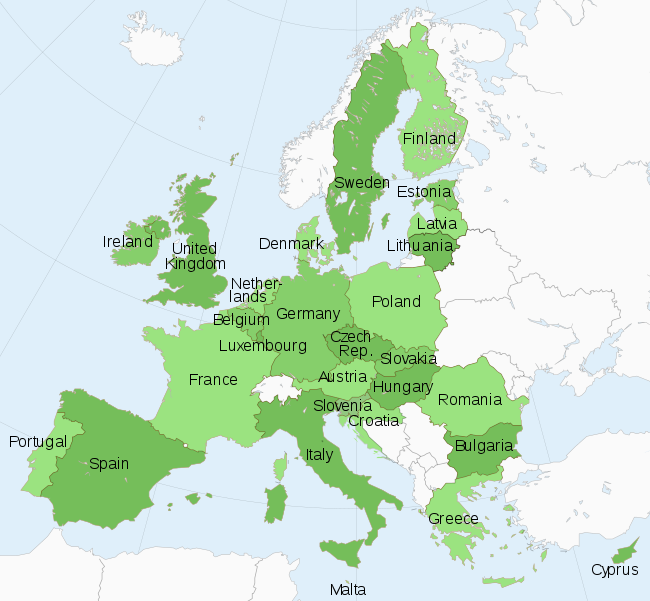
european union statesAccess issues also play a big role in just about every country- from cost to privacy. And on the privacy front, it is not just foreigners who are getting used to new rules. So are German doctors.

The pharmacy discussion is also very much in the room – and this is not “just like” approaching a “dispensary” from North America. They are regulated chemists. Which causes a whole new set of issues and a serious need for new kinds of educational materials.

In Germany, for example, pharmacists are being recruited and trained by not only staff recruiters specializing in the same, but also sent on special training courses funded by the big Canadian companies (Tilray being the noticeable one recently). The brick and mortar vs. online discussion is also a big topic across Europe. Notably, where it is allowed and where it is, as in Deutschland, verboten.

And, of course, the big green giant in the room everywhere in Europe, in particular, is payer/insurance approvals, which are based on a kind of education called proven medical efficacy.

And that, so far, is in markedly short supply.

In the UK, it is so far the main reason that NHS patients (for example) cannot access coverage for the drug to treat conditions like chronic pain.

In the meantime, the most widespread “education” that is going on, is still mostly at the patient level. Especially when patients sue their insurers, or lobby doctors to prescribe.

The cannabis industry may be maturing, in other words, to be able to answer these questions – but there is also clearly a long way to go.

How Half-Baked Labels Can Destroy a Cannabis Business

By Greg Boulos
2 Comments

Cannabis manufacturers and consumers are currently in a honeymoon phase. Consumers love their CBD gummies and believe wholeheartedly in the benefits of cannabis-related products. But it is only a matter of time before industrious plaintiffs’ lawyers take a close look at ways to attack manufacturers. We know from other industries that product labels tend to be the entry point for plaintiff lawyers eyeing manufacturers and looking for easy targets. Any company in the business of manufacturing cannabis-related products needs to devote significant time and resources to developing labels that minimize the risk of bet-the-company litigation down the road. Most notably, manufacturers need to think through whether there are any adverse effects associated with their products of which consumers should be aware. Also, manufacturers must scrutinize any “all natural” or “organic” claims on their labels to ensure that they are not misleading consumers.

Failure to Warn of Potential Detrimental Effects

Most manufacturers are well aware of state mandated labels for cannabis products. And, based on the recent FDA public hearing on cannabis, the industry will likely see FDA labeling requirements in the near future. However, simply complying with these requirements does not insulate a manufacturer from litigation, particularly failure to warn claims. One example, dating back to the 1970s, relates to OSHA’s regulation of asbestos-containing products as it became more and more clear that certain types of asbestos could cause a rare form of cancer, mesothelioma. Among other things, OSHA required manufacturers of asbestos-containing products to add a warning to all packaging. The mandated warning included very specific language. Manufacturers largely complied and added the OSHA-mandated label to their product packaging.

FDAFast-forward 40 years and today, several of those manufacturers are now bankrupt due to litigation based on their alleged failure to warn consumers that asbestos can cause cancer. Plaintiffs have been successful in bringing these claims because the OSHA label only warned that asbestos could cause harm, but it did not mention the word cancer. Some juries have found that the language in the warning was not sufficient to caution end users of the increased risk of developing cancer. While there have also been numerous defense verdicts in asbestos litigation and many asbestos-related cases lack merit – especially against certain defendants – the plaintiffs’ verdicts and legal fees to defend these cases are staggering. Recent plaintiffs’ verdicts have ranged from $20 to $70 million.

Of course, asbestos is an extreme example since CBD has not been associated with an increased risk of developing cancer. But there are other health concerns that manufacturers should consider. For instance, one group of doctors claim to have linked consuming cannabis before the age of twenty-five to development delays. Another study purports to link cannabis consumption to increased risk of premature birth. If there are legitimate studies underpinning these concerns, manufacturers can become the target of potential lawsuits. Beware that when plaintiff law firms find a manufacturer to target, they often file thousands of cases around the country – not just one. Even if the claims are entirely bogus, the legal fees to merely defend these cases are crippling and can lead to a swift bankruptcy.

While there are risks involved with failing to warn consumers of possible adverse effects of a product, manufacturers should not try to mention every alleged adverse effect on its labels. Rather, manufacturers must do their due diligence and investigate whether claimed adverse effects are legitimate, then warn of those that appear to be based on valid scientific studies. Each manufacturer’s research department should assess the credibility of any study linking cannabis use to an adverse health effect and have a candid discussion with their attorneys on whether a warning is warranted. Do not fear lawsuits, they are unavoidable. Rather, work toward ensuring that the company and product(s) have a strong, defensible warning in the event litigation arises.

Questionable “All Natural” and “Organic” Claims

It seems like every CBD product on the market has an “all natural” or “organic” claim on the label. If the product is truly organic, fantastic. Flaunt that organic label. But several food companies have landed in hot water with these labels when there is a hidden ingredient that is not natural. What’s more, manufacturers have been sued when their product contain genetically modified organisms, or GMOs. These lawsuits come in the form of class actions at the state and federal level. Class action litigation is very expensive to defend. And they typically result in settlements for beaucoup bucks – typically multi-million-dollar settlements. Plaintiffs lawyers love these claims because their fees typically also end up in the millions. One example of this kind of class action is a case involving the well-known Kashi brand. Kashi was accused of misleading consumers by including the words “All Natural” on some of its products. Plaintiffs asserted that the products contained bio-engineered, artificial and synthetic ingredients. The class action was settled for $3.9 million.

Just some of the many CBD products on the market today.

How can all natural or organic claims lead to millions of dollars in damages? Here is an example of how these cases usually work: A group of consumers determine that an “all natural” product is not “all natural.”  Let’s call this Product A and assume it sells for $5 per unit. The consumers then find a similar product that is not labeled “all natural.” That product is $2 per unit. The consumers argue that they overpaid for Product A by $3 per unit because they thought the product was all natural. Three dollars may not sound too bad, but if the class consists of two-million consumers, each entitled to $3, that’s a $6 million damages claim against a company. That does not count the hundreds of thousands of dollars that will be spent on legal fees defending the class action.

Cannabis manufacturers should not use all natural labels loosely and should consult with an attorney experienced in product labeling class actions to determine whether they should forgo these labels. The same is true for any labels that claim a product provides unique health benefits. 

Key Takeaway

When manufacturers are excited about introducing a product to the market, trying to compete with other manufacturers and already dealing with miles of regulatory red tape, it may be tempting to avoid self-imposed labeling requirements. But to ensure their businesses are sustainable over the long-term, manufacturers need to take necessary steps now that will limit future litigation risk.  The cost of taking preventative measures to develop a meaningful label is considerably less than the types of product labeling verdicts and settlements affecting other industries. Focus on warnings and the use of all natural labels as a starting point. Then speak with an attorney about the unique aspects of your product, potential adverse effects and the adequacy of your warning. We are here to help.

Soapbox

Medical Cannabis in Georgia: Federal Policy Effects on State Industries

By Reggie Snyder
2 Comments

Under the U.S. Drug Enforcement Administration’s (DEA) Controlled Substance Act (CSA), drugs are classified into five distinct schedules depending upon their acceptable medical use and their overall potential for abuse or dependency. The DEA currently lists cannabis as a Schedule I drug, which the CSA defines as drugs having no currently accepted medical use and a high potential for abuse. It appears, however, that the DEA may soon reconsider its current Schedule I classification of cannabis.

This article considers how the DEA’s potential reclassification of cannabis potentially could affect Georgia’s medical cannabis industry. Specifically, the article discusses: (1) how Georgia medical cannabis distributors would operate within this new regulatory framework; (2) how this change would affect registered Georgia patients who are either currently purchasing medical cannabis or are planning to do so; and (3) whether this reclassification would cause big pharmaceutical companies to enter Georgia’s medical cannabis market, and if so, how.

The DEA’s Reclassification of Cannabis Would Likely Affect the Regulatory Framework of Georgia’s Medical Cannabis Industry

On April 2, 2019, Georgia became the 34th U.S. state to legalize cannabis for medicinal use when the Georgia Legislature passed House Bill 324 (“HB 324”), which recently took effect on Monday, July 1, 2019. In Georgia, medical cannabis is defined as a “low-THC oil” that contains 5% or less of tetrahydrocannabinol (THC)—the psychoactive chemical in cannabis that causes a “high.”

Georgia State Flag

If the DEA reclassifies cannabis, the regulatory framework of Georgia’s medical cannabis industry under HB 324 would likely be affected. For instance, depending on how the DEA elects to reclassify cannabis, low-THC oil products manufactured and sold in Georgia could become subject to the U.S. Food and Drug Administration’s (FDA) costly, complicated and time-consuming drug approval process. Then, any low THC oil products that the FDA approves will be subject to federally mandated quality, efficacy and potency standards for FDA-approved drugs. Also, any federal standards that stem from the DEA’s reclassification of cannabis will trump any conflicting provisions in HB 324 or any other conflicting rules, regulations or procedures established by the Georgia Access to Medical Cannabis Commission (GAMCC), the seven member state agency responsible for promulgating and implementing the state-based rules, regulations and procedures necessary to produce and distribute low-THC oil in Georgia, and the Georgia State Board of Pharmacy (Pharmacy Board). However, even if the DEA reclassifies cannabis, the following state regulatory framework established by HB 324 will remain unaffected:

  • The GAMCC will likely continue to oversee the state’s medical cannabis industry.
  • The following two different types of dispensary licenses issued under the legislation will still likely remain: retail outlets (issued by the GAMCC) and pharmacies (issued by the Pharmacy Board).
  • Licensed dispensaries will still likely not be located within a 1,000-foot radius of a school or church, and licensed production facilities will still not be located within a 3,000-foot radius of a school or church.
  • Pharmacists who dispense low-THC oil will still likely have to review each registered patient’s information on the state’s Prescription Drug Monitoring Program (PDMP) database to confirm that they have been diagnosed with one or more of the 17 approved conditions and diseases. The legislation does not require retail outlet dispensaries to review patient information on the PDMP database or employ a pharmacist to dispense the drug.
  • Registered patients will still likely be prohibited from vaping low-THC oil or inhaling it by any other electronic means. The legislation does not expressly prohibit the use of other, non-electronic delivery methods of low THC oil such as pills or nasal spray.
  • All licensed dispensaries (and all licensed production companies) will still likely be subject to an “on-demand” inspection when requested by the Georgia Bureau of Investigation (GBI), the GAMCC, the four-member Medical Cannabis Commission Oversight Committee (MCCOC), or local law enforcement. The GAMCC and the Georgia Drugs and Narcotics Agency (GDNA) will also still likely be able to conduct one, annual inspection of dispensary locations. And, upon request, licensed dispensaries will still likely be required to immediately provide a sample of their low-THC oil for laboratory testing to the GBI, GAMCC, MCCOC, GDNA or local law enforcement.
  • All licensed dispensaries (and all licensed production facilities) will still likely be required to utilize a GAMCC-approved seed-to-sale tracking software.
  • All licensed dispensaries (and all licensed production companies) will still likely be prohibited from advertising or marketing their low-THC oil products to registered patients or the public. However, they will still likely be allowed to provide information about their products directly to physicians, and upon request, physicians will still likely be allowed to furnish the names of licensed dispensaries (and licensed production companies) to registered patients or their caregivers.

The DEA’s Reclassification of Cannabis Would Likely Affect the Availability of Low THC Oil

To date, approximately 9,500 Georgians are registered with the state’s Low-THC Registry, which allows them to purchase low-THC oil from licensed dispensaries. Since the legislation’s passage, the number of registered patients has increased significantly and continues to steadily rise. If the DEA reclassifies marijuana, this patient number will likely increase at an even faster rate because the public will likely perceive reclassification as an acknowledgement by the federal government that marijuana possesses health and medicinal benefits. If that occurs, statewide demand for low THC oil could quickly outstrip the supply.

Georgia Gov. Brian Kemp
Image: Georgia National Guard, Flickr

Under HB 324, the GAMCC is tasked with ensuring that the state has a sufficient number of retail outlet dispensaries across the state to meet patient demand but is limited to issuing only six production licenses. As the number of registered patients continues to grow, the GAMCC may be forced to recommend amendments to the statute allowing it to issue additional production licenses to increase the state’s supply of low THC oil, and depending on how many additional patients are added to the state’s Low-THC Registry, the GAMCC may also have to issue additional dispensary licenses to keep up with patient demand by relaxing the geographic limitations on locating dispensaries.

Thus, the DEA’s reclassification of cannabis likely would affect the amount of low THC oil available to registered patients in Georgia.

The DEA’s Reclassification of Cannabis Would Likely Cause Large Pharmaceutical Companies to Enter Georgia’s Medical Cannabis Market

Large pharmaceutical companies typically manufacture, market, sell and ship their products on a national and international scale. Given cannabis’ current status as a Schedule I drug under the CSA, these companies have largely steered clear of the burgeoning medical marijuana industry because of the inherent risk of violating federal law. If the DEA reclassifies cannabis, that risk will be diminished greatly, and the companies therefore will likely decide to enter the market by acquiring existing medical marijuana companies with established national or state-level medical cannabis brands.

If the DEA reclassifies cannabis, Georgia’s medical cannabis market will likely be affected in multiple ways.Depending on how the DEA reclassifies cannabis, low-THC oil in Georgia could be subject to stringent federal standards, including the FDA’s complex and expensive drug approval process. Georgia medical cannabis companies will likely not be accustomed to complying with such federal regulations. Large pharmaceutical companies, on the other hand, are very accustomed to dealing with the federal government, including FDA drug approval. So, if the DEA reclassifies marijuana, pharmaceutical companies will likely view reclassification as a tremendous opportunity to enter the Georgia market by leveraging their experience and institutional knowledge dealing with federal law to acquire or partner with a licensed Georgia cannabis company that has an established brand of low -HC oil.

Entering Georgia’s medical cannabis market won’t be easy, however, because HB 324 prohibits licensees from transferring their licenses for five years and requires that the original licensee be a Georgia business. But, HB 324 does not prohibit them from selling their businesses, which necessarily includes any licenses the business owns. Purchasing a licensed Georgia medical cannabis company requires payment of a production license business transfer fee. The fee for the first sale of a business with a Class 1 production license is $100,000 and the fee for a Class 2 license is $12,500. The fee for the second sale is $150,000 for a Class 1 production license, and $62,500 for a Class 2 license. The fee for the third and fourth sales is $200,000 for a Class 1 production license, and $112,500 for a Class 2 license.

Conclusion

If the DEA reclassifies cannabis, Georgia’s medical cannabis market will likely be affected in multiple ways. Specifically, depending on how the drug is reclassified, the regulatory framework for medical cannabis companies likely will change to include both state and federal requirements, potentially including the FDA’s complex drug approval process. Also, the amount of low-THC oil available for registered patients to purchase likely will be diminished precipitating the need for the GAMCC to modify the statute to allow for issuing additional production licenses and relaxing the geographic limitations on locating dispensaries. Finally, large pharmaceutical companies likely will attempt to enter Georgia’s medical cannabis market by purchasing existing, licensed Georgia companies that have established low-THC oil brands.

tilray-logo

Tilray Imports Medical Cannabis Oil In Bulk To UK

By Marguerite Arnold
1 Comment
tilray-logo

Tilray has managed to successfully import its first bulk supply of medical cannabis oil into the UK.

It was a Tilray product, in fact, that was not only confiscated at the border last year – but subsequently sparked media outrage over the denial of the same to one Billy Caldwell, an epileptic child. It was not the only outcry nor was Billy the only child endangered. And the British people, in fact, finally signalled that they had lost their stiff upper lip on this one last year.

All of this despite lingering and significant problems ever since. Not to mention an intriguing and well-timing market entry for Tilray right after things have been heating up on cannabis reform in Parliament of late.

The Tilray product, which will be imported from its new production facilities in Portugal, has already been distributed in other European countries, including Croatia and Germany.

tilray-logoWhat is significant in other words, is that the UK is starting to allow bulk orders in through customs- and they are coming not from Canada, but from Europe. Even if it is a Canadian company’s brand on the same, for now at least.

Tilray of course, is not the only company engaged in a race to get imports into the country. Right after Christmas last year, Canopy/Spektrum announced the same plans. Wayland has clearly been angling for a British outpost for some time. And of course, more locally initiated groups, including European Cannabis Holdings, have been working to initiate easier access to British markets for well over a year. Let alone more locally grown interests and pursuits now clearly lining up for market entry.

But this announcement, coming so shortly after all the recent activity on cannabis reform and calls for trials in the UK, clearly means that the doors are now opening fast for the largest players angling to get in.

Bottom line? Look for the biggest Canadians with an already established European presence, to begin making similar announcements this summer.

Being “Available” Is Only The First Hurdle

One of the biggest problems facing not only the “industry” but patients in the UK, much like elsewhere, is that doctors do not know or want to prescribe cannabis and cannabinoid medicines- and for reasons stemming from fear or ignorance about medical efficacy to insurance coverage.

Medical cannabis, in all its forms so far, however, is also highly expensive and out of reach for most unless they obtain an NHS approval (or as in Germany, statutory health insurer approval) to actually obtain the drug. And then have a place to obtain it.

This basically counts out everyone who cannot pay out of pocket and cannot find a willing doctor to sign them up via onerous and ongoing paperwork. And that, of course, is the majority of the sick people in the room.

It is this basic conundrum, which the bigger Canadians have yet to solve themselves (and it is becoming more of a recognized issue in the U.S. in the days, presumably, before the 2020 election which will hopefully set a timetable for federal reform) that has been in the room for the last two years thanks to Germany.

Image credit: Flickr

It is even more of an issue in the UK. Especially with a renegotiation in Britain’s diplomatic and trade relationship with the rest of the world.

That includes, as of mid-July, a downright, undiplomatic spat between the White House and Whitehall right now over leaked comments from the British Ambassador to Washington – and about matters of competency far from cannabis. Although of course, this issue is in the room.

For that reason, the Canadian as well as the European connection to imports right now (from not just Portugal but Holland) on the medical side of the ledger, spell an intriguing fall for not only cannabis, but the real shape and direction of British politics- and by extension- British trade.

Patients Are Taking It To The Streets And To Parliament

As much as patients have so far partnered with the big Canadian companies in the attempt to get the borders open, this is not the only game in town. Dutch imports, from Dutch companies, are already showing up in the UK (see Bedrocan). And both British and Irish growers are getting in on early action, even if for now “just” on the CBD side.

Furthermore, it is clear that patients are playing a large role in making sure that they are being heard, even to the point of putting pressure on doctors. In an extraordinary admission at the parliamentary level during the last week of June, lawmakers conceded that the British public was taking matters into their own hands. And furthermore, that the change in the law had led to clear expectations that were not being met.

Namely, British patients are literally demanding medical cannabis by prescription from their doctors.

And much like in Germany, with a mandate for coverage, the government is being forced to listen, and as best as it can in a severely crimped and politicized Brexit environment, respond.

While cannabis reform is hardly the Guy Fawkes, in other words, in a tinder match environment that British politics certainly is right now, it might be a kind of spark that drives a much wider conversation in the UK about current events.

Specifically the survival of a system that is poised to provide not only access to cannabis but comprehensive medical care beyond that, even for the old or chronically ill.

When You Don’t Know What You Don’t Know: Debunking Cannabis Insurance Myths

By , T.J. Frost
1 Comment

For all of today’s growing acceptance and legitimacy with cannabis, the reality is that today’s operators – whether growers/producers or dispensary operators – still face risks in running their businesses. If, in the old days, a customer got deathly ill from cannabis contaminated with something from somewhere during the distribution chain, oh, well. But now that there’s a legal system of checks and balances; there’s recourse when issues arise.

The problem is that the business is so new that most people don’t know what they don’t know about mitigating those risks. And that, unfortunately, extends to many in the insurance business who need to be doing a better job helping put the right protections in place.

One grower bemoaned to me at a cannabis trade show, “I sure wish I could insure my crops.” What? “You can,” I told him. His old-school ag broker didn’t know any better and didn’t do him any favors with his ignorance. But it brought home the point: We have to start treating cannabis like the real business it is.

Reviewing the existing insurance policies of today’s cannabis businesses uncovers some serious gaps in coverage that could be financially crippling if not downright dangerous should a claim be triggered. Retail dispensaries, for example, are high-cash businesses, making banking and trusted employees a must-have.Today’s cannabis businesses need to understand there will be risks but they are a lot more manageable than in the old days. 

And a close eye must be cast to lease agreements for hidden exposures, too. We know a Washington state grower that had no property insurance on its large, leased indoor growing facility. The company’s lease made its owners, not their landlord, responsible for any required building improvements. It was one of a variety of serious exposures that had to be fixed.

Today’s cannabis businesses need to understand there will be risks but they are a lot more manageable than in the old days. Rather than find themselves under-insured, they can start by learning what they probably have wrong about insurance. Dispelling three of the most common myths is a good place to start.

Myth #1: Nobody will insure a cannabis business.

Not remotely true. You can and should get coverage. Think property and casualty, product liability, EPLI and directors and officers, employee benefits and workers comp. Additionally, you should be educated on what crop coverage does and doesn’t cover. Depending on your business’ role in production and distribution, you might also consider cargo, stock throughput, auto, as noted, crime and cyber coverage. It pays to protect yourself.

Myth #2: If my business isn’t doing edibles, I don’t have to worry about product liability insurance.

The reality is that product liability may be the biggest risk the cannabis industry faces, at every level on the supply chain. There’s a liability “trickle down” effect that starts with production and distribution and sales and goes down to labeling and even how the product is branded. Especially when a product is an edible, inhalable or ingestible with many people behind it, the contractual risk transfer of product liability is an important consideration. That means the liability is pushed to all those who play any role in the supply chain, whether as a producer or a retailer or an extractor. And all your vendors must show their certificates of insurance and adequate coverage amounts. Don’t make the mistake of being so excited about this new product that you don’t check out the vendors you partner with for this protection.

Myth #3: Any loss at my operation will be covered by my landlord’s policy.

As the example I cited early illustrated, that’s unlikely. Moreover, your loss might even cause your landlord’s insurance to be nullified for having rented to a cannabis business. It’s another reason to examine your lease agreement very carefully. You want to comply with your landlord’s requirements. But you also need to be aware of any potential liabilities that may or may not be covered. Incidentally, even if your landlord’s policy offers you some protection, your interests are going to be best served through a separate, stand-alone policy for overall coverage.

These are interesting times for the burgeoning legal cannabis business. Getting smart – fast – about the risks and how to manage them will be important as the industry grows into its potential.

Transporting Cannabis Can Be a Costly Business Risk

By Susan Preston, T.J. Frost
1 Comment

Did you know that the use of personal vehicles for transporting cannabis products is one of the most frequent claims in the cannabis industry? It surpasses property, product liability and even theft. Businesses are either unaware of the risks involved in using personal vehicles for transporting cannabis, or they aren’t taking them seriously enough.

Considering the strict statutes many states have placed on transporting cannabis should be reason alone to be more diligent. For example, the California Bureau of Cannabis Control’s proposed regulations require cannabis business owners to ensure their drivers have designated permits to transport the product. The state’s current legislation mandates inspections at any licensed premises, and requires employers to provide detailed tracking and schedules on the transport of product. Further, the state prohibits using minors to transport cannabis, and considers it a felony to do so.

Regulatory concerns, combined with the potential liabilities that could come from driver behavior, are keeping insurers from offering auto coverage to the cannabis industry. In fact, just four insurers currently offer the industry auto coverage, with premiums running as high as $17,000 per auto on average. It is important to note that personal auto insurance falls short because it doesn’t cover cargo loss.

Alternatively, because the stakes are so high, many companies are using courier services to transport cannabis product. But cargo insurance is still an issue. Without it, the care, custody and control of someone else’s products, and insurance limits are lacking. Even when the courier has cargo coverage, because they are delivering for multiple companies, the claims payout would have to be split amongst all the customers – likely below the value of your loss.

Consider the following best practices when transporting cannabis:

  • Conduct background checks/review DMV records. Uncovering any potential driver issues prior to hiring is critical. Look for previous DUIs or drug related history. Employees who might use product before getting behind the wheel are a significant danger to other drivers and a major liability to the employer. Even after hiring, be on alert for signs that indicate poor driving performance. Use check-in/check-out processes for all drivers, and conduct regular vehicle walk-arounds to look for scratches, dents or other damage that otherwise might be unreported to the employer.First, and most importantly, assess your risk mitigation options. Then, put processes in place as soon as possible to eliminate risk. 
  • Implement quarterly driver training. Educate employees on proper procedures. While minor fender benders and sideswipe accidents are most common, even these can be costly if not handled properly. Once law enforcement get involved in an accident the car’s transportation of cannabis could become a secondary issue. Teach drivers how to handle accidents while on the scene, including informing law enforcement about the cargo and the employer.
  • Use unmarked vehicles. Drivers carrying a significant amount of product and/or cash are tempting targets for thieves. Company cars used for transporting product should be newer, and have no fleet serial numbers or anything identifying the company.
  • Require increased personal liability limits. If an employee is using their own personal vehicle for business purposes, the business owner should require that person carry more than minimum limits of personal liability.  Ideally, they should have $300,000 or more, at an absolute minimum $100,000.

Get started now

First, and most importantly, assess your risk mitigation options. Then, put processes in place as soon as possible to eliminate risk. Secure the right insurance coverage, and ask your broker/underwriter to provide any additional recommendations to best mitigate your transportation, delivery, and cargo exposures.

To learn more, please visit our website.

Cannabusiness Sustainability

Environmental Sustainability in Cultivation: Part 2

By Carl Silverberg
1 Comment

The first article of this series discussed resource management for cannabis growers. In this second piece of the series on how indoor farming has a reduced impact on the environment, we’re going to look at land use & conservation. There are really two aspects and we have to be up front and acknowledge that while our focus is on legal cannabis farming, there’s a significant illegal industry which exists and is not subject to any environmental regulation.

“Streams in Mendocino run dry during the marijuana growing season impacting Coho salmon and steelhead trout who lay their eggs in the region’s waterways.” One biologist reported seeing “dead steelhead and Coho on a regular basis in late August and September, usually due to water reduction or elimination from extensive marijuana farming.” The quotes are from an extensive article on cannabis land use by Jessica Owley in the U.C. Davis Law Review.The concept that land will stay in its natural state is a mixture of idealism and reality.

This is going to continue until it’s more profitable to go legit. For this article, we’re going to focus on the legitimate cannabis grower. On the land use side, we usually hear four main reasons for indoor growing: remaining land can stay in its natural state, fewer space usually translates to fewer waste, you conserve land and natural resources when you don’t use fossil fuels, greenhouses can be placed anywhere.

The concept that land will stay in its natural state is a mixture of idealism and reality. Just because someone only has to farm five acres of land instead of one hundred acres doesn’t necessarily mean they’re going to leave the rest in its pristine natural state. Granted the footprint for automated greenhouses is significantly less but the key is what happens to that extra space. Assuming that it will all be preserved in its natural state isn’t realistic. What is realistic is the fact that a developer may not want to build tract houses abutting a commercial greenhouse operation. If they do, likely there’s going to be more land set aside for green space than if a farm was sold outright and a series of new homes were plunked down as if it were a Monopoly board.

Combined with workforce development program funding, urban indoor farming is getting more attractive every day.That’s not the same kind of issue in urban areas where the situation is different. Despite the economic boom of the past ten years, not every neighborhood benefitted. The smart ones took creative approaches. Gotham Greens started in Greenpoint, Brooklyn and has expanded to Chicago as well. “In early 2014, Gotham Greens opened its second greenhouse, located on the rooftop of Whole Foods Market’s flagship Brooklyn store, which was the first ever commercial scale greenhouse integrated into a supermarket.”

Green City Growers in Cleveland’s Central neighborhood is another example. “Situated on a 10-acre inner-city site that was once urban blight, the greenhouse—with 3.25 acres under glass–now serves as a vibrant anchor for the surrounding neighborhood.”

The beauty of greenhouse systems even those without greenhouse software, is they can be built anywhere because the environmental concerns of potentially contaminated soil don’t exist. The federal government as well as state and local governments offer a myriad of financial assistance programs to encourage growers to develop operations in their areas. Combined with workforce development program funding, urban indoor farming is getting more attractive every day.

As for the argument that greenhouses save energy and fossil fuels, I think we can agree that it’s pretty difficult to operate a thousand-acre farm using solar power. To their credit, last year John Deere unveiled a tractor that will allow farmers to run it as a fully autonomous vehicle to groom their fields while laying out and retracting the 1 kilometer long onboard extension cord along the way. It’s a start although I’ll admit to my own problems operating an electric mower without cutting the power cord.

In a 2017 article, Kurt Benke and Bruce Tomkins stated, “Transportation costs can be eliminated due to proximity to the consumer, all-year-round production can be programmed on a demand basis, and plant-growing conditions can be optimized to maximize yield by fine-tuning temperature, humidity, and lighting conditions. Indoor farming in a controlled environment also requires much less water than outdoor farming because there is recycling of gray water and less evaporation.”

The overall trend on fossil fuel reduction was verified this week when the Department of Energy announced that renewables passed coal for the first time in U.S. history.  And on the water issue, Ms. Owley had a salient point for cannabis growers. “The federal government will not allow federal irrigation water to be used to grow marijuana anywhere, even in states where cultivation is legal.” That’s not a minor detail and it’s why outdoor farming of cannabis is going to be limited in areas where water resources and water rights are hotly debated.

Branding for Cannabis Companies 101: Part 2

By Jennifer Whetzel
1 Comment

Editor’s Note: In Part 1, Jennifer Whetzel introduced the concepts of branding, marketing and advertising for cannabis companies. Part 2 takes a closer look at the benefits of branding. Stay tuned for Part 3 coming next month.


The Value of Branding

Think back: do you remember the very first Nike ad you saw? Probably not.

But when you see the swoosh, you immediately think of Nike. When you see the swoosh, you probably even think “Just do it.” A whole sensibility, one that signifies perseverance and athletic excellence, gets conjured up by that swoosh. A lot of people think that’s the power of advertising, but they’re only partially correct.

The fact that you don’t just know the swoosh but have thoughts and feelings that bubble up when you see it is due to branding. Companies like Nike don’t spend millions on branding reflexively. They do it because brand recognition and the feelings that come with it turn potential consumers into buyers. Branding success is necessary, measurable and valuable – especially for brands looking to establish themselves.Strong branding is what will increase the chances that your marketing and advertising will be effective, and it’s why branding must be one of your top priorities.

Branding: The Precursor to Advertising

You might not know specifically what ads work on you. But the ones that do work are driven by a strong brand.

For example, check out this ad campaign run by McDonald’s: Essentially, the fast food giant used fractions of its logo to make a wayfinding system on highway billboards. It’s clever and memorable, but it only works thanks to McDonald’s strong branding. McDonald’s has spent years building that shorthand because they understand that immediate recognition pays off in the literal and figurative sense.

Similarly, you know an Apple or an Under Armour ad when you see one. And you know this because there’s a consistent look and sensibility that these companies have worked to codify – that’s the branding piece. If you immediately recognize who these messages are coming from even before you engage with the ad, you’re more focused on the message rather than trying to suss out which company it’s coming from or what they’re selling.

This is why branding has to be a precursor to advertising. If you create ads before you build your brand, you may get a message out about what you’re offering. But if you do this, you’re talking at your customer rather than building a relationship with them. Strong branding is what will increase the chances that your marketing and advertising will be effective, and it’s why branding must be one of your top priorities.

The Benefits of Branding

Branding is about building a lasting, positive relationship with your customer. When you present a consistent brand personality and identity to your audience, you build trust. Consider how you form any long-term relationship; it’s through repeated positive, consistent encounters that allow you to see the other party for who they are. You trust them because you feel that you understand them and that they understand you.

Strange as it seems, it’s also true of brands. Building that bond with your customers will give you an advantage against brands that aren’t very distinct. With proper branding, a company can build and solidify consumer trust, trust that pays off in the form of increased sales, loyalty and good reviews. These brands aren’t constantly introducing themselves to consumers because over time, the branding itself does the selling and makes it easier to introduce new products down the line. Companies that don’t build that trust will have to fight for recognition, and things only get worse with more competition.

The Dollar Value of Branding

And of course, there are numbers to back this up. Every year, Forbes puts out a list of the world’s most valuable brands, and they use complex math to determine the actual value of this intangible thing called a Brand. Based on their thinking, a branded product should earn an 8% premium over a generic product. You can see some of their findings in the table below for a few categories that are traditionally very well-branded.

Industry Brand Brand Value (Billions)[1]
Technology Apple $205.5
Technology Microsoft $125.3
Consumer Packaged Goods Coca-Cola $59.2
Restaurants McDonald’s $43.8
Apparel NIKE $36.8
Restaurants Starbucks $17.0
Apparel Adidas $11.2
Consumer Packaged Goods Kellogg’s $8.0

These numbers, however, make it difficult to compare how well a company’s branding works for them because the brand’s total value is influenced by the size of the company. After doing a few simple calculations, we compared the Brand Value to the total Enterprise Value of each company to determine what we will call their Brand Contribution, which demonstrates how their branding efforts paid off.

When you compare the percentage of total company value that solely comes from the value of the brand, we can see that Nike significantly outperforms competitor Adidas, McDonald’s has a stronger brand than Starbuck’s, and Apple comes close to doubling the brand performance of Microsoft — none of which is surprising.

What might surprise you is the brand at the top of the list when it comes to contribution versus overall company value. Kellogg’s is one of the smallest companies to make the list in terms of Brand Value, and it has the lowest enterprise value in our list. Yet, Kellogg’s has the highest brand contribution. This makes sense in the high-stakes world of consumer-packaged goods; the competition is fierce, well-funded and global, which means that branding that resonates with customers is extremely important.

Industry Brand Brand Value Enterprise Value[2] Brand Contribution[3]
Consumer Packaged Goods Kellogg’s $8.0 $28.4 28.2%
Apparel NIKE $36.8 $133.4 27.6%
Restaurants McDonald’s $43.8 $187.2 23.4%
Consumer Packaged Goods Coca-Cola $59.2 $254.8 23.2%
Technology Apple $205.5 $950.3 21.6%
Apparel Adidas $11.2 $59.0 19.0%
Restaurants Starbucks $17.0 $109.7 15.5%
Technology Microsoft $125.3 $990.9 12.6%

These companies are all massive and wealthy because they prioritize trust and consistency as part of their long-term plan to sell products. Branding promotes loyalty, but its ability to promote trust can be even more powerful by paying off in the long-term. And in this new legal cannabis market, trust is going to be just as critical as it is for traditional companies. After all, the power of branding isn’t just getting people to know who you are — it’s getting them to believe in you.

  1.  https://www.forbes.com/powerful-brands/list/#tab:rank
  2. Enterprise value gathered from ycharts.com on 6/20/2019. Ycharts defines enterprise value as: Enterprise Value (EV) is a valuation metric alternative to traditional market capitalization that reflects the market value of an entire business. Like market cap, EV is a measure of what the market believes a company is worth. Enterprise value captures the cost of an entire business, including debt and equity. It is a sum of claims of all preferred shareholders, debt holders, security holders, common equity holders, and minority shareholders – unlike market cap, which only captures the total value of common equity securities.
  3. Ladyjane’s valuation of the strength of a brand. What percentage of the company’s overall valuation can be attributed to the brand? Brand Contribution = Brand Value / Enterprise Value

Tips for Finding the Perfect Cannabis Packaging Partner for Your Business

By Danielle Antos
3 Comments

Whether your cannabis business is a start-up in its infancy, or established with a loyal customer following, the product packaging you use is essential to building and maintaining your brand. The packaging is the first thing a potential customer sees, and it creates that critical first impression. While the primary function is to contain, protect, and market your products, your packaging is a reflection of your company to the customer. In many ways, the package is the product. Partnering with a quality plastic packaging manufacturer for your cannabis products will increase your success.

Bottles made of high-density polyethylene (HDPE), low density polyethylene (LDPE), polypropylene (PP), and polyethylene terephthalate (PET) have become widely-accepted packaging options within the cannabis industry. There are many plastic bottle manufacturers, but how do you find the right one? In short, seek a manufacturer who makes quality products that are unlikely to present downstream problems for your company, provides services and options that align with things you feel are important, and wants to build a long-term relationship with you so both of your businesses grow faster through strategic partnership.

What to Look for in a Plastic Bottle Manufacturer

Excess Bottom Flash creates a poor printing surface.

As you search for a packaging partner for your cannabis business, here are a few key things to look for:

Bottles That Visually Support Your Brand

It’s essential to partner with a manufacturer who understands the importance of defect-free plastic bottles. Does everything about your packaging convey a sense of trust for your customers? Defects in plastic bottles typically occur during the manufacturing process.

Excessive Side Taper results in uneven, wrinkled labels.

For instance, excessive side taper on the bottles can result in uneven, wrinkled labels that are hard to read and make your product look unprofessional. If flashing on the bottle bottom is not removed, it creates a poor printing surface and results in a poor brand impression.

Partnering with a manufacturer who understands that plastic bottle defects diminish brand presence and who continually strives to remove defect-producing problems out of their manufacturing process is of utmost importance. This avoids many downstream quality problems and helps to keep the focus on growth and off of damage control.

Bottles That Minimize Risk and Waste

Product recalls or safety concerns can be a result of cloudy bottles or material trapped in the resin that makes the plastic packaging look dirty or contaminated. These situations can erode consumer confidence in your brand or expose the customer to risk.

Foreign material trapped in the resin results in reduced customer confidence.

Sub-par plastic bottles can lead to inefficiencies on your filling lines, lost production time, and product that cannot be sold. These situations lead to reduced profitability and negatively impact your bottom line. It’s never good when filled packaging or product has to be thrown away because problems are identified on the filling line.

Uneven Sealing Surface results in poor closure seal and increased risk of product spoilage or contamination.

Worse yet is when your product reaches the point of sale and the problems are identified at the dispensary or by a consumer. For example, over time, an improper seal between the plastic bottle and cap can cause flower to be excessively dry. In turn, when this flower is dispensed to the consumer it can lead to overfilling to make up for weight loss. And some consumers just don’t like their flower to be too dry, resulting in lost sales. Does the defective product get shipped back or trashed at the point of sale location? In either case, this results in the dilemma of wasted product that can’t be used and extra costs that eat into your profitability. 

Closures That Work With The Bottle

The closures for the bottles are also an important part of your cannabis packaging. Can your packaging partner manufacture and supply plastic closures that assure complete functionality to protect your product? Closures produced by the same manufacturer as the bottles ensures that the closure and bottle function correctly together. A one-stop-shop approach will save you time and money.

The cannabis industry is growing quickly and faces many complex regulatory challenges, including regulations for child-resistant packaging. Many states have their own unique cannabis packaging requirements which must be strictly adhered to. Are their bottle and closure pairings compliant with current regulations and those that are under legislation for the future? 

Customization for Your Brand

Can the cannabis packaging manufacturer customize their products to your exact design and specifications? Your product is unique, and your packaging should reflect that. Make sure your brand stands out with the exact image you want to project. There should be “depth” in your supplier: can they do more than just sell you packaging that already exists?

A Safe Resin Source

Another important aspect of safety is country of origin. Plastic bottles and closures manufactured overseas may have impurities in the resin or colorant that could leach or bleed into your products. They may not have documentation of origin or comply with FDA regulations. Your plastic packaging partner should be able to provide this documentation so you can rest assured that your bottles are manufactured under strict guidelines for the safety of your consumers and that your product won’t be affected.

Commitment to Sustainability

To many consumers, packaging made from recycled materials is important. Does your packaging supplier have a strong commitment to environmental sustainability? There is strong market support for carbon-friendly alternatives. Progressive plastic packaging manufacturers are actively working to provide alternatives to plastics made from fossil fuels and instead, using resins produced from renewable resources (i.e. sugarcane). By partnering with a supplier that provides alternative and recycled materials, you enhance your brand by appealing to a growing segment of environmentally concerned consumers.the best cannabis packaging suppliers understand that consistency in the manufacturing process is essential.

Scalable Growth

As your business grows, can your packaging partner grow with you? It’s important that they are able to keep up with the demand for your product and that their supply chain can match your manufacturing needs. As you add to your product line, are they capable of continuing to offer new and innovative packaging? A manufacturer that has a strong business model for growth will benefit you now and for the future.

A Real Cannabis Packaging Partner

Your cannabis business should develop a true partnership with your packaging supplier. They should invest in your success and care about your business. Businesses depend on one another for continued growth – look for a knowledgeable partner that is responsive, courteous and dependable now and for years to come. The best suppliers realize that there is more to a relationship than just the financial transaction of buying packaging.

Additionally, the best cannabis packaging suppliers understand that consistency in the manufacturing process is essential. Using virtually perfect bottles time after time not only reduces waste but helps build consumers’ trust in your brand. Consistency saves you three precious commodities – time, hassle and money.

Remember, a brand consists of more than just a logo and company name. It identifies who you are, what your company stands for and the integrity of your product. Quality cannabis packaging will reinforce your company standards and attract consumers to your product – consistently defining you as a quality provider with integrity in the marketplace. Improving your bottom line and meeting your company’s financial goals is at stake. Is your cannabis packaging partner going to help you grow?

Soapbox

4 Reasons Why Community Relations is Critical to Cannabis Industry

By Savannah Bailey
No Comments

There’s no denying that the cannabis industry is experiencing a boom. While it feels a bit like the wild west, many organizations are riding a wave of (mostly) positive publicity as opportunities increase for cannabis products and distribution.

From a public relations standpoint, relying on this initial excitement, however, is shortsighted at best. As regulations allow for increased competition in many markets such as cannabis dispensaries, manufacturers and distributors, we must find new ways to creatively garner positive attention while staying compliant with regulations.

But what do you do after the initial excitement fades? How do you individualize your company to make it stand out and sustain within the market? For many, the solution is held within a strategic community relations program.

No matter the size or reach of the organization, we encourage many of our clients, especially those in the cannabis industry, to engage with their immediate communities. Not only does this demonstrate that you’re invested in the well-being of your neighbors, but can provide long-term benefits, such as brand loyalty and improved public image.

Here are four reasons why businesses in the cannabis industry should be investing in community relations outreach:

1. Initial Publicity Only Lasts So Long

Like the gold rush, businesses are looking to help themselves to a slice of the cannabis pie. And understandably so. In 2018, the industry earned nearly $10 billion in the U.S. last year, creating 64,389 jobs, according to CNBC. With the newness of the industry comes a lot of excitement and media attention. While this attention is great for those first-to-market trailblazers, as competition increases, the newsworthiness will dwindle.So, what’s the best way to gain awareness without blatantly advertising? The answer is giving back.

For examples of this, look no further than the tech industry. Remember when apps (or websites if you want to go way back) used to be a big deal? In order to stand out in a crowded marketplace you must be different and have a story to tell. Making a meaningful connection through outreach will help you succeed long after the first wave of publicity fades away.

2. Regulations Rule

In many ways, your hands are tied when it comes to advertising or promoting a cannabis business versus a traditional retail product or location. In some states, it’s almost entirely off the table. So, what’s the best way to gain awareness without blatantly advertising? The answer is giving back. Community outreach programs through philanthropic efforts will help build your business, create brand awareness and bring people together. Community relations is a critical part of getting the word out even in the face of strict regulatory guidelines. And the best part – it can be inexpensive to do. As an added bonus, you make friends and create advocates in the process.

3. Combat the Stigma

In some states and communities, cannabis still faces a bad rap. Currently only 33 states have legalized medical cannabis, while 11 states have legalized cannabis recreationally. And even with growing legalization and acceptance, the industry must still combat outdated stigmas and misgivings. By making your business a reputable part of the community you will build trust and loyalty. Take this as an opportunity to educate the community about the facility and meet staff members.

4. Stay in Good Graces

Community relations is a great way to create ambassadors out of community leaders and influencers. Simply put, people are more interested in supporting an organization that supports them in return. Show that you’re invested in your neighbors and ingrained in the success of the local business community. As an added bonus, community involvement will also help boost public image and build the morale of employees. This is important for long-term success of your company as well as employee retention.

No matter what your reason for implementing a community relations initiative, you’ll find it to be a great addition to your public relations strategy.

The best part- community outreach doesn’t have to be extravagant, either. Coat drives, food drives or volunteering time with local events are all great ways to show your support for the community while raising your own profile.

As the cannabis industry continues to grow and competition increases, you’ll feel good about setting the bar high as a responsible and thoughtful invested member of your local business community.